
Reviewed · SHOPPING TOURS
Traditional Antiques Market Tour Tokyo
Tokyo’s shrine markets can be the best place to find a souvenir with a past, from a kimono robe to an old collectible. This tour pairs that hunt with Sayuki, a geisha guide who may be an apprentice geisha, and includes help bargaining with sellers. I like the chance to shop for items beyond standard tourist fare, and I like having a guide explain the cultural setting. The main concern is serious: the market may not operate every week, so confirm the date before you travel across Tokyo.
I also like that the price is $170.60 for up to four people, not per person. For a small group that wants help shopping, the cost can make sense. But the experience has a low 3.0 rating from four reviews, including a report of an absent market and unanswered messages, while the cancellation policy offers no refund.
In This Review
- Key points at a glance
- A shrine market, not a standard Tokyo shopping street
- Meeting Sayuki at Tomioka Hachiman Shrine
- What you can expect during the two-hour hunt
- The appeal of kimono, swords, and old collectibles
- Why a geisha guide changes the shopping experience
- Price value for couples, families, and small groups
- The biggest problem: a market that may not be there
- Walking, group size, and practical comfort
- Who should book this experience
- How to make the most of the shopping
- Should you book the Traditional Antiques Market Tour Tokyo?
- FAQ
- Where does the tour start?
- What time does the tour begin?
- Where does the tour end?
- How long does the tour last?
- How much does the tour cost?
- Are market admission fees included?
- What kinds of items might I find?
- Will the guide bargain for me?
- Is the tour refundable or changeable?
Key points at a glance
- Tomioka Hachiman Shrine meeting point: Start at 9:00 am at 1-chōme-20-3 Tomioka, Koto City.
- Geisha-guided shopping: Sayuki leads the outing and may be joined by an apprentice geisha.
- Possible finds: Look for kimono robes, samurai swords, geisha pillows, antiques, and other Japanese collectibles.
- Bargaining help included: Your guide can negotiate with stallholders and help you pay a fair price.
- Short morning format: Plan on about two hours, with the full activity described as roughly two to three hours.
- Market-date risk: The antique market is not held every week, so verify that it will operate on your chosen date.
A shrine market, not a standard Tokyo shopping street
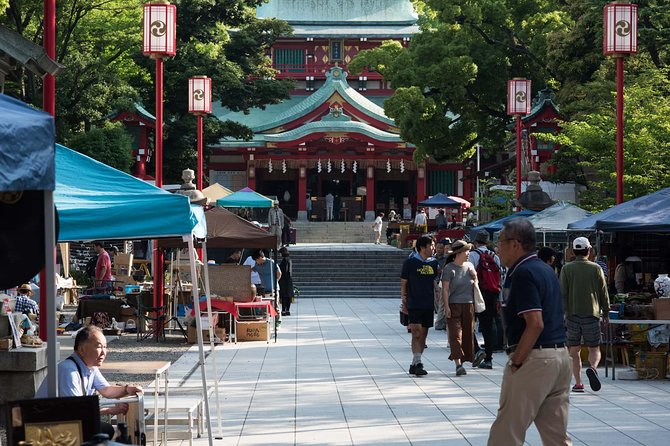
The appeal here is simple: you are not being led to a department store or a souvenir shop stocked with identical magnets. You are looking around outdoor markets held at or near Tokyo shrines, where the goods can be old, unusual, and hard to identify at first glance.
That setting matters. A shrine market gives your shopping a cultural frame. You can see traditional objects in a place connected with Japanese religious life, then ask your guide what an item may have been used for or why it matters. The description specifically points to samurai swords, geisha pillows, kimono robes, antiques, and collectibles. These are examples of what you might find, not guaranteed purchases, so arrive with curiosity rather than a fixed shopping list.
I like this kind of buying because the object comes with a story, even if you never learn every detail. A worn textile or small household item can feel more personal than a factory-made keepsake. At the same time, you should inspect every purchase carefully. The available information does not promise authentication, certificates, condition reports, or expert appraisals.
A few more Tokyo bookings worth comparing
- Tokyo Tsukiji Fish Market Food and Culture Walking Tour
★ 5.0 · 3,184 reviews - Tokyo: Tsukiji Fish Market Food and Walking tour
★ 5.0 · 1,724 reviews - Tokyo: Tsukiji Fish Market Guided Walking Tour
★ 4.9 · 1,397 reviews
Meeting Sayuki at Tomioka Hachiman Shrine
The tour begins at 9:00 am at Tomioka Hachiman Shrine in Koto City. You return to the same meeting point at the end, which keeps the arrangement straightforward. The listed address is 1-chōme-20-3 Tomioka, Koto City, Tokyo 135-0047, Japan.
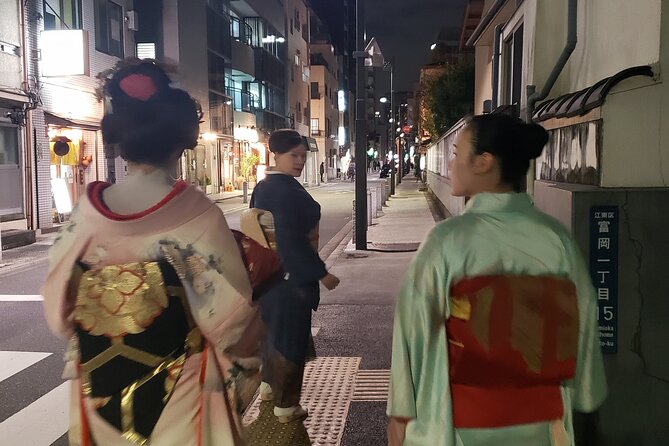
Sayuki is presented as a geisha guide, though the guide may be an apprentice geisha. That is an unusual feature, and it gives the outing a different tone from a regular flea-market walk. You are not simply browsing tables. You are being accompanied by someone connected to a traditional Japanese performance culture while learning about antiques, shrine markets, and local shopping customs.
The exact route beyond the opening shrine is not specified. The activity describes a visit to one of Tokyo’s outdoor shrine markets, while the highlights refer to the most interesting markets around some of Tokyo’s shrines. Treat the plan as a flexible market visit rather than a fixed tour of several named locations.
Because the meeting point is specific but the market schedule is not, I would confirm two things before setting out: that the market is being held that day and that the guide will meet you at Tomioka Hachiman Shrine. One person reported reaching the temple after crossing Tokyo and finding no market, then receiving no reply from the operator. Viator eventually handled the refund, but that is not a situation you want to build into a tightly planned morning.
What you can expect during the two-hour hunt
The listed itinerary gives the outing about two hours, while the general duration is approximately two to three hours. That makes it a compact morning activity rather than a full day of shopping.
At the market, you can expect to walk among outdoor stalls and browse antiques and collectibles. The tour is designed to help you spot traditional Japanese goods and choose items that work as gifts or personal mementos. The information does not name particular vendors or guarantee specific pieces, so the best finds will depend on the market operating that day and what sellers have brought.
The guide’s role is especially useful when you are unsure how to approach a purchase. Flea-market prices may not always be obvious, and a seller’s first figure may not be the final one. Sayuki can bargain for you and help you pay a fair price. That service is included, according to the tour details.
Still, bargaining does not mean every item will be cheap. The tour promises help negotiating, not a guaranteed discount or a specific saving. If you see something you love, decide your maximum price before the discussion begins. Your guide can handle the exchange, but you remain responsible for deciding what the object is worth to you.
The appeal of kimono, swords, and old collectibles
A kimono robe is one of the most practical items to look for if you want a traditional Japanese purchase. It can be displayed, worn, or used as textile art, though the information provided does not specify sizes, fabrics, condition, or typical prices.
Samurai swords are more complicated. They may be striking historical objects, but the tour does not state that swords will be available, authenticated, legally exportable, or suitable for air travel. If you see one, ask about its status and shipping requirements before paying. Do not assume that a dramatic-looking blade is an antique or that you can simply pack it in your luggage.
Geisha pillows and other traditional goods may also appear. The term can cover decorative or cultural objects rather than a standard modern pillow, and no exact product details are supplied. Ask Sayuki about the item’s use, age, and condition. That quick conversation can turn a confusing purchase into a meaningful one.
The same rule applies to all antiques: buy what you understand. A guide can explain and bargain, but the tour does not promise a formal valuation. For expensive items, take your time and ask whether the seller can provide any written information.
Same corner of Tokyo, a completely different plan:
- Mt Fuji and Hakone 1-Day Bus Tour Return by Bullet Train
★ 5.0 · 26,383 reviews - 1-Day Tokyo Bus Tour
★ 5.0 · 14,250 reviews - Tokyo: TOKYO SKYTREE® Admission ticket
★ 4.5 · 11,192 reviews - Tokyo: teamLab Planets TOKYO Digital Art Museum Entry Ticket
★ 4.6 · 9,779 reviews
Why a geisha guide changes the shopping experience
Many flea markets are easy enough to visit alone. The harder part is understanding what you are seeing, knowing how to approach a seller, and judging when a price is fair. A guide can reduce that uncertainty.
Sayuki’s role combines cultural explanation with practical shopping help. You can ask about Japanese arts and culture while moving from stall to stall, then have her bargain when you find something worth considering. That combination is the strongest reason to choose this tour over visiting a market independently.
The geisha connection is also unusual, but you should keep your expectations precise. The description says the guide is a geisha and may be an apprentice geisha. It does not promise a geisha performance, a private tea ceremony, or a formal lesson in geisha arts. The confirmed focus is antique-market shopping and cultural explanation.
For someone interested in traditional Japanese culture, that distinction is useful. You are booking a shopping walk led by a geisha guide, not a performance package. If your main goal is buying a specific antique, the guide’s market knowledge and bargaining assistance matter more than the title itself.
Price value for couples, families, and small groups
The listed price is $170.60 per group of up to four people. That makes the arithmetic quite different from a per-person tour. One person pays the full amount alone, but four people can split it to about $42.65 each before any purchases.
For a small group interested in unusual souvenirs, that can be fair value. You receive a private-feeling group arrangement in the sense that the price covers up to four participants, a guide, about two hours of market time, and bargaining help. The activity also includes a mobile ticket, which is convenient for a morning meet-up.
The value drops if you are not interested in shopping or if the market has few suitable goods. You are paying for access to the guide’s time and help, not for included merchandise. Market entry fees are not included, although the supplied details also say there are no fees to enter the market. In practical terms, plan to pay for your own purchases and confirm any incidental costs before booking.
The average booking lead time is 112 days. That suggests people often arrange this well ahead of their Tokyo visit, but it should not replace a direct check of the market date. A tour being available on the calendar does not guarantee that an antique market will be operating every week.
The biggest problem: a market that may not be there
This is the point I would take most seriously. One detailed complaint describes a guest arriving at the temple after traveling across Tokyo, only to find no antique market. The person tried to contact the operator without success and had to seek a refund through Viator support.
That account does not prove every departure fails. It does show a clear planning risk, especially because the experience is non-refundable and cannot be changed for any reason after booking. If the market is seasonal, monthly, or tied to particular shrine dates, a weekly listing can create false confidence.
Before paying, contact the provider and ask for confirmation in writing that:
- The market will be held on your exact date.
- The 9:00 am meeting at Tomioka Hachiman Shrine is still correct.
- Sayuki or the assigned guide will be present.
- The tour will proceed if the market has fewer stalls than expected.
Keep the reply. If you cannot get confirmation, this is a poor choice for a fixed Tokyo schedule. The fact that the listing accepts mobile tickets and provides a clear meeting point is helpful, but neither detail solves the market-calendar problem.
Walking, group size, and practical comfort
Wear comfortable walking shoes. This is an outdoor market visit, and you may spend much of the two-hour activity standing or moving between stalls. The exact amount of walking is not stated, so you should not assume a long city walk or a completely stationary shopping stop.
The maximum group size is 20 people. The price is for up to four, but the overall activity can have more participants. If you are hoping for constant one-on-one guidance, ask about the group arrangement before booking. Bargaining for several shoppers in a group of 20 may take time, particularly if many people want help with purchases.
The meeting point is near public transportation, which makes reaching Tomioka Hachiman Shrine easier. The tour ends at the starting point, so you do not need to arrange a separate pickup. Service animals are allowed, and most people can participate. Those are useful practical points, but the information does not give detailed accessibility measurements or a route description.
A mobile ticket is accepted. Confirmation is received at booking, though again, I would seek a separate confirmation that the market itself is operating.
Who should book this experience
I would consider this tour for a small group that wants unusual Japanese souvenirs and values help with local bargaining. It suits shoppers who are happy to browse rather than chase one guaranteed item. It also works for people who would enjoy hearing about Japanese arts and culture while looking through antiques.
The format may suit a family or group of friends because the $170.60 price covers up to four. A couple can also find the cost reasonable if both people plan to buy something or want the guide’s help judging and negotiating.
I would be cautious if you have only one free morning in Tokyo. A missed market could disrupt your plans, and the no-refund policy gives you little protection. I would also choose another activity if you need a guaranteed sword, kimono, or other specific object. The market’s stock is not promised.
How to make the most of the shopping
Go in with a spending limit and a short list of interests, not a demand for one exact antique. You might find a textile, decorative piece, or collectible that you had not considered. Ask about condition, age, intended use, and whether the item is suitable to take home.
Let Sayuki lead the negotiation, as bargaining is one of the main services included. You can still explain your budget and priorities before approaching a seller. That gives the guide a clear target and helps prevent a pleasant shopping trip from becoming an expensive impulse buy.
Bring enough time to inspect objects before agreeing to a price. The tour is short, and the group may have several purchases to discuss. If you need shipping or export information for a large, fragile, or potentially regulated item, ask before completing the sale.
Should you book the Traditional Antiques Market Tour Tokyo?
This is an appealing idea with one major weakness. The combination of a shrine market, unusual Japanese goods, Sayuki’s cultural perspective, and included bargaining help could produce a memorable morning at a reasonable group price.
But I would not book it blindly. The overall rating is 3.0 from four reviews, and the report of an absent market is specific and troubling. Because the activity is non-refundable, book only after confirming the exact market date and meeting arrangements directly with the provider. If you receive clear confirmation, this can suit a small group seeking authentic-feeling shopping rather than ordinary souvenirs. If you do not receive a reply, skip it and find a market with a published operating date.
FAQ
Where does the tour start?
It starts at Tomioka Hachiman Shrine, 1-chōme-20-3 Tomioka, Koto City, Tokyo 135-0047, Japan.
What time does the tour begin?
The start time is 9:00 am.
Where does the tour end?
The activity ends back at the meeting point.
How long does the tour last?
The itinerary gives the market visit about two hours. The general duration is approximately two to three hours.
How much does the tour cost?
The listed price is $170.60 per group of up to four people.
Are market admission fees included?
There are no fees to enter the market. The tour details also state that market entry fees are not included.
What kinds of items might I find?
Possible finds include antiques, collectibles, kimono robes, samurai swords, geisha pillows, and other traditional Japanese wares. Specific items are not guaranteed.
Will the guide bargain for me?
Yes. Bargaining on your behalf and helping you pay a fair price is included.
Is the tour refundable or changeable?
No. The activity is non-refundable and cannot be changed for any reason after booking.
New on our Tokyo list
- Sumi-e Experience in a relaxing green tea shop in Tokyo★ 5.0 · 3 reviews
- Tokyo : Kamikaze Street Drift Ride★ 5.0 · 3 reviews
- Private Zen Meditation in English in Shinjuku, Tokyo★ 5.0 · 3 reviews
- Onsen Spa in Tokyo and Asakusa Bar Hopping with Local Guide★ 5.0 · 3 reviews
- Easy for everyone! Now you can play handmade mini shamisen and show off to everyone! Musical instruments, sweets and live music★ 5.0 · 3 reviews
- Tokyo: Private Tsukiji Street Food & Sake with Local Guide★ 5.0 · 3 reviews
- Mt Fuji Exploration Tour with Free Japanese Kusa Mochi from Tokyo★ 4.5 · 3 reviews
- Tokyo Tsukiji Fish Market Walking and Exploring Hidden Gems Tour★ 5.0 · 3 reviews
Shopping Tours, compared.

Tokyo Tsukiji Fish Market Food and Culture Walking Tour
Read our review →
Tsukiji Fish Market Guided Tour and Sushi Making with Pro Chef
Read our review →Tsukiji Fish Market Food and Culture Walking Tour
Read our review →
Tsukiji Fish Market: Street Food & Culture Walking Tour
Read our review →
Tsukiji Fish Market Small-Group Food Walking Tour
Read our review →
Tsukiji Fish Market Sushi Making Class with Pro Chef
Read our review →Browse the lists this tour appears in