
Reviewed · SUSHI EXPERIENCES
【Private】Premium Fish filletting sushi making course
The unusual part of this Tokyo class comes first: you begin with a whole fish, not a tray of ready-cut toppings. A sushi master shows you professional knife work, then guides you through the careful preparation that gives Edomae sushi its character.
I like the private format, which gives you room to ask questions and work at your own pace. I also like the focus on ingredient quality and seasonality, from fish sourced through ports or Toyosu to properly seasoned rice and crisp vegetables. The main consideration is price: at $260.61 per person, this is a serious splurge for three hours, especially since drinks cost extra.
In This Review
- Key points at a glance
- Why this sushi class begins with a whole fish
- Meeting the sushi master at A-PULSE AZABU STUDIO
- The opening demonstration: watch the hands before using the knife
- Filleting whole fish with traditional knife work
- Marinating, curing, and aging the fish
- Cutting sushi neta with precision
- Shaping three kinds of nigiri by hand
- Photographing and eating what you made
- What the private format is worth at $260.61
- Who will enjoy this more than a basic sushi class
- Small practical details that affect your day
- Should you book this private fish-filleting course?
- FAQ
- Where does the sushi-making class begin?
- What time does the experience start?
- How long does the workshop last?
- Is this a private activity?
- Is instruction available in English?
- What food is included?
- Can I cancel for a full refund?
Key points at a glance
- Whole-fish preparation: You learn traditional filleting rather than simply assembling premade sushi.
- Private instruction: Only your group takes part, with one-on-one guidance from a sushi master.
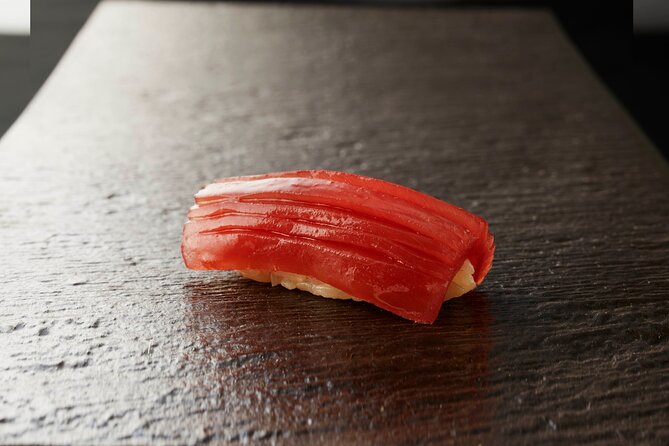
- Edomae methods: The class covers marinating, curing, aging, and precise slicing for sushi toppings.
- Three nigiri preparations: You shape sushi by hand and eat what you make.
- Bilingual support: Fully bilingual staff guide each step and help explain technique and tradition.
- Flexible focus: Rice preparation can be included, or the lesson can center on the skills you most want to practice.
Why this sushi class begins with a whole fish
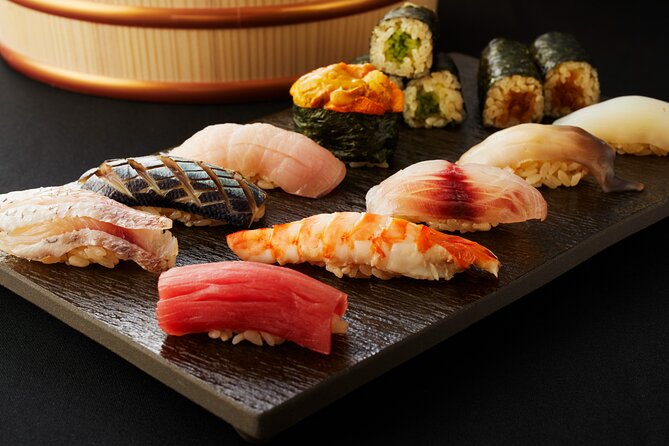
Many sushi workshops start with cooked rice, prepared toppings, and a simple lesson in rolling. This one takes you closer to the working methods behind Edomae sushi. You handle the fish from the start, learning how the knife changes the final texture, shape, and bite.
That difference matters. A slice of fish is not just a slice of fish in Japanese sushi. The angle, thickness, grain, and pressure of the knife all affect how the topping feels when you eat it. The course puts those choices in front of you instead of hiding them behind a finished ingredient.
You also learn what happens before the fish reaches the rice. Classic methods include marinating, curing, and aging. These techniques can bring out flavor, improve texture, and reflect the sushi tradition of preparing seafood with care rather than serving every piece completely raw and untouched.
The lesson is led by a sushi master with experience at a Michelin-starred restaurant. You are not simply following a printed recipe. You watch professional knife work and nigiri shaping at close range, then try the same movements with guidance.
More sushi mornings and classes:
- Sushi Making Tokyo Roll and Authentic Japanese Sushi Class
★ 5.0 · 3,971 reviews - Tokyo: Roll and Authentic Sushi Making Class in Asakusa
★ 4.9 · 1,957 reviews - Make Sushi and Create Unforgettable Memories in Tokyo
★ 5.0 · 1,413 reviews
Meeting the sushi master at A-PULSE AZABU STUDIO
The class begins at noon at A-PULSE AZABU STUDIO, at 3-chōme-8-18 Nishiazabu in Minato City. The studio is near public transportation, and the activity ends at the same location. Since the meeting point is in Nishiazabu, check the route before leaving your hotel and allow enough time to arrive without rushing.
The noon start works well for a substantial lunch, although it also fixes the experience firmly in the middle of your day. Plan around the full three hours, not just the eating time. You will need time for demonstrations, fish preparation, sushi shaping, photographs, and tasting.
This is a private activity, so only your group participates. That is one of the strongest reasons to consider it. In a larger class, you might spend much of the lesson watching someone else handle the knife or waiting for help. Here, the teaching can respond to your questions and skill level.
Fully bilingual staff guide the steps. That is useful for a technical lesson where a quick explanation about knife direction or rice pressure can save a great deal of confusion. The cultural side also benefits from clear communication, since the class connects food preparation with Japanese traditions and respect for ingredients.
The opening demonstration: watch the hands before using the knife
The first part centers on demonstration and basic preparation. You watch the sushi master work with the smooth, controlled movements that are difficult to understand from a video alone. The precision is part of the lesson: how the blade meets the fish, how the hand supports the ingredient, and how small changes in movement affect the cut.
Take this stage seriously. It can be tempting to hurry toward making nigiri, but the demonstration gives you a reference for every later step. Notice the pace, the angle of the knife, and the way the sushi master handles the fish without crushing it.
The instruction is designed for beginners as well as people who already cook. You do not need to arrive with professional knife skills. At the same time, someone who enjoys cooking will find plenty of fine points to study, especially in the relationship between cutting technique and texture.
Basic rice preparation may be part of the lesson, depending on how you customize the private course. The available information describes a possible focus on rice preparation, and one course account also refers to starting with rice and knife-handling basics. If rice is your priority, request that focus when arranging the class rather than assuming every group receives the same sequence.
Filleting whole fish with traditional knife work
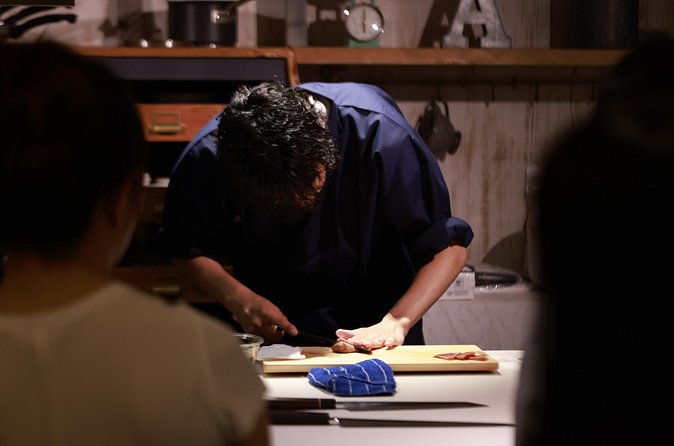
The centerpiece is filleting the fish. You work through the traditional process under close direction, learning how to separate the flesh cleanly and prepare it for later cuts. This is the part that sets the class apart from most introductory sushi sessions.
You should expect a hands-on task, not just a demonstration. The private setting gives the instructor time to correct your technique and explain why a particular cut matters. That can make the work feel slower than assembling sushi from prepared pieces, but the slower pace is also where the value lies.
Fish preparation requires patience. If your first cut is not perfect, the lesson can still be useful because you see how a professional manages the ingredient and how preparation affects the final topping. The goal is not to produce a restaurant counter full of identical pieces in a few minutes. It is to understand the steps that lead to a good piece of sushi.
The fish is sourced directly from ports or Toyosu, according to the provider, and the chef conditions it for the class. That helps explain the premium price. You are working with ingredients selected for a specific preparation rather than ordinary supermarket fish.
Still, ingredient quality alone does not make the experience good value for everyone. If you mainly want to eat excellent sushi, a fine sushi lunch may cost less and require less effort. This class is aimed at you if you want to understand how that quality is achieved.
A few more Tokyo bookings worth comparing
- Mt Fuji and Hakone 1-Day Bus Tour Return by Bullet Train
★ 5.0 · 26,383 reviews - 1-Day Tokyo Bus Tour
★ 5.0 · 14,250 reviews - Tokyo: TOKYO SKYTREE® Admission ticket
★ 4.5 · 11,192 reviews - Tokyo: teamLab Planets TOKYO Digital Art Museum Entry Ticket
★ 4.6 · 9,779 reviews
Marinating, curing, and aging the fish
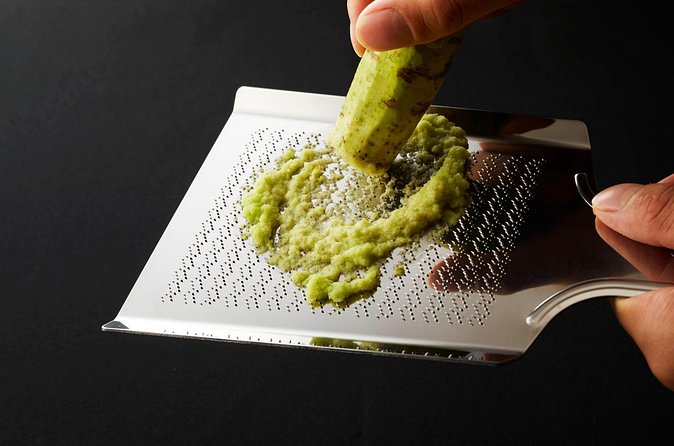
After filleting, the class covers classic methods used to prepare fish for Edomae sushi. Marinating, curing, and aging each change the ingredient in a different way. The lesson gives you a chance to connect those methods with flavor and texture instead of treating them as mysterious chef tricks.
This is also where the course takes on a wider food lesson. Careful preparation asks you to think about the fish as an ingredient that deserves respect. The class links attention to seasonality and sourcing with questions about sustainability and what we consume.
You may not perform every method from start to finish in the same way as a professional sushi kitchen. The exact balance can be customized, and the three-hour schedule has limits. But you should come away with a clearer sense of why sushi chefs make decisions before the fish reaches the cutting board.
The focus on seasonality is worth noting. The fish available for your class will shape the lesson, and sushi is not only about a fixed list of toppings. Ingredient balance changes with the fish, the rice, the seasoning, and the preparation method. That makes the experience more educational than a standard roll-making class.
Cutting sushi neta with precision
Once the fish is prepared, you learn to cut sushi neta, the topping slices used for nigiri. This is a small step with a large effect. A slice that is too thick can overwhelm the rice, while a slice that is too thin may lose its texture and flavor.
The instructor’s attention to detail is especially useful here. Online tutorials can show the general motion, but they cannot easily tell you why your angle is off or why a slice feels uneven. In a private class, you can ask about those small corrections immediately.
The rice and fish must work together. The class emphasizes ingredient balance, so you are not only learning to make attractive slices for photographs. You are learning how the topping should sit on the rice and how the finished piece should feel when eaten.
Fresh fish, properly seasoned rice, crisp vegetables, and carefully prepared toppings all contribute to the final result. The quality of the ingredients makes the practice more rewarding, but it may also raise expectations. If you are used to casual sushi, restaurant-grade ingredients can make your own results taste better than you expect, even when your cuts are not perfect.
Shaping three kinds of nigiri by hand
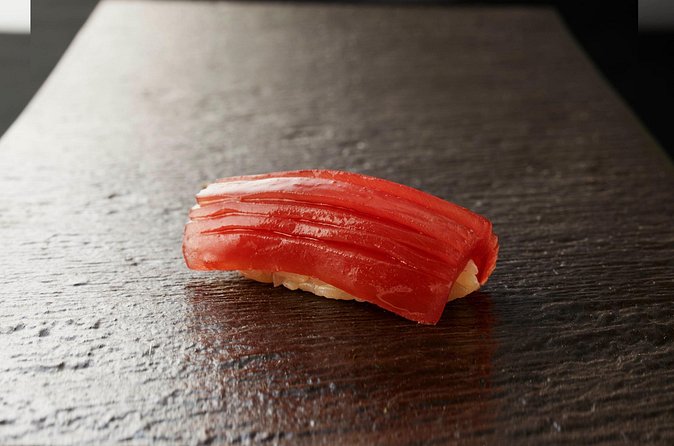
The final hands-on section focuses on nigiri. You form sushi by hand in three different preparations, following the sushi master’s example and corrections. This is likely to be the most immediately satisfying part because you can see the food take shape and eat it soon afterward.
Nigiri looks simple. It is not. The rice must hold together without becoming dense, and the fish must sit neatly on top without being squeezed or flattened. Hand pressure, timing, and balance all matter.
The lesson breaks that work into manageable steps. A complete beginner can follow the guidance, ask questions, and adjust the shape. You may not produce identical pieces every time, but you should understand why the better ones work.
This is also a good place to pay attention to the difference between appearance and texture. A piece can look elegant but feel too firm if you compress the rice. Another can look slightly rough yet offer a pleasant bite. The instructor can help you notice those differences in a way that a quick demonstration at home cannot.
The three preparations add variety without turning the class into a race through many unrelated recipes. You get repeated practice with the central nigiri technique while seeing how different fish treatments affect the finished sushi.
Photographing and eating what you made
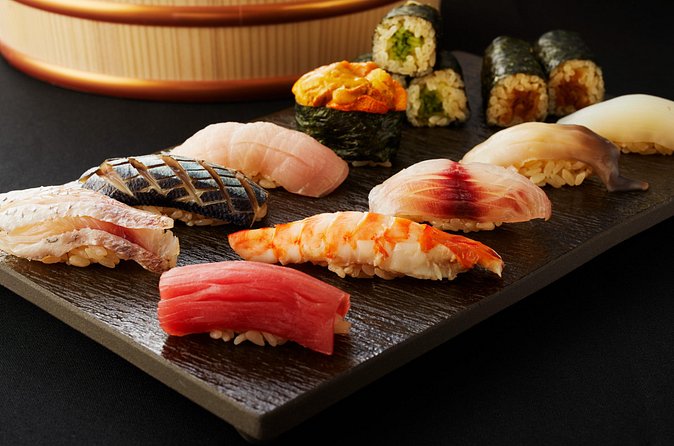
After the preparation and shaping, you photograph and eat your handmade sushi. The photographs give you a record of the experience, but the tasting is the real test. You can compare the fish treatments, rice balance, and texture with what you learned during the class.
This ending has a useful sense of payoff. You have handled the fish, watched it change through preparation, cut the toppings, and shaped the nigiri. Eating the finished pieces makes each earlier step easier to remember.
The meal is included in the price. Alcoholic drinks are not included and can be purchased for an additional charge. If you want to keep the cost under control, account for that before ordering anything beyond the included food.
The tasting also helps you judge the course honestly. You are not just being served sushi prepared by someone else. You eat the results of your own work, with the freshness and quality of the ingredients supporting the lesson. That is satisfying, though you should not expect every piece to look like it came from a Michelin-starred counter.
What the private format is worth at $260.61
At $260.61 per person, this is one of Tokyo’s premium food activities. The price covers about three hours, a private sushi master, bilingual instruction, fish preparation, ingredients, and the meal you make. It does not cover extra alcoholic drinks.
I see the price as reasonable for the right purpose, but not as a bargain. You are paying for personal instruction and access to a process that most sushi meals do not explain. The whole-fish work, knife demonstration, traditional preparation methods, and private attention make this different from a basic class where you roll sushi for an hour.
The value is strongest if you have a real interest in sushi technique, Japanese food traditions, or professional knife work. It is also a good choice for a special occasion when you want a private activity rather than a standard sightseeing stop.
The value is weaker if you want a quick, inexpensive meal or a broad cooking class with many dishes. Three hours devoted largely to one ingredient and nigiri technique is focused by design. That focus will please a sushi enthusiast and may feel narrow to someone who wants variety.
The average booking lead time is nine days. That is not a formal booking deadline, but it is a useful planning signal. If the date matters, reserve before your Tokyo schedule fills up, especially since the class is private and capacity is naturally limited.
Who will enjoy this more than a basic sushi class
I would choose this course for you if you fit one or more of these descriptions:
- You want to learn how sushi begins with fish preparation, not just how to place toppings on rice.
- You enjoy cooking and want direct correction from a professional.
- You are curious about Edomae methods such as curing, marinating, and aging.
- You prefer a private lesson where your group can ask questions freely.
- You want a food experience connected to Japanese culture and ingredient respect.
- You are comfortable paying a premium for a focused three-hour activity.
Beginners are welcome. The instruction is structured to build from basic knife handling and preparation toward nigiri, and the teaching can be adjusted to your interests. You do not need to arrive as an experienced cook.
Families or mixed-skill groups may also appreciate the private format, but the available information does not specify age rules or special arrangements for children. Ask the provider directly if that is important for your group.
Small practical details that affect your day
The class starts at 12:00 p.m. and ends back at A-PULSE AZABU STUDIO. Plan for approximately three hours, and do not schedule a tight appointment immediately afterward.
A mobile ticket is provided, and confirmation arrives at booking. The studio is near public transportation, but the address is worth saving carefully: 3-chōme-8-18 Nishiazabu, Minato City, Tokyo 106-0031.
The activity includes meals. Extra drinks, including alcohol, cost more. Cancellation is free if you cancel at least 24 hours before the local start time. Cancellations or changes made inside that window are not accepted for a refund.
Should you book this private fish-filleting course?
Book it if you want the craft behind sushi, not only the finished meal. The whole-fish filleting, traditional preparation methods, precise neta cuts, and three nigiri styles give you a serious look at the work that usually happens out of sight.
I would skip it if your main goal is inexpensive sushi, a short activity, or a wide menu of Japanese dishes. The price is high, and the lesson stays tightly focused on fish, rice, knife work, and nigiri.
For a sushi enthusiast, food-minded visitor, or private group celebrating a special day in Tokyo, this is a strong choice. You leave with more than photographs and lunch. You gain a practical understanding of why sushi depends so much on the treatment of the ingredient before it ever reaches the rice.
FAQ
Where does the sushi-making class begin?
The class begins at A-PULSE AZABU STUDIO, located at 3-chōme-8-18 Nishiazabu, Minato City, Tokyo 106-0031, Japan.
What time does the experience start?
The scheduled start time is 12:00 p.m.
How long does the workshop last?
The workshop lasts approximately three hours.
Is this a private activity?
Yes. Only your group participates in the activity.
Is instruction available in English?
Fully bilingual staff guide all steps of the experience.
What food is included?
Meals are included. Alcoholic drinks and other additional drinks are optional and cost extra.
Can I cancel for a full refund?
Yes, if you cancel at least 24 hours before the local start time. Cancellations or changes made less than 24 hours in advance are not accepted for a refund.
New on our Tokyo list
- Sumi-e Experience in a relaxing green tea shop in Tokyo★ 5.0 · 3 reviews
- Tokyo : Kamikaze Street Drift Ride★ 5.0 · 3 reviews
- Private Zen Meditation in English in Shinjuku, Tokyo★ 5.0 · 3 reviews
- Onsen Spa in Tokyo and Asakusa Bar Hopping with Local Guide★ 5.0 · 3 reviews
- Easy for everyone! Now you can play handmade mini shamisen and show off to everyone! Musical instruments, sweets and live music★ 5.0 · 3 reviews
- Mt Fuji Exploration Tour with Free Japanese Kusa Mochi from Tokyo★ 4.5 · 3 reviews
- Tokyo Tsukiji Fish Market Walking and Exploring Hidden Gems Tour★ 5.0 · 3 reviews
- Tokyo: Private Tsukiji Street Food & Sake with Local Guide★ 5.0 · 3 reviews
Sushi Experiences, compared.
Sushi Making Tokyo Roll and Authentic Japanese Sushi Class
Read our review →
Roll and Authentic Sushi Making Class in Asakusa
Read our review →
Make Sushi and Create Unforgettable Memories in Tokyo
Read our review →
Sushi Making Class in a Happi Coat near a Famous Spot
Read our review →
Tokyo Sushi Making Class in Tsukiji with Professional Chef
Read our review →
Tokyo Night Foodie Tour in Shinjuku – Seasonal Sushi, Wagyu Beef
Read our review →
Tsukiji Fish Market Guided Tour and Sushi Making with Pro Chef
Read our review →
Tsukiji Fish Market Sushi Making Class with Pro Chef
Read our review →Browse the lists this tour appears in