
Reviewed · JAPANESE CALLIGRAPHY CLASSES
Authentic Japanese calligraphy class in Tokyo! Kanji your name
Japanese calligraphy becomes far more interesting when you stop treating it as something to watch and start making the marks yourself. In this private 90-minute lesson with Maki, you learn how to sit, hold the brush, control the ink, and write a Japanese character or word on traditional paper.
I like two things right away. First, the class takes place in a local home near Yoga Station, not in a large tourist venue. Second, the one-to-one format gives Maki time to repeat a technique, correct your hand position, and explain the cultural meaning behind the writing.
The main consideration is location. Yoga is in Setagaya, away from Tokyo’s central sightseeing districts, so you’ll need to allow time to reach the meeting point. For many people, that quieter neighborhood setting is part of the appeal. For a packed sightseeing day, it may require some planning.
In This Review
- Key points to know before booking
- A quiet Tokyo setting near Yoga Station
- What happens during the 90-minute lesson
- Why the private format makes a difference
- Maki’s patient teaching style
- Understanding shodo beyond the souvenir
- The final piece and what you take home
- Price and what the $56 covers
- Who will enjoy this class most
- Timing the class with your Tokyo plans
- Booking, changes, and practical details
- Should you book Maki’s calligraphy class?
- FAQ
- How long does the Japanese calligraphy class last?
- How much does the experience cost?
- Where does the calligraphy class take place?
- Does the activity include transportation?
- Is the class private?
- Who teaches the class?
- What will I learn during the lesson?
- Are calligraphy supplies included?
- Can I take my calligraphy home?
- Can I cancel for a full refund?
Key points to know before booking
- Maki teaches in her own living room, giving the lesson a personal and informal setting.
- The class is private, so only your group takes part.
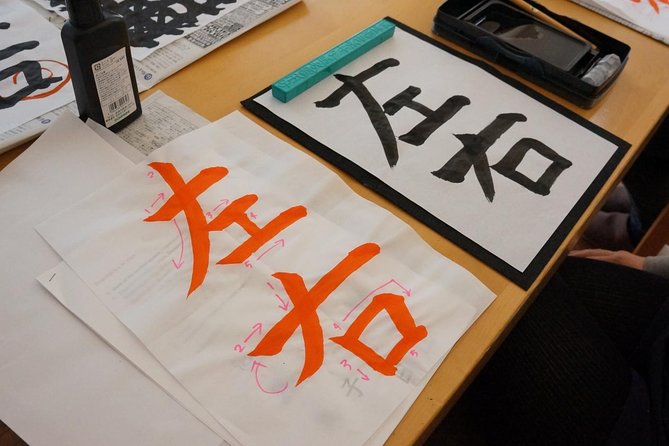
- You learn the basics of shodo, including writing systems, posture, brush grip, and tool use.
- English instruction is available, and Maki is praised for explaining each step clearly and patiently.
- Your finished work comes home with you on traditional paper, colored paper, or a fan.
- The $56 price covers the lesson and supplies, but private transportation is not included.
A quiet Tokyo setting near Yoga Station
The meeting point is at Yoga Station, listed at 2 Chome-39 Yoga in Setagaya City. The activity’s itinerary names Yoga Shrine as its stop, while the lesson itself takes place in a local resident’s home. That gives you two useful clues about the feel of the experience: it is rooted in a neighborhood rather than placed in a major central attraction, and it is designed around personal contact.
You finish back at the meeting point. There is no private vehicle included, so you make your own way to Yoga by public transportation. The location is near public transportation, but you should still check the route and allow a little extra time. Tokyo’s rail system is efficient, yet station exits and neighborhood addresses can take longer than expected when you are carrying luggage or navigating with a phone.
Yoga is a practical choice if you want to pair the class with time in Setagaya. It is less useful if you are trying to squeeze in several central Tokyo sights immediately before and after the lesson. I would treat the journey as part of the outing, not as a quick add-on between two major attractions.
More calligraphy tables:
- Tokyo: Calligraphy on Kanji Fan & Scroll with Drink
★ 5.0 · 210 reviews - Let’s experience calligraphy in YANAKA, Taito-ku, TOKYO !!
★ 5.0 · 127 reviews - Experience all of Japanese culture and Japanese food experience classes “origami, udon, Japanese food, green tea, calligraphy” in 4 hours
★ 5.0 · 105 reviews
What happens during the 90-minute lesson
The lesson begins with an introduction to Japanese writing systems and the tools used in calligraphy. This matters because Japanese writing is not one single alphabet. You learn that different systems have different roles, and the class gives you a basic frame for understanding what you are putting on the page.
Maki then explains the tools and how to use them. The supplied materials include calligraphy tools, practice paper, traditional paper, colored paper or a fan, and other consumable supplies. You do not need to arrive with brushes or paper of your own.
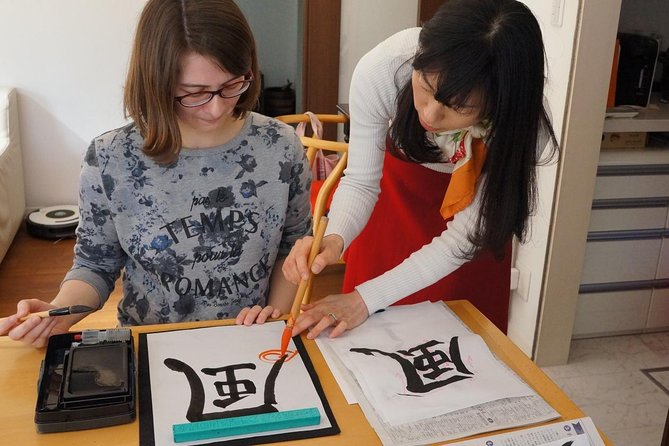
Posture comes next. It may sound minor, but posture affects the movement of your whole arm and the pressure of the brush. Maki also shows you how to hold the brush correctly. This is one of the most useful parts of the class because a brush does not behave like a ballpoint pen. The mark changes with pressure, angle, and speed.
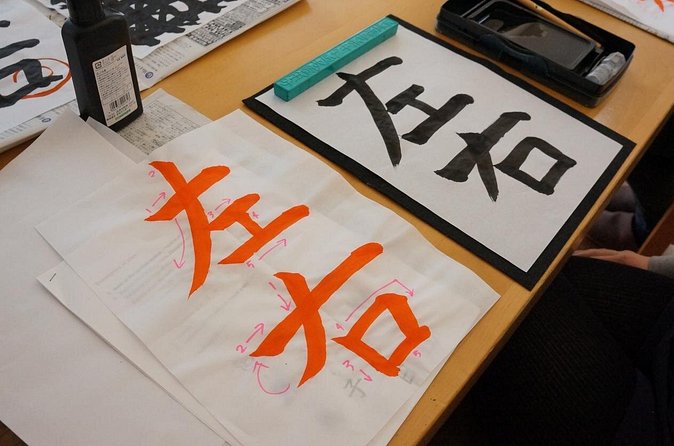
You get time to practice before making your final piece. That practice stage lets you make mistakes without worrying about spoiling the paper you will take home. Maki’s teaching style is careful and systematic, and she is willing to explain the same point more than once. That patience is especially helpful if you have never handled a calligraphy brush.
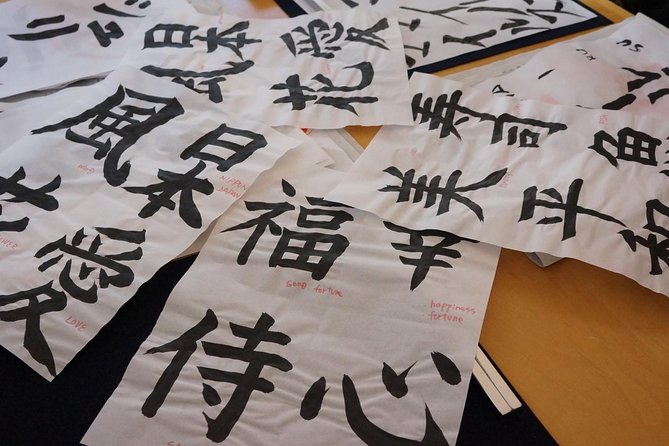
The final project is a word or character on Japanese traditional paper. You may also work on colored paper or a fan, depending on the materials prepared for the session. The focus is not simply on producing a souvenir. You learn enough technique to understand why the final stroke looks the way it does.
Why the private format makes a difference
A private class changes the pace. In a large group, the instructor has to move on even when someone is still struggling with the brush. Here, Maki can watch your technique and give instructions that fit your level.
That is useful for beginners, families, friends, and solo participants. You are not expected to arrive with artistic experience. The emphasis is on learning the process, not proving that you can already write beautifully.
The private arrangement also makes the cultural conversation more natural. Maki’s home setting gives the class a relaxed feel, and the activity is open to questions about Japanese culture as well as calligraphy. The session can feel more like a personal introduction than a formal demonstration.
There is one tradeoff. A private home lesson is intimate, but it is not a polished studio attraction with a full visitor center or a long list of set activities. If you want a broad museum-style presentation of Japanese art, this is not that. If you want direct instruction and a chance to ask questions, the format works well.
Maki’s patient teaching style
The instructor, Maki, is the key part of this experience. Her teaching is described as friendly, professional, careful, and highly personal. She speaks English well enough to explain the techniques and repeat instructions when needed.
That last point is important. Calligraphy has several small movements that are easy to miss when someone demonstrates them only once. Maki’s willingness to repeat an explanation means you can focus on the brush rather than pretending you understood everything immediately.
The class is also participatory. You are not just watching Maki write a perfect character while you sit back with a camera. You practice, ask questions, and work toward your own final piece. The atmosphere is meant to be encouraging rather than intimidating.
Small touches add to the welcome. Maki has prepared drinks for the class, and she has accommodated special occasions, including a birthday surprise. That does not mean every booking includes a custom celebration, but it shows the personal nature of the setting. If you are booking for a birthday, you can ask about arrangements before paying.
A few more Tokyo bookings worth comparing
- Sushi Making Tokyo Roll and Authentic Japanese Sushi Class
★ 5.0 · 3,971 reviews - Tokyo: Roll and Authentic Sushi Making Class in Asakusa
★ 4.9 · 1,957 reviews - Tokyo Shinjuku Chopsticks Making Class
★ 5.0 · 1,763 reviews - Tokyo: Sushi Making Class in a Happi Coat near a Famous Spot
★ 4.9 · 1,377 reviews
Understanding shodo beyond the souvenir
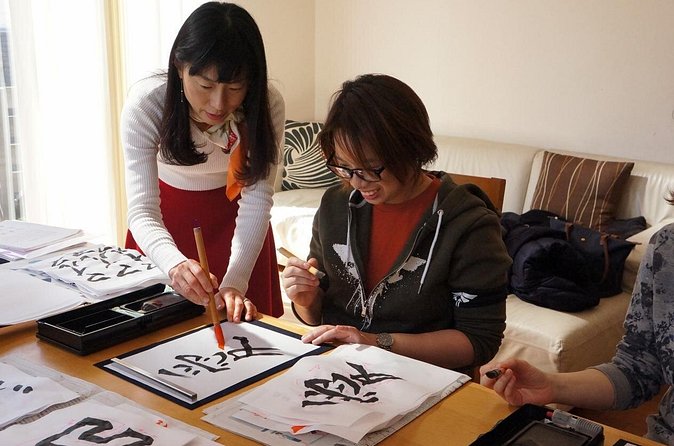
The word shodo is commonly used for Japanese calligraphy, but the activity is more than decorative handwriting. Brush calligraphy depends on movement, balance, spacing, and the relationship between empty paper and dark ink.
A beginner often starts by concentrating on individual strokes. Maki’s instruction helps you notice how the full character is built. You learn to think about posture and brush control before worrying about the finished appearance.
That makes the class valuable even if you do not consider yourself artistic. You are learning a traditional practice through physical action. The brush forces you to slow down and pay attention to each mark.
You also gain a little context for signs, artwork, and written characters you may see around Japan. The class does not promise advanced language study, and it is not a full Japanese lesson. It gives you a practical introduction to writing systems and the tools used in shodo.
The final piece and what you take home
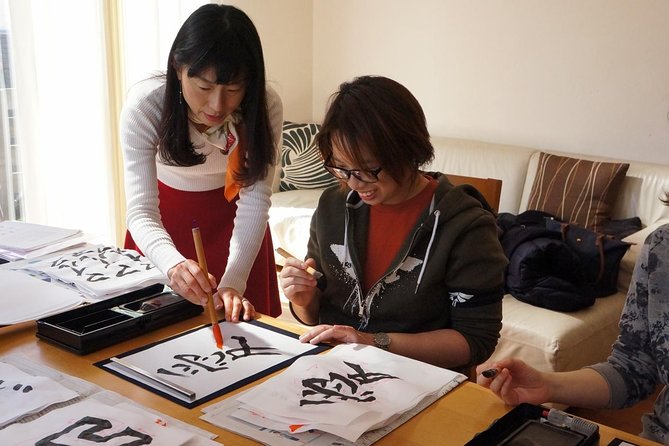
The most tangible part of the experience is your finished work. You write a word or character on traditional Japanese paper, with colored paper or a fan also available among the included materials.
This is a better souvenir than a mass-produced item because you make it during the lesson. It may not look like Maki’s work, and that is perfectly fine. The value is in seeing your brush marks improve from the practice sheets to the final paper.
You take your creations home with you. If you are flying soon after the class, handle the paper with care and think about how you will pack it. The activity information confirms that the finished work is yours to take, but it does not specify protective packaging or a mailing service.
For families, the final piece gives children something concrete to remember. For couples or friends, it creates a shared activity without requiring anyone to read Japanese in advance. For solo visitors, it provides a personal keepsake connected to a real encounter in Tokyo.
Price and what the $56 covers
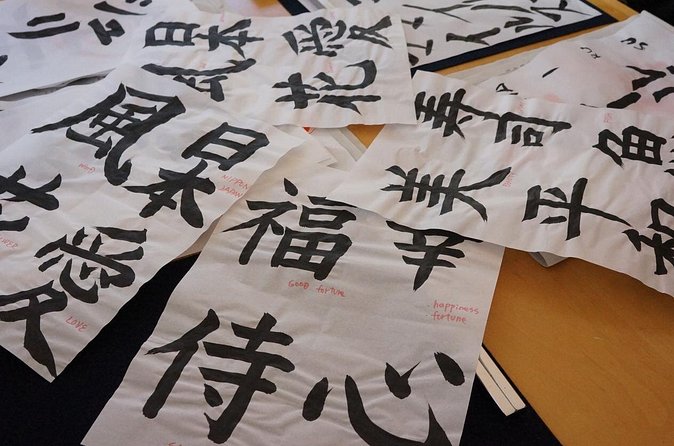
At $56, the price is reasonable for a private 90-minute activity, especially because the fee includes the experience, calligraphy tools, colored paper or a fan, practice paper, consumable supplies, and consumption tax.
You are paying for instruction as much as materials. A brush, ink, paper, and a finished piece have some value, but the main benefit is Maki’s time and individual attention. A cheaper group demonstration might give you fewer chances to practice or ask questions.
The price does not include private transportation. You pay for your own train or other public transit to Yoga Station. Since the class is near public transportation, this should be manageable, but it is still an extra cost and planning step.
I would book this if you value a small, hands-on cultural activity more than a large attraction with many exhibits. If you are only looking for the least expensive way to try a brush, the price may seem high. If you want patient instruction, supplies provided, and a finished work to bring home, the value is stronger.
Who will enjoy this class most
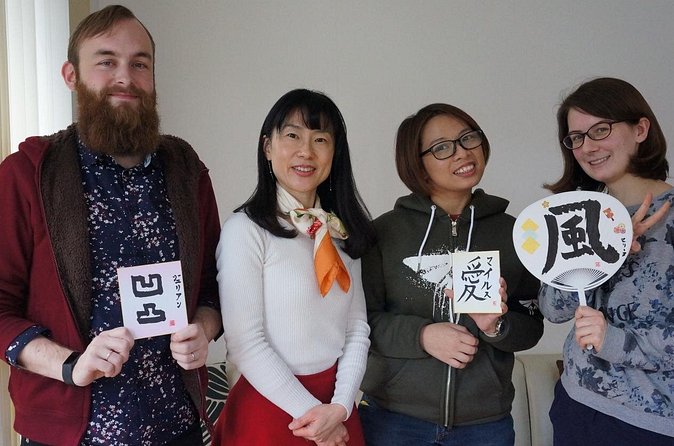
This experience fits several types of visitors:
- First-time calligraphy students who want clear instruction rather than a self-guided activity.
- Couples and friends looking for a shared cultural experience.
- Families wanting an activity that is practical and creative.
- Solo visitors who prefer a private lesson and personal conversation.
- People celebrating an occasion, since Maki has prepared something special for a birthday booking.
- Visitors interested in Japanese culture who want more than a quick photo or souvenir purchase.
It is less suitable if you need a central Tokyo location, dislike indoor home settings, or want a long, full-day program. The session lasts about an hour and a half, so it is focused and manageable rather than an all-day cultural course.
Most people can participate, but the supplied information does not give detailed accessibility notes. If you have specific mobility, seating, or language needs, ask before booking.
Timing the class with your Tokyo plans
Because the class starts and ends at the same meeting point, you can plan your day around Yoga Station. The exact length is approximately 90 minutes, but you should allow additional time for the journey and for finding the correct address.
I would avoid placing this appointment immediately before a timed attraction on the other side of Tokyo. A little breathing room makes the day easier, especially if you want to stay and talk with Maki or take care with your finished work.
The class can also work well on a slower day. After several days of temples, department stores, and crowded transport hubs, a quiet neighborhood lesson gives you a different view of Tokyo. It is not a major sightseeing stop, but it offers contact with local life in a way a large attraction cannot.
Booking, changes, and practical details
You receive confirmation at the time of booking. The activity is private, so only your own group participates. That makes it easy to book as a solo visitor, pair, family, or small group without sharing the lesson with strangers.
Free cancellation is available if you cancel at least 24 hours before the local start time. Cancellations made less than 24 hours before the start are not refunded, and changes inside that period are not accepted.
Bring a little patience and a willingness to practice. The class is not about producing flawless calligraphy on the first attempt. It is about learning the basic tools and movements, then creating something that reflects your own effort.
Should you book Maki’s calligraphy class?
Book it if you want personal teaching, a local home setting, and a handmade souvenir rather than a quick cultural performance. Maki’s patient English instruction and private format make the class approachable even if Japanese writing is completely new to you.
The main question is not the quality of the lesson. The available information points strongly toward careful teaching, friendly hosting, and a well-organized session. The real question is whether you want to travel to Yoga for a 90-minute activity.
For $56, I think the class offers good value for visitors who enjoy making something and learning how it works. It is especially appealing for families, couples, solo visitors, and anyone who wants a quieter side of Tokyo. If your schedule is already crowded or you need a central location, choose another activity. If you can spare the time, this is a thoughtful way to bring home more than a souvenir: you bring home a skill, a story, and your own piece of Japanese calligraphy.
FAQ
How long does the Japanese calligraphy class last?
The activity lasts approximately 1 hour and 30 minutes.
How much does the experience cost?
The listed price is $56.
Where does the calligraphy class take place?
The meeting point is at Yōga Station, at 2 Chome-39 Yoga, Setagaya City, Tokyo 158-0097, Japan. The lesson takes place in a local resident’s home.
Does the activity include transportation?
No. Private transportation is not included. The meeting point is near public transportation.
Is the class private?
Yes. This is a private activity, and only your group participates.
Who teaches the class?
The instructor is Maki from MAKI Japanese Calligraphy.
What will I learn during the lesson?
You will learn about Japanese writing systems, calligraphy tools, correct posture, and how to hold the brush. You will also practice writing a word or character on traditional Japanese paper.
Are calligraphy supplies included?
Yes. The fee includes calligraphy tools, colored paper or a fan, practice paper, consumable supplies, and consumption tax.
Can I take my calligraphy home?
Yes. You can take your calligraphy creations home with you.
Can I cancel for a full refund?
Yes, if you cancel at least 24 hours before the experience start time. Cancellations made less than 24 hours before the start are not refunded, and changes during that period are not accepted.
New on our Tokyo list
- Sumi-e Experience in a relaxing green tea shop in Tokyo★ 5.0 · 3 reviews
- Tokyo : Kamikaze Street Drift Ride★ 5.0 · 3 reviews
- Private Zen Meditation in English in Shinjuku, Tokyo★ 5.0 · 3 reviews
- Onsen Spa in Tokyo and Asakusa Bar Hopping with Local Guide★ 5.0 · 3 reviews
- Easy for everyone! Now you can play handmade mini shamisen and show off to everyone! Musical instruments, sweets and live music★ 5.0 · 3 reviews
- Tokyo: Private Tsukiji Street Food & Sake with Local Guide★ 5.0 · 3 reviews
- Mt Fuji Exploration Tour with Free Japanese Kusa Mochi from Tokyo★ 4.5 · 3 reviews
- Tokyo Tsukiji Fish Market Walking and Exploring Hidden Gems Tour★ 5.0 · 3 reviews
Japanese Calligraphy Classes, compared.
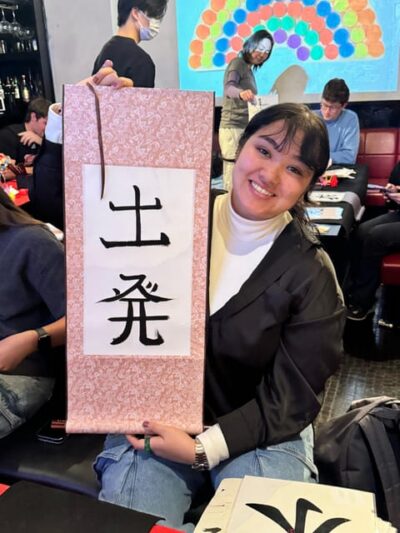
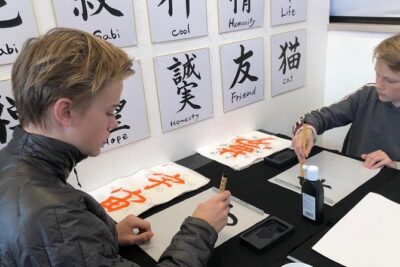
Let’s experience calligraphy in YANAKA, Taito-ku, TOKYO !!
Read our review →
Calligraphy Workshop & Original T-Shirt Creation
Read our review →
Calligraphy Workshop & Original T-Shirt Creation
Read our review →
Calligraphy &Make your original folding fan in Asakusa
Read our review →
Tokyo Asakusa:Calligraphy & Make T-shirt Activity
Read our review →Browse the lists this tour appears in