
Reviewed · JAPANESE CULTURE WORKSHOPS
Bonsai Tour & Experience at the Most Sacred City for Bonsai in JP
The best part of this experience is that it takes you beyond simply looking at bonsai. In Bonsai-cho, a district created by bonsai gardeners after the Great Kanto Earthquake, you visit a working garden before trying pruning and shaping yourself. Guide Jun leads the walk and explains both the art and the patience behind it.
I like the small maximum of 10 people, which leaves room for questions. I also like the practical second half, where you handle bonsai tools instead of merely taking photos. The main consideration is the location: you must reach Toro Station in Saitama, outside central Tokyo, and the cafe session requires a separate food or drink purchase.
In This Review
- Key points to know before booking
- Why Bonsai-cho is worth the trip from Tokyo
- Meeting Jun at Toro Station
- Seeing bonsai in an outdoor garden
- Learning pruning, wiring, and shaping
- What the $55.52 price gets you
- A good fit for beginners and serious bonsai fans
- How to prepare for the morning
- What makes Jun’s guiding useful
- The small drawbacks to consider
- Should you book this bonsai experience?
- FAQ
- Where does the bonsai tour begin?
- How long does the experience last?
- Is the experience suitable for beginners?
- What is included in the price?
- Do I need to pay anything during the activity?
- What are the age and group-size rules?
Key points to know before booking
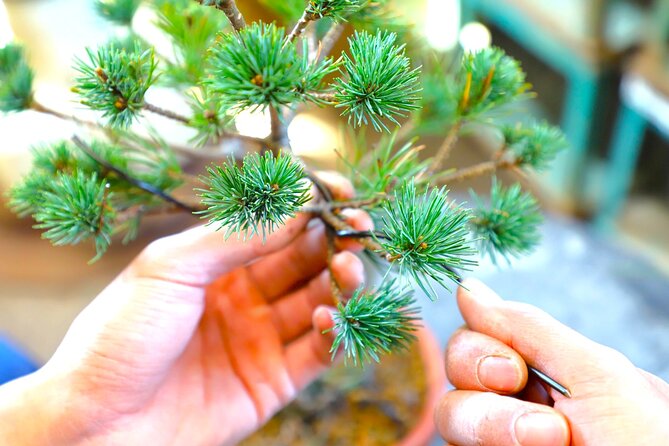
- Bonsai-cho is the setting: Visit one of Japan’s best-known bonsai districts, created about 100 years ago by established gardeners.
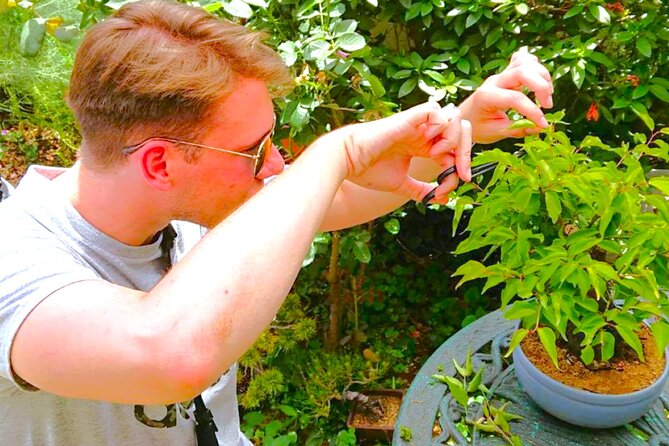
- Jun provides the instruction: He explains bonsai history, pruning, wiring, and shaping, with time for questions about Japan and bonsai.
- You get hands-on practice: The class covers important maintenance techniques rather than stopping at sightseeing.
- The group is capped at 10: Some departures may be much smaller, giving you more time with the guide.
- Plan for two extra costs: Cafe orders begin at about 450 yen, and Bonsai Art Museum admission costs 310 yen if it is part of your visit.
- The tour takes about 2.5 hours: It begins at 10:00 a.m. and ends back at Toro Station.
Why Bonsai-cho is worth the trip from Tokyo
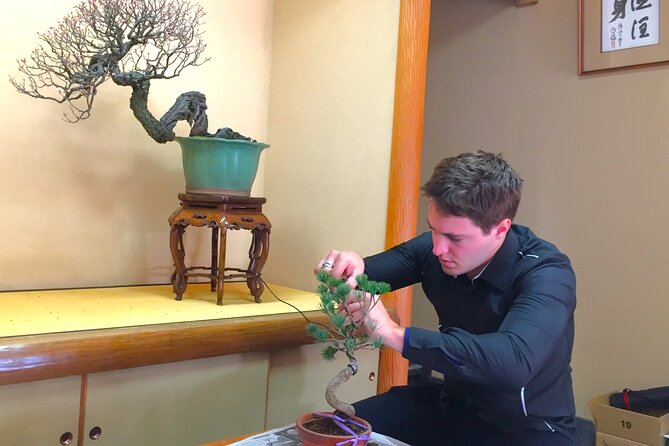
Bonsai can look simple from a distance: a small tree in a pot, carefully trimmed and placed on a stand. In practice, it combines gardening, design, observation, and long-term care. A bonsai is not simply a naturally tiny tree. It is a living plant guided over time into an artistic form.
That makes Bonsai-cho a fitting place to learn. The district was founded after the Great Kanto Earthquake by bonsai gardeners who moved their work to the area. Today, the neighborhood is surrounded by greenery and includes five long-established bonsai gardens.
You do not get this setting in a quick department-store demonstration. Here, the visit connects the finished trees with the places where bonsai are grown, pruned, displayed, and cared for. I find that useful because it helps you understand bonsai as an ongoing practice, not a decorative object that appears finished once it reaches a shop.
The trip does require planning. The meeting point is Toro Station in Kita Ward, Saitama, rather than a central Tokyo landmark. The tour begins at 10:00 a.m., so check your route carefully and allow enough time to reach the station without rushing. The activity ends at the same meeting point, which makes the return journey easier to organize.
More craft workshops in Tokyo:
- Tokyo Shinjuku Chopsticks Making Class
★ 5.0 · 1,763 reviews - Kintsugi Experience: Art of Golden Joinery in Tokyo
★ 5.0 · 467 reviews - Authentic Pure Gold Kintsugi Workshop with Master Taku in Tokyo
★ 5.0 · 217 reviews
Meeting Jun at Toro Station
Your guide meets you at Toro Station and leads you toward the bonsai area. Jun has received especially strong praise for his clear explanations and patient answers. He can discuss the neighborhood, the background of bonsai, and general questions about Japan, so you do not need to arrive with specialist knowledge.
That personal contact matters here. Bonsai has its own vocabulary and techniques, and a good explanation changes what you notice. Jun can point out why a tree has been shaped in a certain way, how branches are trimmed, and what makes a piece look balanced.
The group limit is 10 people. That is small enough for a hands-on lesson to remain practical, especially when everyone needs to see the demonstration and use tools. The experience may be even more personal on a quiet date. One guest described having the entire tour alone, while another attended with her mother and had plenty of time for questions.
The minimum age is 13. Anyone under 18 must come with an adult. People who are unwell or under the influence of alcohol cannot take part, and the stated policy does not provide a refund in that situation.
Seeing bonsai in an outdoor garden
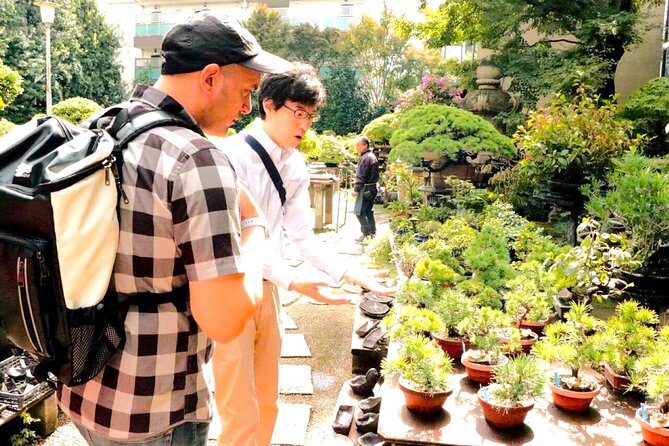
The first main part is the sightseeing visit to a bonsai garden. You see hundreds of carefully tended trees and receive commentary from Jun as you move through the space. The appeal is not just the number of trees. It is the chance to compare different shapes, sizes, branch patterns, and stages of development.
The garden visit gives the practical lesson some needed context. Before you pick up pruning tools, you can see what careful shaping may produce over time. The best specimens are treated as living works of art, but they still need regular maintenance, attention to form, and sound plant care.
You may visit more than one garden during the outing. The supplied experience details describe an outdoor garden visit, while several accounts refer to visits to two bonsai gardens. The exact garden sequence can depend on the day, so it is best to view this as a guided visit through the district rather than a fixed museum-style route.
A possible extra stop is the Bonsai Art Museum. Admission is not included and costs 310 yen, about 2 US dollars. Since the stated inclusions do not cover that fee, bring a little extra if you want to enter. Also note that anyone who wants to enter a shop without taking part in the class must arrange and pay an additional fee in advance.
The garden portion is better suited to slow looking than to a rushed checklist. You will get more from it if you pay attention to the guide’s explanation of structure and care, rather than treating the trees as a series of photo subjects.
Learning pruning, wiring, and shaping
The second session is the heart of the experience. You go to a cafe and practice key bonsai techniques, including pruning and shaping. Jun explains how to handle wire cutters and trimming tools, then helps you apply those methods to a bonsai tree.
This is valuable because bonsai care can seem mysterious when you only see the finished result. Pruning is not random cutting. The aim is to guide the tree’s form while respecting its growth. Shaping requires patience and a careful eye, and the hands-on work gives you a better sense of that balance.
The activity includes the instructor and use of bonsai tools. You do not need to pay a separate tool rental fee. You do, however, need to order something at the cafe, with items beginning at about 450 yen, or roughly 3 US dollars. That purchase is a condition of using the cafe for the practical session, not part of the tour price.
The cafe setting gives the lesson an informal feel. It is not presented as a formal horticulture school, and you should not expect to leave with professional-level bonsai training after one session. You will, however, gain a clear introduction to the basic techniques and a better idea of how much care goes into one tree.
If you enjoy working with your hands, this portion makes the price easier to justify. If you only want to see famous bonsai and avoid handling tools, the garden visit alone may be the more appealing part.
A few more Tokyo bookings worth comparing
- Mt Fuji and Hakone 1-Day Bus Tour Return by Bullet Train
★ 5.0 · 26,383 reviews - 1-Day Tokyo Bus Tour
★ 5.0 · 14,250 reviews - Tokyo: TOKYO SKYTREE® Admission ticket
★ 4.5 · 11,192 reviews - Tokyo: teamLab Planets TOKYO Digital Art Museum Entry Ticket
★ 4.6 · 9,779 reviews
What the $55.52 price gets you
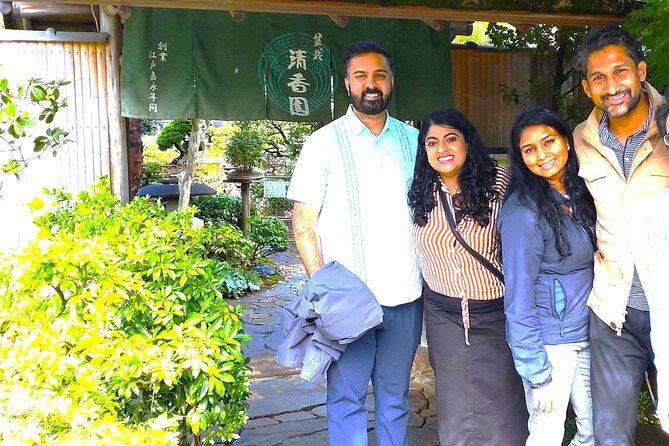
At $55.52 per person, this is not the cheapest short activity in the Tokyo area. You are also responsible for getting to Toro Station, buying a cafe item, and paying 310 yen for the museum if you choose to visit it.
The value comes from the combination of access, instruction, and scale. The fee includes a dedicated instructor, tool use, and consumption tax. You are not paying only for a walk through a public neighborhood. You are paying for a guided visit to bonsai gardens and a practical lesson with time for questions.
I think the price works best for three kinds of people. First, bonsai enthusiasts get access to an important district and a chance to discuss details with someone who works closely with the subject. Second, beginners get enough explanation to understand what they are seeing. Third, curious visitors who want an activity with a local focus get something more distinctive than a standard city tour.
The value is less clear if your schedule is already packed with central Tokyo sights. The journey to Saitama adds time, and the experience lasts around two and a half hours before you account for transport. This is a specialist outing, not a general introduction to Tokyo.
A good fit for beginners and serious bonsai fans
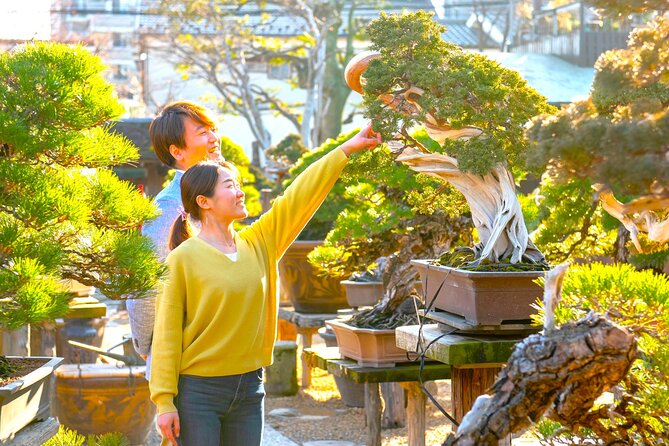
You do not need previous bonsai experience. The activity begins with background and guided observation, then moves into simple techniques. That gradual structure makes it approachable if you have never pruned or shaped a bonsai before.
At the same time, the lesson is not limited to first-timers. A person who already owns bonsai can use the time to ask about trimming, wire cutting, or shaping choices. The guide’s willingness to answer detailed questions is one of the strongest reasons to choose a small group instead of a large demonstration.
Families should note the age rules. Children under 13 cannot participate, and those under 18 need an adult companion. The class is also a better fit for people who can focus during a walking visit and practical session. It is not described as a children’s activity or a casual drop-in workshop.
I would also recommend it to couples or friends with different levels of interest. One person can enjoy the cultural background and the garden visit, while the other gets a real introduction to bonsai care. Since the guide can discuss Japan more broadly, the experience does not depend on already being a bonsai specialist.
How to prepare for the morning
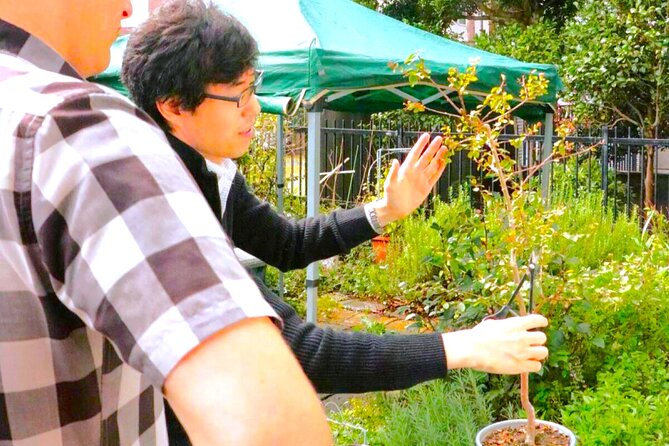
The start time is 10:00 a.m. at Toro Station. Your mobile ticket is accepted, and booking confirmation is provided at the time of reservation. The meeting point is near public transportation, but you still need to arrange your own trip from Tokyo.
Wear something suitable for a walk and a practical activity. The supplied details do not specify a dress code, but you will be moving through a garden and handling tools, so comfortable clothing makes sense. Keep your morning flexible enough to reach the station early.
Bring payment for the cafe. The minimum order is about 450 yen, and staying for a meal after the class is possible if you want to continue enjoying the cafe. The cafe has been described as offering inexpensive food, but that extra time is optional and not part of the formal tour.
If the museum matters to you, set aside another 310 yen. Admission is not included in the tour price, and the route may involve a garden or museum visit depending on the plan for the day. Asking about the museum when you meet the guide is sensible.
The cancellation terms are strict. The activity is non-refundable and cannot be changed for any reason, so check your date, age requirements, meeting point, and transport plan before paying.
What makes Jun’s guiding useful
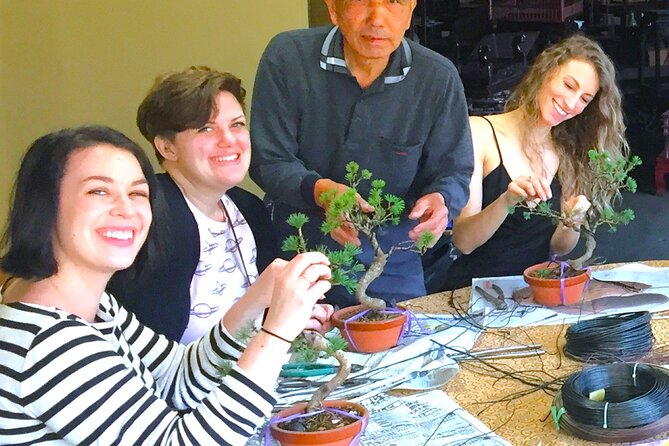
Jun’s role is more than showing you where the bonsai gardens are. He provides the explanations that turn a collection of small trees into a lesson in design and care. He covers bonsai history and explains practical work such as pruning and wire cutting.
The most useful part of his approach is the chance to ask questions as you go. If you are with a parent or companion who wants to know more about bonsai or Japan, the small group format gives those questions room. That can make the experience feel tailored rather than scripted.
The instruction also links the two halves of the outing. At the garden, you see mature examples. At the cafe, you learn how regular decisions help shape a tree. Without that connection, the garden could feel like sightseeing and the class could feel like a craft session. Together, they show both the result and some of the work behind it.
Still, keep your expectations realistic. A two-and-a-half-hour activity cannot cover every school of bonsai, every species, or advanced long-term cultivation. Think of it as a focused introduction with access to a guide, not a full professional course.
The small drawbacks to consider
The distance from central Tokyo is the clearest drawback. Bonsai-cho is a special-purpose destination, and reaching Toro Station takes more planning than meeting in a central neighborhood. If you have only a short stay in Tokyo, compare the time needed for the trip with your other priorities.
The extra payments are modest but easy to overlook. The advertised price does not cover the cafe order or the 310-yen Bonsai Art Museum admission. Neither cost is large, but your total will be higher than the headline amount if you take part in both.
The exact garden route may also vary. The experience promises an outdoor bonsai garden and detailed commentary, while some outings include two gardens. You should expect a visit to the bonsai district and its nurseries, but not assume every date follows an identical sequence.
Finally, the non-refundable policy calls for care. This is not a flexible booking for a day when your plans may change. Confirm your schedule first, especially because the activity is outside central Tokyo and starts at a fixed time.
Should you book this bonsai experience?
Book it if you want to see bonsai where the art has a real local home, meet a guide who can answer questions, and try the basic techniques yourself. The garden visit gives you the setting, while the cafe lesson gives you a practical connection to what you have seen.
I especially recommend it for bonsai fans, curious beginners, and visitors who prefer a small cultural activity over a large sightseeing group. The strongest features are Jun’s personal instruction, the maximum group size of 10, and the chance to handle tools.
Skip it if you want a central Tokyo activity, dislike practical workshops, or cannot commit to the strict booking terms. For everyone else, the $55.52 fee is reasonable once you count the guide, garden visits, equipment, and personal attention. Just budget for the cafe and possible museum admission, and make the trip to Toro Station part of the plan.
FAQ
Where does the bonsai tour begin?
The activity begins at Toro Station, located at 1 Chome Torocho, Kita Ward, Saitama, at 10:00 a.m. It ends back at the same meeting point.
How long does the experience last?
The activity lasts approximately 2 hours and 30 minutes.
Is the experience suitable for beginners?
Yes. The tour explains bonsai history and basic care before giving you hands-on practice with pruning and shaping techniques.
What is included in the price?
The price includes the instructor, use of bonsai tools, and consumption tax.
Do I need to pay anything during the activity?
You must order something at the cafe, with prices beginning at about 450 yen. Bonsai Art Museum admission is also separate and costs 310 yen if you choose to enter.
What are the age and group-size rules?
Participants must be at least 13 years old. Anyone under 18 must be accompanied by an adult. The group can include a maximum of 10 people.
New on our Tokyo list
- Sumi-e Experience in a relaxing green tea shop in Tokyo★ 5.0 · 3 reviews
- Tokyo : Kamikaze Street Drift Ride★ 5.0 · 3 reviews
- Private Zen Meditation in English in Shinjuku, Tokyo★ 5.0 · 3 reviews
- Onsen Spa in Tokyo and Asakusa Bar Hopping with Local Guide★ 5.0 · 3 reviews
- Easy for everyone! Now you can play handmade mini shamisen and show off to everyone! Musical instruments, sweets and live music★ 5.0 · 3 reviews
- Tokyo: Private Tsukiji Street Food & Sake with Local Guide★ 5.0 · 3 reviews
- Mt Fuji Exploration Tour with Free Japanese Kusa Mochi from Tokyo★ 4.5 · 3 reviews
- Tokyo Tsukiji Fish Market Walking and Exploring Hidden Gems Tour★ 5.0 · 3 reviews
Japanese Culture Workshops, compared.
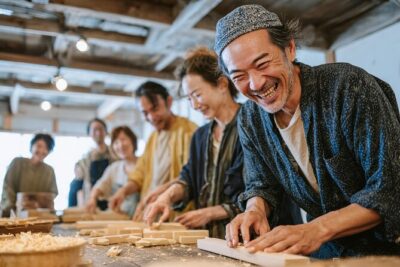
Kintsugi Experience: Art of Golden Joinery in Tokyo
Read our review →
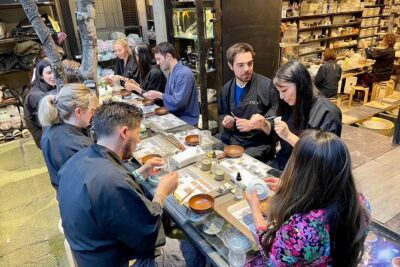
Authentic Pure Gold Kintsugi Workshop with Master Taku in Tokyo
Read our review →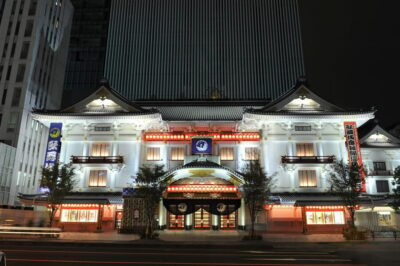
KABUKI Show at Kabukiza Theatre Admission Ticket
Read our review →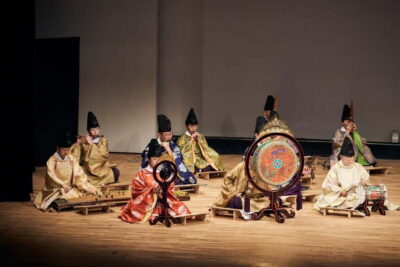
KABUKI, BUNRAKU, etc. presented by National Theatre
Read our review →
Kintsugi Workshop Class in Shibuya, Tokyo with mon cadeau
Read our review →
Browse the lists this tour appears in