
Reviewed · JAPANESE CULTURE WORKSHOPS
Tokyo: KABUKI, BUNRAKU, etc. presented by National Theatre
The best reason to book this performance is simple: you get to see Japanese classical theater as it is performed in Japan, not a shortened tourist imitation. Kabuki brings acting, music, dance, costumes, and stage drama. Bunraku joins a narrator, shamisen player, and puppeteers in one tightly timed performance. Hogaku focuses on traditional Japanese music.
I like two things in particular: the English audio guide gives you the basic story and context, and the performers work without loudspeakers, so you hear the actors, narrator, shamisen, and music directly. The main caution is time and pace. Some programs run close to three hours, and even with English help, the language, slow sections, and unfamiliar conventions can test your patience.
In This Review
- Key points to know before booking
- What this National Theatre Japan performance really offers
- Kabuki: bold drama, music, and controlled movement
- Bunraku: three artists working as one
- Hogaku: traditional music built around the sound of snow
- The English audio guide helps, but it is not a translation
- A closer look at the timing and theater rhythm
- Getting to KAAT in Yokohama for the Bunraku option
- Seating, access, and theater manners
- Who will get the most from this performance
- Is $37 a fair price?
- Should you book it?
- FAQ
- Is the performance held at the National Theatre in Hanzomon?
- How do I reach KAAT Kanagawa Arts Theatre?
- Is an English translation included?
- How long does the performance last?
- Can I choose my seat?
- Is the theater wheelchair accessible?
Key points to know before booking
- Bunraku in Yokohama: This option is held at KAAT Kanagawa Arts Theatre, not at the National Theatre in Tokyo.
- English help is included: Kabuki and Bunraku use an English audio guide. Hogaku provides a free English explanation sheet.
- The guide is a summary: It explains the main action and ideas, but it is not a word-for-word translation.
- Three art forms may appear on different dates: Check the option title carefully before paying.
- Expect 75 minutes to three hours: The running time depends on the program, with some shows including intervals.
- Seats are assigned by the theater: You cannot choose your exact position.
What this National Theatre Japan performance really offers
This is not a sightseeing tour with a guide leading you from one attraction to another. It is a theater ticket arranged through National Theatre Japan, the organization that has supported classical performing arts since 1965.
That distinction matters. You are going to sit quietly and watch a full stage performance by artists trained in forms passed down over many generations. The event gives you a direct look at Japanese culture through sound, movement, costume, storytelling, music, and stage ritual.
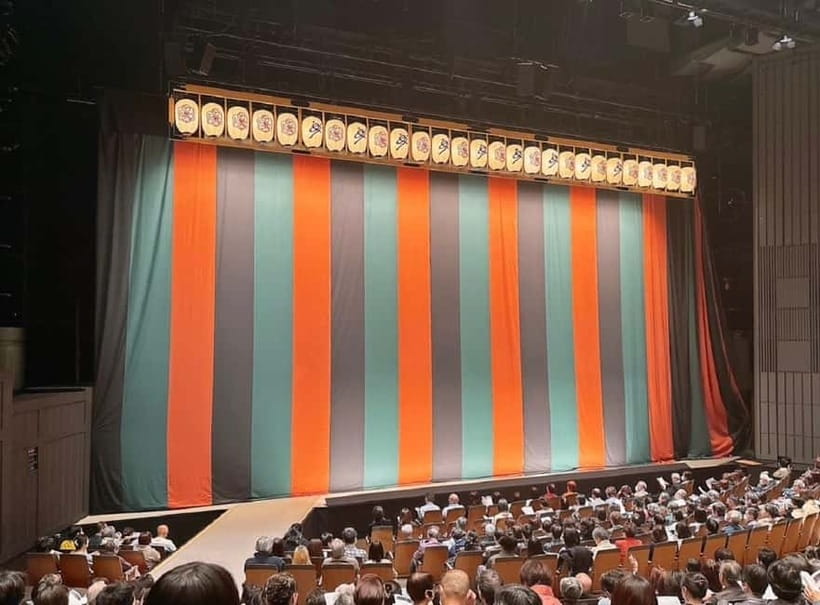
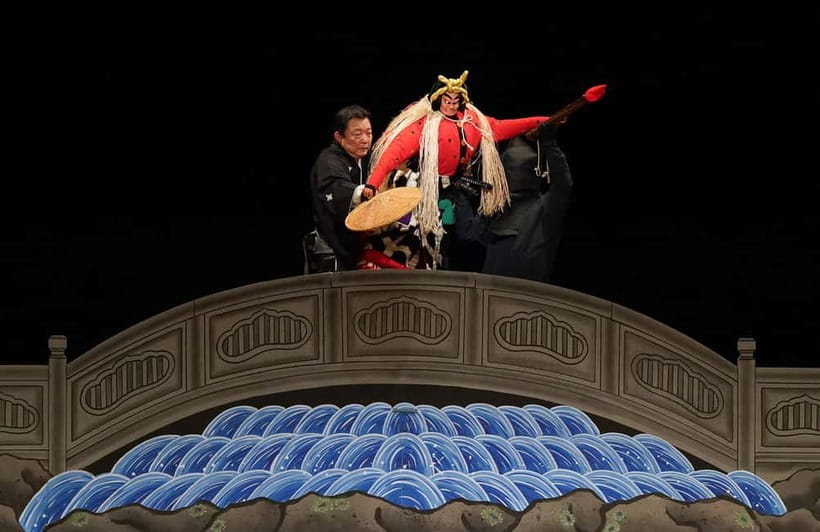
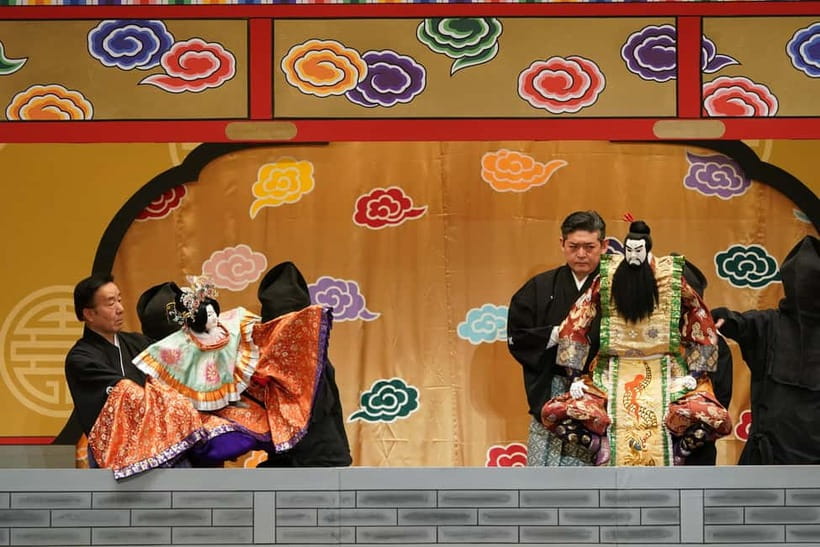
The program depends on the date. One booking may be Kabuki, another Bunraku, and another Hogaku, a concert of traditional Japanese music. The photographs used to represent the experience come from earlier performances, so do not assume that every image or art form will appear at your show.
The price is listed at about $37 per person. For a professional theater performance with an English aid, that is a reasonable price, especially if you already have an interest in theater, music, or Japanese culture. The value is less clear if you have only a short visit and want to spend every hour seeing major sights outdoors.
More craft workshops in Tokyo:
- Tokyo Shinjuku Chopsticks Making Class
★ 5.0 · 1,763 reviews - Kintsugi Experience: Art of Golden Joinery in Tokyo
★ 5.0 · 467 reviews - Authentic Pure Gold Kintsugi Workshop with Master Taku in Tokyo
★ 5.0 · 217 reviews
Kabuki: bold drama, music, and controlled movement
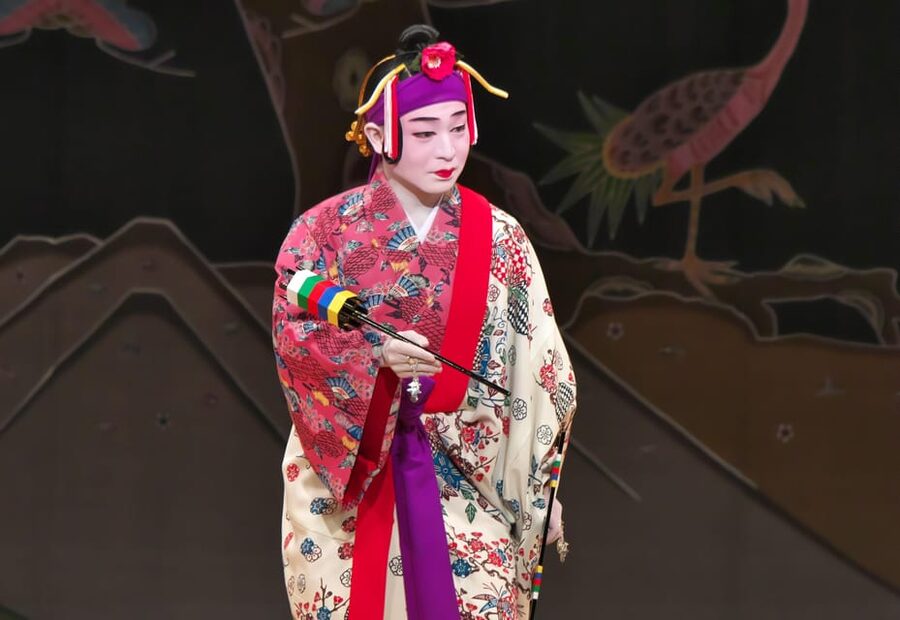
Kabuki is Japan’s best-known traditional theater form, and it combines acting with music and dance. The stories can be dramatic, emotional, and visually striking, but the way they are told differs sharply from modern Western theater.
You may first notice the costumes, poses, stage design, and formal movements. These details are not decoration added around the story. They help communicate character, mood, rank, and emotion. The performance also carries traditions built up over hundreds of years while still reflecting the tastes of different eras.
The English audio guide helps you understand the broad action. It may explain who is entering, what relationship the characters have, and why a movement or scene matters. It does not translate every line, and that is intentional. The aim is to let you hear the original voices and music rather than replace them with constant English speech.
That arrangement takes a few minutes to get used to. You hear the Japanese performance in the theater while listening to English through the guide. Once your ear adjusts, the system gives you enough of a map to follow the story without turning the show into an English-language production.
For the best result, read a little about Kabuki before you go. A basic idea of its stage style, costumes, and dramatic conventions will make the movements easier to read. You may still miss jokes, wordplay, and cultural references, but you will have a much better sense of what you are seeing.
Bunraku: three artists working as one
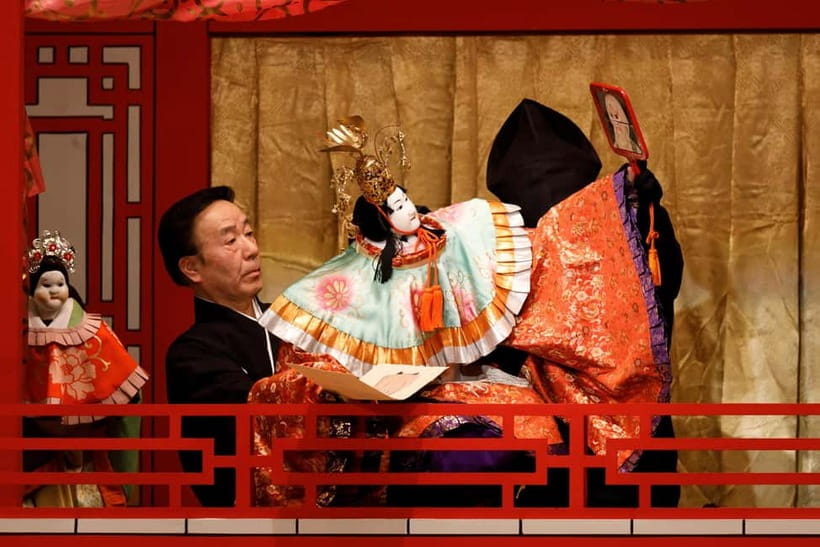
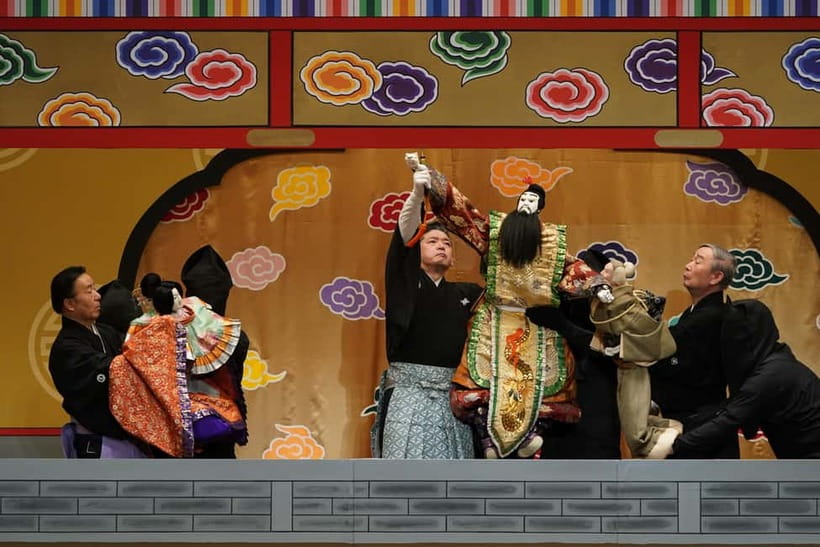
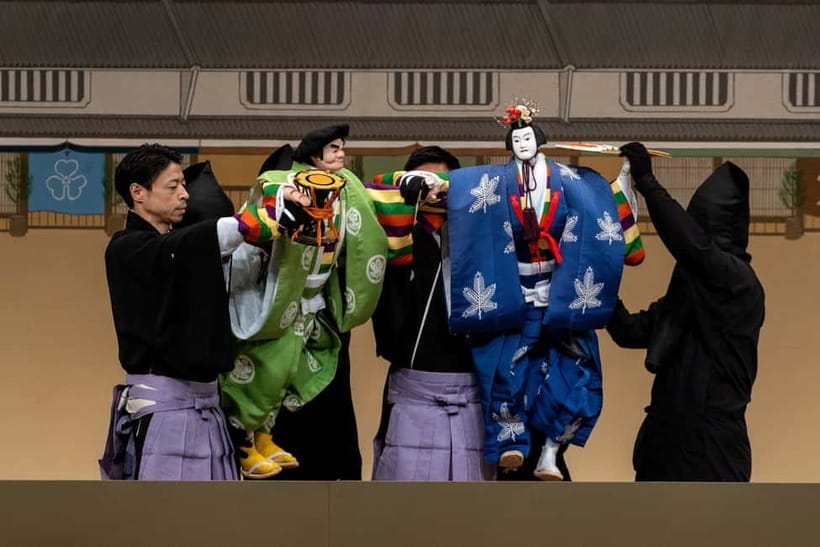
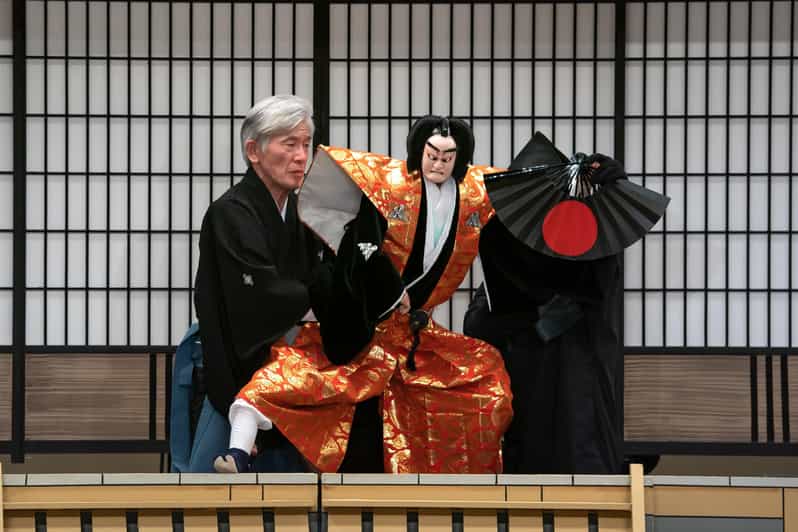
Bunraku is a traditional puppet theater for adults and one of Japan’s most distinctive performing arts. It is listed by UNESCO as an Intangible Cultural Heritage, but the label alone does not explain why the form can be so absorbing.
A Bunraku performance brings together three parts:
- A narrator recites the story with great force and changing vocal styles.
- A shamisen player supplies the musical framework and emotional pressure.
- Puppeteers control the figures with precise, coordinated movements.
The unusual power comes from the cooperation between these artists. The narrator does not simply speak over the puppets. The shamisen is not background music. Each element works with the others to create character, tension, and feeling.
You might expect the puppets to make the show feel child-friendly. This is not a children’s puppet program. Bunraku often deals with adult themes, including love, duty, family pressure, and tragic choices. One program included a love-suicide story, so I would check the subject matter before taking younger children.
The English audio guide gives you the main points of the plot and helps you follow the action. It cannot explain every line or emotional shade. You will lose some wordplay and detail, but the puppets, voices, and shamisen still communicate a great deal without a literal translation.
One important warning: the exact content can vary. A special program may not use puppets in the usual way, so read the option description closely. If seeing the puppets is your main reason for booking, make sure the selected date is a standard Bunraku performance rather than a special presentation.
Hogaku: traditional music built around the sound of snow
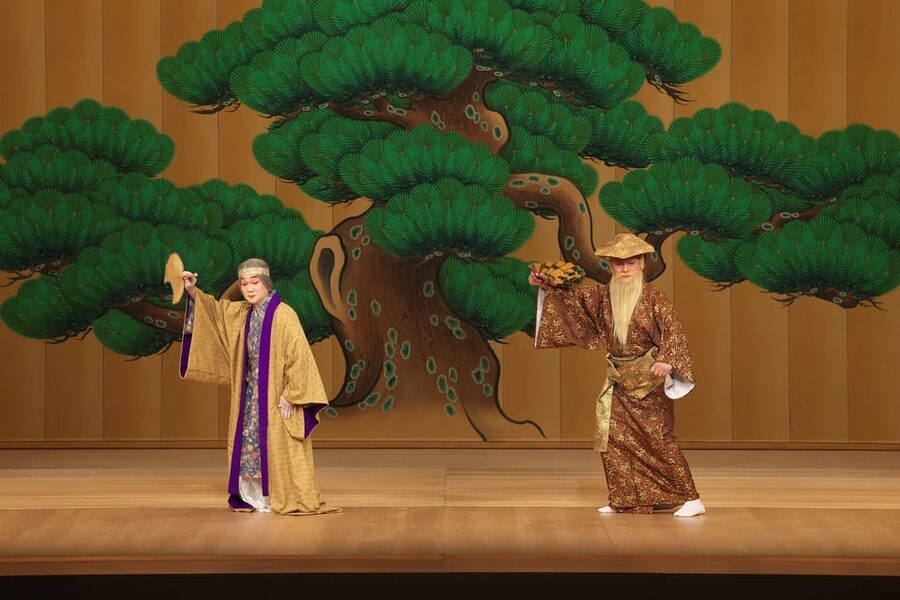
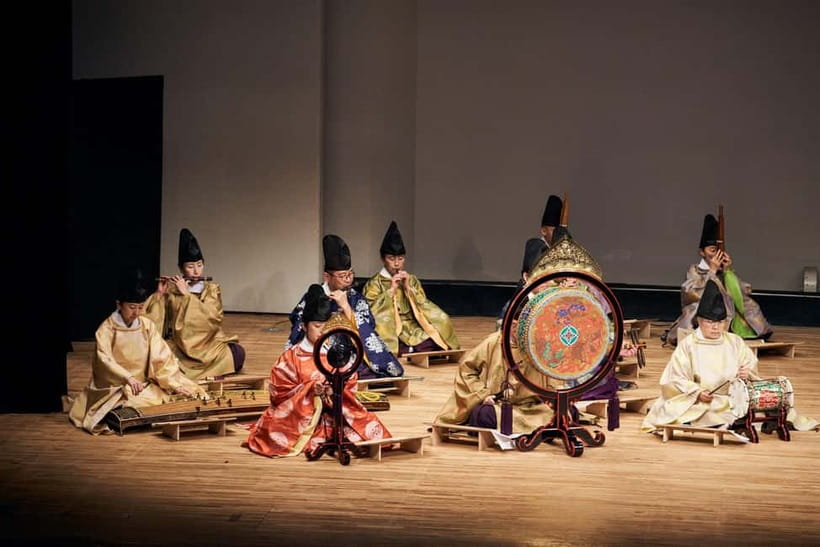
Hogaku is different from Kabuki and Bunraku because it is a concert of traditional Japanese music. The program described here focuses on melodies connected with snow, especially Yuki no Aikata, a long shamisen interlude from the jiuta song Yuki, meaning Snow.
That melody has become a familiar musical representation of falling snow. It appears in several pieces that accompany scenes of winter and snowfall. The appeal is not only the tune itself, but the way traditional musicians use repeated patterns, pauses, and changes in tone to suggest a scene or feeling.
Hogaku does not include the English audio guide used for Kabuki and Bunraku. Instead, you receive a free English explanation sheet. That is useful for understanding the theme and the pieces, but it requires more independent attention during the concert.
If you enjoy traditional music, this may be the most focused choice of the three. If you need a clear story to hold your attention, Kabuki or Bunraku may be easier to follow. The Hogaku program asks you to listen closely to the way a melody returns and changes.
A few more Tokyo bookings worth comparing
- Mt Fuji and Hakone 1-Day Bus Tour Return by Bullet Train
★ 5.0 · 26,383 reviews - 1-Day Tokyo Bus Tour
★ 5.0 · 14,250 reviews - Tokyo: TOKYO SKYTREE® Admission ticket
★ 4.5 · 11,192 reviews - Tokyo: teamLab Planets TOKYO Digital Art Museum Entry Ticket
★ 4.6 · 9,779 reviews
The English audio guide helps, but it is not a translation
The English support is one of the strongest practical features of this booking. Without it, a visitor who does not speak Japanese would have to rely almost entirely on visual cues, musical changes, and a printed program.
Still, set your expectations correctly. The guide offers an overview of the main points, not a literal translation of every spoken passage. That choice preserves the sound of the original performance, but it also means you will miss some details.
You may find it hard at first to listen to English in one ear while hearing the performers in the theater. Several minutes of adjustment can help. The guide works best as a steady outline of the story, while you pay attention to the voices, movement, music, and stage picture.
For Kabuki and Bunraku, the audio guide is in English only. Japanese and other languages are not available. For Hogaku, the English explanation comes in printed form rather than through audio.
A closer look at the timing and theater rhythm
The advertised duration ranges from 75 minutes to three hours, depending on the chosen program. A short performance may fit neatly into an afternoon plan. A longer presentation can take a serious block of your day, especially once you include the trip to the venue and time needed to collect your ticket.
Some longer programs include two breaks. You can use them to get food or step outside, but drinks are not allowed inside the theater. Plan your snack or coffee carefully, since an interval can pass faster than expected.
The pace is also part of the choice. These are not fast-moving stage shows built around quick scene changes. Some sections are slow and formal. The music may repeat or develop gradually. A visitor looking only for easy entertainment could lose interest, particularly during a three-hour program.
I would not choose this for very young children unless you already know they can sit quietly through a serious performance. Noise is poorly received inside the theater, and recording, photography, and video are forbidden. Smoking, alcohol, drugs, and pets are also not allowed, though assistance dogs are permitted.
Getting to KAAT in Yokohama for the Bunraku option
The most important logistical detail is the location. Although the experience is associated with National Theatre Japan, the venue is not the National Theatre in Hanzomon, Tokyo.
For the Bunraku option described here, the performance is at KAAT Kanagawa Arts Theatre in Yokohama. The nearest station is Nihon-ōdōri on the Minatomirai Line, about a five-minute walk from Exit 3 or Exit 4. Motomachi-Chukagai Station is another option, about eight minutes from Exit 1.
The Minatomirai Line connects directly with the Tokyu Toyoko Line and the Tokyo Metro Fukutoshin Line. From Shibuya, a train bound for Motomachi-Chukagai takes about 45 minutes. That makes the show manageable from Tokyo, but it is not a quick central-Tokyo theater stop.
Build in enough time to find the theater and exchange your booking voucher. The voucher from GetYourGuide is not the final theater ticket. At the venue entrance on the performance day, staff will ask for the name of the person who made the reservation and issue the theater ticket.
The venue can change for other dates or art forms, so always read the meeting location attached to your exact option. A Tokyo hotel area and a Yokohama theater are not interchangeable when you are planning a tightly scheduled day.
Seating, access, and theater manners
The theater assigns seats, so you do not select your exact location. That can work in your favor, but it also means you should not book expecting a particular section.
The performance is wheelchair accessible. If you use a wheelchair, contact the provider as soon as possible so accessible seating can be arranged. Do not wait until you reach the venue, since the seating plan may need advance attention.
Arrive early enough to exchange your voucher and settle in. A short explanation before the performance can help you understand how the art form differs from Western theater. It is worth hearing, especially if this is your first Kabuki or Bunraku show.
Keep your phone silent and do not take photographs inside. No video or audio recording is allowed. Food and drinks are not permitted in the theater, and making noise can disturb both the performers and the audience.
Who will get the most from this performance
I would recommend this to you if you have an interest in theater, music, puppetry, or the older cultural traditions of Japan. It is also a smart choice if you want something more substantial than a photo stop or a staged cultural demonstration.
Kabuki suits you if you like dramatic acting, costumes, dance, and spectacle. Bunraku is the strongest pick if you want to understand Japan’s puppet theater and enjoy the unusual partnership of narration, shamisen, and puppetry. Hogaku is best for a listener who can enjoy a concert without needing a continuous plot.
You should think twice if you have fewer than five days in Tokyo and are trying to cover the city’s major sights. A two-and-a-half-hour show, plus transport to Yokohama in the Bunraku case, can take a large part of one day.
This is also not the best pick if you need every line translated or prefer quick, plot-heavy entertainment. Even with the English guide, much of the meaning remains in tone, gesture, custom, and sound.
Is $37 a fair price?
At $37, this is a fair buy for a genuine professional performance with English assistance. You are paying for a theater ticket, not a lecture or a short demonstration, and the performers are among the leading artists in these traditional forms.
The value depends on how you use your time. A shorter 75-minute program is easier to fit into a busy schedule. A three-hour program offers a fuller look at the art, but it demands more patience and planning.
The English audio guide adds real value for Kabuki and Bunraku. It will not make the performance fully transparent, but it prevents you from sitting through an unfamiliar story with no idea who is doing what. For Hogaku, the explanation sheet gives useful context, though the concert remains more dependent on your own listening.
Cancellation is flexible up to 24 hours before the performance for a full refund, and you can reserve now and pay later. Those terms help if your Japan schedule is still shifting.
Should you book it?
Book this if you want an authentic look at Japanese performing arts and are willing to meet the theater on its own terms. The audio guide, affordable price, and access to major traditional forms make it a strong cultural choice.
For the best match, check the art form, venue, running time, and subject matter before confirming. Choose Bunraku for puppetry, Kabuki for drama and visual style, and Hogaku for traditional music. If your schedule is very short or you dislike slow, formal performances, spend your limited time elsewhere.
FAQ
Is the performance held at the National Theatre in Hanzomon?
No. The venue is not the National Theatre in Hanzomon. The location varies by date. The Bunraku option described here is held at KAAT Kanagawa Arts Theatre in Yokohama.
How do I reach KAAT Kanagawa Arts Theatre?
The nearest station is Nihon-ōdori Station on the Minatomirai Line, about five minutes from Exit 3 or Exit 4. Motomachi-Chukagai Station is about an eight-minute walk from Exit 1. From Shibuya, the direct train to Motomachi-Chukagai takes about 45 minutes.
Is an English translation included?
Kabuki and Bunraku include an English audio guide. The guide summarizes the main points rather than translating every line. Hogaku includes a free English explanation sheet instead.
How long does the performance last?
The duration ranges from 75 minutes to three hours, depending on the selected program. Check the available option and starting time before booking.
Can I choose my seat?
No. Seating positions are assigned by the theater.
Is the theater wheelchair accessible?
Yes. If you need wheelchair-accessible seating, contact the provider as soon as possible so suitable seating can be arranged.
New on our Tokyo list
- From Tokyo: Mount Fuji & Hakone Full Day Private Tour★ 4.9 · 25 reviews
- Tokyo Spectacular View Day-Cruise in 90 Minutes★ 5.0 · 25 reviews
- Real Tokyo Runner Club : Daikoku Car Meet Night Tour with JDM Car★ 5.0 · 25 reviews
- 2.5 Hour-Guided Cycle Tour in the Central Tokyo★ 5.0 · 25 reviews
- Tokyo: 2-Hour Night Bike Tour of the City’s Hidden Gems★ 4.9 · 25 reviews
- Ramen Making from Scratch +Akihabara Tour –Cooking Class★ 5.0 · 25 reviews
- [Self-Drive] Tokyo & Daikoku Custom Car Driving Tour★ 4.9 · 25 reviews
- Samurai themed Entertainment show in Shinjuku★ 4.5 · 25 reviews
Japanese Culture Workshops, compared.
Kintsugi Experience: Art of Golden Joinery in Tokyo
Read our review →
Authentic Pure Gold Kintsugi Workshop with Master Taku in Tokyo
Read our review →
KABUKI Show at Kabukiza Theatre Admission Ticket
Read our review →
Kintsugi Workshop Class in Shibuya, Tokyo with mon cadeau
Read our review →

Discover the Art of Ikebana in Tokyo’s Historic Yanaka District
Read our review →Browse the lists this tour appears in