
Reviewed · JAPANESE CULTURE WORKSHOPS
Kintsugi Experience: Art of Golden Joinery in Tokyo
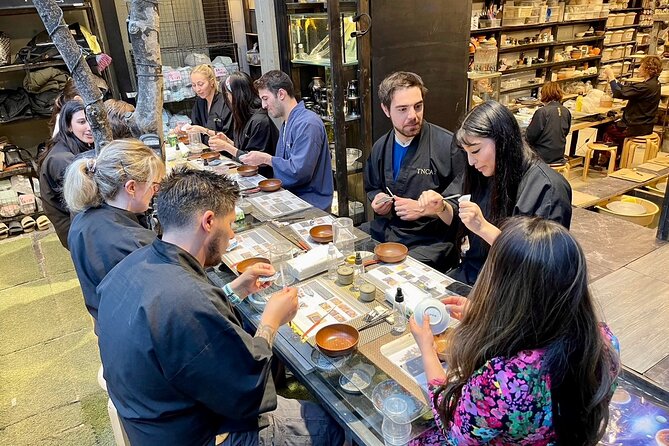
Kintsugi turns a damaged plate into something worth keeping. In this Tokyo workshop, you work with lacquer mixed with gold, learn why Japanese aesthetics treat repair as part of an object’s story, and leave with a small piece you made yourself. It is craft, culture, and souvenir shopping rolled into one tidy hour.
I like the hands-on format because you are not just watching a demonstration. You repair a supplied ceramic plate, follow clear instructions, and get help as you work. I also like the personal scale, with the class designed for a capped group and staff who take time with each person’s piece.
The main catch is that this is a short introductory class, not a full apprenticeship. You should also check your date carefully before booking: the experience is non-refundable and cannot be changed. The Minami-Aoyama studio can be tricky to find, so arrive with time to spare.
In This Review
- Key points at a glance
- Why kintsugi makes a better souvenir than another trinket
- Arriving at TNCA Minami-Aoyama Studio
- Putting on the samue and meeting the class
- Working on the supplied ceramic plate
- The cultural lesson behind the gold lines
- Taking your plate home
- How the one-hour schedule feels
- Who will enjoy this Tokyo workshop
- A few things to know before you book
- Should you book the Kintsugi Experience?
- FAQ
- Where does the kintsugi class take place?
- How long does the experience last?
- What do I repair during the class?
- Is the class available in English?
- Can children attend?
- Can I cancel or change my booking?
Key points at a glance
- Repair your own ceramic plate: The studio supplies the plate, tools, and materials, and you take the finished piece home.
- Meet Master Taku at the 11:00am class: Taku may lead that session, while other classes are taught by members of his team.
- Learn the idea behind kintsugi: The lesson covers Japanese views on repair, imperfection, and the history held by an object.
- Wear a traditional samue: The craftsperson’s garment adds a pleasing sense of occasion without making the class formal.
- Small-group instruction: The expected group size is no more than 10, though the booking information gives a maximum capacity of 20.
- Plan your arrival carefully: The studio is in Minami-Aoyama near public transportation, but it is worth allowing extra time to locate the entrance.
Why kintsugi makes a better souvenir than another trinket

Kintsugi is often described as the art of repairing pottery with gold. The technique is attractive, but the idea behind it is the real reason this class earns a place in a Tokyo itinerary.
Instead of hiding a crack, kintsugi draws attention to it. Breakage becomes part of the object’s past, not proof that the object has failed. That connects with Japanese ideas often discussed alongside kintsugi, including wabi-sabi, an appreciation of imperfection, age, and change.
You will not master every traditional stage of professional kintsugi in one hour. What you do get is a clear introduction to the basic process and the thinking that gives it meaning. That makes the activity more satisfying than a generic craft class.
I especially like the way the finished plate carries a real connection to your time in Tokyo. It is not simply something purchased in a shop. You handled it, made decisions about the repair, and watched the gold line take shape.
More craft workshops in Tokyo:
- Tokyo Shinjuku Chopsticks Making Class
★ 5.0 · 1,763 reviews - Authentic Pure Gold Kintsugi Workshop with Master Taku in Tokyo
★ 5.0 · 217 reviews - Tokyo: KABUKI Show at Kabukiza Theatre Admission Ticket
★ 4.8 · 152 reviews
Arriving at TNCA Minami-Aoyama Studio
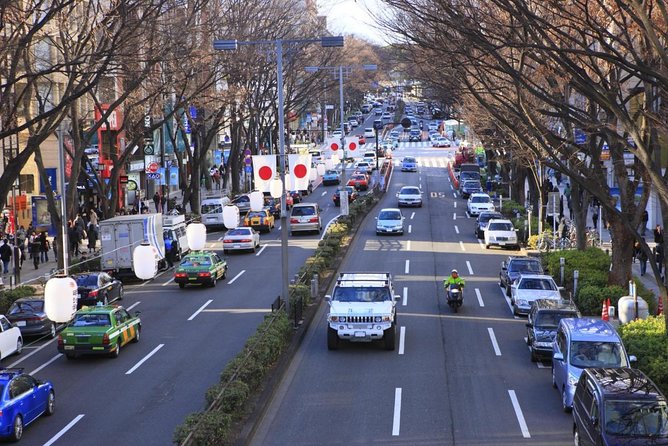
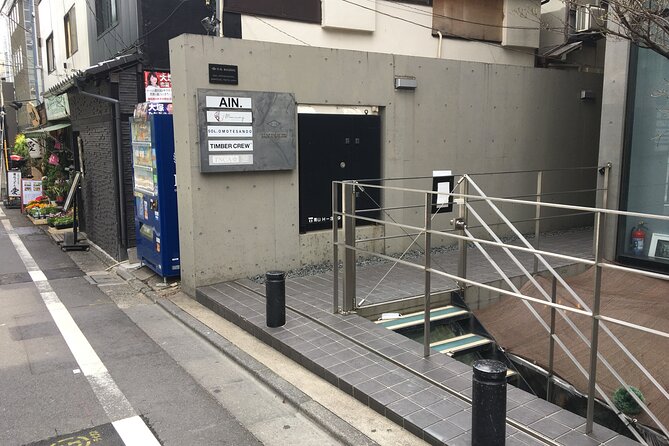
The meeting point is TNCA Minami-Aoyama Studio, at 3-chōme-8-2 Minamiaoyama, Minato City, Tokyo 107-0062. The activity begins and ends there, with no hotel pickup or drop-off.
The listed itinerary names Omotesando as the stop, so the workshop fits neatly into a half-day around Omotesando and Minami-Aoyama. You can pair it with nearby shopping, cafés, galleries, or a walk through the district before or after class. The experience itself, though, is concentrated inside the atelier.
Give yourself a little extra time to get there. One piece of practical advice is especially useful: do not cut arrival close. A participant who reached the studio six minutes before the start had a poor first impression and found the instructor unwelcoming at that moment. Even if that was an isolated interaction, arriving early gives you time to find the studio, settle in, and avoid beginning the class flustered.
The studio is near public transportation, and the metro is described as the easiest way to reach it. The supplied address is exact, so save it on your phone before leaving your hotel.
Putting on the samue and meeting the class
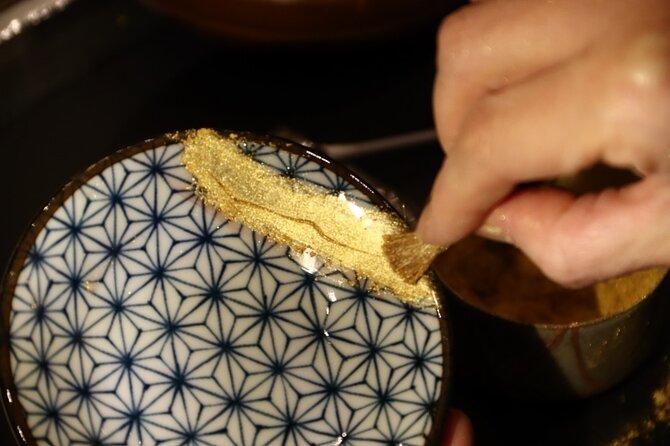
Once inside, you meet the instructor and the other members of your group. The class is presented as a small workshop, normally no more than 10 people, although the additional information allows up to 20 participants. That mismatch is worth noting if group size matters greatly to you. The central description points to the smaller format, but the formal maximum is higher.
You put on a samue, a traditional garment associated with Japanese craftspeople. This is a small touch, but it changes the mood. You are not just sitting at a table for a quick souvenir project. You are taking part in a craft lesson with its own setting and rhythm.
The instructors use clear explanations, video examples, and demonstrations to show the basic steps. English-speaking visitors are supported, and one class description specifically notes that the Japanese instructor spoke very good English. You should be able to follow the process without speaking Japanese.
At the 11:00am session, you may have the chance to meet Master Taku. The material identifies him as the owner and master artisan, but his presence is not guaranteed at every class time. If meeting Taku is important to you, choose the 11:00am option and understand that the schedule can still depend on the day’s arrangements.
Working on the supplied ceramic plate
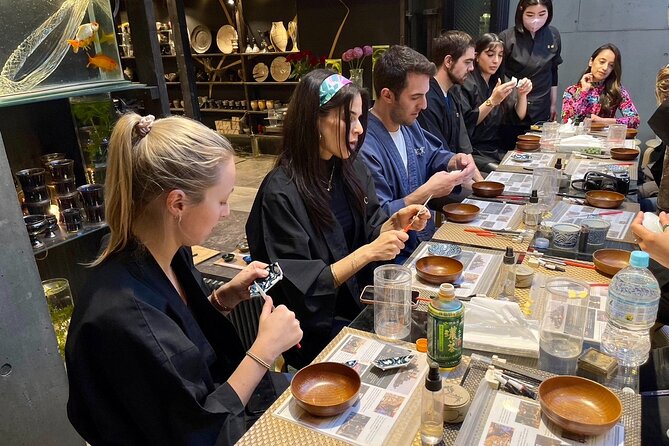
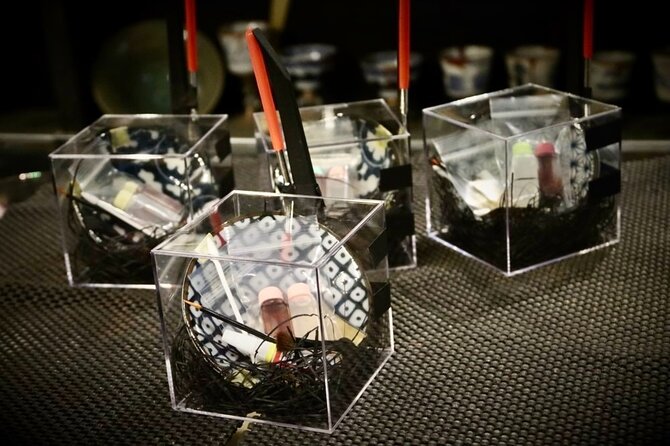
The studio provides one plate for your project. Personal broken items are not allowed, so do not bring your favorite chipped cup expecting to repair it. That rule is practical: the class needs a consistent object that can be prepared and completed within the available time.
You learn how the repair is made with lacquer mixed with gold. The process involves care rather than speed. You follow the instructor’s directions, apply the material, and work toward a visible golden join. The emphasis is on learning the method and making a pleasing first piece, not on producing museum-quality restoration.
This is where the workshop suits non-artists particularly well. You do not need drawing or pottery experience. The activity is structured for beginners, with instructions simple enough to copy and staff available to help when a step feels uncertain.
The instructor’s role matters. Several comments describe the teaching as patient, encouraging, and attentive without taking over the work. That is the right balance for a creative class. You want help when needed, but you also want the result to feel like yours.
The small plate format is a good choice for a one-hour session. It gives you enough surface to see the technique clearly without requiring hours of preparation. You may not produce a perfectly fine line, and that is part of the point. Kintsugi does not demand that every join look machine-made.
A few more Tokyo bookings worth comparing
- Mt Fuji and Hakone 1-Day Bus Tour Return by Bullet Train
★ 5.0 · 26,383 reviews - 1-Day Tokyo Bus Tour
★ 5.0 · 14,250 reviews - Tokyo: TOKYO SKYTREE® Admission ticket
★ 4.5 · 11,192 reviews - Tokyo: teamLab Planets TOKYO Digital Art Museum Entry Ticket
★ 4.6 · 9,779 reviews
The cultural lesson behind the gold lines
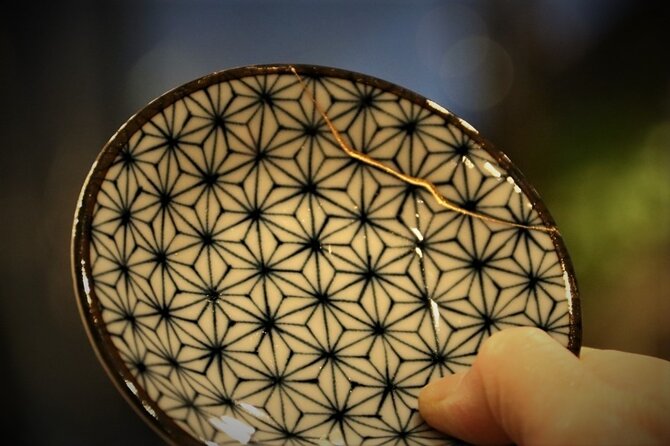
The workshop explains the philosophy of kintsugi alongside the physical steps. That context keeps the activity from becoming a simple craft souvenir.
You learn to think differently about broken objects. A damaged bowl or plate can carry evidence of use, family life, travel, or accident. Repair gives that history a visible place. The gold is not just decoration. It marks the join and accepts the object as it is now.
This cultural explanation is one reason I would choose the class over a standard pottery painting session. You are making something, but you are also getting a compact lesson in Japanese aesthetics and traditional craft.
The class can also be quietly meditative. The work asks you to concentrate on a small task, listen to instructions, and accept that the final result will show your hand. It is a useful pause from Tokyo’s crowds and constant movement, especially if you have spent the morning rushing between major sights.
Taking your plate home
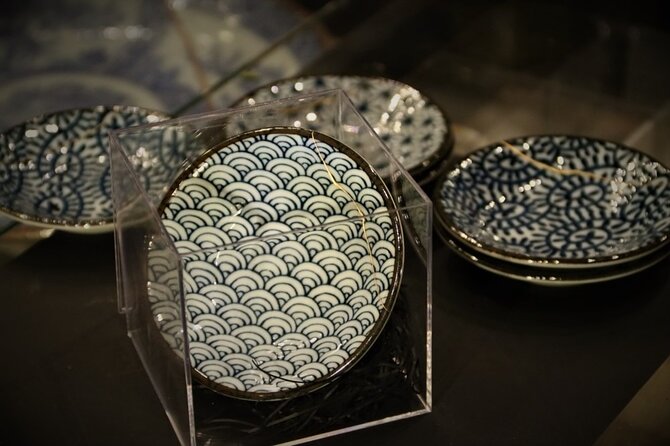
The plate is included in the price, and it becomes your souvenir at the end of the lesson. Equipment, lesson fees, taxes, and handling charges are included as well, so you are not paying extra for the basic materials.
The finished object is small enough to make sense in a suitcase. Careful packing matters, of course, since the plate is ceramic and the new repair needs protection. The workshop has been praised for packaging pieces well for the journey home, which is an important detail when you are carrying handmade pottery through airports and train stations.
Do not think of this as a fully restored heirloom. You are making a beginner’s piece on a supplied plate. The value is in the experience and the personal connection, not in the market price of the object.
That distinction helps explain the cost. At about $59.69 per person, the class is not the cheapest one-hour activity in Tokyo. But the fee includes instruction, a plate, all necessary equipment, the garment, and a take-home item. For someone who values a guided cultural activity and a usable souvenir, the price is reasonable.
The value drops if you are mainly looking for a professional repair of your own pottery. That is not what this class offers. It is a short introduction where you make a new object from a studio-provided piece.
How the one-hour schedule feels
The stated duration is about one hour. That makes this easy to fit between other plans, but it also limits how far the lesson can go.
You receive an introduction to kintsugi, learn the cultural background, put on the samue, follow the demonstration, and work on your plate. The structure is efficient and beginner-friendly. You do not need to set aside an entire afternoon.
The short format is also the main limitation. You will get a taste of the art rather than a long, slow study of traditional materials and restoration methods. If your interest is strongly focused on advanced technique, you may want a longer specialist course.
For most people, the compact schedule is an advantage. You can attend in the morning, continue around Omotesando afterward, and still have most of the day for Tokyo sightseeing. The 11:00am class is particularly easy to build into a day in central Tokyo.
Who will enjoy this Tokyo workshop
This experience is a good fit for you if you like creative activities, Japanese culture, or souvenirs with a story. Couples, friends, and parents with older children can work side by side, and the instruction is designed for people who do not think of themselves as artists.
It is also a strong choice for anyone who wants a calmer activity between busy sightseeing days. The work is focused and tactile. You spend an hour doing one thing carefully, which can feel refreshing in a city where there is always another station, shrine, shop, or viewing point to reach.
The class is less suitable for children under 6. They cannot enter the atelier because of the establishment’s safety rules. Food and drinks are not included, and the activity does not include transportation.
You should also be comfortable with a firm booking policy. The experience is non-refundable and cannot be changed for any reason. If the minimum number of participants is not met and the provider cancels, you are offered another date or experience, or a full refund. That protection does not apply if you book the wrong date or simply change your mind.
A few things to know before you book
Book only after checking the date and time twice. The strict policy means an accidental booking can become expensive, especially if you need to pay again for the correct date.
Arrive early and use public transportation if possible. The studio is near transit, but the exact location may take a little searching. Having the address ready is more useful than relying on a last-minute map search.
Wear something suitable for a hands-on craft session, even though a samue is provided. The supplied information does not promise a private class, so expect to share the room with other people and work at a similar pace.
If you want to meet Taku, the 11:00am class is the one specifically connected with him. Staff members lead other sessions, and the teaching team is set up to assist beginners.
The activity has a 4.9 rating from 467 reviews and is recommended by 98 percent of participants. That strong record matches the most consistent strengths: kind instruction, clear demonstrations, an easy beginner format, and the satisfaction of leaving with a personal piece. Still, allow for the occasional service problem and do not arrive at the last minute.
Should you book the Kintsugi Experience?
I would book this if you want a creative Tokyo activity that teaches an idea as well as a technique. The combination of kintsugi philosophy, samue, patient guidance, and a finished plate gives you more than a quick souvenir purchase.
At $59.69, it is best value for you if the making matters as much as the object. The class is short, beginner-level, and based on a studio-supplied plate, so it is not the right pick for advanced restoration or repairing a personal heirloom.
Choose your date carefully, arrive early at TNCA Minami-Aoyama Studio, and keep your expectations realistic. If you do, this can become one of the more personal memories from Tokyo: a small plate marked with gold, and a useful reminder that damage does not always make something disposable.
FAQ
Where does the kintsugi class take place?
The class takes place at TNCA Minami-Aoyama Studio, 3-chōme-8-2 Minamiaoyama, Minato City, Tokyo 107-0062, Japan. The activity ends at the same meeting point.
How long does the experience last?
The lesson lasts approximately one hour.
What do I repair during the class?
The studio provides a ceramic plate for you to use. Personal broken pottery is not allowed.
Is the class available in English?
The instructor and staff provide clear guidance for English-speaking participants. One class description specifically notes that the Japanese instructor spoke very good English.
Can children attend?
Children under 6 cannot enter the atelier because of the establishment’s safety rules.
Can I cancel or change my booking?
No. The experience is non-refundable and cannot be changed for any reason. If the provider cancels because the minimum number of participants is not met, you will be offered another date or experience, or a full refund.
New on our Tokyo list
- Tokyo Spectacular View Day-Cruise in 90 Minutes★ 5.0 · 25 reviews
- From Tokyo: Mount Fuji & Hakone Full Day Private Tour★ 4.9 · 25 reviews
- Real Tokyo Runner Club : Daikoku Car Meet Night Tour with JDM Car★ 5.0 · 25 reviews
- 2.5 Hour-Guided Cycle Tour in the Central Tokyo★ 5.0 · 25 reviews
- Ramen Making from Scratch +Akihabara Tour –Cooking Class★ 5.0 · 25 reviews
- [Self-Drive] Tokyo & Daikoku Custom Car Driving Tour★ 4.9 · 25 reviews
- Tokyo: 2-Hour Night Bike Tour of the City’s Hidden Gems★ 4.9 · 25 reviews
- Samurai themed Entertainment show in Shinjuku★ 4.5 · 25 reviews
Japanese Culture Workshops, compared.
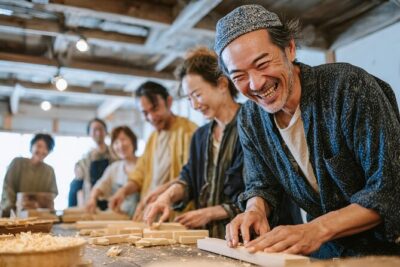

Authentic Pure Gold Kintsugi Workshop with Master Taku in Tokyo
Read our review →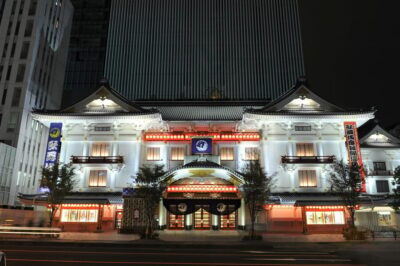
KABUKI Show at Kabukiza Theatre Admission Ticket
Read our review →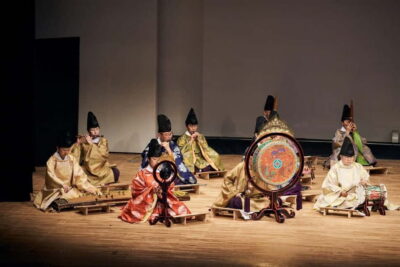
KABUKI, BUNRAKU, etc. presented by National Theatre
Read our review →
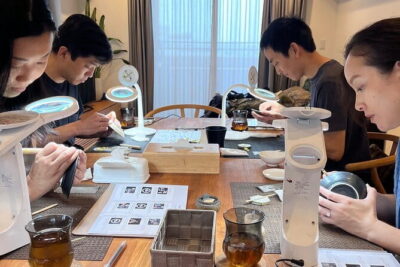
Kintsugi Workshop Class in Shibuya, Tokyo with mon cadeau
Read our review →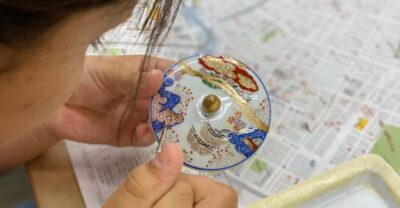

Discover the Art of Ikebana in Tokyo’s Historic Yanaka District
Read our review →Browse the lists this tour appears in