
Reviewed · JAPANESE CULTURE WORKSHOPS
Tokyo: Kintsugi Art Repair Workshop
Kintsugi turns a cracked bowl into a piece of art by tracing its damage with gold. In this Tokyo workshop, you work through the repair yourself, from fitting broken pieces to filling gaps and painting the seams. It is a hands-on way to meet a Japanese craft without giving up half a day.
I like the small group of five, which gives the instructor time to guide each stage, and I like the useful souvenir: your finished ceramic piece is something you made, not something pulled from a gift shop shelf. The calm setting and English interpretation also make the class easy to follow.
The main consideration is that this is a shortened workshop, not the full traditional kintsugi process, which can take a month. The $125 price is fair for a personal craft lesson and finished piece, but it may feel high if you want a long lecture or a technically complete restoration.
In This Review
- Key points at a glance
- What kintsugi means beyond the gold lines
- Arriving at Nihonbashi Mutoh Main Store
- The first steps: choosing a piece and understanding the method
- Fitting broken pieces and filling the gaps
- Painting the cracks and making the souvenir
- Why the small class matters
- The 90-minute schedule and its limits
- Is $125 a fair price?
- Who should book this workshop?
- Practical details before you reserve
- Should you book it?
- FAQ
- How long does the Tokyo kintsugi workshop last?
- Is the workshop taught in English?
- How many people can join the class?
- Can I bring my own broken pottery?
- Can children participate?
- Is the completed piece safe to use for food?
Key points at a glance
- Repair with your own hands: You practice joining pieces, filling chips, smoothing the surface, and applying metallic color to the seams.
- A maximum of five people: The format stays personal, and some sessions may feel almost private if few people book.
- English help is available: An English-speaking instructor or interpreter explains the process alongside the Japanese craft teacher.
- A 90-minute Tokyo activity: The class fits neatly into a busy day and is about 15 minutes by subway from Asakusa.
- Take home a handmade piece: The finished ceramic is mainly decorative, though it can hold dry food.
- Bring the right vessel: Your own item must be ceramic, no larger than 15 centimeters wide or tall, with one or two cracks.
What kintsugi means beyond the gold lines
Kintsugi is the Japanese method of repairing pottery with lacquer and highlighting the repaired seams with gold or another metallic finish. The break is not hidden. It becomes part of the object’s appearance.
That idea gives the workshop more weight than a simple souvenir-making class. You are not trying to make a new bowl look perfect. You are showing where it was damaged and making that damage attractive.
Still, it helps to keep the philosophy in proportion. The 90-minute session teaches a practical, shortened form of the craft. Traditional kintsugi involves longer drying and curing periods, and can take about a month from start to finish. Here, you get a manageable introduction that works for a holiday schedule.
I see that as a strength for most people. You can understand the basic method without signing up for a long course. If your main goal is to restore a treasured family vessel using every traditional material and stage, this class may be too brief.
More craft workshops in Tokyo:
- Tokyo Shinjuku Chopsticks Making Class
★ 5.0 · 1,763 reviews - Kintsugi Experience: Art of Golden Joinery in Tokyo
★ 5.0 · 467 reviews - Authentic Pure Gold Kintsugi Workshop with Master Taku in Tokyo
★ 5.0 · 217 reviews
Arriving at Nihonbashi Mutoh Main Store
The meeting point is Nihonbashi Mutoh Main Store, in the Nihonbashi area of central Tokyo. The listed address is 1-8-13 Nihonbashihoncho, Chuo City, Tokyo 103-0023, in the Nihonbashi Mutoh Main Store building.
From Asakusa, the workshop is described as about 15 minutes by subway, making it a practical addition to a day in the eastern or central part of Tokyo. You should still allow time to find the shop and arrive at least five minutes early. The session begins promptly, and the end time cannot be extended for anyone who arrives late or works slowly.
The shop itself adds interest before and after the class. It carries kintsugi works, ceramics, lacquerware, tenugui, chopstick sets and rests, table linens, and bento boxes. You might find yourself spending a little extra time browsing, especially if you want a smaller gift for someone at home.
Wear comfortable clothes. This is a seated craft activity, but you are handling repair materials and paint, so your most precious holiday outfit is not the best choice.
The first steps: choosing a piece and understanding the method
Once the session starts, the instructor explains the basic idea and helps you choose how to approach the repair. The supplied materials mean you do not need to pack tools, pottery, or craft equipment.
Several people have found the activity especially personal when they brought their own broken ceramic items. That option has rules, though. The object must be ceramic, no more than 15 centimeters in diameter and 15 centimeters high. It should have one or two cracks, and a cracked or chipped mug handle cannot be repaired in this session.
A damaged object may sound like the ideal choice, but I would inspect it carefully before packing it. Large breaks, many fragments, or a complicated chip can take longer than 90 minutes. If you bring something valuable or sentimental, understand that the short format may not allow the work to be completed.
For a predictable result, use the provided ceramic piece. You still learn the process and leave with a finished object. If you bring your own item, the emotional value is higher, but so is the chance that the repair will need more time.
Fitting broken pieces and filling the gaps
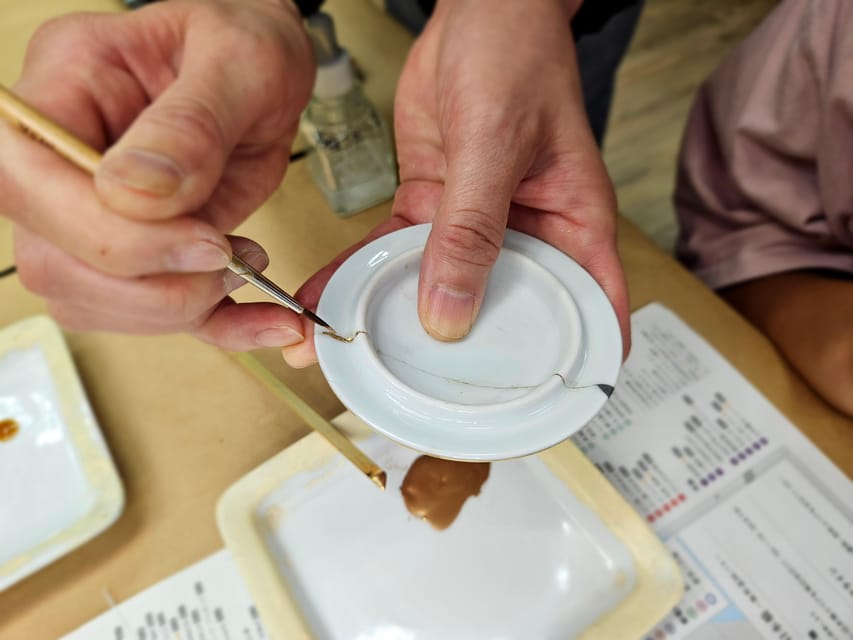
The practical work begins with putting the broken sections back together. One demonstrated approach uses tape to hold the puzzle of pieces in place before the parts are fixed with the appropriate adhesive.
You then work on gaps and chips with putty. This is where the class becomes more than simply painting a gold line. You learn how missing material is built up, then how the surface can be smoothed by sanding.
The instructor guides you through each stage and supplies materials in small amounts, adding more when needed. That keeps the work area controlled and helps you focus on the technique rather than worrying about what to use next.
The pace is friendly and patient, but it is still a timed workshop. You may not have the freedom to redo every stage repeatedly. If you are a careful, slow craft worker, keep your expectations realistic. The goal is a satisfying introduction and a completed keepsake, not museum-level restoration.
A few more Tokyo bookings worth comparing
- Sushi Making Tokyo Roll and Authentic Japanese Sushi Class
★ 5.0 · 3,971 reviews - Tokyo: Roll and Authentic Sushi Making Class in Asakusa
★ 4.9 · 1,957 reviews - Tokyo: Sushi Making Class in a Happi Coat near a Famous Spot
★ 4.9 · 1,377 reviews - Chopstick Making Workshop in Ginza
★ 4.8 · 1,366 reviews
Painting the cracks and making the souvenir
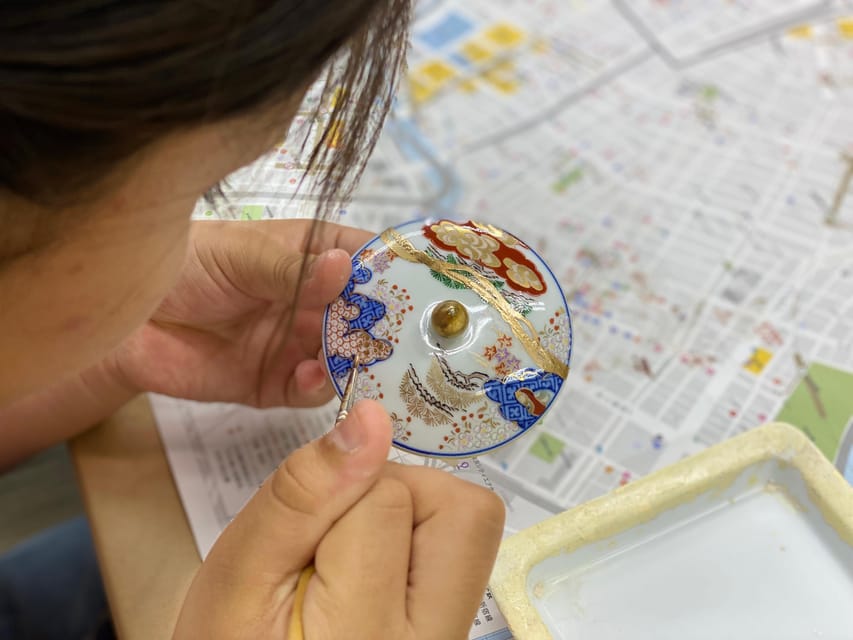
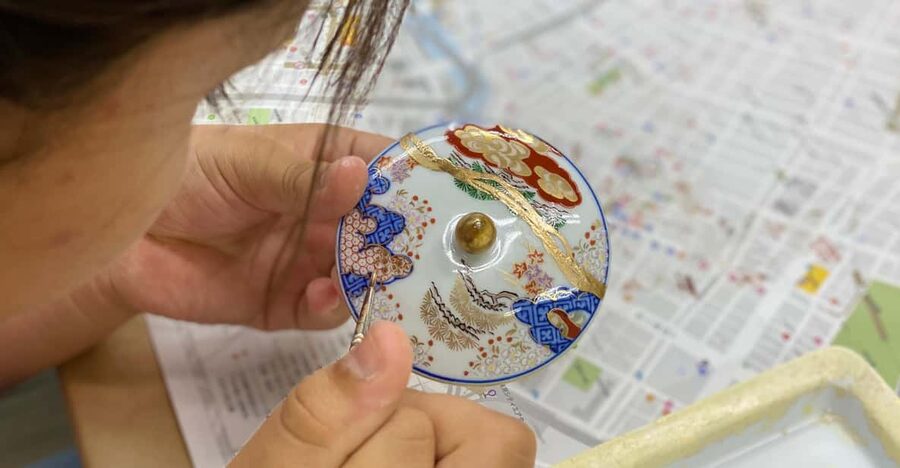
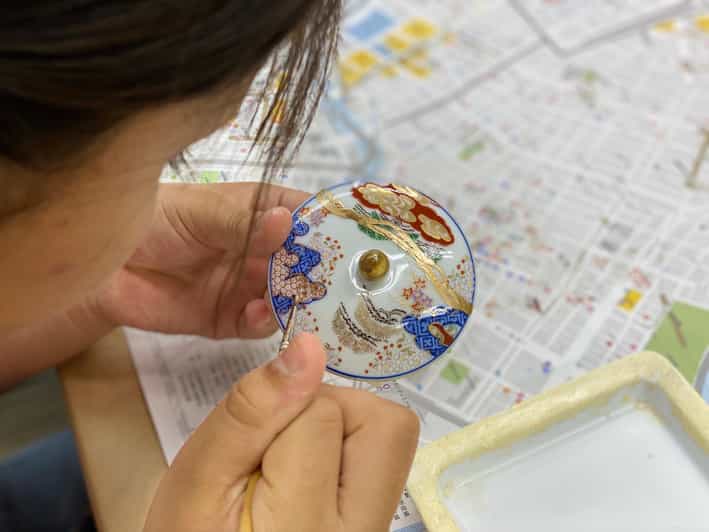
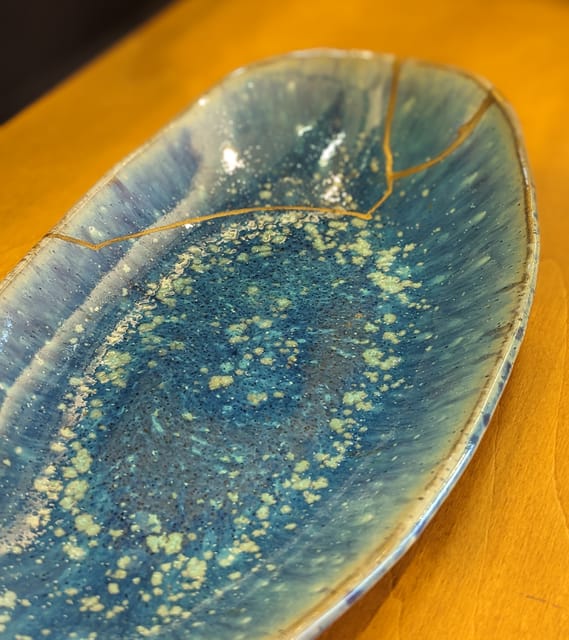
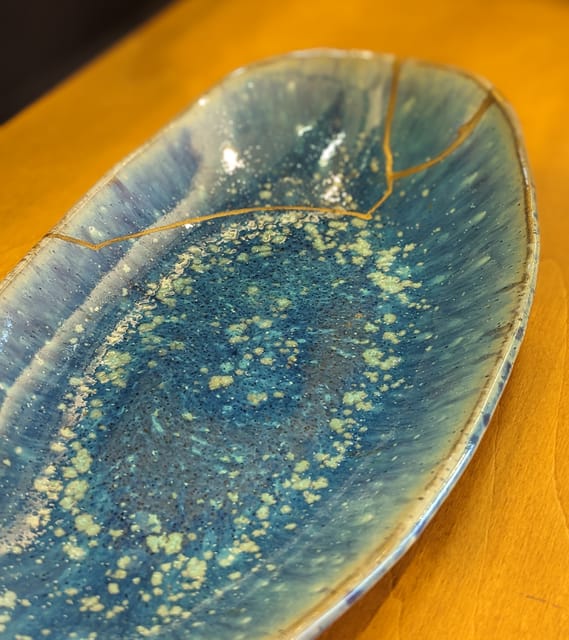
The final visual step is applying metallic paint along the repaired seams. This is the moment when the broken pottery begins to look intentional. A rough crack becomes a bright line that gives the piece its own pattern.
The finish may resemble gold kintsugi, but the workshop uses a shortened process rather than the full month-long traditional method. That distinction matters. You are learning the look and basic sequence of kintsugi in a format designed for visitors, not completing an extended professional restoration.
The finished piece is primarily decorative. It can hold dry food items, but it should not be treated as an everyday vessel for every kind of food or use. Think of it as a display piece with a practical past, rather than a bowl you will put through heavy daily service.
If your item needs more time to cure, the shop can box it for protection. That is useful if you are still in Japan and need to carry it safely to your hotel or onward trip. Ask about the condition of your piece before assuming it is ready for rough packing.
Why the small class matters
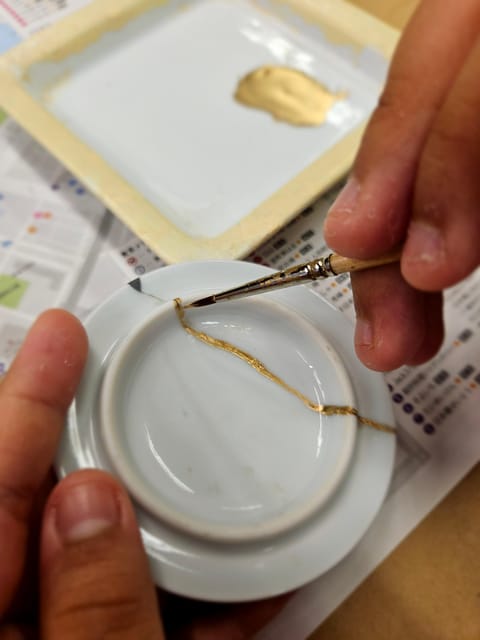
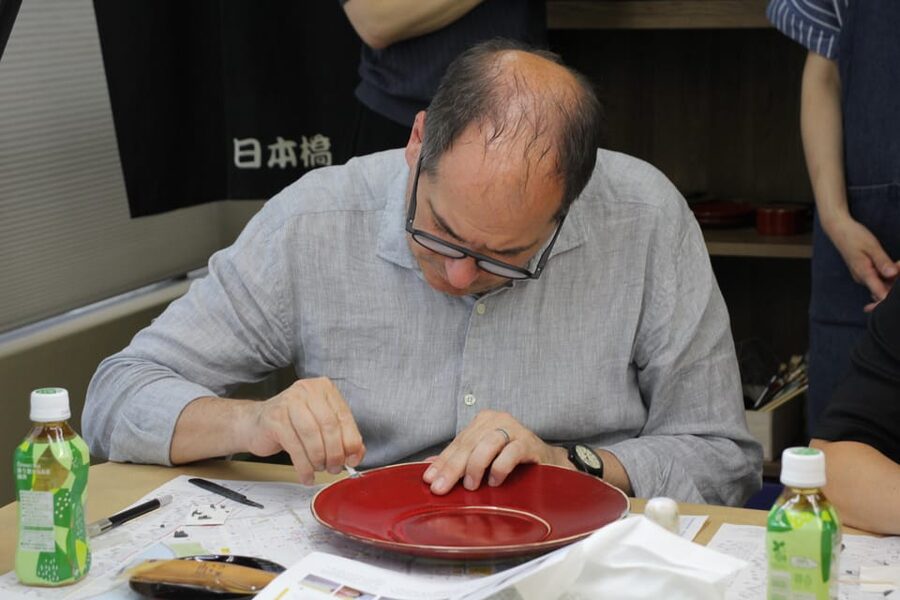
With a limit of five participants, the instructor can watch how you handle each step. That is important for a craft where the amount of adhesive, putty, sanding, and paint affects the final look.
The class can be especially quiet when only two people register. One pair had an almost personalized session because nobody else had booked. Another small group of three worked alongside professionals, which offered a useful glimpse of the craft at a higher level.
That contrast gives the workshop some character. You are not only following a tourist demonstration. You may also see working craft activity around you, depending on the day and the shop’s schedule. At the same time, the presence of professionals does not turn the class into a formal studio apprenticeship. Your experience remains a short guided lesson.
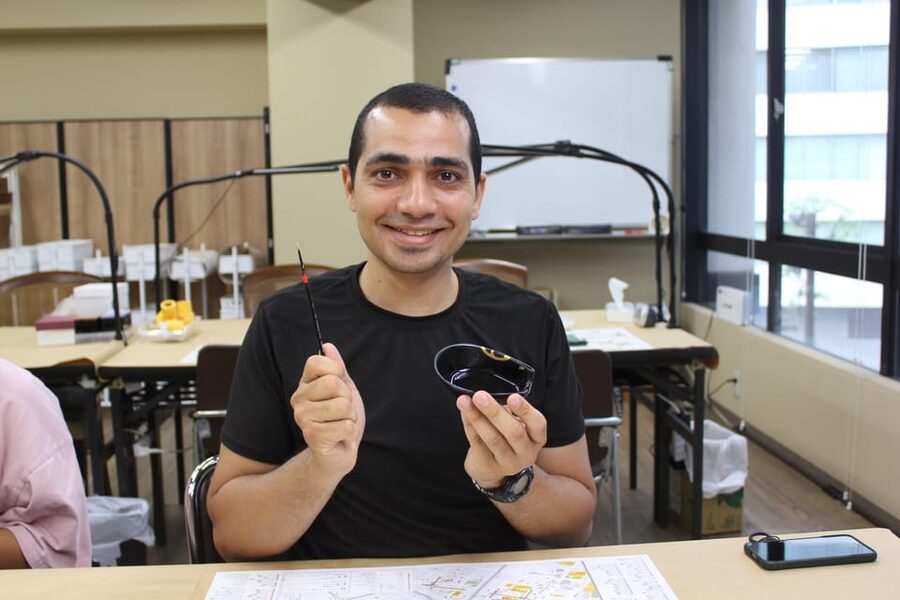
The teaching style is another strong point. Instructors have been described as kind, patient, and willing to help at every stage. Hijiri received particularly warm praise for clear guidance and a calm manner. Other sessions used a Japanese-speaking craft teacher with an English-speaking instructor or interpreter. The language arrangement can vary, but English support is part of the activity.
The 90-minute schedule and its limits
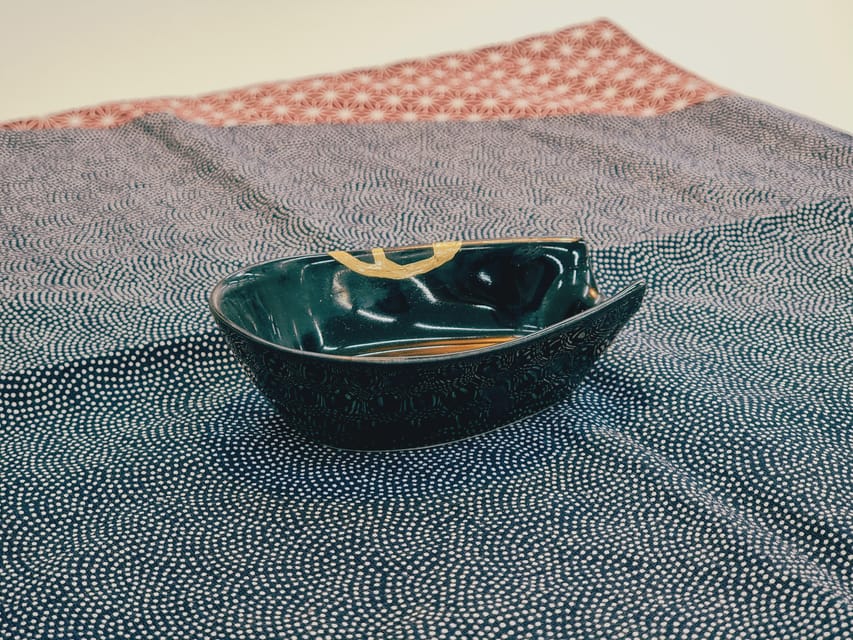
The advertised duration is 90 minutes. That is long enough to handle the main stages of a small repair, hear about the craft, and finish a take-home piece without losing most of your day.
Some sessions have finished much faster, in around 35 minutes. That may happen when the chosen item is simple or the group moves quickly. It is not necessarily a sign that the workshop is always that short, but you should know that the amount of instruction and hands-on time can depend on the project and group.
For most visitors, the short length is a major advantage. You can fit it between sightseeing stops, shopping, or a meal. It also suits anyone who wants one focused cultural activity rather than a full-day class.
The trade-off is depth. The workshop emphasizes doing the repair, with some explanation of the craft’s background. If you want a detailed talk on the philosophy and history of kintsugi, read a little before arriving. You will then understand the larger idea and can use the class time to ask better questions while working.
Is $125 a fair price?
At $125 per person, this is not a bargain activity. The value comes from several parts working together: a professional instructor, all materials, a small class, English support, and a ceramic piece to take home.
You are also paying for access to a specialist setting in central Tokyo. The shop sells Japanese craft goods, so the experience connects the workshop to a wider world of ceramics, lacquerware, textiles, and household design.
I would compare the price with what you want from the activity. If you want a personal lesson, a quiet break from city sightseeing, and a souvenir with a story behind it, the cost is reasonable. If you mainly want an inexpensive craft to keep children busy or a long academic discussion, it is harder to justify.
Two people can also get good value from the format. When the class is not full, you may receive more direct help without paying extra for a private session. That is not guaranteed, since the maximum group size is five but the actual number depends on bookings.
Who should book this workshop?
This class suits adults and teenagers age 13 and older who enjoy making things with their hands. It is also a good fit for couples, friends, and solo visitors who want a calm activity with a clear result.
Art experience is not required. The instructor takes you through the stages, and the small group makes it easier to ask for help. You should be comfortable following a timed process and accepting that handmade work has its own small irregularities.
The age rule is firm: children under 13 cannot take part, and minors must be accompanied by a guardian. Families with younger children will need another activity.
I would also recommend it to anyone carrying a suitable broken ceramic item from home. Bring something modest rather than irreplaceable. A meaningful object can make the class special, but a complex repair may not be finished within the scheduled time.
Practical details before you reserve
You can cancel up to three days in advance for a full refund. Check the available starting times before choosing the class, since the activity is offered at set times rather than as an open drop-in session.
Arrive at least five minutes early. The class starts on time and cannot run over for late arrivals or unfinished projects.
All materials are provided. You only need comfortable clothes, plus a suitable ceramic vessel if you want to repair your own item. The size limit is 15 centimeters across and 15 centimeters high, with one or two cracks. Mug handles are not suitable for repair.
Plan to carry your finished piece carefully. It is a personal souvenir, but it is still ceramic, and the repaired seams may need care. If the piece requires curing, protective boxing can help during the rest of your trip.
Should you book it?
Book this workshop if you want a short, personal craft experience with a finished object to carry home. The calm room, English guidance, small class, and patient teaching make it easy to approach, even if you have never worked with pottery before.
Skip it if you expect a full traditional restoration course, a long cultural lecture, or a guaranteed repair of a complicated family heirloom. The best way to see this $125 experience is as a carefully guided introduction to kintsugi, with a handmade souvenir at the end.
For a busy Tokyo itinerary, that is a sensible exchange. You spend 90 minutes learning how damage can become decoration, then leave with a ceramic piece that carries the memory of making it yourself.
FAQ
How long does the Tokyo kintsugi workshop last?
The scheduled duration is 90 minutes. Some simple sessions may finish sooner, but the activity is booked as a 90-minute experience.
Is the workshop taught in English?
Yes. English instruction or interpretation is provided. Sessions may include a Japanese-speaking craft teacher working alongside an English-speaking instructor or interpreter.
How many people can join the class?
The workshop is limited to five participants, creating a small-group setting.
Can I bring my own broken pottery?
Yes, if it is a ceramic vessel no larger than 15 centimeters in diameter and 15 centimeters in height, with one or two cracks. Chipped or cracked mug handles cannot be repaired.
Can children participate?
The activity is for ages 13 and up. Minors must be accompanied by a guardian, and children under 13 cannot take part.
Is the completed piece safe to use for food?
The finished piece is intended mainly for decoration. It can hold dry food items, but it should not be treated as a general-purpose food vessel.
New on our Tokyo list
- Tokyo Spectacular View Day-Cruise in 90 Minutes★ 5.0 · 25 reviews
- From Tokyo: Mount Fuji & Hakone Full Day Private Tour★ 4.9 · 25 reviews
- Real Tokyo Runner Club : Daikoku Car Meet Night Tour with JDM Car★ 5.0 · 25 reviews
- 2.5 Hour-Guided Cycle Tour in the Central Tokyo★ 5.0 · 25 reviews
- Ramen Making from Scratch +Akihabara Tour –Cooking Class★ 5.0 · 25 reviews
- [Self-Drive] Tokyo & Daikoku Custom Car Driving Tour★ 4.9 · 25 reviews
- Tokyo: 2-Hour Night Bike Tour of the City’s Hidden Gems★ 4.9 · 25 reviews
- Samurai themed Entertainment show in Shinjuku★ 4.5 · 25 reviews
Japanese Culture Workshops, compared.
Kintsugi Experience: Art of Golden Joinery in Tokyo
Read our review →
Authentic Pure Gold Kintsugi Workshop with Master Taku in Tokyo
Read our review →
KABUKI Show at Kabukiza Theatre Admission Ticket
Read our review →
KABUKI, BUNRAKU, etc. presented by National Theatre
Read our review →
Kintsugi Workshop Class in Shibuya, Tokyo with mon cadeau
Read our review →
Discover the Art of Ikebana in Tokyo’s Historic Yanaka District
Read our review →Browse the lists this tour appears in