
Reviewed · JAPANESE CULTURE WORKSHOPS
Authentic Pure Gold Kintsugi Workshop with Master Taku in Tokyo
Kintsugi turns a broken plate into something new, using natural urushi lacquer and pure gold powder to mark the cracks instead of hiding them. In Tokyo, Master Taku Nakano teaches this hands-on craft at his pottery studio in fashionable Minami-Aoyama, giving you a quiet change of pace from temples, trains, and shopping streets.
I like two things right away: you make a real ceramic piece rather than watch a demonstration, and your small group of no more than five allows for patient help. You also take the plate home, so the souvenir has a story and your fingerprints on it.
The main catch is price. At $142.60 per person, this is not a quick craft stop. The workshop lasts about two hours, and the non-refundable booking policy means you should be sure of your Tokyo plans before paying.
In This Review
- Key points to know before booking
- Why this Tokyo kintsugi class feels different
- Meeting Master Taku at Minami-Aoyama
- What happens during the 90 to 110 minutes
- Option A: traditional natural lacquer and gold
- Option B: the black-and-gold Shikkokurai plate
- Option C: decorative yobitsugi
- What you really get for $142.60
- The mindful break your itinerary may need
- Who should book this experience
- Booking details worth knowing
- Should you book the Master Taku kintsugi workshop?
- FAQ
- Where does the kintsugi workshop take place?
- How long does the workshop last?
- What materials are used in the authentic kintsugi option?
- Do I get to keep the plate?
- How many people can join the workshop?
- Are tools and equipment included?
- Is transportation or food included?
- Can I cancel or change my booking?
Key points to know before booking
- Work with Master Taku Nakano: A Tokyo ceramist, pottery studio owner, and teacher of traditional kintsugi.
- Use real materials: The authentic option uses natural urushi lacquer and pure gold powder.
- Choose your finish: Pick traditional gold repair, a black-and-gold plate, or decorative yobitsugi.
- Keep your own plate: The pottery used in the lesson is included and goes home with you.
- Expect a tiny class: The maximum is five participants, useful when you need careful guidance.
- Plan for Minami-Aoyama: The studio is near public transportation, but one participant found the entrance a little hard to locate.
Why this Tokyo kintsugi class feels different
Many Tokyo craft activities give you something attractive to take home. This one asks you to work with imperfection itself. Kintsugi repairs cracks with lacquer and gold, making the damaged lines part of the design rather than pretending the break never happened.
That idea connects with wabi-sabi, the Japanese appreciation of imperfect, changing, and incomplete things. The lesson does not treat the plate as a blank souvenir. The pottery has already been made by Master Taku and prepared with rustic lacquer for a weathered sabi feeling, giving you a starting point with character.
You then add the visible repair. That makes the finished plate personal in a way a shop-bought bowl cannot be. It also gives the activity a gentle environmental angle: instead of throwing away a broken object, you give it another life.
The experience is designed for beginners. You do not need prior pottery or repair skills, and the instruction is paced for a group. The supplied feedback points to clear explanations, calm teaching, and plenty of help when the work becomes fiddly. That matters here. Gold powder on a ceramic crack sounds simple, but careful placement and steady hands make the final result look intentional.
More craft workshops in Tokyo:
- Tokyo Shinjuku Chopsticks Making Class
★ 5.0 · 1,763 reviews - Kintsugi Experience: Art of Golden Joinery in Tokyo
★ 5.0 · 467 reviews - Tokyo: KABUKI Show at Kabukiza Theatre Admission Ticket
★ 4.8 · 152 reviews
Meeting Master Taku at Minami-Aoyama
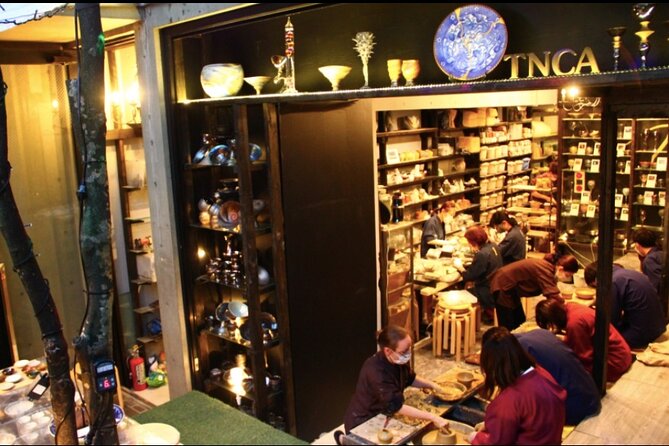
The studio address is TNCA Minami-Aoyama Studio, 3-chōme-8-2 Minamiaoyama, Minato City, Tokyo 107-0062. You start and finish there, with no hotel pickup, drop-off, food, or drinks included.
Minami-Aoyama is known for fashion, design, and stylish shops, so the setting fits a workshop built around fine craft. The studio is near public transportation, though you should allow extra time to find the entrance. One participant arrived 15 minutes late after getting lost and was still welcomed kindly, but that is not a reason to cut your arrival time close.
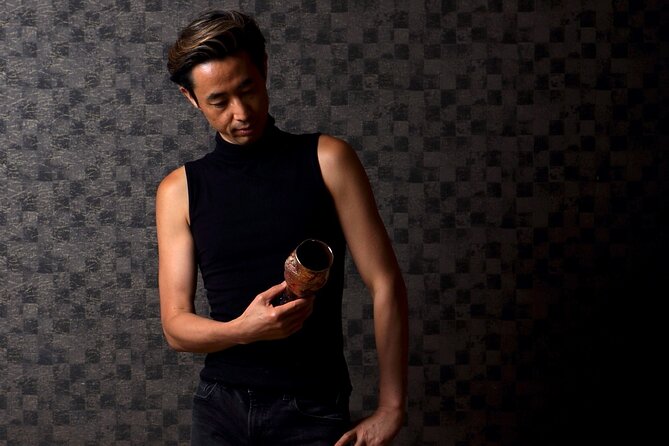
Master Taku Nakano is a ceramist who runs a pottery studio in Omotesando. His working idea is that a repaired object can become more beautiful and stronger than before it broke. That philosophy gives the class a clear purpose beyond simply painting a shiny line onto a plate.
Taku also explains where kintsugi comes from and how it connects with Japanese ideas about beauty. English-language instruction is available, and one participant specifically found his English good. Other assistants may help during a session, including Junko, who has guided participants through the plate repair at a comfortable pace.
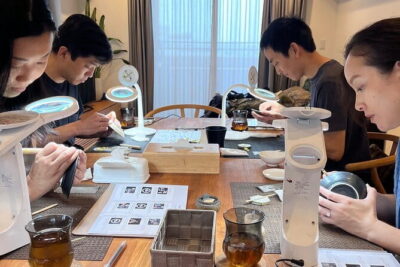
The class maximum is five people. That is one of the strongest practical features. You are not trying to copy a demonstration from the back of a large room. If your line is uneven or you need the next step repeated, the instructor can focus on your work.
What happens during the 90 to 110 minutes
The exact length depends on your selected option. The traditional class takes about 110 minutes, while the black-and-gold and yobitsugi choices take about 90 minutes.
You begin with an introduction to the pottery, the materials, and the basic idea of wabi-sabi. The plate you use has been made by Master Taku and prepared with lacquer, so you are working on a piece designed for the lesson rather than bringing an unknown object from home.
The teacher then leads you through the repair process. The supplied materials include the equipment needed for the class, and the lesson fee, taxes, and handling charges are included in the listed price. You do not need to bring tools or buy extra supplies at the studio.
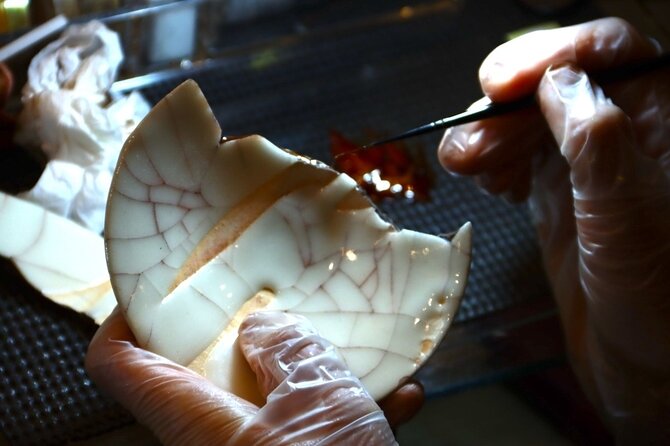
The work calls for attention rather than speed. You follow the damaged lines, apply the lacquer, and use pure gold powder to define the repaired area. The point is not to make every plate look identical. Your result will reflect the shape of the prepared pottery and the choices you make while working.
That hands-on pace is why the class can feel surprisingly absorbing. You have a small, precise task in front of you, and sightseeing noise drops away for a while. Several participants found the activity calming and even cathartic. You should expect a creative lesson, not a passive talk.
At the end, you take your plate home the same day. That is a useful advantage for visitors with limited time in Tokyo. You do not need to return on another day to collect it.
Option A: traditional natural lacquer and gold
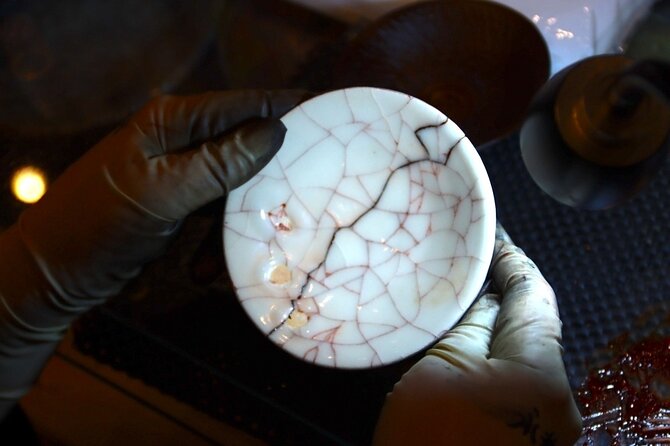
Option A is the closest match for anyone specifically seeking authentic kintsugi. It takes about 110 minutes and uses real natural urushi lacquer with pure gold powder.
This is the choice I would make if you want the clearest connection to the traditional technique. The natural lacquer gives the process a genuine material foundation, while the gold makes the repaired cracks the main visual feature.
The longer session also gives you more time to follow the steps at an unhurried pace. If you are interested in the craft itself, rather than only the final appearance, those extra minutes matter.
There is a practical point to keep in mind. This is not a quick souvenir workshop that you can squeeze between two timed attractions. Set aside the full session, plus travel time to Minami-Aoyama. The reward is a more substantial activity and a plate that feels made rather than purchased.
A few more Tokyo bookings worth comparing
- Sushi Making Tokyo Roll and Authentic Japanese Sushi Class
★ 5.0 · 3,971 reviews - Tokyo: Roll and Authentic Sushi Making Class in Asakusa
★ 4.9 · 1,957 reviews - Tokyo: Sushi Making Class in a Happi Coat near a Famous Spot
★ 4.9 · 1,377 reviews - Chopstick Making Workshop in Ginza
★ 4.8 · 1,366 reviews
Option B: the black-and-gold Shikkokurai plate
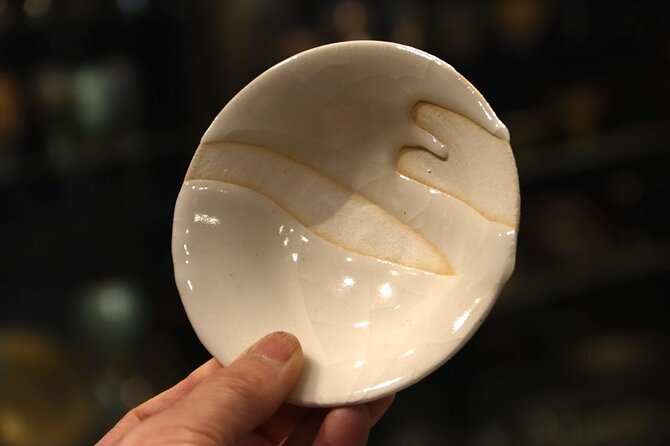
Option B takes about 90 minutes and uses a black plate with gold kintsugi. The method is the same as Option A, but the dark surface gives the finished piece a sharper, more modern look.
This may suit you if traditional pale pottery is not your style. Black and gold create a strong contrast, and the repaired lines become especially easy to see. It is also a shorter choice for a busy day.
The tradeoff is that you spend less time in the workshop. That may be fine if you want a compact introduction, but I would choose Option A if learning the natural-lacquer process is your main reason for booking.
The workshop description presents this choice as cool and sophisticated. That is a fair way to think about it, but remember that the technique remains the same. You are selecting a different visual starting point, not a completely different lesson.
Option C: decorative yobitsugi
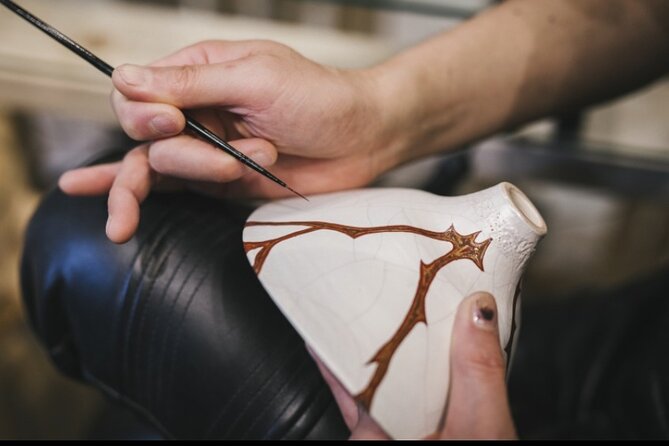
Option C introduces yobitsugi, described here as the highest technique among kintsugi techniques. Instead of repairing only the crack, you attach different decorations and materials to missing sections.
This gives you a more decorative project. If the idea of filling a missing part with an added material appeals to you, this option offers a different kind of creative decision than a standard gold line.
It also takes about 90 minutes. Like Option B, it works well for someone who wants a shorter class, though you still need enough time to listen carefully and complete the piece.
Because the three options use different visual approaches, look at your own taste before booking. Option A is the strongest choice for a traditional natural-lacquer and gold experience. Option B is bold and graphic. Option C is best suited to someone who wants the repair to include added decoration.
What you really get for $142.60
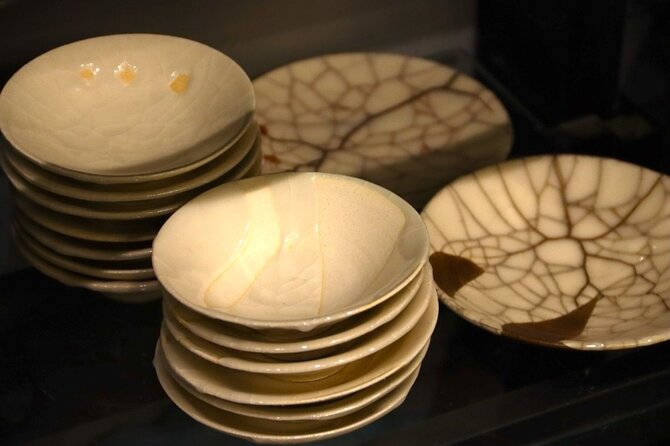
The cost is $142.60 per person. That is a serious price for a two-hour activity, but it includes the lesson, all equipment, the plate, taxes, fees, and handling charges. Most important, the plate is yours to take home.
I would compare the price with a guided craft lesson rather than with a museum ticket or a casual souvenir. You are paying for instruction from a practicing ceramist, a very small class, specialist materials, and a finished object. The use of real urushi lacquer and pure gold powder also places this above a basic craft session using imitation materials.
Value depends on how you travel. If you want to fill every hour with major sights, the price and fixed duration may feel heavy. If you want one memorable activity with a strong connection to Japanese art, the cost becomes easier to justify.
The small group improves the value. A maximum of five means the teacher can watch your work closely, and the supplied feedback repeatedly points to patient, clear assistance. That kind of guidance matters more in a delicate process than it would in a simple coloring or stamping class.
You also avoid the problem of carrying home a fragile, anonymous object from a shop with no memory attached. Your plate records the class, the place, and the work you put into it. For many people, that makes the souvenir worth more than its material cost.
The mindful break your itinerary may need
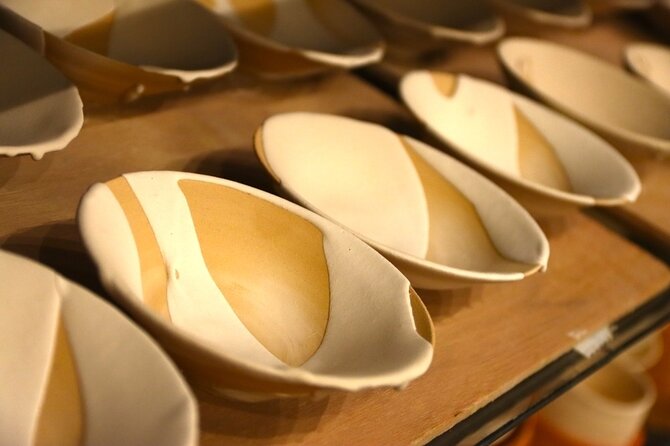
Tokyo can be wonderfully intense. You may spend a morning moving through stations, crossing crowded streets, and fitting several neighborhoods into one day. A quiet repair task gives you a different rhythm.
Kintsugi works well as a mindful activity because you must pay attention to a small area at a time. You are not racing through a checklist. The work asks for patience, and mistakes can become part of the design.
That does not mean the class is a meditation session. You are still learning a practical technique, listening to instructions, and handling materials. But the concentration can make a welcome pause between sightseeing days.
The personal meaning can also be stronger than expected. One participant described Master Taku’s story, the instruction, and the act of repairing pottery as cathartic. You should not book expecting a life-changing moment, but the craft gives you room to think about repair, use, and the value of objects.
It is also suitable for families and couples. A parent and daughter enjoyed the class together, and another couple attended with three other people. The task gives you something to discuss and compare without turning the experience into a competition.
Who should book this experience
I would recommend it most strongly to:
- People interested in Japanese ceramics, design, or traditional crafts
- Couples looking for a shared activity beyond sightseeing
- Families with children who can follow careful instructions
- Visitors who want a handmade Tokyo souvenir
- Anyone drawn to wabi-sabi and the meaning behind kintsugi
- First-time participants who prefer close guidance
It may be less suitable if you dislike fine handwork or want a fast, casual activity. The traditional option takes nearly two hours, and the process requires concentration.
You should also think about your schedule. The studio is in Minami-Aoyama, not at a major attraction where you can simply walk out and continue sightseeing. Since one person found the location difficult to find, use the address carefully and leave a time buffer.
Most people can participate, according to the supplied activity information. No special ability is listed as required. Still, the class involves a detailed manual task, so you should be comfortable following step-by-step instructions.
Booking details worth knowing
The experience uses a mobile ticket. Confirmation is sent within 48 hours of booking, subject to availability, so do not assume an instant confirmation if your plans are tight.
The activity is non-refundable and cannot be changed for any reason. If you cancel or request an amendment, you do not receive your money back. This makes travel insurance or a firm itinerary worth considering, though no insurance is included.
The session also requires a minimum number of participants. If the provider cancels because that minimum is not met, you are offered another date or experience, or a full refund.
The activity begins and ends at the Minami-Aoyama studio. Food, drinks, and hotel transportation are not included, so plan those separately.
Should you book the Master Taku kintsugi workshop?
Book it if you want to make something with a real connection to Japanese craft, and if a small, focused class sounds better than another hour of sightseeing. The natural lacquer and pure gold option is the best pick for an authentic introduction, while the black plate and yobitsugi choices give you shorter, more design-focused alternatives.
I would skip it if $142.60 feels too high for a two-hour activity, or if your Tokyo schedule is so tight that a hard-to-find studio and fixed class time will cause stress. For everyone else, the combination of Master Taku’s calm instruction, a maximum of five participants, and a plate you carry home makes this one of the more personal craft experiences you can add to a Tokyo visit.
FAQ
Where does the kintsugi workshop take place?
The workshop takes place at TNCA Minami-Aoyama Studio, 3-chōme-8-2 Minamiaoyama, Minato City, Tokyo 107-0062, Japan. The activity begins and ends at this meeting point.
How long does the workshop last?
The duration depends on the option. Option A takes about 110 minutes. Options B and C take about 90 minutes.
What materials are used in the authentic kintsugi option?
Option A uses real natural urushi lacquer and pure gold powder.
Do I get to keep the plate?
Yes. The plate used during the lesson is included, and you can take it home the same day.
How many people can join the workshop?
The maximum group size is five participants.
Are tools and equipment included?
Yes. All necessary equipment is included, along with the lesson fee, taxes, fees, and handling charges.
Is transportation or food included?
No. Hotel pickup and drop-off, food, and drinks are not included. The studio is near public transportation.
Can I cancel or change my booking?
No. The experience is non-refundable and cannot be changed for any reason. If the minimum number of participants is not reached and the provider cancels, you are offered another date or experience, or a full refund.
New on our Tokyo list
- From Tokyo: Mount Fuji & Hakone Full Day Private Tour★ 4.9 · 25 reviews
- Tokyo Spectacular View Day-Cruise in 90 Minutes★ 5.0 · 25 reviews
- Real Tokyo Runner Club : Daikoku Car Meet Night Tour with JDM Car★ 5.0 · 25 reviews
- 2.5 Hour-Guided Cycle Tour in the Central Tokyo★ 5.0 · 25 reviews
- Tokyo: 2-Hour Night Bike Tour of the City’s Hidden Gems★ 4.9 · 25 reviews
- Ramen Making from Scratch +Akihabara Tour –Cooking Class★ 5.0 · 25 reviews
- [Self-Drive] Tokyo & Daikoku Custom Car Driving Tour★ 4.9 · 25 reviews
- Samurai themed Entertainment show in Shinjuku★ 4.5 · 25 reviews
Japanese Culture Workshops, compared.
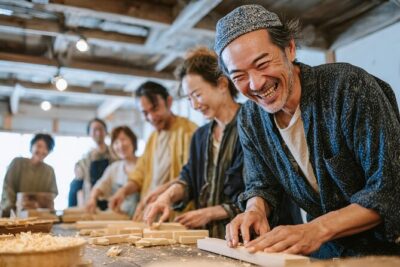
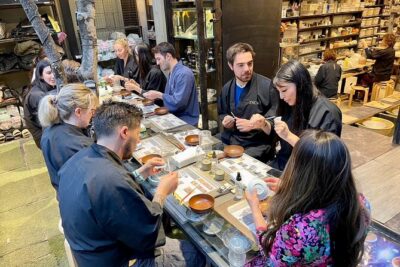
Kintsugi Experience: Art of Golden Joinery in Tokyo
Read our review →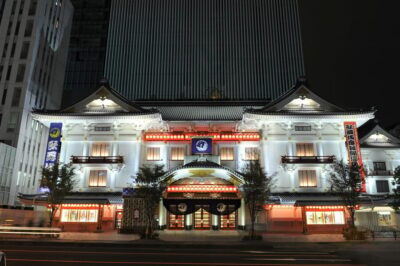
KABUKI Show at Kabukiza Theatre Admission Ticket
Read our review →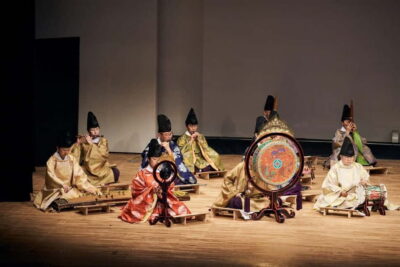
KABUKI, BUNRAKU, etc. presented by National Theatre
Read our review →
Kintsugi Workshop Class in Shibuya, Tokyo with mon cadeau
Read our review →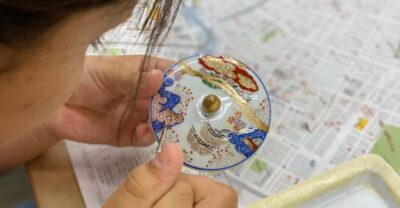

Discover the Art of Ikebana in Tokyo’s Historic Yanaka District
Read our review →Browse the lists this tour appears in