
Reviewed · SUSHI EXPERIENCES
Create Your Own Party Sushi Platter in Tokyo
Tokyo’s party sushi class teaches you four useful Japanese dishes in about two hours: thick futomaki rolls, round temari sushi, miso soup, and tamagoyaki. I like that you do not simply watch a demonstration. You prepare the food yourself, then eat the lunch you made. I also like the focus on dishes used for celebrations and home cooking, not only restaurant-style sushi. The main drawback is the fixed, non-refundable booking, so you need to be sure of your date.
The English-speaking instructors work beside you and offer help throughout the lesson. That makes this a good fit if sushi looks simple until you try shaping it. The class needs at least four people per booking and can hold up to 40, so the feel may range from a small social lesson to a fairly large group.
In This Review
- Key points at a glance
- Making celebratory sushi in Minato City
- What the two-hour lesson covers
- Why futomaki and temari sushi work well for groups
- English support makes the technique less intimidating
- A lunch you prepare yourself
- Is $100.73 per person good value?
- Getting to the meeting point and planning your morning
- Who will enjoy this Japanese cooking class?
- The booking rules deserve attention
- Should you book Create Your Own Party Sushi Platter in Tokyo?
- FAQ
- Where does the sushi-making class take place?
- What time does the activity start?
- How long does the cooking experience last?
- Where does the activity finish?
- What sushi dishes will I learn to make?
- Are other Japanese dishes included?
- Is lunch included?
- Are the instructors English-speaking?
- Is transportation included?
- Can I cancel or change my booking?
Key points at a glance
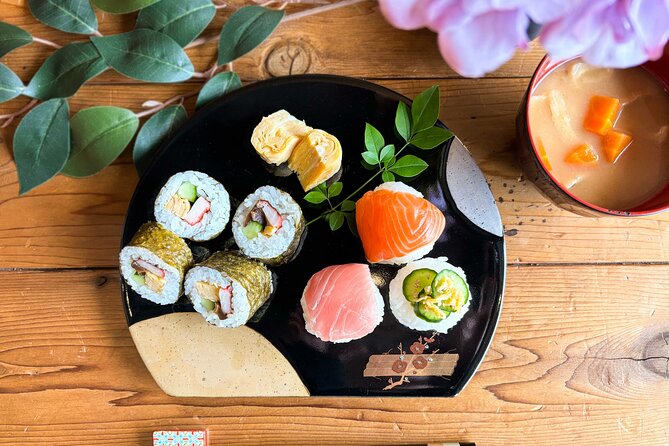
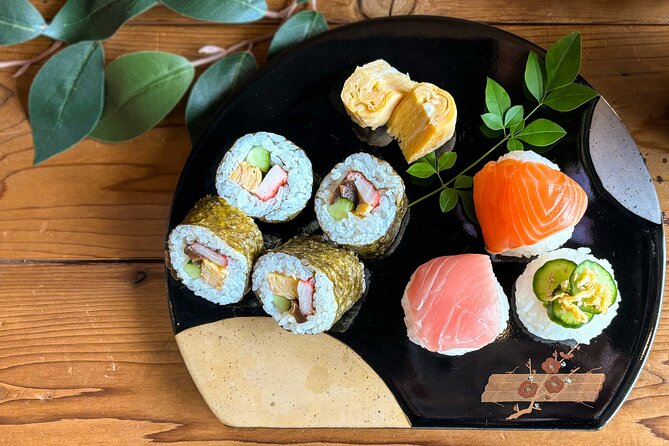
- Two kinds of party sushi: Learn futomaki, a thick nori roll with several fillings, and round temari sushi topped with sashimi and vegetables.
- Four Japanese dishes in two hours: The class also covers miso soup and tamagoyaki, two practical home-style staples.
- English-speaking support: Instructors assist you side by side, which is useful when rolling, shaping, or folding requires careful handling.
- Lunch is part of the lesson: Ingredients, the cooking experience, and the meal are included in the price.
- Convenient Minato City meeting point: Start at 11:30 a.m. and return to the same meeting point when the activity ends.
- Plan carefully before booking: The price is $100.73 per person, and cancellations or changes are not refunded.
Making celebratory sushi in Minato City
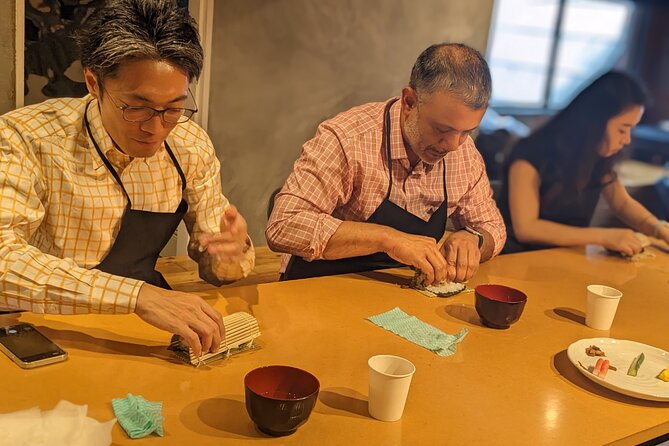
The appeal here is not just eating sushi in Tokyo. It is learning why certain sushi forms work so well for parties and special occasions. Futomaki and temari sushi are designed to look attractive when arranged on a table, so the class gives you a practical skill you can use after your holiday.
Futomaki is the larger roll. You place sushi rice and several ingredients on a sheet of nori, then work toward a firm, thick cylinder. The shape matters. A loose roll falls apart, while a roll that is packed too tightly can push the fillings out. This is the sort of small detail that makes a guided class worthwhile.
Temari sushi takes a different approach. Instead of making a long roll, you form rice into a round shape and top it with sashimi and vegetables. The finished pieces are neat and decorative, with each one looking like a small edible ornament. You get to compare two methods of shaping sushi, rather than repeating one recipe for the entire class.
I like this contrast. Futomaki teaches you how to manage layers, fillings, and pressure. Temari sushi teaches you how to control a small portion and present it attractively. Together, they give you a better sense of the care behind Japanese food preparation.
More sushi mornings and classes:
- Sushi Making Tokyo Roll and Authentic Japanese Sushi Class
★ 5.0 · 3,971 reviews - Tokyo: Roll and Authentic Sushi Making Class in Asakusa
★ 4.9 · 1,957 reviews - Make Sushi and Create Unforgettable Memories in Tokyo
★ 5.0 · 1,413 reviews
What the two-hour lesson covers
The class begins at 11:30 a.m. and lasts about two hours. The exact order of the dishes is not specified, so you should expect the instructor to organize the work around preparation and timing. The supplied ingredients are included, and lunch is served as part of the experience.
The sushi portion is the centerpiece. You learn to make both futomaki and temari sushi from scratch, rather than receiving pre-made pieces to decorate. That distinction matters. You handle the rice, shape the food, and see how presentation changes the character of the meal.
The instructors speak English and offer support at your side. This is especially helpful with futomaki, where a small mistake in placement or rolling can affect the final cut. It also helps with temari sushi, where consistent size and a smooth round form take some care.
You also learn miso soup. It is one of the most common Japanese home-style dishes, and it gives the class a warm, simple counterpoint to the more decorative sushi. The experience does not present sushi as the whole of Japanese cooking. It places sushi alongside an everyday soup that many people in Japan know from home meals.
Tamagoyaki rounds out the lesson. This Japanese rolled omelet is made by forming layers, so the technique is different from making a standard flat omelet. It may look humble beside colorful sushi, but it is an important part of the class because it shows the patient, precise side of Japanese home cooking.
Why futomaki and temari sushi work well for groups
Many sushi classes focus on the familiar small rolls or individual nigiri. This one uses shapes that are especially suited to sharing. Futomaki can be sliced into several pieces, while temari sushi can be arranged in rows or clusters on a serving plate.
That makes the lesson useful for more than a holiday memory. You can take the basic ideas home and adapt them for a birthday, family gathering, or casual dinner with friends. One particularly practical lesson is presentation. The food is meant to look good before anyone takes a bite.
The dishes also give you different levels of control. Futomaki involves several ingredients in one roll, so the final slice reveals a cross-section of the filling. Temari sushi is smaller and more individual. You can vary the toppings with sashimi and vegetables, creating a platter that looks varied without requiring a completely different recipe for every piece.
The supplied information does not specify the exact fish, vegetables, or fillings used on the day. If you have a strong preference or food concern, ask the provider before booking rather than assuming a particular ingredient will be available.
English support makes the technique less intimidating
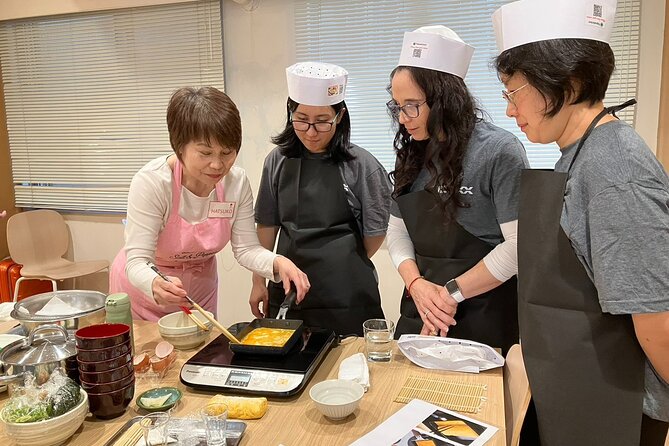
Sushi preparation has a reputation for being fussy. That reputation is not entirely wrong. Rice texture, rolling pressure, and neat shaping all affect the result. A class can turn those details from a source of frustration into the most useful part of the meal.
Here, English-speaking instructors support you throughout the lesson. You can expect guidance while you work, rather than trying to copy a demonstration from across a room. That side-by-side help is valuable for anyone who has never made sushi before.
It also makes the class more social. The strongest praise focuses on the friendly teaching style, the chance to work together, and the way the activity combines cooking with team building. If you are visiting Tokyo with friends or arranging a group outing, the shared task gives everyone something to do with their hands and talk about.
The possible tradeoff is group size. A booking must include at least four people, and the maximum is 40. Four people could make the class feel fairly personal. A much larger group may feel more like a group event, with less individual attention at certain moments. The provider does not promise a small class, so keep that in mind if close instruction is your top priority.
A few more Tokyo bookings worth comparing
- Mt Fuji and Hakone 1-Day Bus Tour Return by Bullet Train
★ 5.0 · 26,383 reviews - 1-Day Tokyo Bus Tour
★ 5.0 · 14,250 reviews - Tokyo: TOKYO SKYTREE® Admission ticket
★ 4.5 · 11,192 reviews - Tokyo: teamLab Planets TOKYO Digital Art Museum Entry Ticket
★ 4.6 · 9,779 reviews
A lunch you prepare yourself
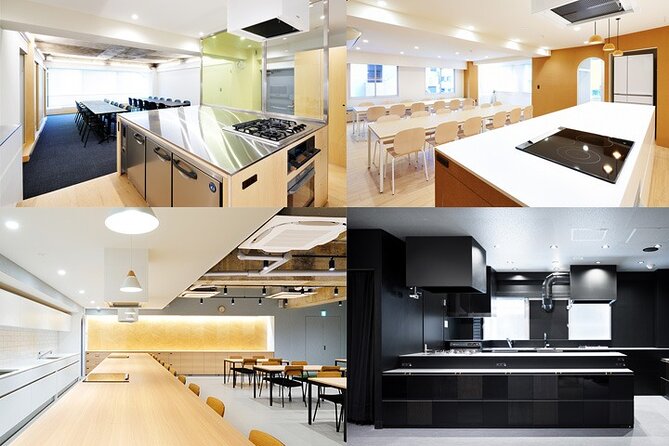
Lunch is included, along with the ingredients and cooking experience. The value comes from combining a meal with instruction, rather than paying separately for a class and then finding lunch afterward.
You should think of this as an activity meal, not a restaurant replacement. The main point is the process of preparing your own food. Eating the sushi, soup, and omelet afterward gives the work a clear finish and lets you see how the dishes fit together.
That personal connection is one reason this class can become a memorable part of a Tokyo visit. You are not only looking at Japanese food culture from the outside. You are learning a few techniques, making mistakes with support, and sitting down to eat the result.
The meal may also help you understand the difference between food made for daily life and food made for special occasions. Miso soup and tamagoyaki are useful home-style recipes. Futomaki and temari sushi bring a more festive look. The combination is well chosen for a short introductory class.
Is $100.73 per person good value?
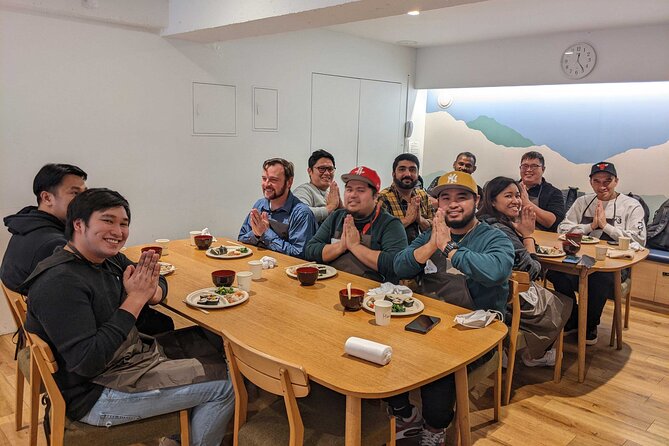
At $100.73 per person, this is not a budget lunch. You are paying for a two-hour guided activity, ingredients, English-speaking instruction, and the meal you prepare. The price makes more sense if you want a hands-on cultural activity rather than simply a plate of sushi.
The value is strongest for people who enjoy learning by doing. You get four dishes, two different sushi styles, and instruction that you can potentially repeat at home. The class also avoids the need to arrange private transportation, since you make your own way to the meeting point in Minato City.
For a group of friends, the price can cover both entertainment and lunch. The team-building angle is useful for colleagues or organized groups, too. You are given a shared project, and the finished food creates a natural reward.
The value is weaker if you only want to eat sushi or if you have little interest in cooking. You could spend less on a regular meal and save time. This is also not the best choice for someone who needs flexible plans, since the experience is non-refundable and cannot be changed for any reason after booking.
Getting to the meeting point and planning your morning
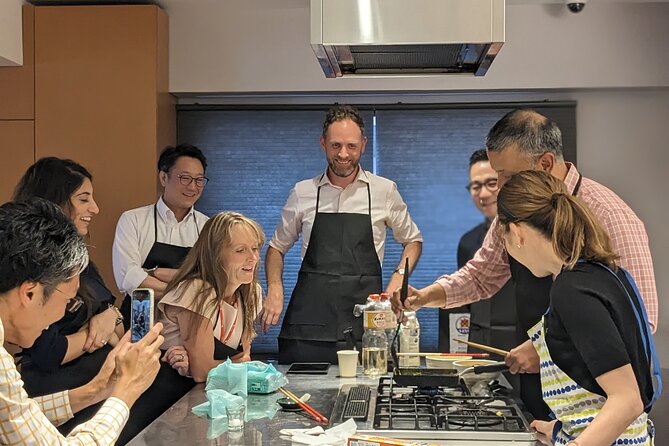
The class starts at 11:30 a.m. in Minato City, Tokyo. The precise street address is not provided in the supplied details, so check your mobile ticket carefully for the meeting instructions and allow enough time to reach the start point.
No private transportation is included. You are responsible for getting to Minato City on your own, then returning from the same meeting point after the class ends. Since the activity finishes around 1:30 p.m., it can fit neatly into an afternoon of sightseeing, provided your next stop is not far away.
The mobile ticket is useful for keeping the booking details on your phone. Confirmation is received at the time of booking. I would still check the meeting address, start time, and any arrival instructions before leaving your hotel.
A two-hour cooking class is long enough to feel substantial but short enough to fit into a busy Tokyo schedule. The 11:30 a.m. start also places lunch at a natural point in your day. You do not need to plan a separate midday restaurant stop, though you should avoid scheduling a time-sensitive attraction immediately afterward.
Who will enjoy this Japanese cooking class?
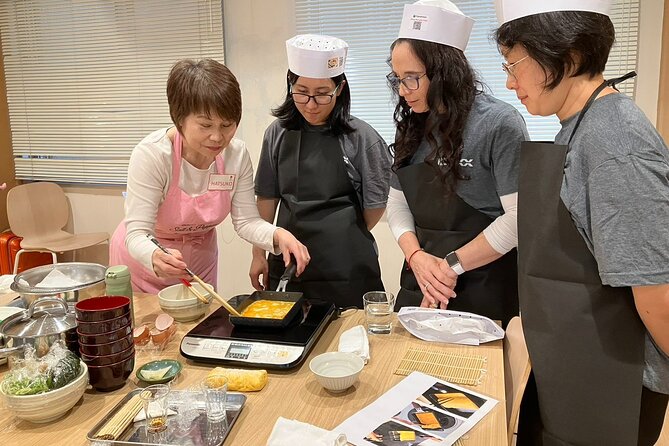
This activity suits friends, families, couples, and work groups who want to do something together. It is especially good for people who like food but want more than a tasting. The shared preparation creates conversation and gives the group a clear goal.
It also suits first-time visitors who want an introduction to Japanese food culture without committing to a full-day cooking program. In two hours, you cover sushi, soup, and omelet, gaining a broad sample of Japanese cooking rather than one narrow recipe.
Home cooks will get extra value from the class. Futomaki and temari sushi can be adapted for parties, and the miso soup and tamagoyaki recipes are useful beyond the holiday. If your goal is to recreate a Japanese meal at home, this is more practical than a class focused only on watching a chef work.
I would be more cautious about booking for very young children or anyone who dislikes structured food preparation. The provided details do not state age limits, child pricing, or accessibility information, so ask the provider before confirming if those points matter to your group.
The booking rules deserve attention
This experience is non-refundable. You cannot cancel or request a change for any reason and receive your money back, so book only when your Tokyo plans are firm.
There is also a minimum of four people per booking. If the minimum number is not met and the provider cancels the activity, you will be offered another date or experience, or receive a full refund. That protection applies to a cancellation caused by the minimum not being reached, not to a change of mind on your part.
The maximum group size is 40. That range is wide, and the experience may feel different depending on the number booked. If you are arranging a private-feeling lesson, contact the provider first and ask about the expected group size.
Should you book Create Your Own Party Sushi Platter in Tokyo?
Book it if you want a social, hands-on introduction to Japanese cooking and like the idea of eating food you prepared yourself. The combination of futomaki, temari sushi, miso soup, and tamagoyaki gives you more variety than a standard sushi workshop, while the English-speaking instructors make the techniques easier to follow.
I would especially recommend it for a group of friends or colleagues. The shared work, colorful finished platter, and included lunch give the outing a natural rhythm. It is also a sensible pick for a food-focused Tokyo itinerary when you want a practical skill to take home.
Skip it if your schedule is uncertain, you need a refundable booking, or you mainly want a restaurant meal. At $100.73, the experience earns its price through instruction and participation, not through the amount of food alone. For the right person, that is the point.
FAQ
Where does the sushi-making class take place?
The class starts in Minato City, Tokyo, Japan.
What time does the activity start?
The start time is 11:30 a.m.
How long does the cooking experience last?
The activity lasts approximately two hours.
Where does the activity finish?
The activity ends back at the meeting point.
What sushi dishes will I learn to make?
You will learn to make futomaki and temari sushi. Futomaki is a thick roll made with sushi rice, several ingredients, and nori. Temari sushi is round-formed rice topped with sashimi and vegetables.
Are other Japanese dishes included?
Yes. The class also teaches miso soup and tamagoyaki, a Japanese rolled omelet.
Is lunch included?
Yes. Lunch, ingredients, and the cooking experience are included.
Are the instructors English-speaking?
Yes. English-speaking instructors support you during the class.
Is transportation included?
No. Private transportation is not included. You must make your own way to the meeting point.
Can I cancel or change my booking?
No. The experience is non-refundable and cannot be changed for any reason. If the provider cancels because the minimum number of participants is not reached, you will be offered another date or experience, or a full refund.
New on our Tokyo list
- Sumi-e Experience in a relaxing green tea shop in Tokyo★ 5.0 · 3 reviews
- Tokyo : Kamikaze Street Drift Ride★ 5.0 · 3 reviews
- Private Zen Meditation in English in Shinjuku, Tokyo★ 5.0 · 3 reviews
- Onsen Spa in Tokyo and Asakusa Bar Hopping with Local Guide★ 5.0 · 3 reviews
- Easy for everyone! Now you can play handmade mini shamisen and show off to everyone! Musical instruments, sweets and live music★ 5.0 · 3 reviews
- Tokyo: Private Tsukiji Street Food & Sake with Local Guide★ 5.0 · 3 reviews
- Mt Fuji Exploration Tour with Free Japanese Kusa Mochi from Tokyo★ 4.5 · 3 reviews
- Tokyo Tsukiji Fish Market Walking and Exploring Hidden Gems Tour★ 5.0 · 3 reviews
Sushi Experiences, compared.
Sushi Making Tokyo Roll and Authentic Japanese Sushi Class
Read our review →
Roll and Authentic Sushi Making Class in Asakusa
Read our review →
Make Sushi and Create Unforgettable Memories in Tokyo
Read our review →
Sushi Making Class in a Happi Coat near a Famous Spot
Read our review →
Tokyo Sushi Making Class in Tsukiji with Professional Chef
Read our review →
Tokyo Night Foodie Tour in Shinjuku – Seasonal Sushi, Wagyu Beef
Read our review →
Tsukiji Fish Market Guided Tour and Sushi Making with Pro Chef
Read our review →
Tsukiji Fish Market Sushi Making Class with Pro Chef
Read our review →Browse the lists this tour appears in