
Reviewed · JAPANESE CULTURE WORKSHOPS
Ecotourism and Woodcraft with a Mountain Artist Near Tokyo
For more than 300 years, the Inoue forestry family has cared for the mountains around Hannō. On this small-group outing, you learn how that work is done, cut a real log, sit quietly beneath the trees, and make a useful souvenir with a pyrography pen. It is a rare look at working forest management, not just a walk in the woods.
I especially like two things here: the setting is a private forest normally closed to the public, and the hands-on work gives the tour some muscle. You do not only hear about thinning and wood use. You handle the saw, smell cedar and cypress, and create an Edo Castle-shaped smartphone stand with your chosen kanji.
The main consideration is time. Two and a half hours goes quickly, and lunch is not included. You also need to reach Higashi-Agano Station on your own, although an air-conditioned vehicle takes you from the station to the activity site and back.
In This Review
- Key points to know before booking
- Why this Hannō forest experience feels different
- Meeting at Higashi-Agano Station
- At Kirari, where forestry becomes craft
- Learning why thinning keeps a forest healthy
- Cutting a log with your own hands
- Choosing a tree and taking a forest bath
- Making a kanji woodcraft at Kirari
- What the $93.93 price really covers
- Who will enjoy this most
- Timing, weather, and practical details
- Should you book this Hannō tour?
- FAQ
- Where does the experience begin?
- How long does the experience last?
- Is transportation included?
- Is lunch included?
- How many people can join the tour?
- What will I make during the craft activity?
- What happens if the weather is poor?
Key points to know before booking
- A private forest near Tokyo: Visit an internationally certified forest that is normally closed to the public.
- A 300-year forestry tradition: Learn how the Inoue family manages old trees and keeps the forest healthy.
- Three kinds of wood: Notice the different aromas and uses of local timber.
- Real log cutting: Use a saw yourself and discover that woodcutting takes more effort than it looks.
- Quiet forest time: Choose a tree, sit beneath its canopy, and practice a simple form of forest bathing.
- A useful handmade souvenir: Burn a kanji onto a wooden piece shaped like Edo Castle, which becomes a phone stand.
Why this Hannō forest experience feels different
Many nature outings near Tokyo keep you on a path and point out attractive scenery. This one brings you into the working side of the forest. You hear why trees are thinned, how timber became linked to Tokyo, and what it takes to manage a mountain over generations.
The local product is called Nishikawa timber. The name refers to wood from the western side of Tokyo, and the material once held an important place in Tokyo architecture. That connection gives the tour a useful bit of context: the forest is not an isolated patch of green, but part of the story of how the capital was built.
The guide describes foresters as mountain artists. It is a fitting term. Their work involves choosing which trees should remain, which should be removed, and how the forest can continue to grow without being stripped of its value. The lesson is practical rather than abstract, which makes the ecological message easier to understand.
You also get to experience the forest with several senses. The scent of cedar and cypress is part of the visit, as is the feel of cut wood and the sound of a saw. If you spend most of your Japan trip in stations, shopping streets, temples, and museums, this is a welcome change of pace.
More craft workshops in Tokyo:
- Tokyo Shinjuku Chopsticks Making Class
★ 5.0 · 1,763 reviews - Kintsugi Experience: Art of Golden Joinery in Tokyo
★ 5.0 · 467 reviews - Authentic Pure Gold Kintsugi Workshop with Master Taku in Tokyo
★ 5.0 · 217 reviews
Meeting at Higashi-Agano Station
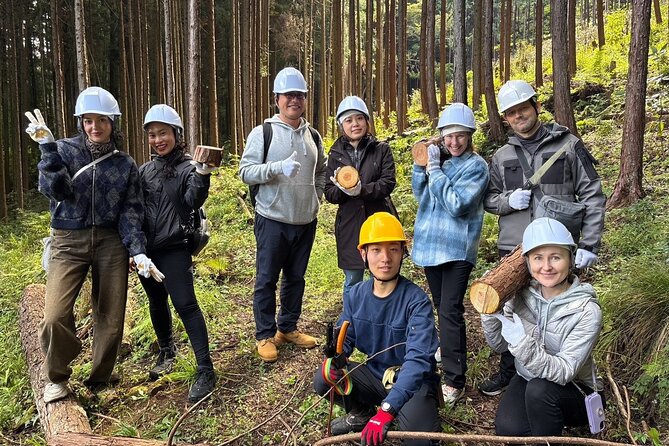
The tour begins at Higashi-Agano Station in Hannō, Saitama Prefecture. After you exit the ticket gate, look for the guide holding a tour placard. This is a small group, with no more than eight people, so the meeting should be fairly easy to manage.
The station setting is already a clue about the day ahead. You are surrounded by nature rather than city blocks, and the meeting point gives you a clear place to gather before heading into the forest. Confirmation is provided when you book, and the tour is near public transportation.
Your train fare is not included in the $93.93 price. That matters when you compare the total cost with other Tokyo excursions. The trip to Higashi-Agano is part of your planning, but the station meeting point also keeps the tour straightforward. You do not need to find a remote trailhead by yourself.
From the station, the guide drives the group to Kirari in an air-conditioned vehicle. The ride is included, and the same vehicle returns you to the station at the end. Private transportation from your own starting point is not included, so plan to arrive at Higashi-Agano independently.
At Kirari, where forestry becomes craft
The main two-hour portion takes place at Kirari, a woodworking studio connected with the local timber tradition. Here, a forestry master explains Nishikawa timber and the history of forestry in the area.
The family connection is a major part of the experience. The business is associated with more than three centuries of forest care, and the guide Shun-san explains the family’s connection to the mountain, the trees, and the customs surrounding forest work. One part of that tradition involves giving thanks to the mountain gods before entering the forest.
That detail adds a cultural layer without turning the outing into a formal religious tour. You are being shown that forestry is not only about production. It also involves respect, responsibility, and a sense of duty passed from one generation to the next.
The studio setting also helps connect the tree to the finished object. Instead of treating wood as a generic material, you learn that cedar, cypress, and other woods have different smells, textures, strengths, and uses. If you study architecture or design, you may find this especially useful. The tour makes the material feel specific and local.
Learning why thinning keeps a forest healthy
Thinning is one of the most important subjects covered during the visit. The basic idea is simple: some trees are removed so that the remaining trees have better access to light, air, and space. Done carefully, thinning supports a healthier forest and produces usable timber at the same time.
This is worth understanding because a well-managed forest does not mean leaving every tree untouched. A forest can look full and healthy while still needing careful decisions about density and growth. The forestry master explains those decisions in the context of Nishikawa timber and the local mountains.
You will likely get more from this section if you ask about the trees directly in front of you. Notice their size, bark, spacing, and scent. Then compare those observations with what you learn about their role in the forest. The lesson becomes much clearer when you connect it to the living trees around you.
Safety is taken seriously. Helmets and gloves are provided, which is useful when you move through a working forest and handle equipment. Most people can participate, but you should be comfortable with a short outdoor activity and hands-on work.
A few more Tokyo bookings worth comparing
- Mt Fuji and Hakone 1-Day Bus Tour Return by Bullet Train
★ 5.0 · 26,383 reviews - 1-Day Tokyo Bus Tour
★ 5.0 · 14,250 reviews - Tokyo: TOKYO SKYTREE® Admission ticket
★ 4.5 · 11,192 reviews - Tokyo: teamLab Planets TOKYO Digital Art Museum Entry Ticket
★ 4.6 · 9,779 reviews
Cutting a log with your own hands
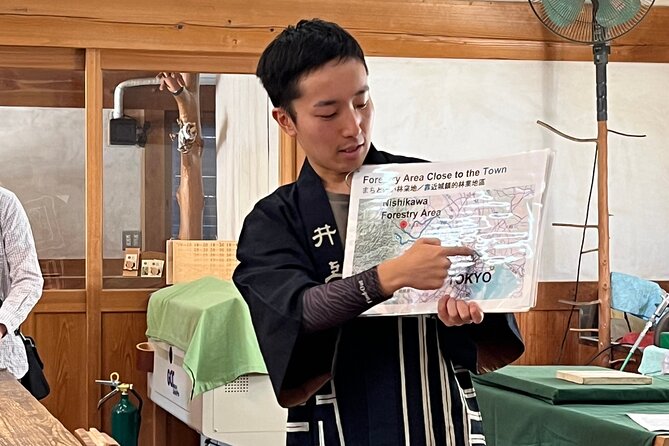
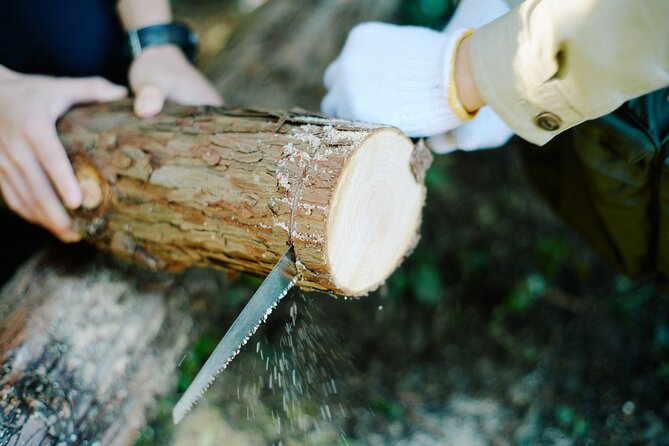
The log-cutting activity is one of the tour’s most memorable parts because it quickly corrects any romantic ideas you may have about sawing wood. A saw does not glide through a log with no effort. You need rhythm, patience, and cooperation if you are working with another person.
That physical effort gives you a better sense of what timber production involves. You feel the resistance of the wood and see the sawdust collect. Even a short task can make the difference between simply hearing that wood is a valuable resource and understanding why.
The activity is not presented as a test of strength. Follow the guide’s instructions, use the safety equipment, and let the tool do its work. If you rush, you will only make the task harder. The point is to take part in the process, not to finish first.
I like this portion because it balances the quieter forest time. The tour asks you to listen and observe, then gives you something direct to do. It is also a good choice for families and mixed-age groups, provided everyone can manage the physical activity.
Choosing a tree and taking a forest bath
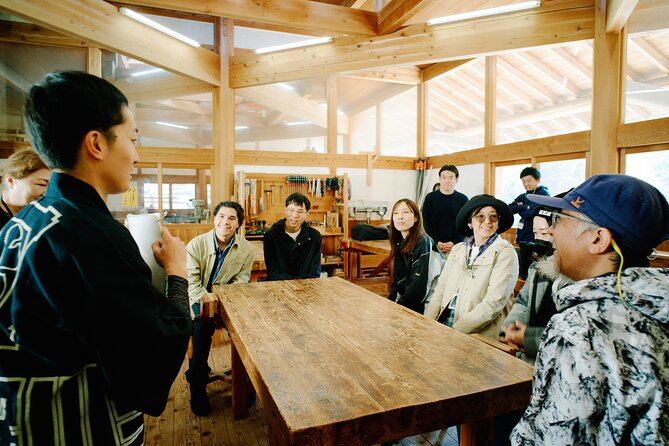
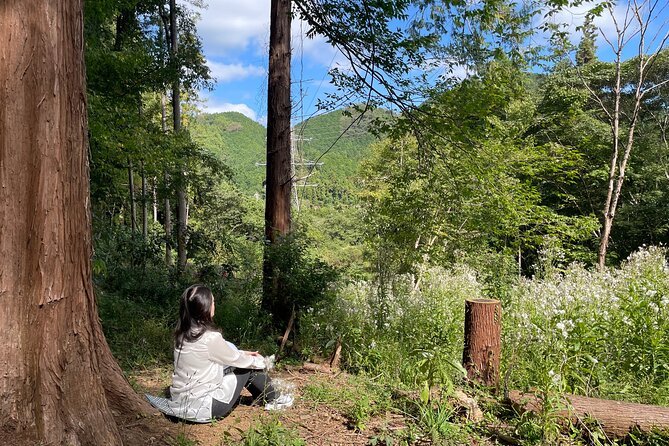
After the explanation and log cutting, you get time to slow down. You can find a tree that speaks to you, sit beneath its canopy, and take in the forest without needing to fill every minute with conversation.
This is the forest-bathing portion of the outing. The value is not in a long hike or a dramatic viewpoint. It is in the pause. You smell the trees, notice the light, and listen to the quiet. For anyone spending several days in Tokyo, that change in pace may be the most useful part of the trip.
The wording around choosing a tree gives the activity a personal touch, but you do not need to treat it as a solemn ceremony. Simply pick a place where you feel comfortable and allow yourself a few quiet minutes. The forest is doing most of the work.
The experience is especially suited to people who want nature without committing to a full-day hike. You get access to a private setting and an explanation of local forestry, but the schedule remains compact. That makes it practical for a short break from the city.
Making a kanji woodcraft at Kirari
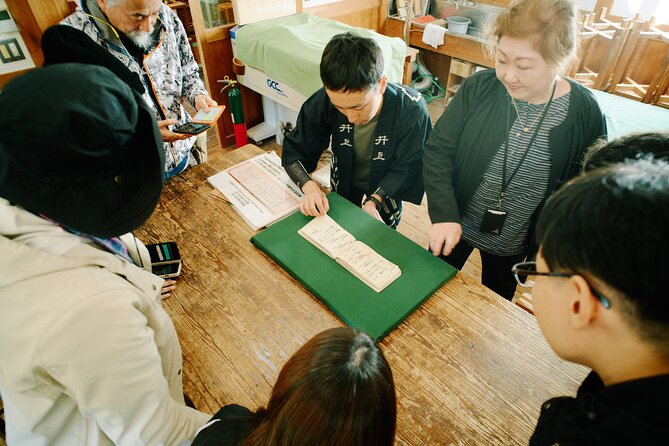
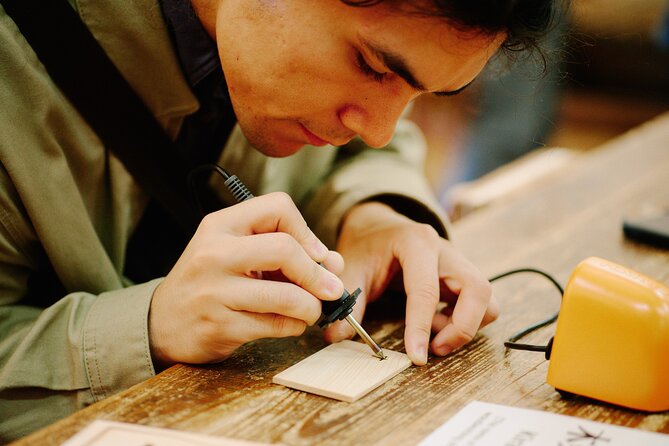
The final activity turns local wood into something you can use at home. With a pyrography pen, you inscribe a kanji of your choice onto a wooden piece shaped like Edo Castle.
The item becomes a smartphone stand, so it is more than a decorative trinket. You have a practical object that also carries a memory of Hannō, Japanese woodcraft, and the day’s lesson about Tokyo’s timber. Choosing the kanji is part of the fun, but you should think about your design before the pen touches the wood.
Pyrography requires care. The pen burns the surface, so the mark cannot be erased in the same way as pencil. Follow the instructions, work slowly, and accept that a handmade piece will have a personal look rather than factory-perfect lines.
The Edo Castle shape is a clever link between the forest and the capital. Nishikawa timber helped supply Tokyo, while the finished craft refers to one of the city’s best-known historic sites. You carry away a small reminder of that connection.
People who enjoy making things will likely rate this part highly. It is also a useful feature for anyone who wants a souvenir with a story but does not want another mass-produced charm or key ring.
What the $93.93 price really covers
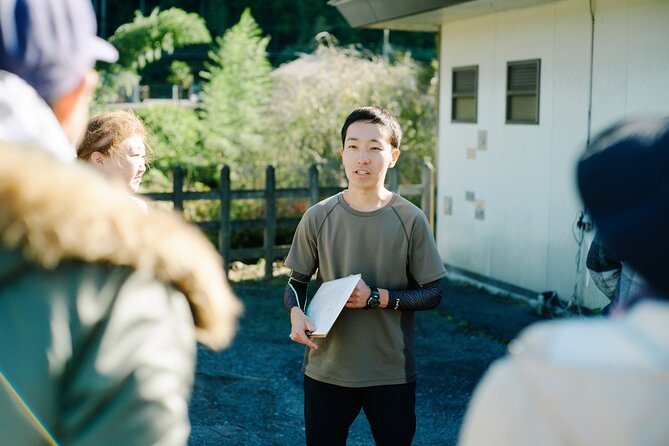
At $93.93 per person, this is not the cheapest way to spend a morning near Tokyo. The price makes more sense when you look at what is bundled into the visit: instruction from a forestry family, access to a private forest, an included vehicle from the station, log cutting, forest time, safety equipment, and a woodcraft activity.
You are paying for access and teaching as much as for the object you make. The forest is normally closed to the public, and the experience depends on a guide who can explain how the trees are managed. That is a different proposition from visiting a public park on your own.
The group limit of eight also matters. A small group gives the guide more room to explain the saw, answer questions, and watch the craft activity. It should feel more personal than a large coach excursion, though the exact group size on your date can vary.
Lunch is not included. The tour returns to Higashi-Agano Station around lunchtime, and the guide can recommend local restaurants. You might also use the timing to continue toward Hannō Station, Chichibu, Kawagoe, or Moomin Valley Park, all mentioned as nearby options for extending your day.
Who will enjoy this most
I would recommend this outing to you if you like practical cultural experiences, local industry, and quiet time outdoors. It has enough activity to keep you involved, but it does not demand a full day of hiking.
Architecture students and design-minded visitors have a clear reason to book. You will see how wood is selected, managed, cut, and shaped, with a direct link between forestry and buildings in Tokyo. The material is treated as part of a local story, not just as craft supply.
Families may also find the mix appealing. The log cutting adds action, the forest provides room to breathe, and the smartphone stand gives everyone a finished project. Still, the tour is not a theme park attraction. Children should be able to listen to safety instructions and take part in careful hands-on work.
It also suits you if you want to support ecotourism in a direct way. The outing explains why responsible forestry includes removing trees, using timber, and continuing long-term care. That is a more grounded lesson than simply being told to appreciate nature.
You may want to skip it if you want a major scenic hike, a full-day itinerary, or a meal included in the price. The forest time is peaceful, but the tour is short and structured around forestry education and craft. If your main goal is sightseeing in central Tokyo, the travel time to Hannō may not fit your plans.
Timing, weather, and practical details
The total duration is about two hours and 30 minutes. The listed schedule allows about 10 minutes at Higashi-Agano Station to meet and transfer, two hours at Kirari, and about 10 minutes for the return to the station.
The tour requires good weather. If poor weather forces a cancellation, you are offered another date or a full refund. A minimum number of participants is also required, and if that minimum is not reached, you receive the choice of another date or experience, or a full refund.
Free cancellation is available until 24 hours before the start time. If you cancel or request changes inside that 24-hour window, you will not receive a refund. Keep the local time in mind when calculating the cut-off.
The experience is confirmed at booking, and most people can participate. Since you will be outdoors, handle a saw, and use a pyrography pen, wear clothes and shoes suited to practical activity. The supplied information does not specify a detailed accessibility plan, so contact the operator if you need particular arrangements.
Should you book this Hannō tour?
Book it if you want a compact, thoughtful escape from Tokyo that combines ecology, family forestry, quiet time, and making something with your hands. The private forest access and the connection to more than 300 years of timber care give the visit real substance.
I would choose it over a standard nature walk when you want to understand how Japanese forests are managed. The log cutting and pyrography also keep the experience active, while the forest-bathing portion gives you a calm break.
Think carefully about the price, the separate train fare, and the short duration. For the right visitor, the $93.93 cost buys a rare view of working forestry and a useful handmade souvenir. For someone seeking a dramatic hike or a cheap outdoor stroll, it is probably not the best match.
FAQ
Where does the experience begin?
The tour begins at Higashi-Agano Station in Hannō, Saitama Prefecture. Meet the guide outside the ticket gate, where the guide will be holding a tour placard.
How long does the experience last?
The experience lasts about two hours and 30 minutes. This includes the meeting and return transfers, with about two hours spent at Kirari.
Is transportation included?
An air-conditioned vehicle takes you from Higashi-Agano Station to the activity site and returns you to the station. Your transportation costs to reach the meeting point are not included.
Is lunch included?
No. Lunch is not included. The tour returns around lunchtime, and the guide can recommend local restaurants.
How many people can join the tour?
The activity has a maximum of eight participants.
What will I make during the craft activity?
You will use a pyrography pen to inscribe a kanji of your choice onto a wooden piece shaped like Edo Castle. The finished item serves as a smartphone stand.
What happens if the weather is poor?
If the experience is canceled because of poor weather, you will be offered a different date or a full refund. The same choice applies if the minimum number of participants is not reached.
New on our Tokyo list
- Sumi-e Experience in a relaxing green tea shop in Tokyo★ 5.0 · 3 reviews
- Tokyo : Kamikaze Street Drift Ride★ 5.0 · 3 reviews
- Private Zen Meditation in English in Shinjuku, Tokyo★ 5.0 · 3 reviews
- Onsen Spa in Tokyo and Asakusa Bar Hopping with Local Guide★ 5.0 · 3 reviews
- Easy for everyone! Now you can play handmade mini shamisen and show off to everyone! Musical instruments, sweets and live music★ 5.0 · 3 reviews
- Tokyo: Private Tsukiji Street Food & Sake with Local Guide★ 5.0 · 3 reviews
- Mt Fuji Exploration Tour with Free Japanese Kusa Mochi from Tokyo★ 4.5 · 3 reviews
- Tokyo Tsukiji Fish Market Walking and Exploring Hidden Gems Tour★ 5.0 · 3 reviews
Japanese Culture Workshops, compared.
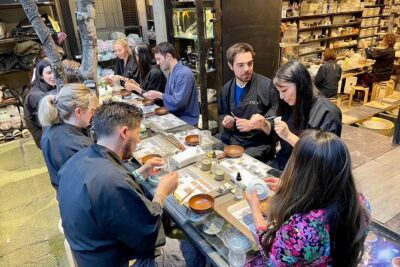
Kintsugi Experience: Art of Golden Joinery in Tokyo
Read our review →
Authentic Pure Gold Kintsugi Workshop with Master Taku in Tokyo
Read our review →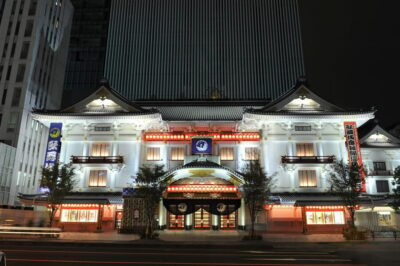
KABUKI Show at Kabukiza Theatre Admission Ticket
Read our review →
KABUKI, BUNRAKU, etc. presented by National Theatre
Read our review →
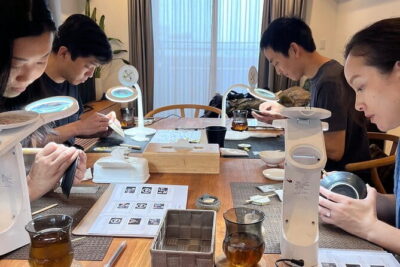
Kintsugi Workshop Class in Shibuya, Tokyo with mon cadeau
Read our review →
Browse the lists this tour appears in