
Reviewed · WALKING TOURS
Explore the Local “Non-touristy” Side of Tokyo: Jujo and Akabane Walking Tour
Tokyo gets more interesting when you leave the major sights behind. This three-hour walk takes you through Jūjō Ginza Shopping Arcade, a working neighborhood market with prepared foods, fresh produce, clothing, and everyday Japanese life. You then continue to a leafy park, old castle remains, and Akabane’s local drinking streets.
I like the route for two clear reasons: it shows you how ordinary Tokyo neighborhoods function, and the small format, capped at eight people, leaves room for questions. Food guidance is another strong point. A guide such as Fumiko may add tastings, tea, temple customs, and practical explanations about Japanese life. The main consideration is that food, drinks, and transportation are extra, and three hours goes quickly.
In This Review
- Key points at a glance
- Why Jūjō and Akabane make a smart Tokyo walk
- Jūjō Ginza: Tokyo shopping without the souvenir filter
- Shimizuzaka Park: a quiet pause after the arcade
- Inatsuke Castle Remains and the story of Ōta Dōkan
- Akabane Ichibangai: izakayas before the evening rush
- What the guide adds to the experience
- Is $71.53 a fair price?
- Practical details before you reserve
- Who will enjoy this Jūjō and Akabane walk?
- Should you book it?
- FAQ
- How long is the Jūjō and Akabane walking tour?
- Where does the tour begin?
- Where does the tour end?
- Are food and drinks included?
- How large is the group?
- What happens if I need to cancel?
Key points at a glance
- Jūjō Ginza has about 500 shops, making it a useful place to see daily shopping rather than souvenir hunting.
- The route ends at Akabane Station, after a look at Ichibangai’s daytime pubs and izakayas.
- Fumiko is one guide associated with the experience, with a style that can include food, tea, temple customs, and local history.
- The walk is capped at eight people, while the activity information also describes it as private for your group.
- Shimizuzaka Park and Inatsuke Castle Remains add green space and historical context between the two shopping districts.
- The $71.53 price buys about three hours with a local guide, but meals, tastings, and transport are not included.
Why Jūjō and Akabane make a smart Tokyo walk
Most first-time Tokyo routes concentrate on Shibuya, Asakusa, Harajuku, and the Imperial Palace. Those places have plenty to offer, but they can leave you with a narrow picture of the city. Jūjō and Akabane show another Tokyo: practical, residential, food-focused, and shaped by regular neighborhood routines.
The walk starts at Jūjō Station at 3:00 p.m. That timing matters. You are not being asked to make an early morning start, and the afternoon light suits the shopping streets and park stops. By the time you reach Akabane, you see a different side of the district, where several pubs and izakayas open around midday and older residents may be enjoying a drink well before evening.
You should think of this as a guided neighborhood walk, not a major-sight tour. There are no grand museum interiors or famous viewing platforms. The reward is the small detail: what people buy, how shops display food, how a local market works, and why a particular street matters to residents.
More walking routes in Tokyo:
- Tokyo Tsukiji Fish Market Food and Culture Walking Tour
★ 5.0 · 3,184 reviews - Tokyo: Imperial Palace and Shogun Historical Walking Tour
★ 5.0 · 2,251 reviews - Tokyo: Shinjuku Local Bar and Izakaya Guided Walking Tour
★ 4.9 · 1,794 reviews
Jūjō Ginza: Tokyo shopping without the souvenir filter
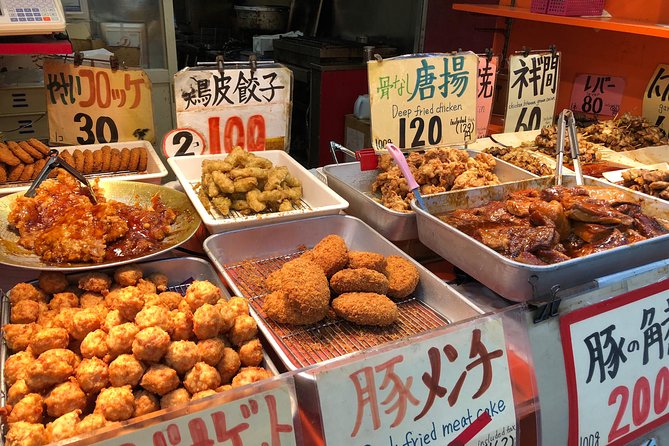
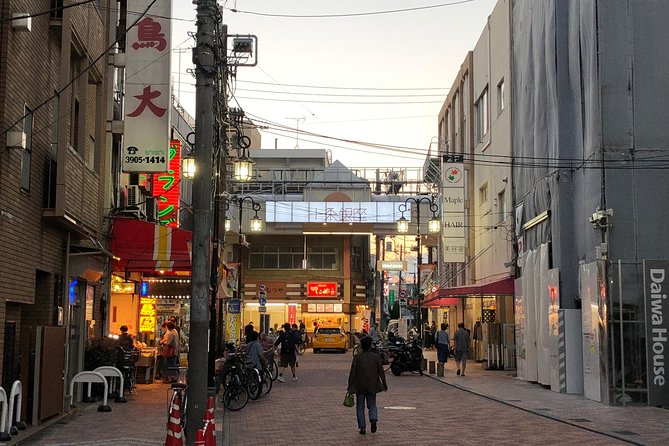
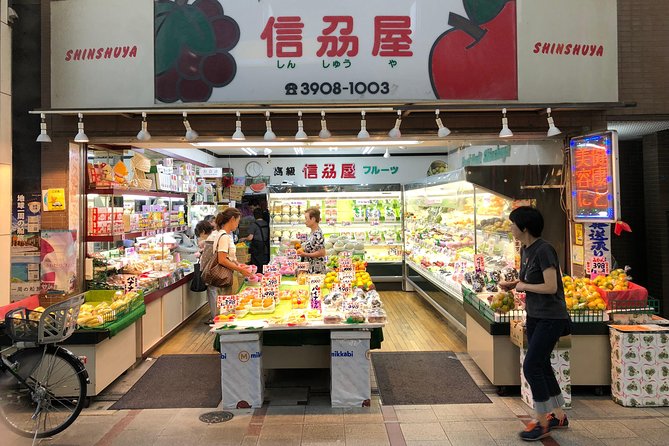
The first hour belongs to Jūjō Ginza Shopping Arcade. This is one of Tokyo’s old shopping streets, with roughly 500 businesses selling prepared foods, fresh foods, clothing, and other everyday goods. The scale gives your guide plenty to point out, and it also gives you a chance to see how a local shopping district earns its place in the community.
I like starting here because a shopping street tells you more about daily life than a polished department store does. You might see food prepared for takeout, household items, inexpensive clothing, and vendors serving people who live nearby. The point is not simply to look at the storefronts. Your guide helps explain what you are seeing and may introduce you to vendors and their products.
Food is one of the better reasons to choose this tour. An experience led by Fumiko can include information about local foods and tastes, and one account of the tour also describes tea tasting and explanations of Japanese customs. The exact food portion is not listed as an included meal, so plan to pay for anything you choose to eat or drink.
Bring a little cash or a payment method you are comfortable using in small shops, though the tour information does not promise that every vendor accepts a particular form of payment. You should also avoid treating the arcade like a rapid-fire tasting contest. An hour sounds generous, but it can pass quickly once you stop to ask questions or examine unfamiliar foods.
The market is likely to be the most visually active part of the walk. It is also where the guide’s value is clearest. Without help, you can admire the signs and displays, but you may not understand which foods are common, how a shopping street fits into neighborhood life, or what makes Jūjō Ginza historically important.
Shimizuzaka Park: a quiet pause after the arcade
After the shopping arcade, the route spends about 20 minutes at Shimizuzaka Park. This is a tree-filled neighborhood park with a pond, an open square, and a roller slide that runs for 52 meters. Children use it as a play area, while local residents use the park as a place to gather and take a break.
The stop works well as a change of pace. You move from shopfronts, food displays, and narrow commercial streets into a calmer public space. I appreciate this kind of stop because it shows that Tokyo is not only concrete, rail lines, and packed sidewalks. Small parks serve a real purpose in the city, even when they are not famous enough to appear in guidebooks.
Do not expect a major garden or a long scenic walk. Twenty minutes is enough for a short look and an explanation of the area, not for a full park visit. If you are traveling with children, the slide may be a pleasant surprise, but the schedule does not promise extended playtime.
This is also a useful moment to ask your guide about neighborhood life. Fumiko’s tour style has included general information about living in Japan, so a quiet stop like this can help connect the physical setting to wider questions about public space, children, and local communities.
Inatsuke Castle Remains and the story of Ōta Dōkan
The next stop is Inatsuke Castle Remains, scheduled for about 15 minutes. The site relates to Ōta Dōkan, the 15th-century warlord associated with the construction of Edo Castle. The remains sit at an elevation of about 21 meters above sea level, and a statue of Ōta Dōkan is also located here.
You will not be touring a preserved castle complex. This is a brief historical stop at a remnant site, and the admission information says no ticket is included. The appeal depends heavily on the guide’s explanation. On your own, you might see a small historical marker or statue and move on. With context, the place becomes part of the larger story of the area before modern Tokyo took shape.
The short timing keeps the tour moving, which is helpful if you want a broad introduction rather than a single-site history lesson. It also means you should keep your expectations measured. Anyone seeking detailed military history or substantial architectural remains may find this stop too brief.
For most people, the value lies in the contrast. You have just seen a living market district, and now you pause at a site linked to a medieval figure connected with Edo Castle. That mix of present-day routines and older history is one of the route’s strongest features.
A few more Tokyo bookings worth comparing
- Mt Fuji and Hakone 1-Day Bus Tour Return by Bullet Train
★ 5.0 · 26,383 reviews - 1-Day Tokyo Bus Tour
★ 5.0 · 14,250 reviews - Tokyo: TOKYO SKYTREE® Admission ticket
★ 4.5 · 11,192 reviews - Tokyo: teamLab Planets TOKYO Digital Art Museum Entry Ticket
★ 4.6 · 9,779 reviews
Akabane Ichibangai: izakayas before the evening rush
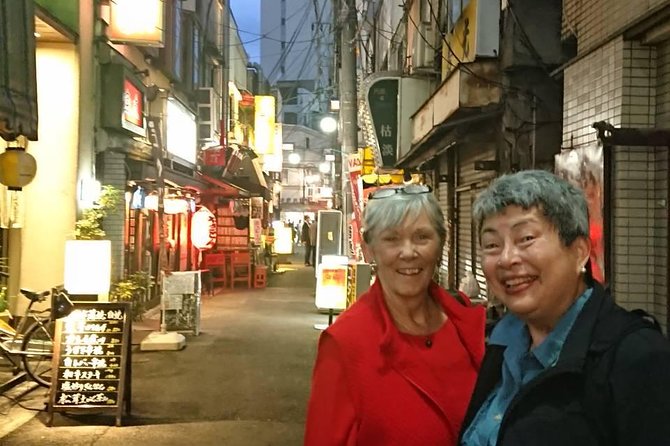
The final major stop lasts about 40 minutes at Akabane Ichibangai Shopping Street. This area is lined with several dozen pubs and izakayas, many of which open at noon. The timing of your tour gives you a look at the street before the usual nighttime crowd develops.
Akabane Ichibangai is not polished for sightseeing. That is precisely why it can be interesting. You may see older men having a mid-afternoon sake at a familiar local bar, with the street operating as part of everyday neighborhood culture rather than as a performance for visitors.
Your guide can explain what an izakaya is, how these establishments fit into Japanese social life, and what you might order if you return later. You should not assume that food or drinks are part of the tour price. They are specifically listed as extra, so budget separately if you want to try something.
The stop is better for atmosphere and explanation than for a full meal. Forty minutes is enough to walk through the area and perhaps make a purchase, but it is not a long restaurant crawl. If you are hoping for an evening drinking tour, this experience finishes at Akabane Station instead.
That ending is practical. You finish at the Akabane Station ticket gate, making it easier to continue your evening elsewhere in Tokyo. Since the tour does not provide transportation to or from the attractions, you are responsible for reaching Jūjō Station and continuing from Akabane after the walk.
What the guide adds to the experience
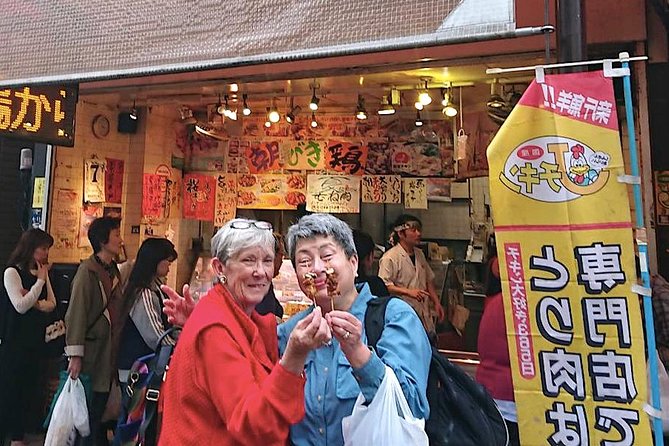
The guide is the difference between a pleasant walk and a useful one. The route itself is easy to describe: arcade, park, castle remains, izakaya street. The right guide connects those places and explains why they matter.
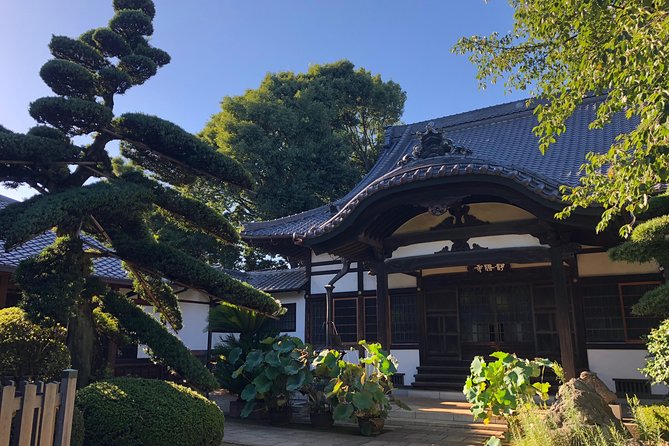
Fumiko is specifically associated with this experience, and her approach has included more than basic sightseeing. Food information, tastings, tea, temple customs, offerings, prayers, history, and general details about life in Japan have all been part of the experience described for her tour. Those additions matter because they give you ways to understand behavior that can otherwise seem mysterious or unfamiliar.
The tour may include a temple visit or related cultural explanation depending on how the walk is operated, but the fixed route information names the four stops above. You should confirm the precise plan if a particular tasting or temple activity is essential to your decision.
The small format is useful here. With a maximum of eight people, you have a better chance of hearing explanations in a busy arcade and asking questions without holding up a large group. The activity information also calls it a private activity for your group, so check the booking details carefully if the distinction between a small shared group and a fully private tour matters to you.
Is $71.53 a fair price?
At $71.53 per person, this is not a bargain-priced orientation walk. You are paying for roughly three hours, a local guide, and access to an area that can be difficult to interpret on your own. Local taxes are included, but food, drinks, and transport are not.
The price makes more sense if you value explanation. You could walk through Jūjō Ginza and Akabane Ichibangai independently for little more than the cost of getting there. What you would miss is the organized connection between the market, the park, the castle remains, and the izakayas, plus help with food and cultural customs.
I would consider the tour good value for a first visit to Tokyo if you want a local orientation and enjoy asking questions. It is less compelling if you only want to shop, eat, or explore at your own pace. The fixed three-hour route limits spontaneous stops, and your personal purchases come out of your pocket.
Group discounts may improve the value for people booking together. The experience is often booked well in advance, around 68 days ahead on average, so you should not leave it until the last moment if the 3:00 p.m. time and Jūjō to Akabane route fit your plans.
Practical details before you reserve
You meet at Jūjō Station in Tokyo’s Kita City area at 3:00 p.m. The walk ends at the Akabane Station ticket gate. Hotel pickup and drop-off are not included, and neither is transportation to or from the attractions.
Wear comfortable shoes and expect a moderate level of physical activity. The route includes walking through a shopping arcade and between several neighborhood stops, so it is not designed as a seated food tour. The provided information does not give a precise walking distance or a detailed accessibility assessment, so ask the operator directly if stairs, uneven surfaces, or mobility concerns affect your plans.
A mobile ticket is available, and confirmation is sent at booking. The cancellation policy allows a full refund if you cancel at least 24 hours before the start time. Changes or cancellations inside that window are not accepted for a refund.
The tour is operated by Trip Designer Inc. The listed rating is 5 out of 5 from three reviews, which is a very small sample. I would treat that as a positive sign, not as proof that every guide, group, or day will feel identical.
Who will enjoy this Jūjō and Akabane walk?
You are a good match for this tour if you have already seen Tokyo’s major districts, or if you prefer local streets to headline attractions. It suits people who like food, neighborhood history, cultural questions, and the simple pleasure of watching a city go about its day.
It also works well for a short Tokyo stay. The route gives you a focused introduction to two connected districts without requiring a full-day commitment. The 3:00 p.m. start leaves your morning free and places you in Akabane at a useful time for deciding what to do next.
Families may appreciate the park and the short historical stops, though the tour’s moderate physical requirement and adult-oriented izakaya area mean it is not built specifically around children. Food-focused visitors should enjoy the market, but remember that tastings are not guaranteed as an included feature and purchases cost extra.
You may want to skip it if your priority is famous architecture, large museums, or a long meal. You should also reconsider if you dislike guided pacing or prefer to spend an hour browsing one street without moving on.
Should you book it?
Book this walk if you want Tokyo explained through its ordinary places: a market where people shop, a park used by residents, a modest historical site, and a drinking street that begins work before sunset. The route is strongest when your goal is understanding local routines rather than collecting famous sights.
I especially like the combination of Jūjō Ginza and Akabane Ichibangai. One shows food and shopping in the daytime; the other shows a more social side of the neighborhood. Add the guide’s food, tea, and cultural explanations, and the $71.53 fee can be reasonable for a first look at Tokyo beyond the standard circuit.
Skip it if you expect included meals, major castle ruins, or a full evening of izakaya hopping. For everyone else, this is a compact, thoughtful way to see a less tour-focused part of the city, with enough structure to make the neighborhood meaningful and enough local detail to send you back on your own later.
FAQ
How long is the Jūjō and Akabane walking tour?
The tour lasts approximately three hours.
Where does the tour begin?
It begins at Jūjō Station in Tokyo’s Kita City area at 3:00 p.m.
Where does the tour end?
The tour ends at the Akabane Station ticket gate.
Are food and drinks included?
No. Food and drinks are not included in the tour price.
How large is the group?
The experience is described as a small-group tour with a maximum of eight people. It is also described as a private activity for only your group, so confirm the format when booking if this detail is important to you.
What happens if I need to cancel?
You can receive a full refund if you cancel at least 24 hours before the experience start time. Cancellations or changes made less than 24 hours in advance are not accepted for a refund.
New on our Tokyo list
- Sumi-e Experience in a relaxing green tea shop in Tokyo★ 5.0 · 3 reviews
- Tokyo : Kamikaze Street Drift Ride★ 5.0 · 3 reviews
- Private Zen Meditation in English in Shinjuku, Tokyo★ 5.0 · 3 reviews
- Onsen Spa in Tokyo and Asakusa Bar Hopping with Local Guide★ 5.0 · 3 reviews
- Easy for everyone! Now you can play handmade mini shamisen and show off to everyone! Musical instruments, sweets and live music★ 5.0 · 3 reviews
- Mt Fuji Exploration Tour with Free Japanese Kusa Mochi from Tokyo★ 4.5 · 3 reviews
- Tokyo Tsukiji Fish Market Walking and Exploring Hidden Gems Tour★ 5.0 · 3 reviews
- Tokyo: Private Tsukiji Street Food & Sake with Local Guide★ 5.0 · 3 reviews
Walking Tours, compared.
Tokyo Tsukiji Fish Market Food and Culture Walking Tour
Read our review →
Imperial Palace and Shogun Historical Walking Tour
Read our review →
Shinjuku Local Bar and Izakaya Guided Walking Tour
Read our review →
Asakusa Walking Tour with Sensoji Temple Visit
Read our review →
Tokyo Castle & Imperial PalaceーShogun Walking Tour
Read our review →
Browse the lists this tour appears in