
Reviewed · JAPANESE CULTURE WORKSHOPS
Furoshiki Cloth Wrapping
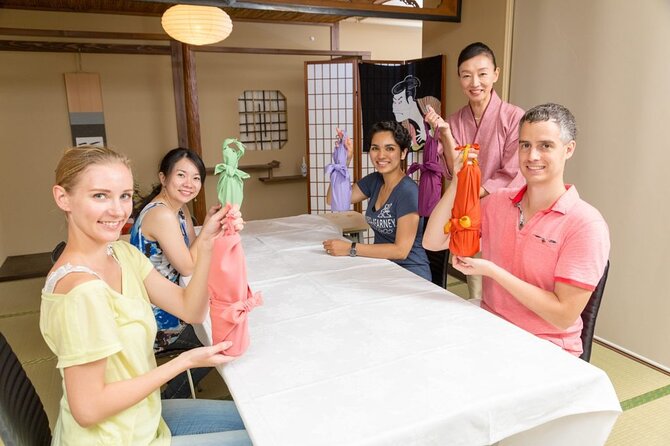
Furoshiki turns a square of cloth into a gift wrap, shopping bag, bottle carrier, hat, or cover, using little more than careful folds and a few reliable knots. This Tokyo workshop teaches seven techniques in about 90 minutes, then sends you home with a cloth to keep practicing.
I like two things here. First, the craft has a practical point: you learn reusable alternatives to paper wrapping and disposable bags. Second, the class connects each fold to Japanese culture and daily life, so you are making something useful rather than simply watching a demonstration.
The main consideration is the price, $77.26 per person. That is a fair deal if you value instruction, cultural context, and the included souvenir cloth, but it is a lot for a short craft lesson if you only want a quick demonstration.
In This Review
- Key points
- Why Furoshiki Is More Than Pretty Gift Wrap
- Starting With Folds and Knots
- Seven Techniques With Real Uses
- The Culture Behind the Cloth
- A 90-Minute Pace That Keeps You Busy
- Kikai Shinkō Kaikan in Shibakōen
- Group Size and the Feel of the Lesson
- What You Take Home
- Is $77.26 a Fair Price?
- Who Should Book This Workshop?
- Booking and Cancellation Details
- FAQ
- Where does the furoshiki workshop take place?
- How long does the activity last?
- How many furoshiki techniques will I learn?
- Is a furoshiki cloth included?
- Is transportation included?
- How many people can join the workshop?
- Can I cancel for a full refund?
- Should You Book It?
Key points
- Seven techniques in one session: Learn folds and knots for gifts, bags, covers, hats, and other useful forms.
- A cloth to take home: Your included furoshiki lets you repeat the techniques after leaving Tokyo.
- Practical cultural lesson: The activity explains furoshiki as both a traditional art and a modern eco-friendly choice.
- Small enough to follow: The maximum group size is 28 people, with instruction from a nationally accredited furoshiki instructor.
- Convenient central setting: The class meets and ends at Kikai Shinkō Kaikan in Shibakōen, near public transportation.
- Good for families: A 15-year-old participant and parent enjoyed learning the knots and useful wraps together.
Why Furoshiki Is More Than Pretty Gift Wrap
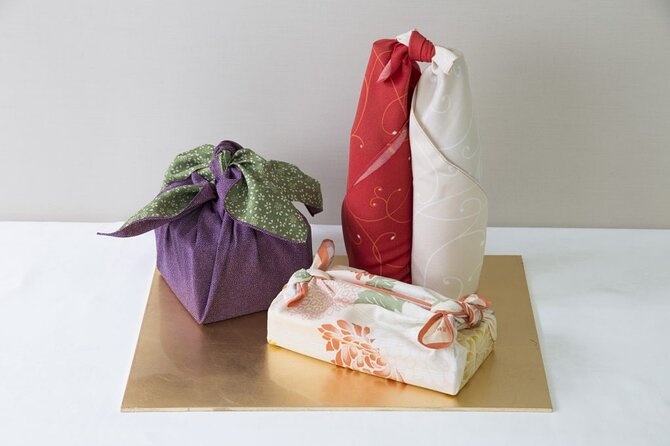
Furoshiki is often introduced as Japanese cloth wrapping, but that description undersells it. The cloth can protect an object, carry belongings, cover a surface, or become a wearable accessory. Its value comes from doing several jobs without needing a different product for each one.
That makes this a useful activity for you if you enjoy crafts with a purpose. You are not simply producing a decoration to admire for five minutes. You are learning a set of folds you can use for birthdays, picnics, shopping, storage, or small gifts.
The environmental side is equally practical. A furoshiki can be folded away and used again, unlike paper wrapping that is usually discarded after one opening. The workshop presents this as part of the craft’s modern significance in Japan, giving you a clear reason to keep the cloth rather than treating it as a disposable souvenir.
I also like the cultural balance. The lesson includes the history and meaning of furoshiki, but the focus remains hands-on. You learn by tying, adjusting, loosening, and trying again. That is the right approach for a craft based on touch and proportion.
More craft workshops in Tokyo:
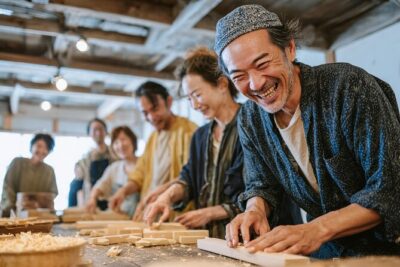
- Tokyo Shinjuku Chopsticks Making Class
★ 5.0 · 1,763 reviews - Kintsugi Experience: Art of Golden Joinery in Tokyo
★ 5.0 · 467 reviews - Authentic Pure Gold Kintsugi Workshop with Master Taku in Tokyo
★ 5.0 · 217 reviews
Starting With Folds and Knots
The class begins with the basics. You work with the square cloth and learn how its corners, edges, and center affect the finished shape. The first knots are important because they provide the foundation for nearly every later technique.
You might find the first attempts less graceful than the final examples. That is normal with furoshiki. A knot that is too tight can make the cloth awkward to open, while a loose knot may let the contents slip. Clear instruction matters here, and the nationally accredited instructor is included in the price.
This opening section should suit beginners well. You do not need prior sewing, origami, or craft experience. The activity is built around simple physical actions, so the challenge is remembering the sequence rather than mastering a difficult tool.
Pay attention to how the instructor handles the fabric. Small changes in where you place an item or how evenly you pull the corners can change the result. If you plan to use furoshiki at home, these details are more useful than simply copying a finished shape.
Seven Techniques With Real Uses
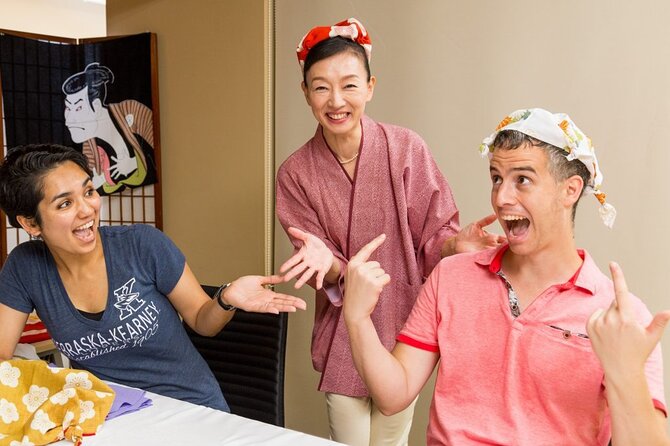
The central part of the workshop covers seven wrapping methods. The techniques include ways to make bags, hats, covers, and other useful cloth forms, as well as gift wrapping. That variety is a strong reason to choose this class over a short demonstration focused on one attractive fold.
Each method gives the same square of fabric a different job. A bag can help carry items. A cover can protect or conceal something. A hat or wearable accessory shows how furoshiki can move beyond wrapping altogether. Gift wrapping adds a personal touch without requiring tape, scissors, or a roll of paper.
The class is also a good reminder that reusable does not have to mean complicated. Once you know the knot pattern, the cloth can be untied and used again. You may not remember all seven methods immediately, which is why the included furoshiki is important. It gives you a chance to repeat the lesson at home while the movements are still familiar.
I would take notes mentally by purpose rather than by technical name. Remember one method as the gift wrap, another as the bag, and another as the cover. That practical system may help you recall the right fold more easily than trying to memorize seven formal labels.
The Culture Behind the Cloth
The cultural explanation gives the activity more weight than a standard craft class. Furoshiki is presented as a traditional Japanese art that still has a place in modern life. You learn how an old method can answer a current concern: how to carry and wrap things with less waste.
This context is especially useful if you are visiting Tokyo and want an activity tied to Japan rather than a generic souvenir-making session. The object you take home has a clear connection to the country, but the experience also asks you to think about how you use materials in everyday life.
The class appears to keep that cultural material accessible. You do not need prior knowledge of Japanese customs or textile traditions. The instructor explains the background while you practice, so the information has a direct connection to what is in your hands.
I appreciate that the cultural lesson is practical rather than overly formal. You can leave with a better sense of why furoshiki matters, plus several ways to use it. That combination makes the workshop suitable for people who want both an activity and a little cultural understanding.
A few more Tokyo bookings worth comparing
- Mt Fuji and Hakone 1-Day Bus Tour Return by Bullet Train
★ 5.0 · 26,383 reviews - 1-Day Tokyo Bus Tour
★ 5.0 · 14,250 reviews - Tokyo: TOKYO SKYTREE® Admission ticket
★ 4.5 · 11,192 reviews - Tokyo: teamLab Planets TOKYO Digital Art Museum Entry Ticket
★ 4.6 · 9,779 reviews
A 90-Minute Pace That Keeps You Busy
The advertised duration is about one hour and 30 minutes. That is long enough to cover the basic knots, work through seven techniques, and allow some practice, but short enough to fit neatly into a busy Tokyo day.
The pace should be active. You will not spend the whole session listening to a lecture. The format moves from basic folds and knots toward more advanced applications, with your hands doing most of the work.
Ninety minutes is also a sensible length for a beginner craft. A much shorter class might leave you with one trick and no confidence. A much longer session could become tiring, especially if you are already walking around Tokyo. Here, the duration gives you a focused break without taking half a day.
Do not schedule something that requires you to leave at the exact end time. The stated duration is approximate, and practice-based activities can take a little longer when a group is working through the same steps. The activity ends back at the meeting point, Kikai Shinkō Kaikan, so you can continue your day from there.
Kikai Shinkō Kaikan in Shibakōen
The meeting point is Kikai Shinkō Kaikan, at 3-chōme-5-8 Shibakōen, Minato City, Tokyo 105-0011. The venue is near public transportation, but transportation to the activity is not included.
That makes the location reasonably easy to fit into a Tokyo itinerary, provided you allow time to reach the building. Check the meeting address carefully before leaving your hotel, especially if you are relying on a phone map. Tokyo addresses can be difficult to interpret at speed, and the activity begins at the specified venue rather than picking you up elsewhere.
The class begins and ends in the same place. This is helpful because you do not need to arrange a second meeting point after the lesson or wonder where your belongings have gone. It also makes the workshop easier to combine with nearby plans.
No food or drinks are included. That is not a serious issue for a 90-minute activity, but you should eat beforehand if this class falls between sightseeing stops. Treat it as a focused cultural lesson, not a meal-based experience.
Group Size and the Feel of the Lesson
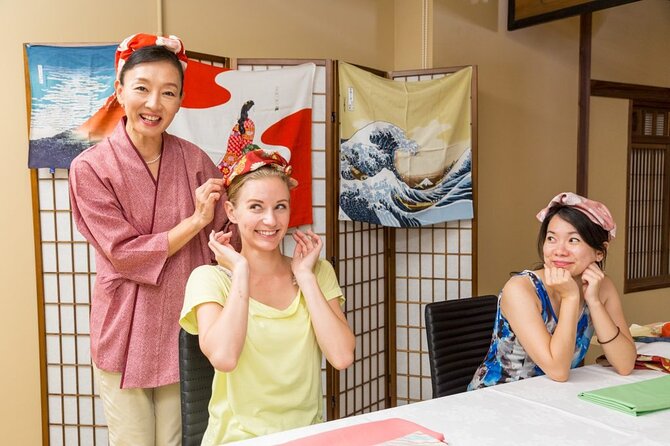
The maximum group size is 28 people. That is not a private class, and you should not expect one-on-one coaching throughout. Still, it is a manageable upper limit for a demonstration followed by guided practice.
Your experience will depend partly on where you sit and how quickly you pick up the knots. If you have trouble, ask for help early rather than waiting until the cloth has become a tangled puzzle. Craft instruction becomes easier when the teacher can correct one small step before it affects the whole wrap.
The instructor is nationally accredited, and the activity places real emphasis on teaching rather than simply handing you a finished souvenir. Friendly, clear instruction is particularly valuable here because furoshiki can look effortless when demonstrated but feel less obvious when you try it yourself.
The class can accommodate most people, according to the stated participation information. It is also a good choice for families. A parent and 15-year-old daughter enjoyed learning the knots and practicing several useful wraps together, which suggests the activity can work across age groups without feeling like a children’s craft session.
What You Take Home
The included souvenir furoshiki is one of the strongest parts of the value. You receive the material needed to continue practicing, not just a certificate or a small object with no further use.
That cloth can become a reminder of the lesson, but it can also become part of your routine. Use it for a small gift, carry an item, cover something, or practice the folds again when you get home. The more often you use it, the more worthwhile the class fee becomes.
The keepsake also solves a common problem with short workshops: forgetting the skill after leaving. You may remember the general idea but lose the exact hand movements. Having your own cloth gives you a way to rebuild the sequence.
If you are buying gifts in Tokyo, the cloth could also support your own wrapping later. The class does not include food, drinks, transportation, or other extras, so the furoshiki itself is the main tangible inclusion beyond instruction.
Is $77.26 a Fair Price?
At $77.26 per person, this is not a bargain activity in the same way as a free museum visit or a casual look around a market. You are paying for an instructor-led lesson, cultural explanation, guided practice, and the souvenir cloth.
The value is strongest if you would like to use the techniques after the class. Seven methods give you more to practice than a single demonstration, and the environmental purpose gives the skill a life beyond your holiday. The workshop can also replace a more generic souvenir purchase with something you made and can use.
The price is less convincing if you only want a quick introduction to Japanese wrapping. In that case, the 90-minute lesson may feel expensive, particularly if you are not interested in crafts or reusable household items.
Group discounts may improve the cost for families or friends booking together. Since the activity is often booked around 40 days in advance, planning ahead is sensible if this is important to your schedule. Confirmation arrives within 48 hours of booking, subject to availability.
Who Should Book This Workshop?
I would recommend it to you if you like hands-on cultural activities, practical crafts, or sustainable travel ideas. It is a good break from sightseeing that still teaches you something connected to Japan.
Families can make good use of it, especially with older children and teenagers who enjoy learning a skill they can repeat later. The craft is also suitable for couples, friends, and solo visitors who prefer doing something active instead of sitting through a passive presentation.
It may be less suitable if you dislike step-by-step instruction or have no interest in making things with your hands. The workshop is not designed as a major sightseeing attraction, and the finished items may depend on your patience and practice.
I would also think about your schedule. The class is near public transportation and returns to the starting point, but you must arrange your own way there. Give yourself enough time to find Kikai Shinkō Kaikan so you arrive ready to begin rather than hurried.
Booking and Cancellation Details
The activity offers mobile tickets, which is convenient when you are moving around Tokyo and do not want to print paperwork. Confirmation is sent within 48 hours, subject to availability.
You can cancel for a full refund up to 24 hours before the local start time. Changes or cancellations made less than 24 hours before the start are not accepted for a refund, so keep the cut-off time in mind when finalizing your plans.
The activity is operated by True Japan Tour. Group discounts are available, and the class has a maximum of 28 participants.
FAQ
Where does the furoshiki workshop take place?
The workshop meets at Kikai Shinkō Kaikan, 3-chōme-5-8 Shibakōen, Minato City, Tokyo 105-0011, Japan.
How long does the activity last?
The session lasts approximately one hour and 30 minutes.
How many furoshiki techniques will I learn?
You will learn seven different wrapping techniques, including methods for making bags, hats, covers, gift wraps, and other useful forms.
Is a furoshiki cloth included?
Yes. Each participant receives a souvenir furoshiki cloth to take home and use for further practice.
Is transportation included?
No. Transportation to the venue is not included. The meeting point is near public transportation, and the activity ends at the same location.
How many people can join the workshop?
The activity has a maximum group size of 28 participants.
Can I cancel for a full refund?
Yes. You can cancel at least 24 hours before the experience start time for a full refund. Cancellations or changes made less than 24 hours before the start time are not accepted for a refund.
Should You Book It?
Book this workshop if you want a useful Japanese craft, a clear cultural connection, and something tangible to continue using after Tokyo. The combination of seven techniques, an accredited instructor, and an included furoshiki gives the 90-minute session more substance than a quick souvenir activity.
Skip it if your priority is keeping costs low or filling your day with major sights. At $77.26, the class earns its price through participation and repeat use, not through length. For families, craft fans, and curious visitors who like learning by doing, it is a thoughtful and practical choice.
New on our Tokyo list
- Tokyo : Kamikaze Street Drift Ride★ 5.0 · 3 reviews
- Private Zen Meditation in English in Shinjuku, Tokyo★ 5.0 · 3 reviews
- Sumi-e Experience in a relaxing green tea shop in Tokyo★ 5.0 · 3 reviews
- Onsen Spa in Tokyo and Asakusa Bar Hopping with Local Guide★ 5.0 · 3 reviews
- Easy for everyone! Now you can play handmade mini shamisen and show off to everyone! Musical instruments, sweets and live music★ 5.0 · 3 reviews
- Tokyo: Private Tsukiji Street Food & Sake with Local Guide★ 5.0 · 3 reviews
- Mt Fuji Exploration Tour with Free Japanese Kusa Mochi from Tokyo★ 4.5 · 3 reviews
- Tokyo Tsukiji Fish Market Walking and Exploring Hidden Gems Tour★ 5.0 · 3 reviews
Japanese Culture Workshops, compared.
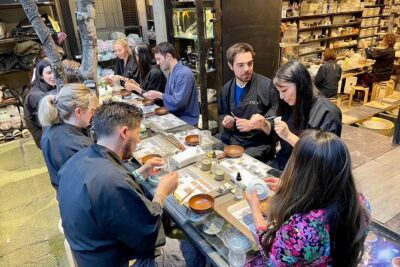
Kintsugi Experience: Art of Golden Joinery in Tokyo
Read our review →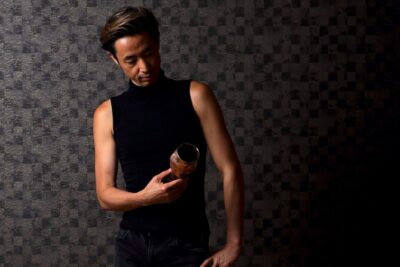
Authentic Pure Gold Kintsugi Workshop with Master Taku in Tokyo
Read our review →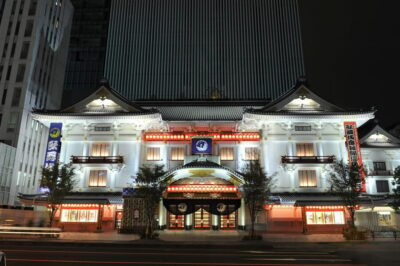
KABUKI Show at Kabukiza Theatre Admission Ticket
Read our review →
KABUKI, BUNRAKU, etc. presented by National Theatre
Read our review →
Kintsugi Workshop Class in Shibuya, Tokyo with mon cadeau
Read our review →
Browse the lists this tour appears in