
Reviewed · WALKING TOURS
Gotokuji and Setagaya Walking Tour: Home of the Lucky Cat Statue
Gotokuji Temple is famous for its rows of white lucky cat statues, but the best part of this tour is that it does not stop at a quick photo. You walk through a real Tokyo neighborhood, visit working shrines, hear the local story behind the maneki-neko, and finish near a small shopping street where residents shop and eat.
I like the private format, which lets your guide adjust the pace and explain shrine customs without rushing. I also like the included drink worth up to ¥800, plus the chance to see places such as Setagaya Hachimangu and the castle ruins that many first-time visitors miss.
The main caution is the walking. You should wear easy shoes, since the route includes mountain paths, and transportation to and from the attractions is not included. At $84.70 per person, the price makes the most sense for a small group that wants personal guidance rather than a simple visit to Gotokuji.
In This Review
- Key points to know before booking
- Why Gotokuji is more than a lucky cat photo stop
- Starting at Gotokuji Station at 10:00 am
- Setagaya Hachimangu and its sumo connection
- Gotokuji Temple and the story behind the cats
- Shoin Shrine and the local meaning of Yoshida Shoin
- Castle ruins, Sangenjaya, and the Setagaya Line
- What the $84.70 price really buys you
- How the guides shape the experience
- Walking conditions, timing, and who should book
- Cancellation and planning details
- Should you book the Gotokuji walking tour?
- FAQ
- Where does the Gotokuji and Setagaya walking tour begin?
- Where does the tour end?
- How long does the tour last?
- Is this a private tour?
- Is a drink included?
- Is transportation or hotel pickup included?
Key points to know before booking
- Hundreds of lucky cats at Gotokuji: See the temple’s famous maneki-neko figures and learn how the tradition began.
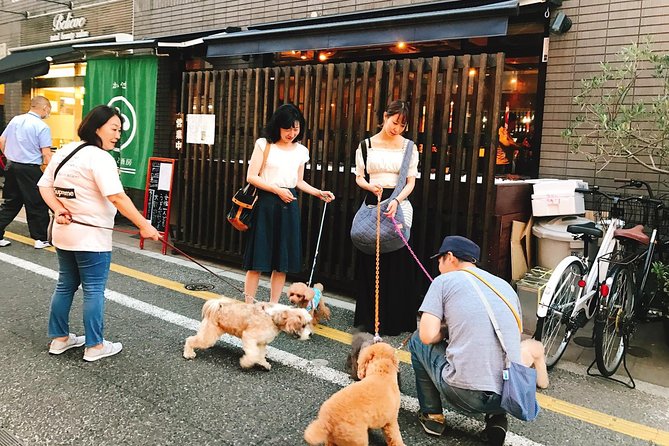
- A private half-day walk: Only your group takes part, with a guide such as Mitsuko, Yumi, Emiko, or Yoshimi.
- More than a cat temple: The route includes Setagaya Hachimangu, Shoin Shrine, castle ruins, and local streets.
- A local drink included: Stop at Shoin Jinja Shopping Street for coffee or tea worth up to ¥800.
- Easy train access: Begin at Gotokuji Station at 10:00 am and finish near Shoin-jinja-mae Station.
- Bring proper walking shoes: The route can include mountain paths and takes about three and a half hours.
Why Gotokuji is more than a lucky cat photo stop
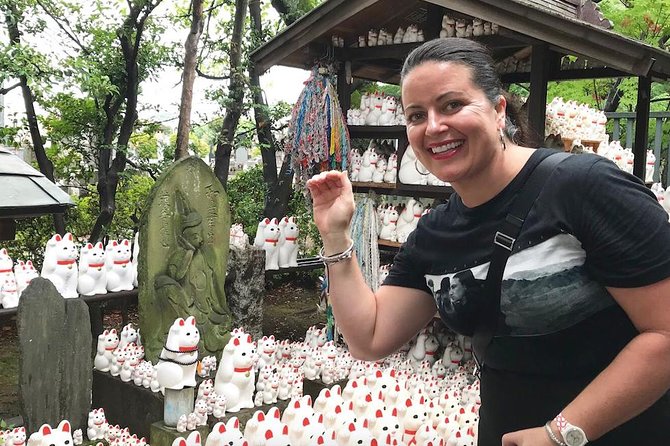
Many people come to Gotokuji for one image: rows of small white cat figures, each raising one paw in the familiar beckoning pose. The temple gives you much more when a guide explains what you are seeing and connects the statues to Setagaya’s past.
The lucky cat is known in Japan as a maneki-neko. The raised paw is associated with calling in good fortune, customers, or helpful opportunities. At Gotokuji, the story of the cat is tied to the temple’s own tradition, which is why the grounds contain so many figures brought by people who hope to express thanks or ask for good luck.
Your guide can help you notice the difference between a quick tourist stop and a place with continuing religious meaning. You will see the cat displays, but you will also learn how to behave at a shrine and how temple and shrine customs differ.
That explanation is one of the strongest reasons to book a guided walk. Yumi, for example, has shown visitors how to approach a shrine, cleanse their hands, and follow the basic prayer ritual. Those small instructions make the visit feel less awkward and help you show respect.
The temple visit lasts about 35 minutes. That is enough time to see the main points and hear the origin story, though it is not a long temple study. If you want extended time for photography, tell your guide early. The tour is private, and the schedule may have some room to breathe.
More walking routes in Tokyo:
- Tokyo Tsukiji Fish Market Food and Culture Walking Tour
★ 5.0 · 3,184 reviews - Tokyo: Imperial Palace and Shogun Historical Walking Tour
★ 5.0 · 2,251 reviews - Tokyo: Shinjuku Local Bar and Izakaya Guided Walking Tour
★ 4.9 · 1,794 reviews
Starting at Gotokuji Station at 10:00 am
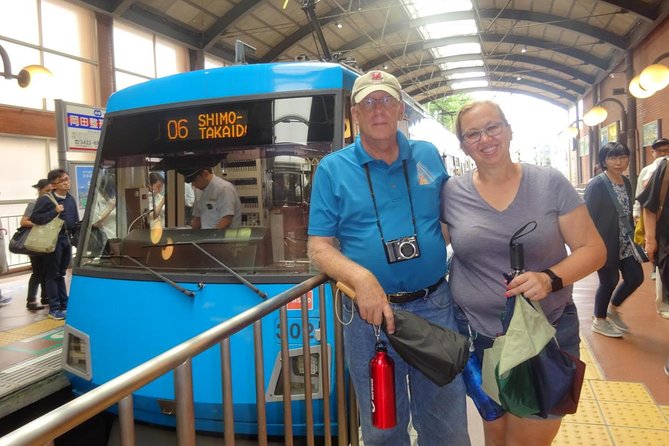
You meet your guide at Gotokuji Station, at 1 Chome-43 Gotokuji in Setagaya City. Starting at a station keeps the meeting point practical, but you need to arrange your own ride from your hotel because hotel pickup is not part of the standard price.
The tour begins at 10:00 am, a useful time for anyone who wants to fit another Tokyo activity into the afternoon. The full experience lasts about three and a half hours. It ends at Shoin-jinja-mae Station, so you do not need to return to the starting point.
The route is a walking tour, not a coach excursion. That matters in a city like Tokyo, where a short train ride can take you from a major commercial district to quieter residential streets. You get a better sense of Setagaya by moving through it on foot, but you also need to be ready for uneven ground and steady walking.
The tour is private, meaning only your group participates. Group discounts are available, although the exact saving depends on the booking details. For two or more people, the cost can feel more reasonable because the guide’s time is shared across your group.
Setagaya Hachimangu and its sumo connection
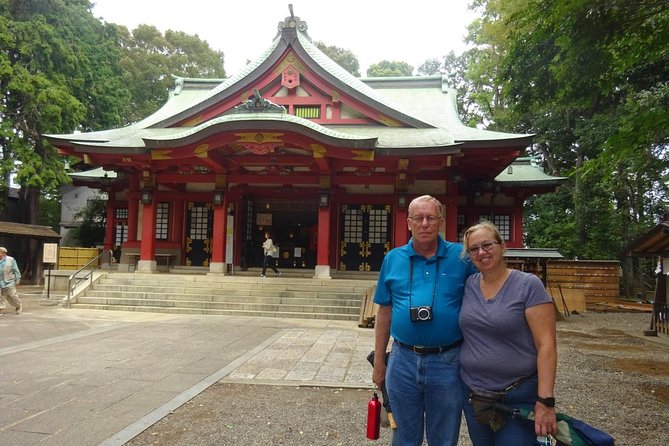
The first listed stop is Setagaya Hachimangu, one of the larger shrines in Setagaya Ward. You have about 20 minutes here, which gives you time to look around and hear about the shrine without turning the morning into a long formal lecture.
One unusual detail is the dohyo, or sumo ring, on the shrine grounds. During the autumn matsuri, the shrine holds honosumo, a sumo event offered as part of the religious festival. Even if your visit does not match the festival, seeing the ring gives the place a strong local character.
This stop is useful because it broadens the tour beyond the cat theme. You begin with a shrine tied to community events, then move toward the temple that made the neighborhood famous among fans of maneki-neko. The contrast helps you see Setagaya as a lived-in district rather than a collection of attractions.
The 20-minute visit is fairly brief. You will get an introduction and time to observe, but you should not expect a full exploration of every corner. That is a fair trade on a tour that also includes Gotokuji, Shoin Shrine, shopping, and several local points of interest.
Gotokuji Temple and the story behind the cats
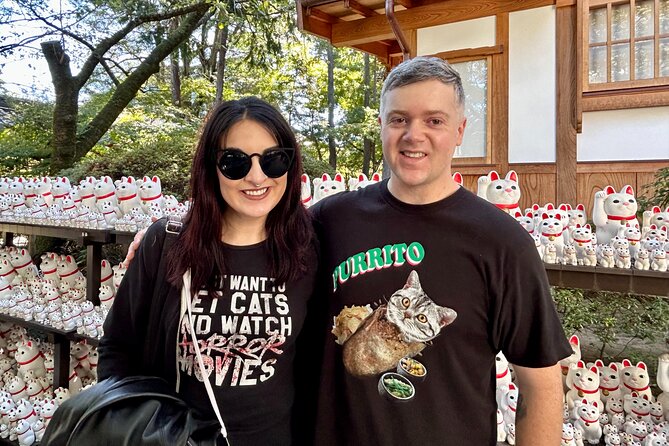
Gotokuji’s past reaches back to the late 15th century. The Kotokuin hermitage began with Kira Masatada, the man who built Setagaya Castle in 1480. The religious site first followed the Rinzai school and became a Soto school temple in 1584.
You do not need to know Japanese Buddhist history to enjoy the visit, but these details give the temple a proper setting. Gotokuji is not simply a themed attraction built around cute statues. It is an old religious site connected to the political and religious history of the Setagaya area.
The large collection of lucky cats is the visual highlight. Some are lined up in groups, while others appear in dedicated display areas. The number of figures can make the scene feel almost playful, yet the story behind them remains tied to gratitude and good fortune.
A guide makes a real difference here. Mitsuko has led the walk as an engaging and considerate host, while Yoshimi has helped visitors explore both the neighborhood and the temple. Emiko has also been praised for helping with local navigation, which is useful when you are moving between stations, shrines, and smaller streets.
Allow about 35 minutes at Gotokuji. That is enough for an introduction, the cat displays, and questions. You may want extra time if you hope to take many photographs, so ask whether the walking pace can be adjusted before the tour begins.
A few more Tokyo bookings worth comparing
- Mt Fuji and Hakone 1-Day Bus Tour Return by Bullet Train
★ 5.0 · 26,383 reviews - 1-Day Tokyo Bus Tour
★ 5.0 · 14,250 reviews - Tokyo: TOKYO SKYTREE® Admission ticket
★ 4.5 · 11,192 reviews - Tokyo: teamLab Planets TOKYO Digital Art Museum Entry Ticket
★ 4.6 · 9,779 reviews
Shoin Shrine and the local meaning of Yoshida Shoin
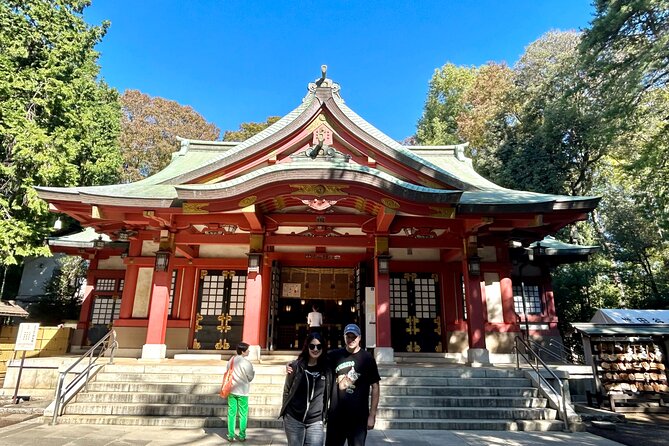
Shoin Shrine, also called Shoinjinja, was founded in 1882 with Yoshida Shoin at its center. The grounds include his tomb and the graves of students from the Shoka Village school. A building connected with the school has also been reproduced on the site.
You spend about 25 minutes here. The stop brings a different kind of history into the morning, focused on education, political thought, and the people connected with Yoshida Shoin. Your guide can place the shrine in context rather than leaving you to read signs and guess at the significance.
This is also where the tour connects naturally with the shopping street. The included coffee or tea, worth up to ¥800, is served at Shoin Jinja Shopping Street. The drink is a small benefit, but it changes the rhythm of the tour. You get a chance to sit or pause, ask questions, and hear practical suggestions for food and nearby sights.
The shopping area is not presented as a grand sightseeing district. That is exactly its value. You can see where local residents gather, browse, and buy everyday goods. If you want a neighborhood experience with less focus on Tokyo’s major landmarks, this portion may be one of the most useful parts of the walk.
Lunch is not included. You can ask your guide where to eat after the tour, and the end point near Shoin-jinja-mae Station makes it easy to continue on your own. The experience does not promise a set restaurant stop, so plan to make your own lunch choice after the walk.
Castle ruins, Sangenjaya, and the Setagaya Line
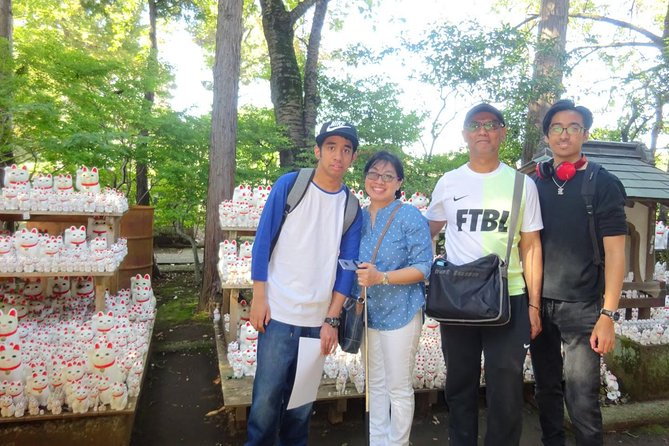
Setagaya Castle Ruins Park adds another layer to the route. The castle was built by Kira Masatada in 1480, the same figure linked with the early history of Gotokuji. The remains are not a full castle complex, so set your expectations accordingly. You are seeing a historical site integrated into a modern Tokyo neighborhood.
The connection between the castle ruins and Gotokuji is one of the tour’s best threads. Instead of seeing unrelated stops, you follow a local story that joins political power, religion, and the changing shape of Setagaya.
The route also points out the landmark of Sangenjaya in Setagaya. The supplied details do not promise a long stop here, so treat it as a useful orientation point rather than a separate major attraction. Your guide can help you understand how this part of Setagaya fits into the larger neighborhood.
Near the end, you can take the Tokyu Setagaya Line, a small local railway used by residents. The listed time for this part is about 10 minutes, and the tour ends at Shoin-jinja-mae Station, at 4 Chome-21-16 Wakabayashi.
The line is not included as a separate transport feature, and transportation costs to and from attractions are not covered. Still, ending beside a local railway is practical. You finish with a clear onward route rather than being left at an isolated temple gate.
What the $84.70 price really buys you
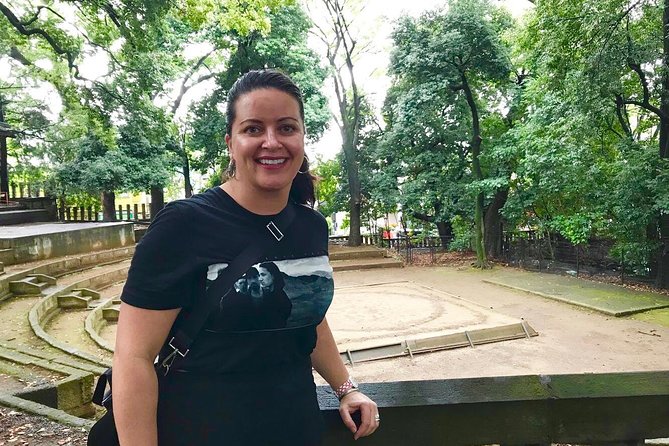
At $84.70 per person, this is not the cheapest way to see Gotokuji. You can visit a temple and walk through a neighborhood without paying for a guide. The real question is how much value you place on context, local navigation, and a private pace.
The tour includes a professional guide and one coffee or tea worth up to ¥800. It does not include lunch, hotel pickup, or transport costs. Hotel pickup can be arranged for an extra ¥5,000 per group for hotels in Tokyo and Yokohama, so the standard meeting point is the better value if you can reach Gotokuji Station easily.
For a couple, family, or small group, the private format is the strongest part of the price. You can ask about shrine rituals, the cats, the castle, or food in the area without waiting for a large group. You also avoid the stop-and-start pace that often comes with a crowded walking tour.
The cost is harder to justify if you only want a quick photograph of the lucky cats. In that case, visit Gotokuji independently and spend your money elsewhere. Book this walk when you want the neighborhood story, several historic stops, and help finding your way through Setagaya.
How the guides shape the experience
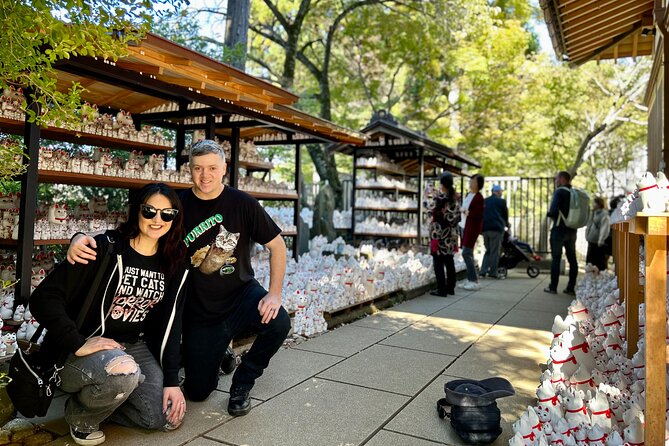
The guide is central to this activity. Names connected with past bookings include Mitsuko, Yumi, Emiko, Yoshimi, and a young guide described as courteous and helpful. You may not be assigned a particular person, so do not book on the assumption that one named guide is guaranteed.
The strongest pattern is personal attention. Yumi has explained purification and prayer rituals. Emiko has helped with directions and made the route easy to follow. Mitsuko has combined history, shopping, and neighborhood details in a way that keeps the morning moving.
That range matters because this is not a script-heavy bus tour. A good guide can adjust the balance between photography, history, religious customs, and practical advice. If you have already seen Tokyo’s major districts, ask for more local detail. If this is your first shrine visit, ask for help with etiquette.
You can also ask for restaurant suggestions and ideas for what to see after the tour. The guide’s local advice may be more useful than a fixed lunch stop, since you can choose based on your appetite, budget, and remaining schedule.
Walking conditions, timing, and who should book
You need moderate physical fitness for this experience. The route includes mountain paths, and the advice to wear easy walking shoes should be taken seriously. This is not the right choice if you want a seated sightseeing tour or have trouble with uneven paths.
The walk lasts about three hours and 30 minutes, with stops of around 20 minutes at Setagaya Hachimangu, 35 minutes at Gotokuji, 25 minutes at Shoin Shrine, and 10 minutes connected with the Setagaya Line. The remaining time covers walking, explanations, shopping street time, and movement between places.
I would choose this tour if you have already seen the major Tokyo sights, enjoy small shrines and neighborhood history, or want a private introduction to maneki-neko culture. It also suits families and couples who prefer to ask questions freely.
I would skip it if you are mainly chasing famous landmarks, dislike walking, or have only a short window in Tokyo. The tour stays in Setagaya, so its appeal comes from local character rather than a long list of headline attractions.
Confirmation arrives within 48 hours of booking, subject to availability. Service animals are allowed, and the route is near public transportation. The tour can be extended for ¥5,000 per group per hour, payable in cash, which may help if you want more time at the temple or shopping street.
Cancellation and planning details
Free cancellation is available if you cancel at least 24 hours before the local start time. Cancellations or changes made within 24 hours are not accepted for a refund.
Plan your route to Gotokuji Station in advance. Since hotel pickup costs extra and transport is not included, the easiest way to protect your morning is to arrive at the station before the 10:00 am meeting time.
Wear comfortable shoes, carry some cash for any extension fee or personal purchases, and leave room in your schedule after the tour. The guide can suggest places to eat and things to see, but lunch itself is your responsibility.
Should you book the Gotokuji walking tour?
Book it if you want the story behind the lucky cats, not just a quick temple visit. The private setting, named guides with strong personal service, shrine instruction, castle history, shopping street break, and local train finish give the morning a clear sense of place.
At $84.70 per person, it is a premium over going alone. For a small group that values a flexible guide and an easy introduction to Setagaya, I think the price can be fair. For a solo visitor focused only on photographs, an independent visit is likely better value.
FAQ
Where does the Gotokuji and Setagaya walking tour begin?
The tour begins at Gotokuji Station, at 1 Chome-43 Gotokuji, Setagaya City, Tokyo 154-0021. The start time is 10:00 am.
Where does the tour end?
The tour ends at Shoin-jinja-mae Station, at 4 Chome-21-16 Wakabayashi, Setagaya City, Tokyo 154-0023.
How long does the tour last?
The tour lasts approximately three hours and 30 minutes.
Is this a private tour?
Yes. Only your group participates in the activity.
Is a drink included?
Yes. One coffee or tea is included at Shoin Jinja Shopping Street, with a value of up to ¥800.
Is transportation or hotel pickup included?
Transportation to and from the attractions and standard hotel pickup are not included. Hotel pickup can be arranged for an additional ¥5,000 per group for hotels in the Tokyo and Yokohama area.
New on our Tokyo list
- Sumi-e Experience in a relaxing green tea shop in Tokyo★ 5.0 · 3 reviews
- Tokyo : Kamikaze Street Drift Ride★ 5.0 · 3 reviews
- Private Zen Meditation in English in Shinjuku, Tokyo★ 5.0 · 3 reviews
- Onsen Spa in Tokyo and Asakusa Bar Hopping with Local Guide★ 5.0 · 3 reviews
- Easy for everyone! Now you can play handmade mini shamisen and show off to everyone! Musical instruments, sweets and live music★ 5.0 · 3 reviews
- Mt Fuji Exploration Tour with Free Japanese Kusa Mochi from Tokyo★ 4.5 · 3 reviews
- Tokyo Tsukiji Fish Market Walking and Exploring Hidden Gems Tour★ 5.0 · 3 reviews
- Tokyo: Private Tsukiji Street Food & Sake with Local Guide★ 5.0 · 3 reviews
Walking Tours, compared.
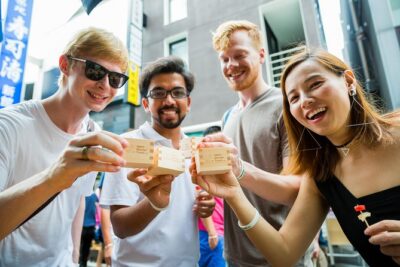
Tokyo Tsukiji Fish Market Food and Culture Walking Tour
Read our review →
Imperial Palace and Shogun Historical Walking Tour
Read our review →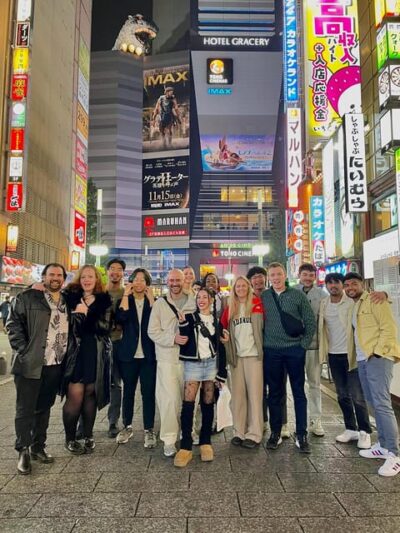
Shinjuku Local Bar and Izakaya Guided Walking Tour
Read our review →

Asakusa Walking Tour with Sensoji Temple Visit
Read our review →
Tokyo Castle & Imperial PalaceーShogun Walking Tour
Read our review →
Browse the lists this tour appears in