
Reviewed · WALKING TOURS
Gyoda Tabi Shoes Cultural Walking Tour
Gyoda’s best story is told through your feet. On this three-hour walk, you choose split-toe tabi socks and zori sandals, then use them as you stroll through a town shaped by footwear making. The route links old warehouses, local snacks, a shrine, and a working factory.
I like the hands-on format, especially the chance to watch craftspeople at work rather than only see finished souvenirs. I also like the food stops: jelly fries and Jumangoku manju give you a quick taste of Gyoda beyond its famous shoes.
The main consideration is the pace. Six stops fit into about three hours, and the factory visit is the real centerpiece, while some stops are brief. The guide is not licensed or certified, so this suits you best if you want a friendly local introduction rather than a formal historical lecture.
In This Review
- What makes this Gyoda walk worth your afternoon
- Why Gyoda is the right place for tabi
- Choosing tabi socks and starting the walk
- Jelly fries inside Chujirou warehouse
- Manju and a shop dating to 1836
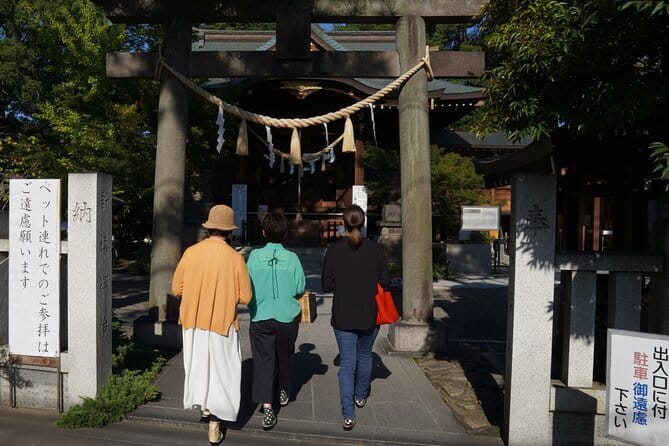
- Hanachozu at Gyoda Hachiman Shrine
- A quick look at the 1917 saw-tooth factory
- Watching tabi being made at Isami Corporation
- What the $45.61 price really covers
- Timing, group size, and practical details
- Who will enjoy this experience most
- Should you book the Gyoda tabi walk?
- FAQ
- Where does the Gyoda Tabi Shoes Cultural Walking Tour start?
- What time does the tour begin?
- How long does the tour last?
- What food is included?
- Are tabi socks and sandals included?
- How large can the group be?
What makes this Gyoda walk worth your afternoon
- Wear the town’s signature footwear: Choose tabi socks and zori sandals before walking through Gyoda.
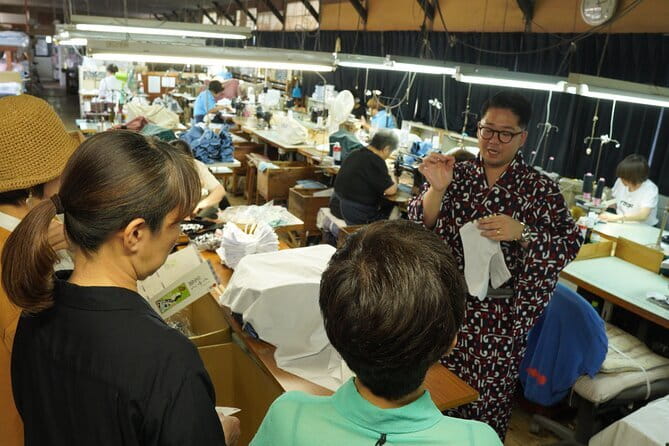
- See tabi production in person: The 45-minute visit to Isami Corporation offers a look at the manufacturing process and old-style machinery.
- Taste two local treats: Jelly fries at Chujirou warehouse and Jumangoku manju at a historic shop are included.
- Visit Gyoda Hachiman Shrine: You can see the beautiful hanachozu flower display and learn about the shrine’s local importance.
- Explore Japan Heritage buildings: The route includes old warehouses and a 1917 saw-tooth-roof factory.
- Keep the group manageable: The maximum group size is 15 people, which helps during the factory visit.
Why Gyoda is the right place for tabi
Gyoda is about an hour from central Tokyo, yet it feels far removed from the capital’s crowded sightseeing routes. The city is Japan’s largest producer of tabi shoes, the traditional split-toe footwear once worn with kimono and still made here today.
That matters because you are not simply looking at an old craft in a museum. Gyoda’s warehouses and factories remain tied to production. The walk gives you a clear sense of how footwear, food, buildings, and local customs fit together in one small city.
Gyoda is recognized as a Japan Heritage site as a town of tabi warehouses that continues to support Japanese footwear culture. You do not need prior knowledge of kimono or Japanese clothing to enjoy the tour. The simple act of putting on tabi socks gives you a useful point of connection before the walk begins.
The experience starts at Kanko Bussankan Buratto Gyoda at 1:00 pm. This is also where you return at the end. Because the meeting point includes sightseeing maps and souvenir shops, arrive with enough time to get oriented if you are unfamiliar with Gyoda.
More walking routes in Tokyo:
- Tokyo Tsukiji Fish Market Food and Culture Walking Tour
★ 5.0 · 3,184 reviews - Tokyo: Imperial Palace and Shogun Historical Walking Tour
★ 5.0 · 2,251 reviews - Tokyo: Shinjuku Local Bar and Izakaya Guided Walking Tour
★ 4.9 · 1,794 reviews
Choosing tabi socks and starting the walk
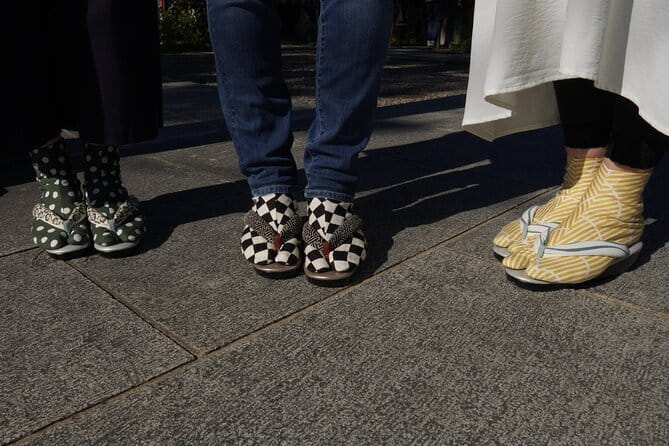
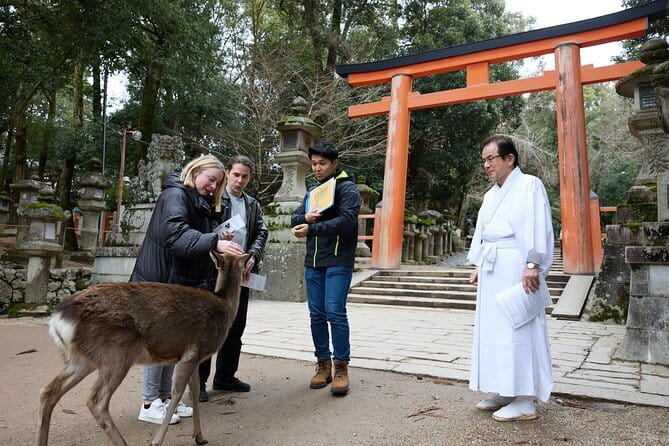
Your first stop lasts about 30 minutes. At Kanko Bussankan Buratto Gyoda, you choose the tabi socks you will wear during the tour. The split toe can feel unusual at first, but that is part of the fun. You are not only hearing about traditional footwear, you are testing how it feels as you move through the city.
The included footwear also includes zori sandals. The combination gives the walk a clear connection to kimono culture, and it makes the first part of the tour more memorable than a standard town stroll.
This stop also gives you access to free Gyoda sightseeing maps, souvenir shopping, and local products. I would use this time to note anything you may want to buy later, since the tour itself soon moves into a fixed schedule.
The description also refers to selecting Gyoda tabi shoes and Yukitadas. The included items specifically list tabi socks and zori sandals, so check the exact footwear arrangement when you arrive if this distinction matters to you.
Jelly fries inside Chujirou warehouse
The next stop is Chujirou warehouse, locally known for jelly fries. You spend about 10 minutes here, so think of this as a quick tasting rather than a full meal.
Jelly fries are a Gyoda specialty and an important part of the tour’s appeal. The snack adds a taste of everyday local food to a route otherwise focused on buildings and manufacturing. The name may sound odd if you have never encountered it, which makes this a good chance to try something specific to the city.
The warehouse itself is part of the story. Chujirou is a historic building designated as a Japan Heritage component cultural property and a nationally registered tangible cultural property.
Ten minutes is short, but that keeps the group moving. If you like lingering over food, you may wish you had more time. Still, the snack works well as a small sample between walking stops, and the food is included in the tour price.
Manju and a shop dating to 1836

At Jumangokufukusaya Gyoda Honten, you spend around 15 minutes touring the historic building and tasting manju, a Japanese steamed bun with a sweet filling.
The shop was built in 1836, and its storehouse is designated as a national tangible cultural property. Here, the building and snack belong together. You get a look at an old commercial space while sampling a familiar Japanese sweet with a strong local connection.
This stop helps balance the factory portion later in the afternoon. Gyoda’s story is not only about machines and skilled sewing. It also includes food shops, warehouses, and the small businesses that gave the town its identity.
Again, the timing is compact. You will not have the freedom of a long food tour or a leisurely shop visit. But the short tasting keeps the tour focused and gives you another concrete memory of Gyoda.
A few more Tokyo bookings worth comparing
- Mt Fuji and Hakone 1-Day Bus Tour Return by Bullet Train
★ 5.0 · 26,383 reviews - 1-Day Tokyo Bus Tour
★ 5.0 · 14,250 reviews - Tokyo: TOKYO SKYTREE® Admission ticket
★ 4.5 · 11,192 reviews - Tokyo: teamLab Planets TOKYO Digital Art Museum Entry Ticket
★ 4.6 · 9,779 reviews
Hanachozu at Gyoda Hachiman Shrine
The shrine visit lasts about 25 minutes. Gyoda Hachiman Shrine is known for blessings related to cancer and draws people from Gyoda and from across Japan. The tour includes time to see the shrine and its hanachozu, a water purification basin decorated with flowers.
The flower display is likely to be one of the prettiest visual moments of the afternoon. It also offers a change of mood after the food and warehouse stops. You can pause, look closely, and take photographs if conditions allow.
The information provided says participants may visit the shrine on their own. That means the exact amount of guided explanation and personal time can vary. Treat this as a chance to explore respectfully rather than expecting a long formal shrine lesson.
If you are interested in Japanese religious customs, this stop adds useful context. If your main goal is tabi manufacturing, it is a pleasant interlude before the factory visit. Either way, the hanachozu gives the walk a seasonal and visual element that the industrial buildings do not provide.
A quick look at the 1917 saw-tooth factory

The fifth stop is Isami Corporation School Factory. The exterior visit lasts about five minutes, so keep your expectations in check. You will see the building, but this is not the main factory tour.
The structure was built in 1917 and has a saw-tooth roof. It is registered as a Component Cultural Property. The roof form is a useful reminder that these buildings were designed for work, not just appearance. It also gives you a quick architectural link to Gyoda’s industrial past.
Five minutes can feel brief, especially if you enjoy historic buildings. The advantage is that the tour does not spend too much time outside before moving to the longer manufacturing visit. Have your camera ready, listen for the guide’s explanation, and save your detailed questions for the main factory stop.
Watching tabi being made at Isami Corporation
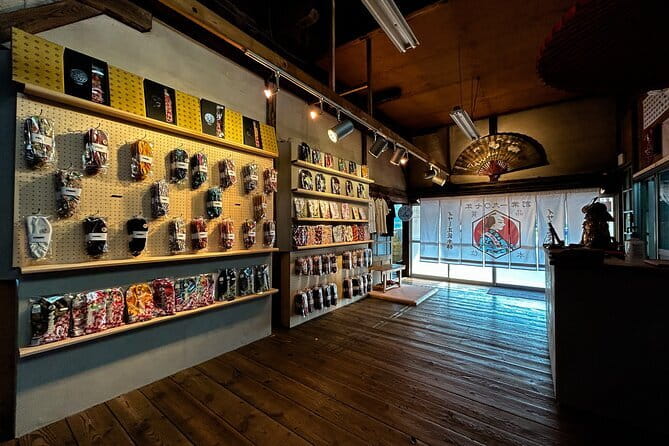
The final major stop lasts about 45 minutes at the Isami Corporation headquarters and manufacturing factory. This is where the tour earns its price for many people.
You are guided through the tabi production process and see the footwear being made using Japanese techniques. The information provided does not spell out every stage, so do not expect a technical workshop covering each tool and material in detail. You should expect a direct look at a working tabi factory and the people who keep the craft going.
The tour’s most memorable detail is the presence of old sewing machines and experienced older craftspeople. That gives the visit a human scale. You can watch hands, fabric, machines, and repeated steps come together in a product that is easy to recognize but harder to make well.
Factory visits can vary depending on the day’s work, so the experience is less polished than a staged museum display. I consider that a benefit. You are seeing an operating workplace, not a performance built only for sightseeing.
The factory was established in a building connected to Gyoda’s footwear culture, and the saw-tooth-roof structure is registered as a Component Cultural Property. The exterior visit and the longer interior visit work together, although the five-minute stop at the School Factory may feel unnecessary if you are eager to reach the production floor.
What the $45.61 price really covers
At $45.61 per person, the tour offers solid value if you would otherwise pay separately for snacks, a local guide, and a factory introduction. Your price includes tabi socks, zori sandals, jelly fries, Jumangoku manju, and the guided walking route.
The footwear is important to the calculation. You are not only paying for information. You receive something you can use during the tour and take away as a practical reminder of Gyoda. The two tastings also remove the need to buy small snacks during the afternoon.
The tour does not include a guide tip. The guide is not licensed or certified, which keeps this in the category of a local cultural walk rather than a formally accredited sightseeing tour.
For me, the strongest value comes from access to the working factory. If you only want a shrine visit or old buildings, you could explore Gyoda independently with a map. If you want the production story explained and arranged in one afternoon, the fee makes more sense.
Timing, group size, and practical details
The tour begins at 1:00 pm and lasts about three hours. It ends back at the starting point, Kanko Bussankan Buratto Gyoda, at 2-chōme-1-8 Oshi, Gyoda, Saitama 361-0077, Japan.
The maximum group size is 15 people. That is small enough to keep the guide close during the walking sections, though the factory area may still feel compact if the group is full.
The meeting point is near public transportation, and most people can participate. Service animals are allowed. Confirmation is provided when you book, and the ticket is mobile, so you do not need a printed voucher.
Free cancellation is available up to 24 hours before the local start time. If you cancel later, or request changes within 24 hours, the payment is not refunded. Keep that deadline in mind when building this into a Tokyo-area day trip.
The tour includes walking between several stops, standing during tastings and factory visits, and wearing unfamiliar footwear. The supplied information does not give a precise walking distance, so contact the operator if you need detailed mobility information.
Who will enjoy this experience most
I would choose this tour if you want a small-city view of Japan that combines craft, food, and local buildings in one route. It is especially suited to people interested in kimono culture, Japanese footwear, traditional manufacturing, or ordinary regional food.
Families may like the hands-on footwear element and the short tastings. You do not need to spend long stretches inside one museum, and the route changes settings often.
It also suits repeat visitors to Tokyo who have already seen the major city sights. Gyoda offers a different pace and a more focused subject. The one-hour journey from central Tokyo makes it possible as an extended half-day outing, though you should allow extra time for reaching the meeting point.
You may want a different activity if you prefer a long food tour, a fully formal historical presentation, or a factory experience with detailed technical instruction. The tour is friendly and varied, but the schedule is tight and some stops last only five to 15 minutes.
Should you book the Gyoda tabi walk?
Book it if the idea of walking in split-toe socks, tasting jelly fries, seeing hanachozu, and watching tabi production sounds better than another crowded Tokyo attraction. The factory visit is the key reason to go, while the food and old buildings make the afternoon feel complete.
Skip it if you want a slow, independent day with lots of shopping time. For everyone else, $45.61 buys a focused introduction to a Japanese craft that is still practiced in its home city, with enough local flavor to make the trip worthwhile.
FAQ
Where does the Gyoda Tabi Shoes Cultural Walking Tour start?
The tour starts at Kanko Bussankan Buratto Gyoda, 2-chōme-1-8 Oshi, Gyoda, Saitama 361-0077, Japan.
What time does the tour begin?
The start time is 1:00 pm.
How long does the tour last?
The experience lasts approximately three hours and ends back at the meeting point.
What food is included?
The tour includes jelly fries, a local Gyoda food, and Jumangoku manju, a Japanese sweet bun.
Are tabi socks and sandals included?
Yes. The tour includes tabi, or Japanese split-toe socks, and zori sandals.
How large can the group be?
The maximum group size is 15 people.
New on our Tokyo list
- Sumi-e Experience in a relaxing green tea shop in Tokyo★ 5.0 · 3 reviews
- Tokyo : Kamikaze Street Drift Ride★ 5.0 · 3 reviews
- Private Zen Meditation in English in Shinjuku, Tokyo★ 5.0 · 3 reviews
- Onsen Spa in Tokyo and Asakusa Bar Hopping with Local Guide★ 5.0 · 3 reviews
- Easy for everyone! Now you can play handmade mini shamisen and show off to everyone! Musical instruments, sweets and live music★ 5.0 · 3 reviews
- Tokyo: Private Tsukiji Street Food & Sake with Local Guide★ 5.0 · 3 reviews
- Mt Fuji Exploration Tour with Free Japanese Kusa Mochi from Tokyo★ 4.5 · 3 reviews
- Tokyo Tsukiji Fish Market Walking and Exploring Hidden Gems Tour★ 5.0 · 3 reviews
Walking Tours, compared.

Tokyo Tsukiji Fish Market Food and Culture Walking Tour
Read our review →
Imperial Palace and Shogun Historical Walking Tour
Read our review →
Shinjuku Local Bar and Izakaya Guided Walking Tour
Read our review →
Asakusa Walking Tour with Sensoji Temple Visit
Read our review →
Tokyo Castle & Imperial PalaceーShogun Walking Tour
Read our review →
Browse the lists this tour appears in