
Reviewed · JAPANESE CULTURE WORKSHOPS
IKEBANA experience
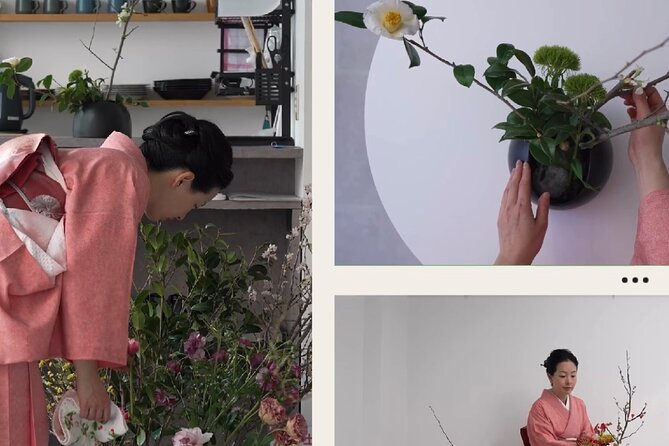
Ikebana becomes much more personal when you learn it inside a Japanese home. In Tokyo’s residential Meguro area, Hiromi introduces you to the art, demonstrates how to cut and place each stem, then lets you create your own arrangement in a traditional Japanese room.
I like the small private setting, where Hiromi can adjust the lesson to your level, and the gentle blend of flowers, tea, and home life. Her clear English is another real plus. The main consideration is time: 90 minutes goes quickly, especially if you want both ikebana and tea ceremony instruction.
In This Review
- Key points
- A quiet art lesson in residential Meguro
- What happens during the 90-minute ikebana class
- Why the home setting adds value
- Hiromi’s teaching style and English
- Matcha, wagashi, and a traditional tea-room finish
- A good choice for couples, families, and children
- Is $115.31 a fair price?
- Practical details before you go
- Who should book this ikebana experience?
- Should you book Hiromi’s ikebana class?
- FAQ
- Where does the ikebana experience take place?
- How long does the class last?
- Is the lesson taught in English?
- Do I make my own ikebana arrangement?
- Are matcha and Japanese sweets included?
- What is the cancellation policy?
Key points
- Learn in Hiromi’s home studio: See a Japanese-style room, tatami, and a colorful garden rather than a generic classroom.
- Build your own arrangement: Hiromi demonstrates first, then gives you room to make creative choices.
- English-language instruction: The lesson is designed for beginners and can cover basic forms or a freer style.
- Finish with Japanese sweets and matcha: If the schedule allows, tea and wagashi are served in the tatami room.
- Private and family-friendly: Only your group participates, and the class has worked well for couples, families, and children.
- Easy station access: The meeting point is near Toritsu-daigaku Station in Meguro City.
A quiet art lesson in residential Meguro
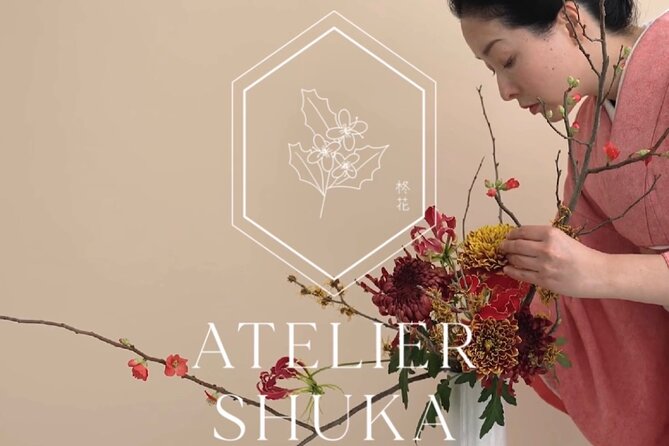
This is not a quick photo stop with flowers arranged for you. The point is to learn enough about ikebana to make an arrangement yourself, with Hiromi guiding you through the process.
You meet at Toritsu-daigaku Station, at 1-chōme-5-1 Nakane in Meguro City. The experience ends at the same meeting point. The neighborhood setting matters. Instead of spending another hour in central Tokyo’s crowded shopping districts, you get a glimpse of an ordinary residential area and enter a private Japanese home.
The studio includes a Japanese-style room, tatami, and a garden. Those details give the lesson a stronger sense of place, though you should remember that this is a home-based class, not a large formal ikebana school with a public exhibition space.
Hiromi teaches in English and is careful with beginners. The lesson can begin with the basics, or you can ask to work from the textbook in a way that suits your interests. That flexibility is useful if one person in your group is already familiar with flower arranging while another is trying it for the first time.
More craft workshops in Tokyo:
- Tokyo Shinjuku Chopsticks Making Class
★ 5.0 · 1,763 reviews - Kintsugi Experience: Art of Golden Joinery in Tokyo
★ 5.0 · 467 reviews - Authentic Pure Gold Kintsugi Workshop with Master Taku in Tokyo
★ 5.0 · 217 reviews
What happens during the 90-minute ikebana class
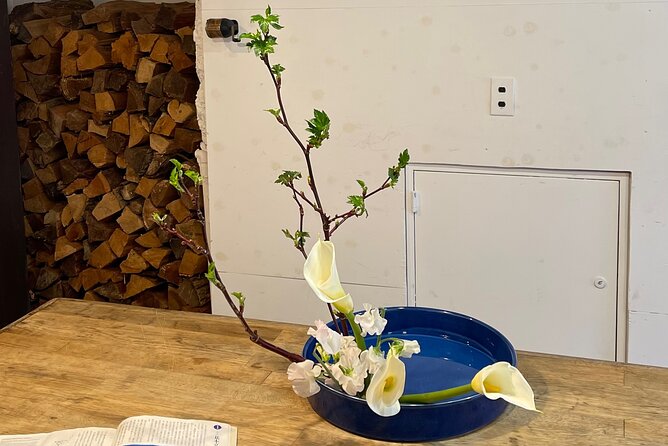
The class follows a clear pattern. First, Hiromi uses a textbook and makes a sample arrangement while explaining the principles behind it. You can watch how she handles the flowers, trims the stems, and places each piece.
The demonstration is important because ikebana is not simply a matter of filling a vase with flowers. The form pays attention to line, space, balance, and the shape of each stem. You use fewer flowers than you might expect, so each branch or bloom has a job.
After the demonstration, you make your own arrangement. Hiromi leaves room for personal choices, but she is close by to comment, correct, or revise the design when needed. This is a good balance for a first lesson. You are not left guessing, but you are also not just copying a finished piece.
One especially useful part is learning how to cut the flowers properly. The lesson focuses on practical handling as well as appearance, which helps you understand why a stem needs to be shortened, angled, or placed in a certain direction.
At the end, you can photograph your arrangement. That gives you a record of what you made and may help if you want to practice again later. You may also be able to purchase supplies so you can continue making arrangements at home. The available information does not specify exactly which materials are sold, so ask Hiromi about current options before planning to take supplies home.
Why the home setting adds value
I like the way this experience connects ikebana to daily Japanese life. You are not only studying a formal art. You are sitting in a Japanese room, seeing the garden, and learning from someone who practices and teaches the art in her own space.
That setting can make the experience feel more relaxed than a tightly scheduled class. Several details support that impression: Hiromi may meet you at the station, she has helped participants adjust scheduling when conflicts arose, and she takes time to listen to what you want from the lesson.
The setting does come with a small tradeoff. A private home is intimate, but it may not offer the polished scale or display collection of a museum or specialist cultural center. If you want a formal lecture, a large demonstration, or a look at famous historical arrangements, this is not the right format.
For most people, though, the home is the attraction. You see a part of Tokyo that is easy to miss when you stay around Asakusa, Shibuya, or Shinjuku. The meeting point near Toritsu-daigaku makes this a good add-on for a day in Meguro rather than a central sightseeing stop.
Hiromi’s teaching style and English
The guide, Hiromi, is central to the experience. She explains the foundations in English, demonstrates each step, and gives individual help as you work. The class is suitable even if you know almost nothing about ikebana.
Her teaching style also leaves space for creativity. You can ask for a basic lesson, follow the textbook, or make something more free-form. That matters because some beginners want a traditional structure, while others want to experiment with color and shape.
Hiromi also answers questions about Tokyo and Japan. Keep your questions practical and specific, such as customs, neighborhoods, or cultural details you have noticed during your trip. The class is not presented as a full cultural lecture, so the depth of those conversations will depend on the time available.
English ability is one of the strongest practical features here. You do not need to rely on watching silently or copying gestures. Clear instruction makes it easier to understand why an arrangement works, not just where to put the flowers.
A few more Tokyo bookings worth comparing
- Mt Fuji and Hakone 1-Day Bus Tour Return by Bullet Train
★ 5.0 · 26,383 reviews - 1-Day Tokyo Bus Tour
★ 5.0 · 14,250 reviews - Tokyo: TOKYO SKYTREE® Admission ticket
★ 4.5 · 11,192 reviews - Tokyo: teamLab Planets TOKYO Digital Art Museum Entry Ticket
★ 4.6 · 9,779 reviews
Matcha, wagashi, and a traditional tea-room finish
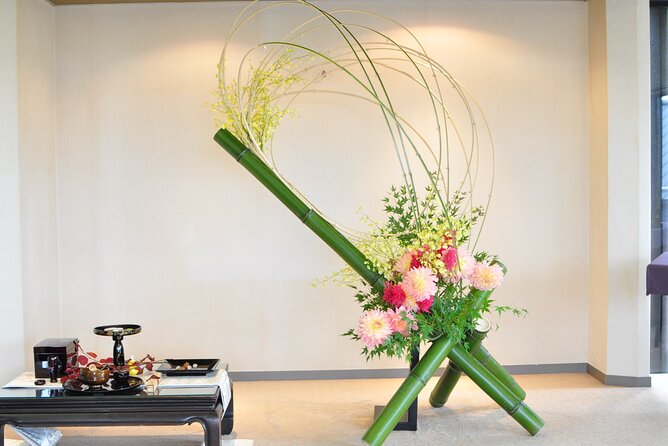
If there is time after the flower lesson, Hiromi serves matcha and Japanese sweets. The sweets are wagashi, traditional confections often made to complement tea.
This final part is not guaranteed as a long separate ceremony because it depends on the time left after ikebana. If tea is important to you, mention it when booking or at the start of the lesson so Hiromi can explain what may fit into the schedule.
If you are interested in tea ceremony, she can also teach the basics of preparing tea. That is a pleasant bonus, but you should not book this as a full tea ceremony course. The main subject is ikebana, and the flower arrangement takes most of the 90 minutes.
The tea service works best as a calm ending. You finish your arrangement, take a photograph, then sit in the tatami room with matcha and a sweet. It gives the class a second cultural layer without turning the visit into a rushed checklist of Japanese customs.
A good choice for couples, families, and children
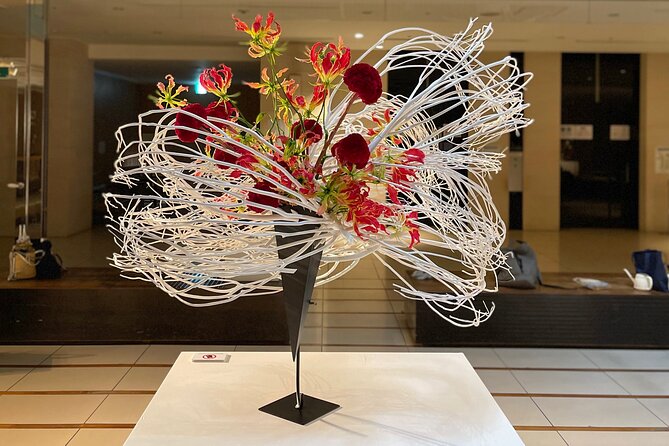
This private activity suits couples particularly well. You can make arrangements side by side, compare your choices, and receive help without feeling watched by a large class.
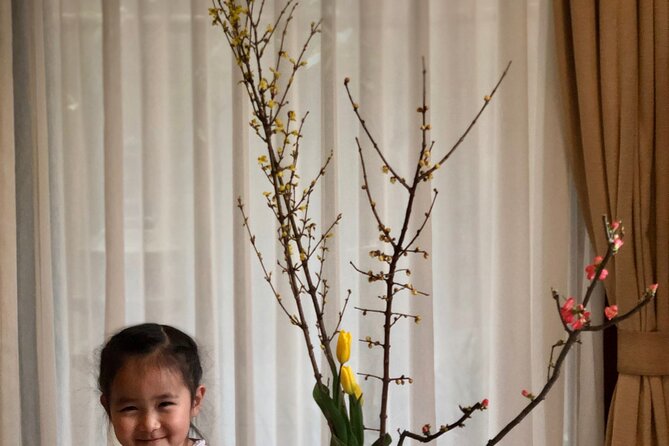
It also works for families. The format has accommodated parents, children, and even three generations together. A three-year-old enjoyed a freestyle version of the class, though younger children will need close adult help around scissors, stems, and the materials.
For children, keep expectations realistic. This is a quiet creative activity, not a high-energy attraction. A child who enjoys flowers, crafts, or making choices independently may have a wonderful time. A child who needs constant movement may find the pace slow.
The private format helps because Hiromi can adapt the lesson to the group. One family member can receive more basic instruction while another works with greater freedom. That flexibility is harder to get in a large group workshop.
Solo participants are welcome as well. A short class can fit neatly into a Tokyo itinerary, and you do not need to bring a companion to make it worthwhile. The format gives one person plenty of direct attention.
Is $115.31 a fair price?
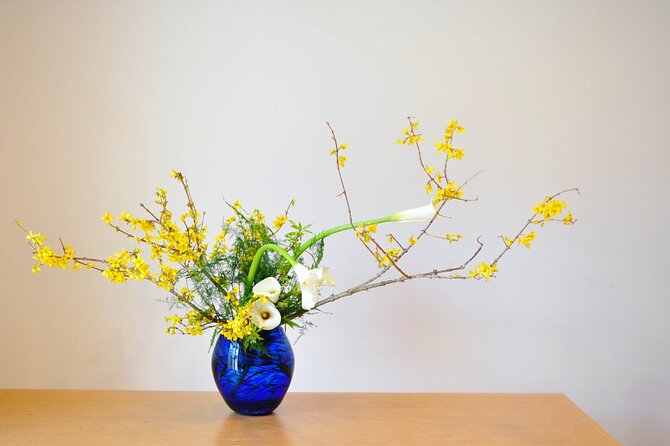
At $115.31 per person, this is not a budget flower-arranging activity. You are paying for a private lesson, an English-speaking instructor, the use of a home studio, flowers and equipment for the arrangement, and possible tea and sweets.
The value depends on what you want. If you only want to put flowers in a vase, cheaper craft classes may be available. If you want a personal introduction to ikebana with the chance to ask questions and receive corrections, the price is easier to justify.
The private format is especially useful for two or more people. You are not paying for a large production with many participants. You are buying time with Hiromi, a finished arrangement, and a cultural setting that would be difficult to recreate on your own.
Ask about supplies if you hope to continue ikebana at home. Being able to purchase materials may improve the value, since you leave with more than a one-time memory. Still, the exact supply costs are not specified, so treat them as an optional extra rather than part of the advertised price.
The experience is booked, on average, 28 days in advance. That suggests you should plan ahead, especially if you have a fixed date or want the class to fit neatly between other Tokyo plans.
Practical details before you go
The class lasts about 1 hour and 30 minutes. That is enough time for a demonstration and your own arrangement, but it is not a full-day cultural program.
You receive confirmation when booking, and the experience uses a mobile ticket. The meeting point is near public transportation at Toritsu-daigaku Station. Since the activity ends back at the meeting point, allow time afterward for your next destination.
The class requires good weather. If poor weather causes cancellation, you can choose another date or receive a full refund. It also requires a minimum number of participants, and if that condition is not met, you will be offered another date or experience, or a full refund.
Cancellation is free up to 24 hours before the start time. If you cancel or request changes less than 24 hours ahead, you will not receive a refund, so avoid placing this class immediately before a complicated train connection or airport transfer.
Most people can participate, and the activity is private. The supplied information does not give detailed accessibility measurements for the home, tatami room, or entrance, so contact Hiromi ahead of time if you have mobility needs.
Who should book this ikebana experience?
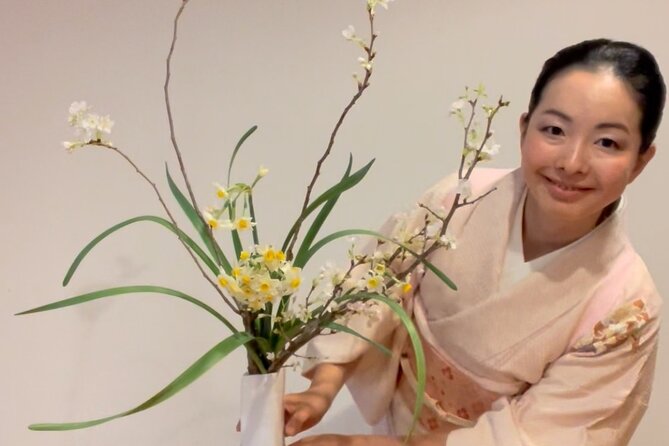
Book it if you want a slower Tokyo activity with a personal teacher and a real chance to make something. It is especially well suited to first-time students, couples, families, and anyone who enjoys flowers, crafts, photography, or traditional Japanese rooms.
It is also a good choice if you have already seen temples and major sights and want a more hands-on connection with Japanese culture. The class does not ask you to simply watch. You learn, make decisions, receive corrections, and leave with an arrangement you can be proud of.
You may want to skip it if your schedule is extremely tight, if you dislike quiet hands-on lessons, or if your main goal is a formal tea ceremony. The tea and wagashi are a possible addition, not the main event.
I would also think twice if you want an advanced ikebana course. The class is built around foundations and first arrangements, though Hiromi can adjust the lesson for different interests.
Should you book Hiromi’s ikebana class?
I would book this for a calm, personal afternoon in Tokyo, particularly if you value instruction more than spectacle. Hiromi’s English, patient demonstrations, private home studio, and willingness to let you create in your own style make the class approachable.
The $115.31 price is fair for a private cultural lesson, but only if you want more than a quick activity. Plan about 90 minutes, reserve in advance, and ask about tea and supplies if those details matter to you. For beginners and families looking for a thoughtful change of pace, this is a strong pick.
FAQ
Where does the ikebana experience take place?
The meeting point is at 1-chōme-5-1 Nakane, Meguro City, Tokyo 152-0031, near Toritsu-daigaku Station. The activity ends back at the meeting point.
How long does the class last?
The experience lasts approximately 1 hour and 30 minutes.
Is the lesson taught in English?
Yes. Hiromi teaches the ikebana lesson carefully in English and explains the demonstration and arrangement process.
Do I make my own ikebana arrangement?
Yes. Hiromi first makes a sample while referring to the textbook. You then create your own arrangement, receive comments or revisions, and take a photograph of your work.
Are matcha and Japanese sweets included?
If there is time after the ikebana lesson, Hiromi offers matcha and Japanese sweets. She can also teach the basics of making tea if you are interested in tea ceremony.
What is the cancellation policy?
You can cancel at least 24 hours before the start time for a full refund. Cancellations or changes made less than 24 hours before the experience are not accepted for a refund. If poor weather or failure to meet the minimum number of participants causes cancellation, you will be offered another date or experience, or a full refund.
New on our Tokyo list
- From Tokyo: Mount Fuji & Hakone Full Day Private Tour★ 4.9 · 25 reviews
- Tokyo Spectacular View Day-Cruise in 90 Minutes★ 5.0 · 25 reviews
- Real Tokyo Runner Club : Daikoku Car Meet Night Tour with JDM Car★ 5.0 · 25 reviews
- 2.5 Hour-Guided Cycle Tour in the Central Tokyo★ 5.0 · 25 reviews
- Ramen Making from Scratch +Akihabara Tour –Cooking Class★ 5.0 · 25 reviews
- [Self-Drive] Tokyo & Daikoku Custom Car Driving Tour★ 4.9 · 25 reviews
- Tokyo: 2-Hour Night Bike Tour of the City’s Hidden Gems★ 4.9 · 25 reviews
- Samurai themed Entertainment show in Shinjuku★ 4.5 · 25 reviews
Japanese Culture Workshops, compared.
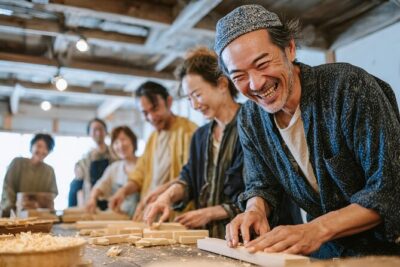
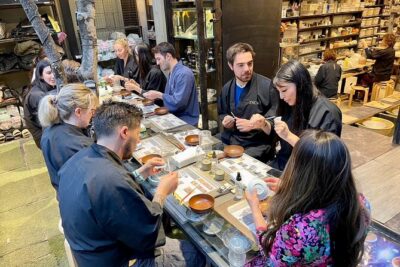
Kintsugi Experience: Art of Golden Joinery in Tokyo
Read our review →
Authentic Pure Gold Kintsugi Workshop with Master Taku in Tokyo
Read our review →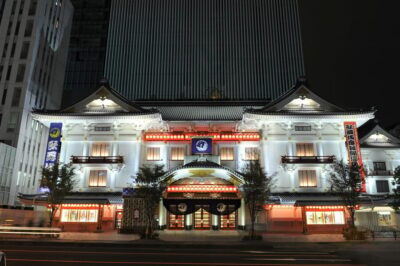
KABUKI Show at Kabukiza Theatre Admission Ticket
Read our review →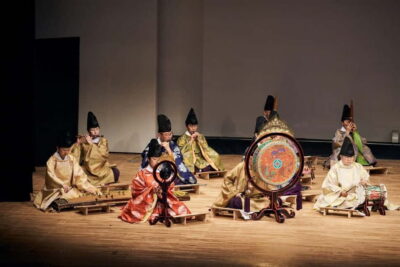
KABUKI, BUNRAKU, etc. presented by National Theatre
Read our review →
Kintsugi Workshop Class in Shibuya, Tokyo with mon cadeau
Read our review →
Browse the lists this tour appears in