
Reviewed · TEA CEREMONIES
Japanese Sweets Making & Tea Ceremony in Yokohama, suburban Tokyo
The best part of this Yokohama class is the pairing of hands-on wagashi making with a real tea ceremony. You do not simply watch a formal ritual. You shape five Japanese sweets, eat some with matcha, and take the rest home.
I like the small maximum of four people, which leaves room for questions and personal help. I also like the rare charcoal procedure, where water is heated with charcoal for the tea ceremony. The main consideration is location: you must reach Azamino Station in suburban Yokohama, not central Tokyo, and you need socks for the tatami room.
In This Review
- Key points at a glance
- Why this Yokohama class feels different
- Making five seasonal wagashi by hand
- Eating your own sweet in the tatami room
- The charcoal procedure and two cups of matcha
- A private home setting with a four-person limit
- Getting to Azamino and planning your afternoon
- Is $97.55 a fair price?
- Who should book this experience?
- Practical details before you reserve
- Should you book the wagashi and tea ceremony class?
- FAQ
- Where does the Japanese sweets and tea ceremony class meet?
- What time does the class start?
- How many people can join?
- Do I need to bring anything?
- How many wagashi will I make and take home?
- Is cancellation free?
Key points at a glance
- Make five seasonal wagashi: The exact sweet depends on the season and may include nerikiri, gyuhi, or manjyu.
- Learn tea ceremony manners as a guest: You will see how to enter the tatami room, receive sweets, and drink matcha.
- Watch charcoal preparation: The tea master adds charcoal to heat the water, an uncommon sight even in Japan.
- Drink two cups of matcha: One is prepared for you, and you whisk another yourself.
- Take four sweets home: One of your five handmade wagashi is eaten during the ceremony, leaving four to carry away.
- Meet at Azamino Station: The activity lasts about three hours, begins at 1:30 pm, and may offer pickup.
Why this Yokohama class feels different
Many tea ceremony activities are mainly demonstrations. You sit, watch, and try to copy a few movements. This class gives you two connected skills: making the sweet that accompanies tea, then learning how that sweet fits into the ceremony.
That connection matters. Wagashi is not just a pretty dessert placed beside a cup. In Japanese tea culture, the sweet balances the bitterness of matcha. When you make the wagashi yourself, you understand more about the care behind its shape, texture, and seasonal design.
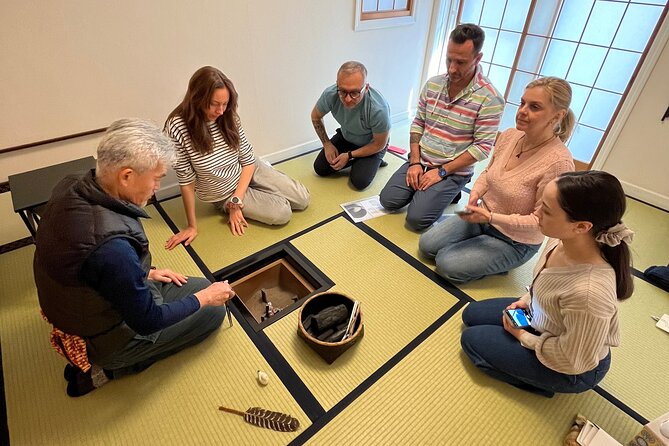
The class takes place in a private home, with the tea ceremony held in a traditional tatami room. That setting gives the experience a personal scale. It is not a large performance built for a crowd. The group is limited to four people, so you can ask questions and receive help while shaping the dough or whisking the tea.
Tea master Ikuyo-san leads the session. The information provided describes her as a certified tea practitioner who has practiced tea ceremony since childhood. Her approach appears especially suitable for beginners. She welcomes people who arrive nervous or know little about tea ceremony, and she has worked comfortably with young participants, including two 13-year-old boys.
More tea rooms worth booking:
- Japanese Tea Ceremony at Private Home in Yokohama, suburban Tokyo
★ 5.0 · 32 reviews - Sencha-do the Japanese Tea Ceremony Workshop
★ 5.0 · 21 reviews - Yokohama : Tea Ceremony with Sweets and Souvenir
★ 5.0 · 5 reviews
Making five seasonal wagashi by hand
The first part takes about an hour and a half. You learn to work with the dough and form five Japanese sweets. The style changes with the season, so the class does not promise one fixed recipe all year.
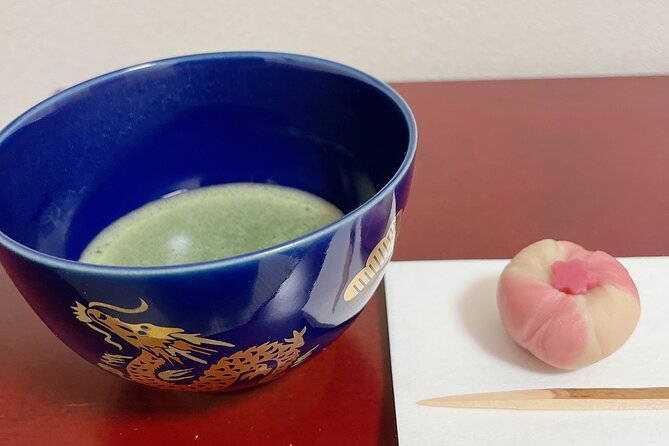
You might make nerikiri, a soft, molded sweet often shaped with careful seasonal detail. Other possible styles include gyuhi, a chewy mochi-like sweet, or manjyu. The choice is made by the tea master according to the time of year.
That seasonal element is one of the strongest reasons to book this instead of a standard cooking lesson. You are not simply producing a generic souvenir. The form of the sweet connects the food to Japanese customs and the calendar.
Still, keep your expectations sensible. This is a short workshop, not professional confectionery training. You will learn the basic process and make five pieces, but the main reward is understanding how wagashi is formed and used, not mastering every traditional technique.
The hands-on format should work well for families and first-time visitors. The young participants described in the supplied feedback enjoyed making both the sweets and the tea, and that makes sense: shaping dough gives children something concrete to do while the cultural explanation unfolds.
You do not need to bring equipment or ingredients. Everything needed for the wagashi portion is provided. Since the exact sweet depends on the season, the class also has a small element of surprise.
Eating your own sweet in the tatami room
After making the wagashi, you move into the traditional tatami room for the tea ceremony portion. This is where the workshop becomes more than a cooking class.
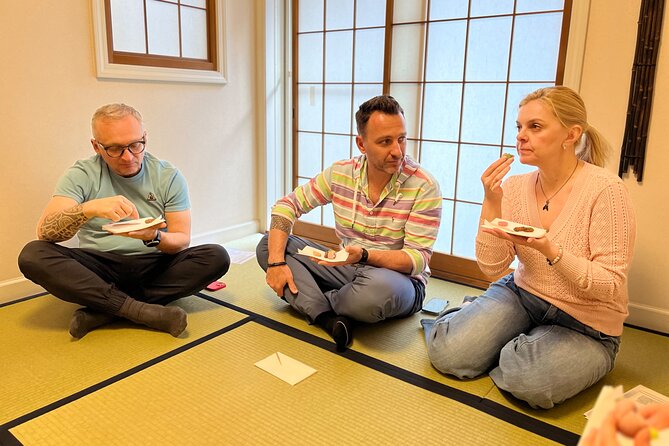
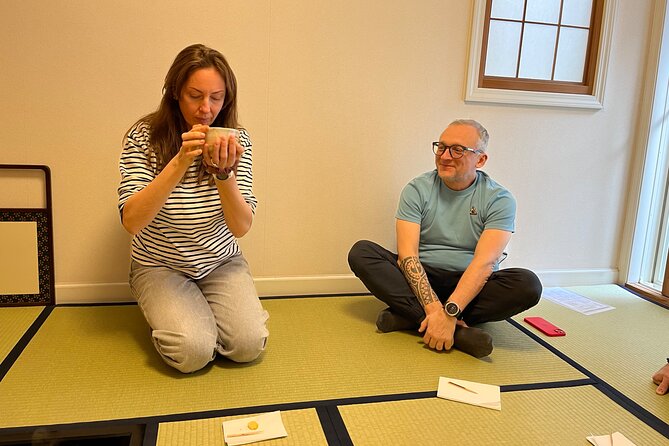
The tea master demonstrates how to behave as a guest. You learn the basic flow of the ceremony, including how to receive and eat the sweet, how to handle the tea bowl, and how to drink matcha respectfully. The goal is not to make you memorize a long set of rules. It is to help you take part without feeling lost.
You eat one of your handmade wagashi during the ceremony. The sweet comes before the tea, allowing its flavor to soften matcha’s sharp bitterness. You then receive a cup prepared by Ikuyo-san.
For someone who has never attended a tea ceremony, this guidance is valuable. The movements can feel formal at first, and many visitors worry about doing something wrong. A small private class is a better place to ask a basic question than a large public demonstration.
You must wear socks when entering the tatami room. This is a simple requirement, but do not forget it. Bare feet are not acceptable for this part of the experience, and socks are not included.
The charcoal procedure and two cups of matcha
One of the most unusual details here is the charcoal procedure. You watch the tea master add charcoal to heat the water used for tea.
This is not something most visitors get to see during a short tea ceremony. The information provided notes that it can be rare even for Japanese people. It gives you a clearer sense of the care involved in preparing tea, since the ceremony includes the fire and water as well as the final bowl of matcha.
While this procedure takes place, you can eat the wagashi you made. The timing is practical: you are not asked to sit through a long demonstration without food or participation. You learn, taste, and watch the process at the same time.
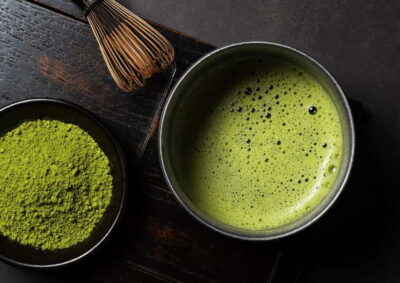
The class includes two cups of matcha. Ikuyo-san prepares one for you. Then you make the second cup yourself, using the whisking method she teaches.
Making matcha is simple in appearance but easy to do poorly without instruction. You will have the chance to try the movement and see how the tea changes as you whisk it. The second cup makes the session more personal because you are not only observing a ceremony, you are taking part in one.
You also receive Japanese dried sweets for the tea portion, along with the wagashi. The supplied details specify two pieces of wagashi and two cups of matcha overall, with four of your handmade sweets remaining to take home. That gives you a useful souvenir without adding a separate shopping stop.
More Yokohama outings:
- Authentic Sumo Experience in Tokyo: Enter the Sanctuary
★ 5.0 · 603 reviews - EVO, WRX, Skyline – JDM Night Run to Daikoku Car Meet
★ 4.9 · 478 reviews - Tokyo: Best Price Daikoku Parking Area JDM Car Meet
★ 4.9 · 192 reviews - Daikoku & Tokyo Private JDM Tour by 700HP R34 GT-R
★ 4.9 · 101 reviews
A private home setting with a four-person limit
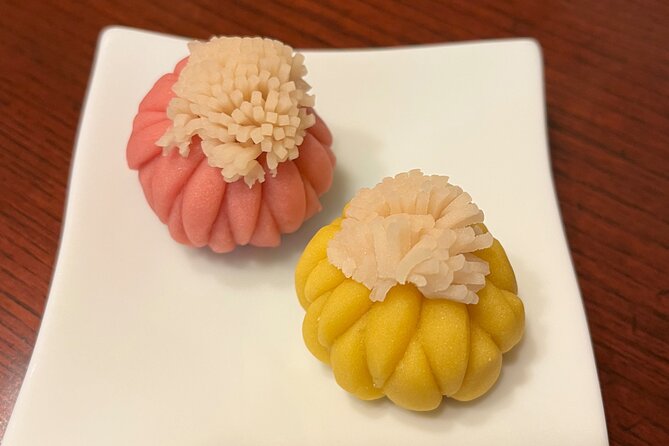
The home setting is central to the character of this experience. You are visiting a private residence rather than entering a commercial kitchen or a staged cultural center.
That can make the class feel warm and relaxed, especially if you are nervous about tea ceremony etiquette. Ikuyo-san’s manner is described as kind and welcoming, and the class is designed for questions. You should still remember that a private home requires a little more courtesy than a public attraction. Arrive ready to remove shoes and follow instructions about the tatami room.
The maximum group size is four people. I consider this a major advantage at the listed price, because each participant gets time with the dough, the tea whisk, and the teacher. A small group also helps the ceremony retain a quiet tone.
The trade-off is that dates may be limited. Confirmation is subject to availability and may arrive within 48 hours of booking. If your schedule in Japan is tight, reserve early and wait for confirmation before building other plans around it.
Pickup is offered, but the stated meeting point is Azamino Station, at 2 Chome Azamino, Aoba Ward, Yokohama. The activity ends back at the meeting point. Check the pickup details when booking rather than assuming door-to-door transportation from Tokyo.
Getting to Azamino and planning your afternoon
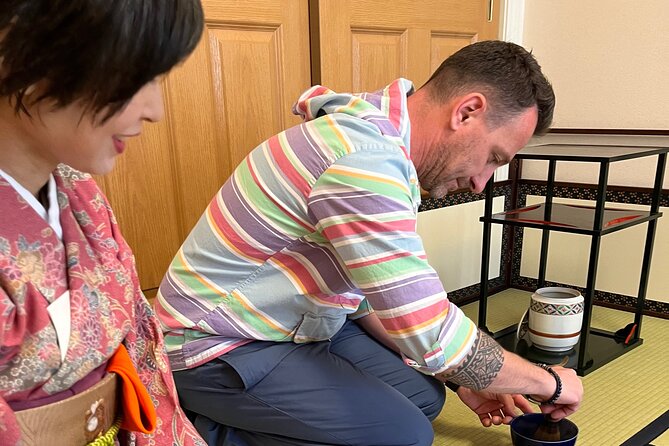
The 1:30 pm start makes this a useful afternoon activity. You can have a relaxed morning elsewhere, then travel to Azamino Station with time to spare.
Azamino is in Yokohama, in the suburban Tokyo area, so this is not a central Tokyo walk-up activity. The location suits you if you are already visiting Yokohama or do not mind using public transportation for a more local residential setting.
The experience is listed as being near public transportation. You should still allow time to find the meeting point and avoid arriving at the last minute. A private-home activity has less room for late arrivals than a major attraction with a staffed entrance.
The nearby Shin-Yokohama Ramen Museum is noted as about 15 minutes from Azamino Station. That can make a good add-on for another part of your day, though you should not assume you can visit it during the three-hour class. Plan it before or after, with enough travel time.
A sensible plan would be to visit the ramen museum earlier, travel to Azamino, and arrive before the 1:30 pm start. You could also schedule the class first and visit the museum later if opening hours and your transport plans allow. The key point is to treat them as separate stops.
Is $97.55 a fair price?
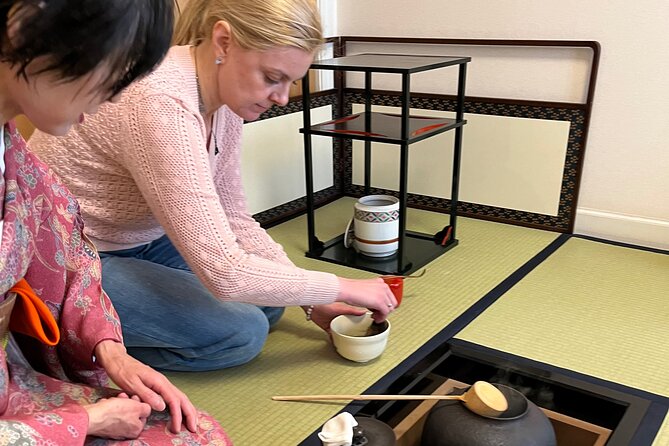
At $97.55 per person, this is not the cheapest way to taste Japanese sweets or drink matcha. The value comes from the combination of instruction, a private-home setting, a small group, two cups of tea, handmade food, and a traditional ceremony demonstration.
You make five wagashi and take four home. Ingredients are included, as is matcha. The class also supplies dried Japanese sweets for the tea portion. Those inclusions reduce the need for extra purchases during the activity.
The price makes the most sense if you want context and participation. If you only want a quick cup of matcha and a photograph in a tatami room, a shorter public tea experience may suit you better. If you want to understand what you are eating, learn how to act as a guest, and try the preparation yourself, the three-hour format gives you more substance.
The group limit improves the value. With no more than four participants, this is closer to a private lesson than a mass-market demonstration. That matters when you are shaping delicate sweets or trying to whisk matcha for the first time.
I would also count the four sweets you take home as part of the value, though they are best viewed as a pleasant extra rather than the reason to book. The main benefit is the cultural instruction and the chance to connect wagashi with tea ceremony.
Who should book this experience?
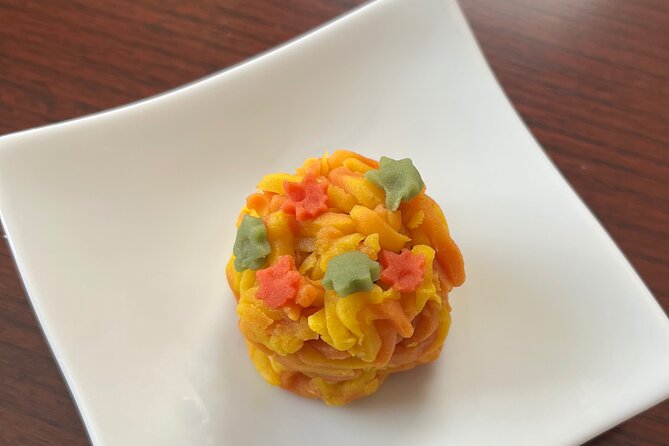
This class is a strong fit for first-time visitors to Japan. You do not need prior knowledge of tea ceremony, and the teacher explains how to be a guest rather than expecting you to know the customs already.
It also suits families with older children. The hands-on sweet making gives young participants a clear role, and the supplied experience with 13-year-old boys suggests the class can work well for that age group. Parents should remember that the tea ceremony still requires quiet attention and respect for the tatami room.
Food lovers will appreciate the seasonal focus. The class is especially useful if you have seen wagashi in shops but wanted to understand how it is made. You will learn about several types, including nerikiri, gyuhi, and manjyu, even though the specific recipe changes by season.
The activity is less suitable if you dislike sitting on tatami, have no interest in formal customs, or want a fast stop between major sightseeing sites. Three hours is a meaningful block of time, and the class rewards patience.
It is also not the right choice if you want a broad tour of Yokohama. You spend the session in the private home and tea room, with no city sightseeing included. Think of it as a focused cultural appointment, not a general Yokohama excursion.
Practical details before you reserve
The activity lasts about three hours and starts at 1:30 pm. You return to the meeting point at the end.
Bring socks for the tatami room. You do not need to bring anything for making wagashi, since the ingredients are supplied.
The tour accepts mobile tickets and offers pickup. The official meeting point is Azamino Station, so check the exact arrangements after booking. Confirmation is subject to availability and may take up to 48 hours.
Free cancellation is available if you cancel at least 24 hours before the local start time. Cancellations or changes made within 24 hours are not refunded or accepted.
The experience has a perfect 5 rating from four posted ratings. The strongest repeated themes are the relaxed welcome from Ikuyo-san, the value of learning both traditions together, and the enjoyment of making sweets and tea by hand.
Should you book the wagashi and tea ceremony class?
Book it if you want a personal introduction to two Japanese traditions in one sitting. The strongest features are the four-person limit, the seasonal wagashi, the charcoal procedure, and the chance to make your own matcha.
I would choose this for a first trip to Japan, a family afternoon, or a return visit when you want something quieter than another major attraction. The $97.55 price is reasonable for a small private-home lesson, but only if you value instruction and participation.
Skip it if Azamino is too far from your route, if you want only a short tea tasting, or if you are not comfortable following tatami-room customs. For everyone else, this is a thoughtful way to learn why wagashi and matcha belong together, then carry four handmade sweets into the rest of your Yokohama afternoon.
FAQ
Where does the Japanese sweets and tea ceremony class meet?
The stated meeting point is Azamino Station, 2 Chome Azamino, Aoba Ward, Yokohama, Kanagawa 225-0011, Japan. The activity ends back at the meeting point.
What time does the class start?
The start time is 1:30 pm. The full activity lasts about three hours.
How many people can join?
The class has a maximum of four participants.
Do I need to bring anything?
You do not need to bring anything for the wagashi-making portion. You must bring socks to enter the traditional tatami room.
How many wagashi will I make and take home?
You make five wagashi. One is used during the tea ceremony, and the remaining four are taken home.
Is cancellation free?
You can cancel for a full refund up to 24 hours before the experience start time. Changes or cancellations made less than 24 hours before the start are not accepted and are not refunded.
More Dessert Tours in Yokohama
- Japanese Calligraphy Class in Yokohama with Tea and Sweets
★ 5.0 · 5 reviews - Matcha Making Class in Tokyo with Authentic Japanese Sweets Set
★ 5.0 · 744 reviews - Tokyo: Matcha Making Experience with Mochi Sweets in Asakusa
★ 4.9 · 388 reviews - Make Traditional Nerikiri Sweets & Matcha experience in Shibuya
★ 5.0 · 130 reviews
New on our Yokohama list
- Yokohama Chinatown: Authentic Local Street Food Experience★ 4.7 · 3 reviews
- Yokohama: A City at the Corner of Tradition and Modernity★ 4.7 · 3 reviews
- 【50 mins】 City lights HelicopterTour: Tokyo and Yokohama plan★ 5.0 · 3 reviews
- Wheelchair Accessible Taxi from HND to Yokohama Port★ 5.0 · 3 reviews
- Tokyo/yokohama: Full Day Nikko Private Sightseeing Trip★ 5.0 · 3 reviews
- Eat like a local in Yokohama – with a Local Expert Guide!★ 4.7 · 3 reviews
- Tokyo JDM Daikoku PA Car Meet Private LEXUS RC Tour from Yokohama★ 5.0 · 3 reviews
- Yokohama: Soba Noodle Workshop with a Soba Master★ 5.0 · 3 reviews
Tea Ceremonies, compared.

Matcha Making Class in Tokyo with Authentic Japanese Sweets Set
Read our review →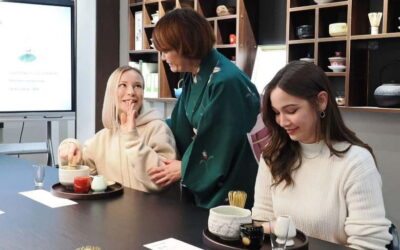
Matcha Making Experience with Mochi Sweets in Asakusa
Read our review →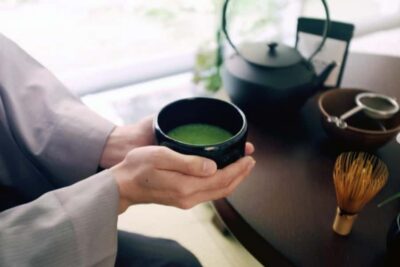
Tea Ceremony Workshop in Tokyo by the Experienced Instrucor
Read our review →

Make Traditional Nerikiri Sweets & Matcha experience in Shibuya
Read our review →Browse the lists this tour appears in