

Reviewed · TEA CEREMONIES
Make Traditional Nerikiri Sweets & Matcha experience in Shibuya
The best part of this Harajuku class is that you do not just eat a Japanese sweet, you learn how its tiny flowers, leaves, characters, and colors are built. Hana sensei guides you through three sample designs, then gives you a fourth piece to invent from scratch. I like that mix of structure and freedom.
I also like the small group of four and the chance to step inside a local home near Omotesando. Hana is patient with children and first-time makers, and she often shares useful Tokyo tips. The main consideration is time: 90 minutes goes quickly, and the class is more about careful handwork and tea than a full meal.
In This Review
- Key points at a glance
- Making nerikiri in central Tokyo
- A lesson that works for beginners
- Matcha and the tea-table finish
- Entering Hana’s home near Omotesando
- Why the 9:00 AM start can be smart
- A good fit for families and mixed-age groups
- What the price includes at $60
- What makes Hana’s teaching effective
- Pairing the class with Harajuku and Shibuya
- The small drawbacks to consider
- Should you book this Harajuku sweets class?
- FAQ
- Where does the nerikiri and matcha experience take place?
- How long does the activity last?
- How many people can join?
- How many nerikiri sweets will I make?
- Do I get to take the sweets home?
- Is matcha included?
- What times are available?
- Is the activity suitable for children?
- Is the activity suitable for vegans and vegetarians?
- Can I cancel for a full refund?
Key points at a glance
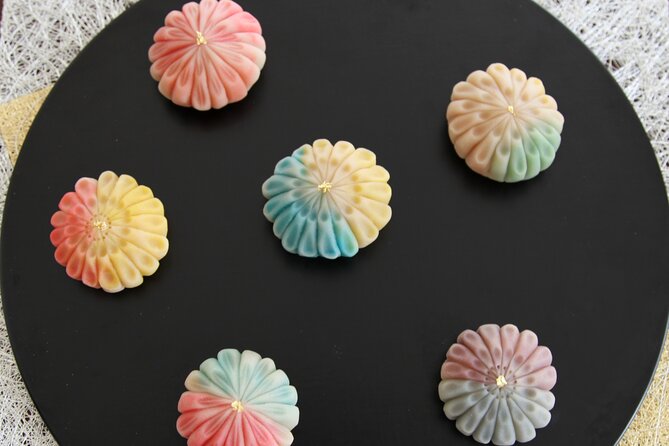
- Four nerikiri sweets: Make three designs from examples, then create one of your own.
- Matcha served at the table: Learn about Japanese tea etiquette and enjoy a hot drink with selected sweets.
- Hana’s personal instruction: She teaches in English and Japanese and gives calm, clear guidance.
- A local-home setting: Meet near CHUMS Omotesando, then walk about 30 seconds to the studio.
- Easy central Tokyo location: Omotesando Station is about three minutes away, with Shibuya and Harajuku within walking distance.
- Family-friendly format: The activity suits young children through seniors and is suitable for vegans and vegetarians.
Making nerikiri in central Tokyo
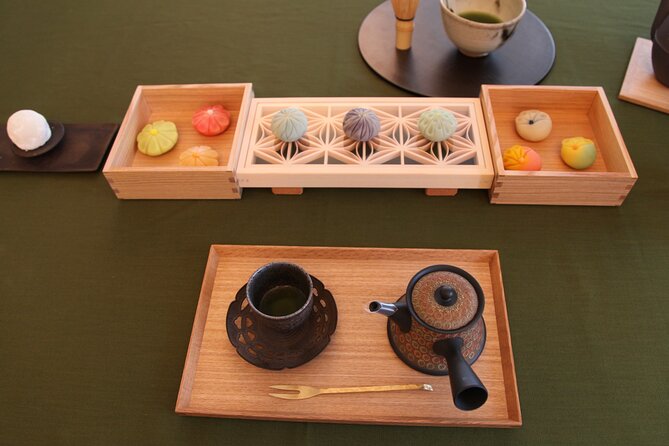
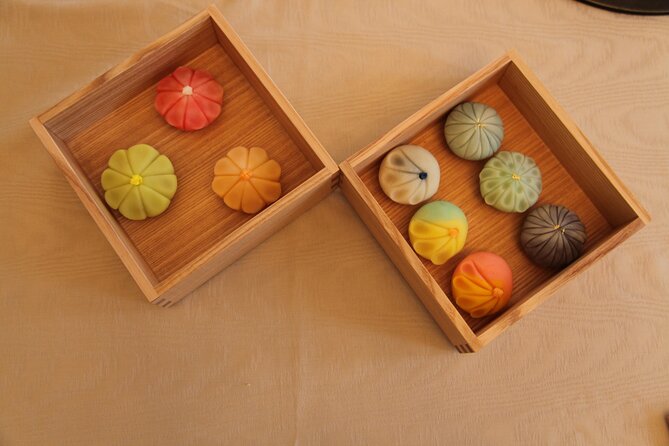
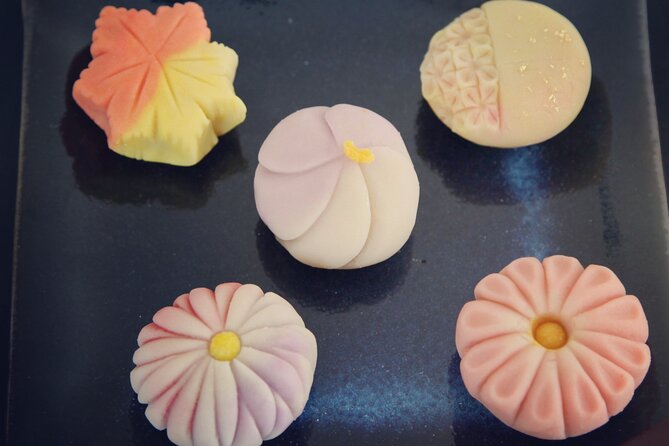
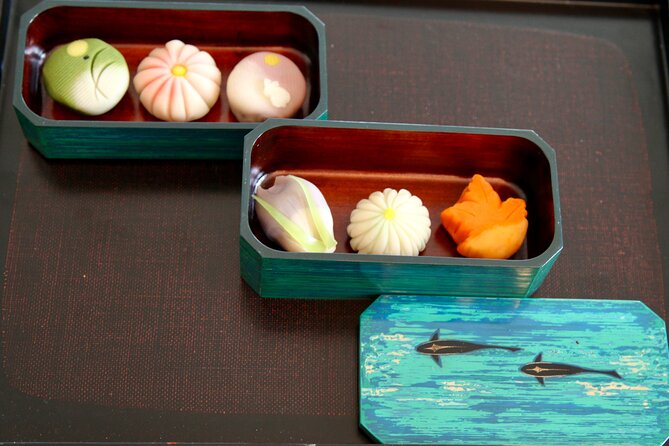
Nerikiri is one of Japan’s prettiest traditional sweets. Its base is bean paste, sugar, and other ingredients, worked into a smooth dough that can be shaped and colored. The result may look like a miniature flower, fruit, animal, or seasonal scene.
That beauty can make nerikiri seem difficult. The class solves that problem by giving you a model to follow. Hana has sample designs ready, so you are not forced to invent a polished Japanese confection from a lump of paste.
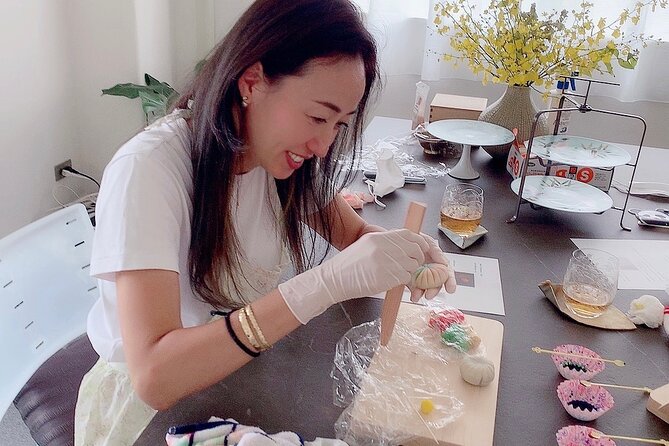
You first choose designs as a group and make three different shapes. Hana demonstrates the techniques, then helps you copy the form with your own hands. The process calls for patience more than culinary skill. You press, pinch, layer, and shape the paste until a recognizable pattern appears.
The fourth sweet is your creative piece. This is where the class becomes personal. You can follow the style of the examples or make something completely different. Past creations have included cherry blossoms, pumpkins, flowers, Hello Kitty, Totoro, Pikachu, and other original characters.
That final piece is especially useful for families. A seven-year-old may not produce the same delicate flower as an adult, but the class gives children room to make something that feels like theirs. One young participant created a Pikachu with impressive focus, while another child favored character designs. Hana’s patient help lets parents work on their own sweets instead of having to manage every step.
More tea rooms worth booking:
- Matcha Making Class in Tokyo with Authentic Japanese Sweets Set
★ 5.0 · 744 reviews - Tokyo: Traditional Tea Ceremony with a Tea Master
★ 5.0 · 528 reviews - Tokyo: Matcha Making Experience with Mochi Sweets in Asakusa
★ 4.9 · 388 reviews
A lesson that works for beginners
You do not need previous experience with Japanese sweets. The instructions are broken into manageable steps, and Hana adjusts her help to the person in front of her. That matters because the finished sweets look far more complex than the method feels once someone shows you how.
I would still set your expectations correctly. This is not a professional pastry course. You are learning a simple, repeatable way to shape nerikiri at home, not mastering every technique used in a specialist wagashi shop.
The class is also not rushed. People who enjoy careful craftwork will like the pace. You get time to correct a shape, adjust a color, or add a small detail. If you prefer fast sightseeing with constant movement, the quiet concentration may feel slow.
That calm pace is part of the appeal. Tokyo can be noisy, crowded, and tightly scheduled. Here, you sit at a table and focus on a small edible object. I find that kind of pause useful in the middle of a busy city itinerary.
Everything you make can be taken home. The information provided does not give a special container or storage instruction, so ask Hana about the best way to carry the sweets if you plan to keep them for later.
Matcha and the tea-table finish
After the sweets are made, Hana serves matcha with carefully selected Japanese sweets sourced from different parts of Japan. The tea portion is presented as a table-style ceremony, making it approachable for people who have never attended a formal tea gathering.
You also have the chance to learn how matcha is prepared. The point is not only the drink itself, but the manners, movements, and care attached to serving it. Hana explains the process clearly, so you can appreciate why the tea is handled with such attention.
The matcha balances the sweetness of the nerikiri. You get four sweets in total, plus a hot drink, which makes the experience feel like a cultural tasting rather than a cooking lesson alone.
Do not book this expecting a full lunch. Four small sweets and matcha are satisfying as a snack, but you will still need another meal. That is easy to manage in this part of Tokyo, where the class fits neatly between sightseeing and shopping.
Entering Hana’s home near Omotesando
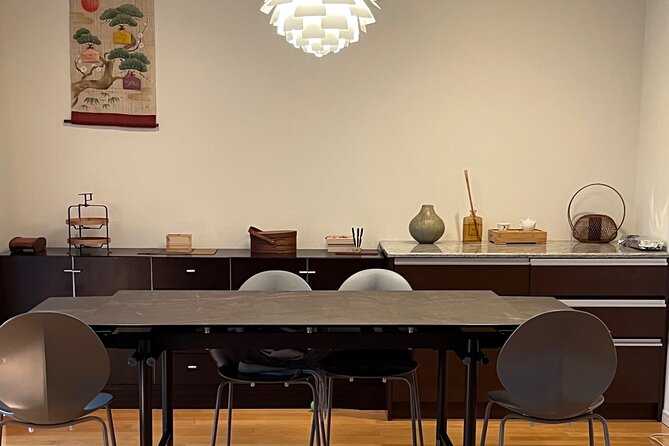
The meeting point is at 5-chōme-2-21 Jingūmae, near CHUMS Omotesando and in front of the brown building. You meet Hana there, then walk together for about 30 seconds to her place.
The location offers something a standard cooking school cannot: a look at how an inner-city Tokyo resident lives. The home setting feels more personal than a commercial classroom, though visitors should remember that this is someone’s private space and follow ordinary house manners.
Omotesando Station is about a three-minute walk away. The area is one of Tokyo’s stylish shopping districts, and the class is also within walking distance of Harajuku and Shibuya.
The choice of meeting point matters. Use the stated landmark rather than wandering directly to the home. The activity ends back at the meeting point, so you can continue your day without arranging a second pickup.
More Shibuya plans:
- Official Street Go-Kart in Shibuya
★ 5.0 · 3,435 reviews - Tokyo: Street Kart Experience in Shibuya
★ 4.9 · 1,484 reviews - Shibuya Meltdown Nightlife Tour: All-You-Can-Drink Bar Hopping
★ 5.0 · 1,058 reviews - Shibuya Official Street Go-Kart in Shibuya Annex
★ 5.0 · 972 reviews
Why the 9:00 AM start can be smart
Classes are offered at 9:00 AM, 1:00 PM, and 3:30 PM. The early start is a practical choice because many shops in Tokyo do not open until around 11:00 AM.
With the morning class, you can make the sweets and tea first, then visit Meiji Shrine, Takeshita Street, or Shibuya Crossing afterward. It turns the workshop into a useful opening activity rather than something that takes up the middle of your sightseeing day.
The 1:00 PM start works well as an afternoon break after a morning in Harajuku or Shibuya. The 3:30 PM option is better if you want to shop or visit a landmark first, but it leaves less daylight for additional plans.
I would allow extra time around the start. The meeting instructions are clear, but central Tokyo stations can be confusing, and arriving late may reduce your making time. The group maximum is four, so a delay can affect a small class more than a large commercial tour.
A good fit for families and mixed-age groups
This is one of the easier Tokyo activities to share across generations. The class is suitable for young children and seniors, and the small group lets Hana give individual help.
Parents have a useful advantage here: Hana is comfortable working with children. She has helped young participants stay involved while adults concentrate on their own sweets. That makes the activity more satisfying than a class where children are expected to sit and watch.
Teenagers can take the design work seriously, especially if they enjoy anime, drawing, food styling, or photography. Adults who prefer traditional culture can focus on the seasonal forms and tea etiquette.
The class is also suitable for vegetarians and vegans. If you have other dietary or religious concerns, contact the provider after booking. One participant requested that alcohol-containing ingredients be replaced for halal reasons, and Hana responded before the lesson. That is a good reason to raise special needs early rather than at the table.
What the price includes at $60
At $60 per person, the cost is reasonable if you value personal instruction and a hands-on cultural activity. You receive approximately 90 minutes of teaching, four sweets to make, the materials needed for the class, matcha, and additional Japanese sweets served with the tea.
The group limit improves the value. With no more than four people, this is not a watch-from-the-back demonstration. You spend most of the time making something yourself, and Hana can step in when your petals, colors, or character details need help.
The price is less compelling if you are mainly looking for a cheap snack. You can buy Japanese sweets for much less at a department-store food hall or confectionery. You are paying here for the instruction, the home setting, the cultural explanation, and the chance to recreate the technique later.
A mobile ticket keeps the booking simple. Confirmation is provided at booking, and free cancellation is available if you cancel at least 24 hours before the local start time. Changes or cancellations inside that window are not accepted for a refund.
What makes Hana’s teaching effective
Hana’s strongest quality is patience. The designs can look intimidating at first, but she breaks them into small actions and encourages you to keep trying. That is important for anyone who describes themselves as clumsy with crafts.
She also speaks English and Japanese fluently and has lived in the United States. That gives English-speaking visitors a comfortable way to ask about ingredients, manners, Japanese food, or Tokyo plans.
Her help does not end when the sweets are finished. She has offered suggestions for places to visit during the rest of a Japan trip, including local stops around Tokyo and advice connected with later destinations such as Kyoto, Osaka, Nara, Hakone, and Hokkaido.
That informal local advice should be treated as a bonus, not the main reason to book. The core experience is the sweets and matcha. Still, it can be useful early in a trip, when you are still deciding how to spend your time.
Pairing the class with Harajuku and Shibuya
The class is easy to combine with several major sights. After a morning session, walk toward Meiji Shrine for a quieter setting, then continue to Takeshita Street for Harajuku’s youth fashion and snack shops.
You can also head toward Shibuya Crossing. The route lets you move from a traditional craft in a private home to one of Tokyo’s most famous modern city scenes in the same half-day.
Omotesando itself is worth time if you like architecture, design, and polished shops. Since the activity is near transport, you can also use it as a break between districts rather than building your whole day around it.
I would not schedule a major timed attraction immediately afterward. Your class may finish on time, but the station walk, photos, and Tokyo’s large pedestrian crossings can take longer than expected.
The small drawbacks to consider
The home setting is appealing, but it may not suit someone who wants a large, formal studio with commercial facilities. The experience is intimate and personal by design.
Nerikiri is delicate work. If you want to make large quantities of food or learn advanced Japanese pastry, this class will feel limited. You make four pieces, not a broad menu.
The activity also uses a set structure. You choose from prepared designs for the first three sweets, then create one original piece. That gives beginners confidence, but highly experienced artists may want more freedom from the beginning.
Finally, matcha has a distinct bitter taste. The sweets soften it, and the class explains the tea process, but anyone who dislikes green tea should know that the hot drink remains an important part of the experience.
Should you book this Harajuku sweets class?
Book it if you want a gentle, creative way to learn about Japanese culture, especially if you are traveling with children, grandparents, or someone who prefers activities over passive sightseeing. The small group, central location, four edible creations, and patient teaching give the $60 price solid value.
I would choose the 9:00 AM session if you want to follow it with Meiji Shrine, Takeshita Street, and Shibuya. Pick the afternoon if you prefer a slower day.
Skip it if you want a full meal, advanced pastry training, or a large professional kitchen. For everyone else, Hana’s nerikiri and matcha lesson offers a rare chance to make something beautiful, taste it immediately, and carry a small piece of Japanese craft into the rest of your trip.
FAQ
Where does the nerikiri and matcha experience take place?
The meeting point is 5-chōme-2-21 Jingūmae, Shibuya, Tokyo 150-0001, near CHUMS Omotesando and in front of a brown building. You then walk about 30 seconds to Hana’s place.
How long does the activity last?
The experience lasts approximately 1 hour and 30 minutes.
How many people can join?
The activity has a maximum of four participants.
How many nerikiri sweets will I make?
You will make four sweets in total. Three follow sample designs, and the fourth is your own original design.
Do I get to take the sweets home?
Yes. Everything you make can be taken home with you.
Is matcha included?
Yes. The experience includes matcha and carefully selected Japanese sweets served at the table.
What times are available?
The listed start times are 9:00 AM, 1:00 PM, and 3:30 PM.
Is the activity suitable for children?
Yes. The experience is described as suitable for all ages, from young children to seniors. Hana has also provided individual help to children during the class.
Is the activity suitable for vegans and vegetarians?
Yes. The experience is suitable for vegans and vegetarians.
Can I cancel for a full refund?
Yes, if you cancel at least 24 hours before the experience’s local start time. Cancellations or changes made less than 24 hours before the start are not accepted for a refund.
More Dessert Tours in Tokyo
- Private Mochi Sweets Making class near Shibuya area
★ 5.0 · 93 reviews - Japanese Traditional Sweets making and Tea Ceremony
★ 4.7 · 50 reviews - Tokyo Local Food Tour: Noodles, Skewers, Dumplings, Sweets
★ 5.0 · 48 reviews - Mochi Matcha Gluten Free Japanese Sweets Class near Shibuya area
★ 5.0 · 26 reviews
New on our Tokyo list
- From Tokyo: Mount Fuji & Hakone Full Day Private Tour★ 4.9 · 25 reviews
- Tokyo Spectacular View Day-Cruise in 90 Minutes★ 5.0 · 25 reviews
- Real Tokyo Runner Club : Daikoku Car Meet Night Tour with JDM Car★ 5.0 · 25 reviews
- 2.5 Hour-Guided Cycle Tour in the Central Tokyo★ 5.0 · 25 reviews
- Ramen Making from Scratch +Akihabara Tour –Cooking Class★ 5.0 · 25 reviews
- [Self-Drive] Tokyo & Daikoku Custom Car Driving Tour★ 4.9 · 25 reviews
- Tokyo: 2-Hour Night Bike Tour of the City’s Hidden Gems★ 4.9 · 25 reviews
- Tokyo: Mt. Fuji, Owakudani, Hakone Shrine, & Open-Air Museum★ 4.7 · 25 reviews
Tea Ceremonies, compared.

Matcha Making Class in Tokyo with Authentic Japanese Sweets Set
Read our review →
Matcha Making Experience with Mochi Sweets in Asakusa
Read our review →
Tea Ceremony Workshop in Tokyo by the Experienced Instrucor
Read our review →
Tea Ceremony Experience in a Private Tea Room in Shibuya
Read our review →Browse the lists this tour appears in