
Reviewed · TEA CEREMONIES
Tea Ceremony Workshop in Tokyo by the Experienced Instrucor
The most rewarding part of this Tokyo activity is that you do not just watch a tea ceremony. You first see the careful movements of an experienced instructor, then make and serve your own bowl of matcha in a traditional tatami room. The lesson takes place through a school licensed by the Urasenke Chado School in Kyoto, giving the session a firm cultural foundation.
I like the small-group setting, which can make the lesson feel calm and personal, and I like the chance to taste several forms of tea, from Sakura tea to strong koicha and foamy usucha. The main consideration is the old building: the tearoom is upstairs, and the staircase is very steep.
In This Review
- Key points to know before booking
- Why this Tokyo tea ceremony feels different
- Sakura tea begins the 90-minute lesson
- Watching koicha in a traditional tearoom
- Tea bowls, sweets, and the details you might miss
- Making your own usucha
- A small setting near Asakusa
- What to wear and how to sit
- Who will enjoy this tea ceremony most
- What may not suit you
- Booking, timing, and cancellation
- Should you book it?
- FAQ
- How long does the tea ceremony workshop last?
- Where does the workshop take place?
- Is the workshop taught in English?
- What kinds of tea will I try?
- Do I need to sit in the seiza position?
- Are socks required, and what should I wear?
- What is the cancellation policy?
Key points to know before booking
- A real hands-on lesson: You practice making usucha, the lighter, foamy style of matcha, rather than only observing a performance.
- Three distinct tea moments: The session includes welcome Sakura tea, strong koicha, and usucha.
- Traditional surroundings: The class takes place in a 1940s Japanese house with tatami mats and a second-floor tearoom.
- English instruction: Ms. Haneishi explains the history, tools, movements, and meaning of Chado in English.
- Small groups: The maximum is six participants, with some sessions feeling almost private.
- Socks are required: Bring socks, and avoid miniskirts or tight pants for comfort on the tatami.
Why this Tokyo tea ceremony feels different
Many matcha activities in Japan are quick demonstrations followed by a sweet drink. This one gives you a broader look at Chado, the Japanese Way of Tea. You learn that the ceremony is not simply about preparing a beverage. The room, bowl, sweets, gestures, silence, and attention paid to the other person all form part of the experience.
The session is held at a school connected with the Urasenke Chado tradition in Kyoto. That matters if you want more than a photo opportunity. The instructor explains the ideas behind the movements and shows you how the host and guest each have a role.
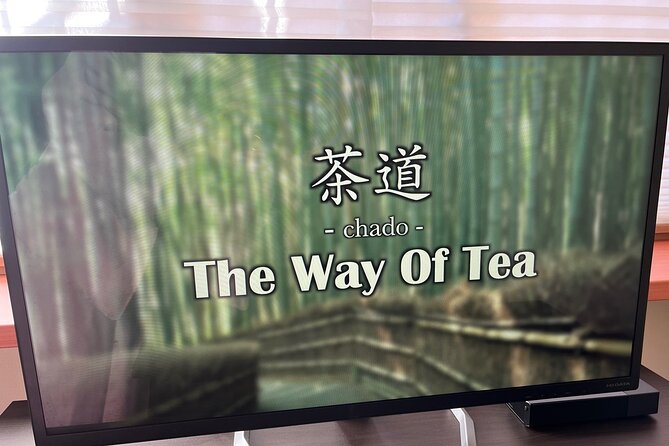
The tone is gentle and focused. A short introductory video sets out the history and basic concepts before you enter the tearoom. This helps you understand what you are seeing, especially if Japanese tea ceremony is new to you.
The class is conducted in English, and Ms. Haneishi has been described as having 28 years of tea ceremony practice. She has also lived in the United States, which can make the cultural explanations easier to follow for English-speaking participants.
More tea rooms worth booking:
- Matcha Making Class in Tokyo with Authentic Japanese Sweets Set
★ 5.0 · 744 reviews - Tokyo: Traditional Tea Ceremony with a Tea Master
★ 5.0 · 528 reviews - Tokyo: Matcha Making Experience with Mochi Sweets in Asakusa
★ 4.9 · 388 reviews
Sakura tea begins the 90-minute lesson
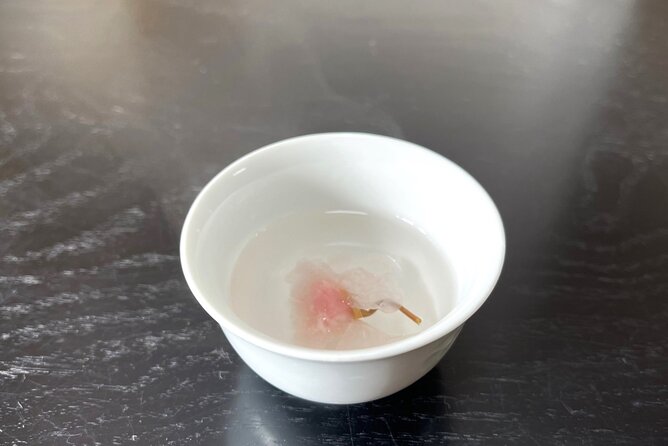
Your first drink is Sakura tea, a cherry blossom tea served by the host as a welcome. It is a small but thoughtful opening. Instead of rushing straight into matcha, the session gives you a gentle introduction to the host’s role and the care involved in serving something to another person.
A 10-minute video follows. It covers the history of Chado and its central ideas, giving you useful context before the formal demonstration. If you already know a lot about Japanese tea, this section may feel basic. For most first-time participants, though, it makes the later movements easier to understand.
The lesson then moves into the tearoom. You will see how the room itself shapes the ceremony. Tatami mats, the arrangement of utensils, the tea bowl, and the quiet pace all direct your attention away from Tokyo’s usual rush.
There is also a short period of meditation. You do not need special religious knowledge, and you are not expected to perform anything elaborate. The point is to leave ordinary concerns aside for a while and notice the small details in front of you.
Watching koicha in a traditional tearoom
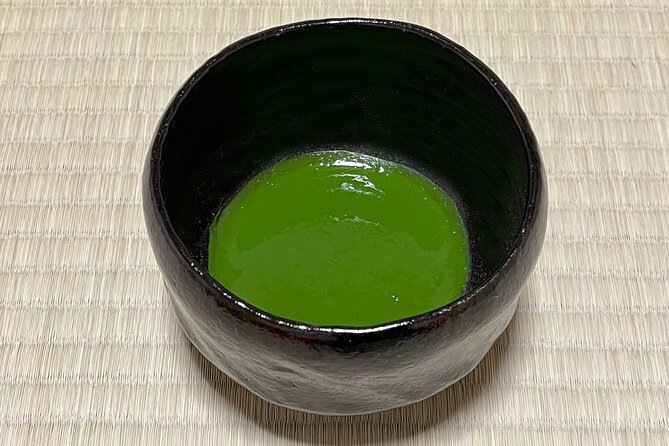
The formal demonstration focuses on koicha, the thick and strong form of matcha. This is described as the original style associated with samurai, and it has a denser texture and more powerful flavor than the matcha most visitors know from cafés.
Koicha is not necessarily the easiest tea for a first taste. Its intensity can surprise you, particularly if you are used to sweetened matcha drinks. That is part of the value of trying it here. You get to understand how Japanese tea varies in strength and texture, instead of treating all matcha as the same drink.
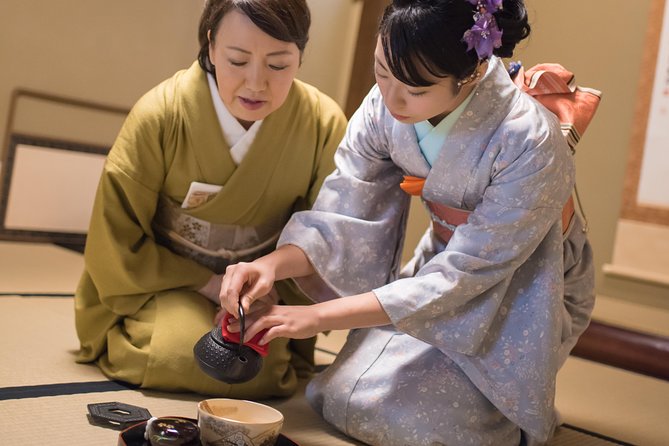
The instructor performs the ceremony step by step. You can watch the position of the utensils, the way the bowl is handled, and the deliberate rhythm of the preparation. The movements may look simple at first, but the formal sequence gives them meaning.
This is also where the class feels most different from an ordinary cooking lesson. You are not only learning a recipe. You are watching a form of hospitality in which the host prepares something with care and the guest receives it with equal attention.
Tea bowls, sweets, and the details you might miss
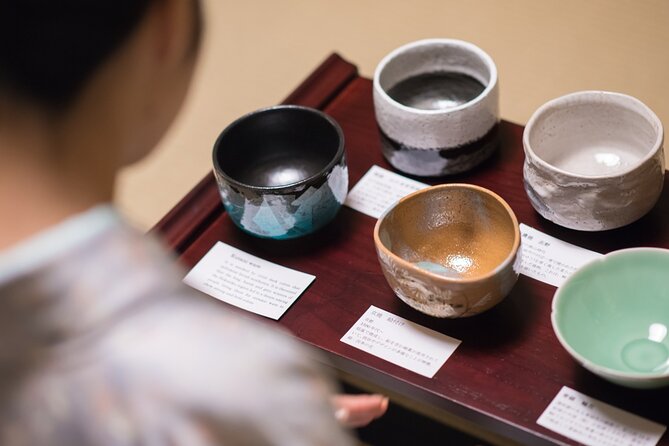
The tea bowl gets its own explanation. You learn that bowls come from different regions and that shape can affect the taste and feeling of the tea. Some bowls are made for particular seasons or settings, and the vessel becomes part of the experience rather than a disposable cup.
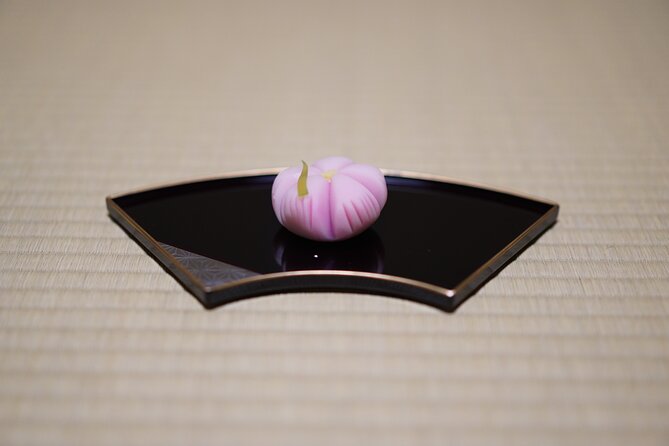
Three kinds of local Japanese confectionery are included during the session. These sweets are not just snacks. Their sweetness balances the bitterness of matcha and prepares your palate for the tea that follows.
You first enjoy a traditional confection with the formal tea presentation. Later, dry sweets are served before usucha. The contrast between moist and dry sweets helps show how food is paired with different stages of the ceremony.
This is one of the strongest parts of the class for anyone interested in Japanese food culture. You are tasting the relationship between tea and confectionery, not simply adding dessert to the booking.
A few more Tokyo bookings worth comparing
- Sushi Making Tokyo Roll and Authentic Japanese Sushi Class
★ 5.0 · 3,971 reviews - Tokyo: Roll and Authentic Sushi Making Class in Asakusa
★ 4.9 · 1,957 reviews - Tokyo Shinjuku Chopsticks Making Class
★ 5.0 · 1,763 reviews - Tokyo: Sushi Making Class in a Happi Coat near a Famous Spot
★ 4.9 · 1,377 reviews
Making your own usucha
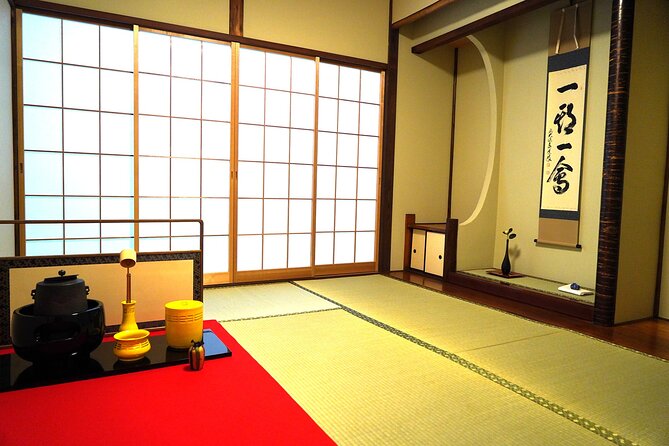
After watching the formal koicha preparation, you get the most practical part of the session: a hands-on lesson in making usucha. This is the thinner style of matcha, whisked until a thick layer of foam forms on top.
The instructor provides the materials and shows you the process step by step. You then prepare your own bowl and have a chance to serve tea as both host and guest. That two-sided practice helps you understand the etiquette from both positions.
Do not worry if your first bowl is not perfect. The value is in feeling how the whisk, powder, water, bowl, and hand movements work together. The class is designed as an introduction, not as a test for future tea masters.
The tasting also gives you a useful comparison. Koicha is strong and concentrated, while usucha is lighter and more familiar to many first-time participants. By trying both, you can decide what kind of matcha you prefer.
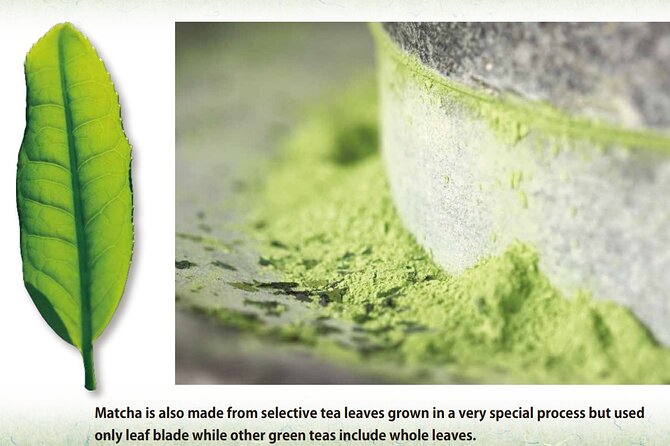
The session also includes an explanation of matcha powder itself. You learn what you are drinking and how it differs from ordinary steeped tea. That basic lesson can be especially useful if you plan to buy matcha during your time in Tokyo.
A small setting near Asakusa
The meeting point is at 2-chome-3-12 Kotobuki in Taito City, near Asakusa and public transportation. Be careful with navigation: the correct new address is 2-3-12, while some Google Maps results may show 2-3-3.
The activity ends at the same location. There is no sightseeing route attached, so plan it as a focused cultural stop rather than a walking tour of Asakusa. It fits well before or after exploring the neighborhood, but leave enough time to find the building and arrive without rushing.
The group limit is six people. A smaller group makes a real difference here because the instructor can explain movements clearly and watch participants during the hands-on section. Some bookings may feel almost private, especially when only a few people attend.
The listed price is $38.47 per person. For about 90 minutes, that is a fair price if you value instruction, several tea tastings, sweets, and access to a traditional tearoom. It is less attractive if your only goal is to drink a cup of matcha cheaply.
You are paying for the setting and the teaching as much as for the tea. The licensed school, English instruction, formal koicha presentation, tea bowl lesson, and hands-on practice give the activity more substance than a simple café tasting.
What to wear and how to sit
Dress for sitting on tatami. Miniskirts and tight pants are not recommended, and bare feet are not allowed. Bring socks with you, even if you expect to wear shoes during the rest of your day.
You do not have to sit in seiza, the traditional kneeling position with your legs folded beneath you. If sitting on the tatami is difficult, a chair can be provided. That makes the session more manageable for many people, though you should still consider the stairs before booking.
The tearoom is on the second floor of an old Japanese house built in the 1940s. The staircase is very steep, and there is no machinery to help people go upstairs. The building also has a weight limit, so larger groups may occasionally be asked to adjust their time for safety.
These details are easy to overlook, but they matter. The old house gives the class character, yet it also means you should be comfortable with a steep staircase and a traditional interior.
Who will enjoy this tea ceremony most
I would recommend this activity to first-time visitors who want a clear introduction to Japanese culture without committing to a long formal ceremony. The session is short enough to fit into a busy Tokyo schedule, but detailed enough to explain why the ceremony works as it does.
It is also a good choice for couples, families with children aged 10 and above, and anyone who prefers a small class. A family can watch the formal performance together, taste the sweets, and then take turns preparing matcha.
Teenagers may particularly enjoy the practical section. The hands-on work gives the experience a clear purpose and can make the history easier to remember. Children under 10 cannot participate, so this is not a suitable activity for families with younger children.
You should also book it if you enjoy quiet cultural experiences. The meditation, careful movements, and traditional room create a slower hour and a half. This is not a loud, fast-moving attraction, and that calm pace is central to its appeal.
What may not suit you
The class is introductory. If you already study Chado or have taken several formal tea ceremonies, you may find the explanations familiar and the lesson too basic. The focus is on giving newcomers a solid first look, not on advanced practice.
The strong koicha may also be challenging if you dislike bitter or concentrated tea. You are given other styles to try, including usucha, but the session deliberately includes koicha so you can understand the traditional form.
The building’s physical limitations are another factor. A steep staircase, tatami seating, and an old house will not work for everyone. A chair is available if you cannot sit on the floor, but the upstairs access remains important.
Finally, the activity is centered on tea ceremony rather than broader Asakusa sightseeing. If you want a guide who takes you through temples, markets, and streets, choose a separate neighborhood tour and use this as one focused stop.
Booking, timing, and cancellation
Several workshop times are available, which makes it easier to fit the class around Tokyo sightseeing. Confirmation is sent within 48 hours of booking, subject to availability, so do not leave the reservation until the last minute if your schedule is tight.
The experience has free cancellation if you cancel at least 24 hours before the local start time. Cancellations or changes made inside that period are not accepted for a refund.
The activity is recommended for most people who can manage the stairs and follow the clothing rules. The maximum group size is six, although the building’s weight limit can occasionally require a time adjustment for safety.
Should you book it?
Book this tea ceremony if you want to understand the manners, tools, flavors, and quiet purpose behind Chado. The strongest reasons are the small group, English explanations, formal koicha demonstration, Japanese sweets, and chance to prepare your own usucha.
At $38.47, it offers good value for a focused cultural lesson in a real traditional setting. I would skip it only if you want a quick matcha drink, already have serious tea ceremony experience, or cannot manage the steep second-floor staircase.
Bring socks, allow time to find the corrected address, and arrive ready to slow down. For many visitors, the best souvenir is not the tea itself but the new ability to notice how much care can fit into one bowl.
FAQ
How long does the tea ceremony workshop last?
The activity lasts approximately 1 hour and 30 minutes.
Where does the workshop take place?
It takes place at 2-chome-3-12 Kotobuki, Taito City, Tokyo 111-0042, near Asakusa. The activity ends at the same meeting point.
Is the workshop taught in English?
Yes. The instructor explains the history, concepts, ceremony, tea, and hands-on preparation in English.
What kinds of tea will I try?
You will receive Sakura tea as a welcome drink, taste koicha, the strong form of matcha, and prepare and drink usucha, the thinner foamy style.
Do I need to sit in the seiza position?
No. You do not have to sit in seiza. A chair can be provided if you cannot sit on the tatami mats.
Are socks required, and what should I wear?
Socks are required in the tearoom. Miniskirts and tight pants are not recommended, and bare feet are not allowed.
What is the cancellation policy?
You can cancel for a full refund up to 24 hours before the local start time. Cancellations or changes made less than 24 hours before the experience are not accepted for a refund.
New on our Tokyo list
- From Tokyo: Mount Fuji & Hakone Full Day Private Tour★ 4.9 · 25 reviews
- Tokyo Spectacular View Day-Cruise in 90 Minutes★ 5.0 · 25 reviews
- Real Tokyo Runner Club : Daikoku Car Meet Night Tour with JDM Car★ 5.0 · 25 reviews
- 2.5 Hour-Guided Cycle Tour in the Central Tokyo★ 5.0 · 25 reviews
- Ramen Making from Scratch +Akihabara Tour –Cooking Class★ 5.0 · 25 reviews
- [Self-Drive] Tokyo & Daikoku Custom Car Driving Tour★ 4.9 · 25 reviews
- Tokyo: 2-Hour Night Bike Tour of the City’s Hidden Gems★ 4.9 · 25 reviews
- Samurai themed Entertainment show in Shinjuku★ 4.5 · 25 reviews
Tea Ceremonies, compared.

Matcha Making Class in Tokyo with Authentic Japanese Sweets Set
Read our review →
Matcha Making Experience with Mochi Sweets in Asakusa
Read our review →

Make Traditional Nerikiri Sweets & Matcha experience in Shibuya
Read our review →
Tea Ceremony Experience in a Private Tea Room in Shibuya
Read our review →Browse the lists this tour appears in