
Reviewed · TEA CEREMONIES
Japanese Tea Ceremony at Private Home in Yokohama, suburban Tokyo
The most unusual part of this private Yokohama tea ceremony is the setting. You enter a traditional tatami room inside a Japanese home, watch the tea master prepare matcha over charcoal, and then learn to make a bowl yourself. This is not a quick demonstration in a crowded venue. It is a small cultural lesson with room for questions and conversation.
I like two things in particular: the teacher has studied tea ceremony for more than 40 years and taught it for more than 15, and the handmade wagashi changes with the season. I also like that you drink two cups of matcha, one prepared for you and one that you mix yourself.
The main consideration is location. The meeting point is in Aoba Ward, Yokohama, near Azamino, not central Tokyo. The trip adds time to your day, and you need to bring socks before entering the tatami room.
In This Review
- Key points at a glance
- Why this Yokohama tea ceremony feels different
- Arriving in Aoba Ward near Azamino
- Entering the tatami tea room
- Watching the charcoal procedure
- Handmade wagashi and the first bowl of matcha
- Making your own matcha
- The history lesson and time for questions
- Is $52.71 a fair price?
- Who will enjoy this private-home lesson?
- How to fit it into a Yokohama day
- Should you book the Yokohama tea ceremony?
- FAQ
- Where does the tea ceremony take place?
- How long does the activity last?
- Do I make matcha myself?
- What food and drink are included?
- Do I need to bring anything?
- Can I cancel the booking for a refund?
Key points at a glance
- A real private-home setting: You learn inside a tatami tea room at the Kono family home in Yokohama.
- A rare charcoal procedure: The teacher adds charcoal to heat the water, a process even many Japanese people seldom see.
- Two matcha servings: You first receive tea prepared by the master, then make a second bowl yourself.
- Seasonal handmade wagashi: Sweets such as nerikiri, gyuhi, or manjyu accompany the tea, with vegan and gluten-free options noted.
- A small, private format: Only your group takes part, making it easier to ask questions and follow the etiquette lesson.
- A 90-minute cultural stop: The workshop fits well into a half-day around Azamino and nearby Shin-Yokohama.
Why this Yokohama tea ceremony feels different
Many tea demonstrations show you the polished final movements and then send you on your way. This workshop gives you more of the structure behind the ritual. You see how the room is used, how the water is heated, how a guest behaves, and why sweets are served before the tea.
The private-home setting matters. You are not simply watching a performance. You are being welcomed into a space designed for tea, with tatami flooring and the quiet manners that go with it. That makes the first few minutes important. Slow down, follow the teacher’s instructions, and treat the room with care.
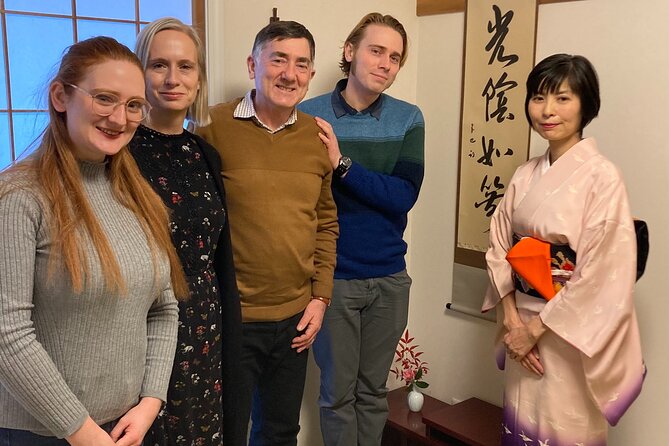
The teacher has practiced Japanese tea ceremony for over four decades. That long background is useful because tea ceremony has many small rules, and a beginner can easily worry about making a mistake. The lesson is meant to show you what to do as a guest, not test you on perfect form.
The group size is also a practical advantage. This is a private activity, so only your party participates. You can ask about the utensils, the sweets, the history of tea ceremony, or a gesture that seems unclear without trying to speak over a large group.
More Private Tours in Yokohama
- Daikoku & Tokyo Private JDM Tour by 700HP R34 GT-R
★ 4.9 · 101 reviews - Tokyo 8hr Private Tour with Licensed Guide from Yokohama
★ 5.0 · 94 reviews - R34Skyline Daikoku PA Fast & Furious Private Experience
★ 5.0 · 63 reviews
Arriving in Aoba Ward near Azamino
The meeting point is at Dresser Azamino Gardens in Aoba Ward, Yokohama. Pickup is offered, and the activity returns to the same meeting point. Since the listing describes the area as being near public transportation, you should confirm the exact pickup details after booking, especially if you are coming from central Tokyo.
Azamino is in suburban Yokohama, so this is not a drop-in activity beside Tokyo Station or Yokohama’s main waterfront. Allow extra time for the outward and return journeys. The location is part of the appeal, since you are visiting a residential part of Japan rather than another tourist district, but it is also the clearest drawback for anyone with a packed Tokyo schedule.
The activity lasts about 1 hour and 30 minutes. That is long enough for a full lesson, but short enough to pair with another stop. One suggested add-on is the Shin-Yokohama Ramen Museum. From Azamino Station, the closest Shin-Yokohama station is about 15 minutes by Yokohama subway, giving you an easy way to build a food stop around the tea lesson.
Do not arrive in a hurry. A tea ceremony depends on quiet attention, and rushing from a distant neighborhood would work against the mood. I would place this on a morning or afternoon when you can give the workshop its own time.
Entering the tatami tea room
Before you enter, put on your socks. The instructions specifically require socks in the tatami room, so do not treat this as a minor detail. If you are wearing sandals or open shoes, carry a clean pair in your bag.
Tatami is more than flooring. It sets the tone of the room and helps define the formal space where the ceremony takes place. You will learn how to be a guest there, including how to receive and drink the tea. The teacher guides you through the process, so you do not need prior experience with Japanese customs.
This part should suit first-time visitors especially well. You are not expected to know the correct gestures before arriving. The value lies in seeing the manners in context and understanding why the guest has an active role in the ceremony.
The room may feel more formal than an ordinary home, but the private setting keeps the lesson personal. A family group, couple, or small party can take part together. The published information does not give an exact maximum group size, so confirm that detail if it matters for your booking.
Watching the charcoal procedure
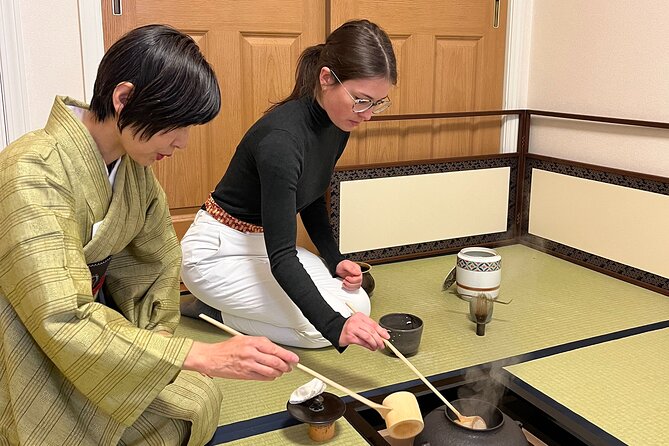
The teacher begins with a demonstration of the tea ceremony. A particularly unusual part is the charcoal procedure, in which charcoal is added to heat the water.
This is a strong reason to choose this workshop over a basic matcha-making class. Many introductions focus only on whisking powdered tea. Here, you see the older method of preparing the heat itself. The procedure connects the tea to fire, water, utensils, timing, and the careful movements of the host.
The charcoal demonstration may be the quietest part of the visit, so watch closely. It is not a spectacle with constant narration. Its value is in the detail: how the teacher handles the process and how the preparation sets up the tea that follows.
The activity notes that this is uncommon even for Japanese people to see. That gives the workshop a special edge, but keep your expectations sensible. You are seeing a demonstration within a 90-minute lesson, not taking a full course in every school of tea ceremony.
More tea rooms worth booking:
- Matcha Making Class in Tokyo with Authentic Japanese Sweets Set
★ 5.0 · 744 reviews - Tokyo: Traditional Tea Ceremony with a Tea Master
★ 5.0 · 528 reviews - Tokyo: Matcha Making Experience with Mochi Sweets in Asakusa
★ 4.9 · 388 reviews - Tokyo: Matcha and Kimono Experience
★ 4.7 · 219 reviews
Handmade wagashi and the first bowl of matcha
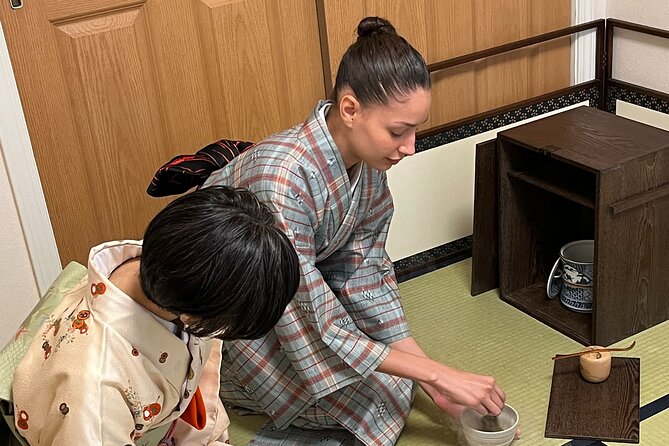
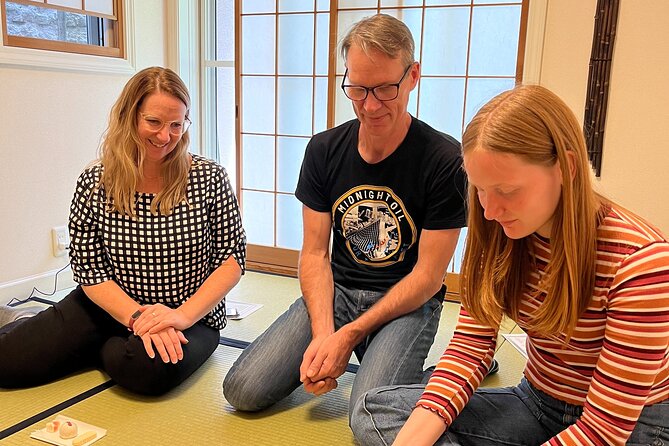
While the teacher demonstrates, you eat wagashi, the traditional sweets served with matcha. The sweets are handmade by the tea master, and the type depends on the season. Possible examples include nerikiri, gyuhi, and manjyu, along with dried Japanese sweets.
The seasonal choice is one of the nicest details here. You are not being handed one fixed snack throughout the year. The sweet gives you a small taste of the season and prepares your palate for the matcha. Nerikiri can be shaped and decorated, while gyuhi is a soft mochi-style sweet and manjyu is another traditional confection. The exact item is selected by the teacher.
The included food is described as suitable for vegan and gluten-free diets. If this is important to you, mention your needs when booking or confirming the activity. The information says the included snacks are suitable, but it does not list every ingredient or promise that all dietary concerns can be handled.
The teacher then prepares a bowl of matcha for you. Pay attention to the guest instructions as much as the tea itself. The ceremony is about the exchange between host and guest, not only the taste of the drink.
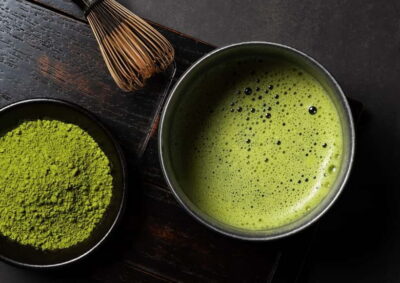
Matcha can be a surprise if you have only had sweetened green tea drinks. It is powdered green tea whisked with water, and its flavor can be earthy and strong. The wagashi helps balance it. If you prefer sweet drinks, approach the first cup as a traditional pairing rather than expecting a café-style beverage.
Making your own matcha
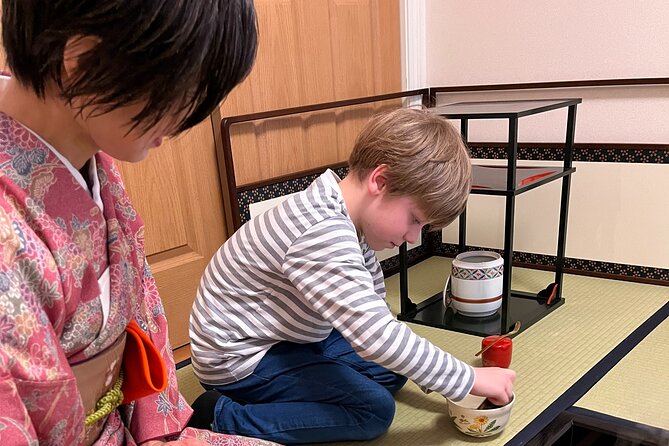
After watching the procedure, you get to prepare matcha yourself. This gives the workshop a useful rhythm: first observe, then take part.
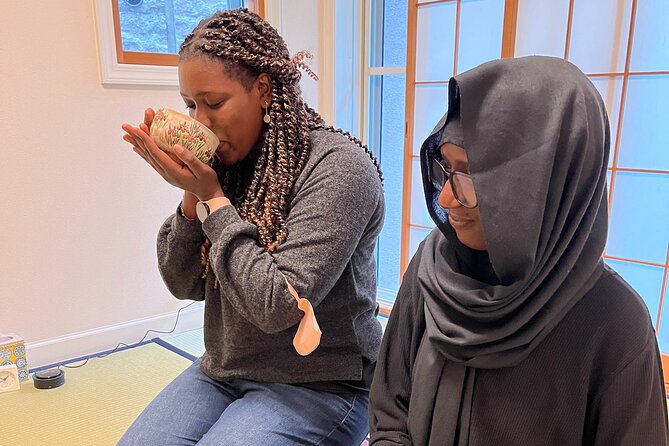
The teacher shows you how to mix the tea, and you drink the bowl you make. In total, you receive two cups of matcha, one made for you and one made by your own hand. That second cup is important because it turns the visit from a demonstration into a practical lesson.
Do not worry about producing a perfect bowl on your first attempt. The point is to learn the basic movement and understand the work involved. You will probably remember the process better after handling the whisk and seeing how the powder changes in the water.
This is also the most interactive part for children and families, provided everyone can sit quietly and follow instructions in the tatami room. The private format helps here. You can take your time, and the teacher can answer questions as they come up.
The description does not specify every utensil used, the precise school of tea, or whether photos are permitted. If those details matter to you, ask before the ceremony begins rather than interrupting the formal demonstration.
The history lesson and time for questions
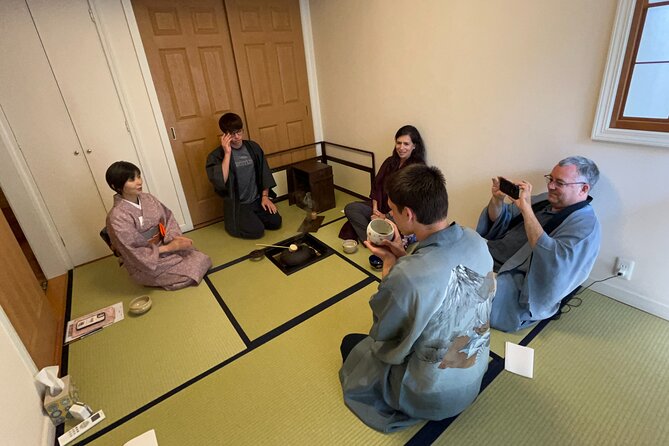
The tea master explains the history of Japanese tea ceremony and leaves time for questions. This makes the workshop more useful than a photo opportunity, since you can connect the gestures, sweets, charcoal, and room to the wider tradition.
Use the question period well. Ask about the meaning of the guest’s actions, why wagashi comes before matcha, how the tea room is arranged, or how the charcoal procedure fits into the ceremony. The teacher has spent more than 40 years learning the tradition and over 15 years teaching it, so this is your chance to get answers from someone with long practical experience.
The conversation can also make the visit feel more personal. A previous booking included a family who enjoyed talking with the Kono family about Japanese culture and everyday life. That detail suggests the workshop can extend beyond formal instruction, although the amount of conversation will depend on your group and the time available.
You should still keep your questions focused. With only 90 minutes, the ceremony, sweets, matcha preparation, and history talk all need their share of time.
Is $52.71 a fair price?
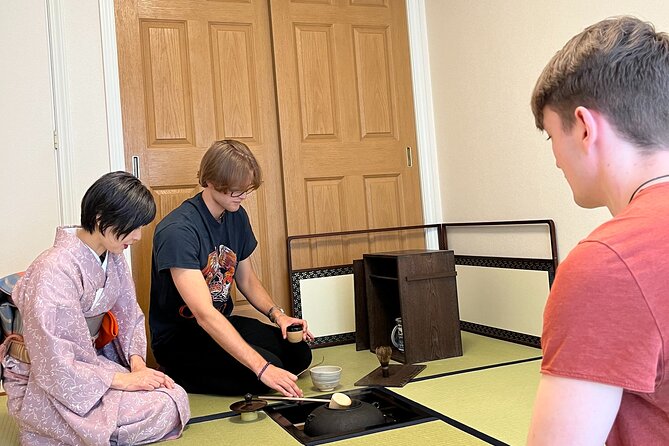
At $52.71 per person, this costs more than buying a matcha drink or attending a short public demonstration. The price makes more sense when you consider what is included: a private lesson, a traditional tatami room, two servings of matcha, handmade wagashi, the charcoal procedure, and time with an experienced teacher.
The private format is the key value. You are paying for access to a personal setting and direct instruction, not just for refreshments. If your goal is to learn how to be a guest and prepare matcha, the price is reasonable for a 90-minute small-group activity.
It is less convincing for someone who only wants a quick taste of matcha or a photograph in traditional clothing. There is no mention of kimono dressing, a large historic venue, or an extended sightseeing program. You should book this for the lesson and the cultural exchange, not for a long list of extras.
The tour is booked an average of 38 days in advance, so plan early if you have fixed dates in Yokohama. Confirmation is sent within 48 hours, subject to availability. Free cancellation is available up to 24 hours before the start time, while later cancellations and changes are not accepted.
Who will enjoy this private-home lesson?
I would recommend it to visitors who want a calm, direct introduction to Japanese culture. It suits couples, families, and small groups who enjoy learning by doing rather than simply watching.
It is especially good for:
- First-time visitors who want help with tea ceremony etiquette
- People interested in Japanese food traditions and seasonal sweets
- Families who prefer a private activity
- Visitors staying near Yokohama or planning a stop around Azamino
- Anyone curious about traditional charcoal-heated tea preparation
It may not suit you if central Tokyo is your base and you have no spare time for a suburban outing. It is also not the best fit if you dislike formal sitting, powdered green tea, or quiet cultural demonstrations.
The activity information does not state how accessible the tatami room is or describe seating options. If you need specific arrangements, ask the provider before booking. The same applies to children, large groups, and detailed dietary restrictions.
How to fit it into a Yokohama day
The simplest plan is to give the tea ceremony a dedicated half-day. Travel to the Azamino area, attend the 90-minute lesson, then continue toward Shin-Yokohama for the Ramen Museum.
The subway connection makes that combination practical. The closest Shin-Yokohama station is about 15 minutes from Azamino Station by Yokohama subway. The ramen stop changes the pace nicely after the quiet ceremony, though you should allow time for the return trip to your accommodation.
You can also treat the tea lesson as a break from major sightseeing. After busy temple visits, shopping streets, and city stations, the private room offers a slower hour and a half. Just avoid placing it between two tightly timed reservations. The fixed meeting point and suburban location need some breathing room.
Bring socks, arrive prepared to listen, and keep your schedule flexible enough to enjoy the conversation. Those three small choices will make the visit easier.
Should you book the Yokohama tea ceremony?
Book it if you want personal instruction, handmade seasonal sweets, and a genuine private-home setting rather than a fast tourist demonstration. The charcoal procedure and the chance to make your own second bowl of matcha give it substance, while the teacher’s decades of practice add depth to the questions and history portion.
Skip it if you are staying far from Yokohama, have only a few hours in Tokyo, or want a grand public tea venue. For the right visitor, though, the $52.71 cost buys more than tea. It buys time in a carefully prepared room, a lesson in guest etiquette, and a friendly introduction to a tradition that is easy to admire but much better understood when you take part.
FAQ
Where does the tea ceremony take place?
It takes place at a private Japanese home in Aoba Ward, Yokohama, near Dresser Azamino Gardens. The listed starting point is in the Azamino area.
How long does the activity last?
The workshop takes about 1 hour and 30 minutes.
Do I make matcha myself?
Yes. The tea master first demonstrates the ceremony and prepares matcha for you. Afterward, you mix matcha yourself and drink the bowl you prepare, for two cups in total.
What food and drink are included?
Matcha, handmade wagashi, and dried Japanese sweets are included. Possible wagashi varieties include nerikiri, gyuhi, and manjyu, with the selection based on the season.
Do I need to bring anything?
You need to bring socks to enter the tatami tea room.
Can I cancel the booking for a refund?
You can cancel up to 24 hours before the local start time for a full refund. Cancellations or changes made less than 24 hours before the start time are not accepted for a refund.
New on our Yokohama list
- Yokohama and Kamakura 6hr Private Trip Government-Licensed Guide★ 5.0 · 25 reviews
- Tokyo Full Day Tour with Licensed Guide and Vehicle from Yokohama★ 5.0 · 26 reviews
- Daikoku & Tokyo JDM Night Tour in R34 or TopSecret R35 GT-R★ 4.8 · 27 reviews
- Yokohama: Guided Cup Noodles Museum Tour & Make Your Own Cup★ 4.9 · 27 reviews
- Tokyo: Kamakura and Yokohama Private Day Trip with Guide★ 4.6 · 27 reviews
- Private Kamakura plus Yokohama Tour – English Speaking Driver★ 4.5 · 28 reviews
- Yokohama 4hr Private Tour with Government-Licensed Guide★ 5.0 · 34 reviews
- Private Car Tour to see Highlights of Kamakura, Enoshima, Yokohama from Tokyo★ 5.0 · 48 reviews
Tea Ceremonies, compared.

Matcha Making Class in Tokyo with Authentic Japanese Sweets Set
Read our review →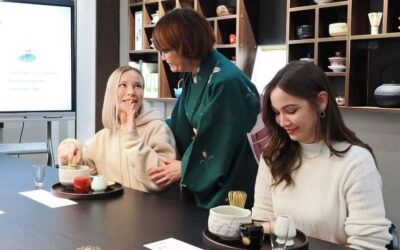
Matcha Making Experience with Mochi Sweets in Asakusa
Read our review →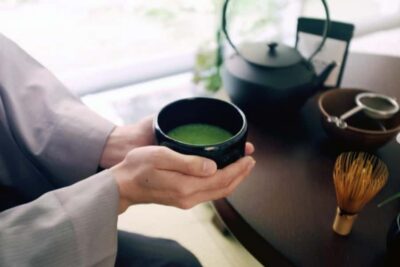
Tea Ceremony Workshop in Tokyo by the Experienced Instrucor
Read our review →

Make Traditional Nerikiri Sweets & Matcha experience in Shibuya
Read our review →Browse the lists this tour appears in