Reviewed · SHOW
Japanese Traditional Music Show in Tokyo
Japanese traditional music can be hard to encounter in a simple, welcoming format. At ZAKURO SHOW, koto, shamisen, shakuhachi, and taiko are played close to a small numbered audience, with explanations between pieces. The program moves from old Japanese music to newer arrangements and includes a surprise Western pop cover.
I like the way the host translates and explains without turning the concert into a lecture. I also like the freedom to take photos and videos during the performance, then stand with the musicians for pictures afterward. The main consideration is the short one-hour format: this is an introduction, not a full evening concert.
In This Review
- Key points
- A close-up look at Japanese wagakki
- What happens during the one-hour show
- Why the small room makes a difference
- The English presentation helps you hear more
- Ancient sounds, modern arrangements, and the surprise song
- Is $38 a fair price?
- Finding Hall 60 in Harajuku
- Who will enjoy this concert most
- My verdict: book it for context and contact
- FAQ
- Where does the Japanese Traditional Music Show take place?
- How do I reach Hall 60 by train?
- How long does the concert last?
- What instruments are played?
- Is the show presented in English?
- Can I take photos or videos?
- What does the ticket include?
- Is the venue wheelchair accessible?
- Can I cancel the booking?
Key points
- Four major wagakki in one hour: Hear Japanese harp, shamisen, shakuhachi flute, and taiko drums in a single program.
- Small numbered audience: Musicians perform directly in front of you, making the instruments easier to see and hear.
- English and Japanese presentation: The host explains how the instruments work, where they come from, and how the pieces fit into Japanese music.
- Old, new, and unexpected: The program combines traditional compositions with modern Japanese music and a Western hit.
- Photos are welcome: You can record during the show and take pictures with the musicians afterward.
- Easy Harajuku access: Hall 60 is one minute from Meiji-Jingumae Station Exit 7 and five minutes from JR Harajuku Station’s Omotesando Exit.
A close-up look at Japanese wagakki
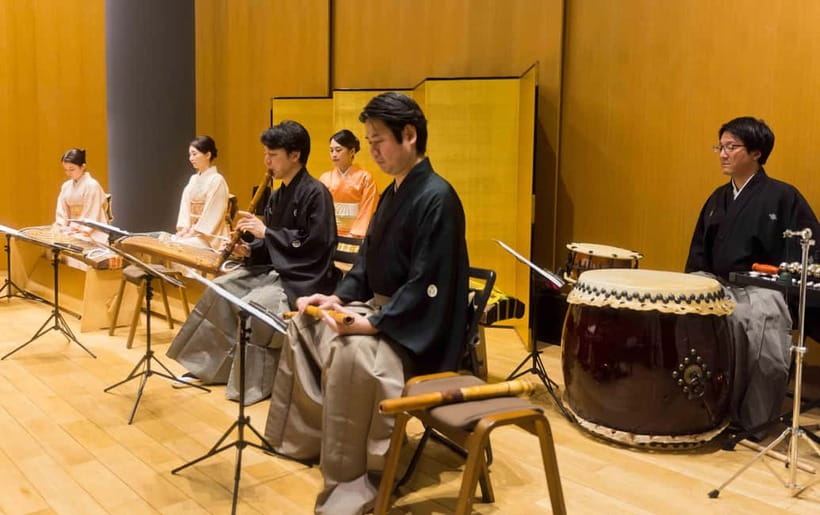
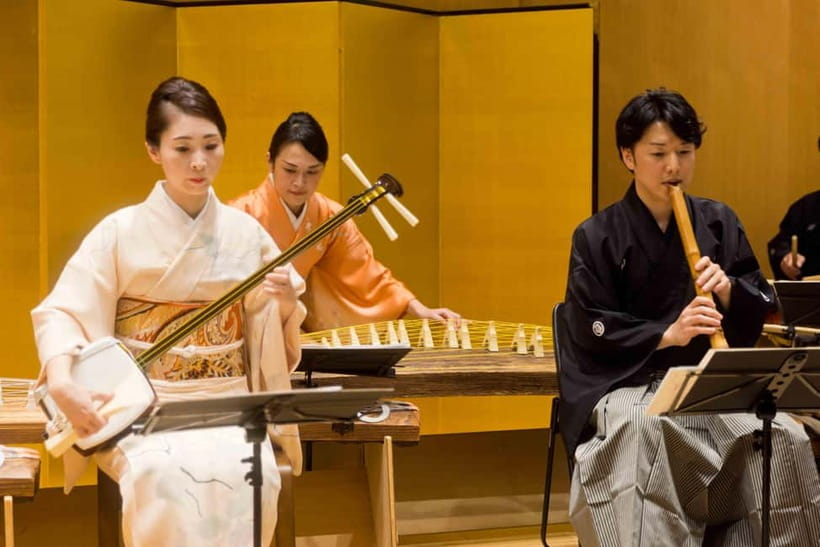
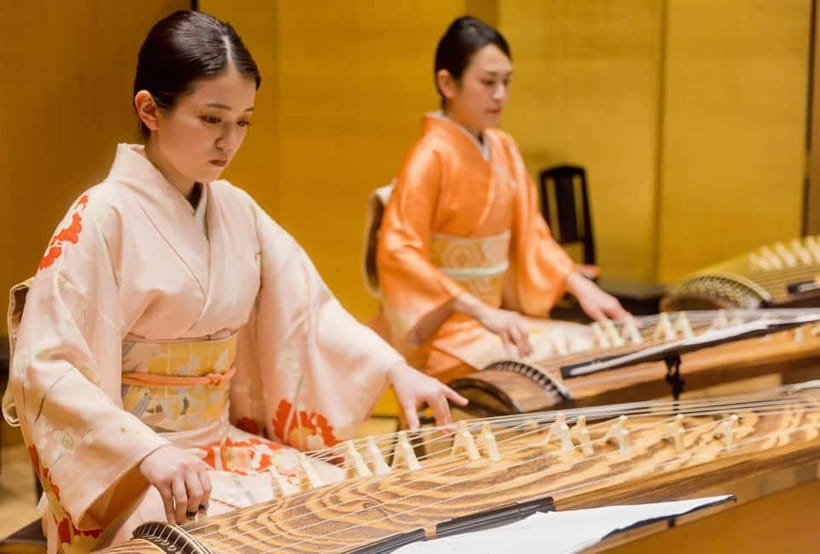
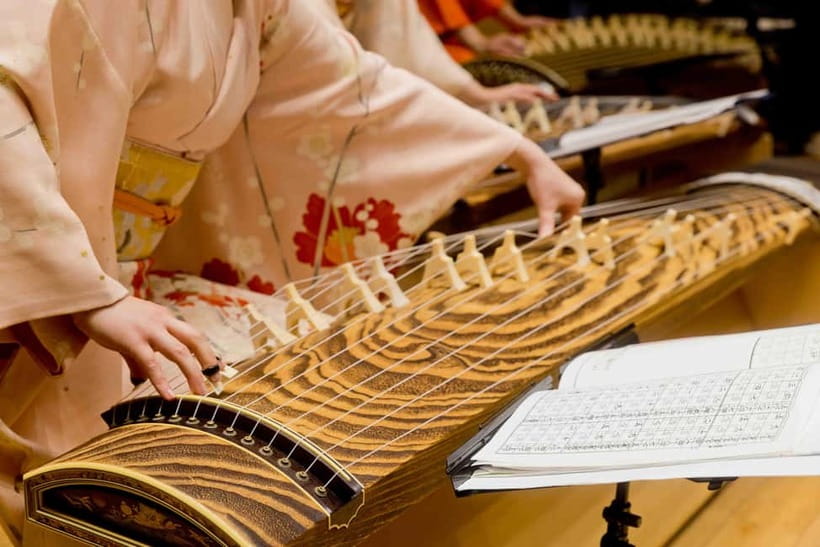
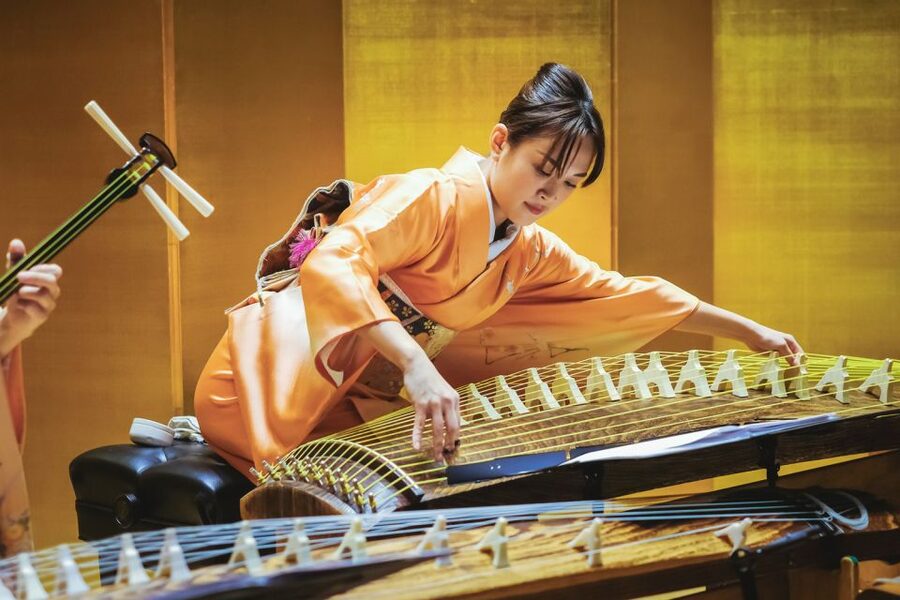
The appeal of this concert is its scale. Instead of watching a large stage from far away, you sit close to musicians in kimono and see the instruments being played right in front of you. That matters with Japanese traditional music, where the shape of an instrument and the movement of the performer help explain the sound.
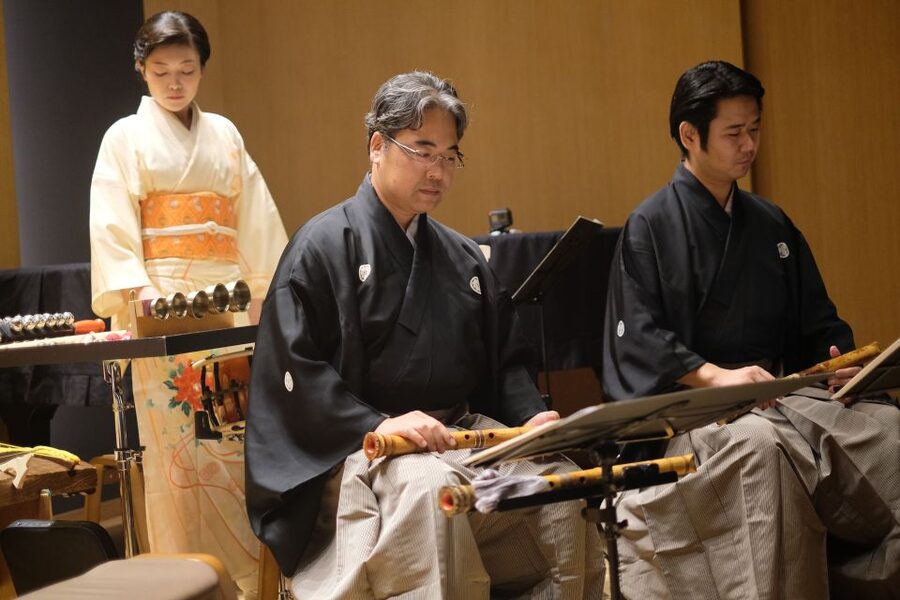
The program features wagakki, the Japanese term for traditional Japanese instruments. You will hear the koto, often described as a Japanese harp, along with the three-stringed shamisen, the breathy shakuhachi flute, and taiko drums. Each has a different voice, so the program gives you a useful sense of the range within Japanese music.
The concert is designed for people who already know Japanese music and people hearing it for the first time. You do not need to recognize the instruments or understand Japanese to follow along. The English and Japanese host gives context about the instruments, the pieces, and their place in Japanese culture.
That teaching is woven between musical selections. You hear a piece, learn more about the instrument or its background, and then listen with sharper ears when the music resumes. It is a good approach for anyone who wants more than a generic cultural performance.
A few more Tokyo bookings worth comparing
- Mt Fuji & Hakone Cruise, Drum Show Bullet Train 1 Day from Tokyo
★ 4.0 · 7,413 reviews - Tokyo: Sumo Show Experience with Chicken Hot Pot and a Photo
★ 4.8 · 6,678 reviews - Tokyo: Sumo Show and Dining Experience
★ 4.8 · 2,742 reviews
What happens during the one-hour show
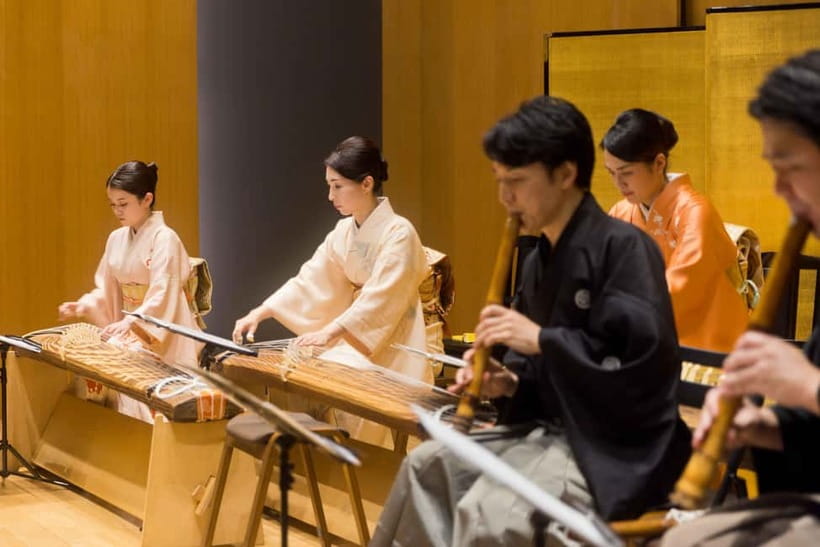
The concert begins with an introduction to the instruments and the musicians. The host explains the basic story of each instrument, including how it works, how it is made, and the history connected with it. The explanations are especially useful for the koto, shamisen, shakuhachi, and taiko because their sounds can seem very different from one another.
The koto brings a clear, plucked sound. The shamisen adds a sharper, more percussive tone. The shakuhachi has a breath-filled sound that can feel spare and expressive, while the taiko provides physical force and rhythm. Hearing these instruments in one program lets you compare them rather than meeting each one in isolation.
The pieces are carefully selected to give the music a setting. The program includes ancient and modern Japanese traditional music, so you are not limited to one period or style. A Western hit appears as a surprise cover, showing how familiar melodies change when played on Japanese instruments.
That modern element is more than a novelty. It gives you a listening reference. After hearing traditional compositions, you can recognize how the koto, shamisen, flute, and drums reshape a melody you may already know. It also helps younger audience members and anyone who is unsure about traditional music stay connected to the performance.
The show is not a long concert with a formal interval. It is a compact sequence of explanation and music, designed to fit into a Tokyo sightseeing day. If you want an introduction to Japanese instruments before visiting a museum, festival, or larger performance, the format works well.
Why the small room makes a difference
The limited seating is one of the strongest parts of the experience. A small numbered audience means you are not simply looking at a distant stage. You can watch fingers move across strings, see how the shakuhachi is held, and observe the physical work behind the taiko.
A close setting also makes the teaching easier to follow. When the host points out a feature of an instrument, you have a better chance of seeing it. This is particularly helpful if you are new to Japanese music and want to understand how the sound is produced.
The tradeoff is that the show does not try to create the scale of a major concert hall. If you want a grand production, elaborate stage effects, or a long repertoire, you may find the one-hour program modest. I see that as a clear choice rather than a flaw: the focus is access, explanation, and contact with the performers.
The audience can take photos and videos during the show. That is a useful difference from many formal concerts, where recording is restricted. You should still follow the host’s directions, but the activity is built to let you document the instruments and performance.
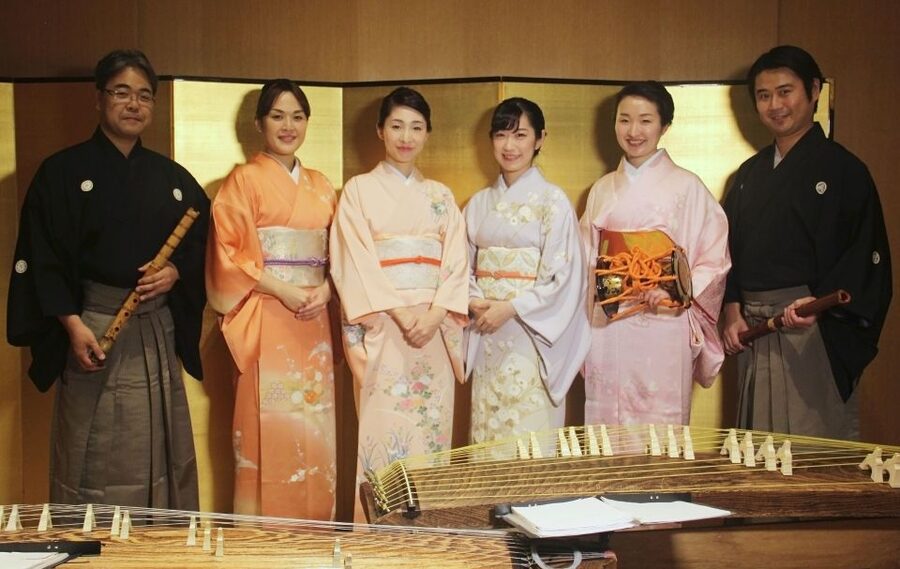
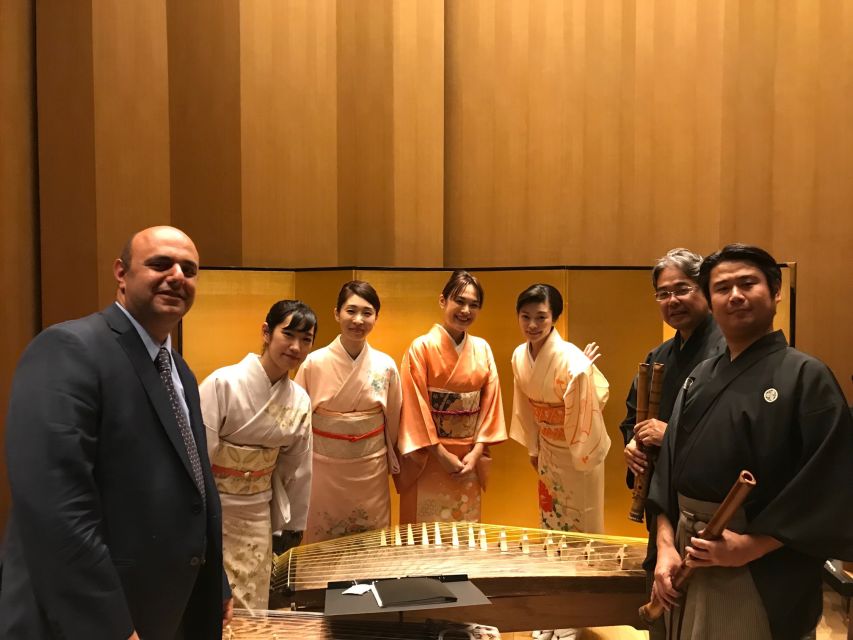
After the concert, you can take photos next to the musicians. This adds a friendly personal touch and gives you a chance to see the performers and instruments at close range once the music ends.
The English presentation helps you hear more
Traditional music can lose some of its meaning when you do not know the language or cultural setting. Here, the host presents in English and Japanese, explaining the instruments and the pieces as the program moves along.
The English translation is a major practical benefit. It means you are not left guessing which instrument you are hearing or why a particular tune was selected. The presentation also helps the concert work for mixed groups, including Japanese residents and international visitors.
You should expect interpretation rather than a long academic talk. The information is there to prepare your ears and give each performance context. Several people who attended with little background in Japanese music found the explanations clear and easy to follow.
No individual host name is provided for this activity, so I would not book it expecting a named celebrity presenter. The value comes from the structure of the bilingual program and the musicians’ performance, not from a personality-led tour.
Same corner of Tokyo, a completely different plan:
- Mt Fuji and Hakone 1-Day Bus Tour Return by Bullet Train
★ 5.0 · 26,383 reviews - 1-Day Tokyo Bus Tour
★ 5.0 · 14,250 reviews - Tokyo: TOKYO SKYTREE® Admission ticket
★ 4.5 · 11,192 reviews - Tokyo: teamLab Planets TOKYO Digital Art Museum Entry Ticket
★ 4.6 · 9,779 reviews
Ancient sounds, modern arrangements, and the surprise song
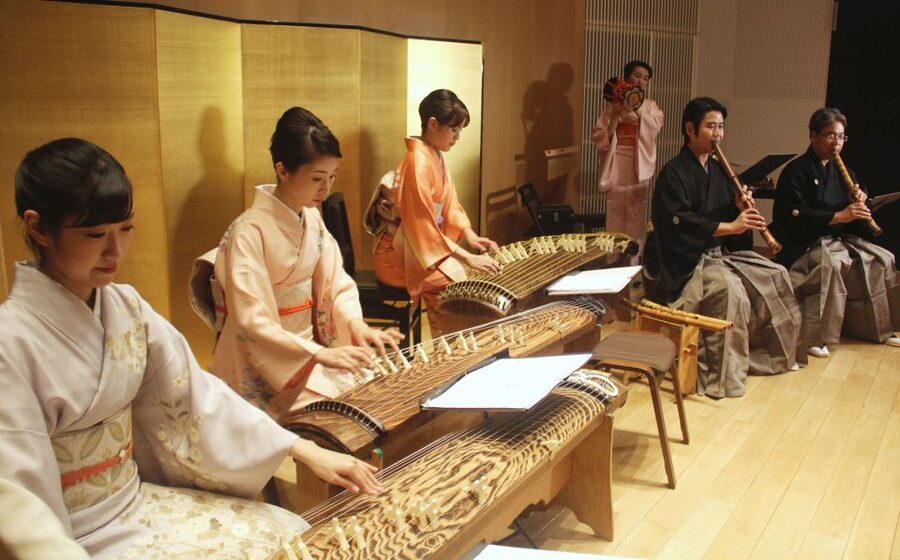
The most effective part of the musical design is the contrast between old and new. Ancient pieces give you a sense of traditional Japanese sound, while newer music shows that these instruments are not trapped in the past.
The Western cover is kept as a surprise, so I will not identify the song. Its purpose is easy to understand: it lets you hear a familiar tune through instruments that may be new to you. This also makes the program accessible if you are not sure how much traditional music you want to hear.
The balance should suit families and mixed-interest groups. Teenagers can record parts of the performance and recognize the modern selection, while adults may pay closer attention to the older compositions and instrument explanations. Children are not specifically mentioned in the activity details, so parents should use their own judgment about whether a one-hour seated concert fits their group.
Music lovers will appreciate the musicians’ skill, but you do not need to be a musician. The program is built to explain what you are hearing, and the range of instruments keeps the sound changing from one section to the next.
Is $38 a fair price?
At $38 per person, the experience costs more than simply walking through a Tokyo neighborhood or visiting a free public performance. The price includes entry, a reserved seat, and the full one-hour concert program. Food, drinks, merchandise, and transport are not included.
I consider the price reasonable if you value a focused cultural activity with English interpretation. You are paying for live performance by musicians who have mastered demanding instruments, plus a close view and guided context. The chance to photograph the performers and take pictures with them afterward adds to the value.
The short length keeps the commitment manageable. You can fit the concert around Harajuku, Meiji-Jingu, Omotesando, or other central Tokyo plans without giving up half a day. If your schedule is tight, one hour is a benefit.
The price may feel less attractive if you want a long concert or a broad selection of performers. This is a compact introduction rather than a full cultural evening with dinner or extended stage time. Think of it as a concentrated lesson and concert in one booking.
Finding Hall 60 in Harajuku
Hall 60 is very easy to reach. From Meiji-Jingumae Station, use Exit 7, then walk about one minute. From JR Harajuku Station, take the Omotesando Exit and allow about five minutes on foot.
The activity does not include hotel pickup or drop-off, so you make your own way to the venue. That is not a problem in this part of Tokyo, where the rail access is strong, but allow enough time to find the hall and settle into your reserved seat.
The activity is wheelchair accessible. Starting times vary, so check the available schedule when booking. You can also reserve now and pay later, which helps if you are arranging several Tokyo activities before finalizing your plans.
Free cancellation is available up to 24 hours in advance for a full refund. That gives you some protection if your itinerary changes, though you should check the exact booking terms attached to your selected time.
Who will enjoy this concert most
I would choose ZAKURO SHOW for you if you want a clear first encounter with Japanese traditional music. It suits solo visitors, couples, families with interested teenagers, and anyone who prefers a small cultural experience to a large staged production.
It is also a good choice for people who have already seen temples, gardens, and city views but want something that engages the ears. The instruments offer a side of Japanese culture that sightseeing alone cannot provide.
The show works especially well for mixed groups. One person can focus on musical technique, another on cultural background, and another on the modern cover. The explanations keep the experience from becoming too specialized.
You may want to skip it if your priority is a long, formal concert with no talking between pieces. The host’s explanations are central to the format, and the one-hour schedule leaves limited time for a large repertoire. You should also know that the show does not include refreshments or merchandise.
The near-perfect rating, with 72 five-star ratings, matches the activity’s main strengths: skilled musicians, clear translation, thoughtful explanations, and a welcoming chance to meet the performers afterward. I would pay closest attention to those features when deciding, rather than expecting a grand theater production.
My verdict: book it for context and contact
I recommend this concert if you want to hear several Japanese instruments, understand what makes them different, and keep your Tokyo schedule flexible. The close seating, bilingual host, mix of old and new music, and photo opportunity make the experience feel personal without demanding a full evening.
Book it while you can secure a time that fits your Harajuku plans, especially if you prefer a small audience. Skip it only if you want an extended concert or a completely silent performance with no educational sections. For most first-time listeners, $38 is a fair price for an accessible hour of live music and cultural context.
FAQ
Where does the Japanese Traditional Music Show take place?
The show takes place at Hall 60 in Tokyo’s Harajuku area.
How do I reach Hall 60 by train?
Hall 60 is a one-minute walk from Meiji-Jingumae Station Exit 7. It is about a five-minute walk from JR Harajuku Station’s Omotesando Exit.
How long does the concert last?
The concert program lasts one hour.
What instruments are played?
The program features the koto, shamisen, shakuhachi flute, and taiko drums.
Is the show presented in English?
Yes. The host or greeter presents in English and Japanese, and the program explains the instruments and music for an international audience.
Can I take photos or videos?
Yes. Photos and videos are allowed during the show. You can also take photos with the musicians afterward.
What does the ticket include?
The ticket includes entry to the venue, a reserved seat, and the one-hour concert program.
Is the venue wheelchair accessible?
Yes. The activity is wheelchair accessible.
Can I cancel the booking?
You can cancel up to 24 hours in advance for a full refund. Reserve now and pay later is also available.
New on our Tokyo list
- From Tokyo: Mount Fuji & Hakone Full Day Private Tour★ 4.9 · 25 reviews
- Tokyo Spectacular View Day-Cruise in 90 Minutes★ 5.0 · 25 reviews
- Real Tokyo Runner Club : Daikoku Car Meet Night Tour with JDM Car★ 5.0 · 25 reviews
- 2.5 Hour-Guided Cycle Tour in the Central Tokyo★ 5.0 · 25 reviews
- Ramen Making from Scratch +Akihabara Tour –Cooking Class★ 5.0 · 25 reviews
- [Self-Drive] Tokyo & Daikoku Custom Car Driving Tour★ 4.9 · 25 reviews
- Tokyo: 2-Hour Night Bike Tour of the City’s Hidden Gems★ 4.9 · 25 reviews
- Samurai themed Entertainment show in Shinjuku★ 4.5 · 25 reviews
Show, compared.

Mt Fuji & Hakone Cruise, Drum Show Bullet Train 1 Day from Tokyo
Read our review →
Sumo Show Experience with Chicken Hot Pot and a Photo
Read our review →

Tokyo Shinjuku Sumo Show & Experience with Photo
Read our review →
Mt Fuji & Hakone Cruise, Drum Show Bus 1 Day from Tokyo
Read our review →