
Reviewed · KAMAKURA TOURS
Kamakura Private Custom Tour
Kamakura packs centuries of Japanese religious and political history into a seaside town, but its temples and shrines are spread across several neighborhoods. This private tour solves that problem with a guide who knows how to combine local trains and buses into a practical seven-hour route.
I like the freedom to shape the day around your interests, and I like that the tour includes the guide’s transportation, lunch, and entrance fees. The main consideration is cost: at $149.58 per person, you still pay about ¥2,000 for your own transportation, plus admission to the Great Buddha and Hasedera.
In This Review
- Key points to know before you book
- Why a private day works well in Kamakura
- Starting at Kamakura Station at 9:00 am
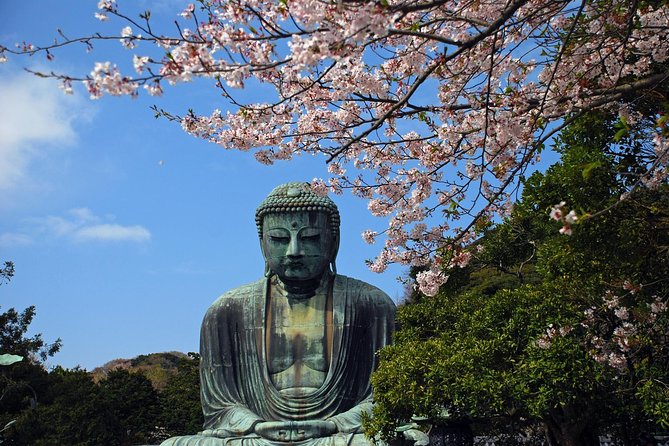
- Kotoku-in and the Great Buddha
- Hasedera, Kannon, and the flower garden
- Tsurugaoka Hachimangu and Kamakura’s political past
- Jomyo-ji and a quiet cup of matcha
- Komachidori for food, shops, and a change of pace
- How the route and timing really work
- What the $149.58 price includes
- Who will get the most from this tour
- Cancellation and final booking advice
- FAQ
- Where does the Kamakura private tour begin?
- What time does the tour start?
- Where does the tour end?
- How long does the experience last?
- Is this a private tour?
- Is an English-speaking guide included?
- Are my train and bus fares included?
- Are entrance fees included?
- Can I visit all five listed stops?
- Can I cancel for a full refund?
Key points to know before you book
- Five possible Kamakura stops: See the Great Buddha, Tsurugaoka Hachimangu, Hasedera, Jomyo-ji, and Komachidori, though the schedule usually allows three or four.
- Private format: Only your own group takes part, so you can discuss interests and needs with the guide as you go.
- Public transportation included in the plan: You use trains and buses rather than a private vehicle, with about ¥2,000 per person for your own fares.
- Strong guide feedback: Akira is praised for careful attention and kindness, while Nobuo Kono is praised for clear explanations and local knowledge.
- A good mix of sights: The route covers Buddhist temples, a Shinto shrine, a famous statue, gardens, local food, and shopping.
- Moderate fitness needed: Expect walking between stations, roads, temple grounds, and shrine approaches during a full day.
Why a private day works well in Kamakura
Kamakura was a political center in the 12th century, when the first shogunate made the town an important seat of power. Today, its appeal comes from the way that older Japan remains part of an ordinary town, with temples, shrines, shops, trains, and seaside food traditions all close together.
The sights are not arranged in one compact historic core. A guide who knows the bus and train system can save you time and help you avoid treating the day as a guessing game at station exits. One past experience with the tour specifically praised this local transport know-how, and that is a real advantage here.
The private setup also matters. You do not have to follow a fixed group pace, and the guide can arrange the day around temples, religious art, gardens, shopping, or food. The route lists five stops, but the tour explains that three or four are more realistic once transportation and walking are included.
The guides named in the feedback are Akira and Nobuo Kono. Akira is described as attentive to individual needs and kind in his manner. Nobuo Kono is praised for clear explanations and a strong grasp of the sites. Guide quality can shape a day like this, since the temples are more rewarding when you understand what you are seeing.
More Private Tours in Kamakura
- Kamakura Private Tour: Temples, Nature, and the Great Buddha
★ 5.0 · 121 reviews - Kamakura 8 hr Private Walking Tour with Licensed Guide from Tokyo
★ 5.0 · 80 reviews - Kamakura: Private Guided Walking Tour with Local Guide
★ 4.8 · 60 reviews
Starting at Kamakura Station at 9:00 am
The tour begins at Kamakura Station, at 1-chōme-1-15 Onarimachi, and returns there at the end. Starting at 9:00 am gives you a full morning and afternoon, though you should be ready to walk soon after meeting the guide.
Kamakura Station is the practical launch point for the town’s rail and bus connections. You will use public transportation throughout the experience, not a private tour vehicle. Your own transportation costs are listed at about ¥2,000 per person, so add that amount to the advertised tour price when comparing options.
The tour runs for about seven hours. That sounds generous, but the time includes movement between districts, waiting for public transportation, and visits that may be shortened if you choose several sites. If you want a slow temple visit, extended shopping, and all five listed stops, ask the guide early in the day how the route should be adjusted.
Kotoku-in and the Great Buddha
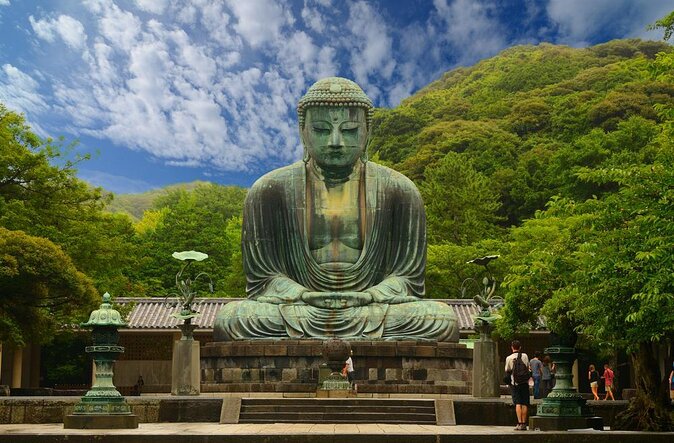
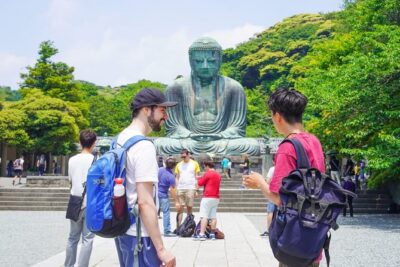
Kotoku-in is home to Kamakura’s famous open-air Great Buddha, the image most closely linked with the town. The statue gives the first part of the day a strong visual focus, and the open-air setting makes it different from a Buddha housed inside a large temple hall.
You can also climb inside the Great Buddha, an unusual detail that adds a physical sense of scale. The experience has been compared with entering the Statue of Liberty, though the attraction is much smaller. Admission is ¥200 for adults and ¥150 for elementary school children, and that fee is not included in the tour price.
The planned visit lasts about one hour. That should give you time to see the statue, hear the guide’s explanation, and take in the temple grounds without rushing. If the Great Buddha is your main reason for visiting Kamakura, tell the guide so this stop receives the attention it deserves.
Hasedera, Kannon, and the flower garden
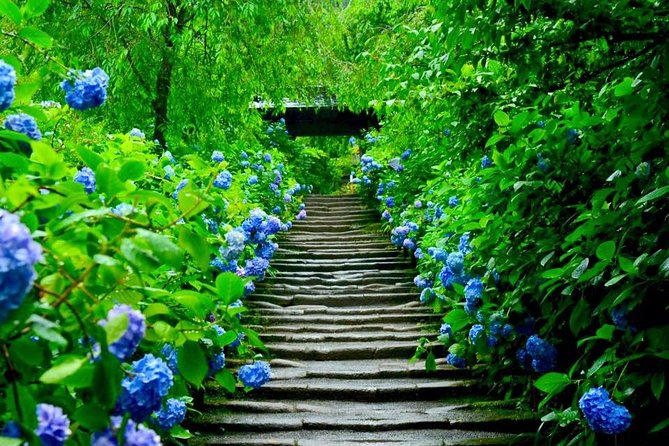
Hasedera is a Buddhist temple known for its eleven-faced statue of Kannon, the Goddess of Mercy. Kannon is associated with relief from suffering, giving the temple a devotional focus that differs from the monumental presence of the Great Buddha.
The temple also has a flower garden. Hydrangeas are a special seasonal feature in June, so the timing of your visit can affect what you see. The garden makes Hasedera more than a quick statue stop, although the temple’s appeal depends partly on the flowers at the time of year.
The planned visit is about an hour and a half, making Hasedera one of the day’s longer stops. Admission is ¥300 per person and is not included. The grounds and the amount of walking are part of why a moderate level of fitness is recommended.
I would give Hasedera priority if you care about religious art, gardens, or seasonal plants. If your group prefers food and shopping, the guide may need to shorten this visit or choose another temple.
More Kamakura and Enoshima days:
- Tokyo: Kamakura & Enoshima Day Trip including Temple Tickets
★ 4.5 · 1,375 reviews - Tokyo: Mt. Fuji, Kamakura, Big Buddha, & Lake Ashi Day Trip
★ 4.5 · 867 reviews - From Tokyo: Kamakura & Enoshima 1-Day Bus Tour
★ 4.5 · 189 reviews - Kamakura Historical Walking Tour with the Great Buddha
★ 5.0 · 129 reviews
Tsurugaoka Hachimangu and Kamakura’s political past
Tsurugaoka Hachimangu is one of Japan’s well-known Shinto shrines and was first built in the middle of the 12th century. Its importance is tied to the rise of Kamakura as a political center and to Minamoto no Yoritomo, the first shogun.
This stop gives the day a useful change of mood. The Great Buddha and Hasedera are Buddhist sites, while Tsurugaoka Hachimangu introduces Shinto practice and shrine architecture. Seeing both traditions in one day helps you understand how different forms of Japanese worship share the same town.
The listed visit lasts about one hour. Admission is not specified for this stop, so you should confirm any current charges with the guide or at the shrine if that matters to your budget. The tour description does not promise a particular ceremony or event, so treat this as a historical and cultural visit rather than a scheduled performance.
Tsurugaoka Hachimangu is a good choice for first-time visitors who want Kamakura’s political story, not just its famous statue. It also gives the guide a natural place to explain how the town developed around religious and military power.
Jomyo-ji and a quiet cup of matcha
Jomyo-ji dates to 1188 and is identified as one of Kamakura’s five great Zen temples. Compared with the headline attractions, this stop offers a calmer temple experience and a chance to focus on Zen traditions.
A particularly appealing feature is the opportunity to have Japanese powdered green tea, or matcha, with sweets. The tea is not simply a refreshment. It gives you a small taste of a traditional Japanese custom within the temple setting.
Admission is ¥100 for adults over 14 and ¥50 for children under 15, according to the supplied details. The listed visit lasts about one hour. The age wording overlaps slightly, so families should confirm the correct child rate at the time of entry.
Jomyo-ji suits you if you prefer atmosphere and a slower cultural pause over another major monument. It may be less important for a group that wants to see as many famous sites as possible.
Komachidori for food, shops, and a change of pace
Komachidori is Kamakura’s main shopping street, lined with shops, stalls, and restaurants. After several temple and shrine visits, this is where the day becomes more casual and local in feel.
The town’s closeness to the sea means seafood is part of the food scene. Vegetables grown in the area are also mentioned as part of Kamakura’s local produce. The tour does not include a meal for you, but the guide’s lunch is included, and your own lunch costs remain yours to cover.
The planned stop lasts about one hour and has no admission fee. You can use this time for snacks, small purchases, or a meal, but a crowded shopping street may not suit every group. If you dislike shopping streets, ask the guide to spend more time at a temple instead.
Komachidori is useful because it connects the historic side of Kamakura with its present-day town life. You see what people eat and buy now, rather than spending the whole day among monuments.
How the route and timing really work
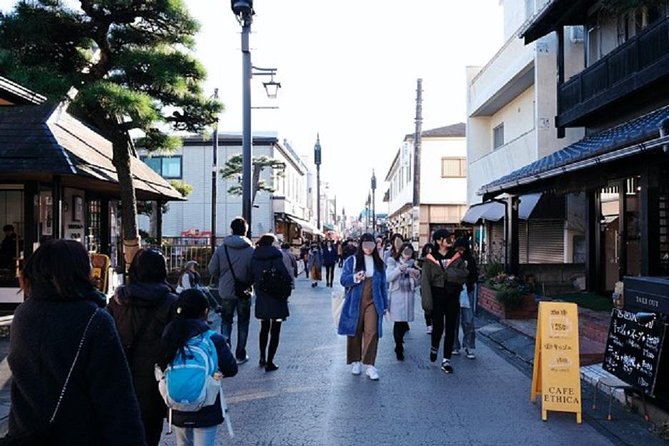
The five listed stops add up to about five and a half hours of sightseeing. The remaining time is needed for trains, buses, walking, meals, and the small delays that come with moving around a popular town.
For that reason, you should think of the list as a menu, not a promise that every stop will receive a full visit. The tour says three or four spots may be possible. Your guide will arrange the route around your interests and needs, but it is smart to name your top two priorities before the day begins.
A sensible plan could pair the Great Buddha with Hasedera, then visit Tsurugaoka Hachimangu and finish at Komachidori. Another plan could focus on Jomyo-ji and other temples, with less time for shopping. The private format gives you room to make that choice.
Public transportation is both a benefit and a limitation. You get a more ordinary view of Kamakura and avoid the cost of a private vehicle, but you must manage stations, buses, walking, and your own fares. The guide’s transportation is included, while your transportation costs are not.
What the $149.58 price includes
The advertised price is $149.58 per person. It covers an English-speaking professional guide, the guide’s transportation, the guide’s lunch, and the guide’s admission fees when needed.
That is a reasonable structure for a private seven-hour day if you value personal attention and help with transportation. A private group also avoids the slower pace and fixed decisions of a larger shared tour. Group discounts may be available, which could improve the value for families or several friends booking together.
You must budget for about ¥2,000 per person in your own train and bus fares. You also pay ¥300 for Hasedera and ¥200 for Kotoku-in, for a stated minimum of ¥500 in those two admission fees per adult. Jomyo-ji lists a separate ¥100 adult admission, while Tsurugaoka Hachimangu and Komachidori have no listed admission charge.
Lunch is not included for you, despite the guide’s lunch being covered. Food, shopping, and any other personal expenses should be added to the total. The tour uses a mobile ticket, and confirmation is normally provided when you book, subject to availability if you reserve within two days of travel.
Who will get the most from this tour
I would recommend this experience to first-time Kamakura visitors who want context as well as photographs. It is also a strong choice for families, couples, or friends who have different priorities and want to shape the day privately.
You will get the most from it if you are comfortable walking and using trains and buses. The tour asks for moderate physical fitness, and the combination of station connections, streets, temple grounds, and shrine approaches can make the day tiring.
The tour is less suitable if you want a luxury vehicle, a fixed all-five-stop schedule, or a completely relaxed pace. It is also not the best match if you only want one attraction and would rather explore independently.
The guide can help you balance the day, but you should still arrive with a short list of priorities. The Great Buddha and Hasedera are the strongest picks for Buddhist sights, Tsurugaoka Hachimangu for Kamakura’s political and Shinto story, Jomyo-ji for Zen and matcha, and Komachidori for food and shopping.
Cancellation and final booking advice
You can cancel for a full refund up to 24 hours before the 9:00 am start time. Changes made less than 24 hours before the tour are not accepted, and the local time cut-off applies.
I would book this tour if you want a private guide, need help with Kamakura’s public transport, and care about fitting several different types of sights into one day. The strongest reasons are the flexible route, the guide’s transportation know-how, and the chance to connect major attractions with smaller temple and food experiences.
I would skip it if you prefer setting your own pace or if the extra transport and entrance costs push the budget too far. For most first visits, though, the combination of the Great Buddha, Hasedera, Tsurugaoka Hachimangu, and a lively final stop on Komachidori makes this a well-shaped introduction to Kamakura.
FAQ
Where does the Kamakura private tour begin?
It begins at Kamakura Station, at 1-chōme-1-15 Onarimachi, Kamakura, Kanagawa 248-0012, Japan.
What time does the tour start?
The tour starts at 9:00 am.
Where does the tour end?
The activity ends back at the meeting point at Kamakura Station.
How long does the experience last?
The tour lasts about seven hours.
Is this a private tour?
Yes. Only your own group participates in the activity.
Is an English-speaking guide included?
Yes. An English-speaking professional guide is included.
Are my train and bus fares included?
No. Your transportation in Kamakura costs about ¥2,000 per person. The guide’s transportation fee is included.
Are entrance fees included?
No. Your entrance fees are not included. The stated fees are ¥300 for Hasedera and ¥200 for Kotoku-in per person, with a separate listed fee of ¥100 for adults at Jomyo-ji.
Can I visit all five listed stops?
The tour explains that three or four spots may be possible, depending on your interests, needs, and transportation time. The guide arranges the route.
Can I cancel for a full refund?
Yes, if you cancel at least 24 hours before the experience start time. Cancellations made less than 24 hours in advance are not refunded.
New on our Kamakura list
- 1-Day trip: Kamakura City (Enoshima/Shonan/Beach)★ 4.7 · 3 reviews
- Kamakura Zen: Great Buddha, Nature, Bamboo & Samurai Culture★ 5.0 · 3 reviews
- Kamakura Half Day Walking Tour with Local Experience★ 3.4 · 4 reviews
- Hiking Tour in Enoshima with a Local Guide★ 5.0 · 4 reviews
- Kamakura Tour with Pro Photographer: Anime Train & Fuji Sunset★ 5.0 · 4 reviews
- Kamakura Historical and Cultural Day Trip with Local Cuisine★ 5.0 · 4 reviews
- Kamakura Full-Day Private Tour★ 5.0 · 4 reviews
- Whispers of Kamakura: Jean’s Full-Day Daibutsu & Hidden Walk★ 5.0 · 4 reviews
Kamakura Tours, compared.
Kamakura & Enoshima Day Trip including Temple Tickets
Read our review →
Mt. Fuji, Kamakura, Big Buddha, & Lake Ashi Day Trip
Read our review →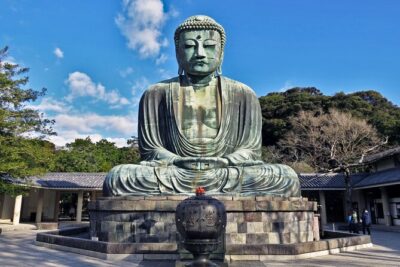
Kamakura Historical Walking Tour with the Great Buddha
Read our review →
Kamakura Private Tour: Temples, Nature, and the Great Buddha
Read our review →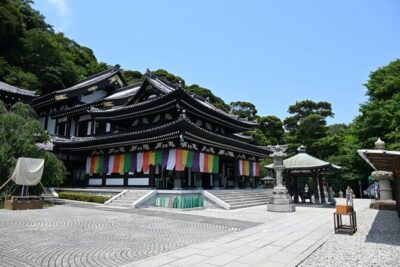
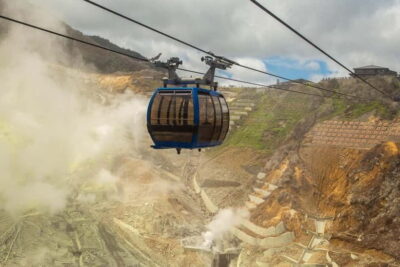
Sea of Mount Fuji, Hakone Ropeway, Ōwakudani, Enoshima
Read our review →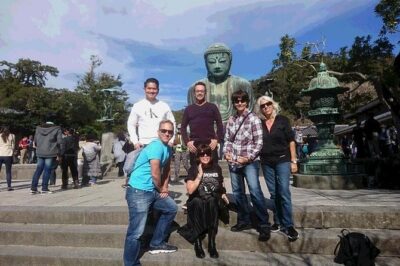
Kamakura 8 hr Private Walking Tour with Licensed Guide from Tokyo
Read our review →Browse the lists this tour appears in