
Reviewed · WALKING TOURS
Kamakura Half Day Walking Tour with Local Experience
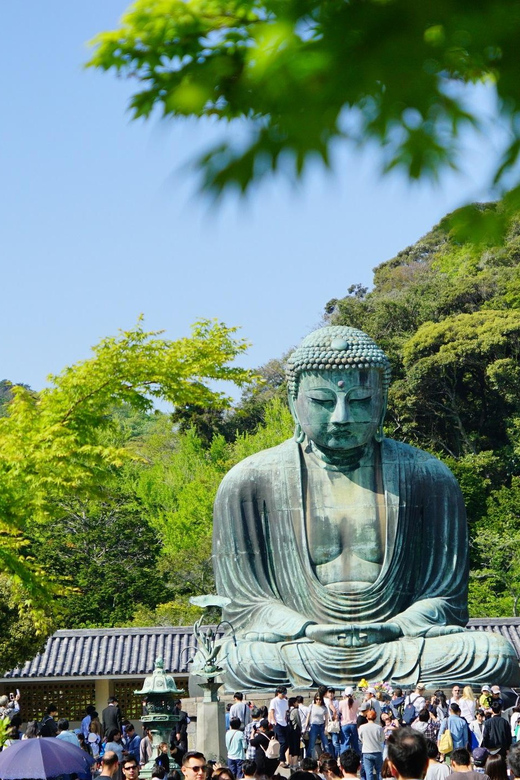
Kamakura’s best sights are spread between quiet temple grounds, a short coastal rail line, and the busy streets near the shrine. This five-and-a-half-hour tour makes that pattern easy by pairing a guide with the Enoden train, Hasedera, the Great Buddha, Komachi Street, and Tsurugaoka Hachimangu.
I like the included Odakyu Kamakura-Enoshima Pass, which covers the trip from Shinjuku and unlimited Enoden rides during the tour. I also like the small local snack or drink allowance, worth up to 500 yen, because it gives you a quick taste of Kamakura without turning the break into a full meal.
The weak point is the meeting point. Shinjuku Station is famously confusing, and one guest could not find the group because the directions felt too broad. Use the Suica Penguin Statue as your fixed landmark, arrive early, and keep your phone ready for a WhatsApp message or call.
In This Review
- Key points at a glance
- Why this Kamakura route works well from Tokyo
- Finding the Suica Penguin meeting point in Shinjuku
- The Odakyu train and the coastal Enoden ride
- Hasedera, Kamakura’s temple of flowers
- Meeting the Great Buddha at Kōtoku-in
- Komachi Street and the snack break
- Tsurugaoka Hachimangu and Kamakura’s samurai story
- What $83 gets you
- Who will enjoy this half-day tour
- Should you book the Kamakura walking tour?
- FAQ
- Where does the tour meet in Shinjuku?
- How long does the experience last?
- Which languages are available?
- Is transportation from Shinjuku included?
- What temples and landmarks are visited?
- Is lunch included?
- How much walking is involved?
- Can I bring luggage or a large bag?
- Can I cancel or pay later?
Key points at a glance
- The Enoden train adds real local flavor: You ride from Fujisawa toward Kamakura along the Pacific coast rather than spending the entire trip on a tour bus.
- Hasedera is more than a quick temple stop: You get gardens, Buddhist halls, caves, and a terrace overlooking the bay during a 45-minute guided visit.
- The Great Buddha is a short walk away: Kōtoku-in gives you time to study Kamakura’s most famous statue without rushing through the grounds.
- The route ends at Tsurugaoka Hachimangu: The shrine connects Kamakura’s temples and streets to the rise of the samurai government.
- The price covers the costly basics: At $83, your rail transport from Shinjuku, temple admissions, guide, and a snack or drink are included.
- Expect about 3 kilometers of walking: Comfortable shoes and water matter, especially in hot, humid summer weather.
Why this Kamakura route works well from Tokyo
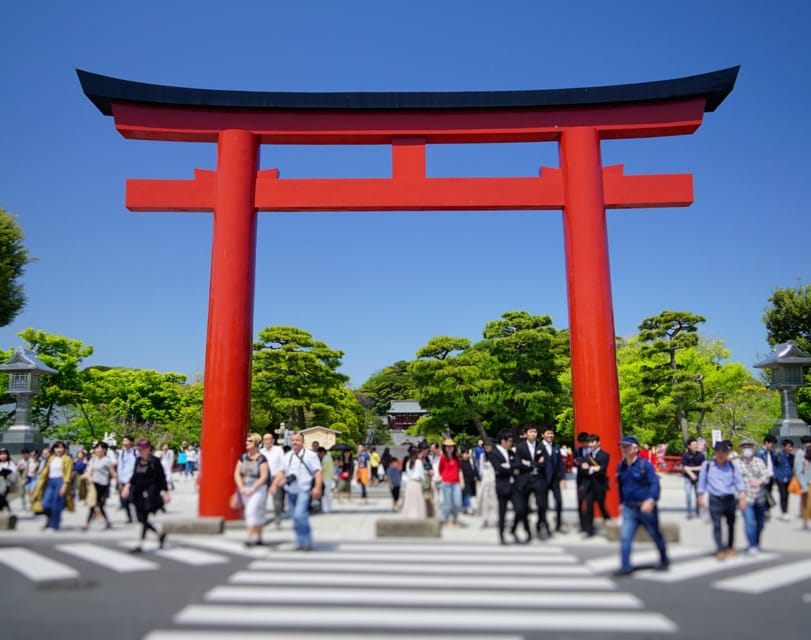
Kamakura is close enough to visit from Tokyo, but its sights do not sit in one neat cluster. You need a train to reach the Hase district, another ride to the center, and some orientation to understand why the temples and shrine matter.
This tour takes care of that structure. You meet in Shinjuku, walk about five minutes to the Odakyu Line terminal, take the train to Fujisawa, and then switch to the Enoden, the small railway that serves the Kamakura and Enoshima area.
I like this arrangement because the journey becomes part of the day. The Enoden is not just a transfer. It gives you a feel for the coastal side of the area and helps you see how Kamakura works as a lived-in town rather than a row of isolated monuments.
The experience lasts 330 minutes, or five hours and 30 minutes. That is enough time for the major sights, but not enough for a long lunch, a slow museum visit, or extensive shopping. Think of it as a well-planned introduction, not a full Kamakura day.
The tour is offered for private or small groups, with English and Spanish available. A private or small-group format can be especially useful here, since the route involves several train changes, narrow streets, and temple grounds where good timing helps.
More Walking Tours in Kamakura
- Kamakura Historical Walking Tour with the Great Buddha
★ 5.0 · 129 reviews - Kamakura Walking Tour – The City of Shogun
★ 5.0 · 100 reviews - Kamakura 8 hr Private Walking Tour with Licensed Guide from Tokyo
★ 5.0 · 80 reviews
Finding the Suica Penguin meeting point in Shinjuku
The meeting point is the Suica Penguin Statue on the pedestrian deck called Suica Penguin Plaza. It is on the second floor of the Shinjuku Expressway Bus Terminal building, attached to JR Shinjuku Station, near the new south gate.
This detail matters. Shinjuku has a maze of platforms, exits, underground passages, and surrounding buildings. Do not simply aim for Shinjuku Station and expect to spot the group. Go to the new south gate area, locate the bus terminal building, and head to the second-floor pedestrian deck.
The Suica Penguin statue is your most useful visual marker. Take a screenshot of the meeting instructions before leaving your hotel, and arrive with enough time to get oriented. The tour provider says the guide will contact you through WhatsApp before departure if you have the app. If not, make sure your phone can receive calls.
This is one area where you should be extra careful. A guest named Pierre had trouble locating the group because the meeting information did not feel specific enough. The published details now give you a precise landmark, but Shinjuku is still not the place to cut things close.
If you select hotel pickup, the guide meets you in your hotel lobby or at an agreed point and travels with you by public transport. The exact time depends on your hotel location and is confirmed the day before. If you instead meet the guide at a nearby departure station, you pay your own transport to that station.
The Odakyu train and the coastal Enoden ride
After meeting the guide, you walk to the Odakyu Line terminal at Shinjuku Station. The train takes you toward Fujisawa, with the full train portion listed at about 110 minutes. The guide remains with you from Tokyo to Kamakura, which removes much of the uncertainty from the change at Fujisawa.
From Fujisawa, you board the Enoden. This popular electric railway runs toward Kamakura along the Pacific coast. Its compact trains and local route give the trip a more personal feel than a direct highway transfer.
The included Enoshima and Kamakura Freepass provides unlimited rides on the Enoden until the tour ends. That is useful even on a fixed route, since it means the group does not need to buy a separate ticket for each short ride.
There is one practical tradeoff: rail travel takes time. The journey is part of the experience, but you are not getting five and a half hours entirely in Kamakura. If you want a long visit to the beach, Enoshima, or several additional temples, you will need to continue on your own after the guided portion ends.
Hasedera, Kamakura’s temple of flowers
The first main stop is Hasedera, also called the temple of flowers. You spend about 45 minutes here with the guide, a generous amount of time compared with the brief photo stop common on many day trips.
Hasedera combines several different settings. You can walk through a carefully arranged garden, visit Buddhist halls, enter caves, and reach a panoramic terrace with views toward the bay. That variety is what makes the temple such a strong opening stop. You are not seeing only one building or statue.
The terrace also gives you a useful sense of Kamakura’s setting. The town sits between hills and the Pacific coast, and the view helps explain why the Enoden route feels so different from an ordinary city rail journey.
Wear shoes with good support. The total walking distance is about 3 kilometers, and the temple visit includes movement through gardens and different areas of the grounds. The tour is wheelchair accessible, but the combination of walking and temple terrain is still worth considering if you have limited stamina.
Photography inside is not allowed. Bring your camera for permitted outdoor views, but follow the guide’s instructions inside halls and caves.
More Kamakura and Enoshima days:
- Tokyo: Kamakura & Enoshima Day Trip including Temple Tickets
★ 4.5 · 1,375 reviews - Tokyo: Mt. Fuji, Kamakura, Big Buddha, & Lake Ashi Day Trip
★ 4.5 · 867 reviews - From Tokyo: Kamakura & Enoshima 1-Day Bus Tour
★ 4.5 · 189 reviews - Kamakura Private Tour: Temples, Nature, and the Great Buddha
★ 5.0 · 121 reviews
Meeting the Great Buddha at Kōtoku-in
From Hasedera, you walk about five minutes to Kōtoku-in, home of Kamakura’s famous Great Buddha. The walk is short, but it is useful to have the guide connect the two sites rather than treating them as unrelated attractions.
The visit lasts about 20 minutes. That is enough to see the statue, take in its scale, and study the details, but it is not a long temple exploration. If you want extended time at Kōtoku-in, you may prefer to return after the tour ends.
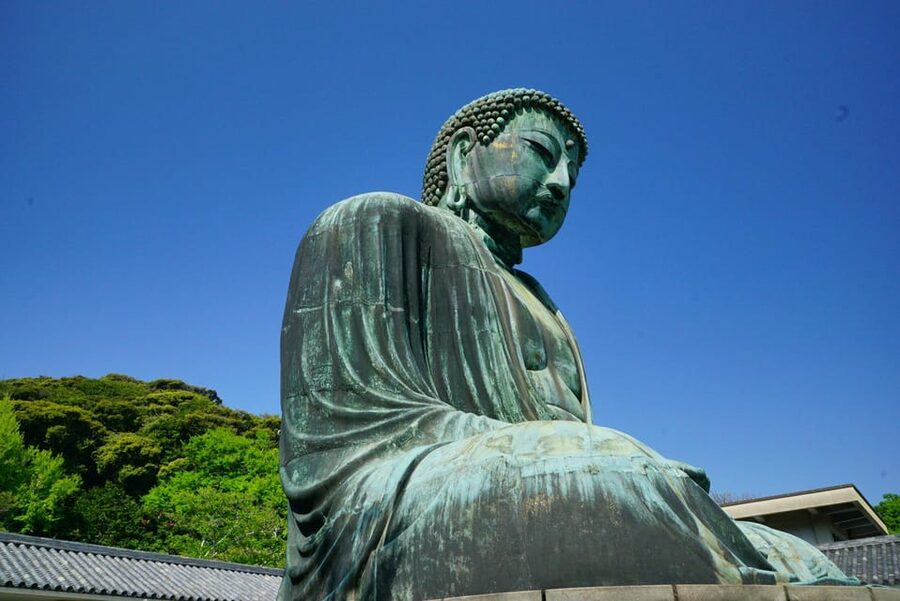
The Great Buddha is the visual centerpiece of Kamakura. Its size is impressive, but the setting also matters. You encounter the statue directly in its temple grounds, after seeing the more intimate gardens and halls at Hasedera. The contrast gives the morning a good rhythm: enclosed temple spaces first, then a large, open monument.
The short visit works best if you already know what you want from the stop. Listen to the guide’s explanation, take your permitted photographs, and allow yourself a quiet moment to look closely rather than racing immediately to the next point.
Admission to both Hasedera and Kōtoku-in is included in the tour price. That removes two small but important costs and keeps the group moving.
Komachi Street and the snack break
After Kōtoku-in, you take the Enoden to Kamakura Station. From there, the group walks along Komachi Street toward Tsurugaoka Hachimangu.
Komachi Street is the liveliest part of the route. It is lined with shops and food stops, making it a good place to see Kamakura’s modern visitor culture after the calm of the temples. You receive about 20 minutes of break time and can choose a local snack or drink worth up to 500 yen per person.
That allowance is modest, but useful. It is enough for a small taste rather than a meal, so plan to eat lunch separately. Lunch is not included, and the schedule does not leave room for a leisurely restaurant visit during the guided route.
You should also expect a busy pedestrian street. Komachi is not a quiet lane for slow photography. Your guide can help you keep track of the route, but you will want to stay aware of the group, especially near shops and food counters.
I like the snack stop because it gives you a small choice within a tightly timed tour. You can spend the allowance on something that catches your eye instead of receiving a standard item selected for everyone.
Tsurugaoka Hachimangu and Kamakura’s samurai story
The final guided stop is Tsurugaoka Hachimangu, reached by walking up Komachi Street. The tour spends about 20 minutes here and ends at the shrine.
Tsurugaoka Hachimangu is dedicated to a deity associated with war. Its importance helps explain Kamakura’s role in Japanese history, particularly the rise of the samurai government. After seeing Buddhist temples and the Great Buddha, the shrine gives you a different window into the city’s past.
This stop is valuable because it ties the whole route together. Hasedera shows the beauty and variety of Buddhist temple grounds. Kōtoku-in gives you Kamakura’s famous religious monument. Tsurugaoka Hachimangu points toward the political and military power that made Kamakura a major center.
The tour ends here rather than returning you to Shinjuku. That is a benefit if you want to continue exploring, shop along Komachi Street, eat lunch, or make your own way to another Kamakura sight. It is a drawback if you expected a guide-led journey back to Tokyo.
You will have to arrange your return after the tour. The included rail pass applies during the tour, and the stated package includes return transportation from Shinjuku, but the guided route itself ends at the shrine. Confirm the exact transport terms when booking if you want a completely clear plan for the trip home.
What $83 gets you
At $83 per person, this is not the cheapest way to reach Kamakura. You are paying for more than a train ticket, though. The fee includes an English- or Spanish-speaking guide from Tokyo, transportation from Shinjuku through the Odakyu route, the Enoden pass, admission to Hasedera and Kōtoku-in, and a snack or drink allowance of up to 500 yen.
The value depends on how much help you want. If you are comfortable navigating Japanese train stations and already understand Kamakura’s layout, you can likely spend less by going independently. You would then need to plan the rail route, pay temple admissions, choose the right local train ticket, and build your own explanation of the sites.
For a first visit, the guide is the main value. The route has several moving parts, and the historical connection between the temples, shrine, and samurai government is easier to follow with context.
The strongest praise has gone to the guides. Silvy was described as timely and patient, and she continued sharing useful information after the tour. Romy was praised for being adaptable, warm, and well informed about the history and culture. Those details suggest that the human side of the experience can make a real difference, though guide quality can vary by date.
The overall rating is 3.4 from four reviews, so keep expectations balanced. Three guests gave five-star ratings, while the one-star experience centered on finding the meeting point, not on the Kamakura route itself. That makes the meeting instructions the clearest practical concern.
Who will enjoy this half-day tour
I would choose this tour if you are staying in Tokyo and want a first look at Kamakura without building the train plan yourself. It suits you especially well if you value explanations, prefer a small or private group, and want to see the major western and central sights in one organized route.
It also works for people who want to continue alone afterward. Ending at Tsurugaoka Hachimangu leaves you in a useful part of town, close to Komachi Street and the center of Kamakura.
The tour is less suitable if you want a slow day. The schedule is purposeful, with fixed visits of 45 minutes at Hasedera, 20 minutes at Kōtoku-in, 20 minutes along Komachi Street, and 20 minutes at the shrine. You will see the major stops, but you will not have much spare time at each one.
The walking is manageable for many people, yet the tour specifically advises against booking if you have a low level of fitness. Summer can be hot and humid, so carry plenty of water, a wipe, and possibly a change of clothes.
Short skirts and loose clothing are not allowed, and large bags or luggage are not permitted. Comfortable shoes are essential. Since photography inside is prohibited, plan to enjoy some temple spaces without taking pictures.
Should you book the Kamakura walking tour?
Book it if you want an efficient Kamakura introduction with rail travel, major temples, the Great Buddha, a local snack, and a guide who can explain the connection between religion and samurai power. At $83, it offers fair value for someone who wants convenience and context rather than the lowest possible transport cost.
I would be cautious if your priority is independence, a long lunch, extensive shopping, or a relaxed pace. You should also take the Shinjuku meeting point seriously. Save the Suica Penguin Plaza details, arrive early, and keep your phone available.
For a first Kamakura visit from Tokyo, this is a sensible choice, especially in a small or private group. The route covers the essentials and ends with enough freedom for you to shape the rest of your afternoon.
FAQ
Where does the tour meet in Shinjuku?
The meeting point is the Suica Penguin Statue on the second-floor pedestrian deck called Suica Penguin Plaza. It is in the Shinjuku Expressway Bus Terminal building attached to JR Shinjuku Station, near the new south gate.
How long does the experience last?
The tour lasts 330 minutes, or five hours and 30 minutes. Starting times vary, so check availability for the date you want.
Which languages are available?
Live guiding is available in English and Spanish.
Is transportation from Shinjuku included?
Yes. The package includes return transportation from Shinjuku through the Odakyu Kamakura-Enoshima Pass. It also provides unlimited Enoden rides until the tour ends.
What temples and landmarks are visited?
The route includes Hasedera, Kōtoku-in with the Great Buddha, Komachi Street, and Tsurugaoka Hachimangu.
Is lunch included?
No. Lunch is not included. You do receive a local snack or beverage of your choice worth up to 500 yen per person.
How much walking is involved?
The tour involves approximately 3 kilometers of walking. Comfortable shoes are recommended, and the experience is not suitable for people with a low level of fitness.
Can I bring luggage or a large bag?
No. Luggage and large bags are not allowed. Short skirts and loose clothing are also not allowed, and photography inside is prohibited.
Can I cancel or pay later?
You can cancel up to 24 hours in advance for a full refund. Reserve-now, pay-later booking is available, so you can hold a place without paying immediately.
New on our Kamakura list
- 1-Day trip: Kamakura City (Enoshima/Shonan/Beach)★ 4.7 · 3 reviews
- Kamakura Zen: Great Buddha, Nature, Bamboo & Samurai Culture★ 5.0 · 3 reviews
- Hiking Tour in Enoshima with a Local Guide★ 5.0 · 4 reviews
- Kamakura Tour with Pro Photographer: Anime Train & Fuji Sunset★ 5.0 · 4 reviews
- Kamakura Private Custom Tour★ 5.0 · 4 reviews
- Kamakura Historical and Cultural Day Trip with Local Cuisine★ 5.0 · 4 reviews
- Kamakura Full-Day Private Tour★ 5.0 · 4 reviews
- Whispers of Kamakura: Jean’s Full-Day Daibutsu & Hidden Walk★ 5.0 · 4 reviews
Walking Tours, compared.
Tokyo Tsukiji Fish Market Food and Culture Walking Tour
Read our review →
Imperial Palace and Shogun Historical Walking Tour
Read our review →
Shinjuku Local Bar and Izakaya Guided Walking Tour
Read our review →

Asakusa Walking Tour with Sensoji Temple Visit
Read our review →
Tokyo Castle & Imperial PalaceーShogun Walking Tour
Read our review →
Browse the lists this tour appears in