
Reviewed · KAMAKURA TOURS
Kamakura Full-Day Private Tour
Kamakura packs temples, a giant bronze Buddha, a bamboo garden, a major shrine, and a lively shopping street into a compact coastal city. This private full-day tour gives you one guide and one group, so you can ask questions, adjust the pace, and hear the story behind each stop without competing with a large crowd.
I like the smart use of public transport, which suits Kamakura better than sitting in a tour bus on narrow city streets. I also like the mix of famous sights and small personal touches, such as learning how to choose an o-mamori charm at Hase-dera. The main drawback is cost: at $162.59 per person, you still pay separately for admissions, food, and transportation.
In This Review
- Key points to know before booking
- Why this private Kamakura day works
- Hase-dera: Kamakura’s temple of flowers
- The Great Buddha at Kotoku-in
- Hokoku-ji and the cool bamboo garden
- Tsurugaoka Hachimangu, the city’s central shrine
- Komachi-dori for snacks and small shops
- Public transport and the walking level
- What the $162.59 price really buys
- Guide style and the personal touch
- Who should book this Kamakura tour
- Booking details and cancellation
- Should you book this private Kamakura day?
- FAQ
- Where does the Kamakura tour begin?
- Where does the tour end?
- How long does the tour last?
- Is this a private tour?
- What sights are included?
- Is transportation included?
- Are admission fees included?
- What happens if bad weather cancels the tour?
Key points to know before booking
- A private guide makes the day flexible: Your group alone takes part, with room to ask questions or adjust the rhythm.
- Five major stops in about 6.5 hours: Hase-dera, the Great Buddha, Hokoku-ji, Tsurugaoka Hachimangu, and Komachi-dori cover Kamakura’s main sights.
- Public transport keeps the tour economical: Train and local transport costs are extra, but you avoid paying for a private vehicle.
- Hokoku-ji adds a quiet bamboo garden: This is a good change of mood after the larger temple and shrine visits.
- Moderate walking is part of the deal: Wear comfortable shoes and expect time on foot between stations, streets, and temple grounds.
- Guide quality matters here: Yumi and Harry have both led praised outings, with Harry noted for careful preparation and personal conversation.
Why this private Kamakura day works
Kamakura is easy to underestimate. On a map, the sights look close together. In practice, the city spreads the major attractions across different neighborhoods, and you lose time if you are constantly checking train routes, temple directions, and opening details.
This tour gives you a simple answer to that problem. You meet at Kamakura Station, then move through the city with an English-speaking professional guide. The schedule allows about an hour at each main sight, followed by a shorter stop on Komachi-dori. The exact flow can be adjusted because the tour is private, although the amount of ground covered still calls for a reasonably active day.
The guide can also provide context that a signboard cannot. At Hase-dera, for example, the visit is not only about taking photos of a famous temple. You can ask about the temple’s seasonal flowers, religious objects, and the meaning of a protective charm. One participant bought a driver’s safety charm for a husband who races cars in Texas. That small detail shows the kind of personal exchange this format can allow.
The guides named in the supplied information are Yumi and Harry. Yumi is described as warm and well prepared, while Harry is noted for his preparation and interesting conversation. His own background includes time working in Darwin, and that sort of shared life experience can make a long day feel more like a conversation than a formal lecture.
More Private Tours in Kamakura
- Kamakura Private Tour: Temples, Nature, and the Great Buddha
★ 5.0 · 121 reviews - Kamakura 8 hr Private Walking Tour with Licensed Guide from Tokyo
★ 5.0 · 80 reviews - Kamakura: Private Guided Walking Tour with Local Guide
★ 4.8 · 60 reviews
Hase-dera: Kamakura’s temple of flowers
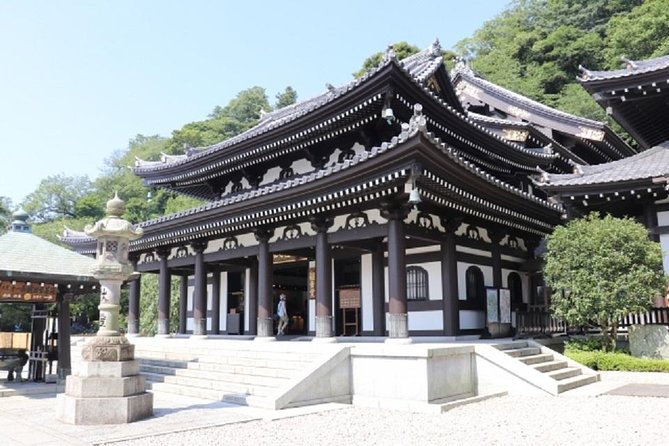
The first listed stop is Hase-dera, one of Kamakura’s best-known temples. It is often grouped with Tsurugaoka Hachimangu and Kencho-ji as a key city sight, but its character is different. The temple is known for flowers that change with the seasons, earning it a long-standing reputation as Kamakura’s temple of flowers.
Plan on about an hour here. That is enough time to see the main grounds and let the guide explain what you are looking at, but it is not an unlimited visit. If flowers are especially important to you, tell the guide at the start. A private tour gives you a better chance of spending your available time where your interests lie.
Hase-dera is also a useful place to notice the difference between a quick sightseeing stop and a guided visit. You can ask about charms, religious customs, or the role of the temple in local life instead of simply walking through and leaving with a few pictures.
Admission is not included. Keep extra cash or a payment method ready for temple fees, and remember that food and drinks are also your responsibility. The tour description does not provide individual admission prices, so confirm the current amount when you book or arrive.
The Great Buddha at Kotoku-in
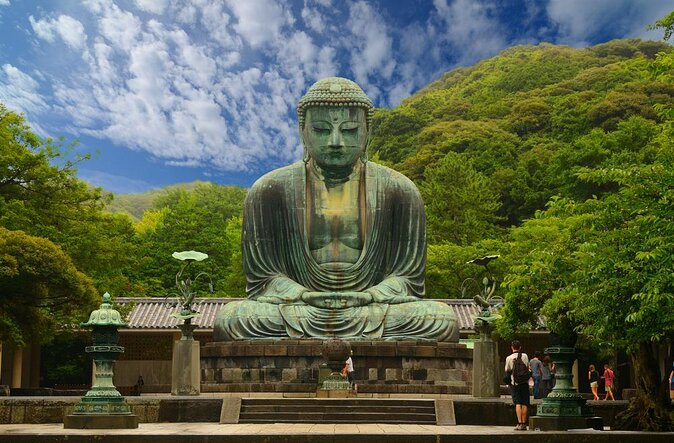
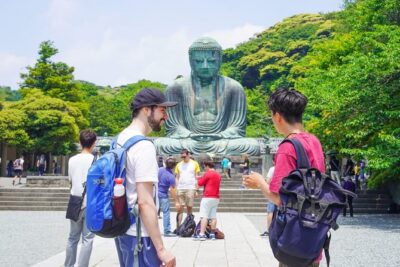
Kamakura’s Great Buddha is the visual centerpiece of the day. The outdoor bronze statue of Amida Buddha measures about 13.35 meters high and sits on the grounds of Kotoku-in Temple. Its open-air setting gives the visit a different feel from a statue inside a dark hall.
The scheduled time is about one hour. That allows you to take in the statue, hear its story, and explore the temple grounds without rushing through the stop. The guide is especially useful here because the Great Buddha can seem simple at first glance. A short explanation about the figure, the temple, and the outdoor setting adds meaning to what might otherwise be a brief photo stop.
This is also one of the places where crowd levels can affect your pace. The tour does not promise a quiet visit, and private guiding cannot remove other people from a famous attraction. What it can do is keep your own group together and help you spend your limited time sensibly.
Admission is not included. You will also need to pay for transport between stops. Since this is not a chauffeured tour, your guide will help you navigate public transport rather than drive you from gate to gate.
Hokoku-ji and the cool bamboo garden
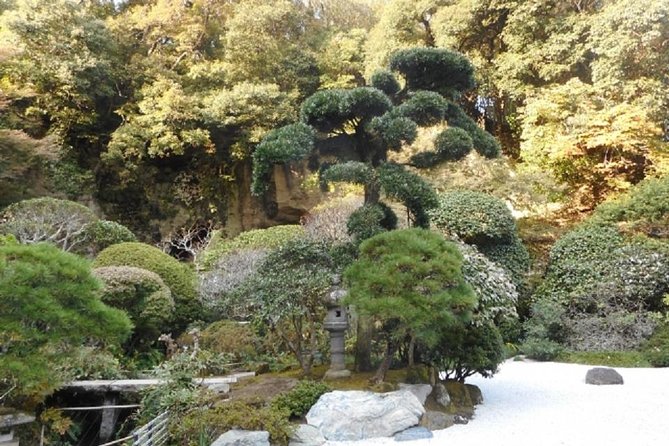
Hokoku-ji is often called Kamakura’s bamboo temple, and it provides the clearest change of pace during the day. Its grounds include a large bamboo garden with a cool, mysterious atmosphere. After the more monumental Hase-dera and Great Buddha, this stop offers a quieter visual break.
The planned visit lasts about an hour. That is generous for a compact garden, but it gives you time to walk slowly and look beyond the first row of bamboo. A private guide can also explain the place in a measured way, rather than hurrying you along with a large group.
The bamboo garden is one of the tour’s more distinctive stops. Many Kamakura day trips focus only on the biggest names. Adding Hokoku-ji makes the schedule feel less like a checklist and gives you a setting with a very different mood.
Admission is extra. The supplied information does not state whether any drink or refreshment is included, so assume it is not. Food and drinks are specifically excluded from the tour price.
More Kamakura and Enoshima days:
- Tokyo: Kamakura & Enoshima Day Trip including Temple Tickets
★ 4.5 · 1,375 reviews - Tokyo: Mt. Fuji, Kamakura, Big Buddha, & Lake Ashi Day Trip
★ 4.5 · 867 reviews - From Tokyo: Kamakura & Enoshima 1-Day Bus Tour
★ 4.5 · 189 reviews - Kamakura Historical Walking Tour with the Great Buddha
★ 5.0 · 129 reviews
Tsurugaoka Hachimangu, the city’s central shrine
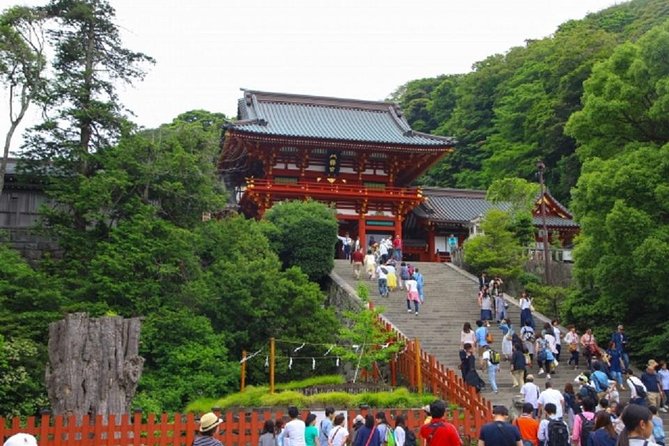
Tsurugaoka Hachimangu sits in the middle of Kamakura’s city center. For centuries, it was honored as the home of gods of war, giving the shrine a strong connection to the city’s samurai-era identity.
The tour sets aside about an hour. That should give you time to see the main approach and shrine grounds while learning why this site matters to Kamakura. Its central location also helps connect the religious sights with the modern city around them.
I like this part of the schedule because it broadens the day beyond temples. Hase-dera, Kotoku-in, and Hokoku-ji each have their own feel, but Tsurugaoka Hachimangu shows how an important shrine remains part of the city center rather than sitting apart from daily life.
As with the other major sites, admission is not included if a fee applies. The tour does not list individual charges, so the final cost will be higher than the advertised per-person price.
Komachi-dori for snacks and small shops
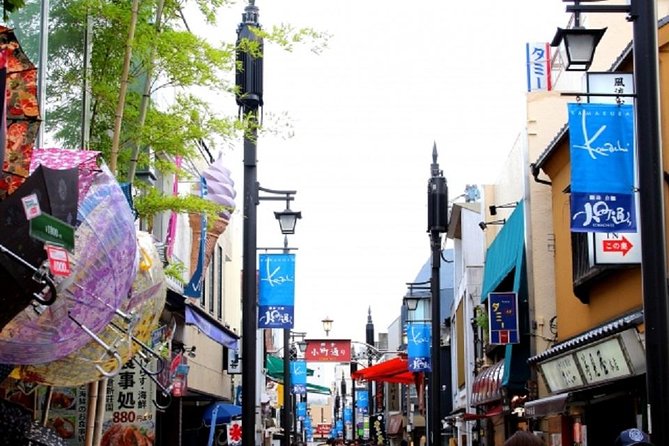
The last listed stop is Komachi-dori, a shopping street near Kamakura Station. You get about 30 minutes to stroll, look for food, and browse distinctive shops. Admission is free, but anything you eat or buy comes out of your pocket.
Thirty minutes is enough for a taste, not a full shopping expedition. If you want to buy several food items, sit down for a meal, or browse at leisure, ask your guide if the timing can be adjusted. The private format makes that conversation possible, but the tour still has to finish back at the meeting point.
Komachi-dori is a useful ending because it lets you shift from formal sights to everyday pleasures. You can pick up a snack, find a small souvenir, or simply watch the flow of people near the station. It also means you finish close to where the tour began.
Public transport and the walking level
This is an economical tour because it uses public transport. That is a practical choice in Kamakura, where a vehicle would not necessarily make movement between central sights faster or simpler. Still, you pay the fares yourself, so budget for local transportation in addition to the tour fee.
You meet at Kamakura Station in the Onarimachi area. The supplied meeting information gives the address as 1-chōme-1-15 Onarimachi, Kamakura, Kanagawa 248-0012. One guide response refers to meeting at the JR Kamakura Station West Exit, so confirm the exact exit and meeting instructions before the day begins.
The tour requires moderate physical fitness. Expect walking around temple grounds, shrine approaches, city streets, and public transport connections. The schedule is not described as strenuous, but it is also not a seated sightseeing ride. Comfortable shoes matter more than stylish ones here.
The total duration is about six hours and 30 minutes. The five stops account for four and a half hours if you spend the full planned time at each location, leaving the rest for transport and movement through the city. That makes the schedule full but sensible.
What the $162.59 price really buys
At $162.59 per person, the tour is not the cheapest way to see Kamakura. The price covers a private tour and an English-speaking professional guide, but it does not cover food, drinks, temple and shrine admission fees, or public transportation to and from the tour.
The value depends heavily on group size. For one person or a couple, the price is a significant expense. For a family or small group, the private format can make more sense, especially if a group discount applies. The supplied information confirms that group discounts are available, but it does not state the discount amount.
You are paying for planning, navigation, and personal attention rather than transport. That distinction matters. If you enjoy planning train routes and reading about each temple on your own, an independent day may cost less. If you want to cover five major sights without constantly checking directions, the guide may justify the added expense.
The ability to customize the day adds value too. You can tell the guide if you care most about flowers, Buddhist art, the Great Buddha, bamboo, shopping, or local food. The tour cannot promise unlimited time at every stop, but a private group has more control than a fixed large-group outing.
Guide style and the personal touch
The information provided names Yumi and Harry as guides associated with the experience. Yumi is described as very friendly and well informed about the area. Harry is described as kind, interesting, and careful in his preparation.
Those details matter because Kamakura is a place where the quality of explanation can shape the day. The major sights are easy to photograph, but a guide can help you connect them to local customs and history. At Hase-dera, for instance, the discussion of an o-mamori charm can turn a quick souvenir purchase into a small window on Japanese religious practice.
Harry’s conversations have also included personal subjects, such as Darwin and the work experience of one participant. That does not guarantee the same conversation for every booking, but it suggests a guide who can respond to the interests of the people in front of him.
The tour is private, but the exact guide cannot be guaranteed by the supplied details. If you hope to request Yumi or Harry, ask Fulfilling Inc. when booking. Confirmation is normally received at booking, though reservations made within two days of travel may take up to 48 hours and depend on availability.
Who should book this Kamakura tour
I would recommend this tour to you if you want the major Kamakura sights in one organized day and prefer a guide to handle the route. It is especially suitable for couples, families, and small groups who value privacy and want to ask questions along the way.
It also suits first-time visitors who do not want to spend the day piecing together public transport. The guide can help you move from station to temple to shrine while keeping the schedule on track.
You should think twice if your priority is the lowest possible price. The per-person fee is only part of the expense, and you add admissions, transit, food, and drinks. Independent sightseeing may be better value for a confident planner who already knows Kamakura.
You should also be realistic about walking. Anyone who needs a very gentle, vehicle-based day may find this format tiring. The tour requires moderate physical fitness, and the compact schedule leaves limited room for long rests unless your private group and guide agree to change the pace.
Booking details and cancellation
The activity begins and ends at the Kamakura Station meeting point. It lasts approximately six hours and 30 minutes, and confirmation is usually issued at booking. The tour is near public transportation, which fits the structure of the day.
Free cancellation is available if you cancel at least 24 hours before the start time. Changes or cancellations made less than 24 hours ahead are not accepted for a refund. The cut-off uses local time.
Good weather is required. If poor weather causes the experience to be canceled, you are offered another date or a full refund. That policy makes the tour a better fit for visitors with some flexibility in their Kamakura schedule.
Should you book this private Kamakura day?
Book it if you want a focused introduction to Kamakura with a private English-speaking guide, a sensible public transport plan, and a mix of famous sights and quieter corners. Hase-dera, the Great Buddha, Hokoku-ji, Tsurugaoka Hachimangu, and Komachi-dori give you a strong first look at the city.
The deciding question is value. At $162.59 per person before admissions, food, and fares, this is a convenience and personal-attention purchase, not a bargain sightseeing ticket. For a small group that wants flexibility, the cost can be reasonable. For a solo visitor on a tight budget, an independent route may be the better choice.
If you do book, wear good walking shoes, confirm the exact station exit, carry money for admissions and transport, and tell the guide what matters most to you. That is how you turn a busy six-and-a-half-hour schedule into a day that feels personal rather than rushed.
FAQ
Where does the Kamakura tour begin?
The tour begins at Kamakura Station, at 1-chōme-1-15 Onarimachi, Kamakura, Kanagawa 248-0012, Japan. One guide response refers to the JR Kamakura Station West Exit, so confirm the exact meeting instructions before departure.
Where does the tour end?
The activity ends back at the meeting point at Kamakura Station.
How long does the tour last?
The tour lasts approximately six hours and 30 minutes.
Is this a private tour?
Yes. Only your group participates in the activity.
What sights are included?
The planned stops are Hase-dera Temple, Kotoku-in and the Great Buddha of Kamakura, Hokoku-ji Temple, Tsurugaoka Hachimangu Shrine, and Komachi-dori.
Is transportation included?
No. Public transportation to and from the activity is not included, and you pay the public transport costs yourself.
Are admission fees included?
No. Admission fees for the sites are not included in the tour price.
What happens if bad weather cancels the tour?
If the experience is canceled because of poor weather, you are offered a different date or a full refund.
More Full-Day in Kamakura
- From Tokyo: Kamakura Full Day Tour with a Local Expert Guide
★ 4.6 · 43 reviews - From Tokyo Kamakura, Hachimangu Shrine and Enoshima Full Day Tour
★ 4.5 · 36 reviews - From Tokyo: Kamakura and Enoshima Full-Day Private Trip
★ 4.7 · 17 reviews - Kamakura Full Day Walking Tour with Local Expert Guide and Pickup
★ 4.5 · 16 reviews
New on our Kamakura list
- 1-Day trip: Kamakura City (Enoshima/Shonan/Beach)★ 4.7 · 3 reviews
- Kamakura Zen: Great Buddha, Nature, Bamboo & Samurai Culture★ 5.0 · 3 reviews
- Kamakura Half Day Walking Tour with Local Experience★ 3.4 · 4 reviews
- Hiking Tour in Enoshima with a Local Guide★ 5.0 · 4 reviews
- Kamakura Tour with Pro Photographer: Anime Train & Fuji Sunset★ 5.0 · 4 reviews
- Kamakura Private Custom Tour★ 5.0 · 4 reviews
- Kamakura Historical and Cultural Day Trip with Local Cuisine★ 5.0 · 4 reviews
- Whispers of Kamakura: Jean’s Full-Day Daibutsu & Hidden Walk★ 5.0 · 4 reviews
Kamakura Tours, compared.
Kamakura & Enoshima Day Trip including Temple Tickets
Read our review →
Mt. Fuji, Kamakura, Big Buddha, & Lake Ashi Day Trip
Read our review →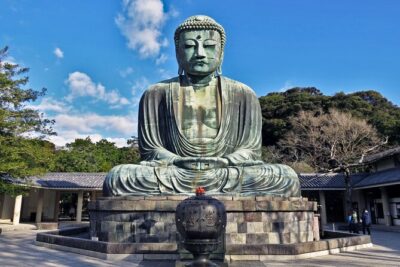
Kamakura Historical Walking Tour with the Great Buddha
Read our review →
Kamakura Private Tour: Temples, Nature, and the Great Buddha
Read our review →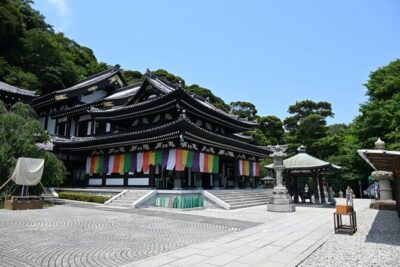
Sea of Mount Fuji, Hakone Ropeway, Ōwakudani, Enoshima
Read our review →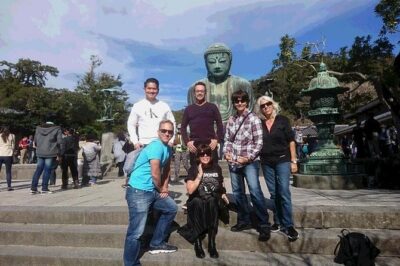
Kamakura 8 hr Private Walking Tour with Licensed Guide from Tokyo
Read our review →Browse the lists this tour appears in