
Reviewed · WALKING TOURS
Kamakura: Private Guided Walking Tour with Local Guide
Kamakura’s biggest pleasure is not just seeing its famous Buddha. It is having someone explain why this compact seaside city became the home of Japan’s samurai government, then guide you through shrines, temples, gardens, shops, and local streets without making you plan every turn. I especially like the private format and the freedom to shape the day around your interests.
I also like that your guide can handle the practical work. Guides such as Shinji, An, Yuki, Emiko, and Taku have built routes around temple preferences, holiday closures, quick sightseeing styles, lunch requests, and even a hoped-for view of Mount Fuji. The main catch is that $106 per person covers the guide, not entrance fees, meals, or transportation between sites.
In This Review
- Key points at a glance
- Why a private Kamakura tour can be worth the price
- Choosing between four and six hours
- The Great Buddha, Kamakura’s essential first stop
- Hase-dera’s gardens and seasonal hydrangeas
- Zeniarai Benten and the money-washing tradition
- Hokoku-ji and the bamboo garden
- Tsurugaoka Hachimangu and the major temple route
- What the guides add to the day
- Walking, trains, taxis, and extra costs
- Timing, weather, and booking expectations
- Who should book this Kamakura experience
- Should you book it?
- FAQ
- How long is the Kamakura private walking tour?
- Is the tour private?
- Which languages are available?
- Does the tour include a private vehicle?
- What sites can I see?
- Are entrance fees included?
- Is pickup included?
- Can I cancel the tour?
Key points at a glance
- Enter Kamakura’s Great Buddha: This famous bronze figure is not only a photo stop. You can go inside the statue for a small additional experience.
- See Hase-dera’s hydrangeas in June: Around the rainy season, roughly 2,500 hydrangeas in 40 varieties fill the temple gardens.
- Let the guide choose among too many temples: Shinji and other guides have planned efficient routes through major sites when visitors felt unsure where to begin.
- Wash money at Zeniarai Benten: Local legend says coins washed in the shrine’s spring will bring greater wealth.
- Sip matcha beside bamboo at Hokoku-ji: This is one of the calmest stops on the route, though it requires adding the temple to your chosen plan.
- Expect a walking day with added fares: Public transit or taxis may connect distant sites, and you should carry Japanese yen for those costs.
Why a private Kamakura tour can be worth the price
Kamakura is only about an hour from Tokyo, but it does not feel like a simple side trip to one monument. The city contains enough temples, shrines, gardens, and historic places to make route planning surprisingly tricky. A private guide gives you a human filter: someone can help you decide what fits your time instead of sending you between every famous stop.
At $106 per person, the value depends on your group size and interests. For one person, it is a considerable addition to a Tokyo trip. For a small private group of up to seven, the cost buys several hours of personal attention, itinerary planning, language help, and cultural explanation. The price is easier to justify if you want more than quick photographs.
The strongest benefit is flexibility. You can ask to focus on temples, shrines, gardens, food, photography, or general Kamakura history. If you prefer a brisk pace, tell your guide. Yuki handled a fast-moving day well, while Emily’s guide adjusted a shorter schedule to cover three destinations.
The guides also help with the small choices that shape a good day. They can suggest a sushi lunch, soba with tempura, or another local stop, though food is not included. They may also point out a good place for photographs or adjust the route for a chance to see Mount Fuji when conditions allow. That sort of help is hard to get from a guidebook.
More Private Tours in Kamakura
- Kamakura Private Tour: Temples, Nature, and the Great Buddha
★ 5.0 · 121 reviews - Kamakura 8 hr Private Walking Tour with Licensed Guide from Tokyo
★ 5.0 · 80 reviews - Kamakura 4hr Private Trip with Government-Licensed Guide
★ 5.0 · 58 reviews
Choosing between four and six hours
The shorter four-hour option works well if you want a focused introduction. You could center the time on the Great Buddha, Hase-dera, and one or two additional sites, depending on walking speed and transfers. It is also a sensible choice if Kamakura is one part of a busy Tokyo day.
The six-hour option gives you breathing room. You have more time for several shrines and temples, lunch, questions, photographs, and a slower look at gardens. Shinji planned a six-hour route that included the Great Buddha, Hase-dera, Tsurugaoka Hachimangu Shrine, Kencho-ji Temple, and Engaku-ji Temple, with lunch after the first three hours.
Do not treat either length as a fixed checklist. Kamakura’s sites are spread across different areas, so each extra stop can mean another train ride or taxi fare. Your guide will plan the order, but you should discuss priorities before the day begins. Emiko arranged a requested route by email and managed the time well, which is exactly the kind of preparation that makes a private tour useful.
The Great Buddha, Kamakura’s essential first stop
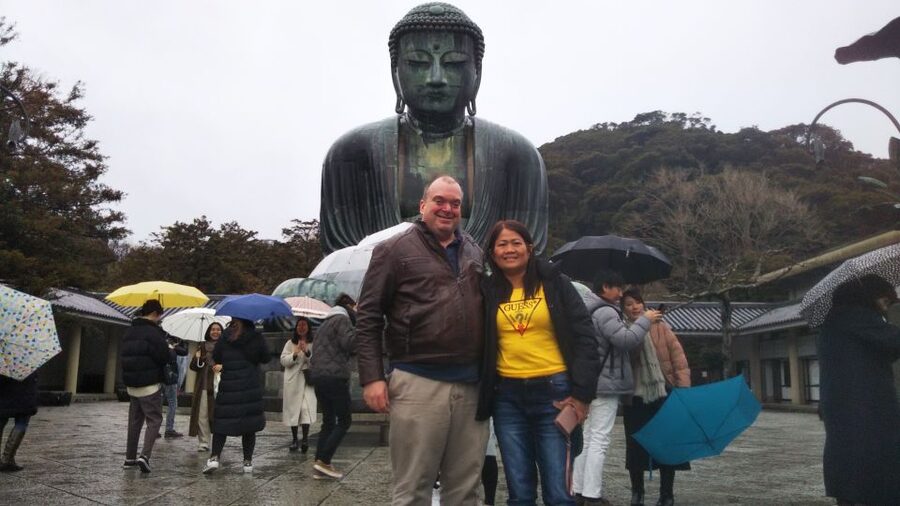
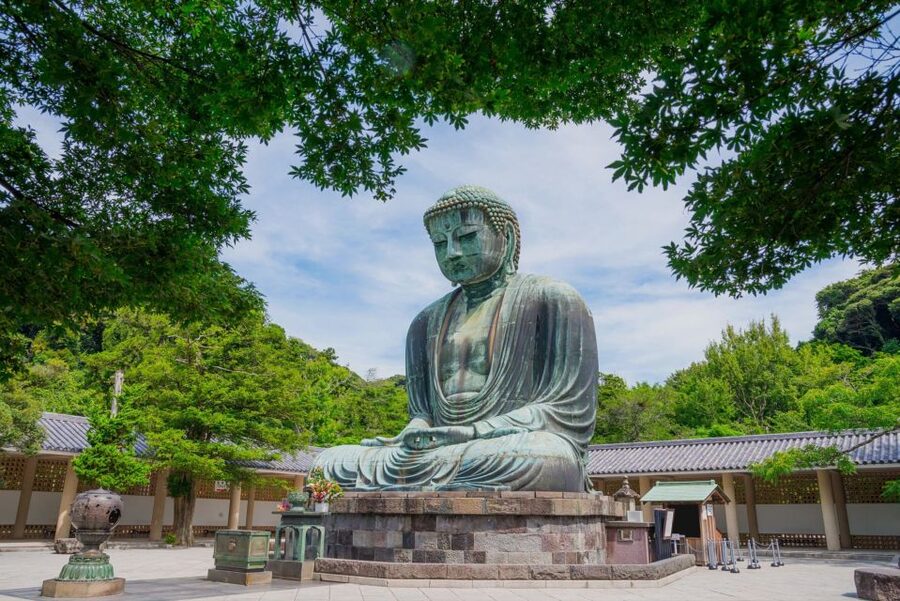
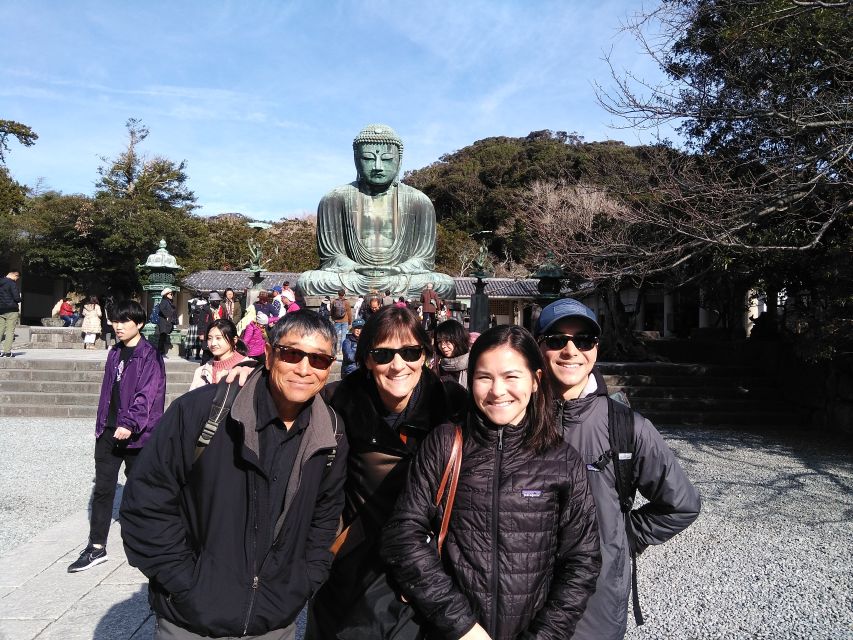
The Great Buddha is Kamakura’s best-known sight and usually the anchor of a first visit. The huge bronze figure carries a sense of calm that photographs only partly capture. Your guide can put the statue into the larger story of Kamakura and explain why it matters to the city and to Japanese culture.
A useful detail here is the chance to enter the interior of the statue. It is a brief, unusual addition, and entrance fees are extra. If you want this stop, tell your guide early so the visit fits comfortably into the route.
The Great Buddha can be crowded, especially during busy periods, but a private guide helps you understand how to approach the visit and what else to see nearby. Several guides have also helped with family or couple photographs, saving you from asking strangers to frame the shot.
Hase-dera’s gardens and seasonal hydrangeas
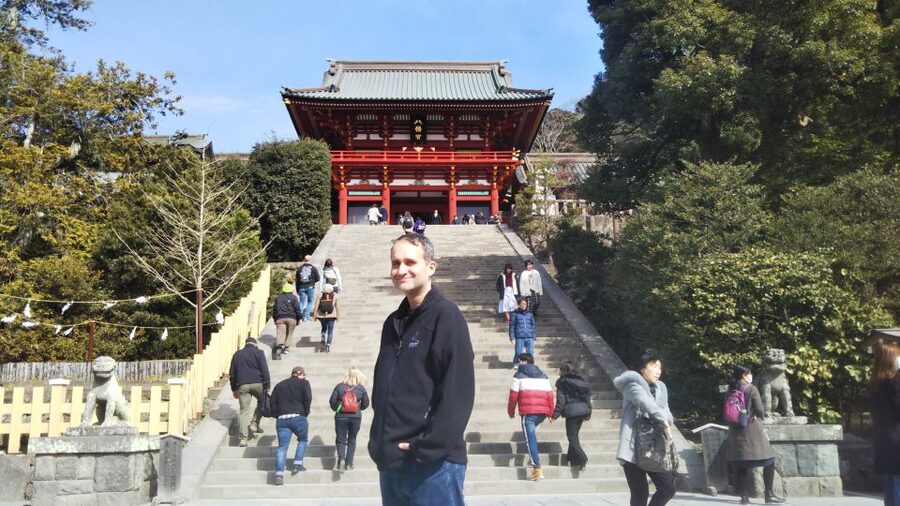
Hase-dera adds a different mood. The temple is famous for its gardens, and the setting rewards a slower pace than the Great Buddha. Around June, during Japan’s rainy season, about 2,500 hydrangeas representing 40 varieties bloom together. That seasonal display can be a major reason to choose Kamakura at that time.
The tradeoff is that June weather can be wet, and this tour operates rain or shine. Bring suitable shoes and clothing rather than counting on a weather cancellation. The garden paths may also take more effort for anyone who finds extended walking difficult, even though the activity is listed as wheelchair accessible.
I like Hase-dera because it gives the guide room to explain more than dates and names. Ask about temple customs, garden design, and how seasonal flowers fit into Japanese appreciation of nature. The guide’s role is especially useful here because a quick walk can miss the details that make the grounds meaningful.
More Walking Tours in Kamakura
- Kamakura Historical Walking Tour with the Great Buddha
★ 5.0 · 129 reviews - Kamakura Walking Tour – The City of Shogun
★ 5.0 · 100 reviews - Kamakura 6hr Private Walking Tour with Government-Licensed Guide
★ 5.0 · 42 reviews - Buddha, Bamboo & Zen – Bespoke Kamakura Private Walking Tours
★ 5.0 · 25 reviews
Zeniarai Benten and the money-washing tradition
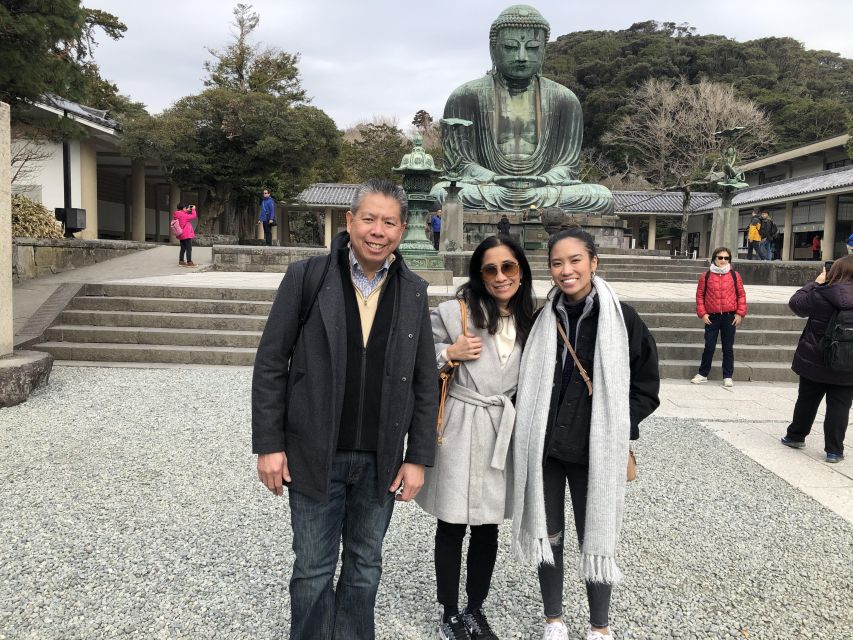
Zeniarai Benten is one of Kamakura’s more memorable shrine visits. Its spring is linked to a local belief that money washed in the holy water will return in greater amounts. The ritual is simple, visual, and easy to remember long after the day ends.
This is also the kind of stop that benefits from explanation. A guide can show you how the visit fits into local religious practice and answer questions about what you are seeing. It is not simply a place to rinse a coin and move on.
The shrine may not appeal as much if your priority is only grand architecture. Its value is the story and the custom. If you want a route built around major buildings and large temple grounds, ask your guide to weigh this stop against another site.
Hokoku-ji and the bamboo garden
Hokoku-ji is known for its bamboo forest garden, a welcome change after a morning of statues and shrine buildings. The tall bamboo creates a quiet, enclosed setting, and the tour can include matcha tea while you look into the forest.
The tea stop is not included in the tour price, and you should allow enough time for it rather than squeezing it between distant sites. Hokoku-ji makes the most sense on a six-hour route or on a four-hour day built around fewer stops.
I would choose this temple if you want a calmer pause and a strong sense of place. If your list already includes several temples, your guide can help decide if the bamboo garden adds something different or simply makes the schedule too tight.
Tsurugaoka Hachimangu and the major temple route
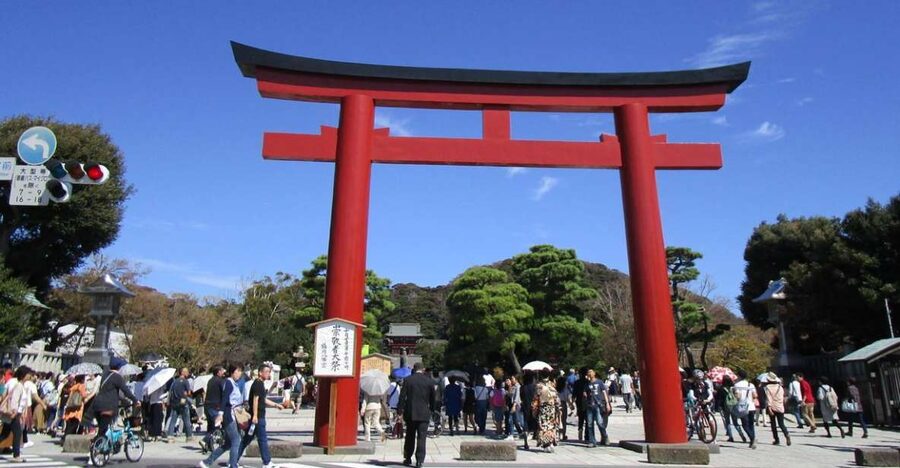
A private guide can also take you toward the larger ceremonial sites of central Kamakura. Tsurugaoka Hachimangu is among the city’s key shrines and helps explain Kamakura’s samurai connections. It works well in a route that begins near the Great Buddha and then moves through the city’s central religious sites.
Kencho-ji and Engaku-ji offer another pair of important temple stops. Shinji included both in a carefully timed route, ending close enough to the train station for an easy return to Tokyo. That detail matters: a day can feel rushed if the final temple leaves you scrambling for your train.
You will not necessarily see every major site in one four-hour visit. Kamakura rewards choices, not a frantic race. Tell your guide which matters most, then let the route reflect that.
What the guides add to the day
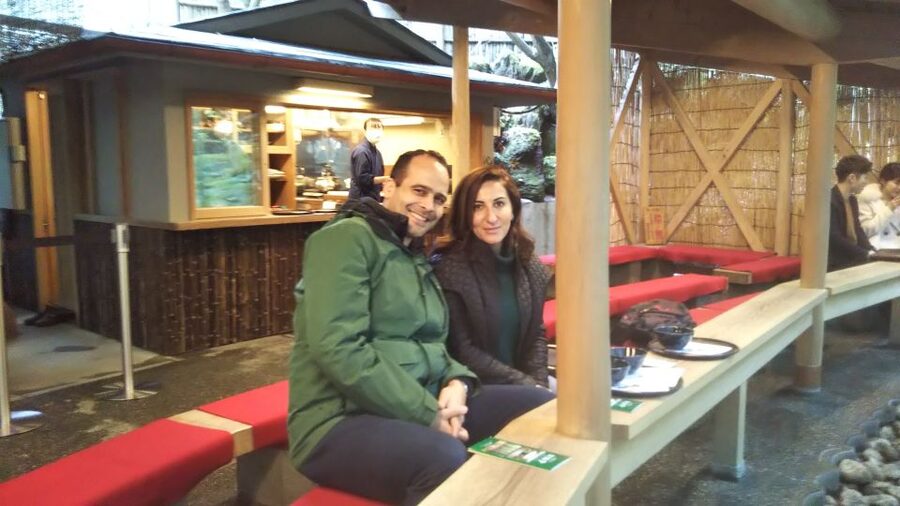
The best part of this experience is the person leading it. Every guide holds Japan’s nationally licensed Tour Guide-Interpreter certification, which requires formal knowledge of Japanese culture and history. English and Japanese are offered.
The guides also bring different strengths. An has led shrine-focused routes and answered broad questions about Japanese culture. Shinji has been especially good at building a plan from a long wish list. Yuki has met visitors at Kamakura Station, handled a quick pace, and found a sushi lunch. Taku has managed short-notice planning, while Emiko has coordinated requested stops in advance by email.
You should not assume you can book a particular guide by name. The assigned guide contacts you after booking, and the local team confirms the practical details beforehand. Still, these examples show the range of help available: route planning, history, food suggestions, photographs, transportation, and simple companionship.
The tone is personal rather than scripted. One guide accompanied a couple on the train until his own stop after their tour, while another found a route that included a rare view of Mount Fuji. Those moments are not guaranteed, but they show why a private local guide can make a day feel less mechanical.
Walking, trains, taxis, and extra costs
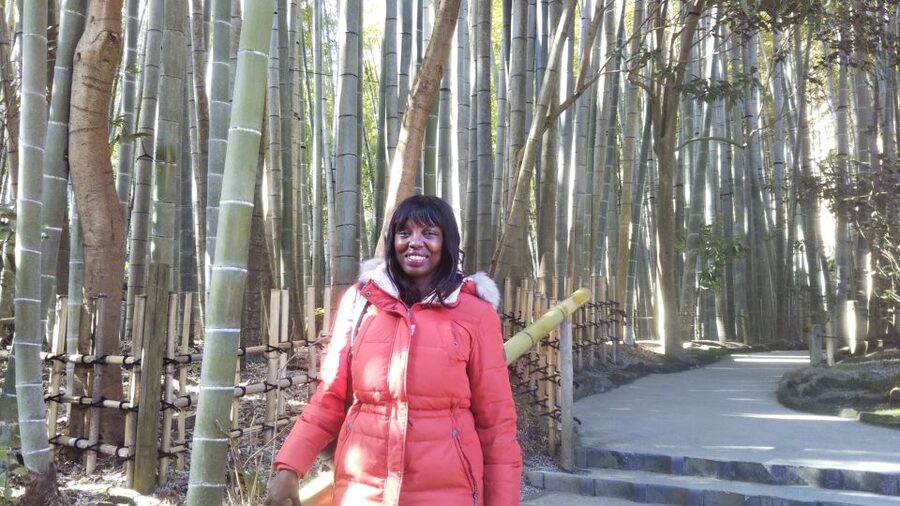
This is a walking tour, not a private vehicle tour. Pickup from your accommodation is included if it is within a reasonable walking distance, but the guide does not arrive with a car. You may use public transportation or local taxis between sites, and those fares are extra.
That arrangement keeps the experience flexible but means you should budget beyond the $106 tour price. Entrance fees, food, drinks, and transportation are all separate. Carry Japanese yen for transfers, as the exact cost can be discussed with your guide after the reservation is finalized.
A private vehicle can be arranged, but it must be booked at least five days ahead. The maximum group size is seven passengers. If you are traveling with older family members or anyone who cannot manage a long walking day, discuss the route and transport needs before confirming.
The activity is listed as wheelchair accessible, but site-by-site conditions and the amount of walking can vary. Ask the local team to confirm a practical route for your group rather than relying on the general accessibility label alone.
Timing, weather, and booking expectations
The tour runs rain or shine, so the season matters. June offers the famous hydrangeas but can bring wet weather. Spring and autumn may suit people who prefer comfortable sightseeing conditions, though the exact experience depends on the day.
The booking is not final until a guide accepts and contacts you. Most guides make contact within seven days. If a guide is unavailable, the local team continues looking and sends updates until 24 hours before the tour. You can cancel without a fee up to 24 hours before the start time for a full refund.
That process is worth understanding before you build a tightly timed day around the tour. Keep your Tokyo plans flexible until the guide confirms the meeting point, start time, route, and any transportation needs.
Who should book this Kamakura experience
I would choose this tour if you want context, not just a list of monuments. It suits first-time visitors who find Kamakura’s many temples confusing, couples who want a flexible pace, families who need help with timing, and anyone who wants to ask plenty of questions.
It is also a good match for a repeat visitor with a specific goal. You can request gardens, shrines, food, photography, or a shorter list of less familiar places. A private guide can give you a more personal day than a large group outing.
You may want another option if you prefer to wander independently, dislike advance coordination, or want all costs bundled into one price. You will need to pay separately for admissions, meals, and transfers, and you should be comfortable with a substantial amount of walking.
Should you book it?
Book this tour if Kamakura is a priority and you want the day shaped around you. The strongest reasons are the private format, licensed local guidance, flexible route, and help with the city’s many choices. Guides have handled everything from temple-heavy itineraries to quick visits, food stops, photographs, and train timing.
Choose the six-hour version if you want several major sites with time for lunch and questions. Choose four hours for a focused introduction. Either way, contact the guide promptly with your must-see list, walking pace, food interests, and transportation concerns.
At $106 per person plus site fees, meals, and local transport, this is not the cheapest way to see Kamakura. It can be good value for a small group that wants a well-planned day and real cultural explanation, rather than a rushed circuit of famous names.
FAQ
How long is the Kamakura private walking tour?
You can choose a four-hour or six-hour tour. Starting times depend on availability.
Is the tour private?
Yes. It is a private group experience for up to seven passengers.
Which languages are available?
The live guide service is available in English and Japanese.
Does the tour include a private vehicle?
No. This is a walking tour. Public transportation or local taxis may be used between sites, and those costs are not included. A private vehicle can be arranged at least five days in advance.
What sites can I see?
Possible sites include the Great Buddha, Hase-dera, Zeniarai Benten Shrine, Hokoku-ji Temple, Tsurugaoka Hachimangu Shrine, Kencho-ji Temple, and Engaku-ji Temple. The route can be personalized.
Are entrance fees included?
No. Entrance fees, food, drinks, and transportation costs are not included in the $106 per person price.
Is pickup included?
Pickup from your accommodation is included on foot if it is within a reasonable walking distance. The exact meeting arrangements are confirmed with the local team.
Can I cancel the tour?
Yes. You can cancel up to 24 hours before the start time for a full refund. The tour is not confirmed until a guide accepts and contacts you.
New on our Kamakura list
- Buddha, Bamboo & Zen – Bespoke Kamakura Private Walking Tours★ 5.0 · 25 reviews
- Yokohama and Kamakura 6hr Private Trip Government-Licensed Guide★ 5.0 · 25 reviews
- Tokyo: Kamakura and Yokohama Private Day Trip with Guide★ 4.6 · 27 reviews
- Private Kamakura plus Yokohama Tour – English Speaking Driver★ 4.5 · 28 reviews
- Day Trip to Kamakura & Enoshima: Shrines, Seaside, Temples & Tea★ 5.0 · 32 reviews
- Kamakura: A Journey Through Medieval Japan★ 4.9 · 32 reviews
- From Tokyo: Kamakura Private Customize Tour by Luxury Van★ 4.6 · 38 reviews
- Exciting Kamakura – One Day Tour from Tokyo★ 5.0 · 40 reviews
Walking Tours, compared.
Tokyo Tsukiji Fish Market Food and Culture Walking Tour
Read our review →
Imperial Palace and Shogun Historical Walking Tour
Read our review →
Shinjuku Local Bar and Izakaya Guided Walking Tour
Read our review →
Asakusa Walking Tour with Sensoji Temple Visit
Read our review →
Tokyo Castle & Imperial PalaceーShogun Walking Tour
Read our review →
Browse the lists this tour appears in