
Reviewed · HISTORICAL TOURS
Lunch & Cultural Tour
Chiba is often treated as a gateway to Tokyo or Narita, but this small-group walk gives you a reason to stop. With local guide Grace, you’ll visit Chiba Shrine, pass Chiba Castle, see a century-old Neo-Renaissance building, and finish with a Japanese lunch of tonkatsu or chicken.
I like two things right away: the tour connects everyday Chiba with its religious and artistic landmarks, and the lunch is part of the experience rather than an afterthought. The main consideration is pace. Two hours and 20 minutes covers three stops, a city walk, and lunch, so the museum visit is focused rather than lengthy.
In This Review
- Key points at a glance
- Why this Chiba walk is worth your time
- Meeting Grace at Chiba Station
- Chiba Shrine and the North Star tradition
- Passing Chiba Castle and finding good photo stops
- The Chiba City Museum of Art and its old bank hall
- Lunch at Kadoya: tonkatsu or chicken
- The walking conditions and pace
- What the small group changes
- Who should book this experience?
- Price, booking timing, and cancellation
- Should you book the Chiba lunch and cultural tour?
- FAQ
- How long does the Chiba lunch and cultural tour last?
- How much does the experience cost?
- Who is the guide?
- Where does the tour start?
- Where does the tour end?
- Is hotel or station pickup available?
- What food is included?
- Are drinks included?
- Is admission to the Chiba City Museum of Art included?
- Is the route accessible for people who cannot use stairs?
- How many people can join the tour?
- Can I cancel for a full refund?
Key points at a glance
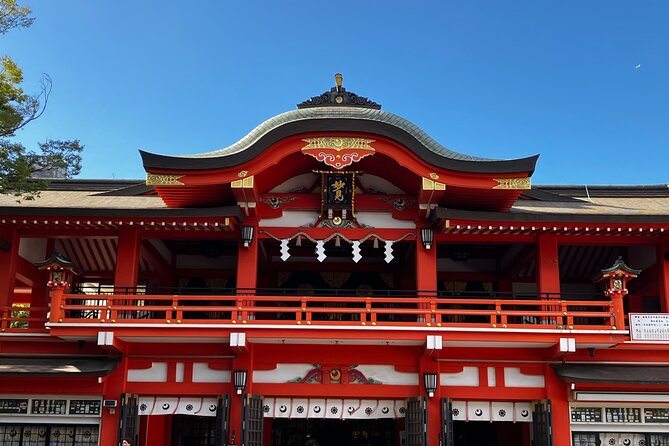
- Chiba Shrine is the spiritual opening: See a quiet place with a history reaching back about 1,000 years, dedicated to the North Star and Big Dipper.
- Grace brings local perspective: She has lived in Chiba for about 18 years and offers a personal connection to the city.
- The art museum occupies a historic bank hall: Sayado Hall, built as Kawasaki Bank, gives the museum an architectural reason to visit.
- Lunch is homemade Japanese comfort food: Choose pork tonkatsu or chicken at Kadoya, with the meal included in the tour price.
- The group stays small: A maximum of eight people makes conversation and flexible pacing more realistic.
- The walk is mostly level but not completely step-free: Some stairs have no lift, so mobility needs matter.
Why this Chiba walk is worth your time
At $60 per person, this is not simply a two-hour sightseeing stroll. The price covers a guide, admission to the Chiba City Museum of Art, and lunch at a Japanese home-style restaurant. Since the meal is included, the value is easier to judge than with a tour that charges separately for food and entry fees.
I see the strongest value in the combination. You get a shrine that matters to local worshippers, a look at Chiba’s historic center, a museum visit, and a sit-down meal. These are modest pieces of the city, not a grand parade of headline attractions, but that is exactly why the outing can help you understand Chiba beyond its role as a transport stop.
The schedule is compact. Chiba Shrine receives about 40 minutes, the museum about 40 minutes, and lunch about one hour. The remaining time is used for walking between the sights and taking in Chiba Castle from the outside or along the route. You should expect a well-defined introduction, not a full museum tour or a slow, unplanned day in the city.
A few more Tokyo bookings worth comparing
- Tokyo: Mt.Fuji & Lake Kawaguchiko 1-Day Bus Tour w/Optional Lunch
★ 4.5 · 839 reviews - Tokyo: Sumo Experience and Chanko Nabe Lunch
★ 4.8 · 257 reviews - Tokyo: Tsukiji Fish Market Tour with 6 Stops & Seafood Lunch
★ 4.5 · 165 reviews
Meeting Grace at Chiba Station
The listed starting point is Chiba Station, at 1 Chome-1 Shinchiba in Chuo Ward. Pickup is offered, but you should confirm the exact arrangement and meeting instructions when you book, since the published start point is the station area.
Grace has lived in Chiba for about 18 years. That matters here because the tour is built around the city she knows as home, not only around famous sights. She describes herself as a mother of two in her mid-40s and brings a personal interest in Japanese culture and Chiba City to the walk.
The group limit is eight people. That is a useful size for a city tour. You are less likely to feel lost in a crowd, and it should be easier to ask questions or request clarification at the shrine, museum, or restaurant. One practical strength is flexibility: Grace has waited for a late-arriving group, so a small delay may be handled with patience. You should still aim to arrive on time, since the schedule is fairly tight.
The route uses public city streets and takes you on foot from the station area toward the central sights. From JR Chiba Station, the museum is about a 15-minute walk. From Keisei Chiba-Chuo Station, it is about 10 minutes on foot, and Yoshikawa Koen Station on the Chiba Urban Monorail is about five minutes away.
Chiba Shrine and the North Star tradition
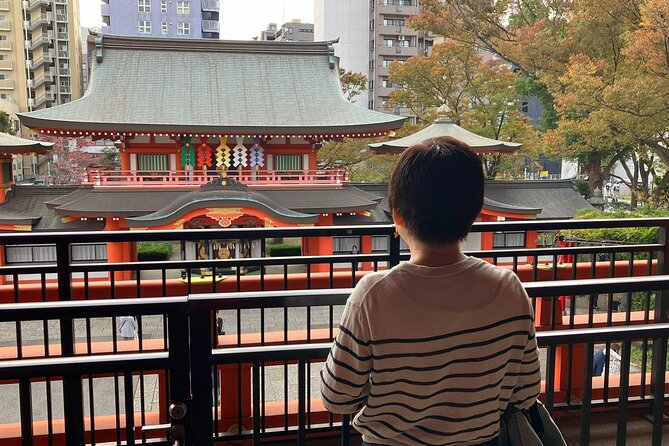
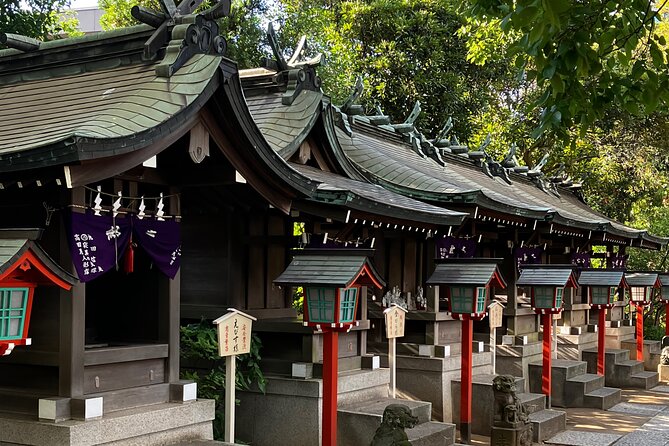
The first major stop is Chiba Shrine, a quiet religious site with about 1,000 years of history. It is dedicated to the spirit of the North Star and the Big Dipper, which gives the shrine a distinctive identity among Japanese sacred places.
I like beginning here because it sets a calm tone before the museum and lunch. This is not presented as a quick photo stop alone. The shrine remains familiar to Chiba citizens and receives worshippers from around Japan, so you get a look at a place that has a role in present-day life as well as the past.
You have about 40 minutes here. That is enough time to take in the setting, hear Grace explain the shrine’s importance, and take photographs without turning the visit into a rushed stop. The description does not promise a formal religious ceremony or special access, so you should expect an exterior and grounds visit with cultural explanation.
As with any active shrine, respectful behavior matters. Keep voices moderate, observe what people around you are doing, and follow Grace’s lead about where to stand or take pictures. The appeal is not just the architecture. It is the chance to see a place used by local people, in a setting that is described as beautiful and quiet.
Passing Chiba Castle and finding good photo stops
The route also passes through Chiba Castle. This part is useful for anyone who likes to collect a few strong city images without spending the whole day at one attraction. You can take photographs here, but the tour does not list Chiba Castle as a separate admission stop.
That distinction is important. If Chiba Castle is the main reason you want to visit Chiba, this tour may not provide enough time or a dedicated interior visit. Instead, the castle functions as one piece of the walk between the shrine, museum, and restaurant.
Still, a passing view can add variety to the day. The shrine offers a religious setting, the castle gives you a recognizable historical image, and the museum shifts the focus to art and architecture. The route appears designed to show several sides of central Chiba without asking you to spend hours on a single site.
Same corner of Tokyo, a completely different plan:
- Mt Fuji and Hakone 1-Day Bus Tour Return by Bullet Train
★ 5.0 · 26,383 reviews - 1-Day Tokyo Bus Tour
★ 5.0 · 14,250 reviews - Tokyo: TOKYO SKYTREE® Admission ticket
★ 4.5 · 11,192 reviews - Tokyo: teamLab Planets TOKYO Digital Art Museum Entry Ticket
★ 4.6 · 9,779 reviews
The Chiba City Museum of Art and its old bank hall
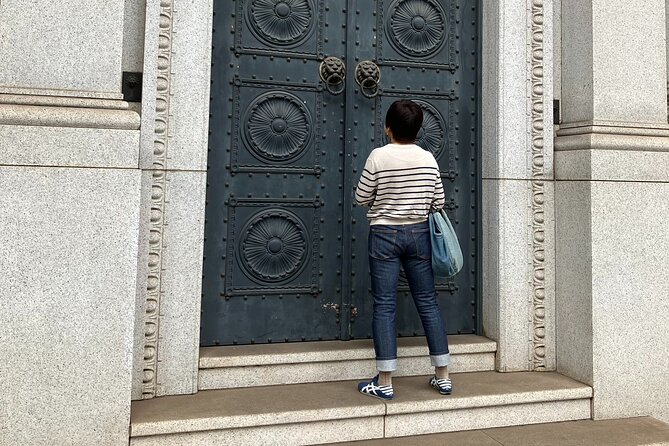
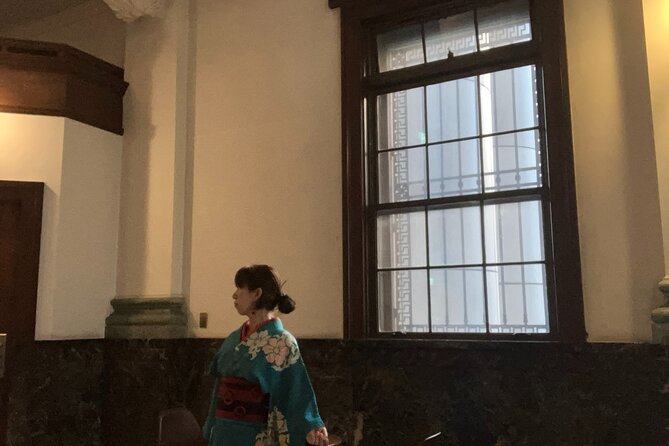
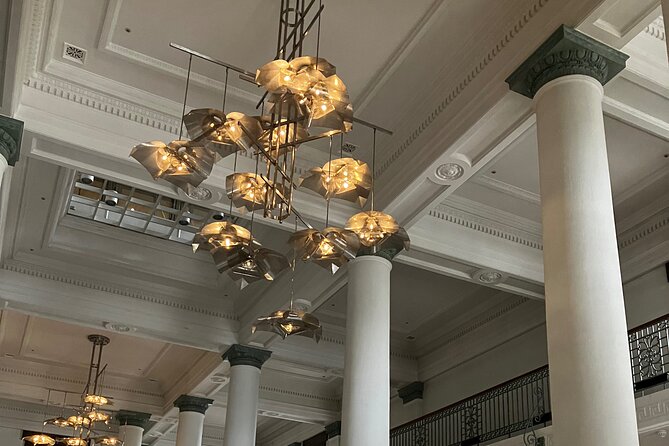
The museum receives about 40 minutes and admission is included. Its most unusual feature is Sayado Hall on the ground floor, a Neo-Renaissance structure built about a century ago as Kawasaki Bank.
The building later came under Chiba City ownership in 1971. That change from bank to civic museum gives the stop more substance than a standard gallery visit. You are not only entering a place to see art. You are also seeing one of the surviving historic buildings in Chiba’s center.
The museum displays works by artists associated with Chiba City. The exact exhibitions can change, so you should not book this tour expecting a particular artist or show. The reliable part is the combination of local art and an old civic building.
Forty minutes is enough for an introduction, especially if you want to see the historic hall and a selection of the displays. It is not enough for a careful look at every gallery. If you are a serious art enthusiast, you may want to return independently and allow more time. For most people, the museum works well as a compact cultural stop that breaks up the walking route.
The end point is listed at the Chiba City Museum of Art, at 3-chome-10-8 Chuo. That can be convenient if you want to continue exploring the museum or central Chiba after the guided portion ends. It also means the tour does not loop back to the station, so plan your next move from the museum rather than assuming you will finish where you started.
Lunch at Kadoya: tonkatsu or chicken
The final major part of the experience is a one-hour meal at Kadoya, described as a Japanese homemade-style restaurant. You choose between pork tonkatsu and chicken.
This is where the tour feels most connected to ordinary local life. A restaurant serving home-style Japanese food gives you a different kind of cultural contact than a formal food demonstration. You sit down, eat a familiar local-style meal, and have time to ask Grace about Chiba or Japan while the day is still fresh.
Tonkatsu is breaded, fried pork, while chicken gives you an alternative if you prefer poultry. The provided details do not specify side dishes, portion sizes, vegetarian options, allergies, or substitutions. If you have dietary restrictions, ask before booking rather than assuming the menu can be changed.
Alcoholic drinks are not included. You will want to budget separately if you plan to order one. The meal itself is included, which makes the $60 cost more useful for budget planning.
One hour is a sensible amount of time for lunch. It avoids the common problem of a food stop squeezed into 20 minutes, while still keeping the whole experience within a half-day schedule. The meal is listed as brunch in the inclusions, but the description also calls it lunch. If the timing matters to you, confirm the exact start time and meal hour before reserving.
The walking conditions and pace
Most of the route is level, which makes it manageable for many people. There are some stairs, though, and the tour notes that lifts are not available in those places. If you use a wheelchair, have trouble with stairs, or are traveling with a stroller, you should contact the provider in advance to discuss the route.
The experience is a city stroll, not a vehicle-based sightseeing tour. Comfortable shoes will help, even though the walking time between stops is not specified in exact detail. You will be moving through central Chiba, pausing at three main locations, and walking between them.
The 2-hour-20-minute length suits several types of schedules. You can fit it into a morning or early afternoon, connect it with a train journey, or use it as a first look at Chiba before exploring alone. It is less suitable if you prefer slow museum visits, long shrine stays, or extended time for shopping and photography.
Service animals are allowed, and the activity is near public transportation. Most people can participate, but the stair warning is the main practical limitation to consider.
What the small group changes
A maximum of eight people is one of the tour’s strongest features. A group this size can move through a shrine without the rigid feel of a large coach tour, and lunch should feel more like a shared local outing than a scheduled mass meal.
It also gives Grace room to respond to the group. Her patience with a late-arriving party is a useful sign for people who worry about finding the meeting point or navigating a new city. That should not be read as permission to arrive late, but it suggests the experience has a human scale.
Small groups can also mean less anonymity. If you like asking about family life, local customs, or Chiba’s history, you may get more from this format than from an audio guide. If you prefer to wander alone or avoid conversation, a private visit to the shrine and museum may suit you better.
Who should book this experience?
I would recommend this walk to you if you have a few hours in Chiba and want an introduction that mixes culture, architecture, and food. It is especially useful if you are staying in the city, passing through on the way to another destination, or have already seen Tokyo’s major sights and want a quieter day nearby.
It also suits first-time visitors who want help with context. A shrine can be beautiful without being easy to understand, and the museum’s old bank hall may be easy to overlook if you walk past it alone. Grace’s local connection gives the stops a clearer purpose.
The tour is a good fit for:
- Visitors who prefer small groups over large sightseeing buses
- People interested in local religious sites and city history
- Art lovers who want a short museum visit
- Food-focused visitors who prefer a set Japanese meal included in the price
- Anyone wanting a guided introduction before exploring Chiba independently
I would hesitate if you need a fully step-free route, want a long visit at Chiba Castle, or expect a broad tasting tour with several dishes. The meal choice is limited to pork or chicken, and the schedule leaves little room for delays or extended independent exploration.
Price, booking timing, and cancellation
The cost is $60 per person, and the tour is booked an average of 33 days ahead. That booking pattern suggests you should reserve early if your dates are fixed, particularly because the group is capped at eight people.
The value depends on how you use the two hours and 20 minutes. You receive guiding, museum admission, and a homemade-style lunch. The shrine and Chiba Castle portion does not require a separate admission fee, and drinks are extra.
Confirmation is provided at booking, and mobile tickets are available. Free cancellation applies when you cancel at least 24 hours before the start time. Cancellations or changes made inside that window are not accepted for a refund.
Should you book the Chiba lunch and cultural tour?
Book it if you want a friendly, compact introduction to Chiba rather than a checklist of major attractions. The strongest reasons are Grace’s local perspective, the quiet Chiba Shrine, the old bank building at the art museum, and a proper lunch included in the price.
Skip it if your priority is a long museum session, a dedicated Chiba Castle visit, or a completely step-free route. For everyone else, this is a practical way to turn a stop in Chiba into a meaningful half-day, with enough structure to help you get oriented and enough time left to continue on your own.
FAQ
How long does the Chiba lunch and cultural tour last?
The tour lasts approximately 2 hours and 20 minutes.
How much does the experience cost?
The price is $60 per person.
Who is the guide?
The guide is Grace. She has lived in Chiba for about 18 years and has a strong interest in Japanese culture and Chiba City.
Where does the tour start?
The listed starting point is Chiba Station, at 1 Chome-1 Shinchiba, Chuo Ward, Chiba.
Where does the tour end?
The listed end point is the Chiba City Museum of Art at 3-chome-10-8 Chuo, Chuo Ward, Chiba.
Is hotel or station pickup available?
Pickup is offered, but you should confirm the exact meeting and pickup details when booking.
What food is included?
The included meal is homemade-style Japanese food at Kadoya. You can choose pork tonkatsu or chicken.
Are drinks included?
Alcoholic beverages are not included.
Is admission to the Chiba City Museum of Art included?
Yes. Admission to the Chiba City Museum of Art is included.
Is the route accessible for people who cannot use stairs?
Most of the route is level, but there are some stairs and no lifts in those areas. Check with the provider before booking if you need a fully step-free route.
How many people can join the tour?
The maximum group size is eight people.
Can I cancel for a full refund?
Yes, if you cancel at least 24 hours before the experience start time. Cancellations or changes made less than 24 hours before the start time are not eligible for a refund.
New on our Tokyo list
- Sumi-e Experience in a relaxing green tea shop in Tokyo★ 5.0 · 3 reviews
- Tokyo : Kamikaze Street Drift Ride★ 5.0 · 3 reviews
- Private Zen Meditation in English in Shinjuku, Tokyo★ 5.0 · 3 reviews
- Onsen Spa in Tokyo and Asakusa Bar Hopping with Local Guide★ 5.0 · 3 reviews
- Easy for everyone! Now you can play handmade mini shamisen and show off to everyone! Musical instruments, sweets and live music★ 5.0 · 3 reviews
- Tokyo: Private Tsukiji Street Food & Sake with Local Guide★ 5.0 · 3 reviews
- Mt Fuji Exploration Tour with Free Japanese Kusa Mochi from Tokyo★ 4.5 · 3 reviews
- Tokyo Tsukiji Fish Market Walking and Exploring Hidden Gems Tour★ 5.0 · 3 reviews
Historical Tours, compared.

Imperial Palace and Shogun Historical Walking Tour
Read our review →
Yanaka Walking Tour: Historic and Traditional District of Tokyo
Read our review →
Shinjuku Historical Walking Tour & Secret Backstreets
Read our review →
Mt. Fuji Heritage Tour: Traditional Villages, Lakes & Shrine
Read our review →
The Best of Izakaya in Shinjuku Food & Cultural Tour
Read our review →
Yanaka Historical Walking Tour in Tokyo’s Old Town
Read our review →Browse the lists this tour appears in