
Reviewed · ANIME & POP CULTURE TOURS
Manga Lesson with a Professional Japanese Manga Artist in Nakano
At Manga School Nakano, you do more than sketch a cartoon character. You work through the actual manga process: pencil draft, inking, black fills, corrections, white highlights, and screen tones. Professional artist Nao Yazawa may guide you through the work, using original manga art and reference books to show how the craft is done.
I like two things here: you use genuine manga tools, not just ordinary pencils, and the teaching adjusts to your ability. A child making a first character and an experienced artist refining technique can work side by side. The finished drawing gives you a useful souvenir, not a trinket picked up in a shop.
The main caution is practical: the school can be a little hard to find, and clear directions matter. You also need to request your preferred start time and select the right option for a solo lesson or a private group of two to four people.
In This Review
- Key Points
- What You Actually Learn in Two Hours
- Using Dip Pens, Ink, and Screen Tones
- How the Step-by-Step Lesson Works
- Meeting Nao Yazawa and Learning from a Working Artist
- Manga School Nakano and the Nakano Location
- Is Two Hours Enough?
- What You Take Home
- Who Gets the Best Value for the Price?
- The Best Fit for Families, Fans, and Artists
- Booking Details That Matter
- Should You Book Manga School Nakano?
- FAQ
- How long is the manga lesson?
- Where does the experience take place?
- What manga tools are provided?
- Can complete beginners participate?
- Is the lesson taught in English?
- Is this a private activity?
- What will I take home?
- Can I cancel for a refund?
Key Points
- Traditional manga production: Practice dip pens, specialized nibs, ink, white correction ink, and screen tones.
- Step-by-step instruction: The artist checks your drawing as you work and corrects technique along the way.
- Suitable for mixed abilities: Beginners can copy from references, while practiced artists can focus on finer skills.
- A real Nakano setting: The class takes place at Manga School Nakano, near public transportation.
- Personal artwork to take home: You complete a manga-style drawing during the two-hour session.
- Private format: Your booking is limited to your own party, with single-person and two-to-four-person choices.
What You Actually Learn in Two Hours
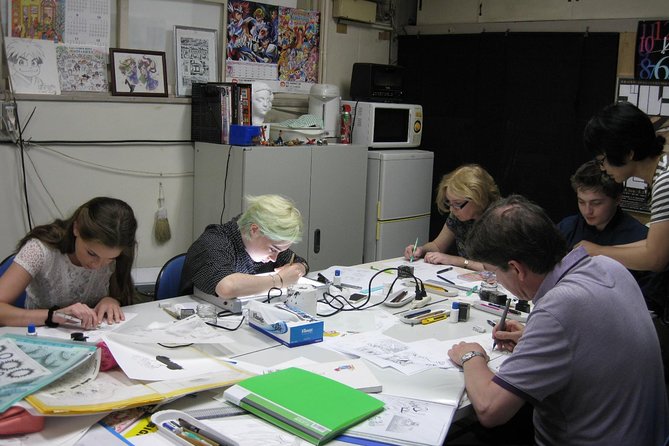
This class is best understood as a compact introduction to the working methods of manga artists. It is not simply a casual drawing period. The lesson explains how a manga image is built in layers, and each stage gives you a different kind of practical challenge.
You begin with a short explanation of manga techniques and its development. The historical portion is brief, but it gives the tools some context. Screen tones, dip pens, correction ink, and specialized paper are not decorative extras. They are part of the traditional production method that helped define the look of printed manga before digital drawing became common.
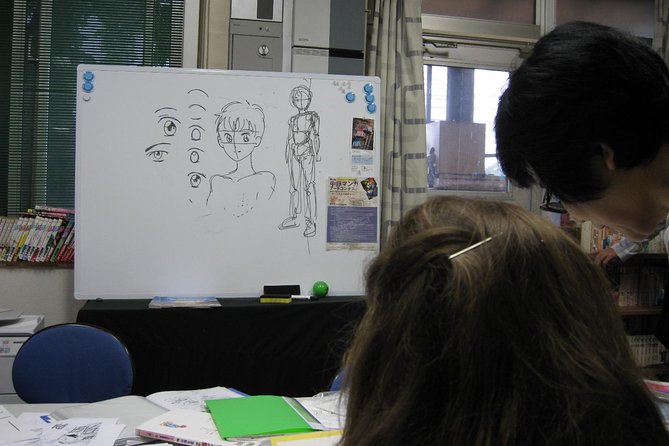
The instructor then demonstrates the process in order. You start with a pencil draft, where proportion and placement matter most. Next comes inking, which means tracing the chosen lines with a pen and removing the pencil marks afterward. You add solid black areas, correct mistakes, place white highlights, and finish with screen tones for gray areas, textures, and effects.
That sequence is valuable because it shows you why manga line work looks so clean. If you normally draw only with a pencil or tablet, the dip pen may feel awkward at first. That is part of the appeal. You are learning how pressure, nib shape, and ink flow affect the line.
More anime and pop-culture days:
- Official Street Go-Kart Tour – Akihabara
★ 5.0 · 1,578 reviews - Tokyo Go Kart: Asakusa, Skytree, and Akihabara **IDP MUST**
★ 5.0 · 988 reviews - Akihabara Anime & Game Adventure Walking Tour (Group or Private)
★ 5.0 · 404 reviews
Using Dip Pens, Ink, and Screen Tones
The tools are one of the strongest reasons to book this lesson. You get to try three different types of specialized pen nibs, along with manga ink, paper, screen tones, and other supplies provided for the session.
Screen tones are especially interesting for anyone who knows manga mainly from finished books or anime adaptations. These adhesive sheets add gray values, texture, shadows, speed effects, and patterns. You cut or place them on the drawing, then adjust them to create the final printed effect.
The process takes more care than drawing with a standard marker. Ink can be less forgiving, and mistakes have to be corrected rather than casually erased. The class includes a correction stage, so you learn how an artist deals with imperfections instead of expecting every line to be right on the first attempt.
I like that this makes the lesson feel connected to professional practice. You are not only copying a face. You are learning the order of operations used to turn a rough sketch into a finished manga image.
How the Step-by-Step Lesson Works
The teacher guides you through one stage at a time, with demonstrations and individual corrections. Beginners can select from manga references and copy with help. That takes away the pressure of inventing an original character immediately, while still giving you a finished result.
If you already draw, the same structure can be more useful than a basic beginner workshop. You can pay closer attention to expressions, line weight, inking control, and the use of tones. The instructor adjusts the pace and level, so an experienced artist does not need to spend the whole class on drawing circles and facial guidelines.
The class can also work well for mixed-age families. An 11-year-old manga fan, parents, teenagers, and grandparents can each work at a suitable level. The instructor can move between participants, offering help without forcing everyone to produce the same picture.
That personal attention is important in a two-hour class. Drawing instruction can become frustrating if the teacher gives a demonstration and then leaves you alone. Here, the stated format has the teacher checking and correcting each participant’s work as the drawing develops.
Meeting Nao Yazawa and Learning from a Working Artist
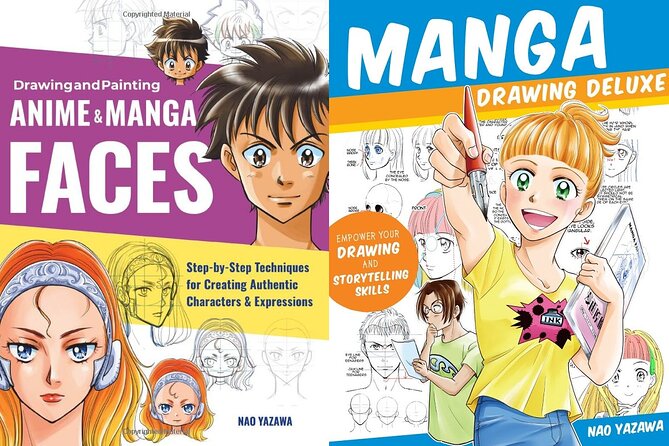
Nao Yazawa is named in many of the experience details, and she is described as a professional manga artist and series creator with a long career. Her role is more than that of a studio assistant. She explains the basics, demonstrates the tools, answers questions, and helps students make decisions about their character drawings.
Several families have found her patient and encouraging, especially when people of different ages and abilities attend together. That matters if one person in your party draws regularly while another has little artistic experience. You are less likely to feel that you are holding the group back.
The class also leaves room for conversation about manga and anime. You can discuss favorite characters and series while choosing references or working through the drawing. This adds a personal touch without changing the class into a general pop-culture talk.
English instruction is available without an interpreter. The experience information specifically promises precise guidance in English, which is a useful point for visitors who want technical help rather than a demonstration they must watch silently.
A few more Tokyo bookings worth comparing
- Sushi Making Tokyo Roll and Authentic Japanese Sushi Class
★ 5.0 · 3,971 reviews - Tokyo: Roll and Authentic Sushi Making Class in Asakusa
★ 4.9 · 1,957 reviews - Tokyo Shinjuku Chopsticks Making Class
★ 5.0 · 1,763 reviews - Tokyo: Sushi Making Class in a Happi Coat near a Famous Spot
★ 4.9 · 1,377 reviews
Manga School Nakano and the Nakano Location
The class takes place at Manga School Nakano in Arai, Nakano City, at 2-chōme 7-13, Nangoku Building, Tokyo 165-0026. The school is near public transportation, but you should allow time to locate the building.
Finding the entrance has been a weak point for some participants. The school’s English communication may be limited outside the actual lesson, and the directions have not always felt clear. Use the exact address and activity messages carefully, and do not arrive at the last minute.
Nakano is a sensible part of Tokyo for this subject. It is associated with anime, manga, collectibles, and youth culture, yet the lesson itself takes place in a working school rather than a large commercial attraction. You get a quieter, hands-on look at manga production.
The activity begins and ends at the school. There is no separate sightseeing route, transfer, or second stop, so the value comes from the instruction and the materials rather than from covering a large part of Tokyo.
Is Two Hours Enough?
Two hours gives you time to complete a drawing, but it is not enough to master manga technique. That is not a flaw as long as you book it with the right expectation.
The session is long enough to understand the main workflow and produce a finished page. You can learn how the tools feel, see how screen tones change a picture, and receive corrections while your work is still in progress. For a first visit, that is a solid amount of practice.
The pace may feel quick if you want detailed instruction on anatomy, perspective, backgrounds, storytelling, or panel layout. The supplied examples focus mainly on character drawing and the stages of finishing a manga image. A solo lesson may give you more concentrated time, while a group of four will naturally require the instructor to divide attention.
Some sessions have run longer when the lesson was going well, but you should not plan on extra time. Treat the two-hour duration as the firm schedule, especially if you have a dinner reservation or another Tokyo activity afterward.
What You Take Home
You leave with your completed manga drawing. That is a better souvenir than a mass-produced character good because it records your own work and the specific techniques you practiced.
The finished piece may not look like a professional artist’s original. The point is to show the process and give you a result you can proudly display. Even beginners can create a presentable drawing with guidance, and more practiced artists can use the finished page to assess where their line control or composition needs work.
In some family sessions, each person receives supplies to use during the class and keeps the artwork. The school may retain copies for display or social media, so ask about that arrangement if it matters to you. The key personal takeaway is the original drawing you produce during the lesson.
Who Gets the Best Value for the Price?
The listed price is $67.77 per person for about two hours. That is not a budget drawing class, but it includes a professional manga artist and the specialized tools used during the lesson.
I consider the price reasonable for manga fans who would otherwise have no easy way to try dip pens, screen tones, manga paper, and traditional inking methods. You are paying for instruction, materials, access to professional references, and a completed piece of art.
The value is strongest for a small private party. A family can share the session while each person receives individual guidance. It also makes sense for a solo visitor who wants focused attention and a more serious introduction to the craft.
The value is weaker if you only want a quick anime-themed souvenir or a short drawing demonstration. You need to take part, listen to corrections, and work through several stages. This is a hands-on class, not a show.
Drinks are not included, although the class lasts only about two hours. Bring water if you need it, but there is no meal component to plan around.
The Best Fit for Families, Fans, and Artists
This is an easy choice for a child or teenager who already spends time drawing manga. The instructor can show when to use particular tools and how to move from a rough sketch to a more finished character. The structure gives young artists something clear to work toward.
It also suits parents who do not consider themselves artistic. The instructor works at the student’s level, and beginners can use references instead of starting with a blank page. You may not produce a perfect drawing, but you will have a clear method to follow.
Manga fans in their late teens and twenties can appreciate the authentic tools and professional setting. The class is not limited to children, and adult participants can ask more technical questions about line work, expressions, and production methods.
Experienced artists should book with a specific goal. Ask for help with inking, facial expressions, screen tones, or another area you want to improve. The private format makes that kind of tailored request possible, although the exact lesson depends on the artist and available time.
Booking Details That Matter
Choose the correct booking type. A solo visitor should select single-person tuition. A party of two to four should select the private group option. The group lesson is not public, so you will not be combined with unrelated participants.
Give your preferred departure time in the Special Requirements box during checkout. Your chosen slot is subject to availability, and the local provider may offer another time if it is already filled. Confirmation is sent within 48 hours when the booking is available, with activity details delivered through the Viator message system.
The activity has free cancellation up to 24 hours before the local start time. A cancellation or change made inside that 24-hour window is not refundable, so confirm your Tokyo schedule before the cutoff.
Most people can participate, and the school is near public transportation. The provided information does not give a specific accessibility assessment, so contact the supplier if you have mobility or other access needs.
Should You Book Manga School Nakano?
Book it if you want to make manga rather than merely look at it. The chance to work with dip pens, ink, white correction, and screen tones gives the class real substance, while the teacher’s individual guidance makes it approachable for beginners.
It is especially good for families with different skill levels, solo manga fans, and artists curious about traditional production methods. Nao Yazawa’s patient teaching style is a major draw when she leads the session.
Skip it if your schedule cannot handle a fixed two-hour class, if you want a broad tour of Nakano, or if you expect to leave with professional-level skills. Also take the meeting address seriously, since finding the school may require extra care.
At $67.77, this is a focused creative experience with a personal result. For someone who loves manga, that finished page and the chance to use authentic tools can make it one of Tokyo’s more memorable souvenirs.
FAQ
How long is the manga lesson?
The class lasts approximately two hours.
Where does the experience take place?
It takes place at Manga School Nakano in Arai, Nakano City, Tokyo 165-0026. The listed address is 2-chōme 7-13, Nangoku Building.
What manga tools are provided?
The class provides manga tools and materials including manga paper, ink, screen tones, and three different types of specialized pen nibs.
Can complete beginners participate?
Yes. All skill levels are welcome, and beginners can choose from manga references to copy with the instructor’s help.
Is the lesson taught in English?
The experience provides precise guidance in English without an interpreter.
Is this a private activity?
Yes. Only your own group participates. Solo visitors should choose single-person tuition, while groups of two to four should choose the private group tuition option.
What will I take home?
You will take home your completed manga drawing as a souvenir.
Can I cancel for a refund?
You can cancel up to 24 hours before the experience start time for a full refund. Cancellations or changes made less than 24 hours before the start are not refundable.
New on our Tokyo list
- From Tokyo: Mount Fuji & Hakone Full Day Private Tour★ 4.9 · 25 reviews
- Tokyo Spectacular View Day-Cruise in 90 Minutes★ 5.0 · 25 reviews
- Real Tokyo Runner Club : Daikoku Car Meet Night Tour with JDM Car★ 5.0 · 25 reviews
- 2.5 Hour-Guided Cycle Tour in the Central Tokyo★ 5.0 · 25 reviews
- Ramen Making from Scratch +Akihabara Tour –Cooking Class★ 5.0 · 25 reviews
- [Self-Drive] Tokyo & Daikoku Custom Car Driving Tour★ 4.9 · 25 reviews
- Tokyo: 2-Hour Night Bike Tour of the City’s Hidden Gems★ 4.9 · 25 reviews
- Samurai themed Entertainment show in Shinjuku★ 4.5 · 25 reviews
Anime & Pop Culture Tours, compared.

Tokyo Go Kart: Asakusa, Skytree, and Akihabara **IDP MUST**
Read our review →
Akihabara Anime & Game Adventure Walking Tour (Group or Private)
Read our review →

Akihabara Tailor-made Private Tour for Anime Fans
Read our review →
Ramen Making from Scratch +Akihabara Tour –Tokyo Cooking Class
Read our review →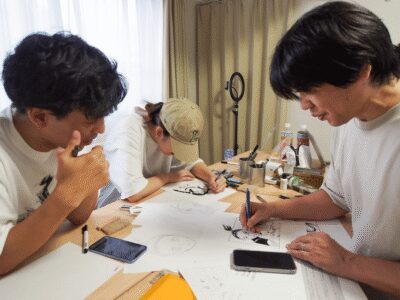
Manga Drawing Workshop Guided by Pro Manga Artist
Read our review →Browse the lists this tour appears in