
Reviewed · ANIME & POP CULTURE TOURS
Tokyo: Manga Drawing Workshop Guided by Pro Manga Artist
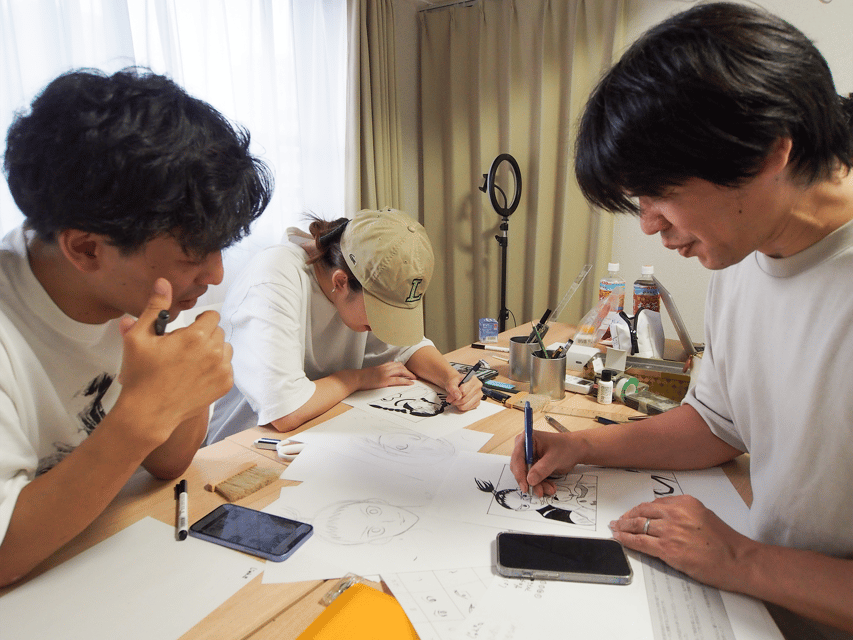
Creating a manga panel in Tokyo is far more hands-on than browsing anime shops. In 150 minutes, a professional artist guides you through the actual studio process: planning, rough sketches, pencil work, inking, solid blacks, screen tones, and speech bubbles. You leave with a finished piece of art, not just a souvenir from a shop.
I especially like two things here: no drawing skill is required, and the small groups, capped at eight, give you real help at the table. The supplied tools also matter. Screen tones, ink, special paper, and manga cutters let you try methods that are hard to reproduce with ordinary art supplies.
The main point to consider is the amount of creative freedom. Some sessions focus on tracing or refining a sketch prepared by the artist, so experienced artists hoping to create a fully original page may find the workshop more guided than expected.
In This Review
- Key points at a glance
- Making manga in the heart of Shibuya
- Choosing your character and manga panel
- From rough sketch to confident lines
- Inking, black areas, and manga effects
- Speech bubbles and the finished keepsake
- What the professional artist adds
- How much freedom do you really get?
- Is $129 a fair Tokyo price?
- Who will enjoy this workshop most?
- Timing, access, and booking details
- Should you book the Manga Drawing Workshop?
- FAQ
- How long does the manga workshop last?
- Where does the activity take place?
- How much does the workshop cost?
- Do I need previous drawing experience?
- What manga techniques will I learn?
- Are drawing materials provided?
- Is an interpreter included?
- How many people can join?
- Can I cancel for a refund?
Key points at a glance
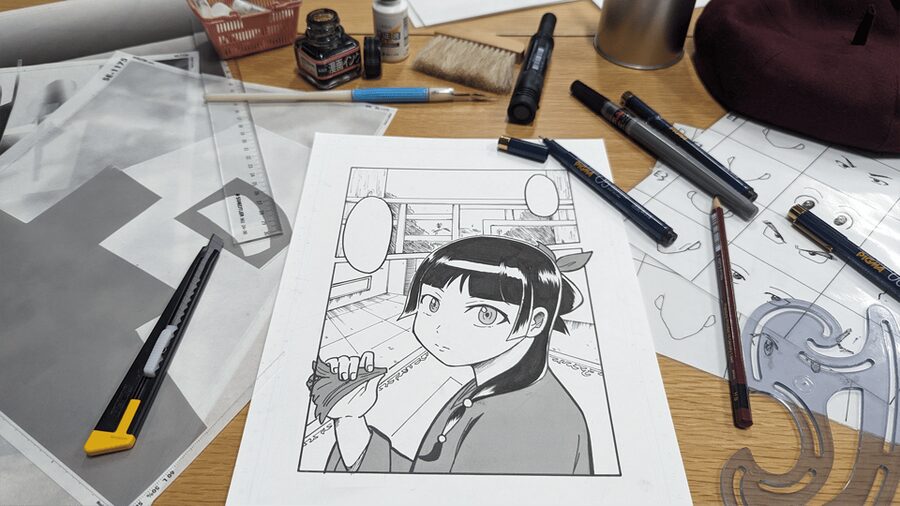
- Traditional manga methods: Work through rough sketching, inking, solid black areas, screen tones, and lettering.
- Suitable for beginners: The artist helps turn a simple idea or chosen image into a finished manga panel.
- Small Shibuya setting: Groups are limited to eight, and some sessions may be much smaller.
- English support: A live interpreter helps with instructions and questions about manga work.
- A useful keepsake: You take your finished drawing home, with past sessions including lamination.
- Good for mixed groups: Children, adults, complete beginners, and experienced digital artists can all take part.
Making manga in the heart of Shibuya
The workshop takes place at 6F, Shibuya 3-chome TR Building, 3-8-11 Shibuya, Shibuya-ku, Tokyo. Look for a relatively thin black building. The address sounds simple, but several people have found the building a little hard to spot, so I would arrive early and allow extra time around Shibuya Crossing.
This is not a large classroom hidden inside a major attraction. It is a compact studio setting, which gives the class a personal feel. Groups are limited to eight, though a booking may have only one or two participants. That can be excellent if you want plenty of attention, but it also means the experience can feel more like a private art lesson than a lively group event.
The artist and interpreter welcome you, explain the tools, and help you choose a subject. You may select from sample images or bring an idea of your own. Several people have used personal characters, family concepts, pets, or a favorite anime-inspired pose. One participant even asked for a virtual YouTuber design, which required extra work because such characters often have complex costumes and details.
You do not need to bring paper, pens, ink, or screen tones. All materials are supplied. Food and drinks are not included, and there is no pickup service, so you arrange your own way to the studio.
More anime and pop-culture days:
- Official Street Go-Kart Tour – Akihabara
★ 5.0 · 1,578 reviews - Tokyo Go Kart: Asakusa, Skytree, and Akihabara **IDP MUST**
★ 5.0 · 988 reviews - Akihabara Anime & Game Adventure Walking Tour (Group or Private)
★ 5.0 · 404 reviews
Choosing your character and manga panel
The first creative decision is what you want to draw. The simplest route is to select a character or pose from the provided examples. You can also use your own reference image, which gives the panel a more personal touch.
For a beginner, this choice matters. A simple character with a clear pose is easier to finish within the 150-minute session. A detailed costume, complicated perspective, or crowded background may leave less time for the later stages. If you arrive with a personal idea, keep it focused enough to fit on one panel.
The artist helps shape the concept before you begin. In some sessions, the artist prepares a rough outline for you to follow. You then adjust it, add details, and develop the finished image. This structure is reassuring if you are nervous about drawing, but it can feel restrictive if you expected a completely open art class.
I would think of the workshop as guided manga production rather than a blank sheet and unlimited freedom. You still make choices about the character, pose, expression, details, and effects, but the artist keeps the work moving toward a polished result.
From rough sketch to confident lines
The next stage is rough sketching. The artist may show you how manga creators break a figure into basic shapes before adding the face, hair, clothing, and pose. This helps you avoid the common beginner problem of starting with small details before the whole figure is placed correctly.
You then work over the rough drawing with pencil. The artist can correct proportions, suggest changes, and show you how to make the pose read clearly. This is where the class works well for mixed abilities. A complete beginner can follow the artist’s guidance, while an experienced artist can ask about line quality, composition, or traditional tools.
The support is not limited to silent demonstrations. The English interpreter explains the artist’s instructions and helps you ask questions. Interpreters have included Hanae, Madoka, Machi, and Ai in different sessions, and the teaching team has been praised for making the exchange easy to follow.
The language support is especially useful when discussing small technical choices. Manga drawing involves terms and methods that can be hard to explain with gestures alone. You can ask about the artist’s career, influences, tools, or the manga business, not just where to put your next line.
Inking, black areas, and manga effects
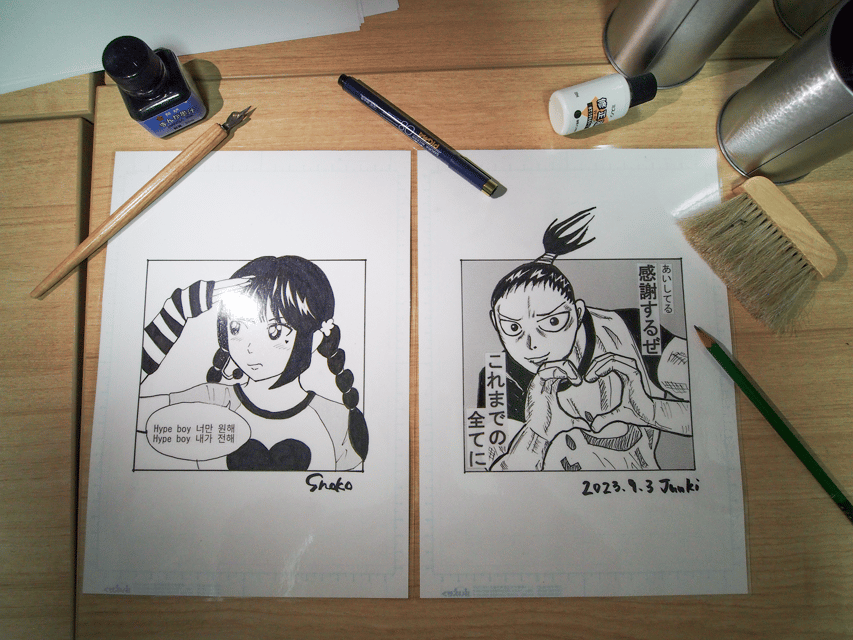
Once the pencil work is ready, you move to ink. This is the stage where the panel begins to look like finished manga. You trace or refine the important lines, then remove unwanted pencil marks so the inked drawing is clean.
You also learn how artists handle solid black areas. A brush or similar tool is used to fill hair, clothing, shadows, or background sections. This simple change can make a large difference in the finished page. One useful lesson is that professional tools often produce a cleaner result than ordinary pencils and markers.
The class then introduces screen tones. These are sheets of patterned or shaded material applied to the page to create grey areas, texture, depth, and mood. You cut the tone with a tool and place it where the drawing needs shading or visual weight.
For many people, screen tones are the most unusual part of the workshop. They are not a digital filter. You physically cut and apply the material, which gives you a better sense of how traditional manga pages were assembled before digital tools became common. If you normally draw on a tablet, this is a chance to work in a very different way.
Take care during the cutting stage. The process requires patience and a steady hand, and the time limit means you should not spend too long perfecting every small section. The artist helps you decide where the screen tone will have the greatest effect.
A few more Tokyo bookings worth comparing
- Sushi Making Tokyo Roll and Authentic Japanese Sushi Class
★ 5.0 · 3,971 reviews - Tokyo: Roll and Authentic Sushi Making Class in Asakusa
★ 4.9 · 1,957 reviews - Tokyo Shinjuku Chopsticks Making Class
★ 5.0 · 1,763 reviews - Tokyo: Sushi Making Class in a Happi Coat near a Famous Spot
★ 4.9 · 1,377 reviews
Speech bubbles and the finished keepsake
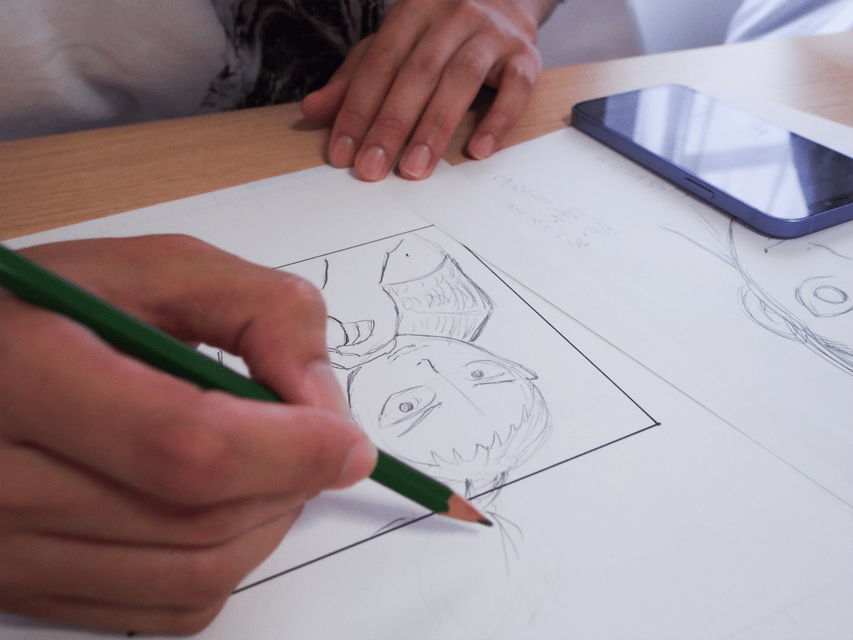
Near the end, you add speech bubbles or other comic effects. This small step gives the drawing a sense of story. Even a simple panel feels more like manga once the character has an expression, a pose, and a line of dialogue.
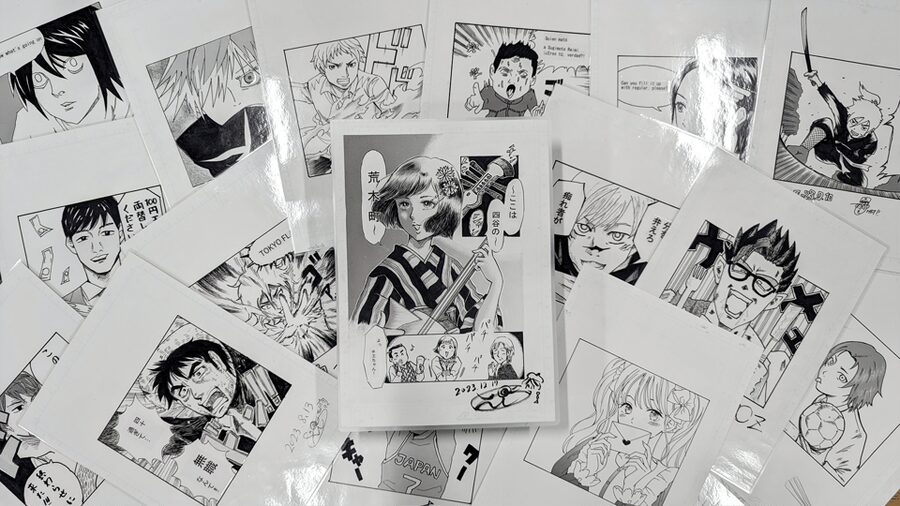
The final result depends partly on your starting idea and partly on how much guidance you accept. Some people produce a panel based closely on the artist’s outline. Others bring an original character or pose and make more of the creative decisions themselves.
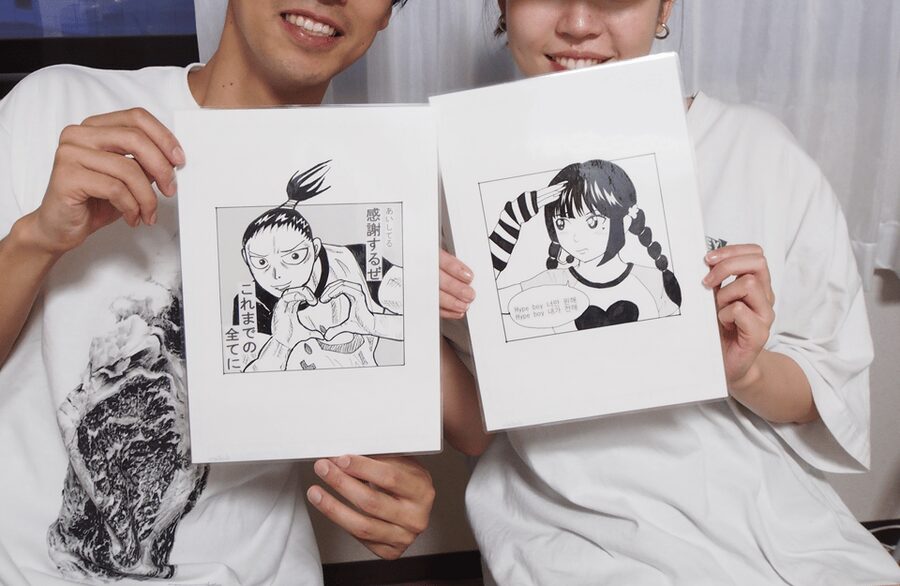
The finished art is yours to take home. Several sessions have included lamination, which makes the page easier to carry in luggage and display later. It also solves a practical problem: wet ink, delicate screen tones, and thin paper do not travel well without some protection.
As a Japan souvenir, this has more personal value than a mass-produced keychain. You can sign it, frame it, or place it on a wall. A child may be proud of it for years, while an adult manga fan gets a physical reminder of the process behind the stories they enjoy.
What the professional artist adds
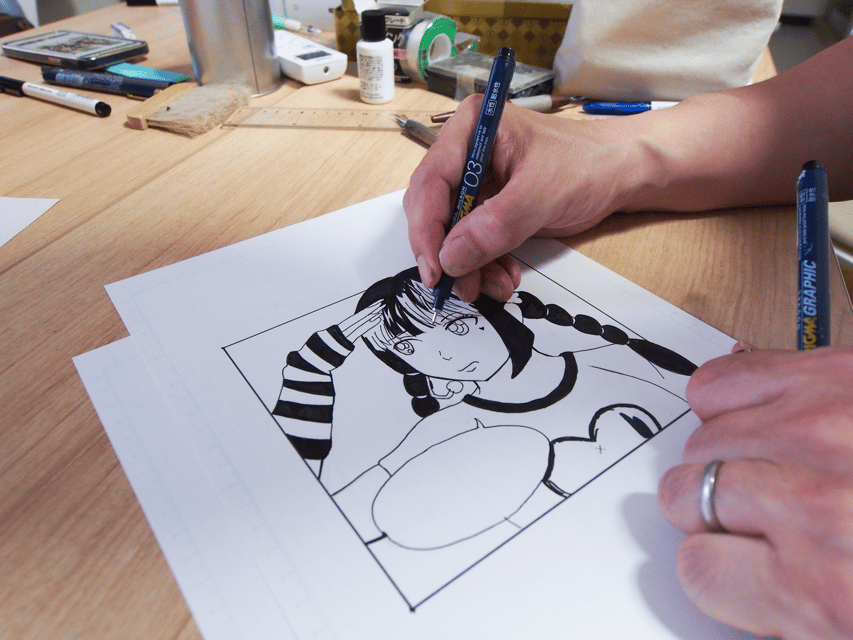
The instructor is a working manga artist with more than 20 years of experience, and some sessions have been led by artists identified as Shige Mathumori, Rokkaku-sensei, Kousei-sensei, Hiroshi, and Kamaya Katsuki. The exact artist may vary, but the format centers on direct instruction from a professional rather than a generic art teacher.
That distinction matters because you can ask practical questions about how manga is drawn and produced. The artist can also demonstrate techniques quickly, sometimes sketching a person’s pets or a character idea in moments. Watching an expert place lines with confidence helps explain why a professional page looks so different from a first attempt.
The teaching style appears patient and encouraging. Children as young as 10 or 11 have been able to follow along, and adults with little confidence have finished work they felt comfortable displaying. At the same time, skilled artists should not expect a long technical seminar. The goal is to complete one appealing panel, not master anatomy or professional storytelling in a single class.
How much freedom do you really get?
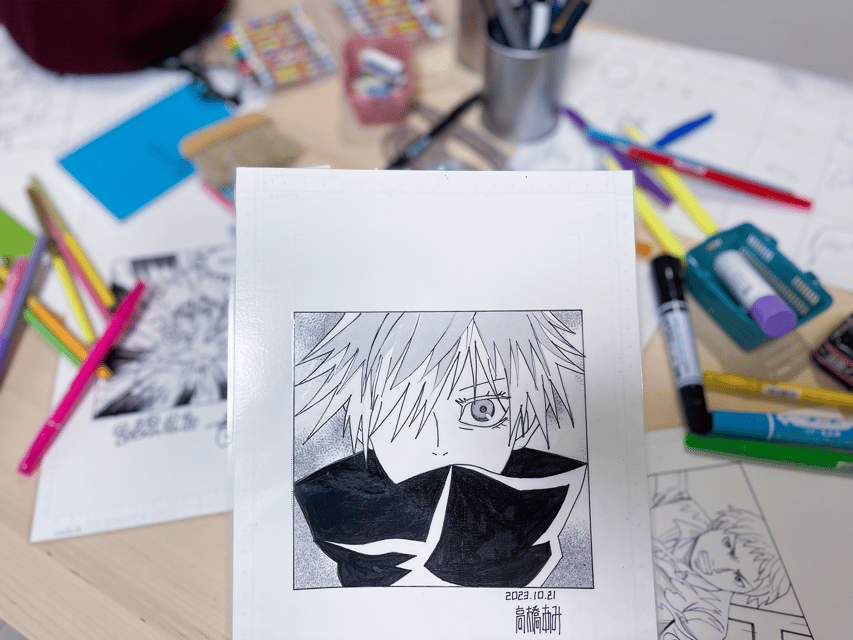
This is the biggest issue to understand before booking. The experience description promises the same broad stages used by professional manga artists, and that is accurate as a process. But the level of authorship can vary.
You may choose an image and pose, then receive a rough sketch from the artist. You refine it, ink it, add black areas, apply screen tones, and finish the panel. That setup gives you a strong chance of producing something attractive within two and a half hours.
For someone who cannot draw, this is a major advantage. You get help before mistakes become difficult to fix. For a manga fan who wants the thrill of making a finished page, the structure keeps the activity fun rather than frustrating.
For a strong artist, I would ask yourself what you want most. If you want to learn traditional tools and see how an expert works, the class should suit you well. If you want an open studio where the artist critiques a wholly original page, you may find the guided format too limited.
Is $129 a fair Tokyo price?
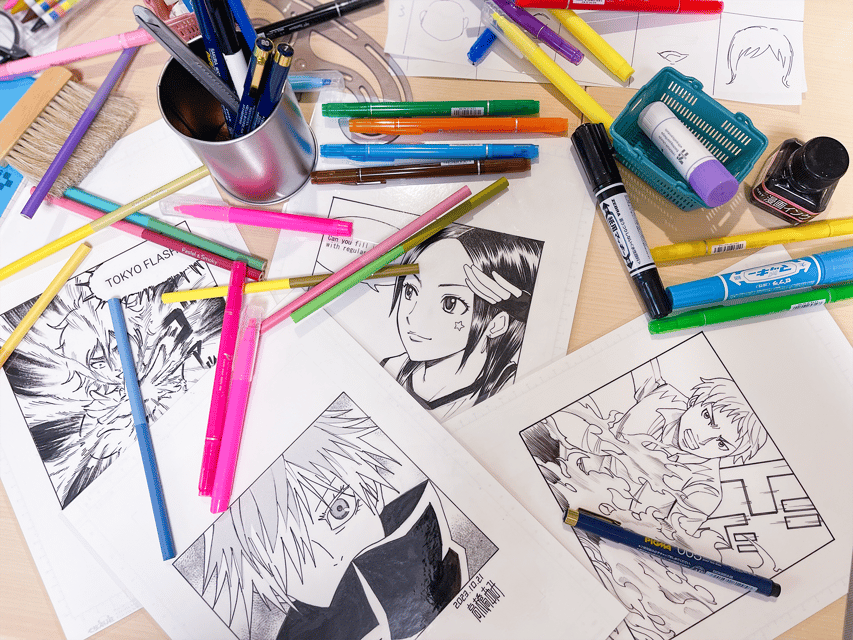
At $129 per person, this is not a cheap drop-in craft activity. You are paying for a professional artist, an interpreter, a small group, specialist materials, and 150 minutes of instruction in central Tokyo.
The value improves if you care about manga as an art form rather than simply wanting a quick souvenir. You get access to screen tones and traditional production methods, plus the chance to ask direct questions through an interpreter. The finished artwork also has a personal quality that a purchased item cannot match.
The cost is harder to justify if your only goal is to draw a character for a few minutes. You could buy inexpensive art supplies and copy a manga image on your own. The difference here is the guidance, the proper materials, the professional demonstration, and the pressure of completing a finished panel during the session.
I would compare it to a short private art lesson with a souvenir included. That makes the price reasonable for dedicated anime and manga fans, families celebrating a special trip, or couples who want an activity they can remember together.
Who will enjoy this workshop most?
This is a strong choice for anime and manga fans, but you do not need to know the major series. People who enjoy One Piece or Naruto will understand the appeal right away, yet the class is about the craft rather than a franchise-specific attraction.
I would recommend it for:
- Families with children who like drawing or comic characters
- Couples looking for a shared Tokyo activity
- Solo visitors who want an easy way to meet an artist and ask questions
- Digital artists curious about traditional paper, ink, and screen tones
- Beginners who want a finished result without years of practice
- Manga fans seeking a souvenir they made themselves
It is also a good option for mixed groups. One person can be a serious artist while another has almost no drawing experience. The artist adjusts the guidance, and the interpreter keeps everyone involved.
The class may be less suitable if you dislike structured instruction or want to spend the whole time inventing your own page. It is also not a food tour, sightseeing walk, or general anime tour. You spend the full session focused on the drawing process.
Timing, access, and booking details
The activity lasts 150 minutes, so set aside more than two hours for the workshop itself. Check the available starting times when booking, then plan extra time to find the thin black building in Shibuya.
The meeting point is on the sixth floor of the Shibuya 3-chome TR Building at 3-8-11 Shibuya, Shibuya-ku. There is no hotel pickup. English and Japanese support is available, and the activity is wheelchair accessible.
You can cancel up to 24 hours before the start time for a full refund. A reserve-now, pay-later option is also available, which helps if your Tokyo plans are still shifting.
Should you book the Manga Drawing Workshop?
Book it if you want to do more than look at Japanese pop culture from the outside. The best part is the contact with a real manga artist and the chance to handle traditional tools while producing a page you can carry home.
I would book with a clear idea of your preferred character or pose, but keep it simple enough to finish. Arrive early, especially if you are unfamiliar with Shibuya, and expect guidance rather than unlimited freedom.
At $129, it is a specialist experience, not a budget activity. For a serious manga fan, a family, a couple, or anyone curious about screen tones and old-school production methods, it offers good value. If you mainly want unrestricted original drawing, ask about the session format before paying.
FAQ
How long does the manga workshop last?
The workshop lasts 150 minutes, or two and a half hours.
Where does the activity take place?
It takes place at 6F, Shibuya 3-chome TR Building, 3-8-11 Shibuya, Shibuya-ku, Tokyo. The building is relatively thin and black.
How much does the workshop cost?
The listed price is $129 per person.
Do I need previous drawing experience?
No. The activity is designed for people with no previous drawing skills, and the professional artist guides you through each stage.
What manga techniques will I learn?
You work through idea development, rough sketching, drafting, inking, filling solid black areas, applying screen tones, and adding speech bubbles.
Are drawing materials provided?
Yes. Manga drawing materials are provided, so you do not need to bring your own supplies.
Is an interpreter included?
Yes. An interpreter is included, and the activity is offered in English and Japanese.
How many people can join?
The group is limited to eight participants.
Can I cancel for a refund?
Yes. You can cancel up to 24 hours in advance for a full refund. A reserve-now, pay-later option is also available.
New on our Tokyo list
- From Tokyo: Mount Fuji & Hakone Full Day Private Tour★ 4.9 · 25 reviews
- Tokyo Spectacular View Day-Cruise in 90 Minutes★ 5.0 · 25 reviews
- Real Tokyo Runner Club : Daikoku Car Meet Night Tour with JDM Car★ 5.0 · 25 reviews
- 2.5 Hour-Guided Cycle Tour in the Central Tokyo★ 5.0 · 25 reviews
- Ramen Making from Scratch +Akihabara Tour –Cooking Class★ 5.0 · 25 reviews
- [Self-Drive] Tokyo & Daikoku Custom Car Driving Tour★ 4.9 · 25 reviews
- Tokyo: 2-Hour Night Bike Tour of the City’s Hidden Gems★ 4.9 · 25 reviews
- Samurai themed Entertainment show in Shinjuku★ 4.5 · 25 reviews
Anime & Pop Culture Tours, compared.
Tokyo Go Kart: Asakusa, Skytree, and Akihabara **IDP MUST**
Read our review →
Akihabara Anime & Game Adventure Walking Tour (Group or Private)
Read our review →

Akihabara Tailor-made Private Tour for Anime Fans
Read our review →
Ramen Making from Scratch +Akihabara Tour –Tokyo Cooking Class
Read our review →
Tokyo’s Must-Sees: 5-hour Tsukiji, Akihabara & Asakusa Tour
Read our review →Browse the lists this tour appears in