
Reviewed · WALKING TOURS
Old Town Tokyo: Shinagawa-Juku Walking Tour
Shinagawa-Juku gives you a look at Tokyo before towers, neon, and packed commuter platforms took over. This three-hour walk follows the old Tokaido Road through fishing history, local temples, narrow side streets, and shrines that still serve neighborhood worshippers. The small group is capped at eight, which matters when your guide is pointing out details in a quiet lane.
I like the route for two clear reasons: it reaches places you could easily miss on your own, and it ties each stop to the old road between Tokyo and Kyoto. I also like the practical touch of hot coffee or tea during the walk. The main drawback is that this is a history-first outing, not a major-sights tour, so anyone wanting Tokyo Tower, Asakusa, or a long food stop should choose something else.
In This Review
- Key points to know before booking
- Why Shinagawa-Juku is worth your morning
- Starting at Shinagawa-Ura Park
- Following Kyu-Tokaido Street for an hour
- Finding Hozenji Temple behind the main road
- A brief visit to maple-lined Shotokuji Temple
- Meeting the dragon god at Ebara Jinja Shrine
- Spending the most time at Shinagawa Shrine
- What the small group changes
- Is $94.88 a fair price?
- Meeting point, timing, and practical details
- Who should book the Shinagawa-Juku walk?
- Should you book it?
- FAQ
- How long does the Shinagawa-Juku Walking Tour last?
- Where does the tour begin?
- Where does the tour finish?
- Is Shimbamba Station close to Shinagawa Station?
- How many people can join the tour?
- Is an English-speaking guide included?
- Are coffee or tea included?
- Is lunch included?
- Are transportation fees included?
- What happens if the weather is poor?
Key points to know before booking
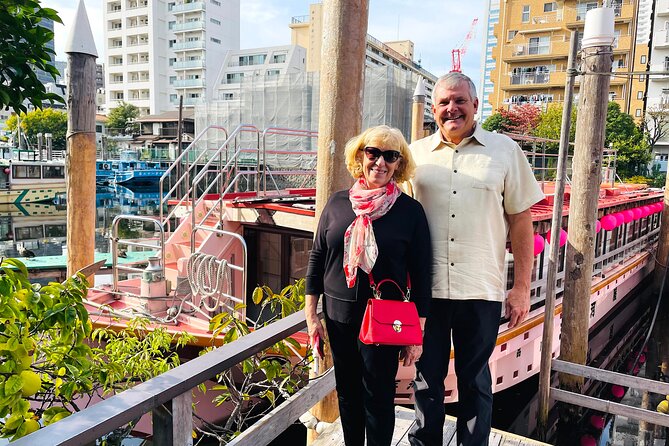
- Old Tokaido setting: Walk along Kyu-Tokaido Street, once lined with inns and shops serving people bound between Tokyo and Kyoto.
- Six focused stops: The route includes a former fishing area, two temples, two shrines, and a miniature Mount Fuji.
- Small group format: A maximum of eight people makes it easier to hear the English-speaking guide.
- Three hours on foot: The tour is active but stays within one part of Shinagawa, with free admission at most stops.
- Charlotte may lead the walk: Her tour profile includes city, culture, subway, history, and neighborhood knowledge.
- Simple logistics: Meet at Kitashinagawa Station and finish at Shimbamba Station, one stop from major Shinagawa Station.
Why Shinagawa-Juku is worth your morning
Tokyo can feel like a city built for speed. Trains rush through, roads widen, and whole neighborhoods change from one block to the next. Shinagawa-Juku offers a slower read of the city. Here, the guide connects ordinary streets and religious sites to the old highway system that linked Edo, now Tokyo, with Kyoto.
That connection gives the walk more shape than a random neighborhood stroll. You are not only looking at an old temple gate or a quiet lane. You are learning why the area grew, who passed through it, and how much of the old post-town survived fires and modern construction.
The tour also solves a real problem. Shinagawa’s older lanes are easy to miss, and some are tucked behind ordinary residential streets. With a guide, you can spend your time noticing wells, fences, greenery, and small religious sites instead of checking your phone to see if you have taken a wrong turn.
This is not a grand monument tour. The appeal is local scale. You see a section of Tokyo where fishing, road travel, temple life, and neighborhood worship still overlap.
More walking routes in Tokyo:
- Tokyo Tsukiji Fish Market Food and Culture Walking Tour
★ 5.0 · 3,184 reviews - Tokyo: Imperial Palace and Shogun Historical Walking Tour
★ 5.0 · 2,251 reviews - Tokyo: Shinjuku Local Bar and Izakaya Guided Walking Tour
★ 4.9 · 1,794 reviews
Starting at Shinagawa-Ura Park
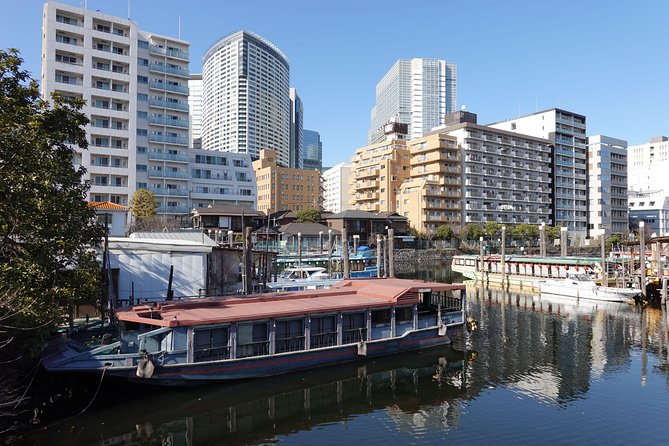
The walk begins at Kitashinagawa Station and moves toward Shinagawa-Ura Park. This area once sat beside a shoreline used for fishing. A small fishing village grew here, and its old connection to the water gives Shinagawa a different character from the inland Tokyo most people picture.
Commercial fishing is no longer the main activity here, but the stop helps explain why the district developed. The park itself is scheduled for about 15 minutes, so do not expect a long waterfront visit. Think of it as an opening chapter that sets up the neighborhood’s past.
I like beginning here because it gives you context before the temples and shrines appear. Without it, Kyu-Tokaido Street could seem like a pleasant old road with no clear reason for its shape. With it, you start to see Shinagawa as a settlement that grew from both the shore and the highway.
The park stop is also an easy introduction to the pace of the experience. You will be walking and listening rather than rushing from one major attraction to another. If you want a dramatic view or a large museum, this first stop may feel modest. If you enjoy seeing how a city grew, it earns its place.
Following Kyu-Tokaido Street for an hour
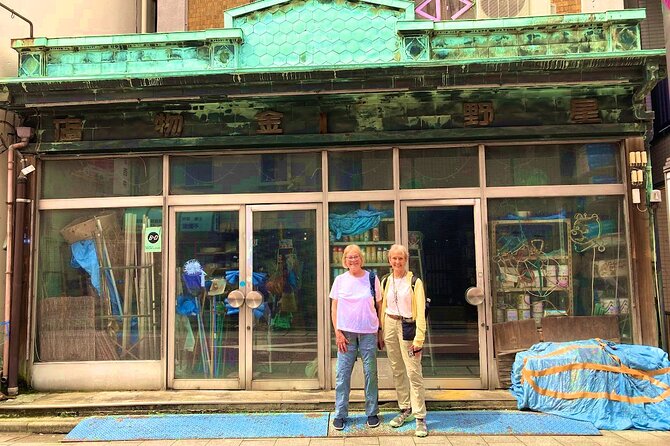
The longest stop is Kyu-Tokaido Street, where the tour spends about an hour. This was the first stop for people traveling from Edo toward Kyoto on the old Tokaido Road. Inns served people on the move, while shops supplied the needs of the road community.
That makes the street the historical center of the walk. Your guide can help you read the area as a former post-town rather than just another Tokyo shopping street. The route includes back lanes and local corners that are easy to pass without noticing.
The street also survived fires that destroyed parts of old Tokyo. That does not mean every building here is from the Edo period, so keep expectations sensible. The value is in the street pattern, the local atmosphere, and the stories that connect present-day Shinagawa with its road past.
An hour gives your guide room to explain details without turning the walk into a rapid list of dates. It also means the tour spends real time in one neighborhood instead of collecting quick photographs at many far-flung points.
The tradeoff is simple: an hour on one street may feel too slow if you prefer constant movement. I think it works well for people who want to understand a district. Wear comfortable shoes, since the experience is a walking tour and the old lanes are part of the point.
Finding Hozenji Temple behind the main road
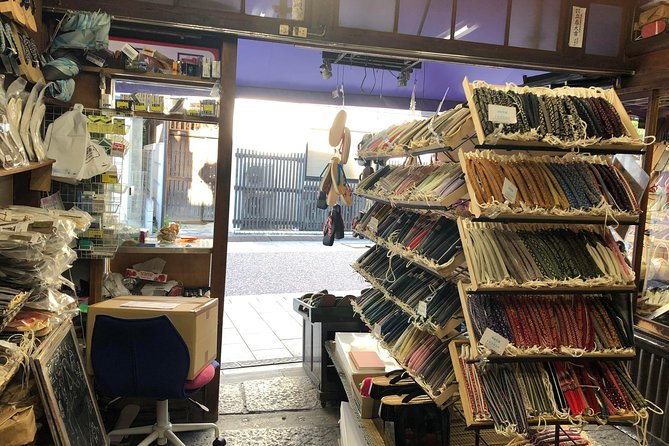
From the old highway, the route branches into smaller streets and alleys toward Hozenji Temple. The change is immediate in feel. The main road gives way to quiet residential lanes, local temples, and older houses with greenery around them.
The stop lasts about 10 minutes, so this is a short look rather than an extended temple visit. One especially useful detail is the water well in the middle of a residential lane. A feature like that can say more about older neighborhood life than a polished monument can.
Hozenji is a good example of why a guide helps here. You might walk past the entrance or assume a small temple is closed to the public. The guide gives the site a place in the wider story and points out details that do not announce themselves.
Do not expect a large complex or a long period for private reflection. This is a compact stop within a longer walk. Its charm comes from the setting, the narrow streets, and the way religious places remain close to everyday homes.
A few more Tokyo bookings worth comparing
- Mt Fuji and Hakone 1-Day Bus Tour Return by Bullet Train
★ 5.0 · 26,383 reviews - 1-Day Tokyo Bus Tour
★ 5.0 · 14,250 reviews - Tokyo: TOKYO SKYTREE® Admission ticket
★ 4.5 · 11,192 reviews - Tokyo: teamLab Planets TOKYO Digital Art Museum Entry Ticket
★ 4.6 · 9,779 reviews
A brief visit to maple-lined Shotokuji Temple
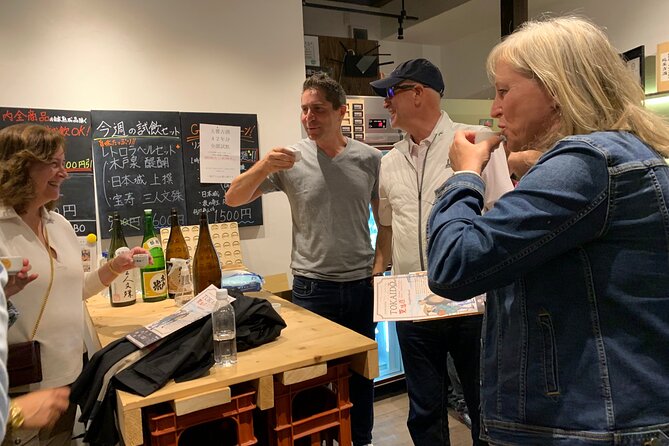
The next stop is Shotokuji Temple on Shinbaba Street. The visit is only about five minutes, but the temple has a distinct visual feature: an unusual fence. Maple trees surround it, making autumn a particularly appealing season for this part of the route.
This is a good reminder that the walk is not built around famous sights alone. A small temple fence, a line of trees, or a side street can become meaningful when you know what to look for. The short stop also keeps the route moving.
Because the time here is limited, you should not book this tour expecting lengthy temple visits. Shotokuji is more of a carefully chosen detail along the neighborhood route. If fall color is important to you, the timing may add extra appeal, although the tour does not promise a particular level of foliage.
Meeting the dragon god at Ebara Jinja Shrine

Ebara Jinja Shrine dates to 709 and sits beside the Meguro River. It is linked with the dragon god, and people come to pray for rain. That association connects the shrine to the practical concerns of farming and water, not only to formal religious tradition.
The stop takes about 10 minutes. Its location by the river makes it another useful piece of the area’s story. You have already heard about fishing near Shinagawa-Ura, and here water appears again in a religious setting.
A shrine of this age can sound grand on paper, but the tour’s format keeps the visit grounded. You are seeing it as part of a living neighborhood route, not as a huge tourist complex. The guide’s explanations are important because the meaning of the site is not always obvious from its architecture alone.
This stop should suit anyone curious about how Japanese religious places relate to nature and daily needs. If you prefer major landmark scale, it may seem brief. The experience is better understood as a series of connected local chapters.
Spending the most time at Shinagawa Shrine
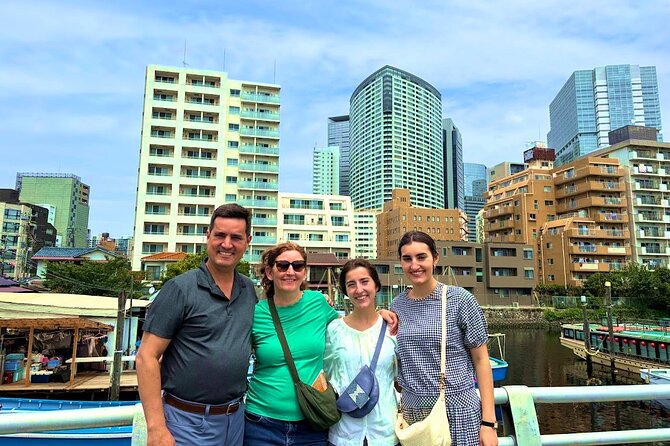
The final major stop is Shinagawa Shrine, with about 50 minutes scheduled here. Founded in 1187, it served as a guardian for the nearby post-town. That role ties it directly to the people who lived and worked along the old road.
The shrine’s most unusual feature is its fujizuka, or miniature Mount Fuji. People who lacked the money or physical strength to climb the actual mountain could worship at a smaller version. It is a practical and human detail, showing how religious practice adapted to ordinary lives.
This is the most substantial stop at the end of the walk, and the extra time gives the guide space to explain the shrine and its role. It also provides a stronger finish than ending with a very small temple or street corner.
The shrine is not simply a final photo stop. It brings together several themes from the route: protection for a post-town, local belief, access to worship, and the way older traditions remain part of present-day Tokyo.
You finish at Shimbamba Station, located on Kitashinagawa’s 2-chome, rather than returning to the starting point. That is useful if you are continuing elsewhere, but make a note of the separate start and finish. The end station is one stop from major Shinagawa Station.
What the small group changes
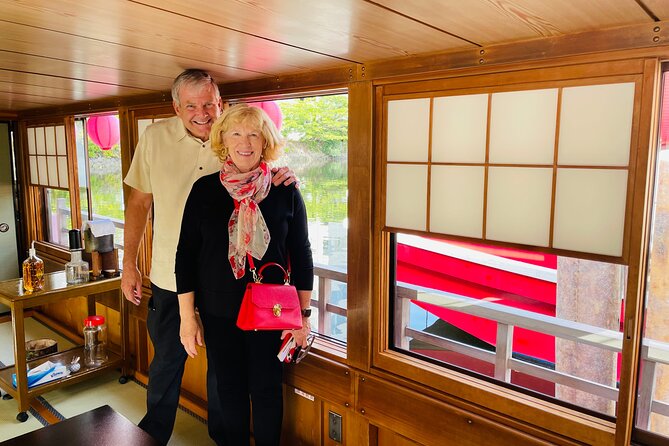
The maximum group size is eight. That is one of the strongest practical features of this experience. Old lanes and small temple spaces do not work well with a large crowd, and a smaller group makes it easier to hear explanations without standing shoulder to shoulder.
A small group also gives the guide more room to answer questions. The supplied experience information identifies Charlotte as a guide who can discuss Tokyo’s city life, culture, subway system, history, and the local district. That range is useful because this walk is not only about old buildings. You may also want help understanding how the area fits into modern Tokyo.
The five-star rating from 33 reviews and a 100 percent recommendation record point to a consistently positive response, with Charlotte’s friendly manner receiving particular praise. I would still judge the tour by its subject. A good guide cannot turn a neighborhood history walk into an entertainment district tour, and that is not what this experience promises.
Hot coffee or tea is included. The drink is a small benefit, but it matters on a cool morning and gives the walking pace a comfortable break. Lunch is not included, so plan to eat before or after the three-hour outing.
Is $94.88 a fair price?
At $94.88 per person, this is not a budget walk. The price makes the most sense if you value an English-speaking guide, a group limited to eight, and access to small historical details that are difficult to interpret alone.
Admission is free at the listed stops except Shinagawa Shrine, where admission is included. Transport fees are not included, and there is no standard hotel pickup or drop-off. Pickup can be arranged for an extra fee, but the simplest plan is to use the train stations.
You are paying mainly for the guide and the structure of the route. The walk lasts about three hours and covers six stops, with a substantial hour on Kyu-Tokaido Street and 50 minutes at Shinagawa Shrine. That is a fair use of time for someone who wants a focused neighborhood study rather than a broad Tokyo sampler.
The value drops if you already know Shinagawa well, dislike walking, or want meals and transportation folded into the price. It rises if you have limited time in Tokyo and want one organized morning devoted to local history.
The tour is often booked about 37 days ahead on average. That suggests planning early is sensible, especially if your dates are fixed and you want the small-group format.
Meeting point, timing, and practical details
You meet at Kitashinagawa Station, at 1 Chome-1 Kitashinagawa, Shinagawa City. The tour ends at Shimbamba Station, at 2-chome-18-1 Kitashinagawa. Since the two stations are different, check your route before setting out.
The experience lasts approximately three hours. You should expect a walking-heavy morning with several short stops and two longer sections. Comfortable footwear is the obvious choice, and you should allow a little time to find the correct station exit.
Confirmation arrives when you book, and mobile tickets are available. The tour operates near public transportation. Most people can participate, and service animals are allowed.
The experience requires good weather. If poor weather causes cancellation, you can choose another date or receive a full refund. For your own cancellation, you need to cancel at least 24 hours before the start time for a full refund. Changes made inside that window are not accepted.
Who should book the Shinagawa-Juku walk?
I would choose this tour if you like local history, religious sites, older streets, and the way a city changes over time. It is especially suitable for a repeat visitor who has already seen Tokyo’s headline sights and wants a quieter district with a clear historical thread.
It also works well for first-time visitors who want a gentle introduction to Edo-era Tokyo without tackling a huge museum or a large tour group. The guide can add useful context about the subway and the surrounding district, which may help you get your bearings for later sightseeing.
Families and mixed-age groups may appreciate the short stops, though the tour still requires walking for three hours. The small group is helpful for anyone who wants to ask questions or hear explanations clearly.
I would skip it if your priority is food tasting, shopping, nightlife, or famous Tokyo landmarks. There is no lunch, no hotel transportation in the base price, and no promise of a major panoramic view. This is a patient look at one old road and the places around it.
Should you book it?
Book the Shinagawa-Juku Walking Tour if you want Tokyo history in human-sized portions. The old fishing quarter, Kyu-Tokaido Street, tucked-away temples, water-related shrines, and miniature Mount Fuji form a thoughtful route rather than a checklist of famous attractions.
The strongest reasons to book are the eight-person limit, the English-speaking guide, and the chance to see small details you might pass alone. Charlotte’s friendly, broad knowledge makes her a particularly good fit if she is leading your departure.
At $94.88, it is a specialist tour, not a cheap orientation walk. For someone who values authentic neighborhood history and a well-explained route, the price can be justified. For a first-time Tokyo visit with only one free morning, compare it with a tour covering the city’s major sights before deciding.
FAQ
How long does the Shinagawa-Juku Walking Tour last?
The tour lasts approximately three hours.
Where does the tour begin?
It begins at Kitashinagawa Station, at 1 Chome-1 Kitashinagawa, Shinagawa City, Tokyo 140-0001, Japan.
Where does the tour finish?
It ends at Shimbamba Station, at 2-chome-18-1 Kitashinagawa, Shinagawa City, Tokyo 140-0001, Japan.
Is Shimbamba Station close to Shinagawa Station?
Yes. Shimbamba Station is one stop from major Shinagawa Station.
How many people can join the tour?
The tour has a maximum of eight travelers.
Is an English-speaking guide included?
Yes. An English-speaking guide is included. Charlotte is one of the named guides associated with the experience.
Are coffee or tea included?
Yes. Coffee and/or tea are included.
Is lunch included?
No. Lunch is not included.
Are transportation fees included?
No. Transport fees are not included. Hotel pickup and drop-off are also not included in the standard price, though pickup and drop-off may be available for an extra fee.
What happens if the weather is poor?
The experience requires good weather. If it is canceled because of poor weather, you can choose a different date or receive a full refund.
New on our Tokyo list
- From Tokyo: Mount Fuji & Hakone Full Day Private Tour★ 4.9 · 25 reviews
- Tokyo Spectacular View Day-Cruise in 90 Minutes★ 5.0 · 25 reviews
- Real Tokyo Runner Club : Daikoku Car Meet Night Tour with JDM Car★ 5.0 · 25 reviews
- 2.5 Hour-Guided Cycle Tour in the Central Tokyo★ 5.0 · 25 reviews
- Ramen Making from Scratch +Akihabara Tour –Cooking Class★ 5.0 · 25 reviews
- [Self-Drive] Tokyo & Daikoku Custom Car Driving Tour★ 4.9 · 25 reviews
- Tokyo: 2-Hour Night Bike Tour of the City’s Hidden Gems★ 4.9 · 25 reviews
- Buddha, Bamboo & Zen – Bespoke Kamakura Private Walking Tours★ 5.0 · 25 reviews
Walking Tours, compared.

Tokyo Tsukiji Fish Market Food and Culture Walking Tour
Read our review →
Imperial Palace and Shogun Historical Walking Tour
Read our review →
Shinjuku Local Bar and Izakaya Guided Walking Tour
Read our review →
Asakusa Walking Tour with Sensoji Temple Visit
Read our review →
Tokyo Castle & Imperial PalaceーShogun Walking Tour
Read our review →
Browse the lists this tour appears in