Reviewed · PRIVATE
Private 6hr Tokyo Essentials Tour of Tradition and Modernity
Tokyo’s best introduction may be a day that moves from seafood stalls to temple courtyards, then finishes under the neon of Akihabara. This private six-hour route gives you that sharp contrast without asking you to plan four separate neighborhoods yourself.
I like the flexible morning start, from 9 to 11, and the fact that your guide meets you at your hotel, Airbnb, or another agreed location. I also like the private format: you can ask basic questions about trains, customs, food, or neighborhoods without holding back. The main drawback is pace. Four stops in six hours means about 90 minutes at each, and public transit fares, food, lunch, and attraction fees are extra.
In This Review
- Key points at a glance
- Four Tokyo neighborhoods in one well-planned day
- Tsukiji for seafood, snacks, and a quick first look
- Ueno connects temples, park space, and street shopping
- Asakusa and Senso-ji reveal Tokyo’s old character
- Akihabara shifts the mood to anime and gaming
- What a private guide adds to the day
- Walking and public transit are part of the lesson
- Is $215 per person a fair price?
- Who will get the most from this Tokyo tour?
- Booking details worth knowing before you go
- Should you book it?
- FAQ
- How long does the Tokyo tour last?
- What neighborhoods are included?
- Is hotel pickup available?
- What time can the tour start?
- Is this a private tour?
- Is the guide fluent in English?
- Are public transportation fares included?
- Is lunch included?
- Can I cancel for a full refund?
Key points at a glance
- Tsukiji begins with food and local energy: Expect seafood stalls, sushi, grilled skewers, and Japanese street food.
- Ueno adds a cultural side of Tokyo: The park, temples, and Ameya-Yokocho shopping street make this more than a quick market stop.
- Asakusa brings old Tokyo into focus: Senso-ji and Nakamise Street offer the tour’s clearest look at traditional Japan.
- Akihabara finishes with modern pop culture: Arcades, anime, gaming, technology, and themed cafés round out the day.
- A private guide changes the experience: You can ask questions freely and adjust the conversation to your interests.
- Budget for extras: Public transportation, food, lunch, and paid attractions are not included in the $215 per-person price.
Four Tokyo neighborhoods in one well-planned day
Tokyo is too large for a quick tour to explain everything. That is exactly why this route works best as an orientation day rather than a deep visit to any one sight.
You move through four areas with very different personalities. Tsukiji shows Tokyo through food. Ueno brings in parks, temples, and postwar shopping culture. Asakusa gives you the old temple district. Akihabara turns the page to anime, games, arcades, and electronics.
The private setup matters here. You are not simply following a flag through crowded streets. You can stop to ask why a shrine is arranged a certain way, how to use a train station, or which food looks safest for your taste. You can also tell the guide if your group cares more about history, shopping, food, or pop culture.
The tour is described as a walking experience using public transit. That means you should expect a full day on your feet, with train or subway rides linking the districts. Tokyo’s rail system is useful, but it can feel confusing at first. Learning to move around with a local guide is one of the practical benefits of this experience.
A few more Tokyo bookings worth comparing
- Mt Fuji and Hakone 1-Day Bus Tour Return by Bullet Train
★ 5.0 · 26,383 reviews - 1-Day Tokyo Bus Tour
★ 5.0 · 14,250 reviews - Tokyo: TOKYO SKYTREE® Admission ticket
★ 4.5 · 11,192 reviews
Tsukiji for seafood, snacks, and a quick first look
The day starts at Tsukiji Fish Market, with about 90 minutes in the area. The market is a natural first stop because it gets you into Tokyo’s food culture right away.
You can stroll among market stalls and look for fresh sushi, grilled seafood skewers, and Japanese street food. This is not presented as a formal cooking class or a full meal, so think of the stop as a guided food walk with time to sample things along the way.
I like this approach for a first visit. Food can tell you a great deal about a city, and a guide can help explain what you are seeing instead of leaving you to point at unfamiliar dishes. If you have dietary restrictions, this is a good place to raise them at the start of the tour, since food purchases are your responsibility.
The 90-minute limit keeps Tsukiji from swallowing the whole day. That is useful, but it also means you will not have unlimited time to browse every lane or sit down for a long meal. If seafood is your main reason for coming to Tokyo, you may want to return on your own.
Tsukiji is also a good test of the tour’s pace. You will be walking, looking, asking questions, and possibly eating small portions before moving on. Wear comfortable shoes and avoid arriving hungry enough to expect a full lunch here, since lunch is not included.
Ueno connects temples, park space, and street shopping
The second stop is Ueno, also planned for about 90 minutes. This district brings a different side of Tokyo, with a large park, historic temples, and Ameya-Yokocho.
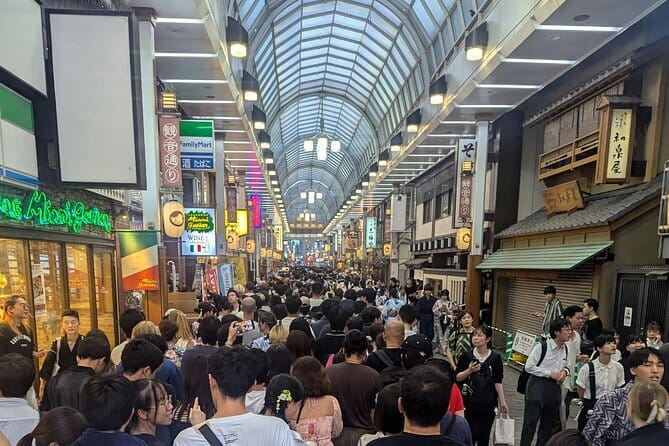
Ameya-Yokocho is especially useful for understanding everyday shopping culture. The postwar shopping street is filled with food vendors and small shops, giving you a less polished, more local-feeling contrast to the major department store areas. You might find snacks, market foods, and inexpensive items as you walk.
The Ueno stop is not just a shopping break. The park and temples give the guide room to explain the cultural side of the city. I would pay attention to how the guide connects the street market with the more formal temple spaces. That contrast is one of the reasons this route feels broader than a simple list of famous sights.
Still, 90 minutes is a short window for Ueno. If your interests center on museums, you should note that no museum admission is included in the plan, and no specific museum visit is promised. The tour gives you an introduction to the district, not a full museum day.
This stop may suit families and mixed-interest groups particularly well. One person can focus on food, another on temples, and another on shopping. Since the tour is private, you have a better chance of shaping the conversation around what your group actually notices.
Asakusa and Senso-ji reveal Tokyo’s old character
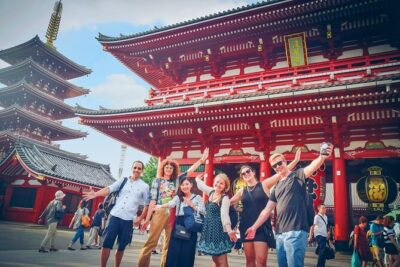
Asakusa is the third stop, with another 90 minutes. Here you visit Senso-ji, described as Tokyo’s oldest and most famous temple, and walk along Nakamise Street.
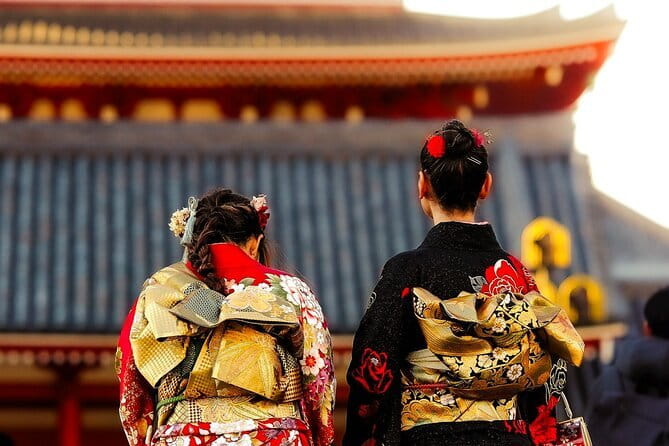
This is likely the most visually traditional part of the day. Nakamise Street is lined with traditional snacks and souvenirs, while Senso-ji gives you a clear sense of the city’s older religious and cultural identity. If you want a classic first impression of Tokyo, Asakusa delivers it more directly than the modern districts do.
The guide’s role is important here. A temple can be beautiful but confusing if you do not know what you are looking at or how visitors are expected to behave. A private English-speaking guide can explain the setting and answer questions as they come up. You are not expected to arrive with prior knowledge.
There is also a practical advantage to visiting Asakusa with a local guide: the district has plenty of things competing for your attention. You can browse snacks and souvenirs, look at the temple, and still keep an eye on the clock. Your guide helps the group move along before Akihabara becomes a rushed afterthought.
The tradeoff is that this is an introduction, not a quiet temple visit. Nakamise Street is a shopping lane, and the area is one of Tokyo’s major sightseeing zones. If you want time for careful photography, extended prayer, or browsing every shop, you may need to return separately.
Same corner of Tokyo, a completely different plan:
- Tokyo: teamLab Planets TOKYO Digital Art Museum Entry Ticket
★ 4.6 · 9,779 reviews - Mt Fuji & Hakone Cruise, Drum Show Bullet Train 1 Day from Tokyo
★ 4.0 · 7,413 reviews - Tokyo: Sumo Show Experience with Chicken Hot Pot and a Photo
★ 4.8 · 6,678 reviews - Tokyo: Shinjuku Food Tour (13 Dishes at 4 Local Eateries)
★ 5.0 · 6,603 reviews
Akihabara shifts the mood to anime and gaming
The final 90-minute stop is Akihabara, Tokyo’s center for anime, gaming, and technology culture. It is a smart ending because the change from Asakusa is so strong. You move from temple roofs and traditional sweets to neon signs, multi-story arcades, retro games, and themed cafés.
Akihabara can seem baffling on a first visit. Shops may be stacked vertically, and the best-known interests are spread across several blocks. A guide can help you understand what kind of place you are entering and point out the parts of the district that match your interests.
You may browse arcades, look for retro gaming shops, or step into a themed café. The description does not promise an included café visit or admission to a particular attraction, so plan to pay for those choices yourself if you decide to make them.
I like ending here because it prevents the familiar old-versus-new comparison from becoming too abstract. You have already seen traditional food, temples, and a historic shopping street. Akihabara lets you see how another part of Japanese culture has developed around games, animation, technology, and fan communities.
The limitation is again time. Ninety minutes can give you a strong first taste, but it will not cover every arcade, shop, or café. If anime or gaming is your main purpose in Tokyo, use this tour to get oriented, then set aside a separate visit for focused browsing.
What a private guide adds to the day
The guide is the central reason to choose this experience over a basic sightseeing bus or group walk. Your guide speaks fluent English and works only with your group, so the day can be conversational rather than scripted.
You can ask questions without worrying that strangers are waiting. That is useful for first-time visitors who want help with everyday matters, such as how Tokyo’s public transit works, what to eat, or how to behave at a temple.
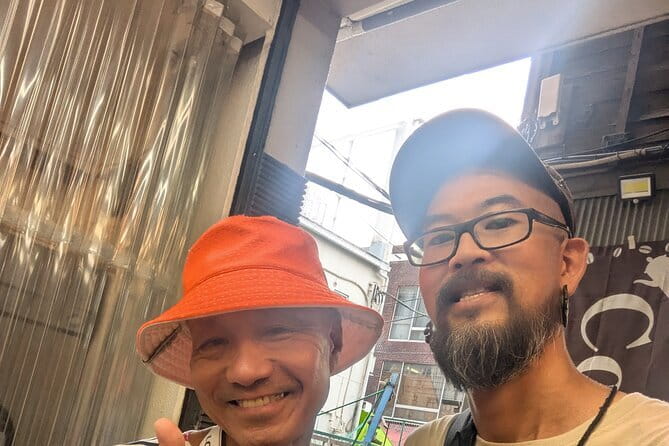
The guide can also add personal context. One named guide, Satoshi, received especially strong praise for sharing historical facts and personal experiences at different stops. He was also described as having friendly relationships with shop owners and helping introduce the guest to places along the way. If Satoshi is assigned to your booking, that personal connection could add a lot to the market and shopping portions. The provider may assign another guide, so you should not assume he will lead every departure.
A private tour also helps families and small groups with different energy levels. You can ask for more time at a food stall, spend less time shopping, or direct more questions toward history. The schedule remains fairly tight, but the conversation does not have to be one-size-fits-all.
Walking and public transit are part of the lesson
There is no private vehicle. You walk between sights and use public transportation as needed, with fares paid separately.
That may sound less comfortable than a car, but it fits Tokyo well. The city is designed around rail travel, and learning to move between districts is useful for the rest of your stay. The train ride is not dead time. It shows you how the neighborhoods connect and gives you a practical skill you can reuse.
The downside is physical effort. You will spend six hours walking, standing, browsing, and moving through stations. Anyone with limited mobility should ask the provider about the exact route before booking, since the supplied details say most people can participate but do not provide a detailed accessibility plan.
I would also carry a small amount of cash and keep room in your budget for snacks and transit. The tour price does not cover public transportation, food, lunch, or entrance charges. No private vehicle is included.
Is $215 per person a fair price?
At $215 per person, this is not a bargain if you measure value only by the number of admission tickets included. The four listed stops are free to enter, and you still pay for transit, meals, snacks, and any paid attractions.
The value comes from the private service. You receive pickup, a flexible morning start, six hours with an English-speaking guide, and a route that joins four widely separated districts. For a couple or small group that wants help getting oriented quickly, the cost can make sense.
It is also good value for a first full day in Tokyo if you are unsure how to use the rail system or how to organize the city. A local guide can save you time and help you avoid spending half a day moving between neighborhoods without understanding what you are seeing.
For a solo visitor, the per-person price is harder to justify unless personal guidance is a high priority. For a family or group, compare the total price with the cost of several separate private activities. Group discounts are offered, though the exact reduction is not specified.
The best way to judge the price is to ask what you want from the day. If you want a private introduction, cultural context, and a clear route through old and new Tokyo, the fee is easier to defend. If you mainly want free sightseeing and are comfortable planning trains yourself, explore these districts independently.
Who will get the most from this Tokyo tour?
I would recommend this experience to first-time visitors who want a strong overview without spending days planning routes. It suits people who enjoy mixing food, history, temples, shopping, and modern Japanese pop culture in one day.
It is also a good choice for families. The private format lets you keep questions simple, adjust attention spans, and give different members of the group something to look forward to. The mix of markets, temple grounds, street shopping, and arcades is broad enough to hold varied interests.
You should think twice if you prefer slow travel. Each stop lasts about 90 minutes, and the moving between districts takes part of the day. Someone who wants an unhurried meal at Tsukiji, a long temple visit in Asakusa, or several hours in Akihabara will need extra time beyond this tour.
You should also budget carefully. The $215 price covers the guide, pickup, and private walking experience, but not the small costs that arise during the day. For a stress-free introduction, that is a reasonable trade. For a low-cost sightseeing day, it is not.
Booking details worth knowing before you go
You can choose a departure between 9 and 11 in the morning, which gives you room to fit the tour around a flight arrival, a jet-lagged start, or another Tokyo plan. Pickup is available from a hotel, Airbnb, or another location.
The tour is private, and only your group participates. Confirmation is provided when you book, and the route is near public transportation.
Free cancellation is available if you cancel at least 24 hours before the local start time. Changes or cancellations inside that window are not accepted for a refund. The experience is often booked about six days ahead, so do not leave it until the last minute if your schedule is fixed.
Should you book it?
Book this tour if you want one private day that explains Tokyo’s contrasts and helps you get comfortable with the city’s trains and neighborhoods. Tsukiji, Ueno, Asakusa, and Akihabara give you a useful range, while a guide such as Satoshi can add personal stories and local connections.
Skip it if you want a slow, highly specialized visit or if the extra costs make the $215 price feel too high. You will need comfortable shoes, money for transit and food, and realistic expectations about the 90-minute limit at each stop. For a first visit, though, this is a practical way to get your bearings and decide where you want to return on your own.
FAQ
How long does the Tokyo tour last?
The experience lasts approximately six hours.
What neighborhoods are included?
The route includes Tsukiji, Ueno, Asakusa, and Akihabara.
Is hotel pickup available?
Yes. Pickup is offered from your hotel, Airbnb, or another chosen location.
What time can the tour start?
You can choose a departure between 9 AM and 11 AM.
Is this a private tour?
Yes. Only your group participates in the activity.
Is the guide fluent in English?
The experience includes a fluent English-speaking private guide.
Are public transportation fares included?
No. Public transportation fees are not included in the tour price.
Is lunch included?
No. Lunch and food purchases are not included.
Can I cancel for a full refund?
Yes, if you cancel at least 24 hours before the experience’s local start time. Cancellations or changes made less than 24 hours in advance are not refunded.
New on our Tokyo list
- Sumi-e Experience in a relaxing green tea shop in Tokyo★ 5.0 · 3 reviews
- Tokyo : Kamikaze Street Drift Ride★ 5.0 · 3 reviews
- Private Zen Meditation in English in Shinjuku, Tokyo★ 5.0 · 3 reviews
- Onsen Spa in Tokyo and Asakusa Bar Hopping with Local Guide★ 5.0 · 3 reviews
- Easy for everyone! Now you can play handmade mini shamisen and show off to everyone! Musical instruments, sweets and live music★ 5.0 · 3 reviews
- Tokyo: Private Tsukiji Street Food & Sake with Local Guide★ 5.0 · 3 reviews
- Mt Fuji Exploration Tour with Free Japanese Kusa Mochi from Tokyo★ 4.5 · 3 reviews
- Tokyo Tsukiji Fish Market Walking and Exploring Hidden Gems Tour★ 5.0 · 3 reviews
Private, compared.
Tokyo 6hr Private Tour with Government-Licensed Guide
Read our review →
Private Tour to Mt. Fuji and Hakone (Fully Licenced Operator)
Read our review →
Tokyo Customized Private Tour (Must See Places in 1 Day)
Read our review →
Mount Fuji Full-Day Private Tour from Tokyo (Customizable)
Read our review →
Private City Highlights Tour with Local Guide
Read our review →
Tokyo 4hr Private Tour with Government-Licensed Guide
Read our review →