Reviewed · PRIVATE
Private Day Tour In Tokyo with a Native English Speaker
Tokyo becomes much easier to grasp when someone shows you how its neighborhoods fit together. This private tour with an English-speaking guide lets you shape a three-to-six-hour outing around your interests, then handles the trains, walking routes, and basic navigation for you.
I like the freedom to mix old and new Tokyo, perhaps pairing Sensoji Temple with Akihabara’s anime shops or Harajuku with Shibuya Crossing. I also like that guides such as Ken can turn a sightseeing day into a practical lesson in using Tokyo’s rail system, not just a parade of photo stops.
The main caution is time. Asakusa, Shibuya, Tsukiji, Harajuku, and Akihabara are spread across the city, so fitting every stop into one outing means moving quickly. Public transportation costs about $15 extra, and food is not included.
In This Review
- Key points to know before booking
- Why a private Tokyo tour can be worth the cost
- Starting in Asakusa and the Sensoji area
- Reading modern Tokyo at Shibuya Crossing
- Sampling Tsukiji beyond seafood
- Harajuku and Tokyo’s kawaii culture
- Akihabara for electronics, anime, and figures
- Letting the guide build a custom route
- What the guides add to the day
- Trains, walking, and the real pace of Tokyo
- Who will get the most from this experience
- Should you book this Tokyo private tour?
- FAQ
- How long does the private Tokyo tour last?
- Which Tokyo neighborhoods can I visit?
- Is the tour private?
- Does the guide speak English?
- Are public transportation costs included?
- Is food included?
- Where can pickup be provided?
Key points to know before booking
- Choose your own Tokyo mix: The tour can include Asakusa, Shibuya, Tsukiji, Harajuku, Akihabara, or other places you request.
- A private guide keeps the day flexible: Only your personal group participates, so you can adjust the pace and focus.
- English and Japanese support helps on the trains: The guide can lead you through public transportation and local navigation.
- Ken has earned special praise: He is described as friendly, clear in English, and able to explain Japanese culture, food, shopping, and entertainment.
- Expect a walking and rail day: A moderate level of fitness is recommended, and transport costs are separate.
- Pickup has a firm boundary: Pickup is available only within a seven-kilometer radius of Tokyo Station.
Why a private Tokyo tour can be worth the cost
At $145 per person, this is not the cheapest way to see Tokyo. Its value depends heavily on your group size and how much help you want with planning and transportation.
For a solo visitor or couple, the price buys personal attention, a flexible route, and an English-speaking guide who can help you make sense of one of the world’s largest city transit systems. For a family or small group, the cost may feel more reasonable because the tour is private and group discounts are available.
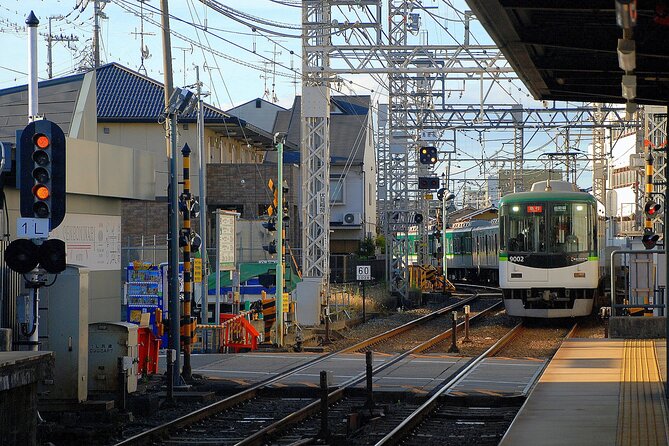
The biggest benefit is not simply seeing famous places. It is the time you may save by avoiding wrong trains, confusing station exits, and long pauses over where to go next. Tokyo’s rail network is efficient, but large stations can be bewildering at first. A guide who can show you how to buy tickets and move through the system gives you a useful skill for the rest of your stay.
The tour runs for approximately three to six hours. That range matters. A shorter outing works best if you focus on one or two districts. A longer session gives you room for several neighborhoods, though you should still resist trying to cover every corner of Tokyo in one go.
Food and drinks are not included, but that gives you control over spending. You can choose a quick meal, stop for a snack, or ask the guide about a local place that fits your budget. One guided day even included lunch at a small Japanese hamburger restaurant, showing how the experience can include ordinary local food rather than only famous attractions.
A few more Tokyo bookings worth comparing
- Mt Fuji and Hakone 1-Day Bus Tour Return by Bullet Train
★ 5.0 · 26,383 reviews - 1-Day Tokyo Bus Tour
★ 5.0 · 14,250 reviews - Tokyo: TOKYO SKYTREE® Admission ticket
★ 4.5 · 11,192 reviews
Starting in Asakusa and the Sensoji area
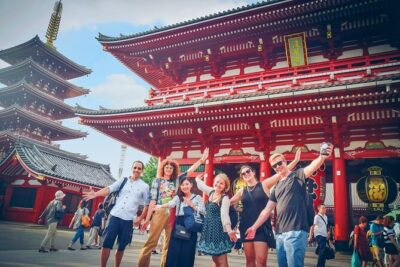
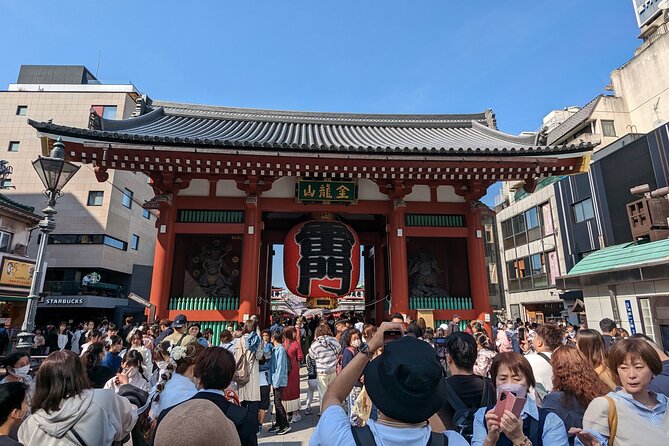
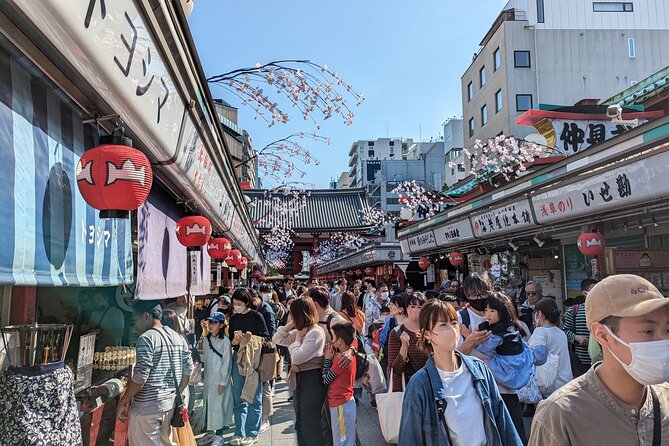
Asakusa is the natural choice when you want Tokyo’s traditional side. The district is home to Sensoji, a major Buddhist temple, and it offers a strong contrast to the glass towers and neon found elsewhere in the city.
Plan on about an hour here. You can expect a walk through the temple area, time to take in the gates and grounds, and an explanation of the customs and setting. Admission to the stop is free, though you may want money for snacks or small purchases nearby.
Asakusa works especially well early in your Tokyo visit because it gives you cultural context before you spend time in districts built around fashion, electronics, and entertainment. Your guide can also help explain how the temple area functions as more than a quick photo stop.
The limitation is that one hour passes quickly. If you want a slower temple visit, shopping time, and a meal, Asakusa could easily fill much of the tour. Tell your guide this in advance so the rest of the route does not become rushed.
Reading modern Tokyo at Shibuya Crossing
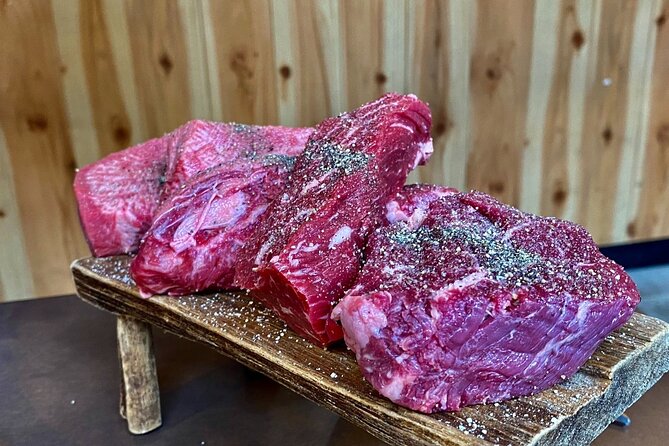
Shibuya gives you a sharp change of mood. Its famous pedestrian crossing and Hachiko statue are the headline sights, but the district also shows Tokyo’s modern, youthful side through shopping, signs, and constant movement.
A one-hour stop is enough to see the main landmarks and get a feel for the area. Your guide can help position the visit within your wider route and explain why Shibuya has become such a recognizable symbol of Tokyo.
I would pair Shibuya with Harajuku if fashion and youth culture interest you. I would pair it with Asakusa if you want the strongest contrast between old and new Japan. Trying to spend a full hour at every listed stop, however, may leave you with little time to linger.
Shibuya is also a useful place to learn how to move around Tokyo. A guide who shows you the station and nearby routes can save you trouble later, especially if you plan to return independently.
Sampling Tsukiji beyond seafood
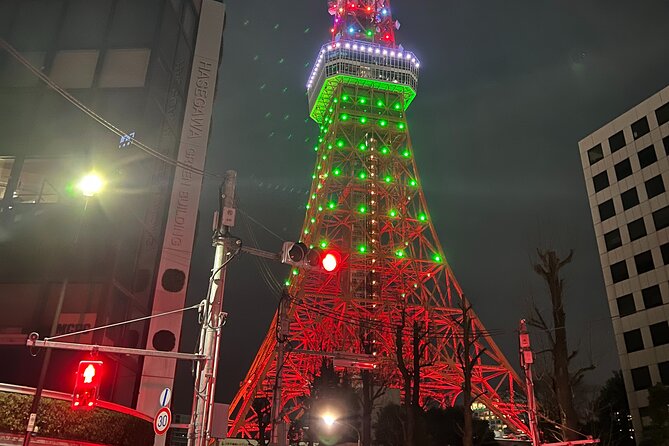
Tsukiji is best known for fresh fish, sushi, and sashimi, but you do not need to be a seafood fan to enjoy the district. The area has food stalls and shops that make it a useful stop for anyone curious about Japanese ingredients and everyday eating.
The planned time is about an hour. That is enough for a look around and perhaps a snack, but food purchases are your responsibility. If you have dietary limits or specific food interests, explain them before the day begins so the guide can shape the visit properly.
Tsukiji can add a welcome food element to a tour otherwise centered on temples, crossings, shopping, and rail travel. It also gives you a chance to ask about Japanese food culture while standing in a working market district.
The practical catch is that the stop may be less appealing if you dislike crowds, strong food smells, or seafood-focused stalls. Since the market is only one possible destination, you can request another district instead.
Same corner of Tokyo, a completely different plan:
- Tokyo: teamLab Planets TOKYO Digital Art Museum Entry Ticket
★ 4.6 · 9,779 reviews - Mt Fuji & Hakone Cruise, Drum Show Bullet Train 1 Day from Tokyo
★ 4.0 · 7,413 reviews - Tokyo: Sumo Show Experience with Chicken Hot Pot and a Photo
★ 4.8 · 6,678 reviews - Tokyo: Shinjuku Food Tour (13 Dishes at 4 Local Eateries)
★ 5.0 · 6,603 reviews
Harajuku and Tokyo’s kawaii culture
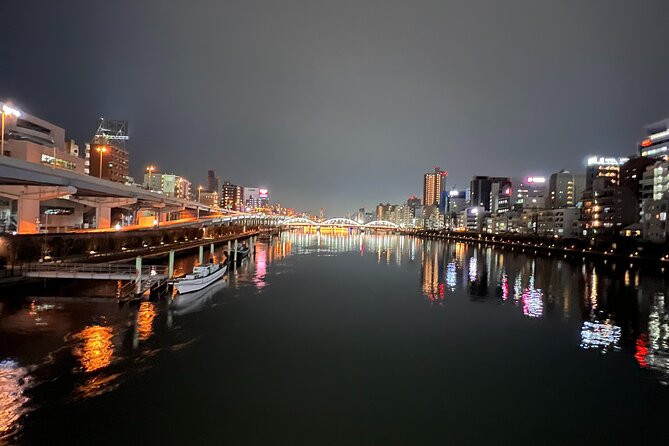
Harajuku is the stop for youthful style, colorful shops, boutiques, and kawaii culture. The word refers to the Japanese celebration of cuteness, and the neighborhood offers a different look at Tokyo from the solemn setting of Sensoji or the commercial scale of Shibuya.
You can spend around an hour exploring the main shopping streets and asking your guide about the local style. The guide’s role is especially useful here because the meaning behind the fashions and products may not be obvious at first glance.
Harajuku suits you if you enjoy clothing, pop culture, character goods, and browsing. It may be less satisfying if your main goal is architecture or older religious sites. The private format lets you skip it without wasting time if it does not match your interests.
Because Harajuku and Shibuya are relatively natural partners within a city route, you might ask to combine them and spend less time on each. That gives you a broad look at Tokyo’s youth culture without treating every stop as a separate appointment.
Akihabara for electronics, anime, and figures
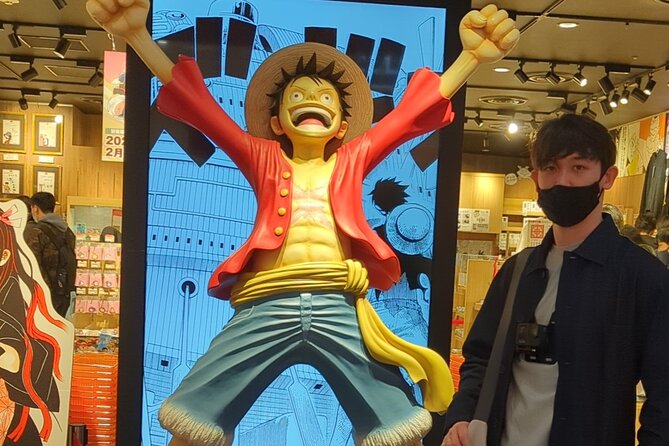
Akihabara is the clear choice for electronics, anime, cosplay, and Japanese pop culture. Its shops range from technology stores to places selling character goods and anime figures.
The experience becomes much more useful when the guide knows what you want to find. A guide has helped visitors use the trains to reach anime figure shops, so you can ask for a shopping-focused visit rather than a general walk through the district.
Akihabara is not only for dedicated anime fans. Even if you are simply curious about Japanese gaming, electronics, or character culture, the district offers plenty to see. Your guide can explain what you are looking at and help you avoid spending the whole hour wandering without a plan.
Shopping costs are not included, of course. Keep your purchases and interests in mind when setting the route. If you want to browse seriously, give Akihabara more time and remove one or two other stops.
Letting the guide build a custom route
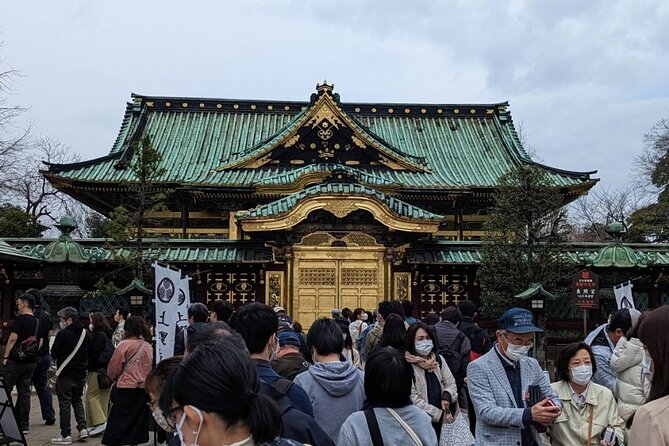
The most important feature is the option to request places beyond the standard choices. You are not limited to Asakusa, Shibuya, Tsukiji, Harajuku, and Akihabara.
This makes the tour useful for repeat visitors, families with a clear interest, and first-time visitors who need help deciding. You might ask for a day built around temples, food, shopping, anime, or major Tokyo sights. The supplied choices are starting points, not a fixed schedule.
Be specific about your priorities. If you want Sensoji, a sushi market, and anime shopping, say so. If you care more about learning the subway than checking off landmarks, make that clear too. The guide can then spend time where it matters instead of rushing through places simply because they appear on a standard route.
A private tour also lets you ask questions as they arise. That is where the English-speaking guide adds value. You can ask about Japanese culture, food, social customs, shopping, or entertainment in the moment, rather than saving every question for a museum label or guidebook.
What the guides add to the day
The guide speaks both English and Japanese and accompanies your group throughout the outing. That combination is practical in Tokyo, where signs may be clear in one station and less helpful in the next.
Guide Ken receives particularly strong praise for friendly service, fluent English, and explanations covering Japanese culture, food, shopping, and entertainment. He has also guided groups through Tokyo by train and on foot, which suits the structure of this experience.
You should not assume Ken will lead every departure, but his example shows the level of help this tour aims to provide. The strongest use of the guide is not just pointing out a landmark. It is asking questions, learning how to move around, and adjusting the day as your interests become clearer.
The tour is private, so you do not have to match the pace of a large group. That can be a major advantage if one person wants more time at a temple, another wants to shop, or someone in the group needs a short break.
Trains, walking, and the real pace of Tokyo
Public transportation is not included, and the expected cost is about $15. That is an important addition to your budget, but rail travel is also central to seeing several distant Tokyo districts in a short time.
The guide handles navigation, while you pay the transport fares. One useful outcome is learning enough about the subway and train system to continue exploring on your own. The experience is therefore part sightseeing tour and part orientation session.
You should expect a moderate level of physical activity. The day combines walking through districts with getting to and from stations, and large Tokyo stations can involve substantial walking even when the train ride is short.
Comfortable shoes matter. You should also be honest about your pace when discussing the itinerary. A three-hour tour with two nearby districts will feel very different from a six-hour outing that crosses the city several times.
Pickup is offered only within seven kilometers of Tokyo Station. If you are outside that area, confirm where you will meet before booking. The tour is near public transportation, which makes meeting arrangements manageable, but the pickup limit is firm.
Who will get the most from this experience
I would recommend this tour to a first-time Tokyo visitor who wants a friendly introduction without joining a large group. It is also a strong fit for families, small groups, and anyone nervous about using trains in an unfamiliar city.
You will get the most from it if you arrive with a few clear interests. The more specific you are, the more useful the customization becomes. Someone who says I want traditional Tokyo and anime shopping has given the guide a much better starting point than someone who asks to see everything.
The tour also suits visitors who value conversation. If you want cultural explanations, help with food choices, and practical advice about shopping or transport, the guide can make the city easier to understand.
I would be more cautious about booking it if you prefer a fixed historical tour, need guaranteed admission to specific attractions, or want a slow visit to only one district. This is a flexible city orientation, not a ticketed attraction tour with a tightly fixed schedule.
Should you book this Tokyo private tour?
Book it if you want personal guidance, train help, and the freedom to build your own Tokyo day. The combination of Asakusa, Shibuya, Tsukiji, Harajuku, and Akihabara gives you plenty of choice, while the private format lets you replace stops that do not interest you.
At $145 per person, the value improves with a larger group and with visitors who would otherwise lose time navigating. The tour earns its keep when the guide helps you understand Tokyo, not merely when you take you to famous places.
Before booking, decide on two or three priorities and accept that you cannot properly explore every district in three to six hours. Add about $15 for public transportation, plan to pay separately for food, and confirm pickup if you are staying outside the seven-kilometer area around Tokyo Station. For a flexible first look at Tokyo with English-language support, this is a sensible choice.
FAQ
How long does the private Tokyo tour last?
The experience lasts approximately three to six hours.
Which Tokyo neighborhoods can I visit?
Possible stops include Asakusa, Shibuya, Tsukiji, Harajuku, and Akihabara. You can also request other destinations and build a custom itinerary.
Is the tour private?
Yes. Only your personal group participates in the tour.
Does the guide speak English?
Yes. The guide speaks both English and Japanese.
Are public transportation costs included?
No. Public transportation is separate and costs approximately $15.
Is food included?
No. Food and drinks are not included in the tour price.
Where can pickup be provided?
Pickup is available within a seven-kilometer radius of Tokyo Station.
New on our Tokyo list
- Tokyo : Kamikaze Street Drift Ride★ 5.0 · 3 reviews
- Private Zen Meditation in English in Shinjuku, Tokyo★ 5.0 · 3 reviews
- Sumi-e Experience in a relaxing green tea shop in Tokyo★ 5.0 · 3 reviews
- Onsen Spa in Tokyo and Asakusa Bar Hopping with Local Guide★ 5.0 · 3 reviews
- Easy for everyone! Now you can play handmade mini shamisen and show off to everyone! Musical instruments, sweets and live music★ 5.0 · 3 reviews
- Tokyo: Private Tsukiji Street Food & Sake with Local Guide★ 5.0 · 3 reviews
- Mt Fuji Exploration Tour with Free Japanese Kusa Mochi from Tokyo★ 4.5 · 3 reviews
- Tokyo Tsukiji Fish Market Walking and Exploring Hidden Gems Tour★ 5.0 · 3 reviews
Private, compared.
Tokyo 6hr Private Tour with Government-Licensed Guide
Read our review →
Private Tour to Mt. Fuji and Hakone (Fully Licenced Operator)
Read our review →
Tokyo Customized Private Tour (Must See Places in 1 Day)
Read our review →
Mount Fuji Full-Day Private Tour from Tokyo (Customizable)
Read our review →
Private City Highlights Tour with Local Guide
Read our review →
Tokyo 4hr Private Tour with Government-Licensed Guide
Read our review →