
Reviewed · WALKING TOURS
Private Ginza Architecture Walking Tour
Ginza is easiest to understand when you stop treating it as a luxury shopping district and start looking up. This private walk connects historic religious sites with bold brand buildings, small shrines, a Kabuki theater, and older structures that are easy to miss from street level. The guide can shape the talk around your interests, from design and urban planning to Japanese culture and history.
I like the small private format, capped at five people, and the chance to ask questions without losing your guide in a crowd. I also like the mix of famous façades and less obvious stops, including Toyoiwa Inari Shrine and the Okuno Building. The main consideration is that this is a walking and explanation-heavy tour, so the experience depends partly on your guide’s English and on how much architectural detail you want.
In This Review
- Key points to know before booking
- Why Ginza works so well as an architecture walk
- From Tsukiji Station to Ginza’s layered streets
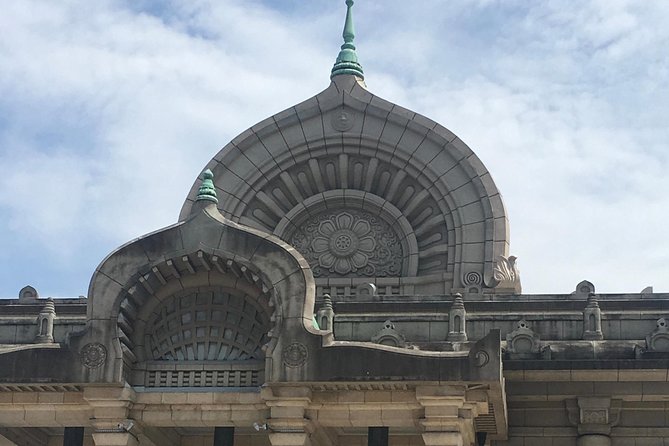
- Tsukiji Hongwanji Temple: a surprising first interior
- Kabukiza Theater and the architecture of performance
- Luxury design at the Nicolas G. Hayek Center
- Toyoiwa Inari Shrine: a tiny pause with local character
- Maison Hermès and Mikimoto: brand buildings as public art
- UNIQLO Tokyo, Wako, and Ginza’s famous street face
- Okuno Building: an older finish to a modern route
- The guides and the private format
- What the $132.10 price gets you
- Who should book this Ginza walk
- Should you book it?
- FAQ
- How long does the Ginza Architecture Walking Tour last?
- Where does the tour begin?
- Where does the tour finish?
- How many people can join one booking?
- Is the tour conducted in English?
- Is hotel pickup included?
Key points to know before booking
- Start near Tsukiji and finish in central Ginza: The route begins by Tsukiji Station and ends at the Ginza 4-chome intersection, in front of Mitsukoshi.
- Private groups are limited to five people: Your guide can adjust the pace, answer personal questions, and focus on the buildings that interest you most.
- The route joins old and new Tokyo: Expect a Buddhist temple, shrines, Kabuki theater, luxury boutiques, department-store architecture, and twentieth-century buildings.
- Several interiors are part of the plan: Tsukiji Hongwanji Temple, Kabukiza Theater, the Nicolas G. Hayek Center, Maison Hermès, and Okuno Building are listed for interior visits.
- The price is $132.10 per person: That buys a private English-language guide, about three and a half hours, and a drink break, with group discounts available.
- The walk suits people with moderate fitness: There is no hotel pickup, and you move from site to site on foot.
Why Ginza works so well as an architecture walk
Ginza gives you a useful lesson in how Tokyo layers time. A luxury watch center can sit near a tiny shrine. A grand department store faces a glass tower. A Buddhist temple with strong Indian and East Asian design influences is only a short ride from the polished streets of Ginza.
The district is also unusually good for architecture fans who do not want a formal museum tour. Much of the route is outdoors, and the buildings become the exhibits. Your guide can point out materials, shapes, uses of light, and the commercial ideas behind a façade, then explain how those choices fit Japanese culture.
The private setup matters here. Ginza has plenty of famous buildings, but many are best understood through small details. You may want to ask why a luxury company commissioned a daring design, how a building fits its narrow site, or how older commercial architecture survived beside newer towers. A group of five or fewer gives you room to stop, look up, and ask.
The tour lasts approximately three hours and thirty minutes, though the overview also describes it as a three-hour walk. Allow the longer window when planning your day. Two departure times make it easier to fit around meals, shopping, or another Tokyo activity.
More walking routes in Tokyo:
- Tokyo Tsukiji Fish Market Food and Culture Walking Tour
★ 5.0 · 3,184 reviews - Tokyo: Imperial Palace and Shogun Historical Walking Tour
★ 5.0 · 2,251 reviews - Tokyo: Shinjuku Local Bar and Izakaya Guided Walking Tour
★ 4.9 · 1,794 reviews
From Tsukiji Station to Ginza’s layered streets
You meet near Exit 1 of Tsukiji Station, at 3-chome, Tsukiji, in Tokyo’s Chuo City. This is not the same as hotel pickup, so you need to make your own way to the starting point by public transportation.
The opening section includes about forty minutes of walking between sites. That gives your guide time to set the scene before the route reaches the most recognizable Ginza buildings. The walk is not just transportation. It is where you begin to see the shift from the Tsukiji area toward Ginza’s commercial core.
I would arrive ready for a city walk rather than a stop-and-go bus excursion. Comfortable shoes matter, and you should expect to spend time outside while listening. The tour requires a moderate level of physical fitness, but the pace is described as your own, which is helpful for a private group.
Tsukiji Hongwanji Temple: a surprising first interior
The first named stop is Tsukiji Hongwanji Temple, where you go inside for about ten minutes. It gives the tour an early change of mood. Instead of beginning with retail architecture, you start with a religious building and a place of worship.
The value here is context. Ginza’s polished commercial image can make the district seem new, but Tokyo’s urban story is not limited to glass and steel. A guide can explain the temple’s cultural role and architectural character before the tour turns toward theaters, boutiques, and corporate buildings.
Ten minutes is brief, so do not expect an extended temple visit. Think of it as a focused introduction. You will want to listen closely and observe respectfully, since this is an active religious site rather than a display arranged only for sightseeing.
Kabukiza Theater and the architecture of performance
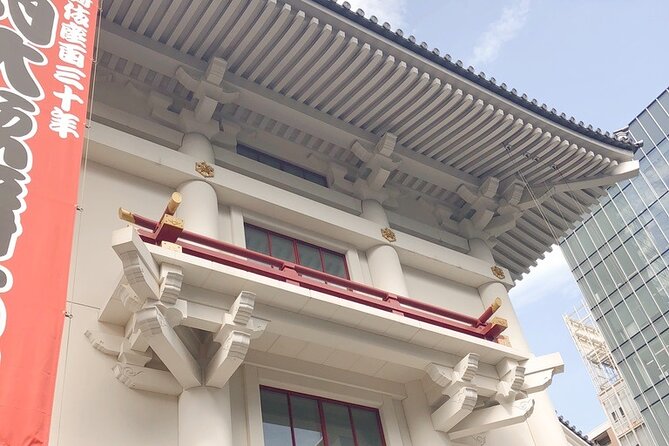
Kabukiza Theater receives about twenty minutes, including an interior visit. This is one of the route’s strongest cultural stops because it links architecture with a major Japanese performing art.
Your guide can help you read the theater as more than a decorative building. Its design has to communicate ceremony, create a memorable public face, and serve audiences and performers. The stop also adds a human and cultural layer to the tour, breaking up the focus on shopping brands and office towers.
The time is long enough to enjoy the building’s features without allowing one stop to swallow the whole walk. If theater interests you more than retail design, tell your guide early. The private format lets the discussion lean toward your preferences, although the exact depth will depend on the guide assigned to your group.
A few more Tokyo bookings worth comparing
- Mt Fuji and Hakone 1-Day Bus Tour Return by Bullet Train
★ 5.0 · 26,383 reviews - 1-Day Tokyo Bus Tour
★ 5.0 · 14,250 reviews - Tokyo: TOKYO SKYTREE® Admission ticket
★ 4.5 · 11,192 reviews - Tokyo: teamLab Planets TOKYO Digital Art Museum Entry Ticket
★ 4.6 · 9,779 reviews
Luxury design at the Nicolas G. Hayek Center
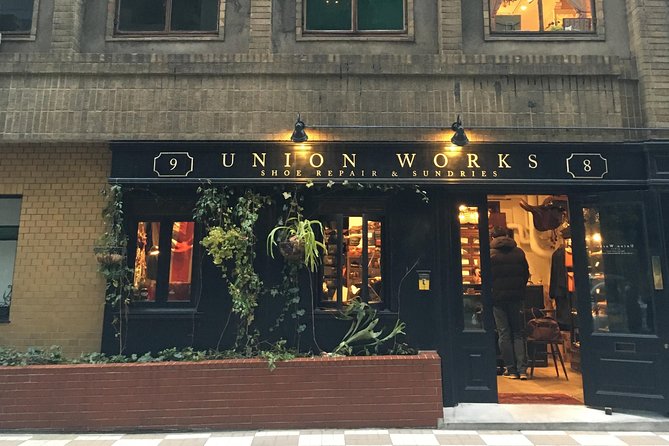
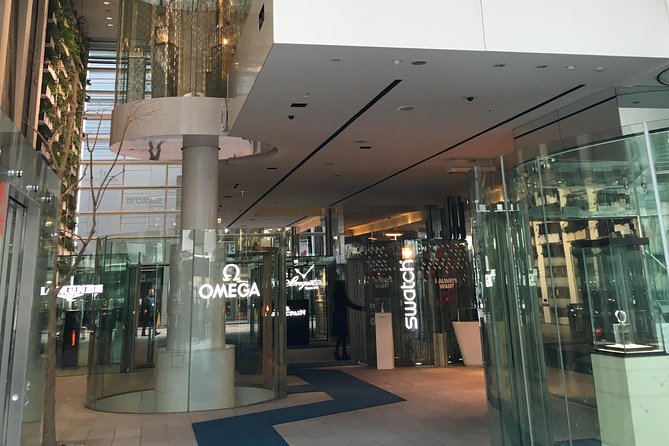
The Nicolas G. Hayek Center is scheduled for about fifteen minutes, with time inside to examine its features. This stop represents the commercial side of Ginza, where international companies use architecture to express identity.
For you, the interesting question is not simply whether the building looks expensive. It is how a company turns a retail address into part of its public image. The guide can discuss the building’s design, its place in Ginza, and the relationship between architecture and luxury shopping.
This is a good point to ask practical questions about why certain brands commission celebrated architects. Several major companies in Ginza have used world-class designers to create buildings that function as advertisements as much as shops. That idea helps make sense of the district’s unusual façades.
Toyoiwa Inari Shrine: a tiny pause with local character
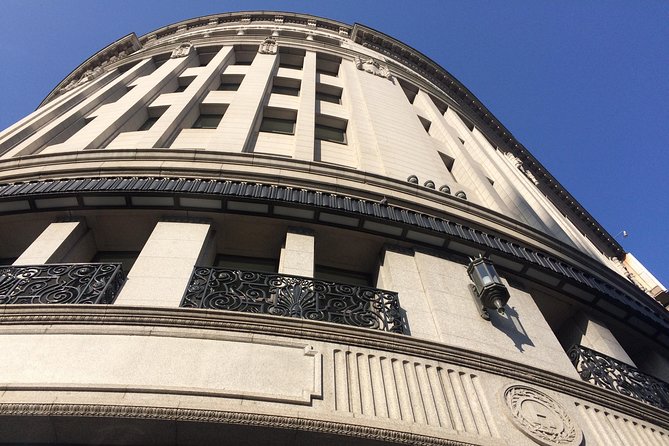
The stop at Toyoiwa Inari Shrine lasts only about five minutes. Its short length is part of the appeal. This is the sort of small religious site that can disappear beside Ginza’s larger commercial buildings.
A private guide is especially useful here because you might walk past without recognizing its importance. The shrine gives you a quick reminder that Ginza is not only a stage for global brands. Small sacred places remain woven into the district’s everyday streets.
Do not expect a long visit or a major monument. Treat it as a compact stop that adds contrast to the larger buildings. The route works best when you appreciate these changes in scale.
Maison Hermès and Mikimoto: brand buildings as public art
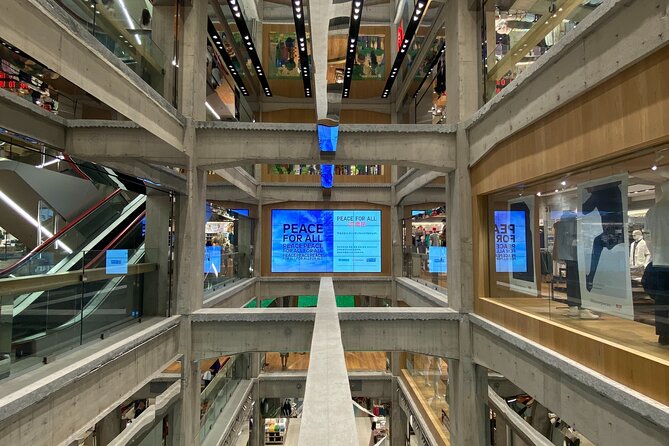
Ginza Maison Hermès Le Forum receives around fifteen minutes, with an interior visit planned. This is one of the tour’s clearest examples of architecture being used to shape a brand’s identity.
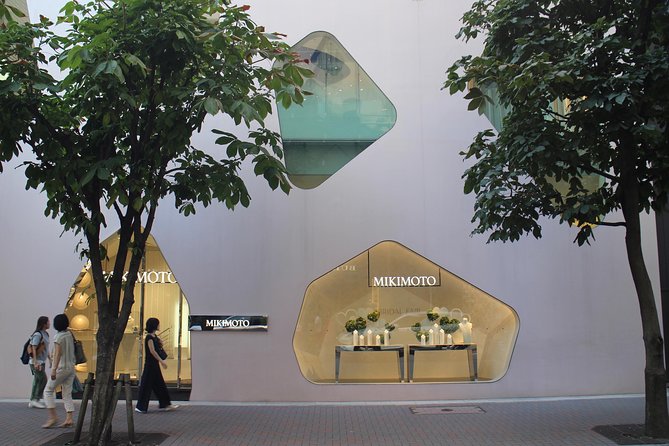
The stop is useful even if you have no interest in buying luxury goods. You can focus on how a company presents itself through the building, how the structure relates to the street, and how the interior continues the ideas seen outside. Your guide can also explain the cultural role of Ginza as a high-end shopping district.
Mikimoto Boutique Ginza 2-chome is scheduled for about five minutes, with an interior visit if time allows. That last phrase matters. The route contains many stops, and timing may force the guide to make this a quick look or skip the interior.
You also view Mikimoto Ginza 4-chome Honten from outside for about five minutes. Seeing both Mikimoto locations gives you a chance to compare how related brands use separate addresses, though the time at each is short. If these buildings matter to you, say so when the tour begins.
UNIQLO Tokyo, Wako, and Ginza’s famous street face
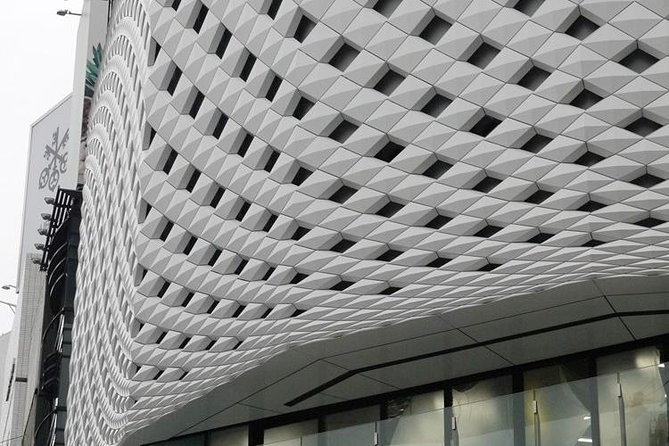
UNIQLO Tokyo is an exterior stop of about ten minutes. Here the focus shifts from a luxury jewelry or watch brand to a major everyday retailer. That contrast helps explain how different companies use Ginza’s prime streets.
You view Mikimoto Ginza 4-chome Honten and Wako Ginza from outside as well. Wako is especially useful as a visual reference point because its clock-tower building is closely linked with Ginza’s public image. A guide can help you notice the relationship between the building, the intersection, and the commercial life around it.
These exterior stops are also practical for photographers. You get time to frame façades and listen without needing to enter every shop. Still, the route cannot guarantee quiet conditions. Ginza is a working shopping district, so the streets may be active while you are trying to study a building.
Okuno Building: an older finish to a modern route
The Okuno Building is allotted about ten minutes, with an interior visit. It provides a welcome counterpoint to the newer luxury façades. After seeing buildings designed to project polished corporate identities, you end with a structure that carries a different sense of age and atmosphere.
This is where the tour’s theme becomes clearest. Ginza is not a single architectural style. It is a conversation between older buildings, modern towers, retail showpieces, cultural institutions, and small religious sites.
The tour ends at the Ginza 4-chome intersection, in front of Mitsukoshi department store. That is a convenient finish for continuing into Ginza on your own, though the experience does not include hotel drop-off.
The guides and the private format
Guide quality is central to this experience. The available guides named in the feedback include Yoko, Yuki, Taka Yamamura, Yoshi, Mari, Haruka, Makoto, and Eriko. You should not assume you will receive a particular person unless the provider confirms it, but the range of backgrounds is encouraging.
Taka Yamamura is described as an urban planner with a strong grasp of Ginza. Haruka is praised for connecting historical context with present-day Japanese culture. Other guides, including Yoko, Mari, Makoto, and Eriko, are described as friendly, flexible, and able to adjust the discussion to personal interests.
That flexibility is the real benefit. If you know architecture, ask for more design and planning detail. If you are new to the subject, ask your guide to explain the basics without technical language. One particularly useful possibility is help with translation and local shopping questions. A stop at a seaweed and tea distributor even led to a brief tea tasting during one customized walk, though you should not treat that as a guaranteed part of the tour.
English ability may vary by guide. Most of the available feedback is strongly positive, but one account found the English only adequate and wanted more explanation at the most striking buildings. I would send your interests clearly when booking and tell the guide at the start what level of architectural detail you prefer.
What the $132.10 price gets you
At $132.10 per person, this is not a cheap orientation walk. Its value depends on your group size and your interest in guided interpretation.
For one person, the price is hard to justify if you only want a list of buildings and a few exterior photographs. You can walk around Ginza independently. But for a private group of two to five, the cost buys several hours of focused attention, a route that includes interiors, and the freedom to ask questions that a large group tour cannot handle well.
The price includes a local licensed guide and a comfortable drink pause along the way. Admissions are listed as free for the scheduled stops. Hotel pickup and drop-off are not included, so add the time and cost of getting to Tsukiji Station and making your own way afterward.
Group discounts are available, though the exact savings are not specified. For families or friends sharing one booking, that may improve the value. Adult pricing applies to every participant, with a minimum age of ten.
Who should book this Ginza walk
I would choose this tour if you want to understand why Ginza looks the way it does, not merely photograph its best-known buildings. It suits architecture fans, repeat visitors who have already seen Tokyo’s major sights, and first-time visitors who enjoy mixing culture with city design.
It also works well for a family group with older children. Kabukiza, the shrine, temple, and bold retail buildings offer variety, while the guide can adjust the level of explanation. The private format is helpful if one person wants more history and another wants shopping or photography advice.
I would hesitate if you dislike walking, need hotel pickup, or want long visits inside each building. Several stops last only five or ten minutes, and some interiors are conditional on time. This is a broad introduction to Ginza rather than a slow architectural study of two or three buildings.
Book at least a day ahead if your plans might change. Free cancellation is available up to twenty-four hours before the start time, but cancellations or changes inside that window are not refunded or accepted.
Should you book it?
Book this private Ginza Architecture Walking Tour if you want a personal guide to the district’s contrast between temples, shrines, theater, older buildings, and high-design retail spaces. The strongest reason to choose it is the guide’s ability to tailor the walk, especially for a small group with clear interests.
The tour is also a good choice for repeat Tokyo visitors. One participant had visited Tokyo many times for business yet found this architectural viewpoint new, which gets to the heart of the experience. You are not simply moving from one famous address to another. You are learning to look upward and notice how Ginza works.
Skip it if you mainly want shopping time or a relaxed stroll with little commentary. The schedule covers many stops, the walking adds up, and the quality of the discussion depends on the guide. For the right group, though, $132.10 buys a thoughtful way to see a district you could easily mistake for just another luxury shopping zone.
FAQ
How long does the Ginza Architecture Walking Tour last?
The experience lasts approximately three hours and thirty minutes. The overview also describes it as a three-hour walking tour, so you should allow about three and a half hours in your schedule.
Where does the tour begin?
The meeting point is near Exit 1 of Tsukiji Station, at 3-chome, Tsukiji, Chuo City, Tokyo 104-0045.
Where does the tour finish?
The walk ends at the Ginza 4-chome intersection, in front of Mitsukoshi department store, at 4-chome-6-11 Ginza, Chuo City, Tokyo 104-0061.
How many people can join one booking?
This is a private activity with a maximum of five people per booking. Only your group participates.
Is the tour conducted in English?
Yes. The tour includes an English-speaking guide who discusses architecture, culture, and history. Guide assignments vary, so English fluency and the level of detail may differ.
Is hotel pickup included?
No. Hotel pickup and drop-off are not included. You need to reach the Tsukiji meeting point and arrange your own transportation after the tour.
New on our Tokyo list
- From Tokyo: Mount Fuji & Hakone Full Day Private Tour★ 4.9 · 25 reviews
- Tokyo Spectacular View Day-Cruise in 90 Minutes★ 5.0 · 25 reviews
- Real Tokyo Runner Club : Daikoku Car Meet Night Tour with JDM Car★ 5.0 · 25 reviews
- 2.5 Hour-Guided Cycle Tour in the Central Tokyo★ 5.0 · 25 reviews
- Ramen Making from Scratch +Akihabara Tour –Cooking Class★ 5.0 · 25 reviews
- [Self-Drive] Tokyo & Daikoku Custom Car Driving Tour★ 4.9 · 25 reviews
- Tokyo: 2-Hour Night Bike Tour of the City’s Hidden Gems★ 4.9 · 25 reviews
- Samurai themed Entertainment show in Shinjuku★ 4.5 · 25 reviews
Walking Tours, compared.
Tokyo Tsukiji Fish Market Food and Culture Walking Tour
Read our review →
Imperial Palace and Shogun Historical Walking Tour
Read our review →
Shinjuku Local Bar and Izakaya Guided Walking Tour
Read our review →
Asakusa Walking Tour with Sensoji Temple Visit
Read our review →
Tokyo Castle & Imperial PalaceーShogun Walking Tour
Read our review →
Browse the lists this tour appears in