
Reviewed · WALKING TOURS
Private Harajuku Omotesando Architecture Walking Tour
The best part of this private Harajuku architecture tour is the contrast. In three to three and a half hours, you move from the forested approach to Meiji Jingu to Kenzo Tange’s Olympic buildings, glossy fashion boutiques, and quiet residential lanes. Omotesando becomes an open-air architecture gallery, not simply a shopping street.
I like two things in particular: the route can be adjusted to your interests, and guides often arrive with photos, floor plans, and background material that make hard-to-read buildings easier to understand. I also like the short drink break in a backstreet cafe, which gives the walk a welcome pause. The main consideration is that this is a real walking tour, and one guide’s English was difficult for a guest to follow.
In This Review
- Key points to know before booking
- Why this Harajuku walk is more than a shopping stroll
- Starting at Meiji Jingu near Harajuku Station
- Kenzo Tange and the Olympic buildings
- Omotesando’s designer architecture
- Backstreets where the neighborhood changes pace
- A short drink break in a tucked-away cafe
- What the private format changes
- How much walking and time should you expect?
- Who will get the most from this experience?
- Booking, cancellation, and everyday practical details
- Should you book the Harajuku architecture tour?
- FAQ
- Where does the tour begin?
- Where does the tour end?
- How long does the tour last?
- Is this a private tour?
- Is hotel pickup included?
- What buildings can you see?
- Is a drink break included?
- Can I cancel for a full refund?
Key points to know before booking
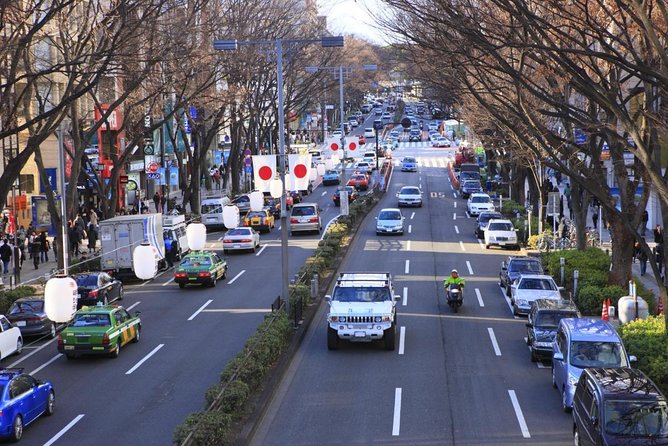
- See major works by famous architects: The route can include Yoyogi National Gymnasium, Prada, Tod’s, Dior, Louis Vuitton, SunnyHills, The Iceberg, and other notable buildings.
- Private and adjustable: Only your group takes part, so you can ask for more design detail, more local culture, or additional indoor stops when possible.
- Start at Meiji Jingu: The meeting point is in front of Meiji Jingu near Harajuku Station.
- Finish in Aoyama: The walk ends at the Omotesando and Aoyama-dori intersection, in front of Mizuho Bank.
- Plan for steady walking: The tour lasts about three and a half hours and requires moderate physical fitness.
- Good guide preparation: Guides including Yoshi, Yoko, Aki, Mari, Eriko, Junko, and Taka have been praised for research, clear explanations, and personal attention.
Why this Harajuku walk is more than a shopping stroll
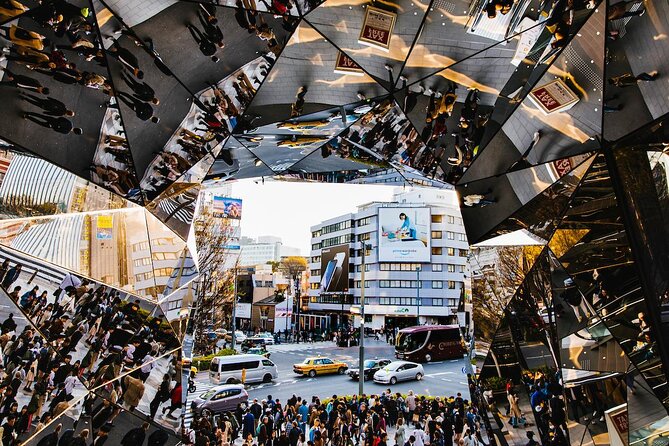
Harajuku and Omotesando are often treated as two separate Tokyo attractions. Harajuku brings youth fashion, pop culture, and Meiji Jingu. Omotesando brings international brands and polished storefronts. This tour ties the two together through architecture and urban change.
That connection matters. You do not just look at a Prada store or a Louis Vuitton facade. You learn how architects used glass, concrete, curves, planted surfaces, underground space, and unusual shapes to make retail buildings part of the city’s visual life.
The route also gives you a useful sense of scale. A famous building may face a major avenue, while an older house or small business sits just a turn away. The walk shows how Harajuku developed from the 1960s onward and how newer design sits beside quieter local streets.
You should not expect a museum visit with a fixed script. This is a guide-led outdoor walk, with the exact emphasis shaped by your group. If you care about architectural theory, say so when you meet your guide. If you want a broader introduction to Tokyo, ask for more history, etiquette, and neighborhood context.
More Harajuku wanders:
- Tokyo Go-Kart Tour Shibuya-Harajuku-Shinjuku (*IDP Required)
★ 5.0 · 217 reviews - Tokyo: Guided Go Kart Tour from Harajuku to Shibuya Crossing
★ 4.5 · 166 reviews - Shibuya & Harajuku: Hidden Gems & Highlights Private Tour
★ 4.7 · 139 reviews
Starting at Meiji Jingu near Harajuku Station
The tour begins at Meiji Jingu, at 1 Yoyogikamizonocho in Shibuya. This is a practical starting point because it places you beside one of Tokyo’s best-known religious sites and close to Harajuku Station.
The shrine itself provides a quiet opening before the commercial streets. Your focus here is not a long shrine tour, but the setting and its relationship to the city around it. That change from wooded shrine grounds to dense urban streets helps you understand Harajuku’s unusual character.
If you arrive early, allow enough time to find the meeting point in front of the shrine. The tour does not include hotel pickup, so you need to make your own way there.
From Meiji Jingu, the route turns toward Olympic-era architecture. The first major sight is Yoyogi National Gymnasium, designed by Kenzo Tange. The itinerary describes viewing it from a distance, so you should not assume an interior visit. Even from outside, it gives the tour a strong architectural anchor and introduces Tokyo’s Olympic building program.
The Olympic connection is especially useful if you have an interest in postwar Japan. Your guide can place the gymnasium within the story of Tokyo’s changing city image and later Olympic excitement. The tour is not only about buildings completed for the Games, but that history gives the early part of the walk a clear theme.
Kenzo Tange and the Olympic buildings
Yoyogi National Gymnasium is one of the route’s most important sights. It is not a conventional rectangular stadium, and its sweeping structure makes it easy to identify even when viewed from away.
A strong guide will help you look beyond the outline. Guides on this tour have used photographs and other reference material to explain architects, construction, and design choices. Taka, a retired architect, has shown guests photos, architect portraits, floor plans, and suggested viewing positions on an iPad.
That sort of preparation changes the experience. Without context, you might take a quick picture and continue walking. With a good explanation, you begin to notice how a building directs your eye, controls movement, or uses structure as part of its public image.
This is also where expectations matter. The route includes a view of Yoyogi Gymnasium, not a promised tour inside it. If entering buildings is essential to you, tell your guide at the beginning and ask what indoor stops are possible that day.
Omotesando’s designer architecture
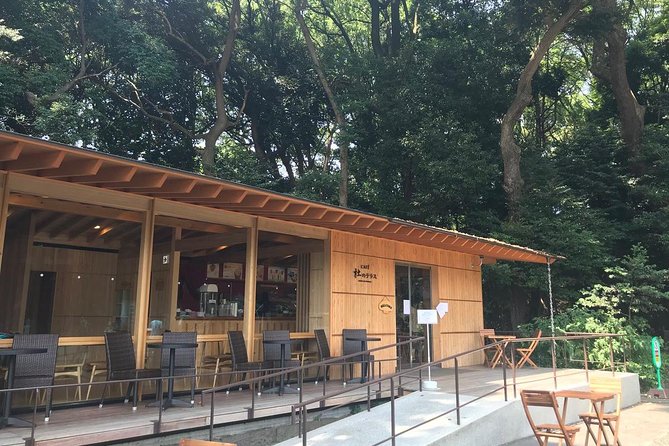
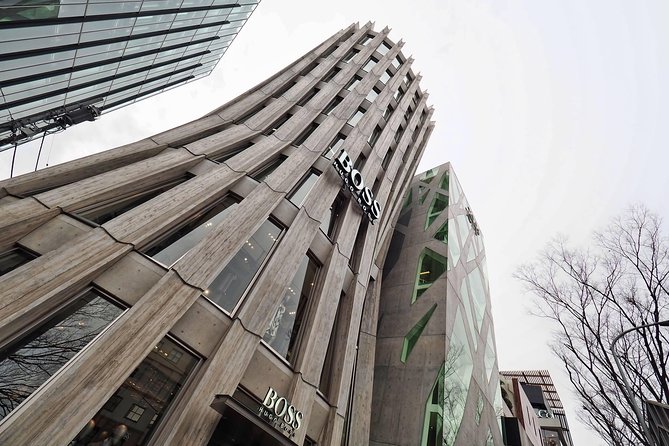
The walk then follows Omotesando, one of Tokyo’s best streets for contemporary commercial architecture. The road is lined with major fashion names, but the buildings are often more interesting than the shop signs.
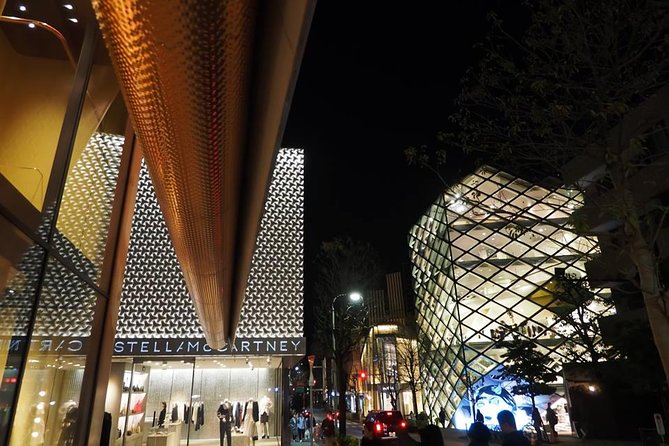
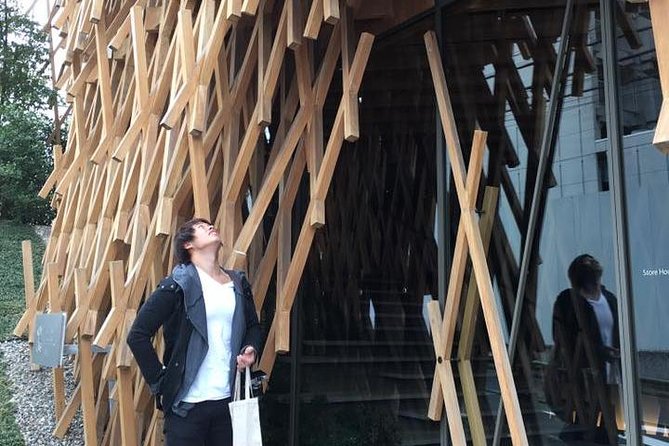
Possible stops include The Iceberg, Dior, Louis Vuitton, Tod’s, SunnyHills, and Prada. These buildings use very different ideas. Some rely on glass and sharp geometry. Others play with texture, curves, transparency, or a facade that looks almost like a piece of sculpture.
Prada is a particularly useful stop because its glass surface is not simply flat. The building’s convex and concave panels create changing views of the interior and street. Depending on your position, the facade can appear to bulge outward or pull inward.
The route may also include Tokyo Plaza Harakado, with its planted rooftop and vertical garden. This gives you a chance to discuss how newer buildings combine retail, public use, and greenery. The point is not just that the building looks unusual. You can consider how it fits into a crowded district where every frontage competes for attention.
Tadao Ando’s Collezione is another notable possibility. Part of the building sits underground, so its presence is quieter than a huge glass storefront. That contrast is important. Omotesando architecture is not one single style. Some buildings seek attention, while others make you look twice.
The precise list of stops depends on your interests, the guide, and access on the day. The tour description specifically presents the route as customizable. You might spend more time on designers, construction details, interiors, fashion retail, or the area’s development since the 1960s.
More walking routes in Tokyo:
- Tokyo Tsukiji Fish Market Food and Culture Walking Tour
★ 5.0 · 3,184 reviews - Tokyo: Imperial Palace and Shogun Historical Walking Tour
★ 5.0 · 2,251 reviews - Tokyo: Shinjuku Local Bar and Izakaya Guided Walking Tour
★ 4.9 · 1,794 reviews - Tokyo: Tsukiji Fish Market Food and Walking tour
★ 5.0 · 1,724 reviews
Backstreets where the neighborhood changes pace
The best shift in the tour comes when you leave the main avenue. A side route leads into a backstreet area where the scale changes and the polished retail image fades.
This part gives you a more balanced picture of Harajuku and Omotesando. The main road is about international brands and big architectural gestures. The smaller lanes show another side of the district, with local businesses, homes, and less formal street views.
The exact buildings on these lanes are not specified, and that is part of the appeal of a private walk. Your guide can point out details you would likely pass without noticing. One guide took guests through places they would not have found alone, including lesser-known buildings and small architectural features.
Do not expect the backstreets to feel like a separate historical village. The value is in the contrast and in seeing how different uses sit close together. You may be amused by how quickly the neighborhood changes after only a short turn from Omotesando.
This is also a good time to ask questions about local life. Junko, one guide, has been praised for adjusting explanations to a group’s level of architectural knowledge while also covering culture and etiquette. That makes the tour useful even if you are interested in design but do not have a technical background.
A short drink break in a tucked-away cafe
The tour includes a cozy pause with drinks. It is a small feature, but it matters on a three-hour-plus walking route.
The break takes place in an under-the-radar cafe along a backstreet, according to the tour description. You can sit, rest your feet, and talk with your guide rather than trying to absorb information while crossing roads or studying facades.
This pause also helps make the tour feel less like a checklist. A private guide can use the time to answer questions, change the pace, or discuss buildings you will see later in Tokyo. One guide helped a guest connect the architecture on this walk with other places planned for the rest of the trip.
The break is not presented as a full meal or a long cafe visit. Think of it as a short rest with drinks. If you have limited stamina, this pause helps, but it does not remove the need for comfortable walking shoes and reasonable fitness.
What the private format changes
A private tour is the main reason this experience costs more than a standard group walk. At about $132.14 per person, the value depends heavily on the size of your group and your interest in architecture.
For one person or a couple, the price is a serious splurge. You are paying for a private guide, a route that can respond to your questions, and access to a specialist view of a district you could otherwise walk through for free.
For a family or small group, the price may make more sense, especially if group discounts apply. You do not have to wait for strangers, and your guide can adjust the level of detail. An architect may want floor plans and construction background. Someone new to design may prefer simple explanations and more neighborhood context.
The private format also helps with weather and energy. One guide extended indoor portions when the heat became uncomfortable. That is a useful benefit, though you should not assume that every planned building can be entered.
A private tour cannot guarantee a particular guide. Names associated with this experience include Yoshi, Yoko, Aki, Taka, Mari, Eriko, Junko, Yuki, and Aki. The strongest feedback centers on guides who prepare visual material, answer questions carefully, and adjust the route instead of reciting a fixed speech.
There is one important qualification. One guest had trouble understanding a guide’s English and felt that information was missed. Most of the available feedback praises the guides’ English and communication, but this experience depends on the individual guide you receive.
How much walking and time should you expect?
The duration is listed as approximately three hours and thirty minutes, while the route details describe about three hours. Treat it as a half-day activity rather than a quick one-hour introduction.
You will walk from Meiji Jingu through Harajuku and along Omotesando toward Aoyama. The exact distance is not provided, but the physical fitness note and repeated emphasis on walking make the practical message clear: plan for a steady walk with standing time.
The end point is at 5-chome-1-27 Minamiaoyama, at the Omotesando and Aoyama-dori intersection, in front of Mizuho Bank. There is no return to the starting point and no hotel drop-off, so plan your next activity from the Aoyama end of the route.
The meeting and ending points are near public transportation. You still need to handle your own transport before and after the tour.
Who will get the most from this experience?
I would choose this tour if you care about modern architecture, urban design, fashion retail, or the way Tokyo neighborhoods change from one block to the next. It suits people who like to stop, look up, compare materials, and ask why a building was made the way it was.
It also works well as an early Tokyo activity. Junko’s style, described through the tour experience, includes history, culture, etiquette, and help navigating onward by subway. That kind of orientation can make the rest of your visit easier.
Families can benefit from the private format because the guide can adjust the pace and subject matter. A group with a professional architect and a non-specialist can also find common ground if the guide explains technical details clearly.
I would be more cautious if you dislike walking, want a fixed list of interiors, or mainly want Harajuku’s youth fashion and shopping scene. You will pass high-end boutiques, but this is not a shopping tour. It is an architecture walk that uses the shopping district as its setting.
The tour has a 4.9 rating from 67 reviews, with 99 percent recommending it. Those numbers suggest a strong experience overall, but they should not replace practical questions about guide language, indoor access, and your walking ability.
Booking, cancellation, and everyday practical details
Confirmation is provided when you book, and the activity accepts mobile tickets. It is commonly reserved well ahead, with an average booking lead time of 53 days, so popular travel dates may require planning.
Free cancellation is available up to 24 hours before the start time for a full refund. Changes or cancellations made less than 24 hours before the local start time are not accepted for a refund.
The tour includes a licensed local guide and drinks during the pause. Hotel pickup and drop-off are not included. You should arrive ready to walk and make sure everyone in your group can manage moderate physical activity.
Should you book the Harajuku architecture tour?
Book it if you want to see Tokyo through buildings rather than only through famous sights. The combination of Meiji Jingu, Yoyogi Gymnasium, designer architecture, small lanes, and a cafe pause gives you a useful cross-section of Harajuku and Omotesando.
The strongest reason to choose it is the guide. A well-prepared guide such as Yoshi, Yoko, Aki, or Taka can turn a row of expensive storefronts into a lesson in design, city growth, and public space. Ask at the start for the subjects you care about most.
Skip it if you want minimal walking, guaranteed interior visits, or a low-cost overview. At $132.14 per person, this is best value for a private group that will use the customization and ask plenty of questions.
FAQ
Where does the tour begin?
It begins in front of Meiji Jingu near Harajuku Station, at 1 Yoyogikamizonocho, Shibuya, Tokyo 151-0052.
Where does the tour end?
It ends at the intersection of Omotesando and Aoyama-dori, in front of Mizuho Bank, at 5-chome-1-27 Minamiaoyama, Minato City.
How long does the tour last?
The experience lasts approximately three hours and thirty minutes. The route description also refers to about three hours of touring, so you should allow at least three hours and plan for a half-day schedule.
Is this a private tour?
Yes. Only your group participates in the private activity.
Is hotel pickup included?
No. Hotel pickup and drop-off are not included. You make your own way to Meiji Jingu and arrange transportation after the tour.
What buildings can you see?
The route can include Meiji Jingu, Yoyogi National Gymnasium, The Iceberg, Dior, Louis Vuitton, Tod’s, SunnyHills, Prada, Tokyo Plaza Harakado, and Tadao Ando’s Collezione. The exact route is customizable.
Is a drink break included?
Yes. The tour includes a short cafe pause with drinks along the way.
Can I cancel for a full refund?
Yes, if you cancel at least 24 hours before the experience’s start time. Cancellations or changes made less than 24 hours before the local start time are not accepted for a refund.
New on our Tokyo list
- Tokyo Spectacular View Day-Cruise in 90 Minutes★ 5.0 · 25 reviews
- From Tokyo: Mount Fuji & Hakone Full Day Private Tour★ 4.9 · 25 reviews
- Real Tokyo Runner Club : Daikoku Car Meet Night Tour with JDM Car★ 5.0 · 25 reviews
- 2.5 Hour-Guided Cycle Tour in the Central Tokyo★ 5.0 · 25 reviews
- Ramen Making from Scratch +Akihabara Tour –Cooking Class★ 5.0 · 25 reviews
- [Self-Drive] Tokyo & Daikoku Custom Car Driving Tour★ 4.9 · 25 reviews
- Tokyo: 2-Hour Night Bike Tour of the City’s Hidden Gems★ 4.9 · 25 reviews
- Samurai themed Entertainment show in Shinjuku★ 4.5 · 25 reviews
Walking Tours, compared.
Tokyo Tsukiji Fish Market Food and Culture Walking Tour
Read our review →
Imperial Palace and Shogun Historical Walking Tour
Read our review →
Shinjuku Local Bar and Izakaya Guided Walking Tour
Read our review →
Asakusa Walking Tour with Sensoji Temple Visit
Read our review →
Tokyo Castle & Imperial PalaceーShogun Walking Tour
Read our review →
Browse the lists this tour appears in