Reviewed · PRIVATE
Private homevisit for whole cultual experience, 20min from Tokyo
The best part of this experience is its setting: you spend several hours inside a real Japanese home, not in a staged attraction. Noriko welcomes you at Shin-Urayasu Station, walks you through a supermarket, and then guides you through food, tea, music, clothing, and home life.
I like the private format, which gives you room to ask questions and set your own pace. I also like the mix of hands-on activities: you do not just watch a tea ceremony or admire a koto. You prepare matcha, play the instrument, and cook lunch yourself.
The main consideration is the price, $165.53 per person. It is a serious spend for five hours, though the private host, meal, clothing, and several separate activities make it more useful than a quick cultural demonstration. Your group must also choose one lunch menu for everyone.
In This Review
- Key points to know before you book
- Starting at Shin-Urayasu, 20 minutes from Tokyo
- A supermarket lesson before the home visit
- Changing into a cotton yukata
- Preparing Hiroshima-style okonomiyaki or norimaki
- Two bowls of matcha, with a relaxed ceremony
- Hearing and playing the traditional koto
- More than food and costumes: a look at home life
- What the $165.53 price really covers
- Who will get the most from this experience
- Should you book this private home visit?
- FAQ
- Where does the activity begin?
- How far is Shin-Urayasu from Tokyo Station?
- How far is the home from the meeting point?
- How long does the experience last?
- Is this a private activity?
- Who meets you at the station?
- What can you prepare for lunch?
- Can people in the same group choose different lunch menus?
- Do you get to wear Japanese clothing?
- Does the experience include a tea ceremony and music?
Key points to know before you book
- A real home near Tokyo: The meeting point at Shin-Urayasu is about 20 minutes from Tokyo Station, followed by a three-minute walk.
- Noriko leads the experience: Her warm, personal style suits families and curious first-time visitors to Japan.
- You choose the lunch project: Pick Hiroshima-style okonomiyaki or norimaki sushi rolls in advance, with one menu for the whole group.
- Two matcha moments: You receive one bowl prepared in a tea ceremony, then make a second bowl yourself.
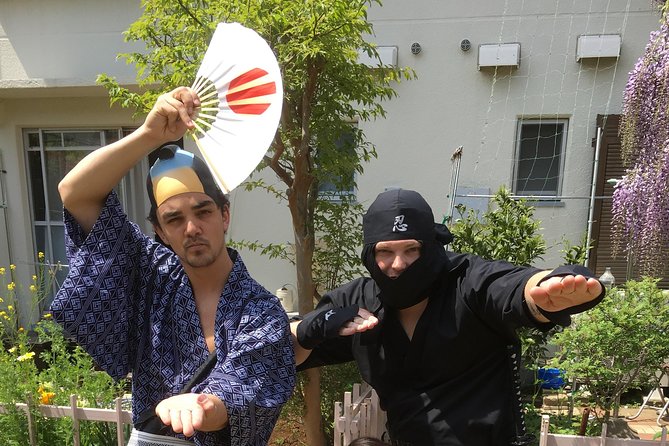
- Traditional dress and photos: You change into a cotton yukata, with kimono and ninja-style clothing included among the photo possibilities.
- Private from start to finish: Only your group takes part, so questions and conversation are encouraged.
Starting at Shin-Urayasu, 20 minutes from Tokyo
This experience begins at Shin-Urayasu Station in Chiba Prefecture, southeast of central Tokyo. From Tokyo Station, the journey takes about 20 minutes on the train to Shin-Urayasu, station JE08. From the meeting point, the walk is only about three minutes.
That short trip matters. You are not spending half a day crossing the city, yet you do leave the most familiar tourist routes behind. The location gives the activity a neighborhood feel without making it hard to reach. You make your own way to the station, and Noriko meets you there before walking with you to her home.
The station meeting is also useful if you are unsure about local directions. Instead of trying to find a private residence on your own, you have a clear public meeting point and a host to guide you from there.
The activity lasts about five hours. That is long enough for the cooking, tea, clothing, and music to feel like separate experiences rather than a rushed series of photo stops. Still, plan your day around it. This is not a short morning add-on you can squeeze between several major Tokyo sights.
A few more Tokyo bookings worth comparing
- Mt Fuji and Hakone 1-Day Bus Tour Return by Bullet Train
★ 5.0 · 26,383 reviews - 1-Day Tokyo Bus Tour
★ 5.0 · 14,250 reviews - Tokyo: TOKYO SKYTREE® Admission ticket
★ 4.5 · 11,192 reviews
A supermarket lesson before the home visit
On the way to the house, Noriko stops at a supermarket. This small part of the outing may be easy to overlook, but it gives you useful context before the cooking begins.
Japanese supermarkets can be confusing at first. Packages, seafood, vegetables, seasonings, and prepared foods may look unfamiliar, even when you recognize the general category. Noriko can explain the ingredients you will use and point out products that are part of everyday Japanese cooking.
I like this stop because it connects the meal to ordinary life. You are not simply handed ingredients in a cooking studio. You see where food is bought and how Japanese products appear in a normal shopping environment.
The supermarket visit also helps you understand why the lunch choices matter. You choose either Hiroshima-style okonomiyaki or norimaki, which are sushi rolls. Make that choice before the experience, and remember that the entire group must follow the same menu. If half your party wants pancakes and half wants sushi, you will need to settle that in advance.
Changing into a cotton yukata
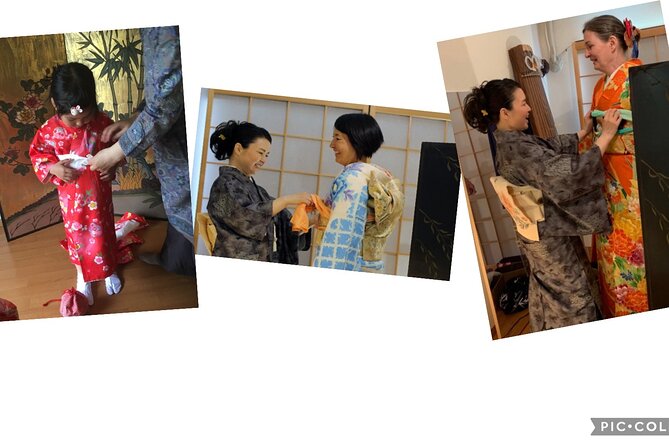
Once you reach the home, you change into a yukata, a light cotton garment often associated with summer festivals and casual traditional dress. It is simpler and less formal than the silk kimono used for important ceremonies, which makes it a practical choice for an activity that includes cooking and movement.
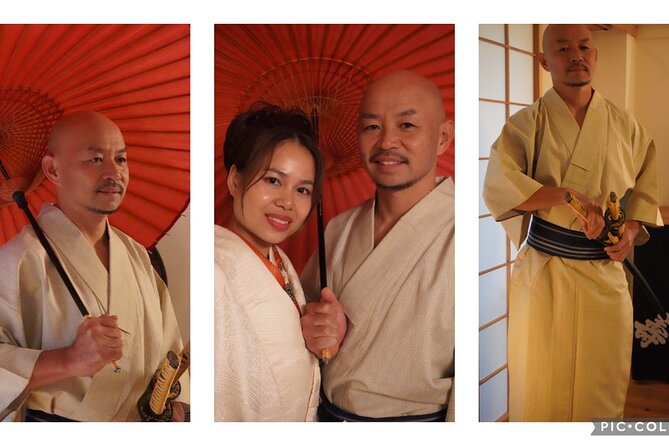
The clothing is not just a costume photo opportunity. It gives you a better sense of how traditional Japanese dress feels and how it changes the way you move. You can take photos in the home, and the experience also includes the possibility of dressing in kimono or ninja-style clothing for memorable pictures.
You should keep your expectations sensible. This is not presented as a formal professional kimono fitting or a long fashion session. The clothing supports the cultural activities and photographs rather than becoming the entire event.
Past visits have included birthday celebrations, including one for a daughter. That points to the kind of personal atmosphere Noriko creates, especially for families. You are not being moved through a large group with strangers. The tone is closer to spending time with a friendly local family.
Preparing Hiroshima-style okonomiyaki or norimaki
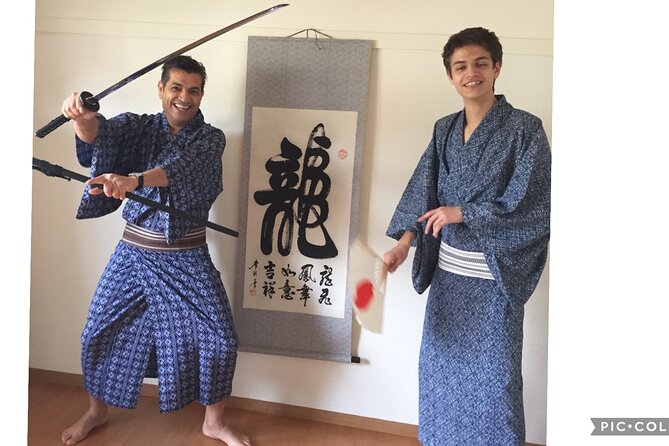
The cooking section gives you the most direct role in the meal. Your group chooses Hiroshima-style okonomiyaki or norimaki sushi rolls ahead of time, then prepares lunch with Noriko’s guidance.
Okonomiyaki is a savory Japanese pancake. The Hiroshima style is built in layers, making it different from the more mixed batter often associated with Osaka-style okonomiyaki. You get a chance to see how the ingredients come together and then eat the result once it is ready.
Norimaki means sushi rolls wrapped in nori seaweed. This option may appeal to you if rolling and shaping food sounds more interesting than cooking a hot pancake. It is also a good choice for families because the process gives everyone a clear task.
The meal is included as part of the activity, but the larger value is the practical lesson. You learn about ingredients, preparation, and presentation while sitting in a home environment. Noriko can also answer questions as you work, which is far more useful than trying to remember facts from a guide speaking to a large crowd.
The limitation is simple: the group cannot split the menu. If your party has different food preferences, discuss them before booking. The supplied details do not specify substitutions or dietary arrangements, so you should ask the provider directly if you have allergies or special food needs.
Same corner of Tokyo, a completely different plan:
- Tokyo: teamLab Planets TOKYO Digital Art Museum Entry Ticket
★ 4.6 · 9,779 reviews - Mt Fuji & Hakone Cruise, Drum Show Bullet Train 1 Day from Tokyo
★ 4.0 · 7,413 reviews - Tokyo: Sumo Show Experience with Chicken Hot Pot and a Photo
★ 4.8 · 6,678 reviews - Tokyo: Shinjuku Food Tour (13 Dishes at 4 Local Eateries)
★ 5.0 · 6,603 reviews
Two bowls of matcha, with a relaxed ceremony
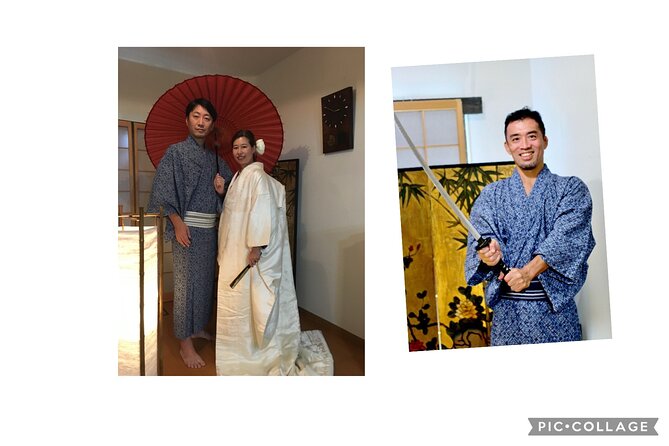
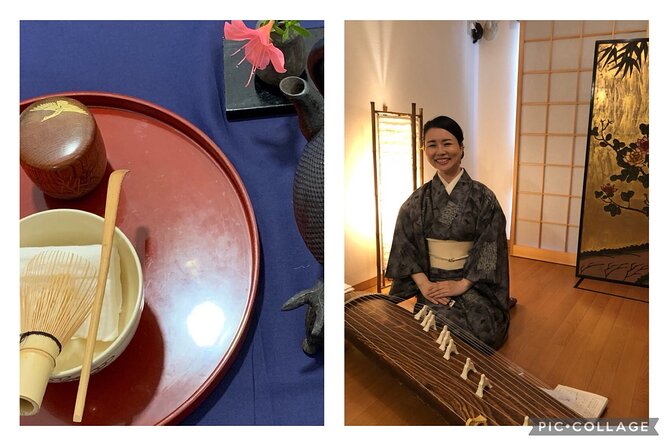
The tea portion includes two bowls of matcha. First, Noriko prepares and serves one to you in a tea ceremony. Then you make a second bowl yourself.
This order is helpful. You first see the rhythm and gestures, then try the process with a better idea of what to do. It is described as a casual tea ceremony, so you do not need to worry about performing every movement perfectly.
The activity offers a gentle introduction to the purpose behind the ceremony. The bowl, tools, preparation, and attention given to serving all matter. Even in a relaxed setting, you can see that matcha is about more than drinking powdered green tea.
The second bowl turns the demonstration into a skill. You may not leave as a tea master, but you will understand the basic process and remember it more clearly because you made the drink yourself.
This part may suit quiet, curious visitors best. If you want a fast sequence of big activities, the measured pace of tea preparation could feel slow. I see that as part of its value, but it is worth knowing before you book.
Hearing and playing the traditional koto
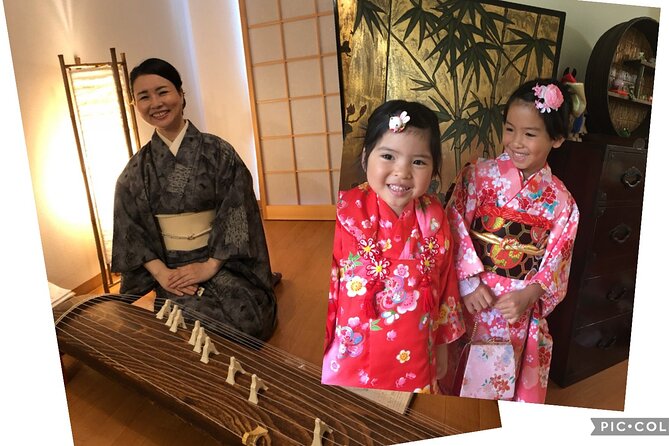
Noriko also introduces you to the koto, a Japanese string instrument. She plays pieces for you first, then gives you a chance to try it yourself with guidance.
The koto has a very different sound from the instruments most visitors encounter in a standard sightseeing program. Hearing it in a private home, at close range, makes the presentation feel personal. You are not simply looking at an instrument behind glass or listening to a short recording.
Playing it yourself is the important step. The activity is designed for beginners, and you receive help creating a pleasing sound. You do not need prior musical training.
The koto segment also gives the five-hour schedule some variety. Cooking is active, tea is quiet, dressing is visual, and music adds another way to connect with Japanese culture. That range is one reason the experience works well for families with different interests.
You should not expect a full music lesson. The description promises an introduction, a performance by the host, and a chance to play. If you want detailed instruction or advanced repertoire, this is not that kind of appointment.
More than food and costumes: a look at home life
One of the most useful details to come through from the experience is its attention to Japanese homes and older wooden-house architecture. Noriko has explained how wooden houses were arranged in the past, adding a layer of daily life to the activities.
That context helps tie everything together. The clothing, food, tea, music, and house are not isolated museum pieces. They belong to different parts of Japanese family and social life.
A private home also changes the questions you can ask. You can be curious about customs, ingredients, music, clothing, and ordinary routines without worrying about holding up a line. Noriko’s replies to detailed questions have been one of the strongest parts of the experience.
Her personality matters here. She is described as friendly, enthusiastic, and eager to share her culture. The warm tone does not mean the activity lacks structure. The day still follows a clear order, but it leaves space for conversation and personal interests.
What the $165.53 price really covers
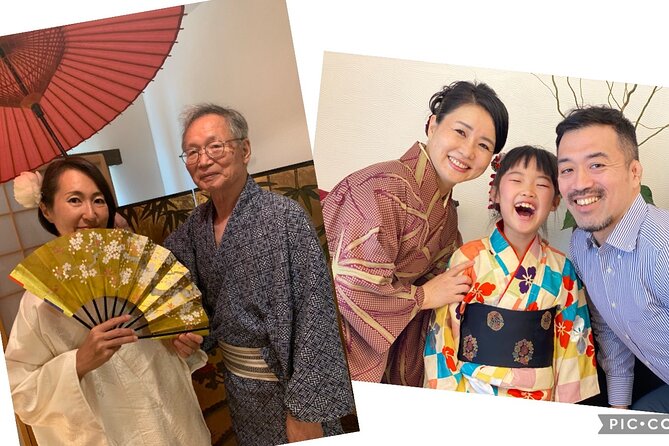
At $165.53 per person, this is not a bargain activity in the usual Tokyo sense. You can eat okonomiyaki, visit a tea house, or see traditional clothing for less if you arrange each part yourself.
The comparison changes when you count what is bundled together. The price covers about five hours of private attention, a station pickup, the walk to the home, a supermarket stop, clothing, lunch preparation and food, two matcha servings, a tea demonstration, koto instruction, and cultural explanations.
You are also paying for convenience. Instead of researching separate places, coordinating different reservations, and moving across Tokyo, you receive one carefully connected experience near the city center. For a family or small group, that can be good value.
The price makes the most sense if you want participation rather than sightseeing alone. It is especially suitable for a first visit to Japan, for families, or for anyone who wants a personal introduction before exploring other parts of the country.
Group discounts are available, but the exact saving is not provided. Since this is a private activity, ask how the discount applies to your party before booking. The total cost can also feel more reasonable when shared across a larger private group.
Who will get the most from this experience
I would recommend this activity to families, couples, and small groups who enjoy learning by doing. Children can take part in cooking, dressing, music, and matcha rather than being asked to listen through a long talk.
It also suits first-time visitors who want basic cultural context. After five hours with Noriko, you should have a clearer understanding of several customs you may encounter elsewhere in Japan.
The activity is a strong choice for a special occasion. A birthday visit has included family celebration and time with Noriko’s daughter, giving the day a personal touch. That kind of setting can make a family memory feel more meaningful than another scheduled attraction.
I would be more cautious if you want a formal ceremony, advanced cooking instruction, or a highly polished stage performance. This is a friendly home visit with several introductory activities. Its strength is the personal contact, not technical depth in one subject.
Service animals are allowed, and the meeting point is near public transportation. The activity is private, with only your group taking part. If you need other accessibility details, contact 和 WA Japan at Home before reserving, since the supplied information does not describe the home’s layout.
Should you book this private home visit?
Book it if you want a broad, personal introduction to Japanese culture and like the idea of making your own lunch, wearing a yukata, preparing matcha, and trying a koto. Noriko’s warmth and willingness to answer questions are central to the experience, so this works best when you are ready to talk and participate.
The strongest reason to choose it is the home setting. You get a look at Japanese daily life that a large group tour usually cannot provide. The five-hour length also gives each activity enough breathing room.
Think twice if $165.53 feels high for a cultural introduction or if your group cannot agree on okonomiyaki versus norimaki. For everyone else, especially families and curious first-time visitors, the mix of food, music, dress, tea, and conversation makes this a well-rounded use of half a day near Tokyo.
You can cancel for a full refund up to 24 hours before the local start time. Changes or cancellations made less than 24 hours ahead are not refunded or accepted.
FAQ
Where does the activity begin?
It begins at Shin-Urayasu Station, at 1 Chome-1 Irifune, Urayasu, Chiba 279-0012, Japan.
How far is Shin-Urayasu from Tokyo Station?
The location is about 20 minutes from Tokyo Station by train.
How far is the home from the meeting point?
The home is about a three-minute walk from the meeting point.
How long does the experience last?
The activity lasts approximately five hours.
Is this a private activity?
Yes. Only your group participates.
Who meets you at the station?
Your host, Noriko, meets you at Shin-Urayasu Station and guides you to the home.
What can you prepare for lunch?
You can choose Hiroshima-style okonomiyaki or norimaki sushi rolls in advance.
Can people in the same group choose different lunch menus?
No. One menu must be selected for the entire group.
Do you get to wear Japanese clothing?
Yes. You change into a cotton yukata, and kimono or ninja-style clothing is included among the photo options.
Does the experience include a tea ceremony and music?
Yes. You receive one bowl of matcha prepared in a casual tea ceremony, prepare a second bowl yourself, hear Noriko play the koto, and try playing it with guidance.
New on our Tokyo list
- Tokyo : Kamikaze Street Drift Ride★ 5.0 · 3 reviews
- Private Zen Meditation in English in Shinjuku, Tokyo★ 5.0 · 3 reviews
- Sumi-e Experience in a relaxing green tea shop in Tokyo★ 5.0 · 3 reviews
- Onsen Spa in Tokyo and Asakusa Bar Hopping with Local Guide★ 5.0 · 3 reviews
- Easy for everyone! Now you can play handmade mini shamisen and show off to everyone! Musical instruments, sweets and live music★ 5.0 · 3 reviews
- Tokyo: Private Tsukiji Street Food & Sake with Local Guide★ 5.0 · 3 reviews
- Mt Fuji Exploration Tour with Free Japanese Kusa Mochi from Tokyo★ 4.5 · 3 reviews
- Tokyo Tsukiji Fish Market Walking and Exploring Hidden Gems Tour★ 5.0 · 3 reviews
Private, compared.
Tokyo 6hr Private Tour with Government-Licensed Guide
Read our review →
Private Tour to Mt. Fuji and Hakone (Fully Licenced Operator)
Read our review →
Tokyo Customized Private Tour (Must See Places in 1 Day)
Read our review →
Mount Fuji Full-Day Private Tour from Tokyo (Customizable)
Read our review →
Private City Highlights Tour with Local Guide
Read our review →
Tokyo 4hr Private Tour with Government-Licensed Guide
Read our review →