
Reviewed · WALKING TOURS
Private Ueno Park Architecture Walking Tour
Ueno Park is famous for cherry blossoms and museums, but its buildings tell another story. This private walk brings you face to face with Le Corbusier’s National Museum of Western Art, Kunio Maekawa’s Tokyo Bunka Kaikan, a carefully restored 1906 library, and four contrasting structures at Tokyo National Museum. You spend less time simply passing through the park and more time learning how modern Japanese architecture developed.
I like the private format, since your guide can focus on your party rather than a fixed crowd. I also like the clear architectural theme. This is not a general museum tour disguised as a walk. One important consideration is the admission information: the tour description says museum entry is included, while the detailed stop notes mark the National Museum of Western Art and Tokyo National Museum admission as not included, and the inclusions list only states a 1,000-yen Tokyo National Museum fee. Confirm this before paying.
In This Review
- Key points at a glance
- Why Ueno Park works so well for an architecture walk
- Starting with Le Corbusier’s National Museum of Western Art
- Comparing Tokyo Bunka Kaikan across the way
- Seeing preservation at the International Library of Children’s Literature
- Four different eras at Tokyo National Museum
- What the private guide adds
- Timing, walking, and the shape of the 3.5-hour route
- What the tour does not try to do
- Is $146.59 per person fair value?
- Who should book this Ueno architecture walk?
- Final booking advice
- FAQ
- How long is the Private Ueno Park Architecture Walking Tour?
- Is this a private tour?
- How many people can join the private tour?
- Can I choose the departure time?
- Which buildings are included in the route?
- Which architect designed the National Museum of Western Art?
- Who designed Tokyo Bunka Kaikan?
- Does the tour include museum admission?
- Is hotel pickup included?
- Where does the tour begin and end?
- Is the tour physically demanding?
- Is cancellation free?
Key points at a glance
- Le Corbusier in Ueno Park: See the National Museum of Western Art, a UNESCO World Cultural Heritage Site for its modern architectural value.
- A private route for your party: Choose a morning or afternoon departure and receive focused commentary from one professional guide.
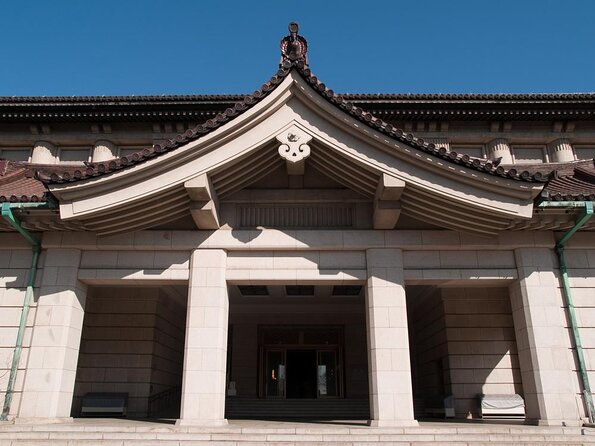
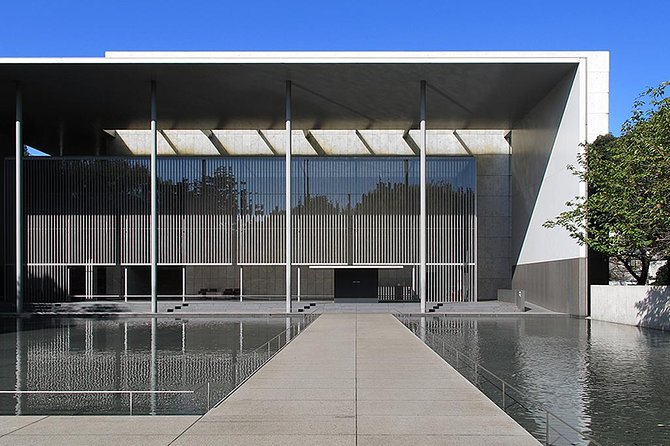
- Four buildings at Tokyo National Museum: Compare Hyokei-kan, Hon-kan, Toyo-kan, and the Gallery of Horyuji Treasure.
- A 1906 library with later additions: Study the International Library of Children’s Literature and its preservation and renovation work.
- Architecture rather than art collections: The museums provide the setting, but the guide’s attention stays on buildings, design, and context.
- A short pause with drinks: The tour includes a cozy break during the three-and-a-half-hour walk.
Why Ueno Park works so well for an architecture walk
Ueno Park gives you an unusually compact look at several periods of Japanese design. In one outing, you can see a major European architect’s work, a Japanese architect shaped by Le Corbusier, a preserved early twentieth-century building, and museum structures dating from 1908 to 1999.
That range gives the tour its value. You are not looking at isolated buildings without context. The route lets you compare how ideas changed across decades, and your guide explains what to notice at each stop.
The setting also helps. The buildings are spread through a well-known cultural area, so the walk connects architecture with Tokyo’s museum district and public park life. You still get the trees, open paths, and seasonal atmosphere Ueno is known for, but the focus is sharper than on an ordinary sightseeing stroll.
This is best for you if you already have some interest in buildings, urban design, or twentieth-century architecture. You do not need specialist training. The guide’s job is to point out the details and explain why each structure matters.
More walking routes in Tokyo:
- Tokyo Tsukiji Fish Market Food and Culture Walking Tour
★ 5.0 · 3,184 reviews - Tokyo: Imperial Palace and Shogun Historical Walking Tour
★ 5.0 · 2,251 reviews - Tokyo: Shinjuku Local Bar and Izakaya Guided Walking Tour
★ 4.9 · 1,794 reviews
Starting with Le Corbusier’s National Museum of Western Art
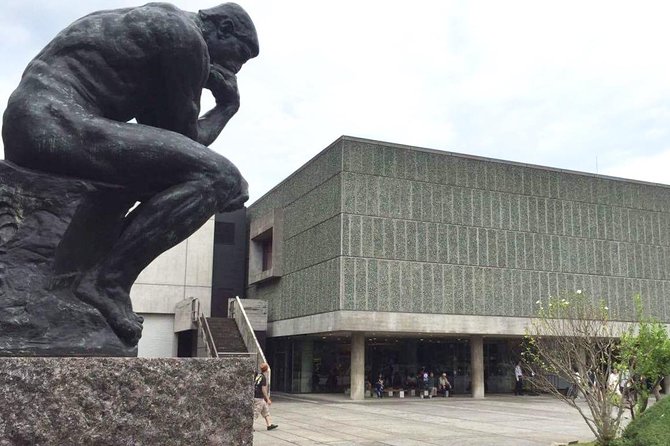
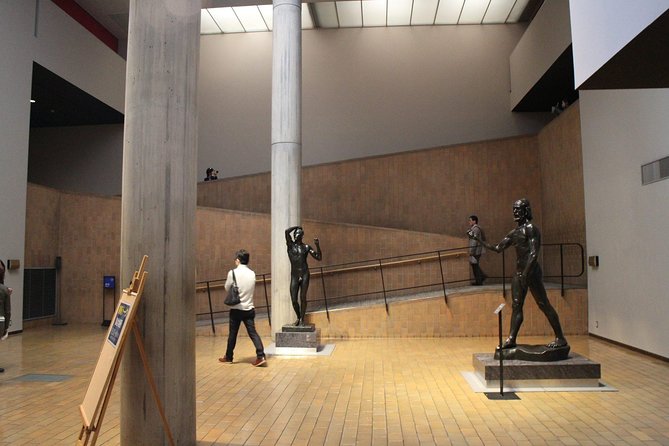
The National Museum of Western Art is the tour’s strongest architectural draw. Designed by Le Corbusier, it was added to the UNESCO World Cultural Heritage list in 2016 because of its modern architectural value.
The planned stop lasts about 40 minutes. That is enough time for your guide to explain the building’s design and place it within the larger story of modern architecture. The museum houses Western paintings and sculptures from before the eighteenth century through the twentieth century, but the tour’s stated focus is the structure itself.
That distinction matters. If you are hoping for a full art collection visit, this route will feel too brief. If you want to understand how the building works, the time is better used. You can appreciate the museum as architecture first, then return on your own later for a longer look at the collection.
The published information is unclear about the admission fee here. The overview says admission to the National Museum of Western Art is included, but the stop details say the admission ticket is not included. Ask the provider to confirm the current arrangement before booking, especially if you are planning your budget closely.
Comparing Tokyo Bunka Kaikan across the way
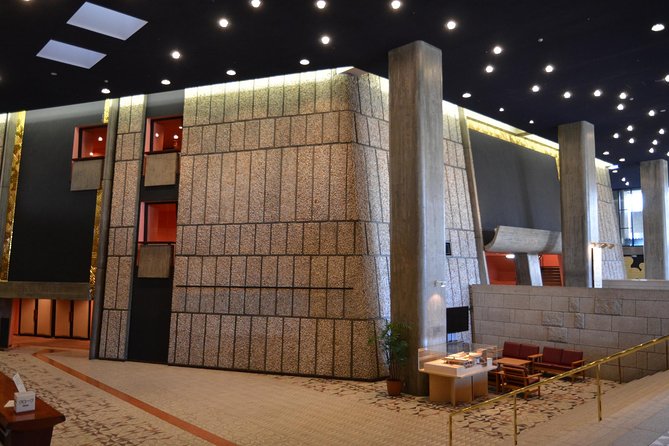
After the Le Corbusier museum, the route pauses for about 15 minutes at Tokyo Bunka Kaikan. Kunio Maekawa designed this building, and he was one of three Japanese apprentices of Le Corbusier.
The location makes the comparison especially useful. Tokyo Bunka Kaikan sits directly opposite the National Museum of Western Art, so you can look from one building to the other as if the two were answering each other across the street.
A short stop works here because the point is not to tour a large interior. It is to see how Maekawa developed his own architectural voice while carrying forward ideas linked to Le Corbusier. Your guide can help you compare the two buildings rather than treating them as separate sights.
This is one of the tour’s most effective moments for a visitor who likes connections. You see influence, adaptation, and difference in the same small area. The building is free to view from the route, according to the tour details.
Seeing preservation at the International Library of Children’s Literature
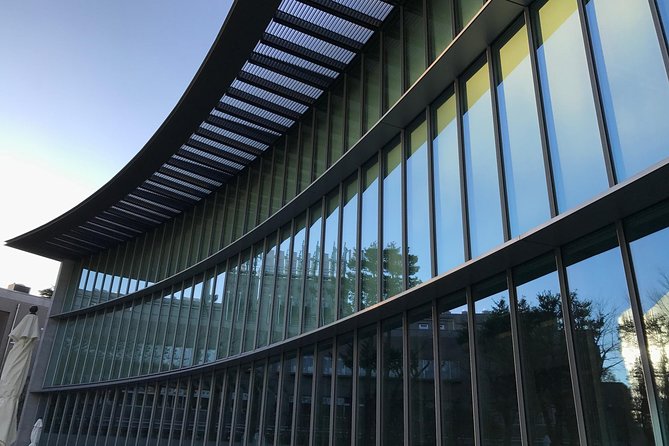
The International Library of Children’s Literature adds a different kind of interest. Built in 1906, it is described as the oldest building in Ueno Park.
The scheduled visit lasts about 40 minutes. The attraction here is not only the original building. You also get to examine its preservation and renovation work, including a newer addition with an eye-catching arched design.
That mix makes this stop useful for anyone interested in how cities handle older buildings. Preservation is rarely just a matter of leaving an old structure untouched. Renovation has to serve a current purpose, and the newer work must sit beside the historic fabric without wiping it out.
The tour details do not promise an extended interior visit or a particular library service. Think of this as an architectural stop where you study the building and the relationship between old and new. It also breaks up the sequence of major museums with a building that has a more specific preservation story.
A few more Tokyo bookings worth comparing
- Mt Fuji and Hakone 1-Day Bus Tour Return by Bullet Train
★ 5.0 · 26,383 reviews - 1-Day Tokyo Bus Tour
★ 5.0 · 14,250 reviews - Tokyo: TOKYO SKYTREE® Admission ticket
★ 4.5 · 11,192 reviews - Tokyo: teamLab Planets TOKYO Digital Art Museum Entry Ticket
★ 4.6 · 9,779 reviews
Four different eras at Tokyo National Museum
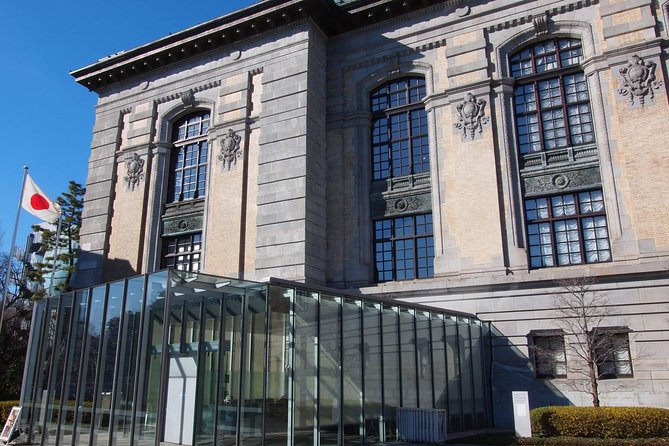
The final major stop is Tokyo National Museum, where you examine four important buildings: Hyokei-kan, Hon-kan, Toyo-kan, and the Gallery of Horyuji Treasure.
The planned time is about 30 minutes. That may sound short for four structures, but the purpose is comparison rather than a full museum visit. The buildings reflect different historical periods, with dates ranging from 1908 to 1999.
This is where the tour broadens beyond the Le Corbusier thread. You see how architecture changes across time, institutions, and design goals. The buildings are not presented as one uniform museum complex. Your guide explains the background of each era and helps you notice the contrasts.
You should not expect to explore every gallery or spend an afternoon with the collections. The tour is centered on exteriors, architectural features, and historical setting. If you want to see the museum’s art and artifacts in detail, plan a separate visit.
The admission details need another check here. The inclusions list says the Tokyo National Museum entrance fee of 1,000 yen is included. Yet the itinerary marks the admission ticket as not included. The safest approach is to ask exactly what the $146.59 price covers and whether you will need to pay at the entrance.
What the private guide adds
A private guide changes the pace and feel of this experience. Only your group participates, so you are not tied to strangers’ interests or questions. You can ask for more explanation at the buildings that catch your attention and move along when a stop has made its point.
The tour description promises insight into each work of architecture. One written assessment specifically praised the guide’s preparation and excellent English, while also noting that the route stayed tightly focused on architecture rather than museum collections. That is a useful description of what you are buying.
The named response connected with the experience is signed Aki. If Aki is assigned to your booking, you can expect the provider’s stated emphasis on modern Japanese structures and their design context. Guide assignment can vary, so confirm the name if that matters to you.
The private format also explains part of the price. At $146.59 per person, this is not a bargain way to enter Ueno’s museums. It becomes easier to justify when you are traveling as a small party and want a tailored explanation rather than an audio guide or a quick look at façades.
Group discounts are available, though the exact discount is not stated. Ask for the rate based on your party size. A larger private group may bring the per-person cost down, but the value depends on how much your group cares about architecture.
Timing, walking, and the shape of the 3.5-hour route
You can choose a morning or afternoon departure. That flexibility helps you fit the walk around other Tokyo plans, though the experience is long enough that you should protect the full three and a half hours.
The listed stops account for about 125 minutes: 40 minutes at the National Museum of Western Art, 15 minutes at Tokyo Bunka Kaikan, 40 minutes at the children’s library, and 30 minutes at Tokyo National Museum. The remaining time covers walking, explanations, transitions, and the included drinks pause.
A moderate level of physical fitness is recommended. No difficult hike is described, but you will be on your feet and moving between buildings in a large park. Wear comfortable shoes, and allow extra energy if you plan to visit more museums after the tour.
The meeting point is at 7-chōme-7-7 Uenokōen in Taito City. The walk ends beside the ticket machines at the park exit of JR Ueno Station, at 7-chōme-1-1 Ueno. That ending is practical because you can continue by train or make your next Tokyo stop without arranging a separate ride.
Hotel pickup and drop-off are not included. You need to reach the starting point yourself, but the area is near public transportation. The mobile ticket and booking confirmation make the basic arrival process simple.
What the tour does not try to do
The most important boundary is the focus. This is an architecture tour, not a broad Ueno Park introduction and not a museum collection tour.
You will learn about the design and setting of the buildings, but you should not expect a detailed explanation of every painting, sculpture, artifact, or gallery. The National Museum of Western Art and Tokyo National Museum are used as architectural subjects, even though both contain major collections.
That narrow focus is a benefit if you want to look at structure, materials, preservation, and historical design. It is a drawback if your main reason for entering the museums is to see their holdings.
The short time at Tokyo National Museum is another limit. Four buildings in 30 minutes means the commentary must stay selective. You will get a useful framework, then can return later if one building interests you more than the others.
Is $146.59 per person fair value?
The price is high compared with simply walking through Ueno Park on your own. You can see several buildings from public paths without paying for a guide, and the museums may be less expensive when visited independently, depending on the final admission arrangements.
The fee makes more sense when you value interpretation. A private professional guide gives you context for Le Corbusier, Maekawa, the 1906 library, and the four Tokyo National Museum structures. You also receive a planned route, a drinks pause, flexible departure time, and the ability to ask questions throughout.
The value improves for a group that shares an interest in design. Since group discounts are offered, ask for the exact price before booking. For a couple or family, the private format can be more pleasant than joining a large group, but the cost still requires a genuine interest in the subject.
The conflicting admission language is the main issue. Because one section says both major museum entries are included, another says tickets are not included, and the inclusions list mentions only the 1,000-yen Tokyo National Museum fee, get the answer in writing. That small step will prevent a surprise at the entrance.
Who should book this Ueno architecture walk?
I would choose this tour if you want to see Ueno Park through its buildings rather than only its blossoms and museum labels. It suits architecture students, design fans, photographers who want context, and curious visitors who prefer a focused private walk.
It also works well for a party with mixed experience. You do not need to know Le Corbusier or Maekawa in advance. A good guide can give beginners a clear starting point while answering more detailed questions from people who already follow modern architecture.
I would skip it if you want a long museum visit, a general history tour, or a relaxed stroll with little commentary. The 3.5-hour length and moderate fitness requirement also make it less appealing if you prefer to spend most of the day sitting indoors.
The overall rating is 4.9 from eight reviews, a small sample but a strong signal. The clearest praise centers on the informative, well-prepared guiding and the beauty of the park setting. The clearest caution is equally useful: the tour stays focused on architecture, not art or artifacts.
Final booking advice
Book this experience if you want a private, tightly planned look at Ueno Park’s architecture and are willing to pay for expert explanation. The Le Corbusier and Maekawa comparison, the 1906 library, and the four-building museum study give the walk a clear purpose.
Before booking, confirm two things: the exact museum admission policy and the assigned guide. Free cancellation is available up to 24 hours before the start time, but changes or cancellations inside that window are not accepted for a refund. With those details settled, this is a strong choice for seeing a side of Ueno Park that many people walk past.
FAQ
How long is the Private Ueno Park Architecture Walking Tour?
The tour lasts approximately 3 hours and 30 minutes.
Is this a private tour?
Yes. Only your group participates in the activity.
How many people can join the private tour?
The supplied details do not state a maximum group size. Group discounts are available, so ask the provider for the rate and capacity for your party.
Can I choose the departure time?
Yes. You can choose a morning or afternoon departure.
Which buildings are included in the route?
The route includes the National Museum of Western Art, Tokyo Bunka Kaikan, the International Library of Children’s Literature, and Tokyo National Museum.
Which architect designed the National Museum of Western Art?
Le Corbusier designed the National Museum of Western Art.
Who designed Tokyo Bunka Kaikan?
Kunio Maekawa designed Tokyo Bunka Kaikan. He was one of three Japanese apprentices of Le Corbusier.
Does the tour include museum admission?
The supplied details are inconsistent. The overview says admission to the National Museum of Western Art and Tokyo National Museum is included. The stop details mark both admission tickets as not included, while the inclusions list specifically mentions a 1,000-yen Tokyo National Museum entrance fee. Confirm the current policy with the provider.
Is hotel pickup included?
No. Hotel pickup and drop-off are not included.
Where does the tour begin and end?
It begins at 7-chōme-7-7 Uenokōen in Taito City, Tokyo. It ends beside the ticket machines at the park exit of JR Ueno Station, at 7-chōme-1-1 Ueno.
Is the tour physically demanding?
A moderate level of physical fitness is recommended. You should expect to walk between several buildings and remain on your feet for much of the 3.5-hour experience.
Is cancellation free?
You can cancel up to 24 hours before the start time for a full refund. Cancellations or changes made less than 24 hours before the start time are not accepted for a refund.
New on our Tokyo list
- Sumi-e Experience in a relaxing green tea shop in Tokyo★ 5.0 · 3 reviews
- Tokyo : Kamikaze Street Drift Ride★ 5.0 · 3 reviews
- Private Zen Meditation in English in Shinjuku, Tokyo★ 5.0 · 3 reviews
- Onsen Spa in Tokyo and Asakusa Bar Hopping with Local Guide★ 5.0 · 3 reviews
- Easy for everyone! Now you can play handmade mini shamisen and show off to everyone! Musical instruments, sweets and live music★ 5.0 · 3 reviews
- Tokyo: Private Tsukiji Street Food & Sake with Local Guide★ 5.0 · 3 reviews
- Mt Fuji Exploration Tour with Free Japanese Kusa Mochi from Tokyo★ 4.5 · 3 reviews
- Tokyo Tsukiji Fish Market Walking and Exploring Hidden Gems Tour★ 5.0 · 3 reviews
Walking Tours, compared.
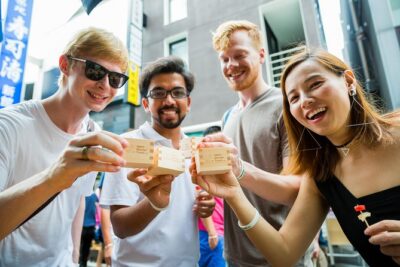
Tokyo Tsukiji Fish Market Food and Culture Walking Tour
Read our review →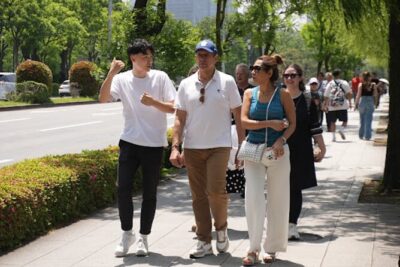
Imperial Palace and Shogun Historical Walking Tour
Read our review →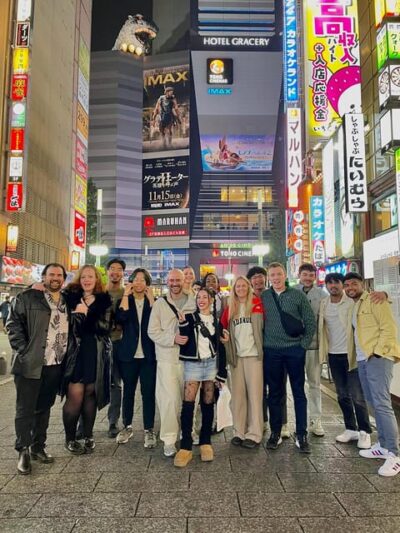
Shinjuku Local Bar and Izakaya Guided Walking Tour
Read our review →
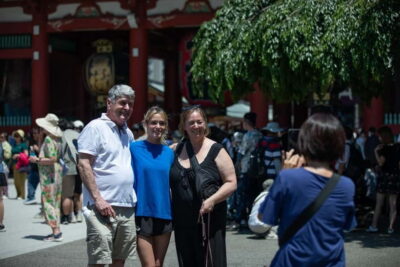
Asakusa Walking Tour with Sensoji Temple Visit
Read our review →
Tokyo Castle & Imperial PalaceーShogun Walking Tour
Read our review →
Browse the lists this tour appears in