
Reviewed · WALKING TOURS
Private Walking Tour: The Little Kyoto of Tokyo, Kagurazaka
Kagurazaka gives you a rare look at old Tokyo without leaving the city center. In about two hours, you move from a Kengo Kuma-designed shopping space to shrines, a Bishamonten temple, Edo Castle ruins, and narrow lanes linked with geisha culture and Japanese literature. The mix of old and modern is the real draw.
I like the private format, since you can ask questions instead of following a fixed crowd. I also like the route’s range: samurai-era power, religious life, local food, traditional entertainment, and ordinary residential streets all appear in one compact walk. Guides may speak English, French, German, or Spanish.
The main caution is value. At $104.05 per person, this is a serious price for roughly two hours, especially since snacks are not included and the cancellation policy is strict. You are paying for personal guidance and context, not a long list of admissions.
In This Review
- Key points at a glance
- Why Kagurazaka feels unlike most of Tokyo
- Starting at AKOMEYA TOKYO in la kagū
- Akagi Shrine and the local religious story
- Zenkoku-ji, the Bishamonten temple
- Tsukudo Hachiman Shrine and a much older past
- The Ushigome Gate and Edo Castle defenses
- Food, shopping, and the chance for serendipity
- What a private guide adds
- Timing, meeting point, and walking demands
- Is $104.05 per person fair?
- Who should book this Kagurazaka walk?
- Should you book it?
- FAQ
- Where does the private Kagurazaka walking tour start?
- Where does the tour end?
- How long does the walking tour last?
- Is this a private tour?
- What languages can the guide speak?
- What places are included on the route?
- Are entrance fees included?
- Are snacks included?
- Can I cancel or change the booking?
Key points at a glance
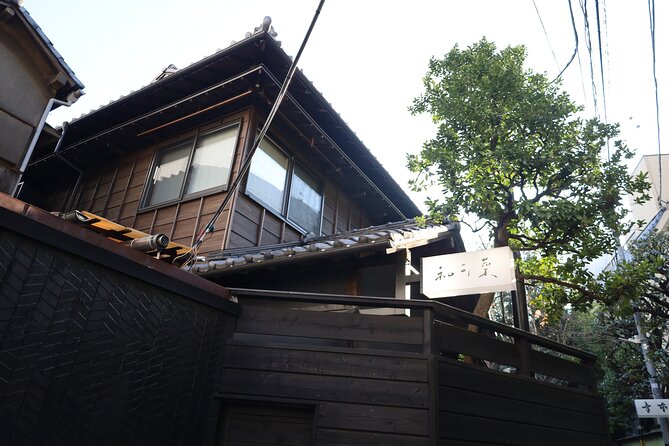
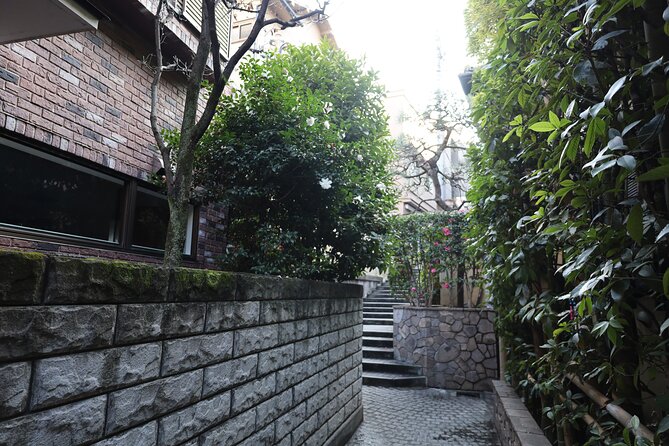
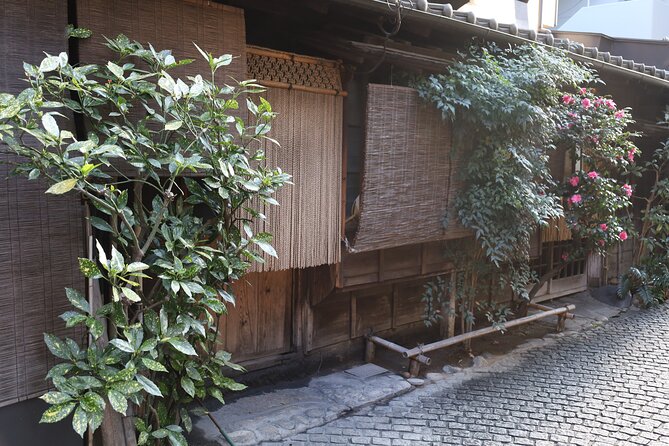
- Kagurazaka’s cobblestone lanes offer a quieter side of central Tokyo, with black wooden fences and small residential streets.
- Five included stops cover modern design, Shinto shrines, Buddhist worship, and the remains of an Edo Castle gate.
- Private touring lets your group ask questions and adjust the conversation to your interests.
- Food is available along the way, but local sweets, doughnuts, tofu desserts, and croquettes cost extra.
- The route connects several eras, from a shrine said to be about 1,200 years old to a 1636 castle gate.
- The walk ends at JR Iidabashi Station, making it practical to continue sightseeing afterward.
Why Kagurazaka feels unlike most of Tokyo
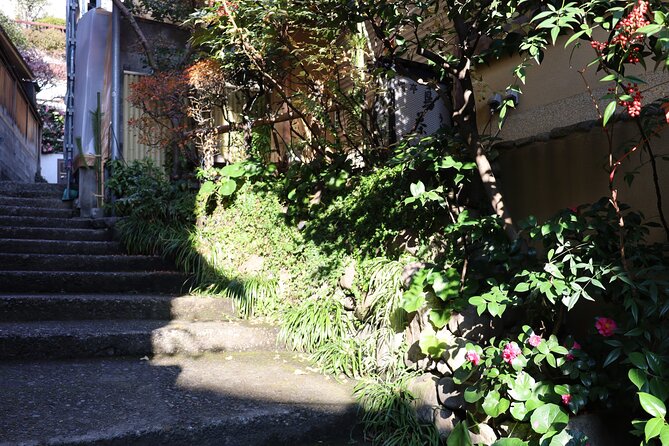
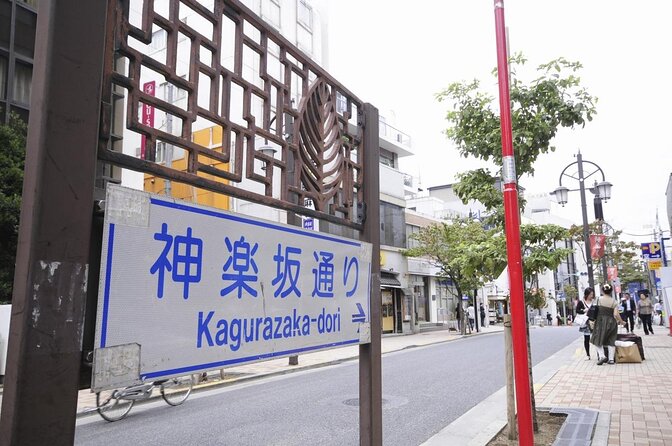
Kagurazaka was shaped by the Tokugawa shogunate and developed around an important route near Edo Castle. The area still has steep lanes, stone paving, dark wooden fences, small shrines, and narrow streets where modern Tokyo does not completely erase the past.
The nickname Little Kyoto is useful, but do not expect a miniature version of Kyoto’s major temples. Kagurazaka’s charm is more local and piecemeal. You get a shrine tucked beside shops, a temple on a busy street, a remnant of castle defenses, and quiet lanes where the city suddenly feels far away.
This makes the walk especially good for you if you have already seen the major Tokyo sights and want a neighborhood with a slower rhythm. It also works early in a Tokyo visit if you want a guide to explain how religion, feudal government, entertainment districts, and modern city life fit together.
The tour description points to possible encounters with geisha and to small heart-shaped stones along the route. These details are best treated as things you might notice, not guaranteed performances or scheduled stops. The pleasure here comes from observation and chance.
More walking routes in Tokyo:
- Tokyo Tsukiji Fish Market Food and Culture Walking Tour
★ 5.0 · 3,184 reviews - Tokyo: Imperial Palace and Shogun Historical Walking Tour
★ 5.0 · 2,251 reviews - Tokyo: Shinjuku Local Bar and Izakaya Guided Walking Tour
★ 4.9 · 1,794 reviews
Starting at AKOMEYA TOKYO in la kagū
The first stop is AKOMEYA TOKYO in la kagū, a commercial space created from a warehouse formerly connected with Shinchosha Publishing. Architect Kengo Kuma renovated the building, giving the tour an immediate link between modern Japanese design and everyday culture.
Inside, you can browse rice, dashi, seasonings, and other high-quality food items. Admission is free, and the planned stop lasts about 10 minutes.
This is a smart opening because it introduces Japan through objects you can understand and buy, rather than beginning with a long historical lecture. Dashi and seasonings also give you a practical sense of the ingredients behind Japanese home cooking.
The limitation is simple: 10 minutes is short. If you like shopping, you may want to return later instead of trying to browse carefully during the tour. The stop is more about orientation than a full food tasting.
Akagi Shrine and the local religious story
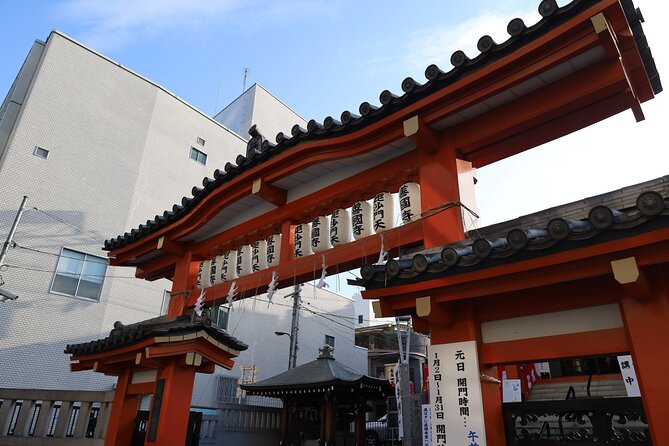
Akagi Shrine is scheduled for about 15 minutes. Its story reaches back to 1300, when Ohgoshi Hikotaro Shigeharu moved from the area near Mount Akagi in Gunma Prefecture and established the shrine. It was relocated to its current site in 1555.
That background helps you see shrines as part of migration and community life, not just as old buildings. A family or group arriving from another region brought its local religious tradition with it, then reshaped the neighborhood around that foundation.
Your guide can explain the difference between a Shinto shrine and the Buddhist sites later in the walk. That comparison is one of the tour’s useful features. You are not simply ticking off religious buildings. You are learning how several traditions occupied the same city.
The scheduled visit is brief, so do not expect a long ceremony or a detailed architectural study. The value comes from the explanation and the chance to connect this one site with the wider story of Kagurazaka.
Zenkoku-ji, the Bishamonten temple
Zenkoku-ji Temple, also called Bishamonten, receives another 15 minutes. Tokugawa Ieyasu ordered its establishment in 1595 in Nihonbashi Bakurocho as a place intended to protect the nation. Fires later forced the temple to move, and it eventually reached Kagurazaka.
This stop brings the first shogun of the Edo government directly into the walk. You can connect the temple’s location with the political importance of the area, then see how religious sites survived repeated fires and urban change.
The name Bishamonten refers to a Buddhist guardian figure. Your guide can help you understand why the temple carries that identity and how it differs from Akagi Shrine. That kind of explanation matters in Japan, where a quick glance at a gate or altar does not always tell you which tradition you are seeing.
Zenkoku-ji also helps explain Kagurazaka’s public character. The area is not only a quiet residential quarter. It has long been a place of movement, worship, shopping, and entertainment.
A few more Tokyo bookings worth comparing
- Mt Fuji and Hakone 1-Day Bus Tour Return by Bullet Train
★ 5.0 · 26,383 reviews - 1-Day Tokyo Bus Tour
★ 5.0 · 14,250 reviews - Tokyo: TOKYO SKYTREE® Admission ticket
★ 4.5 · 11,192 reviews - Tokyo: teamLab Planets TOKYO Digital Art Museum Entry Ticket
★ 4.6 · 9,779 reviews
Tsukudo Hachiman Shrine and a much older past
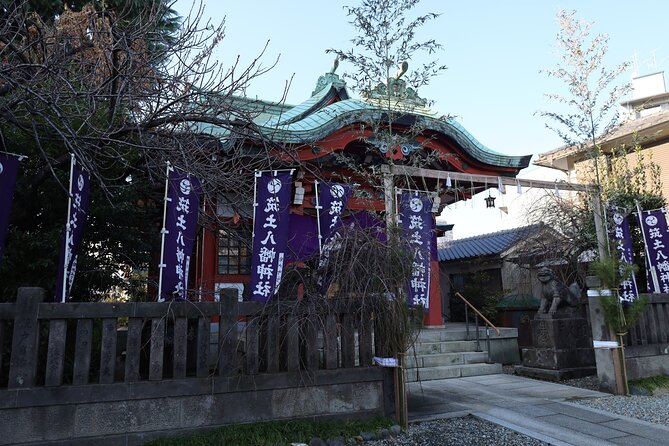
Tsukudo Hachiman Shrine is described as roughly 1,200 years old, making it one of the route’s oldest religious sites. The shrine also preserves a tradition involving a statue of Amitabha Buddha said to have been carved by Saicho, an important Buddhist figure.
The stop lasts about 15 minutes. That is enough time for a focused explanation, though not for a full exploration of every story attached to the shrine.
This is a useful place to consider how Japanese religious history does not fit neatly into separate boxes. The route takes you from a Shinto shrine to Buddhist temples, then to a shrine with a tradition involving a Buddhist image. Your guide’s interpretation is important here, since the physical sites alone may not explain the connections.
If you enjoy old stories, sacred objects, and the way local traditions survive in a large city, this should be one of the most rewarding parts of the walk. If your main goal is grand architecture, the stop may feel modest.
The Ushigome Gate and Edo Castle defenses
The final listed stop is the remains of Ushigome Gate, with about 10 minutes set aside. The gate was built in 1636 as part of the outer moat of Edo Castle. What remains today is mainly the stonework, but the scale gives you a sense of how substantial the original structure was.
This is where the shogun-era story becomes physical. Instead of only hearing about political power, you see the defensive system that protected the castle city. The stones are not a complete gate, yet they make the old boundary easier to picture.
The name Ushigome comes from the area’s earlier association with cattle, according to the tour information. That small detail gives the neighborhood a more ordinary past, before it became part of a major urban center.
Ten minutes is enough for a concise explanation and photographs. Do not expect a full castle visit. This is a surviving fragment, and its appeal depends on your interest in reading history from what remains.
Food, shopping, and the chance for serendipity
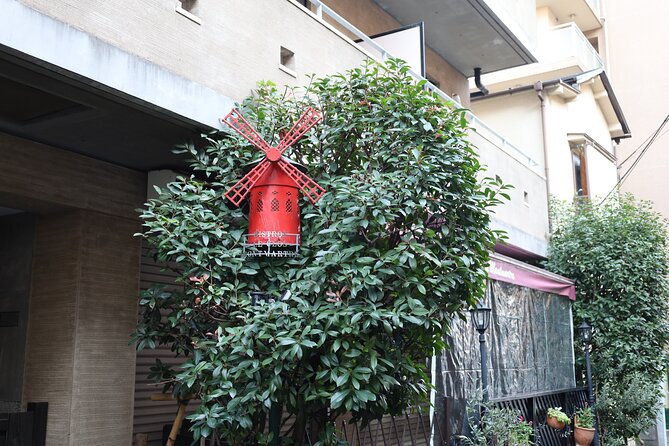
Snacks are not included, but Kagurazaka offers several chances to buy something along the way. Possibilities named for the area include Japanese sweets, doughnuts, tofu desserts, and croquettes from local butcher shops.
That arrangement has advantages. You choose what interests you and pay only for what you want. It also means the tour is not a food tour, so you should not book it expecting a planned tasting menu or a series of included samples.
I would carry some yen or a payment method accepted by small shops, though the available information does not promise specific payment options. If you want to try local food, allow a little flexibility in your own spending and appetite.
The route’s idea of serendipity also matters. You may notice a heart-shaped stone, a quiet lane, or signs of Kagurazaka’s geisha past. The tour offers a framework for seeing these things, but it cannot schedule every chance encounter.
What a private guide adds
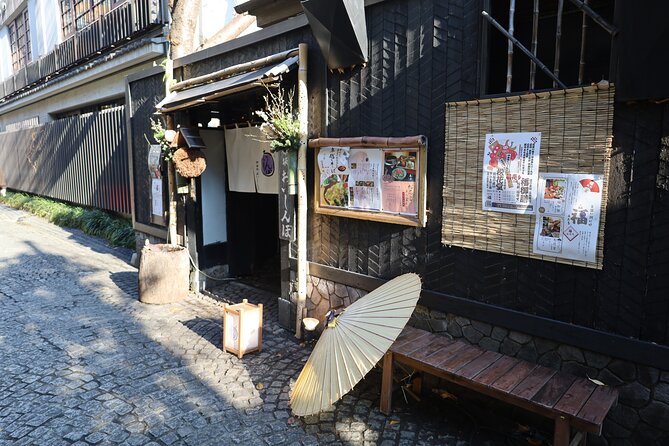
A private tour changes the feel of a short walk. With only your group taking part, you can ask why a shrine moved, how a gate fit into Edo Castle’s defenses, or how Kagurazaka developed its entertainment culture. You do not have to save every question for the end.
The tour includes a local guide in English, French, German, or Spanish. The booking information does not guarantee a particular guide. Shinya Yamada is identified as the company founder, and Chiharu Iida is identified as a guide in the provider’s tour work, but you should not assume either will lead your departure.
The strongest praise connected with the guiding centers on friendly explanations, historical information, and the freedom to ask many questions in a small group. That is exactly where the private format earns its keep.
Still, a private tour is only as good as the match between your interests and the guide’s approach. If you want a fast architectural survey, say so. If you care more about food, literature, religion, or the former geisha district, tell the guide early.
Timing, meeting point, and walking demands
The tour starts at Kagurazaka Station, at the Yaraicho area in Shinjuku City. It ends at JR Iidabashi Station, West Exit. That one-way structure is convenient because you do not need to return to the starting point.
The advertised duration is approximately two hours. The listed stops total about 65 minutes, leaving the balance for walking, transitions, and explanations. That is a useful clue: this is an active neighborhood walk, not five long site visits.
You should wear comfortable shoes. The route includes cobblestone paths and narrow streets, and the neighborhood’s charm depends on walking rather than riding between points. Most people can participate, and service animals are allowed. The tour is near public transportation.
The operating hours listed for the experience are 9:00 AM to 8:30 PM, Monday through Sunday, for the stated booking period. Your exact start time should be confirmed when you reserve.
Is $104.05 per person fair?
At $104.05 per person, the price is high for a two-hour walk if you are measuring only distance, admission, and food. All five listed stops have free admission, and snacks are extra.
The calculation changes if you value a private guide. You are paying for a focused route, multilingual service, local interpretation, and the ability to ask questions without a large group. For a couple or family that wants a personal introduction to an overlooked part of Tokyo, that can be worthwhile.
Group discounts may improve the value for larger private parties. The key question is how much you want context. If you are happy to wander Kagurazaka with a map and read signs on your own, the price will feel steep. If you want someone to connect samurai culture, religious sites, literature, local food, and the geisha district in one walk, the fee makes more sense.
The non-refundable policy also deserves attention. You cannot change or cancel for a refund, so book only when your Tokyo schedule is firm.
Who should book this Kagurazaka walk?
I would recommend it to first-time visitors who want a calm break from Tokyo’s major crossings and towers. It is also a strong fit for repeat visitors, history fans, architecture lovers, and anyone who prefers neighborhoods over headline attractions.
Families and small groups may appreciate the private setup, especially if different people want to ask different questions. Couples can use the walk as a gentle introduction to Kagurazaka before returning for dinner or shopping.
I would be more cautious if you want a food-focused tour, a formal geisha performance, or a long visit inside major historic buildings. Those are not promised here. The route is about streets, stories, religious sites, remains, and local atmosphere.
Should you book it?
Book this tour if you want personal historical context in a quieter Tokyo neighborhood and value a guide who can adjust the conversation to your group. The route covers a lot in two hours, and the finish at Iidabashi Station makes it easy to continue your day.
Skip it if the $104.05 price feels too high for free-entry sights, or if you prefer exploring independently. For the right visitor, Kagurazaka offers a thoughtful look at old and modern Tokyo in a compact walk. Just budget extra for snacks and treat the possible geisha or heart-stone sightings as pleasant surprises, not guarantees.
FAQ
Where does the private Kagurazaka walking tour start?
It starts at Kagurazaka Station in the Yaraicho area of Shinjuku City, Tokyo.
Where does the tour end?
The tour ends at Iidabashi Station, at the JR Iidabashi Station West Exit.
How long does the walking tour last?
The tour lasts approximately two hours.
Is this a private tour?
Yes. Only your group participates in the activity.
What languages can the guide speak?
A multilingual local guide is provided in English, French, German, or Spanish.
What places are included on the route?
The listed stops are AKOMEYA TOKYO in la kagū, Akagi Shrine, Zenkoku-ji Temple, Tsukudo Hachiman Shrine, and the remains of Ushigome Gate.
Are entrance fees included?
Admission is free at the listed stops, and no separate admission charge is included or required for those sites.
Are snacks included?
No. You can buy local sweets, doughnuts, tofu desserts, croquettes, and other foods separately.
Can I cancel or change the booking?
No. The experience is non-refundable and cannot be changed for any reason.
New on our Tokyo list
- Sumi-e Experience in a relaxing green tea shop in Tokyo★ 5.0 · 3 reviews
- Tokyo : Kamikaze Street Drift Ride★ 5.0 · 3 reviews
- Private Zen Meditation in English in Shinjuku, Tokyo★ 5.0 · 3 reviews
- Onsen Spa in Tokyo and Asakusa Bar Hopping with Local Guide★ 5.0 · 3 reviews
- Easy for everyone! Now you can play handmade mini shamisen and show off to everyone! Musical instruments, sweets and live music★ 5.0 · 3 reviews
- Tokyo: Private Tsukiji Street Food & Sake with Local Guide★ 5.0 · 3 reviews
- Mt Fuji Exploration Tour with Free Japanese Kusa Mochi from Tokyo★ 4.5 · 3 reviews
- Tokyo Tsukiji Fish Market Walking and Exploring Hidden Gems Tour★ 5.0 · 3 reviews
Walking Tours, compared.

Tokyo Tsukiji Fish Market Food and Culture Walking Tour
Read our review →
Imperial Palace and Shogun Historical Walking Tour
Read our review →
Shinjuku Local Bar and Izakaya Guided Walking Tour
Read our review →

Asakusa Walking Tour with Sensoji Temple Visit
Read our review →
Tokyo Castle & Imperial PalaceーShogun Walking Tour
Read our review →
Browse the lists this tour appears in