
Reviewed · ANIME & POP CULTURE TOURS
Professional Japanese Anime Voice Acting Workshop in Tokyo
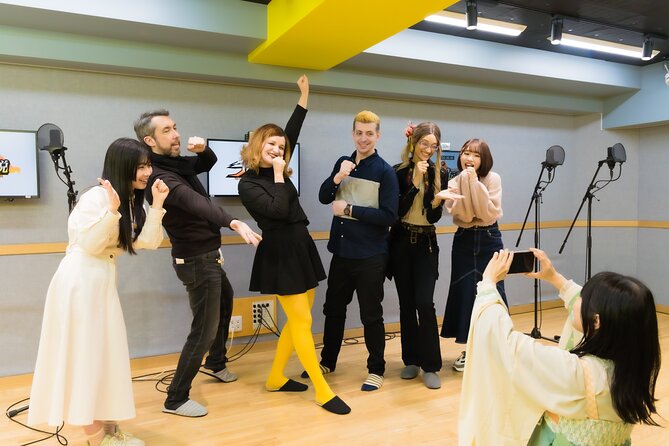
The best part of this Tokyo workshop is that you do not just watch anime or tour a themed shop. You step up to a real microphone, follow a Japanese script, and try to match your voice to animation. I like the hands-on recording and the patient help from English-speaking guides, including Yuri and Yamamoto in some sessions. I also like that professional voice actors coach you through the work rather than leaving you to guess.
The main thing to consider is the price: $172.65 per person is a serious charge for about two hours. The session is also non-refundable, so you need to be sure your Tokyo schedule and energy level are settled before booking.
In This Review
- Key points at a glance
- Your first step at animate Ikebukuro
- What happens before the microphone
- Learning to sound like a character
- Matching your voice to silent animation
- Why the English guide makes a real difference
- The studio recording and your digital keepsake
- Is $172.65 a fair price?
- Who will enjoy this workshop most?
- Practical planning for your Tokyo day
- Should you book the anime voice acting workshop?
- FAQ
- Where does the workshop begin?
- What time does the activity start?
- How long does the workshop last?
- Is Japanese language ability required?
- Who teaches the voice acting?
- What is included in the price?
- Is the activity suitable for beginners?
- How many people can join?
Key points at a glance
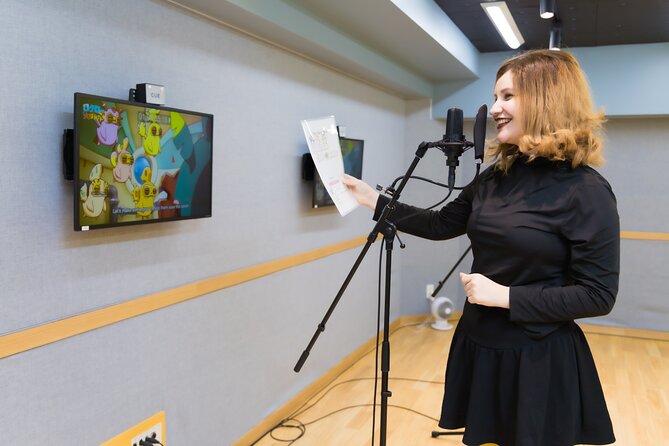
- Record in a real studio: You receive audio data with the animation by email later.
- No Japanese required: The script is made for English speakers with limited Japanese ability, and an English-speaking guide translates the instructions.
- Learn from working professionals: The voice actors teach microphone use, script reading, pronunciation, and emotional delivery.
- Meet in anime central Ikebukuro: The workshop starts outside the animate Ikebukuro main store, a natural spot for fans to gather.
- Small group setting: The maximum group size is 10, which gives the session a more personal feel than a large class.
- Beginners can take part: You practice the lines before recording, so you do not need acting or Japanese experience.
Your first step at animate Ikebukuro
The meeting point is the animate Ikebukuro main store at 1-chōme-20-7 Higashiikebukuro, Toshima City. The start time is 2:45 pm, and the activity returns to this same meeting point when it ends.
That location matters. Ikebukuro is one of Tokyo’s best-known districts for anime, manga, games, and cosplay culture. Meeting at animate gives you an easy landmark and puts the workshop in the right setting from the start. You are not being sent to an anonymous office on the edge of town.
Plan to arrive with enough time to find the store and settle down. The activity is near public transportation, but Tokyo station areas can still take a few minutes to navigate, especially if you are coming from another part of the city. Your mobile ticket is useful at the meeting point, so keep it ready on your phone.
The group can have up to 10 people. That is small enough to avoid the feel of a crowded tour, though the exact number in your session can vary. If you are shy, a group of 10 may still feel like a performance audience at first. The instructors and guide are used to beginners, which helps take some of the pressure off.
More anime and pop-culture days:
- Official Street Go-Kart Tour – Akihabara
★ 5.0 · 1,578 reviews - Tokyo Go Kart: Asakusa, Skytree, and Akihabara **IDP MUST**
★ 5.0 · 988 reviews - Akihabara Anime & Game Adventure Walking Tour (Group or Private)
★ 5.0 · 404 reviews
What happens before the microphone
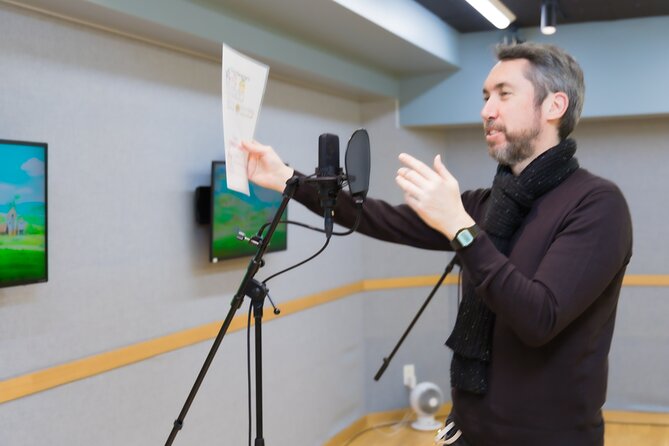
The workshop begins with an explanation of voice acting and the basic work involved. You learn how to stand in front of a microphone, read a script, and use your voice to express a character’s feelings.
This teaching is more useful than simply being handed a line and told to perform it. Anime voice acting depends on timing, pronunciation, volume, and emotion. A line that looks simple on paper can sound flat if you read it without a clear feeling behind it. The professional instructor helps you understand what the character is doing, not just what the words mean.
The session is conducted in Japanese, but the English-speaking guide supports you throughout. That translation is a key part of the experience. You are not expected to understand every instruction from the voice actor, and you are not left trying to copy a performance without context.
The workshop materials are prepared for people with little or no Japanese. The script uses approachable lines, and the group practices together before recording. If you can read a short romanized or Japanese script with help, you should be able to take part. The information provided does not promise a particular script format, so it is sensible to ask the guide for clarification if you need help with reading Japanese characters.
Bring a drink. Drinks are not included, and the information specifically recommends bringing one. A bottle of water is useful when you are speaking repeatedly, especially if nerves make your throat dry.
Learning to sound like a character
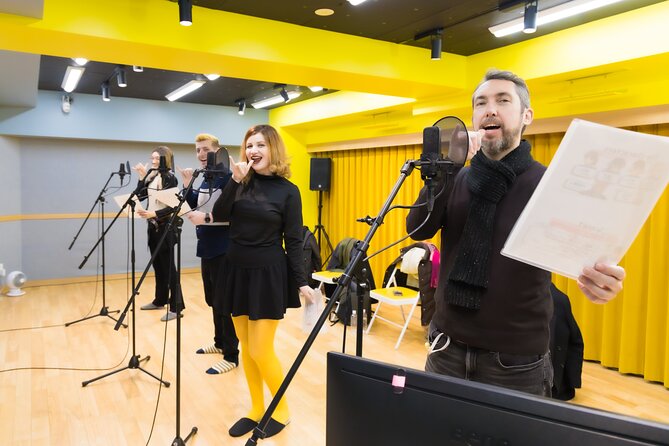
The heart of the session is choosing a character role and trying to bring it to life. You are not simply repeating words into a microphone. You are asked to make choices about mood, reaction, and energy.
This is where the workshop can feel surprisingly demanding. A line may need excitement, fear, surprise, anger, or warmth. The instructor gives advice on pronunciation and the emotions to use, then lets you try again. Repeating a line is part of the lesson, not a sign that you have failed.
One session described by a participant included several recording attempts as the tension rose. That is a useful expectation to have. Your first take may be nervous or too quiet. With practice, you start to understand the rhythm of the scene and gain confidence in front of the microphone.
You may also receive direct advice about acting technique. The aim is not to turn you into a professional voice actor in two hours. Instead, you get a compact introduction to the skills professionals use: clear speech, controlled volume, timing, and emotional expression.
The instructor’s approach matters a lot here. Named staff in past sessions have included Yume-sensei, described as a real voice actor, along with English-support staff such as Yuri and Yamamoto. The specific instructor and translator for your date may differ, but the format calls for professional voice-actor guidance and translation.
Matching your voice to silent animation
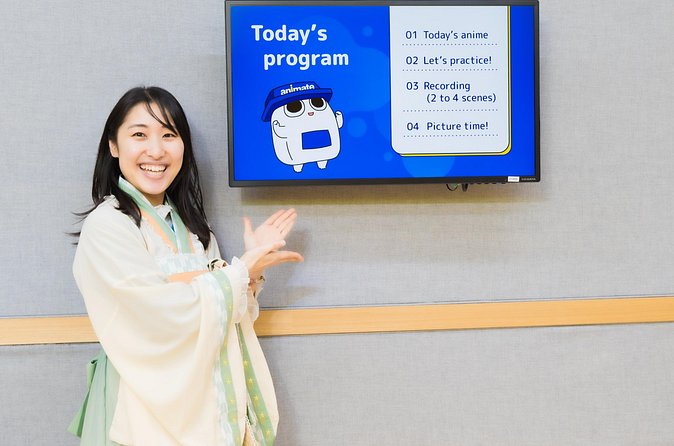
After practice, you record while watching animation without the original spoken dialogue. This is the most distinctive part of the activity. You must watch the character’s movement, judge the timing, and deliver your line at the right moment.
That process is called dubbing, and it requires more focus than ordinary script reading. A character may open their mouth for only a short time, or react quickly to something on screen. You need to listen to the instructor, follow the visual cue, and perform at the same time.
The silent animation gives the exercise a clear goal. You are not standing in a studio reciting disconnected sentences. You are responding to something on screen and trying to fit your voice into a scene.
You will record in Japanese, even if you do not speak Japanese. That may sound intimidating, but the script and practice period are built for English speakers with limited ability. You are coached through the lines before the recording begins, and the guide translates what you need to know.
Still, do not expect the experience to be effortless. You may need to repeat sounds or phrases several times. If your main goal is a polished Japanese performance, your result will depend on how closely you follow the pronunciation help and how willing you are to try the line again.
A few more Tokyo bookings worth comparing
- Sushi Making Tokyo Roll and Authentic Japanese Sushi Class
★ 5.0 · 3,971 reviews - Tokyo: Roll and Authentic Sushi Making Class in Asakusa
★ 4.9 · 1,957 reviews - Tokyo Shinjuku Chopsticks Making Class
★ 5.0 · 1,763 reviews - Tokyo: Sushi Making Class in a Happi Coat near a Famous Spot
★ 4.9 · 1,377 reviews
Why the English guide makes a real difference
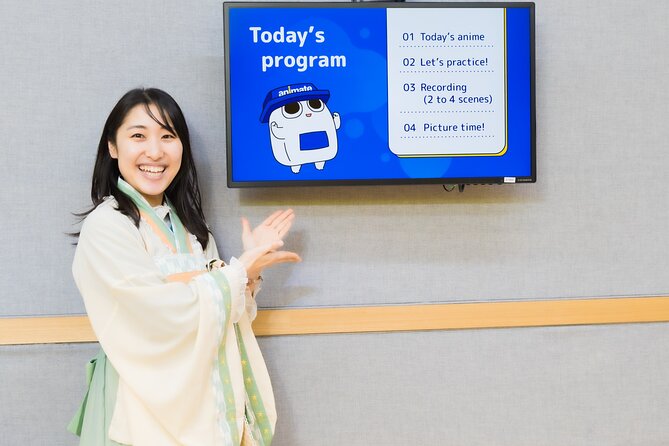
The English guide is not a minor extra. For many people, translation will determine whether the workshop feels approachable or confusing.
The professional voice actor can focus on demonstrating technique, while the guide explains the instructions and answers questions in English. You can ask what an emotion means, when to speak, or how to approach a line without stopping the lesson to solve a language problem.
This support also helps with nerves. A first recording can feel exposed, especially when you are performing in front of other people. Calm translation and clear explanations make it easier to understand what is expected before you step up.
The setup is especially useful for anime fans who know the visual style and characters but do not know much Japanese. You can enjoy the sound and performance side of anime without pretending to have language skills you do not have.
I would still keep your expectations realistic. Translation does not mean every part of the session becomes an English-language acting class. The actual recording is in Japanese, and you need to be willing to repeat unfamiliar sounds. The reward is trying something outside your normal comfort zone, not avoiding every challenge.
The studio recording and your digital keepsake
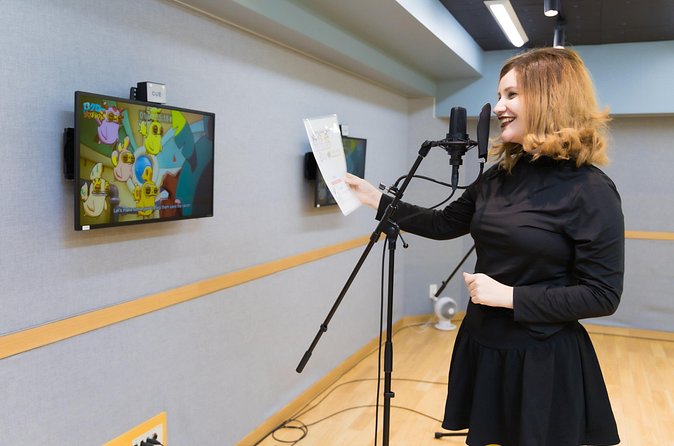
The workshop includes studio use and an audio file with the animation. The finished data is sent by email at a later date, so you should not expect to walk away with it immediately.
That recording gives the $172.65 fee more substance than a short demonstration. You have a personal result to keep, share, and revisit later. It also lets you hear how the performance changed from your first attempt to the final version.
The exact delivery timing is not stated, so check your email after the activity and make sure the provider has the correct address. The file is part of the included package, but the experience does not promise a professionally edited commercial production. Think of it as a personal souvenir from the session.
Past descriptions of the workshop place some sessions at about an hour or a little more, while the scheduled experience is listed as approximately two hours. The safest plan is to reserve the full two-hour window. The difference may reflect how much time a group spends on explanation, practice, and recording.
Is $172.65 a fair price?
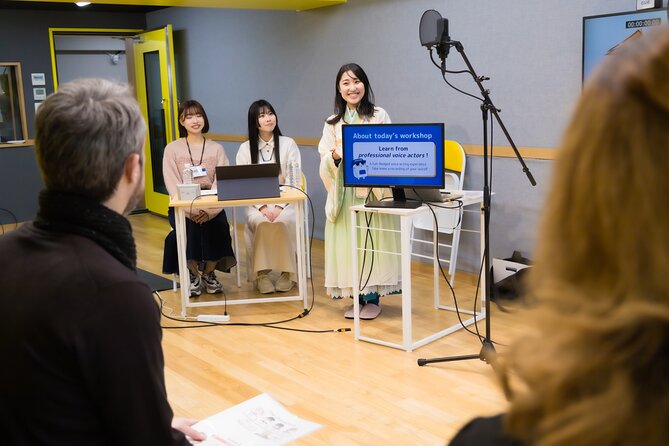
At $172.65 per person, this is not a casual add-on for an afternoon in Tokyo. The cost includes professional instruction, studio use, the recording, an English-speaking guide, and the animated audio file sent later.
I see the value if anime is one of the main reasons you are visiting Japan, or if you have wanted to try voice acting for years. A standard anime shopping trip may give you souvenirs and photos. This workshop gives you a skill-based activity, direct contact with professional performers, and a recording tied to your own visit.
The price is harder to justify if you are only mildly curious or if you want a long class with detailed acting training. Two hours is enough for a memorable introduction, but not enough to build advanced technique. You are paying for access to a special studio experience and a guided chance to perform, not a professional qualification.
The small maximum group of 10 helps support the cost. Personal coaching is more useful when the instructor can hear each participant and offer corrections. If the group is full, you may still have to wait your turn, but the format is more focused than a large sightseeing activity.
Who will enjoy this workshop most?
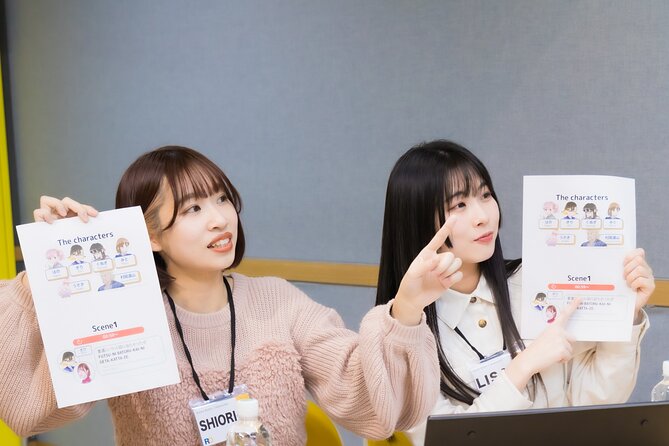
I would recommend it first to dedicated anime and manga fans, especially those who want something more active than shopping or taking photos. It also suits anyone curious about acting, dubbing, or Japanese popular culture.
It is a good choice for couples and friends. One person can steady the other before the recording, and the shared experience gives you something to discuss afterward. Solo participants can also fit in well because the group is limited and the guide provides support.
You do not need Japanese ability, previous acting experience, or professional confidence. Beginners are specifically welcome, and the practice section is designed to prepare you.
You may want to skip it if you dislike performing in front of other people, cannot handle a fixed afternoon appointment, or want a fully English recording. The lines are recorded in Japanese, even though the instructions and assistance are available in English.
Practical planning for your Tokyo day
The 2:45 pm start makes this easy to pair with other Ikebukuro activities earlier in the day. Give yourself time to reach the animate store without rushing. The workshop ends back at the meeting point, so you can continue exploring the area afterward.
Wear something comfortable enough for standing and repeated speaking. The activity description specifically teaches standing at the microphone, so you should be ready to take an active role rather than sit through a lecture.
Keep your mobile ticket accessible. Bring water, since drinks are not included, and check the email address used for booking so the recording can reach you later.
Confirmation is sent within 48 hours of booking, subject to availability. Since the activity is non-refundable and cannot be changed for any reason, book only after you have checked your Tokyo plans. This is especially important if your schedule includes flights, long-distance rail trips, or other fixed appointments.
Should you book the anime voice acting workshop?
Book it if you want a personal anime memory rather than another sightseeing stop. The combination of a real studio, professional coaching, simple Japanese lines, English translation, and an emailed recording gives the experience a clear purpose.
I would be most comfortable recommending it to fans who accept the price and understand that this is a short introductory workshop. You will not leave as a trained voice actor, but you will learn how microphone work and animated timing feel from the performer’s side.
Skip it if you are looking for a cheap activity, a long acting course, or a no-pressure observation tour. For the right person, though, stepping up to the microphone in Ikebukuro can be the highlight of a Japan visit.
FAQ
Where does the workshop begin?
It begins at the animate Ikebukuro main store, located at 1-chōme-20-7 Higashiikebukuro, Toshima City, Tokyo 170-0013, Japan.
What time does the activity start?
The scheduled start time is 2:45 pm.
How long does the workshop last?
The activity lasts approximately two hours. Some past sessions have been described as lasting about an hour or a little more, so reserve the full two-hour period.
Is Japanese language ability required?
No. The English-speaking guide translates the instructions, and the script is designed for participants with limited or no Japanese ability. The recording itself is done in Japanese.
Who teaches the voice acting?
Professional Japanese voice actors lead the workshop. Past sessions have included a voice actor referred to as Yume-sensei, with English support from guides including Yuri and Yamamoto. Staff may vary by session.
What is included in the price?
The price includes the dubbing experience with professional guidance, studio use, and audio data with the animation sent by email at a later date.
Is the activity suitable for beginners?
Yes. Beginners can participate, and the group practices the lines before recording. Most people can take part.
How many people can join?
The maximum group size is 10 participants.
New on our Tokyo list
- Tokyo : Kamikaze Street Drift Ride★ 5.0 · 3 reviews
- Private Zen Meditation in English in Shinjuku, Tokyo★ 5.0 · 3 reviews
- Sumi-e Experience in a relaxing green tea shop in Tokyo★ 5.0 · 3 reviews
- Onsen Spa in Tokyo and Asakusa Bar Hopping with Local Guide★ 5.0 · 3 reviews
- Easy for everyone! Now you can play handmade mini shamisen and show off to everyone! Musical instruments, sweets and live music★ 5.0 · 3 reviews
- Tokyo: Private Tsukiji Street Food & Sake with Local Guide★ 5.0 · 3 reviews
- Mt Fuji Exploration Tour with Free Japanese Kusa Mochi from Tokyo★ 4.5 · 3 reviews
- Tokyo Tsukiji Fish Market Walking and Exploring Hidden Gems Tour★ 5.0 · 3 reviews
Anime & Pop Culture Tours, compared.


Tokyo Go Kart: Asakusa, Skytree, and Akihabara **IDP MUST**
Read our review →
Akihabara Anime & Game Adventure Walking Tour (Group or Private)
Read our review →

Akihabara Tailor-made Private Tour for Anime Fans
Read our review →
Ramen Making from Scratch +Akihabara Tour –Tokyo Cooking Class
Read our review →
Manga Drawing Workshop Guided by Pro Manga Artist
Read our review →Browse the lists this tour appears in