
Reviewed · WALKING TOURS
Shimbashi Hidden Gem Walking Tour
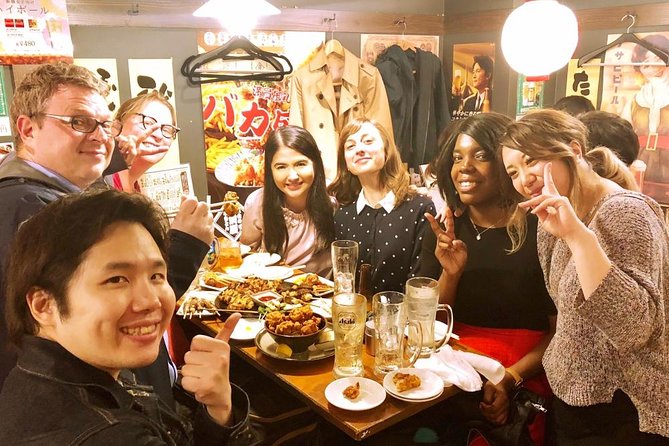
Tokyo’s after-work ritual is the heart of this three-hour walk. In Shimbashi, you’ll follow the office crowd into small izakayas and casual eateries, eating the same kind of quick, social food that makes quitting time in Tokyo such a lively part of the day. The tour includes five food stops and two drinks.
I like the local focus, especially the chance to try dishes such as gyoza nabe, sashimi, okonomiyaki, and taiyaki instead of sticking to familiar sushi. I also like the small group limit of 10, since a guide can explain Japanese table manners and help you order in places that may feel hard to enter alone.
The main caution is price. At $217 per person, this is a costly food walk, and the food quality may not be equally strong at every stop. You’re paying for guidance, access, drinks, and neighborhood context, not simply for dinner.
In This Review
- Key points to know before you book
- Why Shimbashi makes a good food-tour base
- Starting at SL Square and finding your bearings
- Karasumori Jinja and the old neighborhood feel
- The New Shinbashi Building and casual dining culture
- Five food stops, from skewers to taiyaki
- Learning how to eat and drink like a local
- Museums and railway history along the route
- How much food do you get for $217?
- Group size, timing, and practical limits
- Who will enjoy this Shimbashi evening?
- Should you book the Shimbashi food walk?
- FAQ
- How long does the Shimbashi walking food tour last?
- What time does the tour start?
- Where does the tour begin?
- Where does the tour end?
- How many food stops are included?
- Are drinks included?
- Is the tour suitable for vegetarians?
- What is the minimum age?
- Can I cancel for a refund?
Key points to know before you book
- Five stops in three hours: Expect a progressive evening of small dishes rather than one large meal.
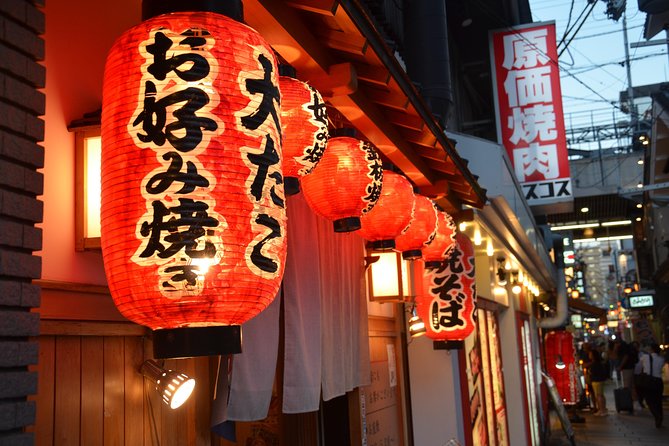
- Shimbashi after work: The tour places you among Tokyo office workers as they eat, drink, and socialize.
- Two drinks included: Additional food and drinks cost extra.
- Small groups: The maximum is 10 people, which suits travelers who want room to ask questions.
- Strong guide element: Guides explain Japanese food customs and manners, with past guides including Asami, Lora, and Anne.
- Dietary limits matter: The tour can accommodate pescatarian and vegetarian diets, but it is not recommended for vegans or gluten-free diners.
Why Shimbashi makes a good food-tour base
Shimbashi gives you a different side of Tokyo from the polished streets around Ginza or the giant crossings of Shibuya. It is an old office district with a strong after-work food culture. Once the workday ends, salarymen head for beer, grilled skewers, dumplings, raw fish, and quick plates shared around compact tables.
That setting gives the tour its purpose. You are not simply walking between famous sights and stopping for a snack. You are watching a local evening habit unfold around you. The area remains popular with office workers, so the atmosphere comes from ordinary city life rather than a performance built only for sightseers.
The meeting point is SL Square, outside the west entrance of Shimbashi Station, at 4:30 pm. That timing is well chosen. You begin as the workday is winding down and continue into the early evening, when the neighborhood’s restaurants and drinking dens become most active.
The walk ends near JR Shimbashi Station. That is useful after three hours of eating and drinking, since you can continue elsewhere in Tokyo without arranging a taxi or finding your way through an unfamiliar neighborhood.
More walking routes in Tokyo:
- Tokyo Tsukiji Fish Market Food and Culture Walking Tour
★ 5.0 · 3,184 reviews - Tokyo: Imperial Palace and Shogun Historical Walking Tour
★ 5.0 · 2,251 reviews - Tokyo: Shinjuku Local Bar and Izakaya Guided Walking Tour
★ 4.9 · 1,794 reviews
Starting at SL Square and finding your bearings
SL Square is a practical meeting point at 2-chōme-7-1 Shinbashi. The square is associated with Shimbashi Station’s west entrance, making it easier to reach by public transportation.
The first few minutes are simple, but they matter. Your guide gathers the group, checks the plan, and sets the tone for the evening. Since the tour is limited to 10 people, you should have a better chance to hear explanations and ask about ingredients, customs, or eating etiquette.
This is also a useful moment to tell the guide about dietary needs. Vegetarian and pescatarian participants are accepted, but vegan and gluten-free diners are not advised to book this experience. If you have a serious allergy, the supplied information does not promise specific allergy handling, so you should contact the provider before paying.
You may find that the tour feels especially personal with a very small group. One couple once had the experience with guide Asami and assistant Lora as their only participants, and both guides were described as lively and generous with explanations. That kind of small-group arrangement cannot be guaranteed, but the 10-person maximum keeps the tour from becoming a large procession.
Karasumori Jinja and the old neighborhood feel
Karasumori Jinja is one of the named points along the route. The shrine adds a quiet cultural pause to an evening otherwise centered on food and office life.
The value here is contrast. Shimbashi is known for its compact bars and after-work dining, but a local shrine helps you see that the district is more than a row of restaurants. Your guide may explain customs and local habits as you move between the station area and the food stops.
The shrine is not advertised as a long sightseeing visit, so do not expect a formal temple tour or a lengthy stop. Think of it as part of the neighborhood walk, a chance to notice a smaller piece of Tokyo between meals.
The New Shinbashi Building and casual dining culture
The New Shinbashi Building appears among the route’s points of interest. Buildings like this help show how Tokyo’s food culture often works vertically and compactly. Small restaurants and drinking spots can be tucked into places that are easy to miss when you are walking on your own.
This is where a local guide can make a real difference. You may pass through streets and entrances that look ordinary from outside, then reach a casual eatery filled with local diners. The experience is less about a grand dining room and more about understanding where people actually go for a quick meal and a drink after work.
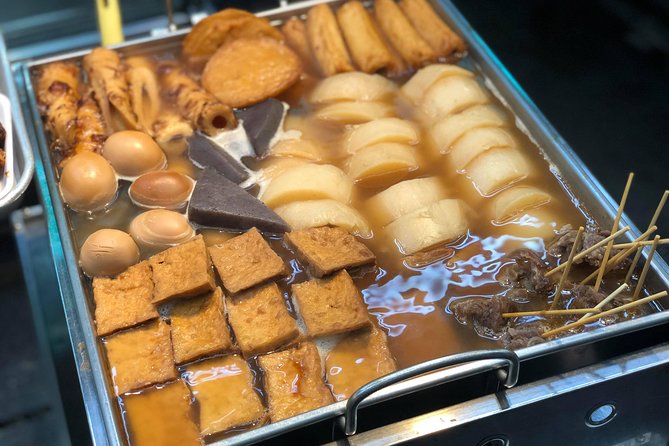
The food is served across several stops, so you should expect modest portions designed to be shared or sampled. That format lets you try more dishes than you could manage at one restaurant. It also means you should not judge the tour by the size of any single plate.
A few more Tokyo bookings worth comparing
- Mt Fuji and Hakone 1-Day Bus Tour Return by Bullet Train
★ 5.0 · 26,383 reviews - 1-Day Tokyo Bus Tour
★ 5.0 · 14,250 reviews - Tokyo: TOKYO SKYTREE® Admission ticket
★ 4.5 · 11,192 reviews - Tokyo: teamLab Planets TOKYO Digital Art Museum Entry Ticket
★ 4.6 · 9,779 reviews
Five food stops, from skewers to taiyaki
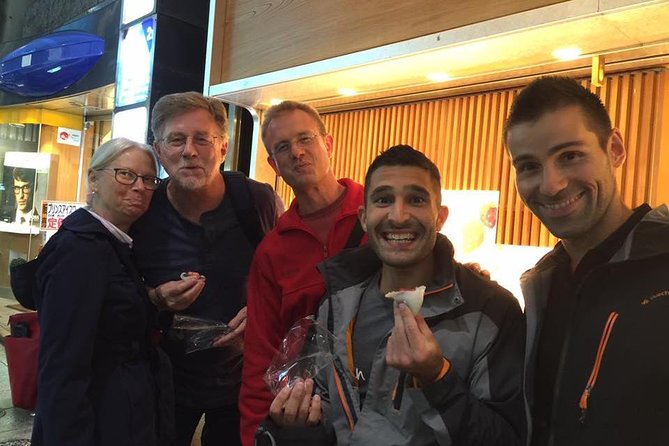
The food is the main reason to book this walk. The exact restaurants and dishes can change because of restaurant schedules, public holidays, weather, and other conditions, but the plan includes five stops featuring seasonal and local food.
Possible dishes include:
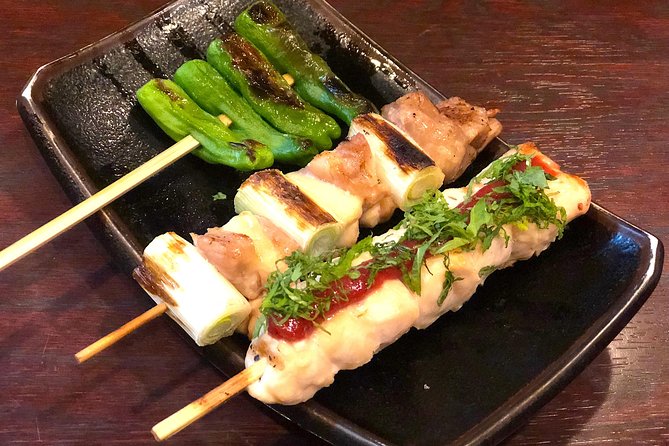
- Yakitori, grilled chicken skewers that suit the quick-drink style of an izakaya
- Gyoza, Japanese dumplings
- Gyoza nabe, dumplings served in a hot-pot preparation
- Sashimi
- Okonomiyaki, a savory Japanese pancake
- Taiyaki, a fish-shaped dessert
This is a generous range. You get grilled food, dumplings, raw fish, a cooked pancake, and something sweet at the end. For a first introduction to Japanese drinking food, that variety is more useful than a tour devoted only to sushi.
Sashimi and yakitori can help you compare two very different sides of Japanese dining. The sashimi gives you a clean, raw preparation, while yakitori is direct, smoky, and easy to eat with a drink. Gyoza nabe adds warmth and a shared-pot style that you may not encounter on a standard Tokyo sightseeing route.
The tour also has a reputation for pushing beyond the most familiar choices. One memorable food reference involves raw chicken, which may appear at a stop depending on the menu and restaurant schedule. That is not a dish you should assume will be served, but it shows the kind of less usual food you might encounter. If that idea makes you uncomfortable, tell your guide early.
Food quality is the biggest variable. One reported experience praised the guide and the first stop but found later food disappointing. That is a fair warning. The tour’s structure depends on several restaurants, so one weak plate can affect your sense of value even when the guide is excellent.
Learning how to eat and drink like a local
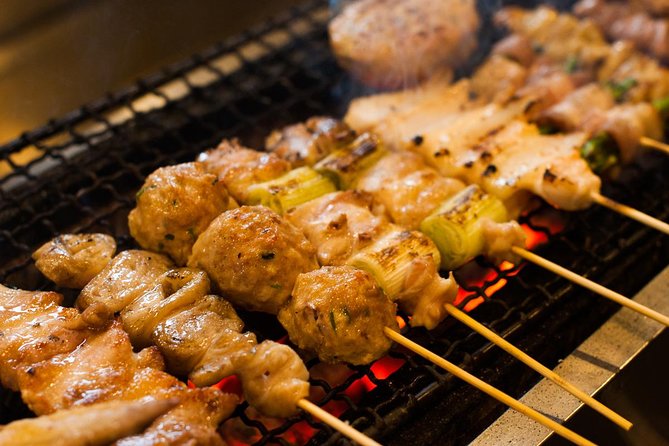
The best part of the tour may be the explanation around the food. Guides such as Asami, Lora, and Anne have been singled out for being friendly, talkative, and willing to explain Japanese eating customs and manners.
That help is practical. You may learn how to approach an izakaya, how shared dishes fit into a group meal, or how local dining differs from a formal restaurant. The details can make the rest of your Japan trip easier, especially if you plan to eat in small places without English menus.
Anne was also described as happy to share local knowledge about Japanese food and subjects beyond the meal. That matters because the walk is not just a list of tastings. A good guide connects the dishes to daily life, work culture, and the way people use neighborhood restaurants.
The social side is part of the design. You are encouraged to experience the hour when office workers relax together after work. You will not become a salaryman simply by carrying a drink through Shimbashi, but the tour does place you close to that familiar Tokyo routine.
Remember that the group is adults only, with a minimum age of 20. That fits the drinking focus and keeps the evening aimed at adult dining culture rather than family sightseeing.
Museums and railway history along the route
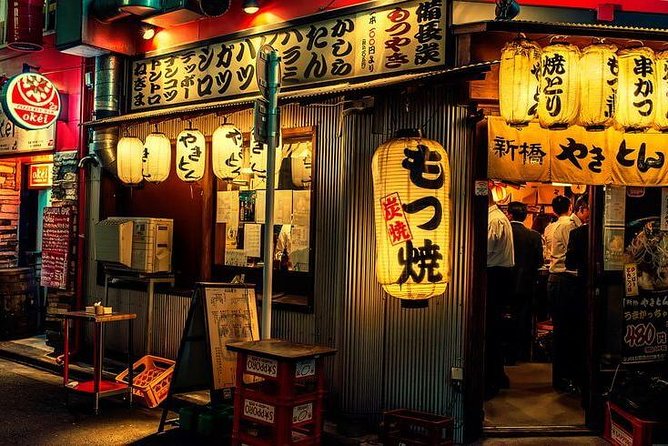
The route also names the Advertising Museum Tokyo, the Old Shimbashi Station Railway History Exhibition Hall, and the Panasonic Shiodome Museum. These places add context to the walk, but the tour is not presented as a museum-focused outing.
You may pass near these attractions or receive brief explanations as the group moves through the district. Their presence gives the route more variety than a simple restaurant crawl. Shimbashi has strong connections to Tokyo’s office, transport, and commercial life, and these sites help frame that setting.
Do not book this experience expecting admission-heavy sightseeing. The listed food walk lasts about three hours, and the named museums are not described as included ticketed visits. The food and neighborhood atmosphere remain the main event.
Hamarikyu Gardens is also listed among the route points. Since the tour starts in the late afternoon and focuses on Shimbashi dining, you should confirm with the guide how much of the garden area is included on your date. The route can change, and this is not marketed as a dedicated garden tour.
How much food do you get for $217?
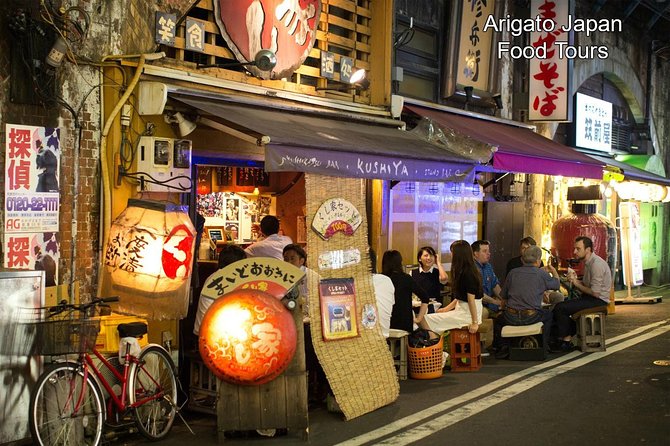
The price is $217 per person, which puts this tour firmly in the expensive category for a three-hour food walk. You receive five food stops, two drinks, and an English-speaking local guide. Hotel pickup, transportation costs, extra food, and extra drinks are not included.
The price makes more sense if you value access and confidence. A guide can lead you into lesser-known drinking spots, explain unfamiliar dishes, and manage the evening while you concentrate on eating and talking. If you are nervous about ordering in Japanese or entering compact izakayas alone, that support has real value.
The calculation is less favorable if you mainly want a large dinner. Five tastings and two drinks may fill out an evening, but this is not advertised as an unlimited meal. You might still want food afterward, especially if you normally eat a substantial dinner.
I would compare it with the cost of booking several meals independently. In Shimbashi, eating on your own can be cheaper, but you will have to choose the restaurants, handle menus, and judge what to order. This tour charges a premium for the plan and the guide, not just the ingredients.
The uneven nature of the food also deserves attention. One stop may be excellent while another feels ordinary. If every dish needs to justify a high per-person price, you may find the experience costly. If your goal is to understand the neighborhood and try several unfamiliar foods with help, the value improves.
Group size, timing, and practical limits
The maximum group size is 10, a sensible limit for small restaurants and narrow streets. A smaller group also makes conversation with the guide easier, though the actual number can vary by booking date.
The start time is 4:30 pm, so plan your day around an early evening meal. You should arrive ready to walk and eat soon after meeting. A moderate level of physical fitness is recommended, but no special athletic ability is required.
Wear comfortable shoes. The route connects several food and cultural points on foot, and the experience is built around walking through the district rather than sitting in one place. Transportation is not included, so you handle your own trip to SL Square and your journey home from JR Shimbashi Station.
The tour requires good weather and a minimum number of participants. If poor weather or low enrollment causes cancellation, you can choose another date or receive a full refund. You can also cancel for a full refund up to 24 hours before the start time. After that point, refunds are not available, and late changes are not accepted.
A karaoke after-party is available, but the provided details do not say that it is included in the $217 price. Treat it as an optional add-on and ask the provider about current arrangements before you count on it.
Who will enjoy this Shimbashi evening?
I would choose this tour if you want a social introduction to Tokyo food and prefer local streets to famous attractions. It suits adults who are curious about izakaya culture, willing to try unfamiliar dishes, and happy to share a meal across several stops.
It is also a good fit for solo travelers, couples, and first-time visitors who want help with Japanese food customs. Solo travelers should email the provider before booking, as the tour includes a specific note for them.
Vegetarians and pescatarians can take part, but you should explain your needs in advance. Vegans and gluten-free diners should skip this tour because the experience is not recommended for those diets.
I would be more cautious if you have a strict food budget, want a full formal dinner, dislike raw food, or expect every stop to be equally impressive. The tour’s greatest strengths are its guide, setting, and variety. Its weakest point is the price relative to the possibility of uneven dishes.
Should you book the Shimbashi food walk?
Book it if you want to see Tokyo through its after-work food culture and you value a guide who can explain what you are eating. The combination of five stops, two drinks, a small group, and a neighborhood still used by local office workers gives the evening a clear purpose.
Skip it if $217 feels too high for tastings, or if you need vegan or gluten-free food. For the best chance of enjoying it, arrive hungry but not over-hungry, keep an open mind about unfamiliar dishes, and confirm dietary needs before booking. This is a guided introduction to Shimbashi’s evening rhythm, not simply a cheap way to get dinner.
FAQ
How long does the Shimbashi walking food tour last?
The tour lasts approximately three hours.
What time does the tour start?
The scheduled start time is 4:30 pm.
Where does the tour begin?
It begins at SL Square, at the west entrance of Shimbashi Station, at 2-chōme-7-1 Shinbashi, Minato City, Tokyo 105-0004, Japan.
Where does the tour end?
The tour ends at JR Shimbashi Station, near 2 Chome-17 Shinbashi, Minato City, Tokyo 105-0004, Japan.
How many food stops are included?
Five food stops with seasonal and local food are included.
Are drinks included?
Yes. Two drinks are included. Additional drinks and food are not included.
Is the tour suitable for vegetarians?
Yes. The tour is described as suitable for vegetarian and pescatarian diners. It is not recommended for vegans or gluten-free diners.
What is the minimum age?
Participants must be adults aged 20 or older.
Can I cancel for a refund?
You can cancel at least 24 hours before the local start time for a full refund. Cancellations or changes made less than 24 hours before the start time are not accepted for a refund.
New on our Tokyo list
- Tokyo Spectacular View Day-Cruise in 90 Minutes★ 5.0 · 25 reviews
- From Tokyo: Mount Fuji & Hakone Full Day Private Tour★ 4.9 · 25 reviews
- Real Tokyo Runner Club : Daikoku Car Meet Night Tour with JDM Car★ 5.0 · 25 reviews
- 2.5 Hour-Guided Cycle Tour in the Central Tokyo★ 5.0 · 25 reviews
- Ramen Making from Scratch +Akihabara Tour –Cooking Class★ 5.0 · 25 reviews
- [Self-Drive] Tokyo & Daikoku Custom Car Driving Tour★ 4.9 · 25 reviews
- Tokyo: 2-Hour Night Bike Tour of the City’s Hidden Gems★ 4.9 · 25 reviews
- Samurai themed Entertainment show in Shinjuku★ 4.5 · 25 reviews
Walking Tours, compared.
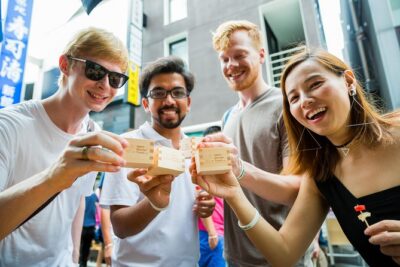
Tokyo Tsukiji Fish Market Food and Culture Walking Tour
Read our review →
Imperial Palace and Shogun Historical Walking Tour
Read our review →
Shinjuku Local Bar and Izakaya Guided Walking Tour
Read our review →
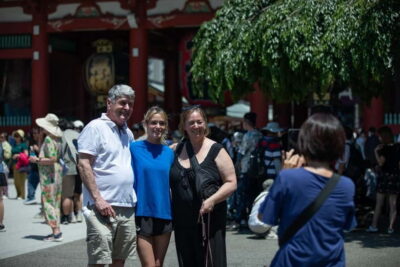
Asakusa Walking Tour with Sensoji Temple Visit
Read our review →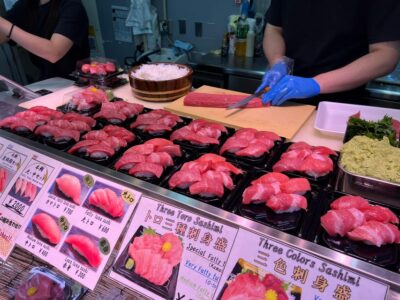
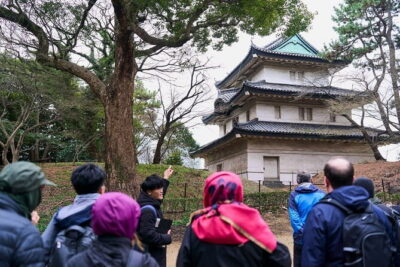
Tokyo Castle & Imperial PalaceーShogun Walking Tour
Read our review →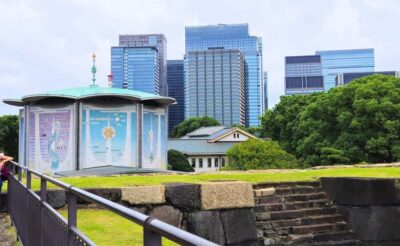
Browse the lists this tour appears in