
Reviewed · WALKING TOURS
Small Group Food Guided Walking Tour of Tokyo
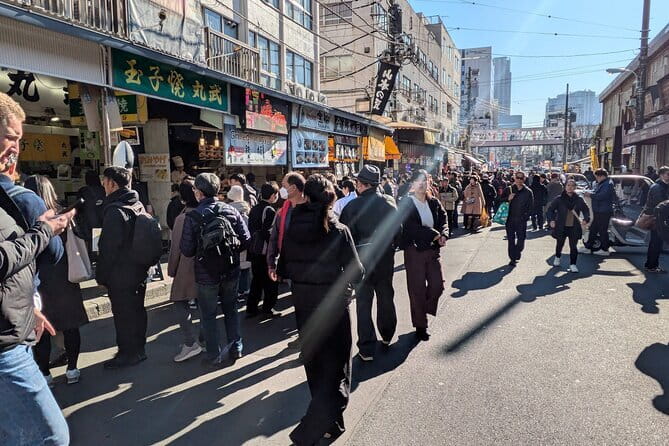
Tsukiji is the place to go when you want to understand Tokyo through what people eat. The former wholesale fish market moved to Toyosu in 2018, but the Tsukiji Outer Market remains open to the public, with seafood stalls, sweets, tea goods, samples, and small restaurants packed into a compact district.
I like the small group limit of eight, which makes it easier to ask questions and keep up in crowded lanes. I also like that lunch is included, including the guide’s meal, so you can focus on choosing a seafood dish instead of sorting out the bill. The main consideration is that extra food purchases and transportation cost more, and the market can be busy enough that this is not a quiet stroll.
In This Review
- Key points to know before booking
- Why Tsukiji still matters after the fish market moved
- Meeting at Tsukiji Hongwanji Temple
- Three or four tastings inside the market
- Lunch at a local seafood restaurant
- A final shrine or observation deck
- What the guide adds to the experience
- Is $80 a fair price?
- Timing, walking, and practical details
- Who will enjoy this Tsukiji food walk?
- Should you book the Tsukiji food tour?
- FAQ
- Where does the tour begin?
- What time does the tour start?
- How long does the experience last?
- How many people can join the tour?
- Is lunch included?
- Can I cancel for a full refund?
Key points to know before booking
- Start at Tsukiji Hongwanji Temple: Meet at 10:30 a.m. outside this distinctive temple before heading into the market.
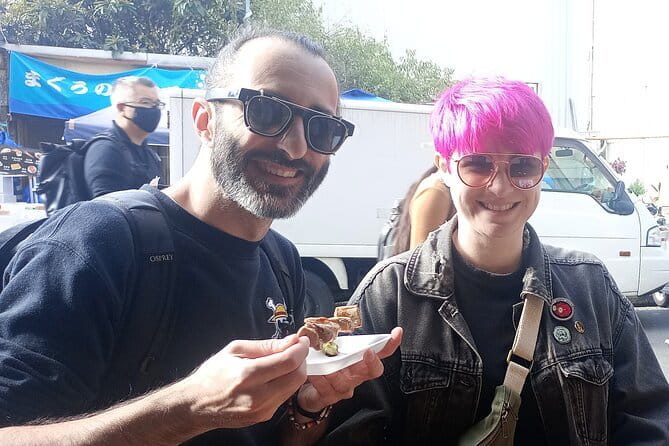
- Taste 3 or 4 street foods: The guide explains Japanese food customs as you sample market specialties and free bites.
- Lunch is included: Your meal at a local seafood restaurant, plus the guide’s lunch, is covered in the tour price.
- Choose the final stop: Depending on your preference, the guide takes you to a Japanese shrine or an observation deck.
- Small group format: The tour accepts no more than eight people, with the possibility of a private-feeling outing if no one else books.
- Plan for extra spending: Transportation and additional food purchases are not included in the $80 price.
Why Tsukiji still matters after the fish market moved
Many people hear Tsukiji and picture the old wholesale fish market. That operation moved to Toyosu in 2018, but the public-facing outer market stayed in place. That distinction matters. You are not touring the former wholesale auction floor. You are exploring the market area where shoppers, cooks, restaurant workers, and curious visitors still come for seafood, snacks, tea items, and kitchen-related goods.
The appeal is the range of small discoveries packed into a short walk. One stall may offer a seafood bite, another a sweet, and another a free sample. You do not need to make sense of every item on your own. Your guide provides the food context that turns a series of tastings into a better understanding of Japanese traditions and everyday eating habits.
I find guided market walks especially useful in Tokyo because the best food is not always obvious from an English sign. A guide can explain what you are seeing and help you avoid spending your entire morning guessing. This tour keeps the focus on local food culture rather than trying to cover every corner of the district.
More walking routes in Tokyo:
- Tokyo Tsukiji Fish Market Food and Culture Walking Tour
★ 5.0 · 3,184 reviews - Tokyo: Imperial Palace and Shogun Historical Walking Tour
★ 5.0 · 2,251 reviews - Tokyo: Shinjuku Local Bar and Izakaya Guided Walking Tour
★ 4.9 · 1,794 reviews
Meeting at Tsukiji Hongwanji Temple
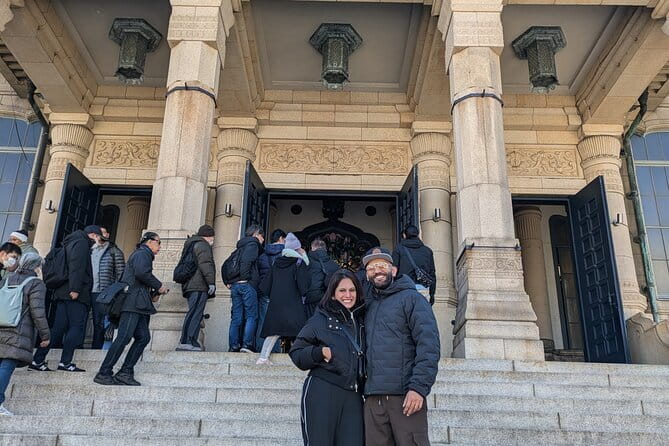
The tour begins at Tsukiji Hongwanji Temple, at 3-chōme-15-1 Tsukiji, Chuo City. The start time is 10:30 a.m., and the temple visit lasts about 20 minutes.
This is a sensible meeting point. It gives the tour a clear landmark and lets you begin with a little orientation before entering the market lanes. The guide provides information, allows time for photographs, and then leads you onward. Admission is free.
The temple stop is brief, so do not book this expecting a full religious-site tour. Its role is to set the scene and give you a calm starting point before the food portion begins. Arrive early enough to find the meeting point without rushing. The location is near public transportation, but transportation itself is not included.
Three or four tastings inside the market
The main tasting portion lasts about an hour. You can expect three or four kinds of street food, along with guidance about Japanese food culture and tradition. Free samples may also be available at some shops.
The exact foods are not fixed in the information provided, and that is worth noting. Market selections can vary, and the tour is not promising a rigid menu. You should see this as an introduction to the market rather than a formal tasting course with carefully measured portions.
That flexibility is useful in Tsukiji. You may have your eye on one food, while another stall has something more appealing that day. The guide can explain what you are buying and help you take part without needing to know the Japanese names in advance. For anyone who feels unsure about ordering from busy stalls, this support can make the market easier and more enjoyable.
You should still expect to purchase extra food if you want to try more than the included samples. The tour covers the stated 3 or 4 street-food tastings, but additional purchases are your responsibility. Bring an appetite, but not one so enormous that you cannot manage the later lunch.
Lunch at a local seafood restaurant
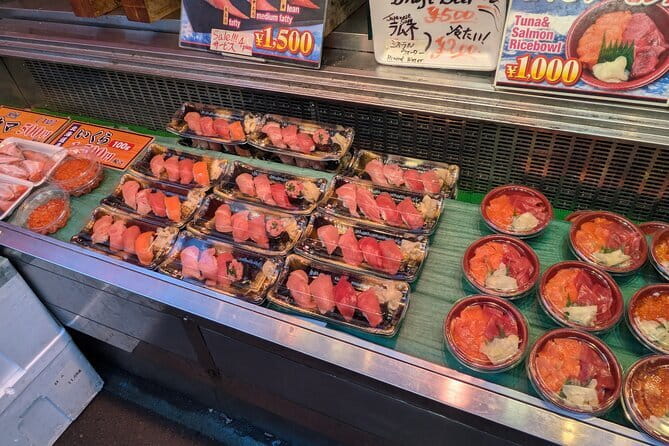
The next hour is set aside for lunch in the Tsukiji Outer Market. You can choose from many local seafood restaurant options, and the lunch fee for both you and the guide is included.
The strongest food detail associated with this experience is kaisen-don, a seafood bowl. The tour does not guarantee that every participant will select this dish, but it gives you a good idea of the kind of meal available. If you like fresh seafood, this is likely to be the highlight of the morning. If raw seafood is not your preference, ask the guide about your choices before ordering.
Including the guide’s lunch is a small but useful touch. It means the guide stays with you rather than sending you off to eat alone, and it avoids the awkward question of whether you are expected to cover another person’s meal. You still need to clarify what your own lunch includes at the restaurant, since extra food purchases are excluded from the tour price.
The lunch stop also gives the morning a natural pause. After walking and sampling food, you can sit down, eat a proper meal, and ask more questions about what you have seen. This is one reason the three-hour schedule feels more useful than a quick market introduction.
A few more Tokyo bookings worth comparing
- Mt Fuji and Hakone 1-Day Bus Tour Return by Bullet Train
★ 5.0 · 26,383 reviews - 1-Day Tokyo Bus Tour
★ 5.0 · 14,250 reviews - Tokyo: TOKYO SKYTREE® Admission ticket
★ 4.5 · 11,192 reviews - Tokyo: teamLab Planets TOKYO Digital Art Museum Entry Ticket
★ 4.6 · 9,779 reviews
A final shrine or observation deck
The final 30 minutes take place in Tsukiji, with the destination chosen according to your preference. The guide may take you to a Japanese shrine or an observation deck.
This choice gives the tour a little breathing room. You can select a quieter cultural stop or a place with a view, depending on what you want from the final part of the outing. The details of the shrine and observation deck are not specified, so you should not book this portion expecting a particular named attraction.
I like this flexible ending because it lets the guide respond to your interests. If the market and food were your main priorities, you can finish with a cultural stop. If you want to see Tokyo from above, you can ask about the observation deck. The final stop lasts only about half an hour, so think of it as a short add-on rather than a separate sightseeing tour.
What the guide adds to the experience
The guide is the reason to choose this tour instead of simply walking through Tsukiji on your own. The central service is not just leading you from stall to stall. It is explaining Japanese food customs, helping the market make sense, and keeping the morning moving.
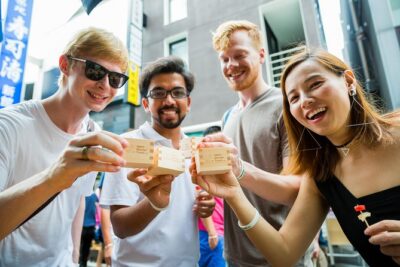
Specific guides named in past feedback include Hitomi and Hiromi. Hitomi was praised for being friendly and keeping the process smooth. Hiromi was described as informative, friendly, and entertaining. Those details point to the kind of guiding style you can expect: personal, conversational, and attentive to how the group is doing.
One particularly useful feature is the possibility of a very small outing. The official maximum is eight people, but if only one person books, the tour can feel almost private. That gives you more room to ask questions and adjust the pace. It also means the experience may vary depending on group size.
A small group does not eliminate the market’s crowds. You will still be walking through active commercial lanes, and you may need to stay close to the guide. The benefit is that a group of eight is easier to manage than a large coach party, especially when stopping for food or photographs.
Is $80 a fair price?
At $80 per person, this is not the cheapest way to visit Tsukiji. You can enter the district without paying an admission fee and buy food directly from stalls. If you are confident choosing dishes, do not need explanations, and plan to eat only a little, an independent visit will cost less.
The value improves when you use the included elements. The price covers the guide, 3 or 4 street-food tastings, your lunch, the guide’s lunch, and photos. It also gives you three hours of local guidance, which is useful if this is your first visit to Tsukiji or your first time navigating Japanese market food.
The included lunch is especially important in the price calculation. A self-guided visitor would pay for lunch separately, along with every tasting and any help from a private guide. The tour will not cover transportation or extra food, but the basic food program is more substantial than a simple walking orientation.
I would compare the cost to a half-day food experience rather than to a free market walk. You are paying for convenience, explanation, and a planned meal. If those are priorities, $80 can be reasonable. If you mainly want to browse and snack at your own pace, the fixed structure may not earn its keep.
Timing, walking, and practical details

The tour lasts about three hours, beginning at 10:30 a.m. and ending back at the meeting point. That timing places the food walk around late morning and lunch around the middle of the day, so you should eat lightly beforehand.
Transportation is not included, and the tour does not provide a transfer to or from Tsukiji. You need to make your own way to Tsukiji Hongwanji Temple and return from the meeting point after the tour. The start area is near public transportation.
The market includes active lanes, food stalls, and restaurant areas. You should expect to walk and stand during the tasting portion. Wear comfortable shoes and keep your belongings manageable, especially if you plan to buy extra food or market goods.
Mobile ticketing makes the booking side simple. Confirmation is received at the time of booking, and most people can participate. The supplied information does not give special accessibility details, so contact the provider before booking if you need specific assistance.
The cancellation terms are straightforward. You can receive a full refund if you cancel at least 24 hours before the local start time. Cancellations or changes made less than 24 hours in advance are not accepted for a refund.
Who will enjoy this Tsukiji food walk?
I would recommend this tour most strongly to first-time visitors who want help understanding what they are eating. It also suits solo visitors who would prefer company, couples who want a planned food morning, and anyone who likes asking questions rather than simply pointing at a stall.
The small group size makes it a good choice for people who dislike large organized tours. Parents and mixed-age groups may also appreciate having a guide manage the food choices and route, although the market environment itself can be busy and requires attention.
Food-focused visitors should pay attention to the included lunch and tasting structure. You will get a sample of Tsukiji rather than a full survey of every stall. If your goal is to eat a seafood bowl, sample several street foods, and learn how the market fits into Japanese food culture, the format makes sense.
I would hesitate to recommend it to independent eaters who already know Tsukiji well. You may prefer setting your own route, choosing every dish, and staying as long as you like. The tour also may not suit anyone seeking a quiet historical walk, since food and market activity take up most of the morning.
Should you book the Tsukiji food tour?
Book it if you want a guided introduction to Tsukiji with lunch included and prefer a small group to a large organized outing. The combination of 3 or 4 tastings, a seafood restaurant meal, food-culture explanations, and a flexible shrine or observation-deck finish gives you a well-shaped three-hour visit.
Skip it if you would rather browse alone, avoid seafood, or spend the morning buying as much food as possible with no set schedule. Remember to budget for transportation and extra purchases, and arrive ready to walk, stand, sample, and share the market with plenty of other people.
For most first-time visitors, the guide is the deciding factor. Hitomi and Hiromi are specifically associated with warm, informative service, and the eight-person limit keeps the outing personal. If you want Tsukiji to feel less like a maze of stalls and more like a place with meaning, this tour is a sensible pick.
FAQ
Where does the tour begin?
It begins at Tsukiji Hongwanji Temple, at 3-chōme-15-1 Tsukiji, Chuo City, Tokyo 104-0045, Japan.
What time does the tour start?
The tour starts at 10:30 a.m.
How long does the experience last?
The experience lasts approximately three hours and ends back at the meeting point.
How many people can join the tour?
The maximum group size is eight people.
Is lunch included?
Yes. The guest’s lunch fee and the guide’s lunch fee are included. Extra food purchases are not included.
Can I cancel for a full refund?
Yes. You can cancel for a full refund up to 24 hours before the local start time. Changes or cancellations made less than 24 hours before the start are not accepted for a refund.
New on our Tokyo list
- Tokyo : Kamikaze Street Drift Ride★ 5.0 · 3 reviews
- Private Zen Meditation in English in Shinjuku, Tokyo★ 5.0 · 3 reviews
- Sumi-e Experience in a relaxing green tea shop in Tokyo★ 5.0 · 3 reviews
- Onsen Spa in Tokyo and Asakusa Bar Hopping with Local Guide★ 5.0 · 3 reviews
- Easy for everyone! Now you can play handmade mini shamisen and show off to everyone! Musical instruments, sweets and live music★ 5.0 · 3 reviews
- Tokyo: Private Tsukiji Street Food & Sake with Local Guide★ 5.0 · 3 reviews
- Mt Fuji Exploration Tour with Free Japanese Kusa Mochi from Tokyo★ 4.5 · 3 reviews
- Tokyo Tsukiji Fish Market Walking and Exploring Hidden Gems Tour★ 5.0 · 3 reviews
Walking Tours, compared.
Tokyo Tsukiji Fish Market Food and Culture Walking Tour
Read our review →
Imperial Palace and Shogun Historical Walking Tour
Read our review →
Shinjuku Local Bar and Izakaya Guided Walking Tour
Read our review →

Asakusa Walking Tour with Sensoji Temple Visit
Read our review →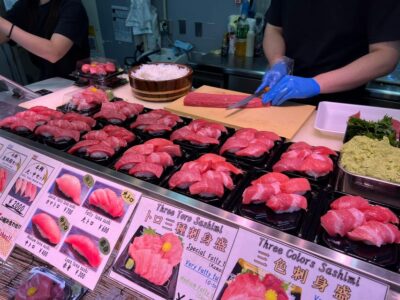
Tokyo Castle & Imperial PalaceーShogun Walking Tour
Read our review →
Browse the lists this tour appears in