
Reviewed · HALF-DAY
Tokyo: A Half-Day Trip Bus Tour in the Morning
Tokyo is huge, and this four-hour bus tour gives you a sensible first look without making you wrestle with several train lines. You see the Imperial Palace outer area, Tokyo Tower, and Senso-ji in Asakusa, with a licensed English-speaking guide filling in the cultural details along the way.
I like the efficient route and the cool, clean hybrid bus, especially in Tokyo’s hot summer months. I also like that Senso-ji includes free time, so you can browse Nakamise shopping street, eat a snack, or stay longer around the temple. The trade-off is simple: the tour only visits the Imperial Palace’s outside grounds, and busy crowds or traffic can reduce your time at each stop.
- Imperial Palace outer garden: Walk around Nijubashi Bridge and see the statue of Masashige Kusunoki without entering the palace grounds.
- Tokyo Tower observatory: Go up to the main observatory, 150 meters above the city, with a chance of seeing Mount Fuji in clear weather.
- Senso-ji and Nakamise: Pair Tokyo’s oldest temple with shopping, street food, souvenirs, and a little free time.
- English guidance: Guides including Aki, Kumiko, Yuko, Kiki, and Atsushi have been praised for clear explanations, humor, and local insight.
- Comfortable transport: The hybrid bus saves time between widely separated sights and has air conditioning.
- Good first-day choice: The tour covers major landmarks without requiring you to learn Tokyo’s rail system immediately.
In This Review
- A practical first look at Tokyo
- The Imperial Palace outer garden and Nijubashi Bridge
- Tokyo Tower at 150 meters
- Senso-ji, the oldest temple in Tokyo
- Why the guide matters
- Timing, comfort, and the value of the bus
- Who will get the most from this tour
- Booking tips before you go
- Should you book the Hato Bus Tokyo tour?
- FAQ
- How long does the Tokyo bus tour last?
- Which sights are included?
- Can I enter the Imperial Palace?
- Where does the tour start?
- Is the tour conducted in English?
- Are hotel transfers included?
A practical first look at Tokyo
At $40 per person, this is priced as an introduction rather than a full-day cultural tour. You are paying for transport, admission to Tokyo Tower, a licensed English-speaking guide, and a route that links three important sights across central Tokyo.
That matters because Tokyo’s attractions are not arranged in one compact old town. The Imperial Palace area, Tokyo Tower, and Asakusa sit in different parts of the city. You could visit them independently, but the bus removes much of the map work and keeps you from spending your morning changing trains.
The tour has two possible departure areas: the Hato Bus Tokyo office near Tokyo Station or the Hato Bus meeting point at Shinjuku Station East Exit. Hotel pickup and drop-off are not included, so you need to reach the selected starting point yourself. Check the exact meeting location when booking, since it depends on the option you choose.
The transport is a hybrid sightseeing bus. One account described a group of about 20 people, though group size can vary. That is small enough for a guide to keep an eye on the group, but you should still listen carefully when free time ends. One person lost sight of the guide at the final stop, a useful reminder to note the bus location and return time.
The Imperial Palace outer garden and Nijubashi Bridge
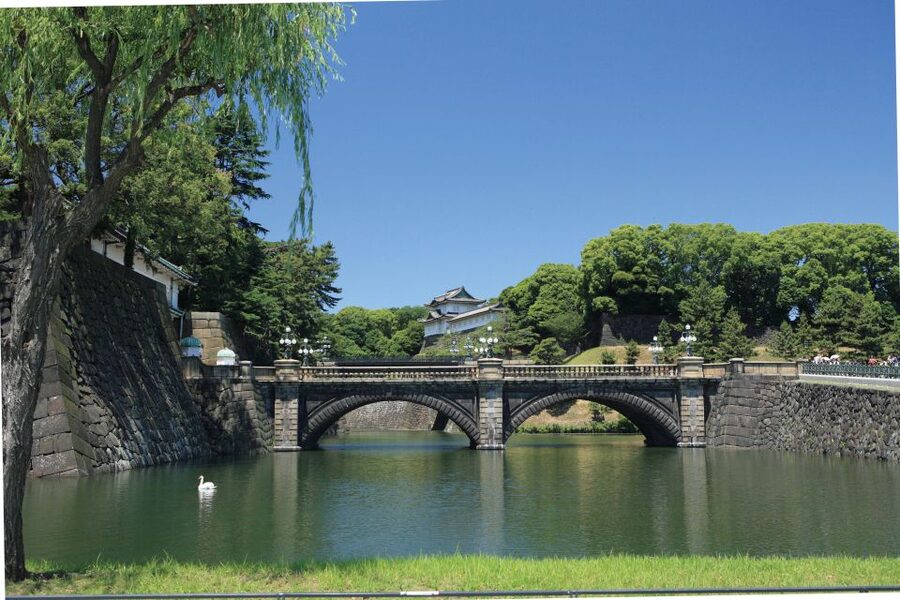
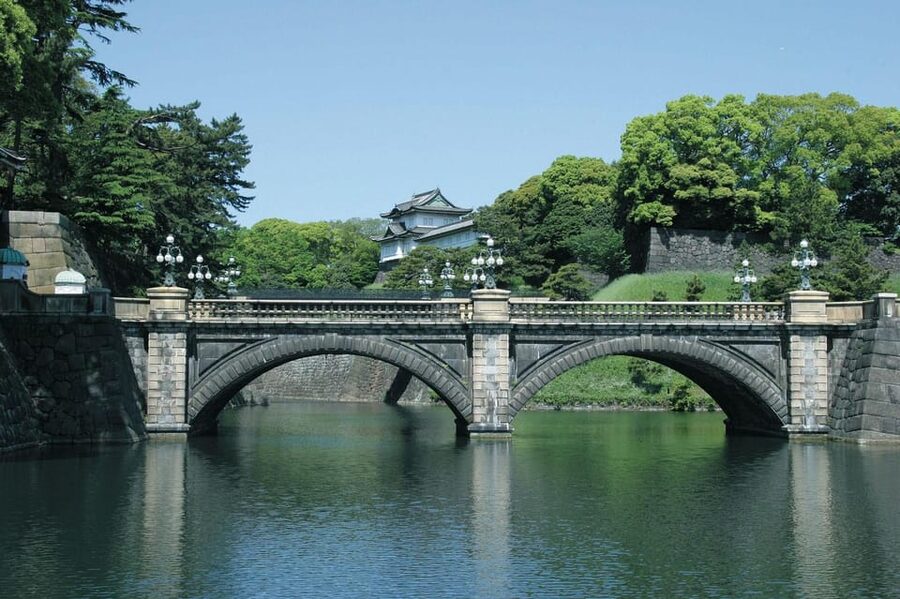
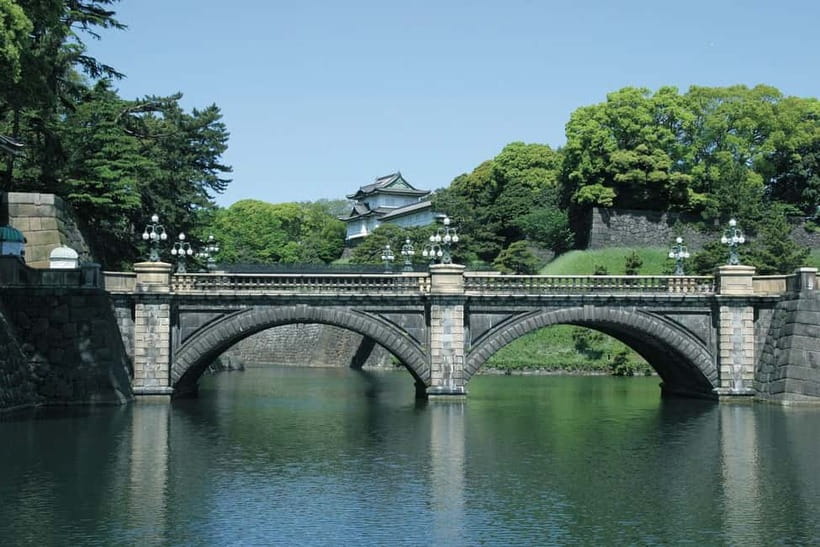
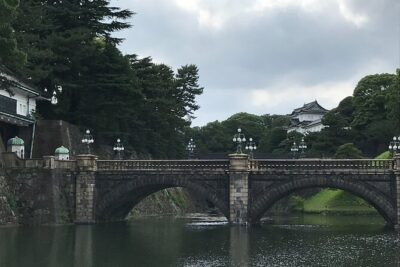
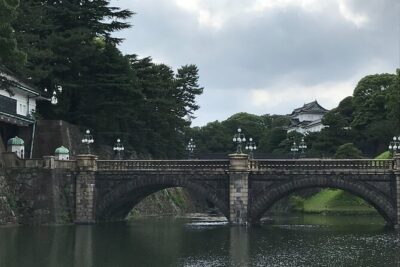
The first stop focuses on the Imperial Palace outer area, not the private palace grounds. You get off the bus for about 40 minutes, view the statue of Masashige Kusunoki, and walk near Nijubashi Bridge.
Nijubashi is one of Tokyo’s familiar postcard views. The bridge, stone walls, trees, and palace setting offer a calm contrast to the traffic and tall buildings nearby. Your guide can give the site political and historical context, which makes the photo stop more meaningful than a quick pause beside a landmark.
Keep your expectations clear. Entry into the Imperial Palace itself is not part of this experience, and the East Gardens are also excluded. You are seeing the outer garden and historic architecture from public areas. If you want a longer palace visit or garden walk, you will need to arrange that separately.
The 40-minute stop is enough for photographs, a short walk, and an explanation of the setting. It is not enough for a slow exploration. I would wear comfortable shoes and stay close to the guide, since the group must return to the bus on schedule.
More day trips out of Tokyo:
- Mt Fuji and Hakone 1-Day Bus Tour Return by Bullet Train
★ 5.0 · 26,383 reviews - 1-Day Tokyo Bus Tour
★ 5.0 · 14,250 reviews - Mt Fuji & Hakone Cruise, Drum Show Bullet Train 1 Day from Tokyo
★ 4.0 · 7,413 reviews
Tokyo Tower at 150 meters
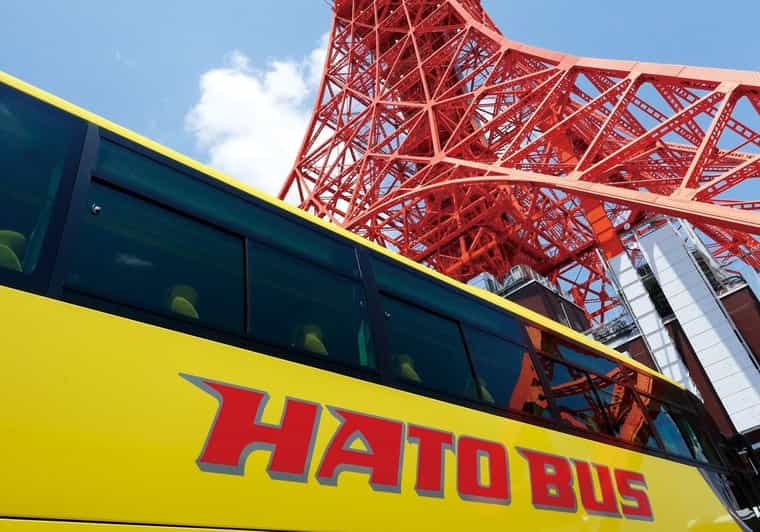
Tokyo Tower is the tour’s main paid admission and gives you a clear visual sense of the city’s scale. You visit the main observatory at 150 meters, where broad views stretch across Tokyo. On a clear day, Mount Fuji may be visible, though weather and haze decide that.
The observatory is especially useful early in your visit because it helps you understand Tokyo’s size. After seeing the city from above, the train map and long journeys between neighborhoods make more sense. You can also take photographs of the dense city below and the tower’s steel structure around you.
The scheduled visit lasts about 40 minutes. That is a reasonable amount of time for the observatory, photographs, and a quick look around, but it will not suit you if you want a slow visit or every viewing angle. Crowds can also affect how quickly you move through the observation areas.
The bus is a real advantage here. Tokyo Tower is not always the easiest stop to combine with the palace and Asakusa on your own in a short morning. You avoid another transfer and return to the same vehicle after your visit.
If you are visiting in August, the air conditioning matters. Several accounts specifically praised the cool bus during very hot weather, including temperatures above 35 degrees Celsius. In cooler months, the bus still provides a comfortable place to rest between walks.
Senso-ji, the oldest temple in Tokyo
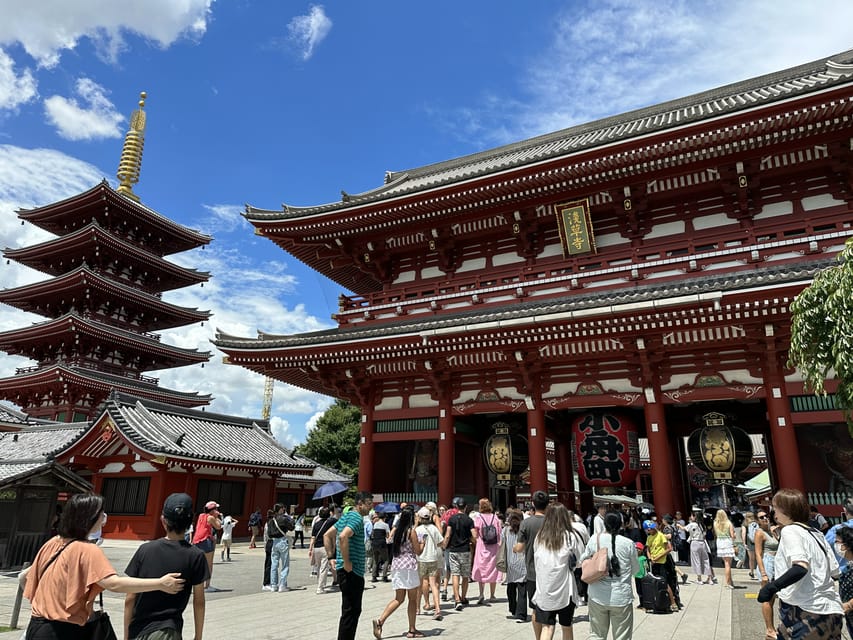
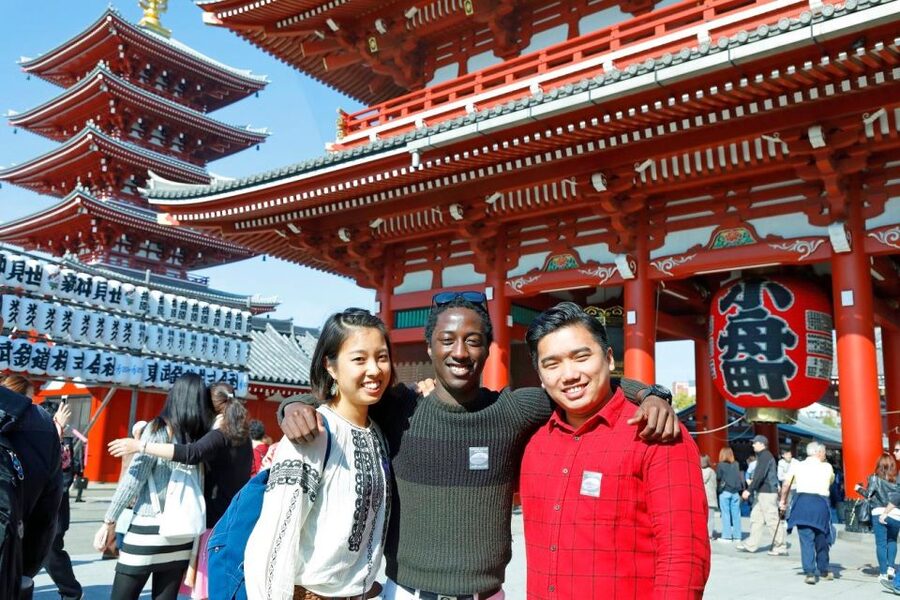
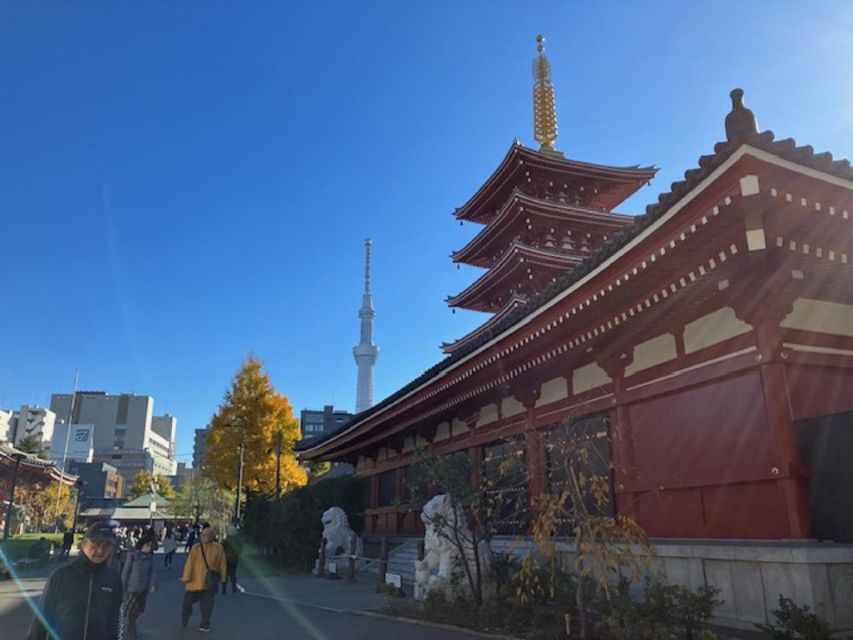
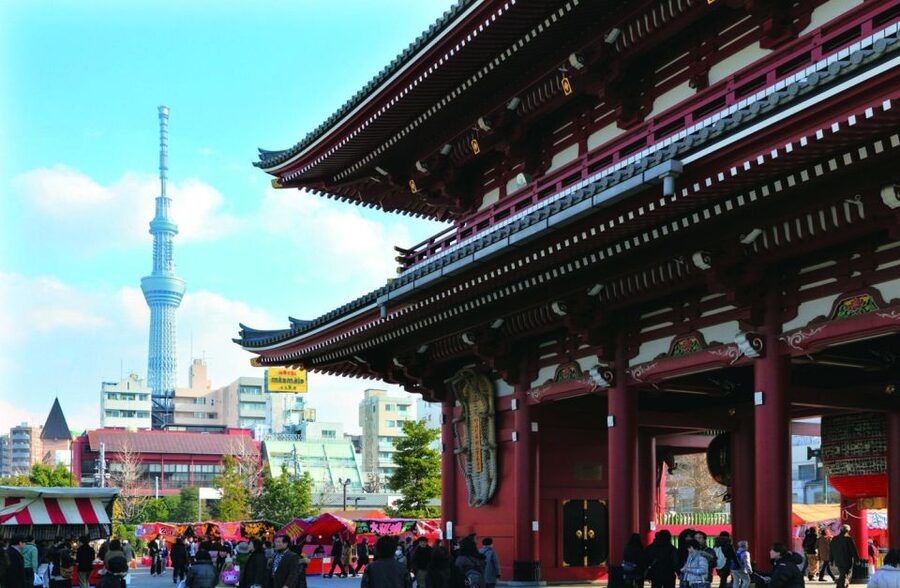
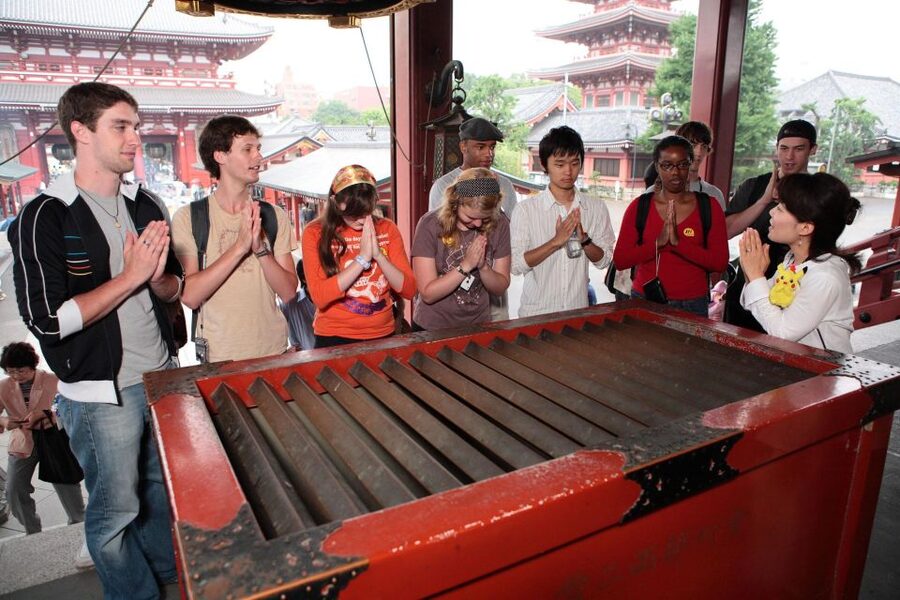
Asakusa’s Senso-ji is the most atmospheric stop on the route. It is also called Asakusa Kannon Temple and is identified here as Tokyo’s oldest temple. The approach gives you a stronger sense of old Tokyo than the modern office districts around the Imperial Palace and Tokyo Tower.
Your guide explains the temple, its craftsmanship, and the difference between Buddhist temples and Shinto shrines. Guides have also used the stop to explain how to pray, adding practical context that helps you behave respectfully rather than simply take photographs.
The formal guided portion is followed by free time. That balance works well. You get the background first, then you can explore at your own pace. You might inspect the temple buildings, take photos, browse the shops, or pause to watch the flow of people through the complex.
Nakamise, the traditional shopping street within the temple area, runs for about 200 meters. It is a good place for small souvenirs and local snacks. Food and shopping are extra, and one useful tip is to carry cash because the market is described as mostly cash only.
Crowds are part of the experience. Senso-ji is a major Tokyo sight, and the approach can feel packed, particularly on holidays. You may need patience around the gate, temple grounds, and shopping street. That does not make the stop a poor choice, but it does mean you should not expect a quiet temple visit.
The route may finish at Senso-ji before the bus returns to the original starting point, depending on the scheduled operation. If you want to stay in Asakusa for lunch or more shopping, confirm the exact end arrangements before leaving the group. One account noted that the tour did not finish at the original pickup location, so it is worth checking the day’s instructions rather than assuming.
Why the guide matters

The guide is the difference between a quick landmark circuit and a useful introduction to Japan. This is an English-language tour with a nationally certified professional guide, not just a driver pointing out buildings from the front of the bus.
Guides named Aki, Kumiko, Yuko, Kiki, Atsushi, Azumi, Takako, Shota, and Makoto have each been praised for different strengths. Aki was described as warm, funny, and helpful with photographs. Kumiko explained Japanese culture in a way that made it easy to follow, while Yuko added simple Japanese phrases. Another guide taught greetings by singing, and one guide explained how she put on her kimono and obi.
You should not book expecting the same guide on every departure. The names above show the range of guides used, not a guaranteed assignment. What you can count on is English commentary and a guide whose job is to explain the places, manage timing, and help the group move through the city.
The best comments focus on clear speech, humor, patience, and the amount of information packed into a short tour. That is important for a first day in Tokyo. You get orientation, basic customs, and ideas for what to see next, rather than only a string of photo stops.
There is one small group-management caution. At Senso-ji, free time means the group spreads out. Keep track of your guide, remember the meeting point, and pay attention to the return time. Independent wandering is part of the appeal, but it also means you are responsible for getting back to the bus.
A few more Tokyo bookings worth comparing
- Tokyo: Sumo Morning Practice Viewing Tour
★ 4.8 · 570 reviews - Tokyo: Sumo Morning Training Visit
★ 4.4 · 370 reviews - Tokyo: Sumo Morning Practice Tour at Sumida City
★ 4.8 · 308 reviews - Tokyo Sumo Morning Practice Tour at Stable
★ 5.0 · 298 reviews
Timing, comfort, and the value of the bus
The tour is advertised as four hours, with the duration also shown as up to 270 minutes. In practical terms, set aside roughly four to four and a half hours, depending on the departure and traffic.
Tokyo traffic can be slow, and the schedule covers several districts. The bus does not make the city distances disappear, but it turns transit time into a guided ride instead of a series of navigation tasks. Your guide may continue explaining Tokyo while you travel, and you have a seat between the walking portions.
The walking is manageable but not absent. You will need to get on and off the bus, walk around the palace area, move through Tokyo Tower, and explore Senso-ji. A few steps are required when boarding and leaving the bus. The activity is marked wheelchair accessible, but anyone who needs specific assistance should confirm how the steps and bus boarding will be handled before booking.
Children from age zero to under six can ride free, but no seat is provided for them. That policy may work for families with very young children who can sit on an adult’s lap, but older children who need their own place should be booked according to the operator’s rules.
The bus also keeps the pace predictable. After one day of trying to navigate Tokyo independently in the rain, one person found this type of organized route well worth the cost. That is the key value here: you spend your limited time seeing places instead of figuring out how to connect them.
Who will get the most from this tour
I would choose this tour for a first visit, a short stay, or a morning when you want the major sights handled efficiently. It is particularly useful if you are staying near Shinjuku or Tokyo Station, since those are the departure areas.
It also suits you if you want cultural explanation in plain English. Senso-ji’s rituals, the palace setting, imperial history, and Tokyo’s modern skyline make more sense with a guide connecting the pieces.
The tour is less suitable if you prefer long, unstructured visits. Forty minutes at the palace and Tokyo Tower is enough for highlights, not detailed study. Senso-ji receives about an hour, but crowds and shopping can make that feel short if you want to explore every corner.
You may also prefer an independent day if you already know Tokyo well. The route is designed around first impressions and famous sights, not lesser-known neighborhoods or specialized interests.
Booking tips before you go
Choose your departure point carefully. Shinjuku may be convenient if you are staying there, while Tokyo Station can make more sense if you are already near the Imperial Palace or connecting from another part of the city.
Enter your first and last name exactly as required, keeping the full name within 20 characters. A middle name can be left out if needed, and longer names may cause a booking error.
Wear shoes suitable for walking and bring water in warm weather. The bus has air conditioning, but the palace grounds and Asakusa require time outdoors. Carry some Japanese yen for Nakamise snacks and souvenirs, since the market is mostly cash based.
The tour allows free cancellation up to 24 hours before departure for a full refund, and you can reserve now and pay later. Those terms are useful when Tokyo weather or your arrival schedule is uncertain.
Should you book the Hato Bus Tokyo tour?
Book it if you want three famous Tokyo sights in one organized morning and value a good English-speaking guide over complete freedom. At $40, the combination of transport, Tokyo Tower admission, and guided cultural context is strong value, especially during a first visit.
Skip it if entering the Imperial Palace, spending a long time at Tokyo Tower, or exploring Senso-ji quietly is essential to you. The palace visit is exterior only, the schedule is fixed, and crowds may make the stops feel brisk.
For most first-time visitors with limited time, I would book it near the beginning of the trip. You will see the city’s imperial, Buddhist, and modern sides in one outing, then use what you learn to choose where to return on your own.
FAQ
How long does the Tokyo bus tour last?
The tour is listed as lasting four hours, with the duration also shown as up to 270 minutes. Check the available departure time when booking.
Which sights are included?
The tour visits the Imperial Palace outer area near Nijubashi Bridge, Tokyo Tower, and Senso-ji Temple in Asakusa. Tokyo Tower admission and the listed entrance fees are included.
Can I enter the Imperial Palace?
No. The tour visits the outer garden area and does not include entry into the Imperial Palace or the East Gardens.
Where does the tour start?
There are two possible starting areas: the Hato Bus Tokyo office and the Hato Bus meeting point at Shinjuku Station East Exit. The exact meeting point depends on the option booked.
Is the tour conducted in English?
Yes. A nationally certified English-speaking guide accompanies the group, and English is the tour language.
Are hotel transfers included?
No. Hotel pickup and drop-off are not included. You must make your own way to the selected departure point and return from the tour’s ending point.
More Half-Day in Tokyo
- Half-day Tokyo Afternoon Tour by Hato Bus
★ 4.0 · 269 reviews - Half-day Tokyo Morning Tour by Hato Bus
★ 4.0 · 220 reviews - Tokyo Private Half-Day Tour with a Local – Secrets & Highlights
★ 5.0 · 53 reviews - Private Hakone Half-day Car Tour with Hotel Pickup – Local Guide
★ 5.0 · 48 reviews
New on our Tokyo list
- From Tokyo: Mount Fuji & Hakone Full Day Private Tour★ 4.9 · 25 reviews
- Tokyo Spectacular View Day-Cruise in 90 Minutes★ 5.0 · 25 reviews
- Real Tokyo Runner Club : Daikoku Car Meet Night Tour with JDM Car★ 5.0 · 25 reviews
- 2.5 Hour-Guided Cycle Tour in the Central Tokyo★ 5.0 · 25 reviews
- Ramen Making from Scratch +Akihabara Tour –Cooking Class★ 5.0 · 25 reviews
- [Self-Drive] Tokyo & Daikoku Custom Car Driving Tour★ 4.9 · 25 reviews
- Tokyo: 2-Hour Night Bike Tour of the City’s Hidden Gems★ 4.9 · 25 reviews
- Buddha, Bamboo & Zen – Bespoke Kamakura Private Walking Tours★ 5.0 · 25 reviews
Half-Day, compared.

Tokyo Private Half-Day Tour with a Local – Secrets & Highlights
Read our review →
Private Hakone Half-day Car Tour with Hotel Pickup – Local Guide
Read our review →
Old and Nostalgic Tokyo: Half-Day Yanaka Walking Tour
Read our review →Browse the lists this tour appears in