
Reviewed · YANAKA & OLD TOKYO WALKS
Old and Nostalgic Tokyo: Half-Day Yanaka Walking Tour
Yanaka gives you a Tokyo of narrow lanes, small houses, temple grounds, and quiet cemetery paths. The Yanaka Cemetery, with about 7,000 tombstones, is the tour’s most distinctive stop, especially in spring when its cherry trees bloom. From a slope, you look across a maze of paths that feels far removed from Tokyo’s towers.
I like the tour for two clear reasons: the small group size, capped at eight, keeps the walk personal, and the mix of temples, neighborhood streets, and food shops gives you more than a standard sightseeing loop. Guides including Michiko, Kaori, Rie, Sumiko, and Yoshimi have been praised for friendly, clear explanations and a warm interest in the people they lead.
The main consideration is the walking. You spend 210 minutes on foot, and the route includes cemetery paths, slopes, and traditional streets. It is not suited to wheelchair users, people with serious heart conditions, or anyone who needs a very gentle pace.
In This Review
- Key points at a glance
- Why Yanaka feels unlike central Tokyo
- Meeting at Nippori Station
- Tennōji Temple and the first steps into old Tokyo
- Yanaka Cemetery and its 7,000 tombstones
- Nezu Shrine and the Tokugawa connection
- Yanaka-Ginza and the taste of neighborhood Tokyo
- What the guide adds to the walk
- Is $83 a fair price?
- Who should book this walk?
- Practical details before you go
- Should you book Old and Nostalgic Tokyo?
- FAQ
- Where does the Yanaka walking tour begin?
- Where does the tour finish?
- How long does the activity last?
- Is the tour conducted in English?
- How many people can join the tour?
- Is food included in the price?
- What should I bring?
Key points at a glance
- Yanaka Cemetery has around 7,000 tombstones: This is not simply a quick photo stop. It is a quiet place to learn how Buddhist temples, family graves, and Tokyo’s past fit together.
- Nezu Shrine dates to 1706: Built by the fifth Tokugawa shogun, it gives the tour a major historical anchor beyond the neighborhood lanes.
- Yanaka-Ginza brings the food break: You can sample local foods, sweets, bread, pastries, and other small treats, though food and drinks cost extra.
- The tour starts and ends at JR Nippori Station: That makes it easy to fit into a Tokyo day without arranging hotel transfers.
- Groups are limited to eight people: You have a better chance to ask questions and keep up with the guide than on a large bus tour.
- English guidance is provided: The experience is designed for international visitors who want context while walking through old Tokyo.
Why Yanaka feels unlike central Tokyo
Tokyo is often presented through neon, department stores, packed crossings, and tall buildings. Yanaka offers a different picture. The Yanesen area, made up of Yanaka, Nezu, and Sendagi, keeps a traditional neighborhood character tied to the Edo period.
I like this district because the appeal is not one huge monument. It comes from the steady change of scene: a temple gate, a cemetery wall, a quiet lane, a tiny garden, then a shopping street where you can stop for something sweet. You get a sense of how ordinary parts of Tokyo look when the city’s noise falls away.
Yanaka was selected among Japan’s top 100 beautiful and historical natural features. That label matters less than what you actually see on foot. The district’s charm comes from its paths and small details, and a guide helps you understand why the area matters instead of treating it as a collection of random old buildings.
The neighborhood has also drawn Japanese writers looking for ideas. You do not need to know their work to enjoy the setting. The slopes and winding paths create the sort of views that explain why a quieter part of the city could appeal to people who wanted time away from busy streets.
More old-Tokyo backstreet walks:
- The Old Quarter of Tokyo – Yanaka Walking Tour
★ 4.5 · 590 reviews - Yanaka Walking Tour: Historic and Traditional District of Tokyo
★ 5.0 · 530 reviews - Tokyo: Old Quarter Yanaka Walking Tour
★ 4.8 · 406 reviews
Meeting at Nippori Station
The tour begins at the north gate of JR Nippori Station, written locally as 北改札. This is an important detail because Nippori Station has more than one exit. Check the meeting instructions before you set off, and allow enough time to find the north gate rather than arriving at the station at the last minute.
The tour also finishes back at Nippori Station. I consider that a real advantage. You do not lose time waiting for a vehicle, and you can continue to another part of Tokyo afterward. The route works well as a morning activity followed by lunch, or as an afternoon walk before dinner.
There is no hotel pick-up or drop-off. You make your own way to the station, and you should wear comfortable shoes. The walk lasts 3.5 hours, so sandals with little support or stiff new shoes could make the final hour less pleasant.
Tennōji Temple and the first steps into old Tokyo
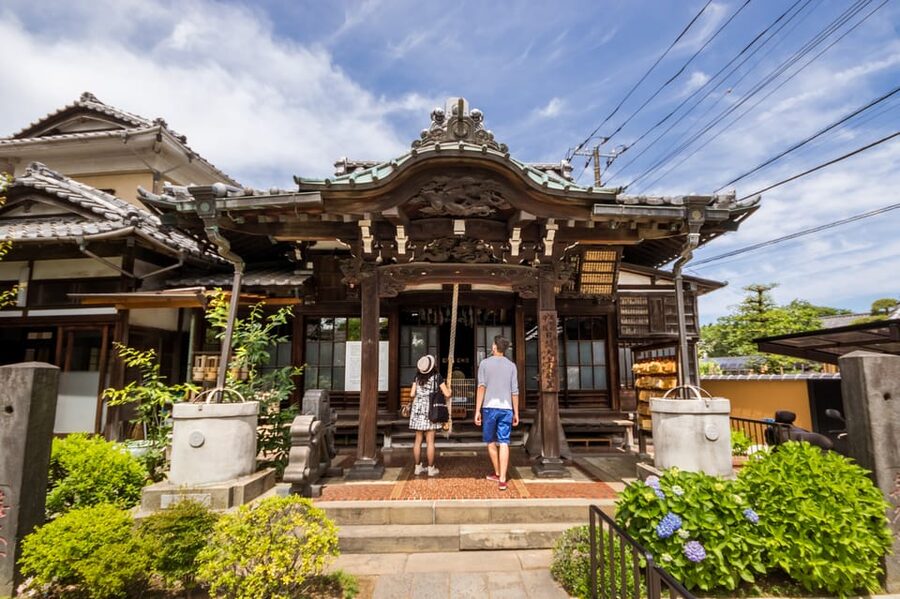
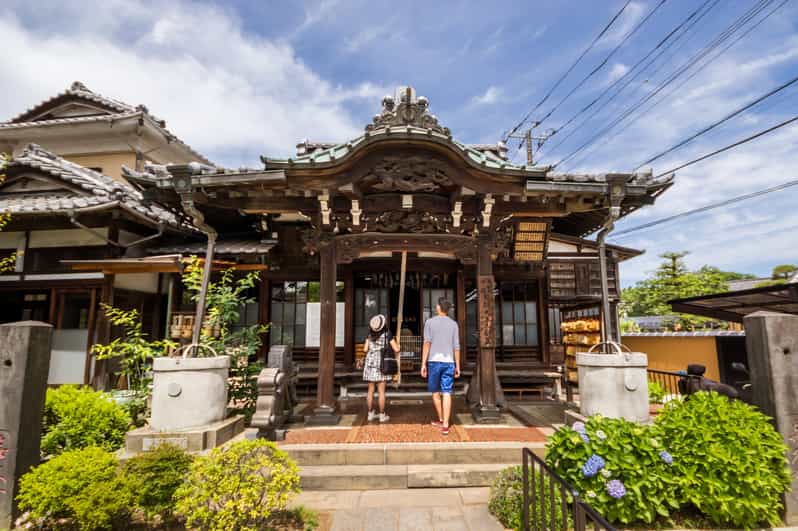
Tennōji Temple is listed as a 20-minute visit, giving the walk an early cultural stop. The temple helps set the tone for the district: Yanaka is not an artificial historic park, but a living neighborhood where religious sites and homes sit close together.
Your guide can explain what you are seeing and answer questions about Japanese life, customs, and the area’s past. Past guides such as Sumiko and Rie were praised for giving clear explanations in English and taking time with questions. That personal exchange is one of the better reasons to choose this walk instead of simply downloading a map and following it alone.
The temple visit is not likely to satisfy someone searching for a long, formal temple tour. Twenty minutes is enough for an introduction, basic context, and a look around, but not an exhaustive study of the site. The strength of this stop is how it fits into the larger walk.
Yanaka Cemetery and its 7,000 tombstones
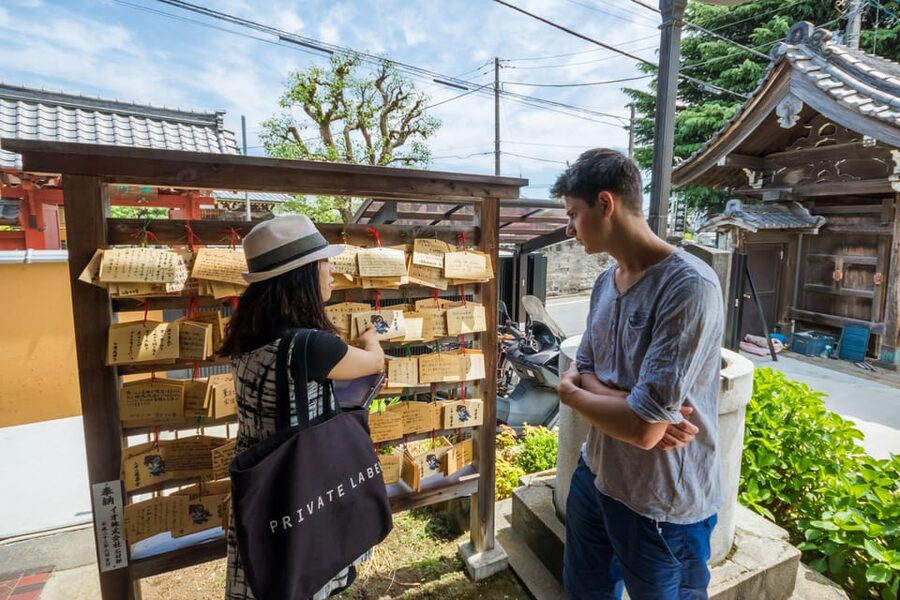
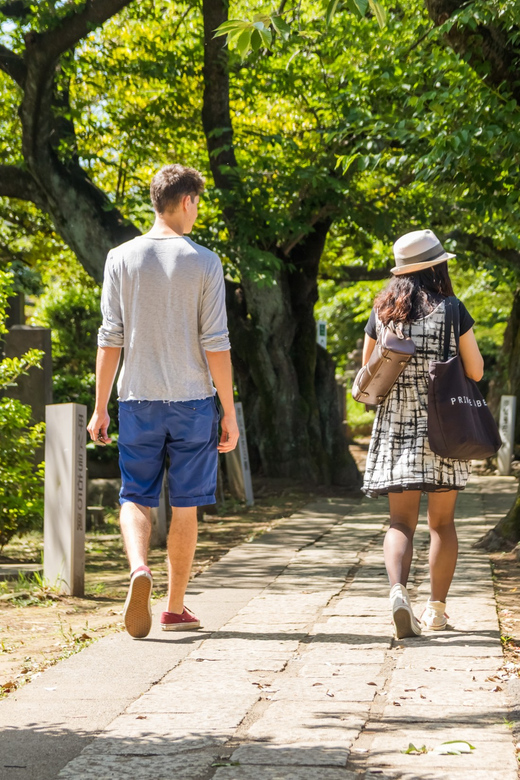
Yanaka Reien, or Yanaka Cemetery, is the emotional center of the route. With about 7,000 tombstones, it is one of Tokyo’s largest cemeteries and far more spacious than the crowded city around it.
I like the stop because it changes your view of Tokyo. Instead of seeing the city only as a place of commerce and transport, you see a quiet area shaped by memory, religion, and family history. The cemetery’s paths also give you a natural pause in the day. The pace slows, and the guide can explain the importance of the site without competing with traffic and crowds.
The cemetery is famous for cherry blossoms in spring. If you visit during that season, the trees can add another layer to the walk, though bloom timing is never guaranteed by a tour schedule. In other seasons, the attraction is the calm setting, the rows of graves, and the unusual contrast between an expansive cemetery and the dense city nearby.
Some past guides have also taken groups toward the grave of the last shogun. The exact stops can depend on the guide and conditions, so I would treat this as a possible highlight rather than a guaranteed feature. Ask your guide if this interests you.
You should also show respect here. Keep your voice low, stay with the group, and follow any instructions about where to walk. The activity information specifically lists noise and indoor shoe rules among its restrictions, though the cemetery itself is outdoors.
More walking routes in Tokyo:
- Tokyo Tsukiji Fish Market Food and Culture Walking Tour
★ 5.0 · 3,184 reviews - Tokyo: Imperial Palace and Shogun Historical Walking Tour
★ 5.0 · 2,251 reviews - Tokyo: Shinjuku Local Bar and Izakaya Guided Walking Tour
★ 4.9 · 1,794 reviews - Tokyo: Tsukiji Fish Market Food and Walking tour
★ 5.0 · 1,724 reviews
Nezu Shrine and the Tokugawa connection
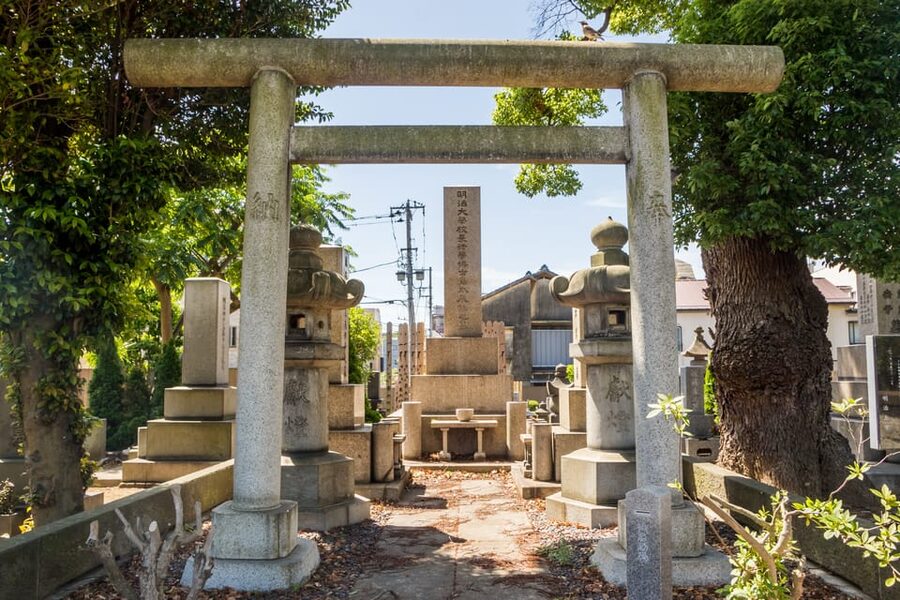
Nezu Shrine adds a grander historical note to the neighborhood walk. The shrine was built in 1706 by the fifth Tokugawa shogun, placing it firmly in the Edo-period story that shapes Yanaka.
I find this stop valuable because it connects local streets with the political history of old Japan. You are not just looking at an attractive shrine. You are seeing a site linked to the Tokugawa rulers who governed Japan during the Edo period.
The shrine is especially appealing when its azaleas are in bloom. One spring visit was timed with the flowers at their best, making the grounds particularly memorable. As with the cemetery’s cherry blossoms, seasonal displays depend on timing, but Nezu Shrine remains worthwhile outside peak bloom.
The visit also gives you a chance to compare religious spaces. Tennōji Temple and Nezu Shrine are not interchangeable, and a guide can help explain the difference between Buddhist and Shinto settings. That sort of comparison is easy to miss when you visit places on your own without context.
Yanaka-Ginza and the taste of neighborhood Tokyo
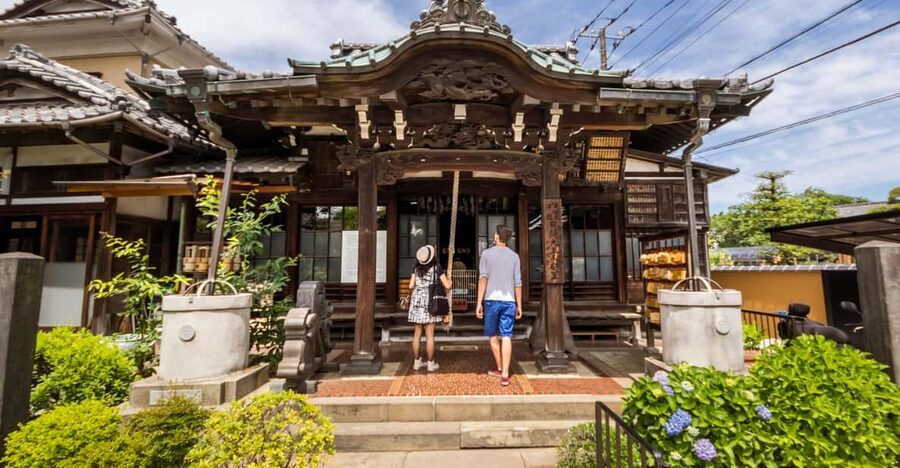
Yanaka-Ginza is the tour’s most social and food-focused section. This old-style shopping street offers the chance to sample different local foods and sweets. Food and drinks are not included in the $83 price, so bring some yen or another accepted payment method for anything you want to buy.
I like this part because small shops often tell you more about daily life than a grand attraction does. You may find bread, pastries, sweets, pottery, and other local goods. The exact choices depend on what is open and what catches your eye, but the tour gives you time to stop instead of marching past every shop.
Do not expect a full meal to be included. Think of the food tasting as a series of optional small purchases. That arrangement keeps the tour flexible, especially for people with different diets or appetites, but it means you should budget beyond the ticket price if you want to try several things.
The shopping street can also be busier than the cemetery and temple lanes. That contrast is useful. You move from quiet religious grounds into a more active local market area, then back toward the station. It makes the district feel lived in rather than preserved only for sightseeing.
What the guide adds to the walk
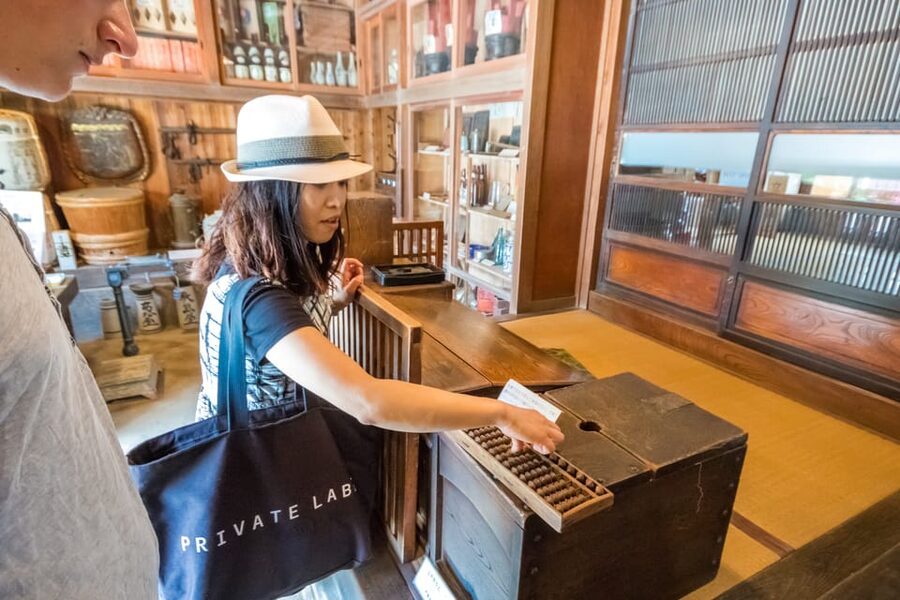
The guide is the main variable in any walking tour, and this experience has a strong record of warm, personal guiding. Names connected with particularly well-liked tours include Michiko, Kaori, Rie, Sumiko, Yoshimi, Mikko, and Arika.
Michiko was described as energetic and kind with children. Kaori received praise for making the walk enjoyable. Yoshimi was noted for combining hospitality with a strong grasp of Japanese culture, while Mikko brought special enthusiasm for the district and its back streets. These details suggest the experience works best when you want conversation, not just a sequence of photo stops.
A small group of two to eight people helps. You can ask why a lane looks different from a modern Tokyo street, what a shrine feature means, or how people use the neighborhood today. In a large group, those questions can be hard to ask. Here, they are part of the value.
The guide’s style may vary. One person may focus more on history, another on food or local life. That is not necessarily a flaw, but you should book this as a guided neighborhood walk rather than a fixed museum lecture with identical wording every time.
Is $83 a fair price?
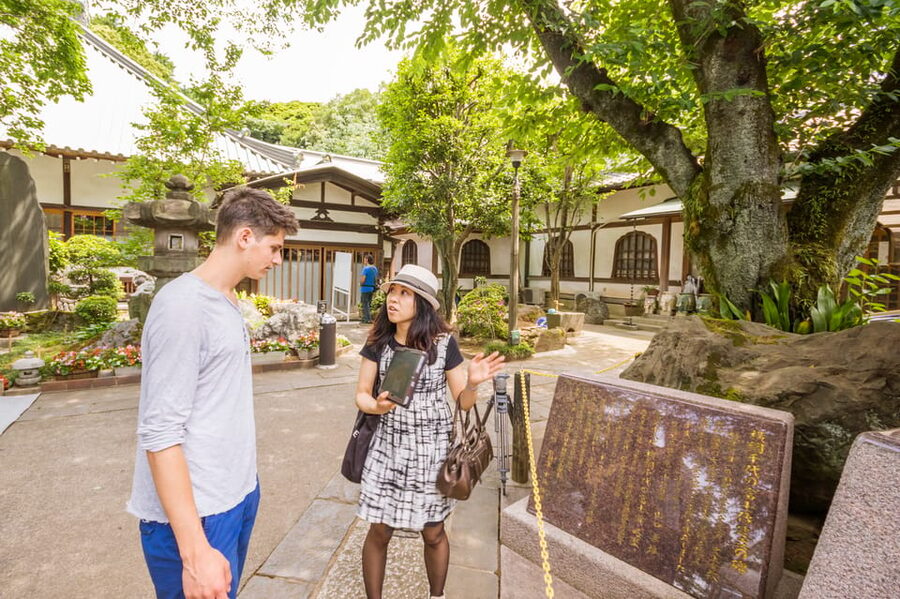
At $83 per person, this is not the cheapest way to walk around Yanaka. You can visit the district independently, and the ticket does not include food, drinks, transport, or hotel transfers.
The price becomes easier to justify if you value interpretation and efficiency. In 210 minutes, you cover several key parts of Yanaka, learn why they matter, and avoid spending your limited Tokyo time figuring out the route. The English-speaking guide and group limit are the main things you are paying for.
I would see the tour as good value for a first visit to Yanaka, especially if you want cultural background but do not want a formal private tour. It is less compelling for confident repeat visitors who already know the district and enjoy wandering without a schedule.
Remember to add the cost of snacks and sweets. That is not a hidden charge, since food is clearly separate, but it changes the total cost of the afternoon.
Who should book this walk?
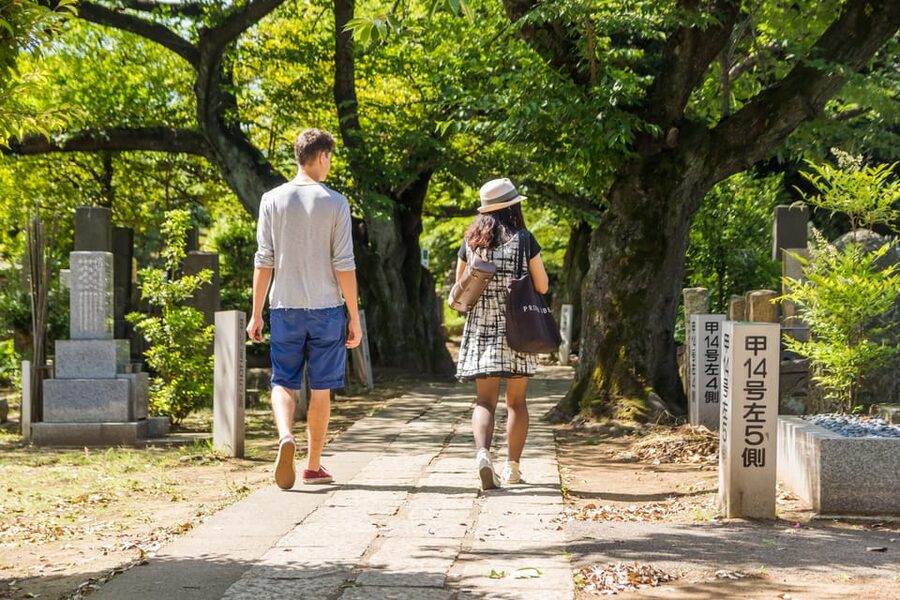
This tour suits you if you want to see Tokyo beyond its famous modern sights. It is a good fit for first-time visitors who want a gentle introduction to temples, shrines, neighborhood customs, and local food without spending an entire day outside the city center.
Families can also do well here. A guide such as Michiko has been especially good with children, and the food stops can break up the historical sections. Still, parents should be ready for a moderate amount of walking and should make sure children can manage cemetery paths and slopes.
I would also recommend it to anyone who enjoys photography, old streets, gardens, temples, and quiet corners. The route offers plenty of changing views, from stone markers to shrine grounds and shopping lanes.
This is not the right choice if you need step-free access. Wheelchair users, people using electric or non-folding wheelchairs, and people with serious heart problems are specifically advised against booking. The tour also lists restrictions for babies under one year and people over 95, along with several weight limits. Check those conditions carefully before paying.
Practical details before you go
The tour runs in English and requires at least two people per booking. No more than eight people can join one booking, so the group remains small.
Wear comfortable walking shoes and avoid bringing oversize luggage, bikes, drones, or other restricted items. Alcohol and drugs are not allowed, and you should follow local expectations about quiet behavior and footwear.
You can cancel up to 24 hours before the start for a full refund, and the reserve-now, pay-later option gives you some flexibility. Starting times vary, so check availability for your chosen date.
The activity is rated 4.9 from 30 ratings, which matches its strongest qualities: friendly guides, clear English, cultural context, and a route that feels different from central Tokyo. I would still pay attention to the physical demands and the extra cost of food.
Should you book Old and Nostalgic Tokyo?
Book it if you want a small-group introduction to old Tokyo with a guide who can connect cemeteries, temples, shrines, food shops, and local streets. The route is varied, the station meeting point is practical, and the chance to see Yanaka at a walking pace is the real reward.
Skip it if you dislike organized walks, want a full meal included, or need accessible transport and frequent rest breaks. For most visitors who have already seen Tokyo’s bright central districts, this 3.5-hour tour offers a welcome change of pace and a more personal look at the city.
FAQ
Where does the Yanaka walking tour begin?
It begins at the north gate of JR Nippori Station, marked 北改札.
Where does the tour finish?
The tour returns to JR Nippori Station.
How long does the activity last?
The walk lasts 210 minutes, or 3.5 hours.
Is the tour conducted in English?
Yes. The activity includes a live English-speaking guide.
How many people can join the tour?
A minimum of two people is required per booking, and the maximum is eight people.
Is food included in the price?
No. Food and drinks are not included, so you pay separately for local snacks, sweets, or other purchases.
What should I bring?
Bring comfortable shoes. You should also avoid bringing oversize luggage, pets, bikes, drones, or other restricted items.
More Half-Day in Tokyo
- Half-day Tokyo Afternoon Tour by Hato Bus
★ 4.0 · 269 reviews - Tokyo: A Half-Day Trip Bus Tour in the Morning
★ 4.6 · 236 reviews - Half-day Tokyo Morning Tour by Hato Bus
★ 4.0 · 220 reviews - Tokyo Private Half-Day Tour with a Local – Secrets & Highlights
★ 5.0 · 53 reviews
New on our Tokyo list
- From Tokyo: Mount Fuji & Hakone Full Day Private Tour★ 4.9 · 25 reviews
- Tokyo Spectacular View Day-Cruise in 90 Minutes★ 5.0 · 25 reviews
- Real Tokyo Runner Club : Daikoku Car Meet Night Tour with JDM Car★ 5.0 · 25 reviews
- 2.5 Hour-Guided Cycle Tour in the Central Tokyo★ 5.0 · 25 reviews
- Ramen Making from Scratch +Akihabara Tour –Cooking Class★ 5.0 · 25 reviews
- [Self-Drive] Tokyo & Daikoku Custom Car Driving Tour★ 4.9 · 25 reviews
- Tokyo: 2-Hour Night Bike Tour of the City’s Hidden Gems★ 4.9 · 25 reviews
- Samurai themed Entertainment show in Shinjuku★ 4.5 · 25 reviews
Yanaka & Old Tokyo Walks, compared.
Yanaka Walking Tour: Historic and Traditional District of Tokyo
Read our review →

Small Town in the Big City: Tasting Tokyo’s Kichijoji
Read our review →
Stroll in Old traditional culture towns~Yanaka & Nezu
Read our review →
Yanaka Historical Walking Tour in Tokyo’s Old Town
Read our review →
Private Home Cooking in Yanaka – Local Flavors in a Warm Setting
Read our review →
Browse the lists this tour appears in