
Reviewed · SUMO EXPERIENCES
Tokyo Sumo Morning Practice Tour at Stable
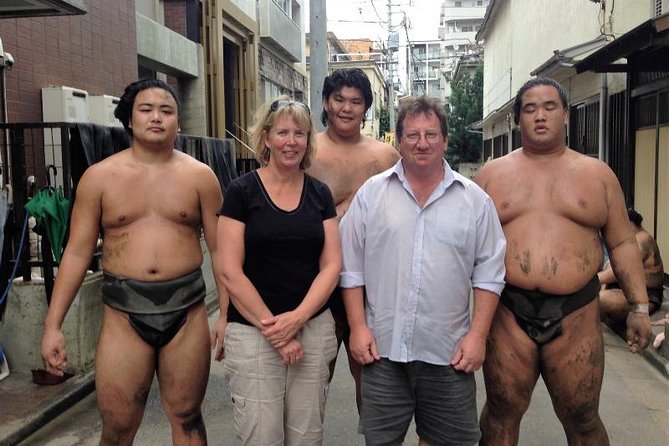
Tokyo’s sumo stables are not theaters built for sightseeing. They are working training rooms where wrestlers repeat the same hard drills, push through bouts, and prepare for Japan’s six annual Grand Tournaments. This morning visit lets you watch from close range, often just a few feet from the action, while a guide explains what you are seeing.
I like the authentic setting and the chance to see many practice bouts without the ceremony and long pauses of a formal tournament. I also like the guides’ strong personal interest in sumo. Seiji, Yumi, Noriko, Cameo, and Nobu are among the guides praised for clear explanations and thoughtful handling of the visit.
The main drawback is that you must watch in silence, and the headset commentary may compete with the action. Some people found the audio hard to hear or distracting. Seating can also affect your view, so arriving early matters.
In This Review
- Key points to know before you book
- Why a practice stable can beat a tournament
- Meeting at Ryogoku Station at 7:45am
- The short introduction to sumo’s old rules
- Inside the stable, silence becomes part of the experience
- What you will actually watch during 90 minutes
- Headsets help, but they are not perfect
- Photos and the brief ending
- Is $83.57 a fair price?
- Who will enjoy this morning most?
- Practical rules that protect the stable
- Should you book the Tokyo sumo practice tour?
- FAQ
- How long does the Tokyo sumo morning practice tour last?
- Where do I meet the guide?
- Is transportation included?
- How old must children be to join?
- Can I take photographs inside the stable?
- Can I eat or drink inside the stable?
- What should I wear or bring?
- Can I leave the stable during practice?
- What is the cancellation policy?
Key points to know before you book
- Watch real morning practice: You enter a working stable rather than a staged dinner show or tourist performance.
- Expect an early start: Meet near Ryogoku Station at 7:45am, with the stable visit lasting about 90 minutes.
- See training up close: You may watch repeated sparring matches, drills, and rituals from stools or floor seating near the ring.
- Learn the bigger picture: Guides explain Shinto connections, wrestler rankings, training life, and the six 15-day Grand Tournaments.
- Prepare for strict manners: No video, flash, food, hats, sunglasses, or casual movement inside the stable.
- Bring patience and water in summer: The room has no air conditioning, though water and sports drinks are permitted in summer.
Why a practice stable can beat a tournament
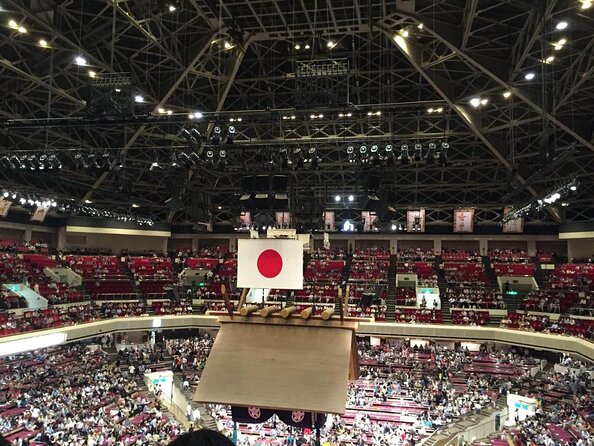
A formal sumo tournament is the grand public event, with music, ceremony, introductions, rankings, and packed spectator stands. It is a terrific experience, but the rhythm can be slow if you are mainly interested in the physical contest.
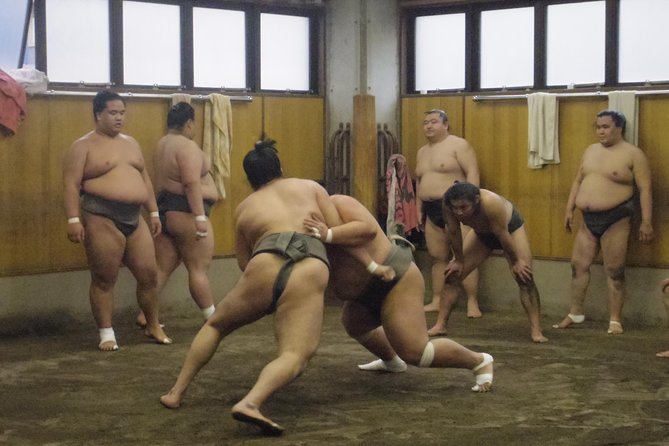
Morning practice gives you the opposite view. The wrestlers train bout after bout, often with little fuss. You can watch them prepare, collide, reset, and try again. The practice may include dozens of exchanges, depending on the day’s routine. That repeated effort helps you understand sumo as work, not just spectacle.
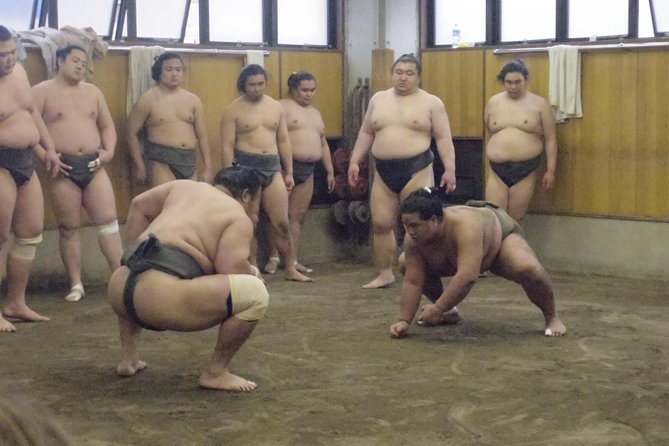
I also find the setting more revealing. The sandy ring is sacred, and the room feels like a place of discipline rather than entertainment. You are close enough to notice the force of each impact and the quiet concentration between bouts. The wrestlers are not performing for applause, so your behavior matters.
The stable is still a carefully arranged experience for visitors, with a guide managing access and explaining the customs. It is not a completely free-form look behind a door. Still, the wrestlers are carrying out their actual training, and that gives the morning its value.
More sumo mornings:
- Tokyo: Sumo Show Experience with Chicken Hot Pot and a Photo
★ 4.8 · 6,678 reviews - Tokyo: Sumo Show and Dining Experience
★ 4.8 · 2,742 reviews - the SUMO show
★ 5.0 · 1,960 reviews
Meeting at Ryogoku Station at 7:45am
The meeting point is at the Ryogoku Station Gallery near Ryogoku Station. Your guide gathers the group in the morning, gives an introduction, and leads you to the stable. Depending on the plan you book, the exact meeting place may differ, so check your confirmation email rather than relying only on a general map pin.
This is one part of the morning where you should allow extra time. One person had trouble finding the meeting point because Google Maps placed it about a block away. Another group encountered confusion when no representative appeared at the station and made its own way to the stable. That does not appear to be the norm, but it is a good reason to arrive early, keep your phone available, and have the stable directions from your confirmation ready.
The group can include up to 20 people. After meeting, you may take a train to the stable. The walk and transport are part of the morning’s practical side, so wear shoes and clothing that are easy to manage, especially if you are not used to early starts.
Use the restroom before you arrive. Once the practice begins, leaving is discouraged, and you cannot re-enter the stable after going out.
The short introduction to sumo’s old rules
Before you take your place, the guide explains the sport’s roots and basic structure. Sumo is closely linked with Shinto, Japan’s native religious tradition, and many rituals remain visible in the ring. The sport is often described as having origins stretching back at least 1,500 years, while the tour also places its traditional development in the context of Japan’s long religious and cultural history.
You learn about the six annual Grand Tournaments, each lasting 15 days. Three are held in Tokyo, with one each in Osaka, Nagoya, and Fukuoka. This information is useful because it places stable practice in the larger sumo calendar. A wrestler is not simply training for one match. He is working toward rank, tournament results, and a demanding professional life.
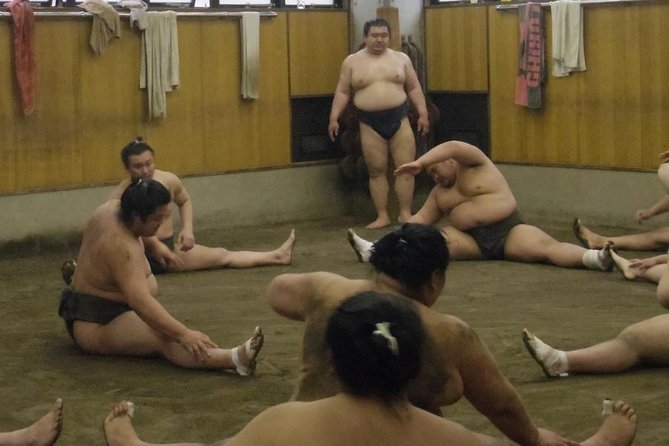
The guide may also explain rankings and the daily lifestyle of the wrestlers. That background makes the practice easier to read. Without it, a sequence of stomps, pushes, throws, and bouts can look like a blur of large bodies. With some context, you begin to notice who is senior, who is testing a technique, and how much effort goes into basic movement.
One useful improvement would be a clearer rules briefing before the practice. Some people wanted more explanation of how a wrestler wins, what counts as a foul, and why certain exchanges stop. If you know little about sumo, ask your guide when questions are allowed. The timing varies, and speaking during practice is not appropriate.
Inside the stable, silence becomes part of the experience
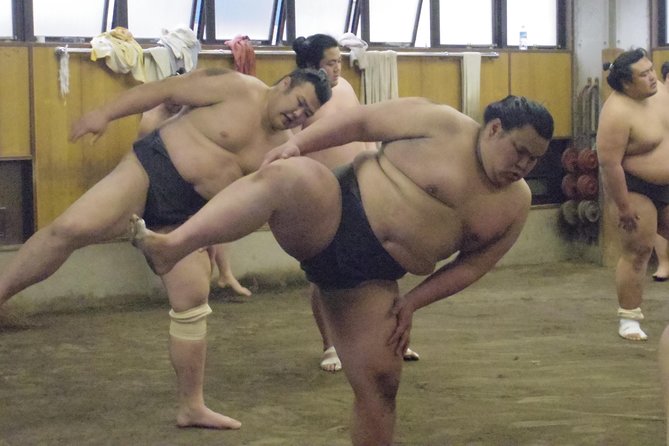
The stable is a working place, not a room designed around visitor comfort. You may sit on stools, or on the floor depending on the arrangement. Front places can be reserved for sponsors or other special invitees, so arriving early can help you secure a better position behind them.
The room can be hot, particularly in Tokyo’s summer. There is no air conditioning. During summer, water and sports drinks are allowed, but eating and drinking are otherwise prohibited. An ice pack or cold towel is a sensible addition to your day bag.
Once seated, you watch quietly. Keep your cellphone on silent, and do not stretch your legs toward the ring. Showing the soles of your feet toward the wrestlers is considered rude, and the ring itself is a sacred area. Never step onto the ring or sandy ground.
These rules may sound fussy until you see how close the action is. A wrestler’s training depends on concentration, and visitors are near enough to become a real distraction. You cannot ask wrestlers for photographs while practice is under way, and you should avoid leaving in the middle unless you feel unwell.
This is not the place for a running conversation, snack break, or constant camera work. If you can accept those limits, the quiet helps you notice the power and routine of the training.
A few more Tokyo bookings worth comparing
- Tokyo: Sumo Morning Practice Viewing Tour
★ 4.8 · 570 reviews - Tokyo: Sumo Morning Training Visit
★ 4.4 · 370 reviews - Tokyo: Sumo Morning Practice Tour at Sumida City
★ 4.8 · 308 reviews - Tokyo Ryogoku Sumo Morning Practice + Photo Shoot with Wrestlers
★ 4.5 · 277 reviews
What you will actually watch during 90 minutes
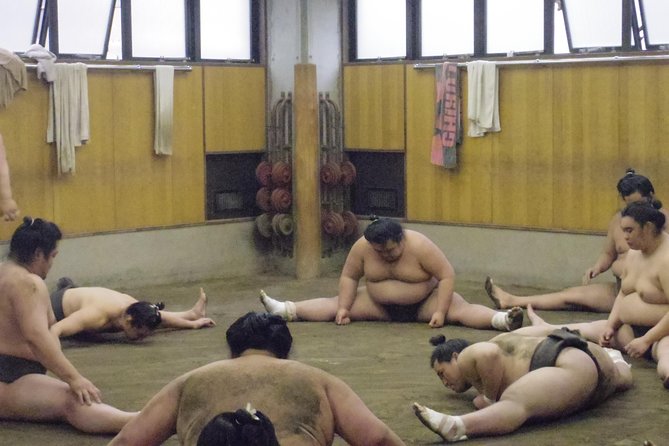
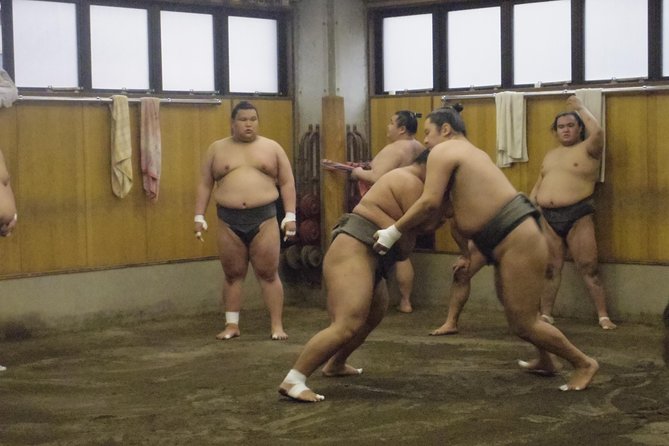
The practice session is the heart of the morning. Wrestlers go through their daily routine, including exercises and sparring. You may see less experienced competitors train alongside more seasoned wrestlers, and the intensity can rise as the session continues.
The content is not identical every day. Practice can finish earlier or run longer depending on what the stable is doing. A sponsor’s visit, for example, may lead to a longer session with more bouts from senior wrestlers. That unpredictability is part of the appeal, but it also means you should not book this expecting a fixed show with a guaranteed sequence.
The best moments come when the action shifts from warm-up work to serious practice bouts. The wrestlers may crash into each other repeatedly, with no need for lights, music, or a commentator’s dramatic voice. You see how much stamina and mental control are required to repeat an explosive effort.
The viewing position is close in most parts of the room, but it is not identical for everyone. Your seat may be excellent, or another person’s shoulder may occasionally block part of the view. One account praised the fact that even seats farther back still felt close, while another found the position made it hard to see. Arrive early and choose carefully when you have a choice.
Headsets help, but they are not perfect
Guides often use headsets or in-ear commentary so you can hear explanations without forcing the guide to speak loudly in the stable. This is a smart idea in principle. It preserves the quiet needed for practice while giving you a running explanation of rituals, rankings, moves, and wrestler backgrounds.
Several guides have earned praise for clear English and strong enthusiasm for sumo. Seiji was described as kind and informative. Yumi brought an educated fan’s interest to the session. Noriko was praised for careful explanations before the visit, while Cameo was appreciated for a useful question period afterward. Nobu was also singled out as an excellent guide.
Still, the audio system can be the weakest part of the morning. Static or low volume may make it hard to follow, and constant narration can pull your attention away from the bouts. I would prefer the guide to explain the basics before practice, then point out only important moves or details as the action unfolds.
If your headset is unclear, signal the guide as soon as it is polite to do so. You should not have to choose between watching and listening. Some sessions also use handouts, which can reduce the amount of information you must process while the wrestlers are training.
Photos and the brief ending
Photography is allowed without flash or shutter sounds. Video is not allowed. You must also respect privacy and image rights, so photographs cannot be used for unauthorized commercial purposes.
There may be a short photo opportunity with wrestlers after practice. Some people were able to take a picture with one or two wrestlers from the stable, and this can be a memorable finish. It is not a guaranteed, unlimited meet-and-greet, though. Photo time may last only a few minutes, and the group is moved out soon afterward.
Treat this as a courtesy rather than the main product. The valuable part is observing the training. If photographs are offered, follow the guide’s instructions and do not delay the next group.
At the end, the guide walks you back to the station, where the activity finishes. The full outing takes about two hours, though the practice itself accounts for most of the time.
Is $83.57 a fair price?
At $83.57 per person, this is not a cheap way to spend a morning. You are paying for access to a working sumo stable, the guide’s explanations, group coordination, and the chance to sit close to professional wrestlers during real training.
The price makes more sense if you value access and context. A tournament ticket gives you the complete public event, but it may not provide the same close view or the same number of continuous practice bouts. A dinner show may be easier and more theatrical, but it does not offer this kind of working-stable setting.
The value drops if you expect a polished performance, extensive personal interaction, or a long question-and-answer session. You may get only a short photo period, and the commentary may not suit your listening style. The practice length and intensity also depend on the stable’s schedule.
I would call it fair for a visitor who sees sumo as a priority and wants something more direct than a staged cultural show. It is harder to justify for someone who is only mildly curious or who dislikes early starts, strict etiquette, hot rooms, and sitting quietly for a long stretch.
Who will enjoy this morning most?
This experience suits you if you:
- Want to see sumo in a working environment
- Prefer close observation to a polished stage show
- Are curious about rankings, rituals, and wrestler life
- Can wake early and follow strict behavior rules
- Are at least 12 years old
- Appreciate a guide who adds cultural context to what you see
Children 11 and under cannot enter the stable, so this is not a family option for younger children. Most people can participate, but you should skip the activity if you feel unwell. The heat and long quiet sitting may be uncomfortable for some people.
It is also a good choice for a return visit to Tokyo. If you have already seen the major sights, watching sumo practice gives you a more specialized look at Japanese culture. On a first visit, it can be one of the most memorable mornings, provided you are genuinely interested in the sport.
Practical rules that protect the stable
Keep these points in mind before you leave your hotel:
- Turn your cellphone to silent.
- Do not use flash photography or shutter sounds.
- Do not record video.
- Leave hats and sunglasses outside the stable.
- Do not eat or drink, except for permitted water or sports drinks during summer.
- Use the restroom before meeting the guide.
- Do not step onto the ring or sandy area.
- Keep your legs arranged so your feet do not point toward the ring.
- Avoid leaving during practice.
- Do not ask wrestlers for photographs while they are training.
- Do not return inside after you leave.
These are not random restrictions. They show respect for the wrestlers and for the religious meaning of the ring. Following them also helps you remain welcome in a place that is not normally open for casual public visits.
Should you book the Tokyo sumo practice tour?
I would book it if you want to see the demanding, repetitive side of sumo rather than only its tournament spectacle. The close viewing, real training, and strong guide support can give you a lasting respect for the athletes. For many people, watching bout after bout is more revealing than a formal match surrounded by ceremony.
I would hesitate if you need guaranteed seating, perfect audio, air conditioning, flexible movement, or a long personal exchange with wrestlers. The experience is quiet and controlled, and the short photo period should not be your reason for paying the price.
Book early enough to reach the 7:45am meeting point with time to spare. Check the exact location in your confirmation, bring a cold towel in summer, and come ready to watch rather than be entertained. If that sounds like your kind of morning, this is a strong way to meet sumo on its own ground.
FAQ
How long does the Tokyo sumo morning practice tour last?
The activity lasts about two hours. The stable visit itself is scheduled for about 90 minutes, but the practice may be a little shorter or longer depending on what happens that morning.
Where do I meet the guide?
The standard meeting point is the Ryogoku Station Gallery near Ryogoku Station at 7:45am. The exact meeting place can vary by booking option, so check your confirmation email carefully.
Is transportation included?
After meeting the guide, the group may take a train to the stable. The guide then walks the group back to the station at the end.
How old must children be to join?
The minimum age is 12. Children 11 and under cannot enter the stable.
Can I take photographs inside the stable?
Photos are allowed without flash or shutter sounds. Video is not allowed, and you must respect privacy and image rights. You cannot ask wrestlers to pose while practice is still under way.
Can I eat or drink inside the stable?
Eating and drinking are not allowed. During summer, water and sports drinks are permitted because Tokyo can be very hot and the stable has no air conditioning.
What should I wear or bring?
Hats and sunglasses are not allowed inside. Bring comfortable clothing and consider carrying an ice pack or cold towel during summer. Use the restroom before arriving.
Can I leave the stable during practice?
You should do your best to stay until practice ends. Once you leave, you cannot re-enter, so plan ahead and avoid leaving unless you feel unwell.
What is the cancellation policy?
You can cancel for a full refund up to 24 hours before the experience starts. Cancellations or changes made less than 24 hours before the start time are not accepted for a refund.
New on our Tokyo list
- From Tokyo: Mount Fuji & Hakone Full Day Private Tour★ 4.9 · 25 reviews
- Tokyo Spectacular View Day-Cruise in 90 Minutes★ 5.0 · 25 reviews
- 2.5 Hour-Guided Cycle Tour in the Central Tokyo★ 5.0 · 25 reviews
- Real Tokyo Runner Club : Daikoku Car Meet Night Tour with JDM Car★ 5.0 · 25 reviews
- Ramen Making from Scratch +Akihabara Tour –Cooking Class★ 5.0 · 25 reviews
- [Self-Drive] Tokyo & Daikoku Custom Car Driving Tour★ 4.9 · 25 reviews
- Tokyo: 2-Hour Night Bike Tour of the City’s Hidden Gems★ 4.9 · 25 reviews
- Samurai themed Entertainment show in Shinjuku★ 4.5 · 25 reviews
Sumo Experiences, compared.
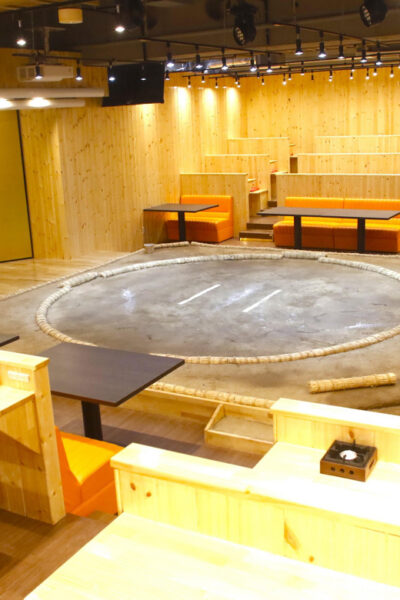
Sumo Show Experience with Chicken Hot Pot and a Photo
Read our review →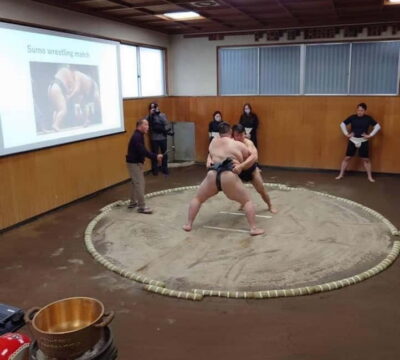
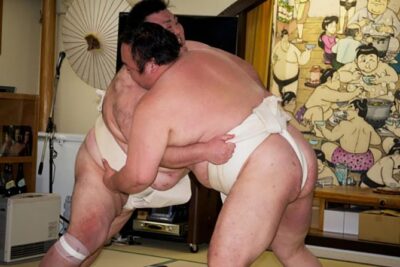
Tokyo Shinjuku Sumo Show & Experience with Photo
Read our review →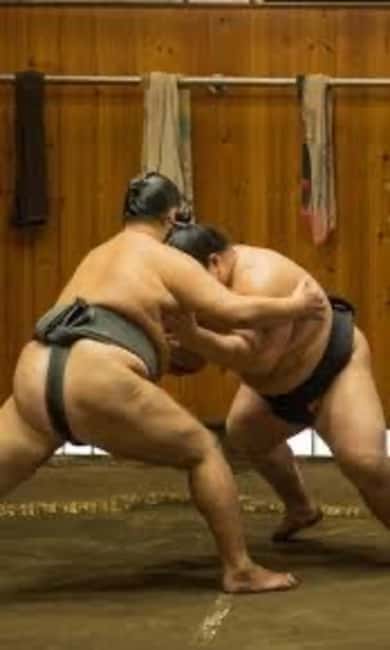

Authentic Sumo Experience in Tokyo: Enter the Sanctuary
Read our review →
Luxury Sumo Show Experience & Japanese cuisine & Drink
Read our review →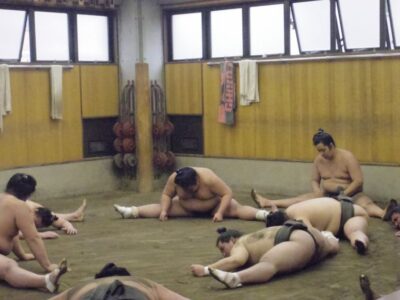
Browse the lists this tour appears in