
Reviewed · SUMO EXPERIENCES
Tokyo: Sumo Morning Practice Tour at Sumida City
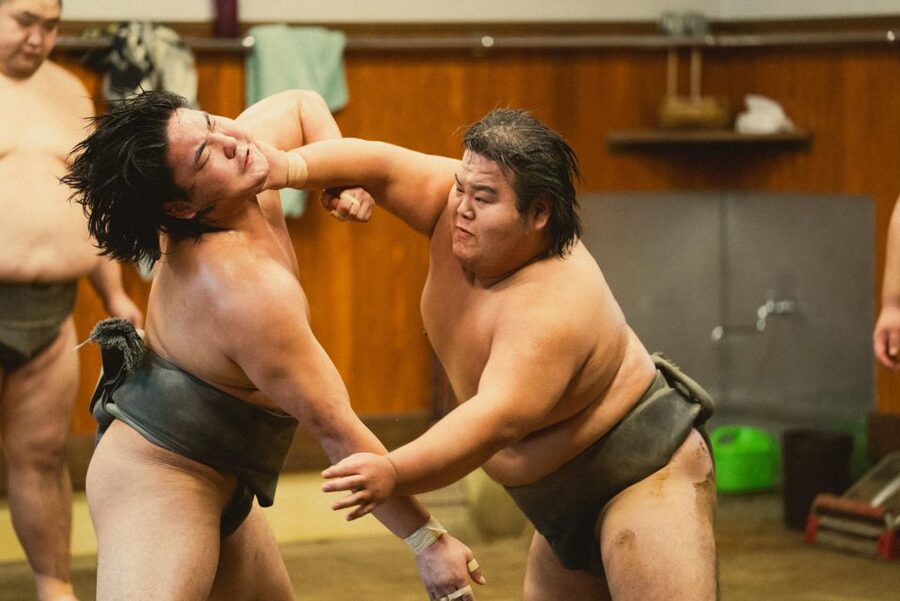
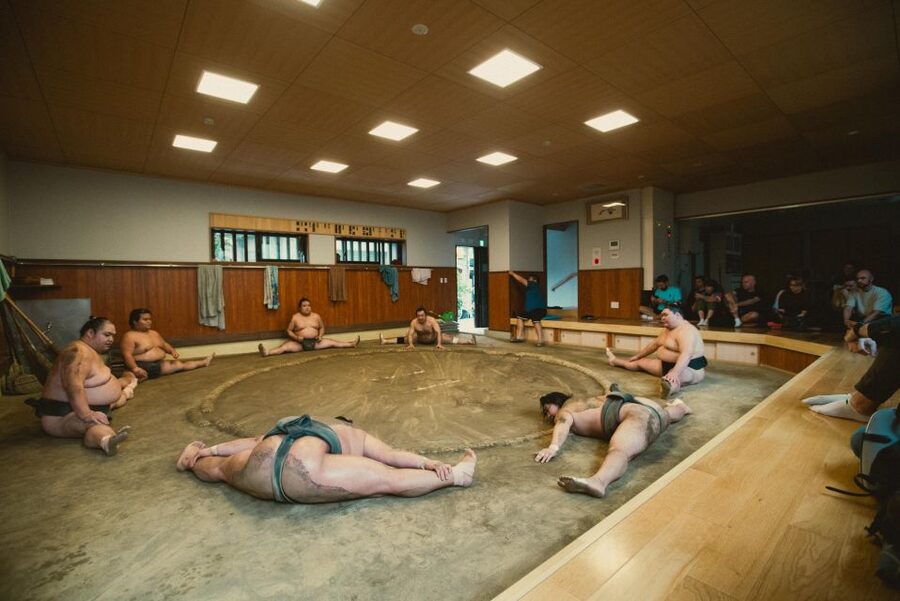
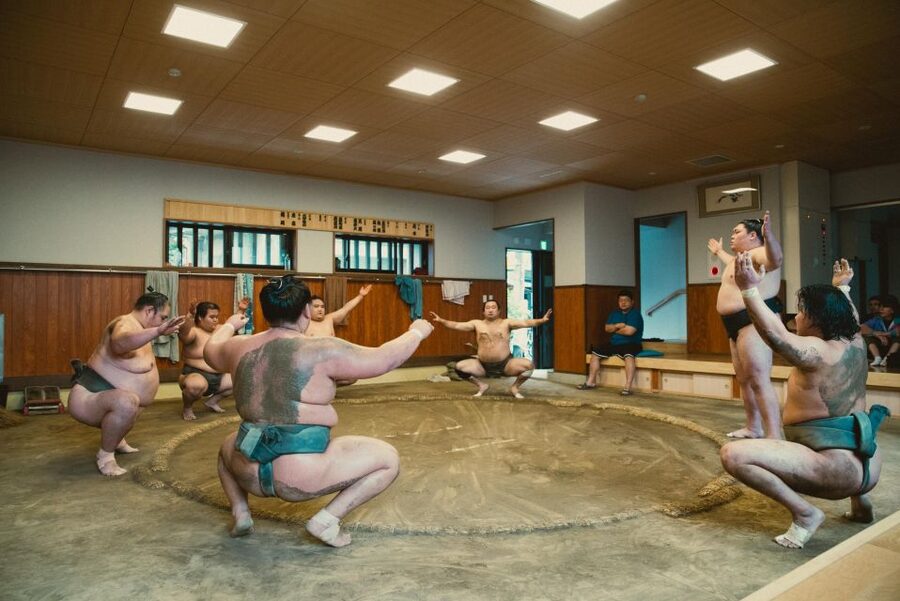
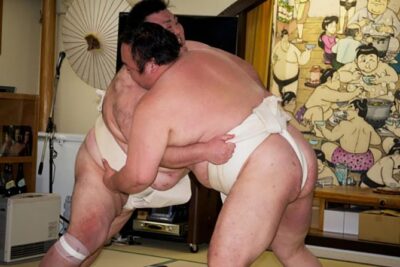
Sumo training is not a staged show. You sit quietly beside the ring while wrestlers repeat powerful, disciplined exercises, clash in practice bouts, and follow rituals shaped by centuries of Japanese tradition. At close range, their size is striking, but so are their speed, balance, and flexibility.
I like the front-row view of real training and the chance to ask the stable master questions afterward. I also like the personal help from guides such as Tadashi, Yoko, Kiyomi, Yuriko, and Oku, who explain what you are seeing without turning the practice into a noisy performance.
The main drawback is physical: you sit cross-legged on the floor for about 90 minutes, with no chairs and no toilet break. The $116 price is high for two hours, but this is a rare chance to enter a working sumo stable rather than simply watch a tournament from the stands.
In This Review
- Key points to know before booking
- Why this sumo morning feels different from a tournament
- Meeting at Oshiage before the city wakes up
- Inside the stable, quiet rules matter
- Watching 90 minutes of powerful, repetitive work
- The stable master Q&A is a major part of the morning
- Photos with wrestlers may be possible
- What $116 buys you
- Who will enjoy this most
- Practical advice for a smoother visit
- Should you book the Oshiage sumo morning?
- FAQ
- Where does the tour meet?
- What time should I arrive?
- How long does the activity last?
- Can I use the restroom during practice?
- Can I take photos or videos?
- Are chairs provided inside the stable?
- Are the tours held all year?
Key points to know before booking
- Training takes place inside a working sumo stable, not in a theater or museum.
- The morning begins early, with a 7:15 AM meeting at Oshiage Station and a 15 to 20 minute walk to the stable.
- You watch in silence, with no flash, shutter sounds, food, hats, sunglasses, strollers, luggage, or large bags.
- The practice lasts about 1.5 hours, followed by questions for the stable master and a possible photo opportunity.
- The floor seating is a real test, especially if you cannot sit cross-legged for an extended period.
- No tours are held in March, July, or November, when Tokyo’s sumo stables are affected by Grand Sumo tournaments outside Tokyo.
Why this sumo morning feels different from a tournament
A professional tournament gives you polished presentation, formal matches, and the excitement of a full arena. This morning visit gives you something quieter and more intimate: a look at the work behind the sport.
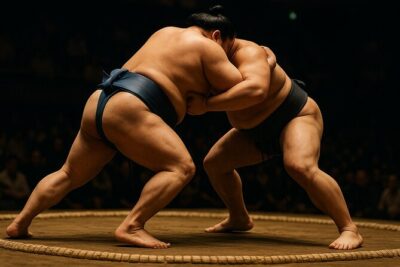
You watch wrestlers train at close range, often just a few feet away. The exercises can look simple at first, but the effort is obvious. The wrestlers use their full weight, explosive strength, and surprising agility. You may see one-on-one practice bouts, repeated drills, and long stretches of preparation before the wrestlers face each other.
That difference matters. You are not there to be entertained in the usual sense. The wrestlers are training for themselves, under the eye of the stable master. Your job is to observe respectfully and avoid interrupting their concentration.
I especially like this setting for anyone who has seen sumo on television but wants to understand the daily discipline behind it. You can see the athletes as people working through demanding routines, not just as huge figures in a tournament ring.
The experience also helps explain why sumo is tied to Japanese ritual and respect. The guide introduces the sport’s history, rules, and customs, although the amount of spoken explanation can vary. One visitor felt the history portion could have been longer, while others found the pre-tour and post-practice explanations useful.
More sumo mornings:
- Tokyo: Sumo Show Experience with Chicken Hot Pot and a Photo
★ 4.8 · 6,678 reviews - Tokyo: Sumo Show and Dining Experience
★ 4.8 · 2,742 reviews - the SUMO show
★ 5.0 · 1,960 reviews
Meeting at Oshiage before the city wakes up
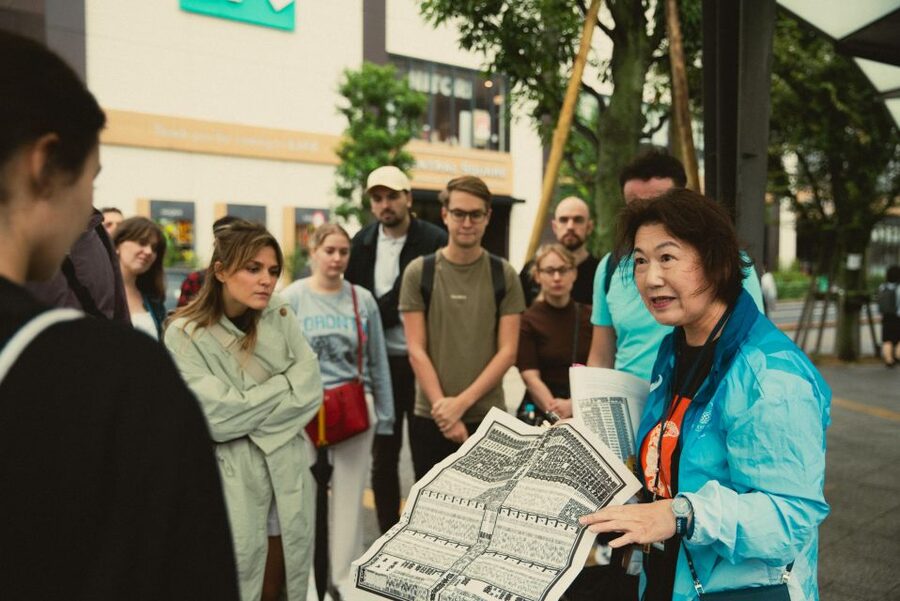
You meet your guide at 7:15 AM on the ground floor outside Exit A1 of Oshiage Station. This is Tokyo Metro Oshiage, also called Skytree Mae, and Toei Asakusa Line Oshiage Station. The official tour begins at 7:30 AM.
Get there early. The meeting area can feel confusing, and one past participant found that the directions did not match the meeting point perfectly. Arriving 15 or 20 minutes ahead gives you time to find the exit, locate the guide, and receive instructions before the group walks away.
From the station, you walk for roughly 15 to 20 minutes toward the stable. Tokyo Skytree Town is nearby, and the route gives you a quick look at the Oshiage area before the main part of the morning. It is not a sightseeing walk, so think of it as practical transport rather than an extra attraction.
The walk is easy for most people, but it can feel long in August heat or in wet weather. Bring a small towel if rain is expected, since you may need to wipe your feet before entering. Wear shoes that are easy to remove. You will take them off at the stable.
If you are late, message the provider. You may be given the stable’s address and told to go there alone, but do not enter on your own. Wait outside for the guide, and never ring the doorbell. The goal is to protect the wrestlers’ focus.
Inside the stable, quiet rules matter
A sumo stable is a training home and workplace, not a public attraction designed around visitors. The rules are strict because the practice must continue without distraction.
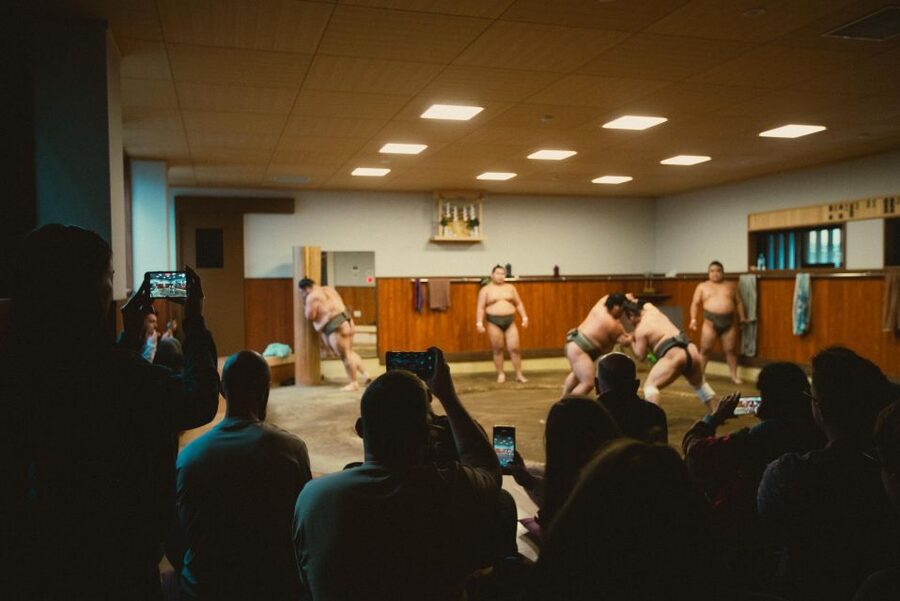
You must watch silently and respectfully. Photos and videos are allowed only without flash or shutter sounds, and you cannot upload them to social media. The no-sharing rule is easy to overlook, so keep your camera discreet and follow the guide’s instructions.
Do not bring food or drinks into the stable. Hats, sunglasses, baby strollers, luggage, and large bags are also not allowed. Use the restroom before you arrive because you cannot leave for a toilet break during practice.
These limits may sound fussy, but they make sense once the training starts. The room can be quiet for long periods, then suddenly fill with the thud of bodies and the force of a practice bout. Even a small interruption would change the mood.
The guide explains how to behave and what is happening. Guides including Yoko and Yuriko have been praised for making the rules clear, while another participant found it difficult to hear a softly spoken guide at the station. Stay close during the introduction, especially if the group is large.
Watching 90 minutes of powerful, repetitive work
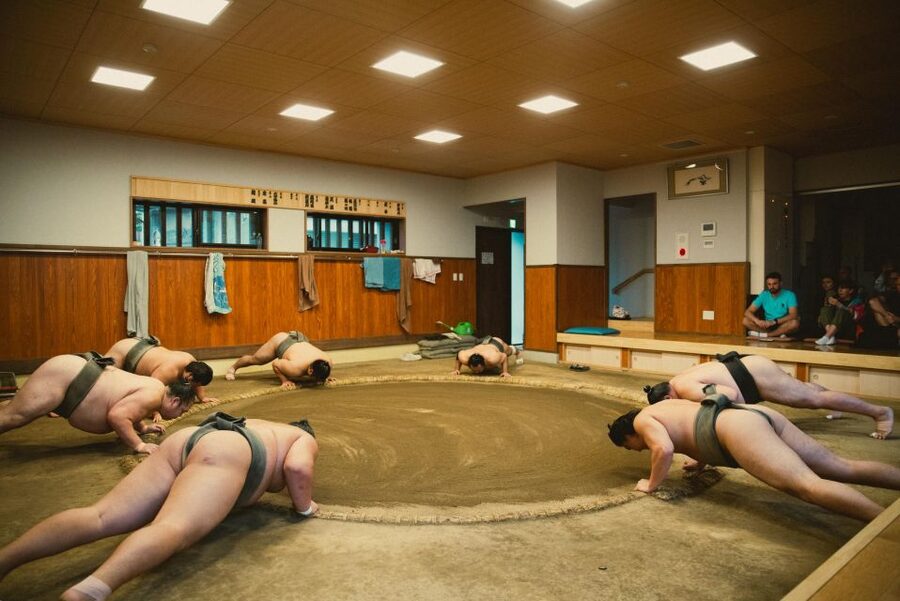
The central part of the tour is about 1.5 hours of morning practice. You sit on the floor near the ring, usually cross-legged, with no chairs available. This is an excellent position for seeing the wrestlers’ footwork, balance, and physical contact, but it is not comfortable for everyone.
Some groups may rotate seating so people can get different views. Still, your position can depend on the size of the group and other visitors in the stable. One group found its view affected when an Olympic fighting team had priority seating that day. Another group had to adjust because people were seated in different rows.
If seeing every movement from the front is vital to you, arrive on time and listen carefully when the guide organizes the group. Even then, expect your view to change. This is a working stable, not a reserved theater seat.
The practice itself can be absorbing because it builds slowly. You may first notice the wrestlers’ size, then their flexibility, timing, and control. The contrast is memorable. These are large athletes, but they move with care and precision.
You may also see trainees rather than the most famous elite wrestlers. That does not make the session less worthwhile. In fact, it gives you a clearer look at the effort required to develop the sport. One participant recognized a well-known wrestler, but you should not book this visit expecting a particular star.
The guide may provide basic information before or after the practice. In some cases, much of the explanation comes from a leaflet or from brief comments rather than a long lecture. If you want the cultural background, ask questions during the permitted times. The stable master session is often the best opportunity.
A few more Tokyo bookings worth comparing
- Tokyo: Sumo Morning Practice Viewing Tour
★ 4.8 · 570 reviews - Tokyo: Sumo Morning Training Visit
★ 4.4 · 370 reviews - Tokyo Sumo Morning Practice Tour at Stable
★ 5.0 · 298 reviews - Tokyo Ryogoku Sumo Morning Practice + Photo Shoot with Wrestlers
★ 4.5 · 277 reviews
The stable master Q&A is a major part of the morning
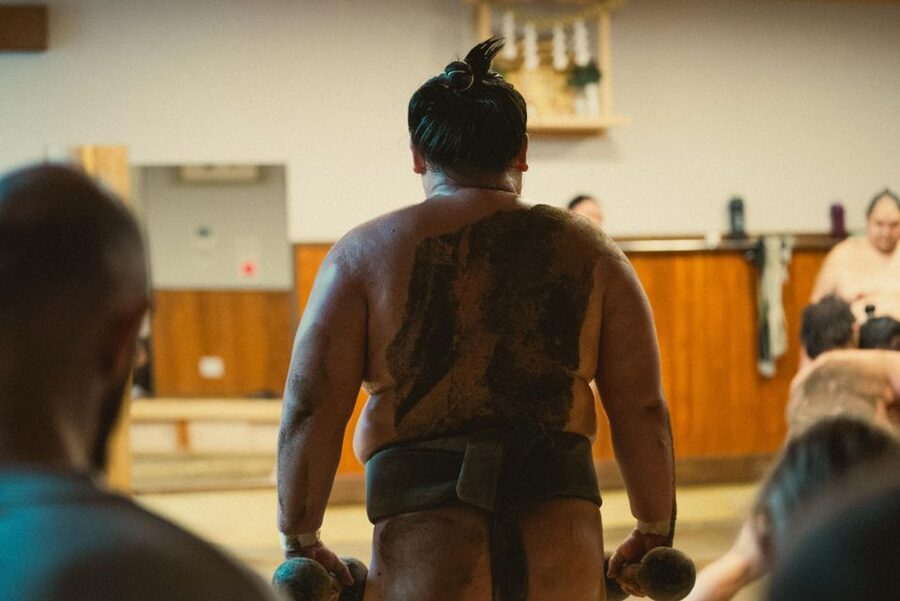
After training, the stable master may answer questions from the group. This adds a personal dimension that a tournament cannot provide.
You can ask about the wrestlers’ daily life, training, rules, and the traditions surrounding the stable. The precise length of the discussion can vary, but the full tour lasts about two hours, with the practice taking roughly 90 minutes and the remaining time used for explanation, questions, and possible photographs.
This conversation is particularly valuable if you are new to sumo. You can connect what you just saw with the larger culture of the sport. The stable master has also been described as generous with time, friendly, and willing to answer many questions.
There is no guarantee that every question will receive a long answer, and the depth of the history talk may depend on the guide and the day. Still, the chance to speak with the person overseeing the stable is one of the strongest reasons to choose this tour over simply reading about sumo.
Photos with wrestlers may be possible
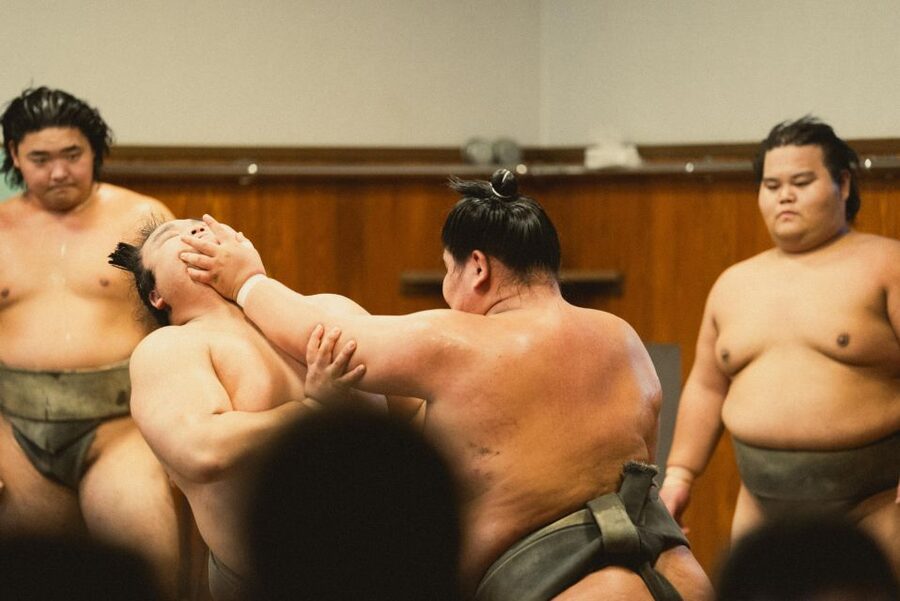
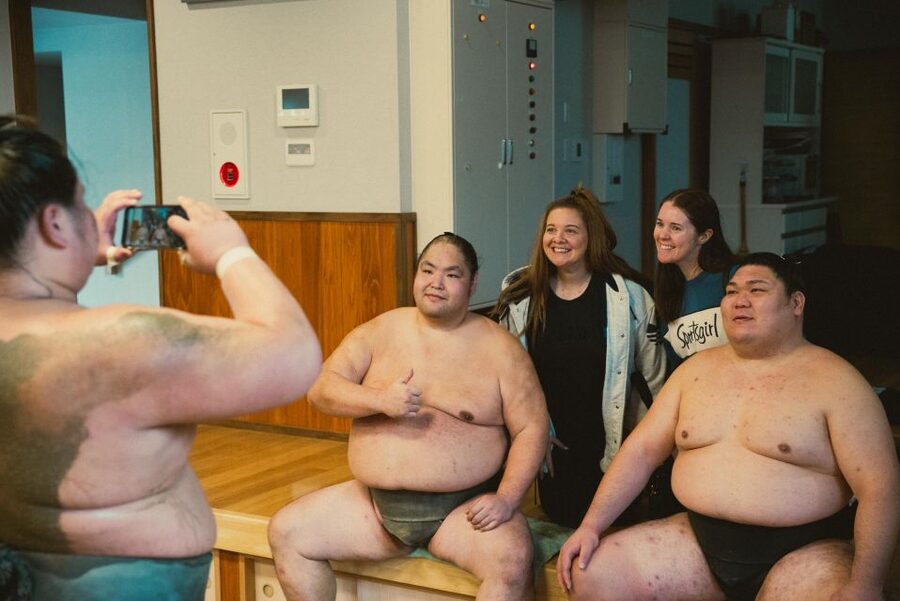
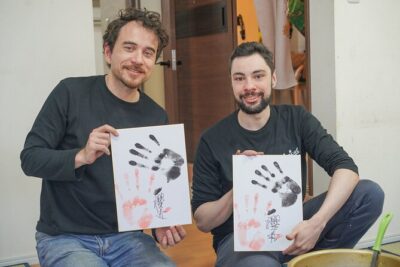
At the end, you may have the chance to take a photo with some of the wrestlers. Several groups were able to do this, and the wrestlers gave friendly farewells as people left.
Treat this as a possibility, not a promise. The training schedule, stable rules, and available time control what happens after practice. Keep your camera ready, but do not push for a photo or ask the wrestlers to repeat anything.
Remember the restrictions: no flash, no shutter sound, and no posting the image on social media. A photo can be a fine keepsake, but the main value is watching the practice respectfully.
What $116 buys you
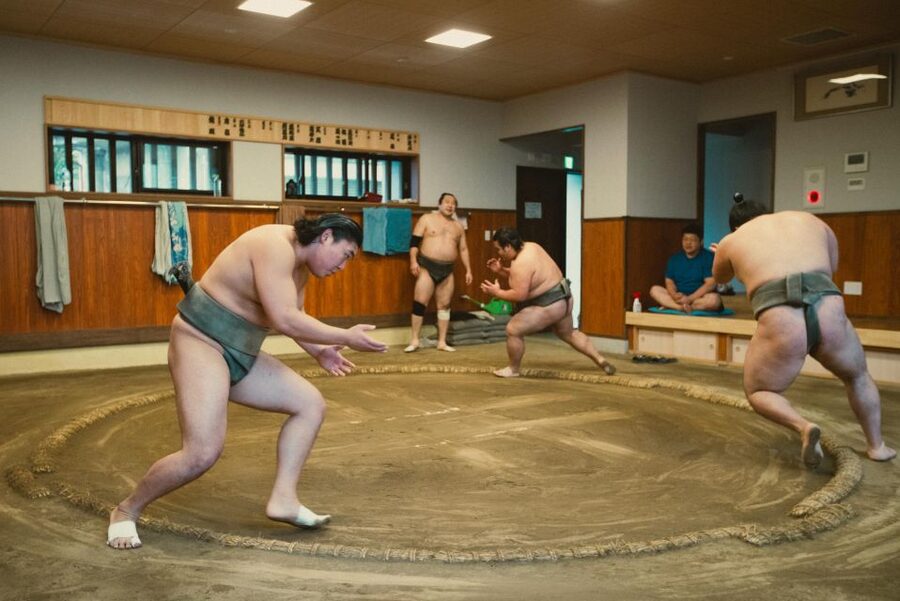
At $116 per person, this is not a cheap morning activity. The visit lasts two hours, there is no food or drink, and hotel pickup is not included. You also pay for a very early start and a simple floor seat.
The value comes from access. You are paying for an English-speaking guide, the entrance fee to the stable, help with local customs, and the chance to watch training from close range. You are not just buying a lecture about sumo. You are entering a private working environment that would be difficult to arrange by yourself.
For a sumo fan, the price can make sense. The same is true if this is your one chance to see Japan’s national sport outside tournament season. If you are only mildly curious, the cost may feel steep, especially if the practice is shorter or lighter than expected on a particular day.
Training can vary. One participant found the session lasted about an hour and 20 minutes, while another saw lighter practice because a May tournament was underway. Do not expect a fixed show with a guaranteed number of bouts.
The tour offers free cancellation up to two days in advance, which gives you some flexibility. Book only after checking that the date falls outside March, July, and November, when these morning visits are not held.
Who will enjoy this most
I would recommend this for adults, older children, and anyone interested in Japanese customs, athletics, or daily life beyond the main sights. The minimum age is six, but children must remain quiet and still. If your child is likely to move around, speak loudly, or lose interest, this is not a good fit. You may be asked to leave the stable.
It suits visitors who can sit on the floor cross-legged for about 90 minutes. People with mobility impairments should not book it, and anyone who needs a chair should choose another activity.
This also works well for people who like close observation. You do not need to understand every rule before arriving. A good guide can explain what you are seeing, and the physical power of the practice is clear even if you know little about sumo.
I would be cautious if you dislike early mornings, cannot manage floor seating, or want a polished show with constant commentary. The silence is part of the point, and the training may have quiet stretches.
Practical advice for a smoother visit
- Arrive at Oshiage Station around 7:15 AM, not at the 7:30 AM start time.
- Find Exit A1 on the ground floor before meeting the guide.
- Wear shoes that come off quickly and easily.
- Use the restroom at the station.
- Bring a small towel if rain could make the walk wet.
- Leave large bags, food, drinks, hats, and strollers behind.
- Keep your phone silent and disable shutter sounds.
- Do not use flash photography.
- Stay close to the guide during the walk and introduction.
- If late, contact the provider and wait outside the stable for the guide.
The group size can affect how well you hear the guide and how clear your view is. Stay near the guide when instructions are given, and be prepared for seating changes during the practice.
Should you book the Oshiage sumo morning?
Book it if you want to see sumo as a living discipline rather than a staged attraction. The close view, quiet atmosphere, stable master Q&A, and possible photo session create a memorable morning, especially for visitors who have never watched training before.
Skip it if floor seating is painful, if you need a restroom break during the session, or if $116 feels too high for a two-hour activity with no meal included. You should also avoid booking in March, July, or November, when the morning practice tours are not held.
For everyone else, I think this is a strong choice. Go early, dress for comfort, respect the rules, and let the training unfold at its own pace. The wrestlers do not need to perform for you. Watching them work is enough.
FAQ
Where does the tour meet?
Meet at Tokyo Metro Oshiage, also called Skytree Mae, or Toei Asakusa Line Oshiage Station, Exit A1 on the ground floor.
What time should I arrive?
The meet-up time is 7:15 AM. The tour begins at 7:30 AM, followed by a 15 to 20 minute walk to the sumo stable.
How long does the activity last?
The full activity lasts two hours. The sumo practice takes about 1.5 hours, followed by questions, explanations, and a possible photo session.
Can I use the restroom during practice?
No. You cannot go to the toilet during the practice, so use the restroom before joining the tour.
Can I take photos or videos?
Yes, photos and videos may be taken without flash or shutter sounds. You cannot upload the photos or videos to social media.
Are chairs provided inside the stable?
No. There are no chairs, and you are expected to sit cross-legged on the floor for about 1.5 hours.
Are the tours held all year?
No. Morning practice and tours are not held in March, July, or November because Grand Sumo tournaments take place outside Tokyo during those months.
New on our Tokyo list
- Tokyo Spectacular View Day-Cruise in 90 Minutes★ 5.0 · 25 reviews
- From Tokyo: Mount Fuji & Hakone Full Day Private Tour★ 4.9 · 25 reviews
- Real Tokyo Runner Club : Daikoku Car Meet Night Tour with JDM Car★ 5.0 · 25 reviews
- 2.5 Hour-Guided Cycle Tour in the Central Tokyo★ 5.0 · 25 reviews
- Ramen Making from Scratch +Akihabara Tour –Cooking Class★ 5.0 · 25 reviews
- [Self-Drive] Tokyo & Daikoku Custom Car Driving Tour★ 4.9 · 25 reviews
- Tokyo: 2-Hour Night Bike Tour of the City’s Hidden Gems★ 4.9 · 25 reviews
- Samurai themed Entertainment show in Shinjuku★ 4.5 · 25 reviews
Sumo Experiences, compared.
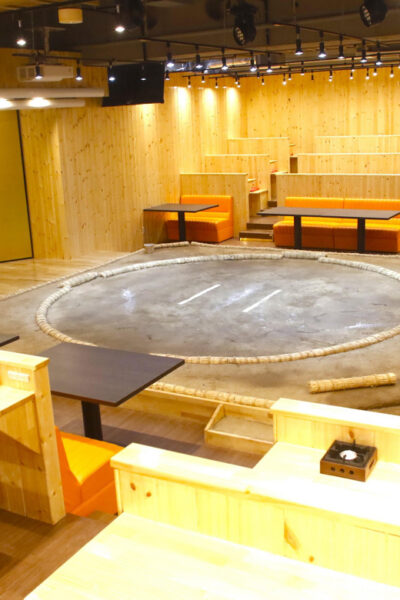
Sumo Show Experience with Chicken Hot Pot and a Photo
Read our review →
Tokyo Shinjuku Sumo Show & Experience with Photo
Read our review →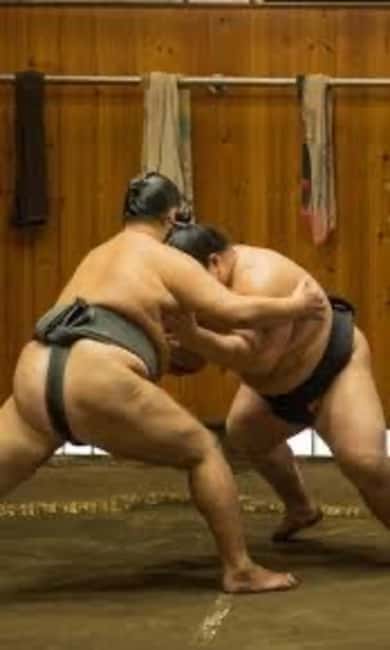
Authentic Sumo Experience in Tokyo: Enter the Sanctuary
Read our review →
Luxury Sumo Show Experience & Japanese cuisine & Drink
Read our review →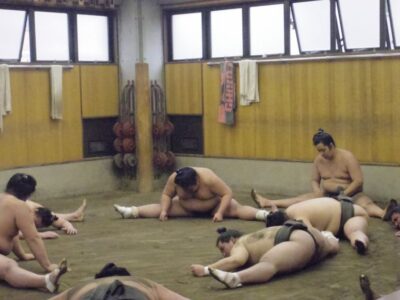
Browse the lists this tour appears in