
Reviewed · WALKING TOURS
Tokyo After 5: Local Eats, Drinks & Culture Walk
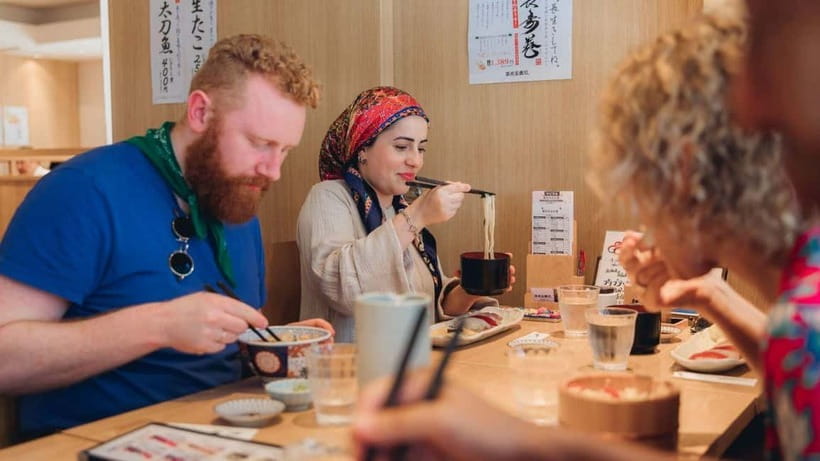
Tokyo After 5 is really three evenings in one: a polished Ginza food hall, smoky yakitori alleys in Yurakucho, and the hotplate fun of Tsukishima Monja Town. I like that you do not just sit and eat. You learn how locals buy food, share small dishes with office workers, and cook monja-yaki yourself.
I also like the eight-person limit and the two subway tickets, which make this a friendly way to handle Tokyo’s evening food scene without wrestling with menus and manners alone. The main caution is food flexibility: vegetarian, vegan, and gluten-free choices are not available, and the walk may feel demanding if stairs and subway transfers are difficult.
In This Review
- Key points to know before booking
- Why this three-hour Tokyo food walk works
- Starting at Mitsukoshi Ginza
- Ginza’s depachika food hall
- Yakitori in Yurakucho’s after-work alleys
- Tsukishima Monja Street and the hotplate
- Wagashi and the meaning of the seasons
- How much food and drink do you get?
- Walking, subway stairs, and the small-group pace
- What makes the guiding valuable
- Age rules and food restrictions
- Booking flexibility and the final decision
- FAQ
- Where does the Tokyo After 5 tour meet?
- Where does the tour finish?
- How long does the activity last?
- What neighborhoods does the route visit?
- What food tastings are included?
- Are drinks included?
- Is public transportation included?
- Can children join the tour?
- Are vegetarian, vegan, or gluten-free options available?
Key points to know before booking
- Three very different food stops: You sample yakitori, monja-yaki, and wagashi rather than eating one large meal in one place.
- A hands-on dinner: At Tsukishima, you cook monja-yaki on the table hotplate with help from the guide.
- Small group, maximum eight: The size leaves room for questions and makes small restaurants easier to manage.
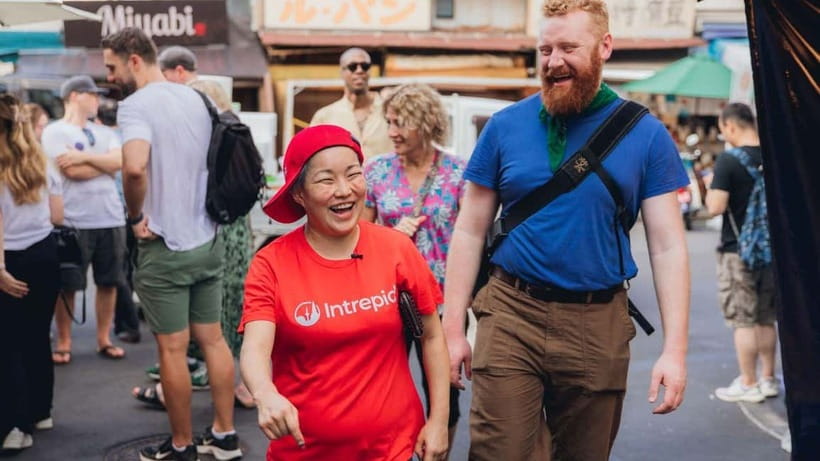
- Two local drinks included: Choose sake, beer, or a soft drink, subject to age rules.
- About 9,000 steps for some participants: One past participant found the walking and subway stairs too much for an 83-year-old companion.
- No special-diet menu: The restaurants cannot cater to vegetarian, vegan, or gluten-free requirements.
Why this three-hour Tokyo food walk works
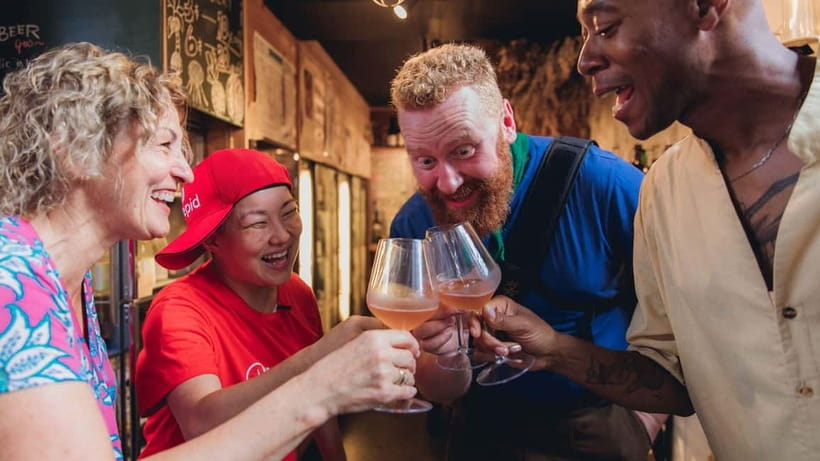
The best thing about this experience is the change of scene. Tokyo food tours can easily become a parade of famous storefronts, but this route focuses on how the city eats after work. You begin in Ginza, pass through Yurakucho, ride public transport to Tsukishima, and return to Ginza after about 210 minutes.
That route gives you more than a list of dishes. It shows three sides of Japanese food culture: carefully presented department-store foods, informal grilled skewers, and a local specialty cooked on a hotplate. I like that balance. You get a little sightseeing, a little food education, and enough conversation to ask about ingredients, etiquette, and daily life.
The food portions are designed as tastings rather than a single long dinner. One past participant estimated about 9,000 steps, so wear comfortable shoes and arrive ready to walk. You should also keep some appetite in reserve, but do not expect this to replace every meal for the evening.
More walking routes in Tokyo:
- Tokyo Tsukiji Fish Market Food and Culture Walking Tour
★ 5.0 · 3,184 reviews - Tokyo: Imperial Palace and Shogun Historical Walking Tour
★ 5.0 · 2,251 reviews - Tokyo: Shinjuku Local Bar and Izakaya Guided Walking Tour
★ 4.9 · 1,794 reviews
Starting at Mitsukoshi Ginza
Meet outside the Mitsukoshi Ginza department store, beside the life-size sitting Lion statue. This is a useful landmark, but pay attention to the exact spot. The meeting point is near Ginza Station’s A7 exit, and Ginza Station is served by the Ginza, Hibiya, and Marunouchi subway lines.
The location puts you in one of Tokyo’s most polished shopping districts before the food stops become more casual. If you are coming from elsewhere in the city, allow time to find the correct station exit. Tokyo’s underground passages can be confusing, and meeting at street level is easier than trying to locate a guide inside the station.
A small practical tip: identify your tour company and guide before you arrive. One participant had trouble finding the guide because the booking had been made through a third party and the original operator’s name was not clear. Keep the activity name and meeting details open on your phone.
Ginza’s depachika food hall
The first stop is a depachika, the basement food hall found beneath a Japanese department store. These places are not ordinary supermarkets. They are compact showcases of prepared dishes, sweets, gift foods, and seasonal specialties, often arranged with great care.
Your guide helps you read this food world. You learn how Tokyo residents buy beautifully made dishes to take home, how seasonal sweets fit into Japanese culture, and what manners matter when browsing and tasting. This is a smart opening because it gives you context before you sit down to eat.
The depachika is also a good place to see the Japanese preference for presentation. Wagashi, boxed foods, grilled items, and other treats may look almost too neat to disturb. You do not need to know the Japanese names or shopping customs in advance. That is where the English-speaking guide earns much of the tour price.
This stop is more about explanation and observation than a large meal. If you love food markets, packaging, and small seasonal details, you may wish you had longer here. The fixed route keeps the group moving, so treat it as an introduction rather than a full shopping visit.
Yakitori in Yurakucho’s after-work alleys
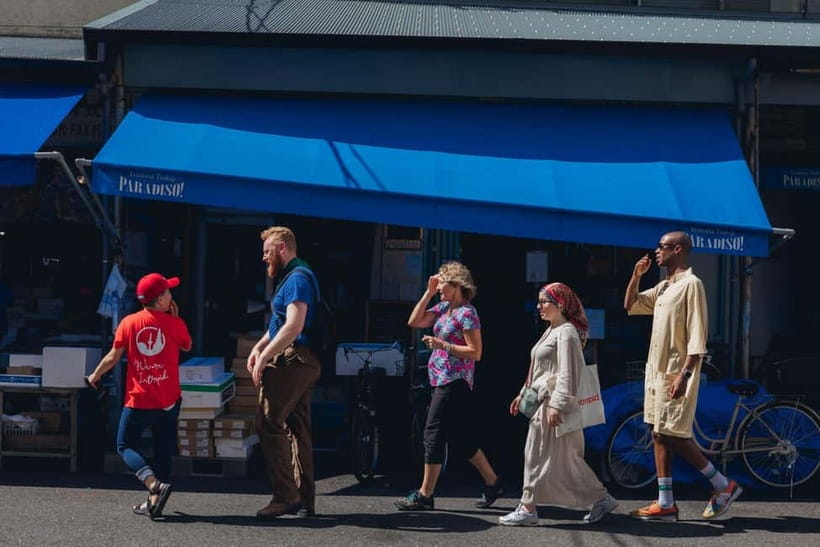
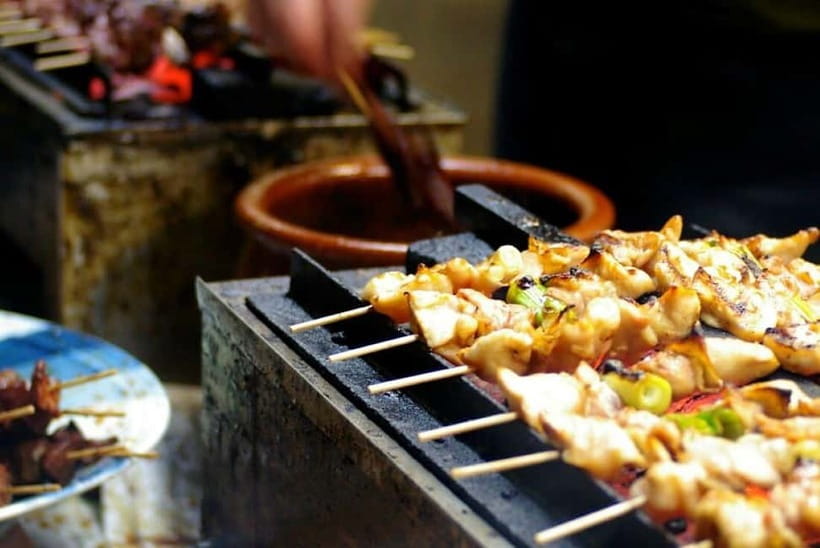
From Ginza, the route heads toward Yurakucho, where lantern-lit backstreets fill with small eateries and grilled aromas. This is the most atmospheric part of the walk. Office workers come here after work, and the narrow dining alleys offer a sharp contrast to Ginza’s department stores.
Yakitori means chicken grilled on skewers, though the selection may include different cuts and vegetables. The point is not only to eat the skewers. You learn how they are prepared and why these compact restaurants matter to Tokyo’s after-work routine.
I like this stop because it feels social without requiring you to understand the whole system on your own. The guide can explain ordering, shared dishes, and the rhythm of a quick meal at a neighborhood counter. You also get two included drinks during the tour, with sake, beer, or a soft drink available according to age rules and the arrangements at the stops.
The restaurant setting may be tight. One past account described a small sit-down place where a loud child made the meal uncomfortable, and the participant felt the owner did not respond well. That is a useful reminder that local dining is not always polished or quiet. The charm comes with less control over the surroundings.
Guides such as Tsunematsu Hidenori, Yuki, who was also called Snoopy, Kirir, Meg, and Yoshi have led this experience at different times. Your guide will vary by date, but the strongest part of the guiding style is the chance to ask direct questions while moving between places.
A few more Tokyo bookings worth comparing
- Mt Fuji and Hakone 1-Day Bus Tour Return by Bullet Train
★ 5.0 · 26,383 reviews - 1-Day Tokyo Bus Tour
★ 5.0 · 14,250 reviews - Tokyo: TOKYO SKYTREE® Admission ticket
★ 4.5 · 11,192 reviews - Tokyo: teamLab Planets TOKYO Digital Art Museum Entry Ticket
★ 4.6 · 9,779 reviews
Tsukishima Monja Street and the hotplate
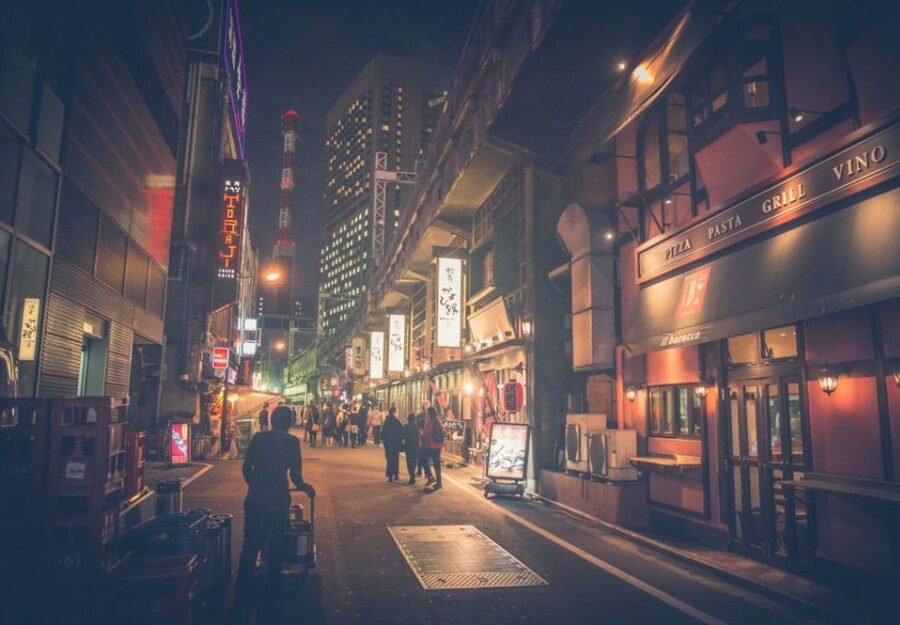
The route then uses public transportation to reach Tsukishima Monja Street, also called Monja Town. Two subway tickets are included, which saves you from handling a small but unfamiliar part of the evening and helps keep the group together.
Tsukishima is known as the birthplace of monja-yaki. This dish is often compared with okonomiyaki, but the texture is much softer and wetter. You spread the ingredients across the hotplate, work them with small spatulas, and eat the cooked mixture directly from the grill.
The hands-on element is a real strength. You watch the meal being prepared, then try the technique yourself. The guide or restaurant staff can help you avoid turning the hotplate into a small cooking disaster, though a little mess is part of the fun.
One account also included okonomiyaki at this stop, but the stated core tasting is monja-yaki. Menus and exact dishes can change, so book this for the cooking experience and the chance to try Tsukishima’s specialty, not for a guaranteed list of every item.
This is probably the most useful dish to encounter with a guide. Monja-yaki is not as immediately familiar as grilled chicken or a Japanese sweet, and the appearance can surprise first-time eaters. You get a better introduction when someone explains how to cook it and why it belongs to Tsukishima.
Wagashi and the meaning of the seasons
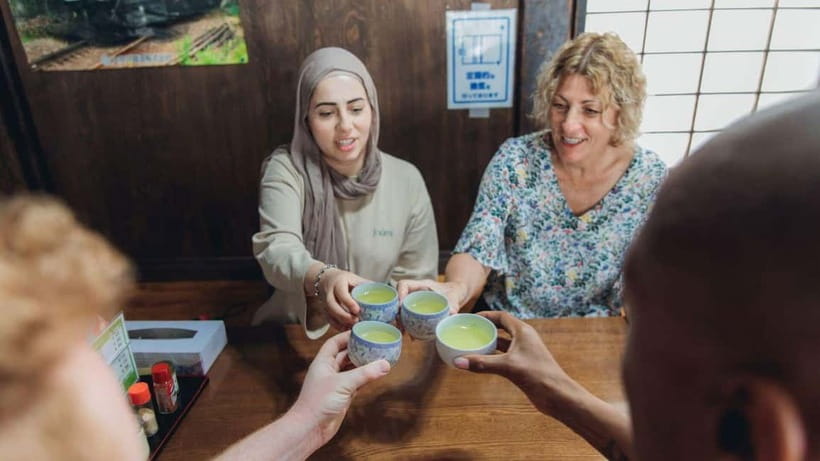
The final food focus is wagashi, traditional Japanese sweets. You try a seasonal example and learn how the ingredients, shape, colors, and presentation connect to the time of year.
Wagashi often uses sweet red bean paste, mochi, rice flour, or other plant-based ingredients. A past tasting included a red bean sweet filled with mochi, which one participant did not care for. That is a fair warning: wagashi is not simply Japanese cake, and its soft texture and restrained sweetness may take some getting used to.
Still, this stop adds something important. It shows that Japanese food culture is not only about savory dishes and expert knife work. A small sweet can refer to flowers, weather, festivals, or a particular season. The guide’s explanation is more valuable than the bite itself.
Do not assume every item will suit your taste. If you prefer bold, salty, or grilled food, yakitori and monja-yaki may be your favorites. If you enjoy design, ritual, and subtle flavors, the wagashi stop may stay with you longer.
How much food and drink do you get?
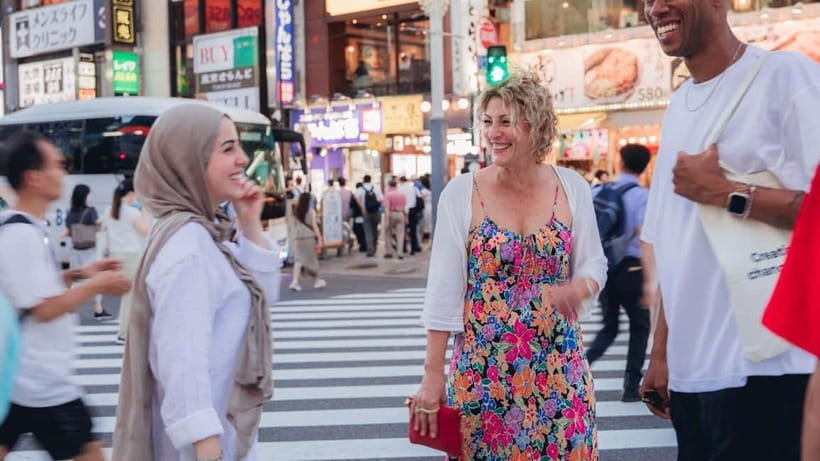
The experience includes three local tastings: yakitori, monja-yaki, and wagashi. It also includes two local drinks, with sake, beer, or a soft drink offered. Additional food and drinks are available for purchase, but they are not included in the $89 price.
I see the price as fair if you value the guiding and the access to several neighborhoods, not just the food. You are paying for an English-speaking local guide, two subway tickets, restaurant coordination, cultural explanations, and a small group capped at eight. Buying three tastings and two drinks independently could cost less, but you would lose much of the ease and instruction.
The amount is best understood as a substantial introduction to Tokyo’s food culture rather than a full night out. One past participant called the portions just right, while another enjoyed an extra melon bread and a chocolate-filled crepe on a particular outing. Those extras should not be treated as guaranteed, but they show that the exact food selection can vary.
If you have a large appetite, budget for an additional meal later. If you prefer grazing through several small dishes, the included tastings may be enough to get your evening started.
Walking, subway stairs, and the small-group pace
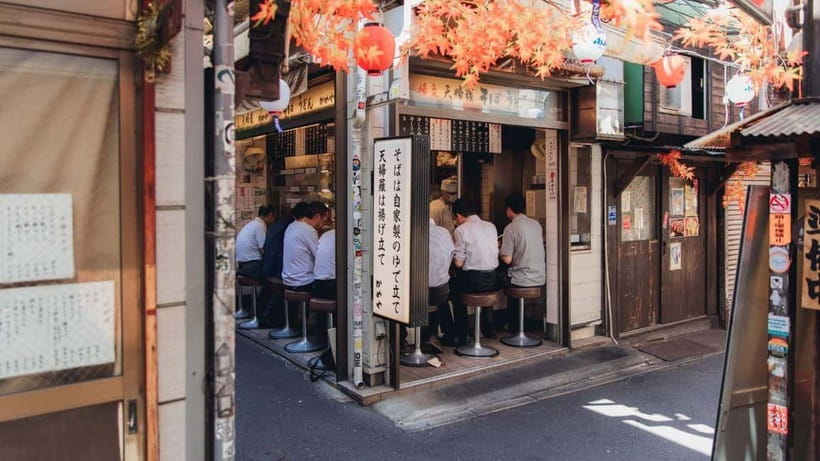
The maximum of eight participants matters in Tokyo. Small restaurants have limited space, and a compact group can move through alleys and subway stations with less fuss. It also gives you more time to speak with the guide and ask about foods that look unfamiliar.
The route includes walking between districts and two subway tickets. Subway stations in Tokyo can involve long corridors, stairs, and changes in level. The experience does not advertise itself as a difficult hike, but it is not a sit-down food crawl either.
One participant stopped before the end because the walking was too much for an 83-year-old companion. If mobility is a concern, ask the operator about the current route before booking. The activity information does not promise an accessible version, and the restaurants cannot meet every dietary need.
For most people who can walk comfortably for several hours, the pace should provide a useful amount of movement between tastings. Wear shoes that handle pavement well, and avoid arriving hungry enough to feel rushed between stops.
What makes the guiding valuable
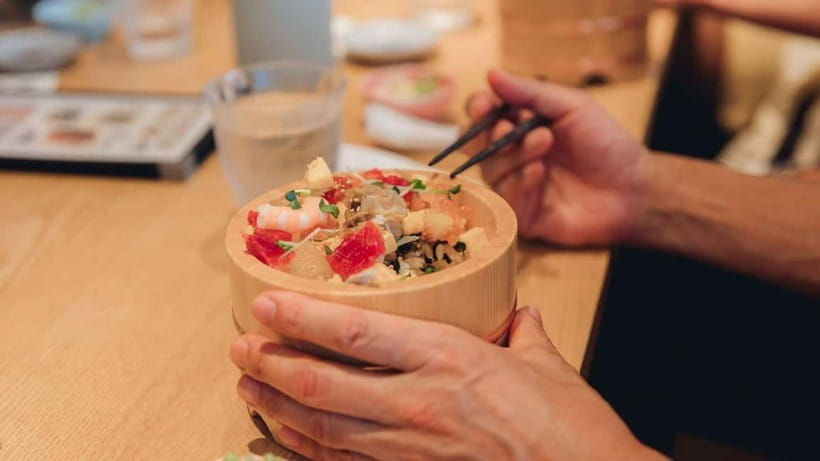
Tokyo has plenty of food, but finding a good place is only half the challenge. You also need to understand how to order, how to share a table, how to use the grill, and how to recognize what a dish is made from.
The English-speaking guide connects those details. The best guide for you will be social, patient, and willing to explain more than the menu. Past guides named Tsunematsu Hidenori, Yuki, Kirir, Meg, and Yoshi were praised for those qualities at different times, with particular appreciation for finding places most visitors would not locate alone.
Guide quality can vary from one date to another, as it does on any walking tour. I would ask questions throughout instead of waiting for a formal speech. Ask about the yakitori cuts, the reason for monja-yaki’s texture, and the seasonal reference in the wagashi. The route offers plenty of openings for conversation.
Age rules and food restrictions
You must be at least 12 years old to join. Japan’s legal drinking age is 20, so anyone under 20 receives non-alcoholic drinks instead of sake or beer.
This is not a suitable booking for a vegetarian, vegan, or gluten-free diner. The participating establishments cannot cater to those requirements, and the food is built around the listed tastings. If you have a serious allergy or another restriction, do not rely on substitutions unless the operator confirms them directly.
The tour suits curious eaters who are happy to try familiar and unfamiliar textures. It is less suitable if you want complete control over every ingredient or prefer formal restaurants with plenty of personal space.
Booking flexibility and the final decision
The activity lasts 210 minutes, and starting times vary by date, so check the available evening slot before you book. You can cancel up to 24 hours in advance for a full refund, and the reserve-now, pay-later option can help if your Tokyo schedule is still changing.
The company describes the tour as carbon neutral and operates as a B Corp certified business. That may matter to you if you prefer an operator that tracks its wider impact, though the main practical value remains the small group, included transport, and local food access.
You should book this tour if you want a friendly first evening in Tokyo with food, neighborhoods, and cultural explanation all tied together. It is especially useful early in a trip, when a guide can give you the confidence to return to similar eateries on your own.
Skip it if you need vegetarian, vegan, or gluten-free food, dislike shared hotplates, or cannot manage a few hours of walking and subway stairs. For everyone else, the $89 price is reasonable for a well-shaped introduction to after-work Tokyo, with the strongest moments likely to be the Yurakucho alley stop and cooking monja-yaki in Tsukishima.
FAQ
Where does the Tokyo After 5 tour meet?
The meeting point is outside Mitsukoshi Ginza, beside the life-size sitting Lion statue. It is near the A7 exit of Ginza Station at 4-6-16 Ginza, Chuo-ku, Tokyo.
Where does the tour finish?
The tour finishes in Ginza.
How long does the activity last?
The experience lasts 210 minutes, or three and a half hours.
What neighborhoods does the route visit?
The route includes Ginza, Yurakucho, and Tsukishima Monja Street.
What food tastings are included?
Three local tastings are included: yakitori, monja-yaki, and wagashi.
Are drinks included?
Yes. Two local drinks are included. Depending on age and availability, these may be sake, beer, or a soft drink.
Is public transportation included?
Yes. Two subway tickets are included as part of the experience.
Can children join the tour?
Participants must be at least 12 years old. Anyone under 20 receives non-alcoholic drinks because the legal drinking age in Japan is 20.
Are vegetarian, vegan, or gluten-free options available?
No. The establishments used on this tour cannot cater to vegetarian, vegan, or gluten-free requirements.
New on our Tokyo list
- From Tokyo: Mount Fuji & Hakone Full Day Private Tour★ 4.9 · 25 reviews
- Tokyo Spectacular View Day-Cruise in 90 Minutes★ 5.0 · 25 reviews
- Real Tokyo Runner Club : Daikoku Car Meet Night Tour with JDM Car★ 5.0 · 25 reviews
- 2.5 Hour-Guided Cycle Tour in the Central Tokyo★ 5.0 · 25 reviews
- Ramen Making from Scratch +Akihabara Tour –Cooking Class★ 5.0 · 25 reviews
- [Self-Drive] Tokyo & Daikoku Custom Car Driving Tour★ 4.9 · 25 reviews
- Tokyo: 2-Hour Night Bike Tour of the City’s Hidden Gems★ 4.9 · 25 reviews
- Samurai themed Entertainment show in Shinjuku★ 4.5 · 25 reviews
Walking Tours, compared.
Tokyo Tsukiji Fish Market Food and Culture Walking Tour
Read our review →
Imperial Palace and Shogun Historical Walking Tour
Read our review →
Shinjuku Local Bar and Izakaya Guided Walking Tour
Read our review →
Asakusa Walking Tour with Sensoji Temple Visit
Read our review →
Tokyo Castle & Imperial PalaceーShogun Walking Tour
Read our review →
Browse the lists this tour appears in