
Reviewed · JAPANESE CULTURE WORKSHOPS
Tokyo: Discover the Art of Kintsugi in Ginza
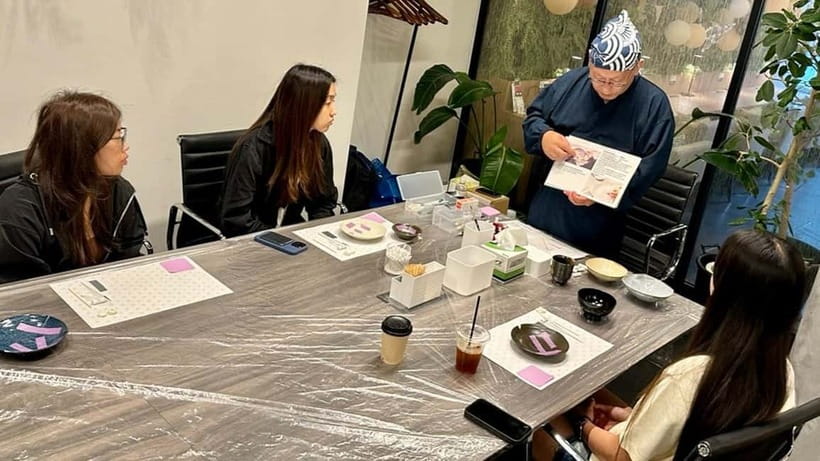
Kintsugi turns a broken ceramic into something worth keeping, with its cracks marked by shining metallic lines instead of hidden. In this 90-minute Ginza workshop, you work on your own plate or bowl under the guidance of an English- or Japanese-speaking instructor. I like the hands-on format and the fact that you leave with a real object, not just a story. I also like the small group size, limited to eight people, which gives the instructor time to help.
The workshop uses synthetic lacquer and metallic powder, not traditional natural lacquer and gold. That makes the quick finish possible, but it also means your repaired piece is for decoration only. The main tradeoff is authenticity versus convenience: this is a practical introduction to Kintsugi, not the month-long traditional process.
In This Review
- Key points at a glance
- Why Kintsugi works so well as a Tokyo activity
- Finding the meeting point near Ginza Station
- Choosing your ceramic piece and settling in
- Repairing the cracks, one careful step at a time
- What the finished piece really is
- Packing your souvenir for the journey home
- Is $75 a fair price?
- Who should book this workshop?
- Booking details that matter
- Should you book Tokyo Kintsugi in Ginza?
- FAQ
- Where does the Kintsugi workshop meet?
- How far is the venue from Ginza Station?
- How long does the workshop last?
- What languages does the instructor speak?
- How many people can join the class?
- Do I need to bring my own broken ceramic?
- Can I take my repaired ceramic home?
- Is the repaired ceramic safe to use in a microwave?
- Can I cancel the booking for a full refund?
Key points at a glance
- Three minutes from Ginza Station: Meet at Cafe AOU Ginza forest on the ground floor of the Daiwa Ginza Building.
- A small class of up to eight: The limited size makes it easier to get help with delicate steps.
- Your own ceramic souvenir: You repair a provided plate or bowl and take it home in protective packaging.
- A calm break in central Tokyo: The private room offers a quiet change from Ginza’s shops and traffic.
- A clear introduction to Kintsugi: The instructor explains the craft, its ideas, and the basic repair method.
- A fast modern version: Synthetic lacquer and metallic powder let you finish within 90 minutes.
Why Kintsugi works so well as a Tokyo activity
Tokyo offers plenty of polished sights, but this workshop asks you to slow down and make something with your hands. Kintsugi is more than a repair method. It reflects a Japanese way of seeing value in age, damage, and change. A crack is not simply a flaw to erase. It becomes part of the object’s story.
I find that idea especially useful in a busy city. You sit down, listen, handle the tools, and pay attention to one small ceramic piece. The activity does not require an art background. You are not being asked to produce a perfect museum object. You are learning a careful process and giving an ordinary piece a new look.
The setting helps. The class takes place in a private room near Ginza Station, in or near Cafe AOU Ginza forest on the ground floor of the Daiwa Ginza Building. The location puts you close to one of Tokyo’s best-known shopping districts, yet the workshop itself is meant to feel contained and quiet.
That contrast is part of the appeal. You can spend the afternoon around Ginza’s department stores and high-end shops, then step inside for a slower activity. If shopping is not your main interest, this gives you a good reason to visit the area.
More craft workshops in Tokyo:
- Tokyo Shinjuku Chopsticks Making Class
★ 5.0 · 1,763 reviews - Kintsugi Experience: Art of Golden Joinery in Tokyo
★ 5.0 · 467 reviews - Authentic Pure Gold Kintsugi Workshop with Master Taku in Tokyo
★ 5.0 · 217 reviews
Finding the meeting point near Ginza Station
The venue is about three minutes from Ginza Station, a major advantage in Tokyo. You do not need hotel pickup, and none is provided, so allow time to make your own way there. The official meeting point is Cafe AOU Ginza forest, located on the ground level of the Daiwa Ginza Building.
The venue may change based on availability and the number of reservations. If that happens, you are notified by email with the new location one day before the workshop. Check your messages before setting out, especially if you booked well ahead.
One useful detail from the class experience is that an instructor may meet you outside the building. That can help in Ginza, where a large station, busy streets, and multiple building entrances can make a short walk less simple than it sounds. Still, you should keep the meeting details handy rather than relying only on finding a café by name.
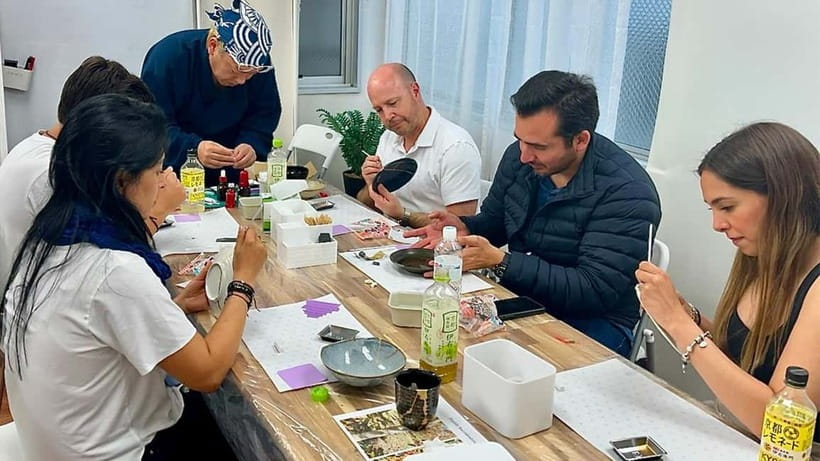
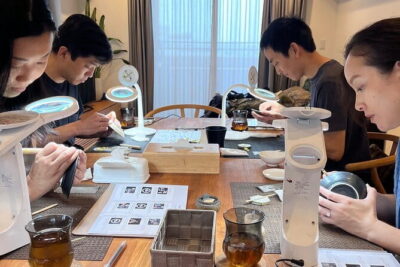
The room is private and designed for the workshop. It is not a large public demonstration, and the group is capped at eight. That gives the activity a more personal feel, though the pace can be shaped by the other people in your class. If someone needs extra help, you may wait briefly before moving to the next step.
Choosing your ceramic piece and settling in
Once the class begins, the instructor explains how the session will work and introduces the Kintsugi tradition. You receive the ceramic item, tools, and materials, so you do not need to bring a broken dish from home. Some sessions offer a choice between two cracked plates or provide a bowl or plate selected for the activity.
This is a sensible arrangement. Bringing your own valuable ceramic would add pressure and could create problems with size, shape, or condition. The supplied piece lets you focus on learning. It also means you know from the start that your finished object is intended as a decorative keepsake.
A complimentary soft drink is included. Some participants have also been offered coffee during the explanation, but the stated inclusion is a soft drink, so I would treat coffee as dependent on the session rather than guaranteed.
Your instructor may be Tatsu or Teki Sensei, names associated with particularly warm and helpful classes, but the instructor can vary. The workshop is offered in English and Japanese. The teaching style is step by step, with explanations of the craft and support when a repair becomes tricky.
This is a good point to ask questions. If you want to understand the philosophy behind Kintsugi, do not treat the introduction as filler. The meaning gives the practical work more weight, especially when you look at the finished lines later.
Repairing the cracks, one careful step at a time
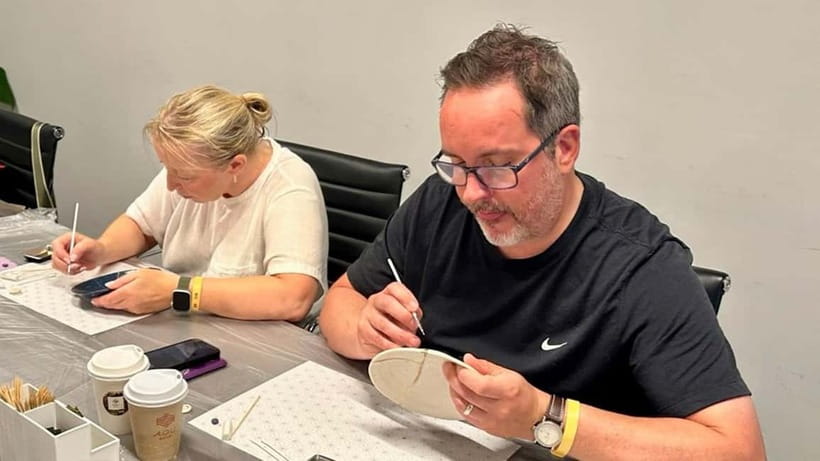
The core of the activity is hands-on. You work through the basic Kintsugi method with the instructor showing you what to do. The exact motions require care, since you are working on a small ceramic surface and creating lines that will remain visible.
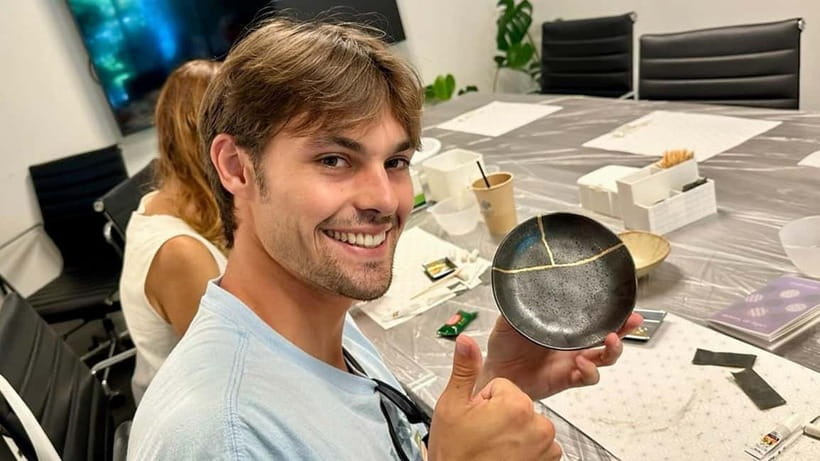
The metallic seams are the visual focus. Rather than trying to make the break disappear, you mark it. That makes the result personal. Two people can follow the same instructions and still end up with different-looking pieces because the crack patterns and application vary.
You should expect some waiting as the instructor moves around the room. In a group of up to eight, the class cannot give every person individual attention at the same second. One participant may need more help, and the instructor may need to adjust the pace so nobody gets left behind. I see this as a minor limitation, but it is worth knowing if you prefer a completely private lesson.
The class is designed for first-timers. You do not need to know anything about lacquer work, ceramics, or Japanese craft. Clear demonstrations and direct assistance are central to the format. The teachers are also part of the social experience. Tatsu, for example, has been praised for sharing stories about Ginza as he helped the class, while Teki Sensei has been noted for explaining each step and helping people recover when they fell behind.
The workshop is suitable for children aged 10 and older, and one family found that children aged 10 and 14 enjoyed the activity. Younger children are not accepted. Because the work is detailed and the session is fairly short, older children and teens who can follow careful instructions are likely to get more from it than very young children.
A few more Tokyo bookings worth comparing
- Mt Fuji and Hakone 1-Day Bus Tour Return by Bullet Train
★ 5.0 · 26,383 reviews - 1-Day Tokyo Bus Tour
★ 5.0 · 14,250 reviews - Tokyo: TOKYO SKYTREE® Admission ticket
★ 4.5 · 11,192 reviews - Tokyo: teamLab Planets TOKYO Digital Art Museum Entry Ticket
★ 4.6 · 9,779 reviews
What the finished piece really is
The workshop makes an important distinction clear: traditional Kintsugi is a long process. Natural lacquer and real gold are used in the classic method, and the work can take about a month before the piece is ready.
This class uses synthetic lacquer and metallic powder instead. That is why you can complete the repair and carry it home after 90 minutes. The result gives you the appearance and basic experience of Kintsugi, but it is not the same as a full traditional restoration.
That honesty matters when deciding if the class is right for you. If you want professional restoration of a cherished family bowl, this is not the service to book. If you want to understand the look and spirit of Kintsugi through a manageable activity, the modern materials make good sense.
Use the finished item for decoration only. It is not microwave-safe because the repaired area presents a risk of ignition. You should also avoid treating it as everyday tableware unless the instructor gives advice that specifically permits a particular use. The safest plan is to display it on a shelf or give it as a thoughtful decorative gift.
Packing your souvenir for the journey home
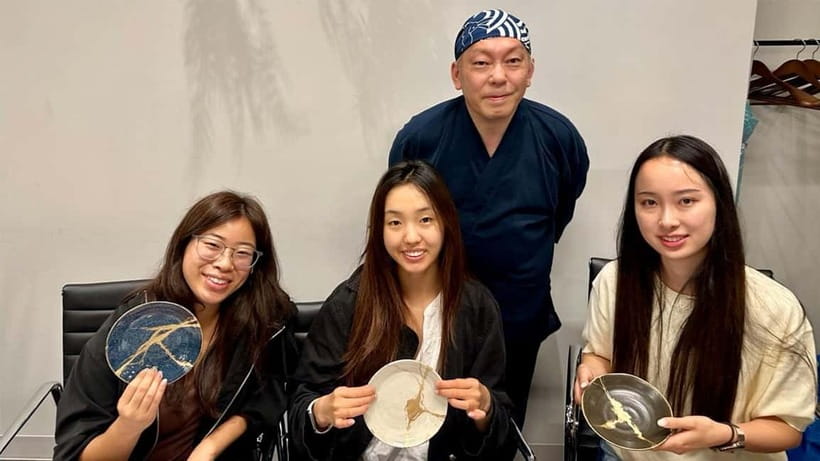
A practical strength of this class is the way the finished piece is prepared for transport. The ceramic is packaged carefully, giving you a better chance of bringing it home safely in your luggage.
That packaging is more important than it might sound. A plate or bowl can be awkward to protect after a craft activity, especially if you still have several days of rail travel, hotel changes, or a flight ahead. I would still place the package in the middle of your luggage and surround it with soft clothing, but the supplied wrapping removes much of the worry.
The souvenir has value because you made the repair yourself. It is not a mass-produced trinket bought from a shop. The object carries the memory of sitting in Ginza, learning the method, and making decisions about how the cracks should look.
You may not produce a flawless piece. That is part of the point. Kintsugi rewards an approach that accepts irregularity, and the finished lines can look more interesting when they are not perfectly uniform.
Is $75 a fair price?
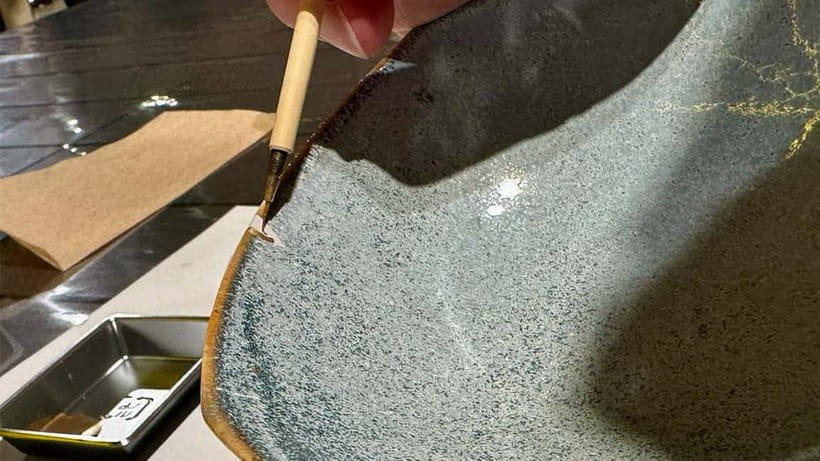
At $75 per person, this is not Tokyo’s cheapest short activity. You are paying for a guided craft session, a ceramic piece, all tools and materials, a drink, and protective packaging. The class also limits attendance to eight, which supports more help than a large demonstration would provide.
The value depends on what you want from your Ginza visit. If you only want a souvenir, you can buy a ceramic object for less. If you want a polished professional Kintsugi restoration, this class is not offering that. But if you want a structured cultural activity with something made by your own hands, the price is easier to justify.
The 90-minute length also fits well into a Tokyo itinerary. It is long enough to feel like a real class without taking half a day. You can place it between sightseeing stops, shopping, or a meal in Ginza. The short format is especially useful if you have limited time in the city.
I would consider the price reasonable for someone who values instruction and a personal souvenir. I would be less inclined to book it if you are looking for a fully traditional craft apprenticeship or a long, quiet studio session.
Who should book this workshop?
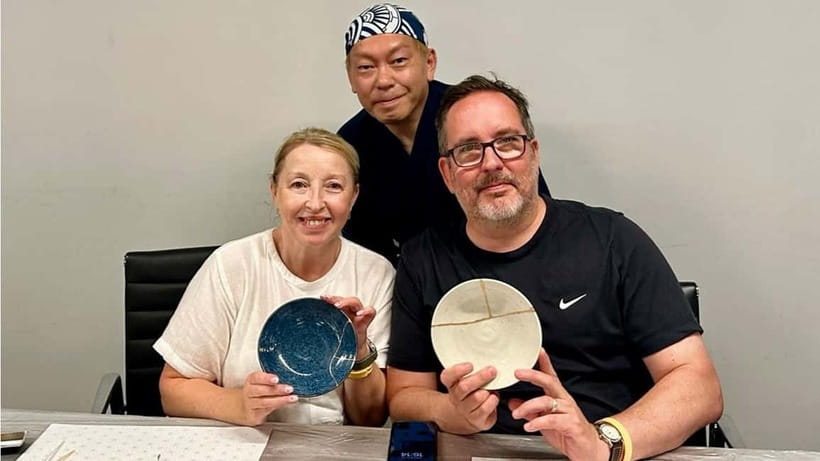
I recommend this activity for first-time visitors who want a cultural experience beyond temples, observation decks, and food tours. It suits couples, solo visitors, friends, and families with children aged 10 and up.
It is also a good choice if you are staying near central Tokyo and want an activity with simple access. Ginza Station is close, and the private room provides a quiet pause without requiring a long trip across the city.
You should have enough mobility to reach and use the workshop space. The activity is not suitable for people with mobility impairments, babies under one year, or people with a cold. It is also not suitable for people with hearing impairments, according to the activity restrictions.
If your interest is mainly in Japanese aesthetics, repair, or making a small object, this gives you a direct way into the subject. If you dislike detailed handwork or become frustrated when a group moves at different speeds, the class may feel less relaxed.
Booking details that matter
The class lasts 90 minutes, with starting times dependent on availability. The small group is limited to eight people, and the instructor speaks English and Japanese.
You can reserve now and pay later, which helps if your Tokyo plans are still shifting. Free cancellation is available up to 24 hours before the activity for a full refund. Hotel transportation is not included.
Since the venue can change, check your email the day before. Bring the new address with you if one is sent. I would also avoid scheduling a very tight connection afterward. The planned class is 90 minutes, but a little breathing room is wise when moving through central Tokyo.
Should you book Tokyo Kintsugi in Ginza?
Book it if you want a short, thoughtful activity with a tangible result. The small class, clear instruction, and carefully packed ceramic make this more useful than a simple craft demonstration. The Ginza location also works well for a free afternoon when you want something quieter than shopping.
Go in with the right expectations. You are learning a modern, accelerated version of Kintsugi using synthetic lacquer and metallic powder. Your finished piece is decorative, not microwave-safe, and the class does not replace the traditional month-long restoration process.
For most first-timers, I think the balance works. You get a cultural idea, a guided creative task, a drink, and a souvenir you helped create, all within 90 minutes. If that sounds more appealing than another quick photo stop, this is a worthwhile addition to a Ginza day.
FAQ
Where does the Kintsugi workshop meet?
The meeting point is Cafe AOU Ginza forest, on the ground floor of the Daiwa Ginza Building near Ginza Station.
How far is the venue from Ginza Station?
The workshop room is about three minutes from Ginza Station.
How long does the workshop last?
The activity lasts 90 minutes.
What languages does the instructor speak?
Instruction is available in English and Japanese.
How many people can join the class?
The workshop is a small group activity limited to eight participants.
Do I need to bring my own broken ceramic?
No. A ceramic piece to restore, along with all necessary tools and materials, is provided.
Can I take my repaired ceramic home?
Yes. You take home the piece you repair, and it is packaged to help protect it during your journey.
Is the repaired ceramic safe to use in a microwave?
No. The restored piece is not microwave-safe because there is a risk of ignition. It is recommended for decorative use only.
Can I cancel the booking for a full refund?
Yes. You can cancel up to 24 hours in advance for a full refund. You can also reserve now and pay later.
New on our Tokyo list
- Tokyo Spectacular View Day-Cruise in 90 Minutes★ 5.0 · 25 reviews
- From Tokyo: Mount Fuji & Hakone Full Day Private Tour★ 4.9 · 25 reviews
- Real Tokyo Runner Club : Daikoku Car Meet Night Tour with JDM Car★ 5.0 · 25 reviews
- 2.5 Hour-Guided Cycle Tour in the Central Tokyo★ 5.0 · 25 reviews
- Ramen Making from Scratch +Akihabara Tour –Cooking Class★ 5.0 · 25 reviews
- [Self-Drive] Tokyo & Daikoku Custom Car Driving Tour★ 4.9 · 25 reviews
- Tokyo: 2-Hour Night Bike Tour of the City’s Hidden Gems★ 4.9 · 25 reviews
- Samurai themed Entertainment show in Shinjuku★ 4.5 · 25 reviews
Japanese Culture Workshops, compared.
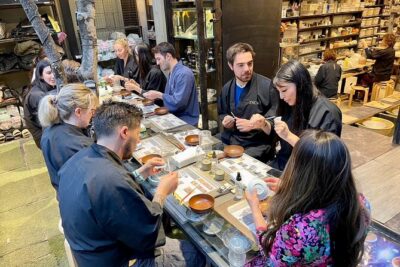
Kintsugi Experience: Art of Golden Joinery in Tokyo
Read our review →
Authentic Pure Gold Kintsugi Workshop with Master Taku in Tokyo
Read our review →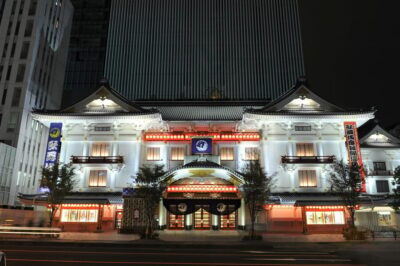
KABUKI Show at Kabukiza Theatre Admission Ticket
Read our review →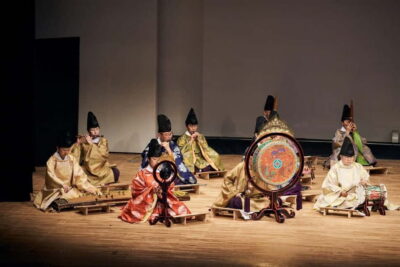
KABUKI, BUNRAKU, etc. presented by National Theatre
Read our review →
Kintsugi Workshop Class in Shibuya, Tokyo with mon cadeau
Read our review →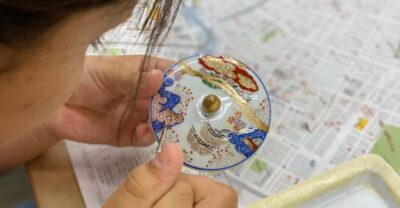
Browse the lists this tour appears in