
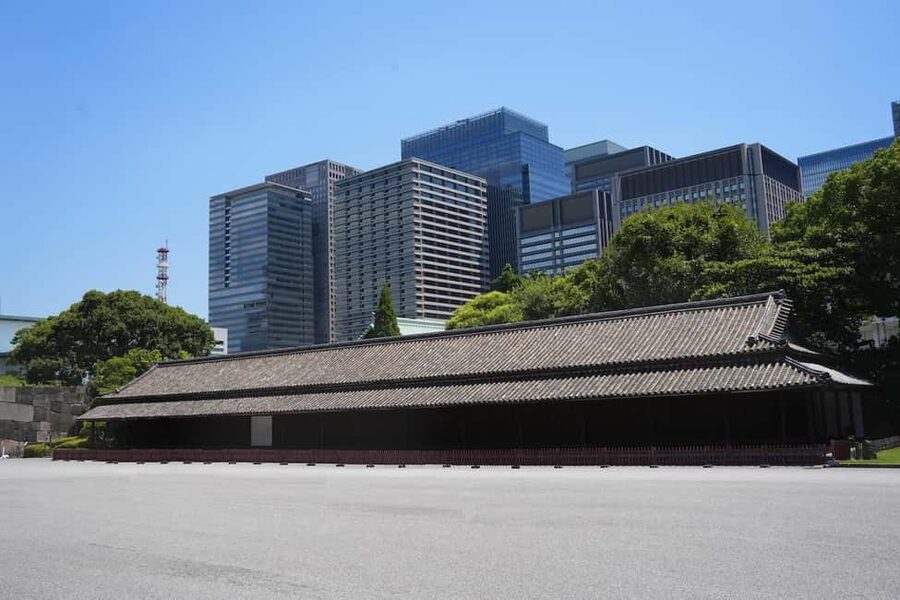
Reviewed · WALKING TOURS
Tokyo: Edo Castle and Imperial Palace Guided Walking Tour
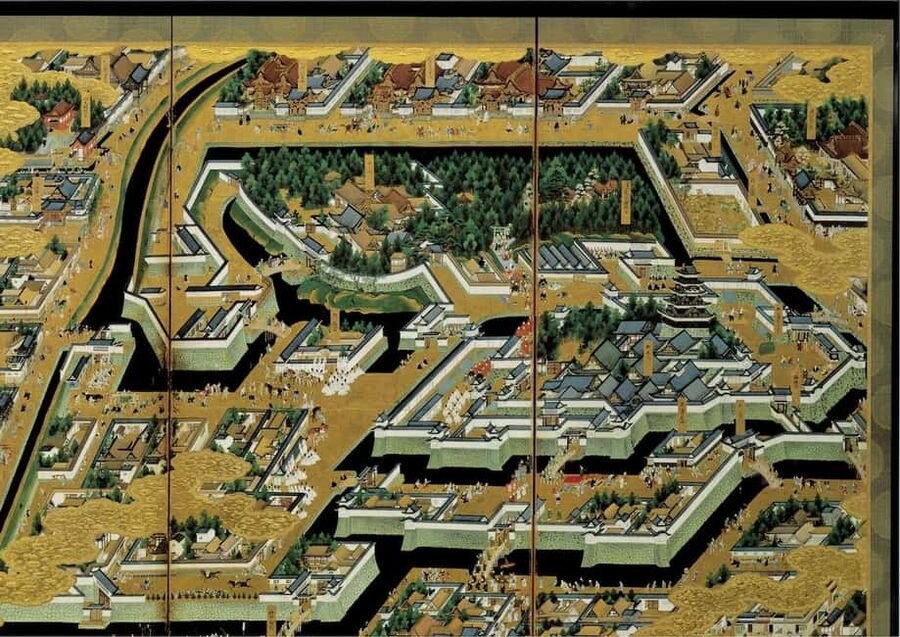
Tokyo’s Imperial Palace sits on the old Edo Castle site, so this walk gives you two layers of Japan at once: the modern imperial capital and the seat of the Tokugawa shoguns. Using a map of Edo from the 1650s, your guide connects today’s gates, moats, and stone walls with the people and power struggles that shaped the city.
I like the small group of eight, which makes it easier to ask questions, and I like the focus on physical remains rather than a fast parade of photo stops. The discussion of the Great Fire of Meireki, the castle’s unfinished main tower, and the political role of the inner palace adds useful detail.
The main drawback is simple: this is a 150-minute walking tour with many stops, so comfortable shoes matter. The route finishes at Hirakawa Gate rather than returning to Tokyo Station, and the very low price may mean you should check the exact meeting and start details carefully before setting out.
In This Review
- Key points about the Edo Castle walk
- Why Edo Castle explains modern Tokyo
- Meeting at Tokyo Station’s Marunouchi South Gate
- Sakurada-mon Gate and the palace approaches
- Yagura, Ote-mon, and the language of stone
- Hyakunin Bansho Guardhouse and castle control
- Thirty minutes at the Edo Castle main hall site
- Kita-Hanebashi Gate, Takebashi, and Hirakawa Bridge
- What the $3.22 price really means
- Who will enjoy this walk most
- Should you book the Edo Castle and Imperial Palace tour?
- FAQ
- Where does the tour begin?
- Where does the tour finish?
- How long does the experience last?
- What language is the tour offered in?
- How many people are in the group?
- What is included in the price?
- Are meals and drinks included?
- What should I wear?
- Is the tour wheelchair accessible?
Key points about the Edo Castle walk
- The tour starts at Tokyo Station’s historic Marunouchi South Gate, beneath the yellow western-style dome.
- A map of Edo from the 1650s helps you picture the castle as the center of government, not just a collection of ruins.
- The former castle grounds include major gates, moats, guardhouses, and stone walls, each with a different role in castle security.
- The main hall site receives the longest stop, with about 30 minutes for history, stories, and questions.
- You see the Imperial Palace area and the former Edo Castle on the same walk, though the route focuses on exterior sites and historic remains.
- The English-speaking tour is limited to eight people, and a small gift is included.
Why Edo Castle explains modern Tokyo
Edo Castle was not simply a fortified residence. For 260 years, it was the working center of the Tokugawa Shogunate, the military government that controlled Japan during the Edo period.
That makes the setting especially useful for understanding Tokyo. The castle was the shogun’s home, but it was also the place where political decisions were made, powerful lords were managed, and a city grew around the needs of government.
The Meiji Restoration changed the castle’s role. When imperial rule returned in the 19th century, the former shogun’s residence became the Imperial Palace. The Emperor now lives there, giving the site a direct link between Japan’s feudal government and its modern state.
I like this historical frame because it keeps the tour from becoming a simple walk around old stones. You are looking at the remains of a political machine, then seeing how the same ground took on a new meaning under the imperial government.
The map showing Edo in the 1650s should help you picture the scale of the old city. You can compare the present-day palace district with a time when the castle controlled the movement of people, goods, and high-ranking lords.
More walking routes in Tokyo:
- Tokyo Tsukiji Fish Market Food and Culture Walking Tour
★ 5.0 · 3,184 reviews - Tokyo: Imperial Palace and Shogun Historical Walking Tour
★ 5.0 · 2,251 reviews - Tokyo: Shinjuku Local Bar and Izakaya Guided Walking Tour
★ 4.9 · 1,794 reviews
Meeting at Tokyo Station’s Marunouchi South Gate
The meeting point is on the ground floor of Tokyo Station’s Marunouchi South Exit. Look for the western-style historic dome with its yellow coloring. The listed coordinates are 35.68048457383692, 139.76571024138642.
This is a practical meeting spot, but Tokyo Station is large. Give yourself enough time to reach the Marunouchi side and the correct south exit. If you arrive at another part of the station, you may need extra time to find your way around.
From the station, the group walks about five minutes to the first stop near the Mitsubishi Ichigokan Museum. The tour does not begin with a long lecture in a classroom. It gets moving quickly, using the city streets to connect the station area with the palace district.
The museum stop lasts about 10 minutes. The supplied details do not say that museum admission is included, so treat this as a guided sightseeing stop rather than a museum visit unless your guide tells you otherwise.
Sakurada-mon Gate and the palace approaches
After about seven minutes on foot, you reach Sakurada-mon Gate for a 10-minute guided stop. This is one of the major historic entrances connected with the former Edo Castle.
Here, the guide can explain how the gate formed part of the castle’s defensive system and how the broad approaches helped control access. This is where the tour’s attention to stonework and circulation begins to make sense. Gates were not decorative entrances alone. They helped regulate who could enter, where they could go, and how the castle could be protected.
The walk then continues through several palace-side locations. One short stop takes place near MQH4+V6 in Chiyoda City, followed by a five-minute stop near the Sakashita Gate security post. These brief pauses may feel small on a schedule, but they help you follow the changing boundary between public city space and the imperial grounds.
You then reach Kikyo-mon Gate for another five-minute explanation. The name and position of each gate can blur together if you visit alone. With a guide, you get a reason to stop and a way to understand how the castle’s entrances fitted into a larger plan.
Yagura, Ote-mon, and the language of stone
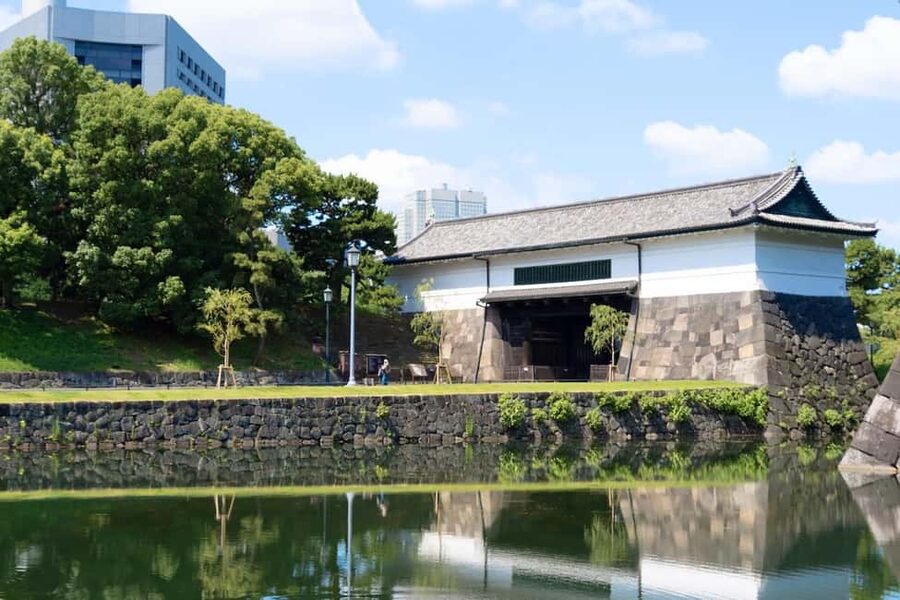
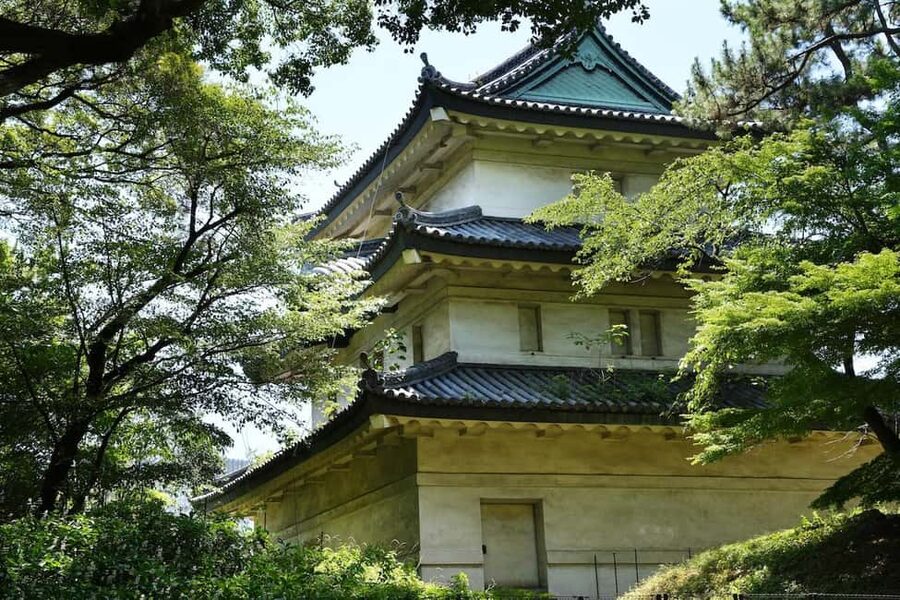
Sakurada Tatsumi Yagura receives about six minutes. A yagura is a fortified turret or watch structure, and this one helps show how the castle’s defenses used height as well as walls and moats.
The route then reaches Ote-mon Gate, followed by the Ote-San’no Gate ruins. These stops are short, about five minutes each, but they build a useful sequence. You move from a major gate to the remains of another entrance, seeing how the castle’s defensive layers worked together.
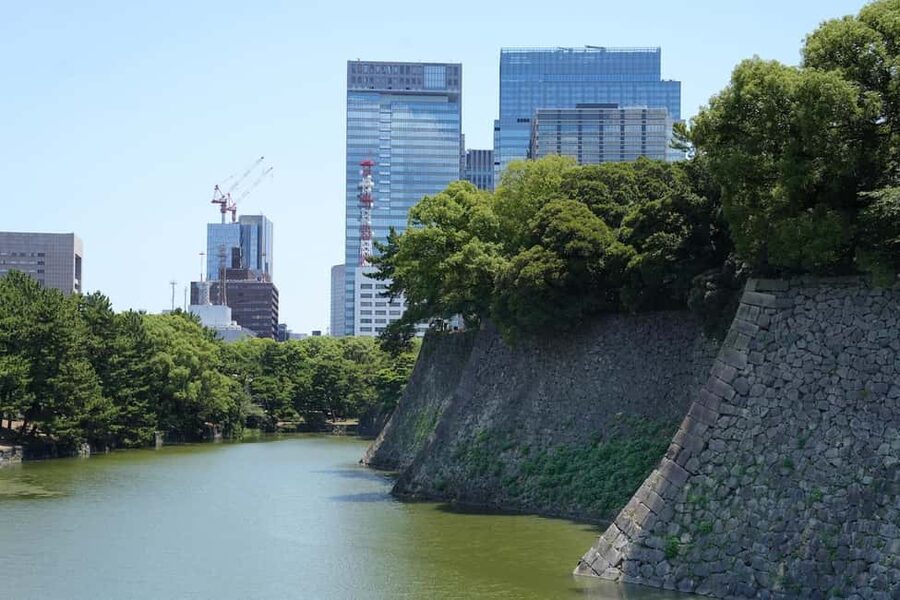
One of the more interesting parts of the walk is the attention to masonry. The castle’s stone walls include different methods of fitting and shaping stone, including tightly fitted cut stone and rougher inset stonework. The details can vary by section, and the guide points out how different feudal lords used slightly different styles.
That is a good reminder that Edo Castle was built through tenka fushin, a system in which powerful lords were ordered to contribute to major public works. The walls were therefore more than a single architect’s project. Their details can reflect the people and groups involved in building them.
You do not need to be a castle specialist to enjoy this. If you look closely, you will start noticing how the stones meet, how the walls rise, and how the moat and gate placement support the design.
A few more Tokyo bookings worth comparing
- Mt Fuji and Hakone 1-Day Bus Tour Return by Bullet Train
★ 5.0 · 26,383 reviews - 1-Day Tokyo Bus Tour
★ 5.0 · 14,250 reviews - Tokyo: TOKYO SKYTREE® Admission ticket
★ 4.5 · 11,192 reviews - Tokyo: teamLab Planets TOKYO Digital Art Museum Entry Ticket
★ 4.6 · 9,779 reviews
Hyakunin Bansho Guardhouse and castle control
The Hyakunin Bansho Guardhouse receives about seven minutes. A guardhouse is a good place to think about the daily work of running a castle.
The name refers to a guard unit of one hundred men, and the stop helps you picture the human side of the compound. Castles were not empty monuments. Guards watched entrances, checked movement, and helped enforce the rules that kept the shogun’s residence secure.
This is also where the tour’s focus on ordinary roles becomes useful. The headline story may be about shoguns and emperors, but the castle depended on guards, servants, officials, builders, and many other workers.
Because the group is small, you should have a fair chance to ask about anything that catches your attention. The guide is expected to explain the site in English and respond to questions, so do not hesitate to ask for a quick clarification when the political or architectural terms become dense.
Thirty minutes at the Edo Castle main hall site
The longest stop is the site of Edo Castle’s Honmaru, or main enclosure, where the main hall once stood. You spend about 30 minutes here, making it the heart of the walk.
This was the place associated with the shogun’s central residence and official government work. The buildings themselves are gone, but the open space and surviving castle features allow the guide to explain how the compound functioned.
One of the most useful stories concerns the Great Fire of Meireki. After the fire, the castle’s main tower foundation was rebuilt, but the tower itself was not reconstructed. The decision was to put resources into restoring Edo instead of rebuilding a grand tower.
That choice says a lot about government priorities. A castle tower may symbolize power, but a damaged capital needed homes, streets, and basic recovery. The story gives you a more practical view of Tokugawa rule and helps explain why an important castle can survive without its most famous vertical landmark.
The guide may also discuss the inner palace, often called the Ooku, and its political role. This is an important correction to the usual picture of the shogun’s household as a private domestic space. The women and officials connected with the inner palace could be part of the flow of influence and decision-making.
Other topics include the castle’s unclean gate and belt enclosure. These terms can sound obscure, but they show how the castle was organized around rules, status, and controlled movement. This stop is where the tour moves beyond visible walls and into the social system that gave those walls meaning.
The 30-minute pause also gives the guide time to answer questions. That makes the experience more useful for anyone who wants context rather than a string of memorized dates.
Kita-Hanebashi Gate, Takebashi, and Hirakawa Bridge
From the main hall site, the group continues to Kita-Hanebashi Gate for about five minutes of explanation. This keeps the focus on how people moved through the castle and how each entrance served a different part of the complex.
A five-minute walk brings you to Takebashi, followed by another five-minute guided stop. The name is often translated as Bamboo Bridge, and the area helps you understand how the old castle district connected with the surrounding city.
The final major stop is Hirakawa Bridge, about five minutes away, with seven minutes of guided explanation. The tour ends at Hirakawa Gate.
This ending point is worth planning around. You are not returned to Tokyo Station, so check your onward route before the walk begins. The details provided do not include transportation after the finish, and meals and drinks are not included.
The route is made up of short walks and short talks, with the main hall site receiving the most time. That rhythm should suit you if you prefer steady movement and frequent changes of scenery. If you want a slow photographic study of every wall, the schedule may feel brisk.
What the $3.22 price really means
At $3.22 per person, this is an unusually low-cost way to add structure to a visit to the Imperial Palace area. The value comes from the guide’s interpretation, not from paid admissions or included meals. The English guide and small gift are included, while transportation to the meeting point, food, and drinks are not.
The price makes the tour easy to add to a Tokyo itinerary, but I would still judge it by your interest in guided history. If you already know Edo Castle well and prefer to wander alone, you may not need it. If the names of gates, shoguns, and restoration periods leave you cold, the short stops may feel like too much information.
For someone interested in Japanese government, castle design, or the shift from shogunate rule to imperial rule, the cost is excellent. You get 150 minutes of organized interpretation across a large historic area without paying for a separate attraction ticket.
The small group is another value point. With up to eight people, the guide can keep the pace together and answer individual questions more easily than on a large coach-style tour.
Who will enjoy this walk most
I would recommend this experience to you if you want a clear introduction to Edo Castle without spending a full day at museums. It suits first-time visitors who want the basic political story, as well as repeat visitors who want to notice stonework and defensive details they might otherwise pass.
It is also a good choice if you enjoy history that connects buildings with people. The stories about the Tokugawa government, the Great Fire of Meireki, the inner palace, and the decision not to rebuild the castle tower give the site human and political weight.
Families with older children may find the gates and moats easier to remember when paired with stories of guards and shoguns. The route is wheelchair accessible according to the activity details, but anyone with specific mobility needs should still confirm how the walking route and individual surfaces fit their needs.
You should wear comfortable shoes. The tour lasts two and a half hours, and even though no single walk is very long, the repeated walking adds up.
The activity offers free cancellation up to 24 hours before the start and a reserve-now, pay-later option. Those terms are useful if your Tokyo schedule is still shifting, but the main decision should remain your interest in the subject and your ability to walk the route.
Should you book the Edo Castle and Imperial Palace tour?
Book it if you want the former Edo Castle explained as a living political center rather than viewed as a few disconnected ruins. The English-speaking guide, eight-person limit, long main hall stop, and attention to masonry give the walk more substance than a quick palace photo stop.
I especially like it for a first visit to Tokyo’s palace district, when the gates and moats can otherwise seem hard to place. The low price makes it a sensible choice for history-minded visitors, provided you remember that it is an outdoor walking experience with no food, drinks, or return transport included.
Skip it if you want to enter the Imperial Palace interiors, spend most of your time taking photographs, or avoid a structured walking pace. For everyone else, this is a compact, practical way to understand how the Tokugawa Shogunate, Edo city, and modern imperial Tokyo occupy the same ground.
FAQ
Where does the tour begin?
The meeting point is on the ground floor of Tokyo Station’s Marunouchi South Exit, beneath the historic yellow western-style dome.
Where does the tour finish?
The walk finishes at Hirakawa Gate, also known as Hirakawa-mon. Return transportation to Tokyo Station is not included.
How long does the experience last?
The tour lasts 150 minutes, or two and a half hours.
What language is the tour offered in?
The tour is conducted in English by a live English-speaking guide.
How many people are in the group?
The group is limited to eight participants.
What is included in the price?
An English-speaking guide and a small gift are included.
Are meals and drinks included?
No. Meals and drinks are not included.
What should I wear?
Wear comfortable shoes because the experience involves walking between the gates, moats, guardhouses, bridge, and former main hall site.
Is the tour wheelchair accessible?
The activity is listed as wheelchair accessible. If you have specific access needs, confirm the route details before booking.
New on our Tokyo list
- Sumi-e Experience in a relaxing green tea shop in Tokyo★ 5.0 · 3 reviews
- Tokyo : Kamikaze Street Drift Ride★ 5.0 · 3 reviews
- Private Zen Meditation in English in Shinjuku, Tokyo★ 5.0 · 3 reviews
- Onsen Spa in Tokyo and Asakusa Bar Hopping with Local Guide★ 5.0 · 3 reviews
- Easy for everyone! Now you can play handmade mini shamisen and show off to everyone! Musical instruments, sweets and live music★ 5.0 · 3 reviews
- Tokyo: Private Tsukiji Street Food & Sake with Local Guide★ 5.0 · 3 reviews
- Mt Fuji Exploration Tour with Free Japanese Kusa Mochi from Tokyo★ 4.5 · 3 reviews
- Tokyo Tsukiji Fish Market Walking and Exploring Hidden Gems Tour★ 5.0 · 3 reviews
Walking Tours, compared.

Tokyo Tsukiji Fish Market Food and Culture Walking Tour
Read our review →
Imperial Palace and Shogun Historical Walking Tour
Read our review →
Shinjuku Local Bar and Izakaya Guided Walking Tour
Read our review →

Asakusa Walking Tour with Sensoji Temple Visit
Read our review →
Tokyo Castle & Imperial PalaceーShogun Walking Tour
Read our review →
Browse the lists this tour appears in