
Reviewed · JAPANESE CULTURE WORKSHOPS
Tokyo Ikebana, Japanese Traditional Flower Arrangement Experience
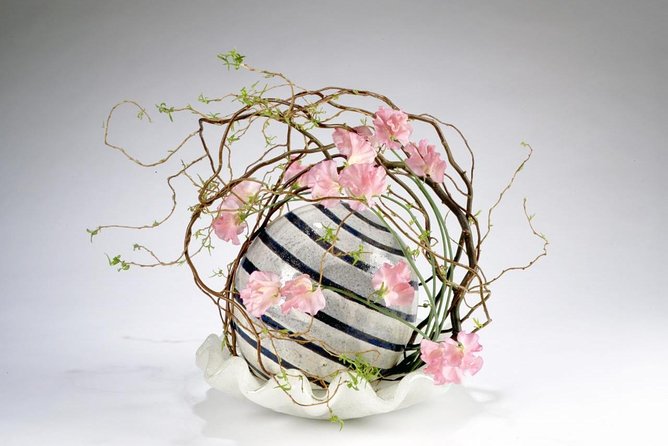
Ikebana is not simply flower arranging. It is the art of making a few branches and blooms express space, movement, and beauty. In this Tokyo class, you first learn the ideas behind the form, then make your own arrangement with seasonal local flowers. Naohiro Kasuya and other instructors guide you at the Ichiyo Ikebana headquarters in Nakano, with lessons adjusted for beginners.
I like the hands-on format, since you are not left watching a demonstration from the sidelines. I also like the thoughtful use of seasonal flowers and the chance to photograph your finished work. The main consideration is the strict cancellation policy: once booked, the activity cannot be changed or refunded.
In This Review
- Key Points
- Why This Short Tokyo Class Has Real Depth
- Starting at the Ichiyo Ikebana Headquarters in Nakano
- The First Lesson: Form, Angle, and Space
- Making Your Own Seasonal Arrangement
- Guidance from Naohiro Kasuya and the Teaching Style
- A Tradition Linked with Samurai Culture
- Photos, Feedback, and What You Keep
- Is $67.28 a Fair Price?
- Who Will Enjoy This Most?
- Practical Planning Before You Book
- Should You Book This Ikebana Class?
- FAQ
- Where does the ikebana class meet?
- How long does the experience last?
- Are flowers and equipment included?
- Is the class suitable for beginners?
- What is the minimum age?
- Can the booking be canceled or changed?
Key Points
- Learn the principles first: Study form, angles, shape, movement, and the relationship between flowers and vase before arranging anything.
- Create your own piece: You cut and place the materials yourself, then receive personal advice from the instructor.
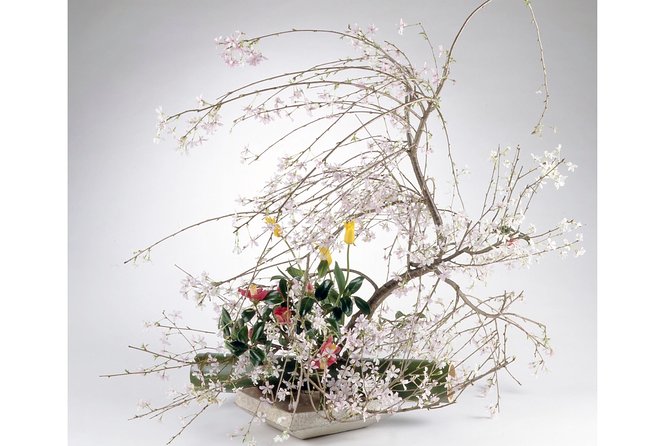
- Use seasonal local flowers: The plant material changes with the season, so your arrangement has a clear connection to the time of year.
- Meet at an ikebana headquarters: The class takes place at 一葉式いけ花本部 in Nakano, not at a generic craft studio.
- Small group setting: The class accepts a maximum of 10 people, and some sessions may be especially intimate.
- Bring nothing special: Flowers and equipment are provided, and the activity lasts about 1 hour and 10 minutes.
Why This Short Tokyo Class Has Real Depth
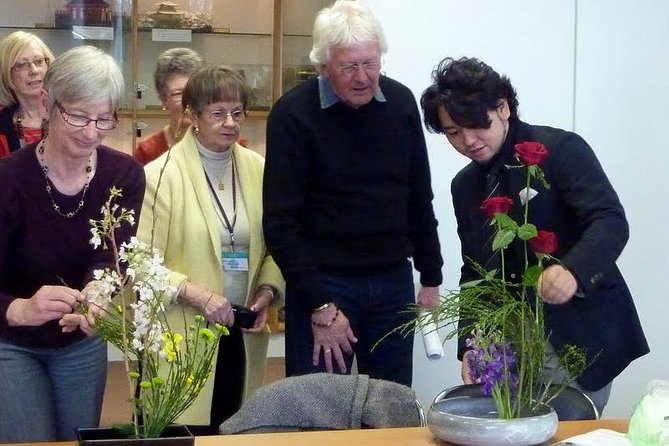
You can spend a week in Tokyo eating, shopping, and visiting temples without ever taking part in a traditional art. This class gives you a different kind of contact with Japan. You are not only looking at a finished object. You are learning why each stem sits where it does.
The central idea of ikebana is to bring out the character of the materials. That includes the flowers, branches, vase, open space, and angle of presentation. A casual bouquet fills a container. Ikebana asks you to consider line, balance, height, direction, and the space around the plant.
That makes the class useful even if you have no experience with flowers. You do not need a practiced eye or a background in Japanese arts. The instruction begins with the basics, and the teacher adjusts the lesson to your level.
The class also offers a welcome change of pace from Tokyo’s crowded streets. For about 70 minutes, your attention narrows to a few stems and the choices in front of you. That quiet focus is part of the value.
More craft workshops in Tokyo:
- Tokyo Shinjuku Chopsticks Making Class
★ 5.0 · 1,763 reviews - Kintsugi Experience: Art of Golden Joinery in Tokyo
★ 5.0 · 467 reviews - Authentic Pure Gold Kintsugi Workshop with Master Taku in Tokyo
★ 5.0 · 217 reviews
Starting at the Ichiyo Ikebana Headquarters in Nakano
The meeting point is 4-chōme-20-5 Nakano, Nakano City, Tokyo 164-0001, at 一葉式いけ花本部. The activity begins and ends at this same location, so you do not need to arrange a second pickup point afterward.
The school is near public transportation, which makes it practical to reach from other parts of Tokyo. Still, allow enough time to find the address. A traditional school can feel less obvious than a major museum or department store, and arriving late would cut into a short lesson.
The setting matters. You are learning in a place devoted to ikebana rather than in a general-purpose room hired for a tourist activity. That gives the class a stronger link to the art and its teaching tradition.
The experience accepts up to 10 participants. That is small enough for the instructor to look closely at your work. In some sessions, you may have an even more personal lesson. One participant had a class alone, which allowed the teacher to give very direct guidance.
Large groups have a separate venue rental charge, so the advertised price is best understood as the standard per-person rate for the normal class arrangement.
The First Lesson: Form, Angle, and Space
The instructor begins by explaining the basics of ikebana. You learn how the shape of an arrangement changes depending on the angle of the stems and the way the flowers relate to the vase.
This is where the class moves beyond a simple craft project. You are shown how a branch can suggest height or motion, how a flower can become a focal point, and how empty space can help the arrangement breathe. The aim is not to cram the container full.
The lesson also covers combinations that work well together and positions that make the materials look attractive. These are practical ideas you can use later with flowers from home. Ikebana can be made with plants from many countries, so the skill is not tied only to Japanese flowers.
The teachers also explain the philosophy and geometric principles behind the form. The exact lesson may vary by instructor, but the goal is consistent: help you see the structure before you start cutting and placing.
This early explanation is important. Without it, you might simply copy the teacher’s arrangement. With it, you have a reason for making your own choices.
Making Your Own Seasonal Arrangement
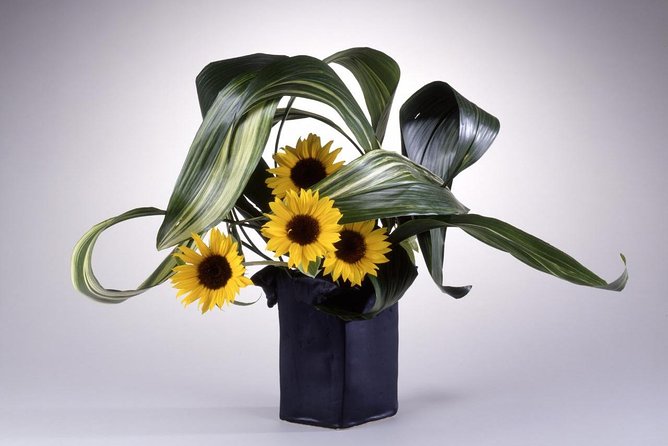
Once the introduction is complete, you receive the flowers and equipment needed for the arrangement. Everything is supplied, so you do not need to shop for materials or carry tools through Tokyo.
The flowers are local and in season. That detail gives the activity a changing character throughout the year. Your arrangement is not a fixed souvenir design repeated for every class. The available plant material reflects what is suitable at that time.
You then build your own creation. The instructor looks at your work and offers suggestions for improvement. You might adjust an angle, change the spacing, or reposition a stem so the form becomes clearer. The point is not to produce a perfect display on your first attempt. The point is to understand how small changes alter the whole arrangement.
This is also where the class feels personal. You are not being asked to make an identical object beside everyone else. The teaching encourages an individual arrangement within the basic rules of the school.
The process can be surprisingly revealing. A branch that seems awkward at first may become the most interesting part once it is turned. A flower that looks plain in a bunch can become striking when given room around it.
A few more Tokyo bookings worth comparing
- Mt Fuji and Hakone 1-Day Bus Tour Return by Bullet Train
★ 5.0 · 26,383 reviews - 1-Day Tokyo Bus Tour
★ 5.0 · 14,250 reviews - Tokyo: TOKYO SKYTREE® Admission ticket
★ 4.5 · 11,192 reviews - Tokyo: teamLab Planets TOKYO Digital Art Museum Entry Ticket
★ 4.6 · 9,779 reviews
Guidance from Naohiro Kasuya and the Teaching Style
Naohiro Kasuya is one of the instructors associated with the class. He teaches with patience and explains form, shape, and movement in clear terms. That matters for first-timers, since ikebana can seem mysterious when you only see the finished result.
Another instructor, Mrs. Shimakawa, has been praised for her careful explanations and strong personal connection to the art. Instruction may be offered by different teachers, so you should not assume that every booking will be led by one particular person.
The class is designed for international participants. English ability may vary by instructor, but the teaching is supported by demonstration and direct visual guidance. One class participant specifically found the instruction easy to understand even though the teacher apologized for her English.
That is useful to know if you worry about language. You will still need to pay attention to the explanation, but ikebana is a visual subject. The teacher can show you how to move a stem, and you can see the result immediately.
The tone is patient rather than formal or intimidating. You can ask for help, try an adjustment, and receive feedback without needing prior knowledge.
A Tradition Linked with Samurai Culture
Ikebana has a long place in Japanese culture, and this class introduces you to the tradition in a direct way. The activity also explains that samurai took part in ikebana, which adds an interesting layer to the lesson.
That fact helps place flower arranging in a broader setting. It was not only a domestic pastime or decorative hobby. It could also be a disciplined art connected with education, taste, ritual, and personal practice.
You do not receive a full history course in 70 minutes, nor should you expect one. The useful part is the connection between the simple act of placing flowers and a larger Japanese tradition.
The class focuses mainly on doing. If you want a detailed study of ikebana schools, historical periods, or religious influences, you will need a book or museum visit as well. For a short cultural activity, though, the balance between background and practice is sensible.
Photos, Feedback, and What You Keep
When your arrangement is complete, you have time to photograph it. This is worth planning for, since the finished work may not look like much while you are still building it. The final angle and spacing can change everything.
The teacher checks the arrangement and suggests improvements. That personal review is one of the strongest parts of the class. You do not simply place the last stem and leave. You learn what works and what could be sharper.
The supplied information does not clearly state whether you take the complete arrangement home, so do not book this expecting a guaranteed long-term souvenir. The reliable takeaway is the skill, the photographs, and the knowledge you can apply later.
You can use the same principles with flowers in your own country. Seasonal branches from a local market or garden can become practice material. You will not need imported Japanese flowers to continue experimenting.
Is $67.28 a Fair Price?
At $67.28 per person, this is not the cheapest short activity in Tokyo. It is also not priced like a casual demonstration. You are paying for instruction, flowers, equipment, access to a dedicated ikebana school, and an individual arrangement with teacher feedback.
The value is strongest if you want participation rather than sightseeing. A museum ticket may cost less, but it will not teach you how to create something. A standard craft class may offer a similar hands-on format, but not the same connection to an established Japanese art.
The 1-hour-10-minute length keeps the commitment manageable. You can fit it into a larger day in Tokyo, and you do not have to give up half a day of sightseeing. The short format does mean the lesson cannot cover every aspect of ikebana.
I would consider the price reasonable for a first introduction, especially if you are interested in design, flowers, Japanese customs, or quiet creative activities. It is less appealing if you only want a quick souvenir-making session or a photo opportunity.
The booking pattern suggests that people often reserve about 16 days ahead. That is a useful planning guide, particularly if you have fixed dates in Tokyo. Confirmation arrives within 48 hours, subject to availability, so do not leave this until the last possible moment.
Who Will Enjoy This Most?
This class is a good match for:
- First-time students who want a gentle introduction to ikebana
- Couples or friends looking for a quieter cultural activity
- Families with children aged 6 and over
- Flower lovers and home decorators
- Visitors interested in Japanese art and traditional practice
- Solo participants who appreciate close instruction
- Anyone who wants an activity that produces both a skill and photographs
Children aged 12 and younger must be accompanied by a parent. Most people can participate, and no special experience is required.
The class may be less suitable if you dislike careful, measured activities or want a lively group event. Ikebana asks you to slow down and look closely. It is creative, but it is not chaotic.
It also suits repeat visitors to Tokyo who have already seen the major sights. The activity gives you a different way to spend time in the city, with a direct connection to Japanese culture.
Practical Planning Before You Book
The meeting point is in Nakano, and the class returns to that same spot. Check the address carefully before leaving your hotel, and allow time for public transportation and finding the school.
A mobile ticket is provided, which is convenient for most Tokyo itineraries. Keep your phone charged and have the booking details easy to access.
All flowers and equipment are supplied. You do not need to bring a vase, scissors, or plant material. You should still keep your personal belongings with you, since the school is not responsible for lost or forgotten items.
You are responsible for accidents or injuries during the activity. The class is designed for people aged 6 and older, but young children need a parent with them.
The standard group size is capped at 10. If you are booking for a large group, ask about the separate venue rental charge before confirming. An instructor can also be sent to a hotel in Tokyo, though that arrangement should be checked when booking since the normal meeting point is the Nakano school.
The cancellation terms are firm. This activity is non-refundable and cannot be changed for any reason. Only book once your schedule is settled.
Should You Book This Ikebana Class?
I would book this class if you want to understand a Japanese tradition by practicing it yourself. The strongest reasons are the seasonal flowers, the supplied materials, the small maximum group size, and the patient feedback from instructors such as Naohiro Kasuya and Mrs. Shimakawa.
I would skip it if you are looking for a long workshop, a guaranteed take-home object, or a broad tour of Japanese culture. The lesson is short and focused. It teaches the basic principles of ikebana rather than offering a full course.
For most first-timers, the format makes sense. You learn the ideas, make an arrangement, receive advice, and photograph the result, all without carrying equipment or spending a full day away from Tokyo’s main sights. At this price, it is a worthwhile choice for anyone who values a calm, authentic activity over another stop on a crowded sightseeing route.
FAQ
Where does the ikebana class meet?
The class meets at 一葉式いけ花本部, located at 4-chōme-20-5 Nakano, Nakano City, Tokyo 164-0001, Japan. The activity ends at the same meeting point.
How long does the experience last?
The class lasts approximately 1 hour and 10 minutes.
Are flowers and equipment included?
Yes. Flowers and the equipment needed for the class are provided.
Is the class suitable for beginners?
Yes. The program teaches the basics of ikebana and is designed for people with no previous experience.
What is the minimum age?
The program is designed for people aged 6 and over. Children aged 12 and younger must be accompanied by a parent.
Can the booking be canceled or changed?
No. The experience is non-refundable and cannot be changed for any reason after booking.
New on our Tokyo list
- Sumi-e Experience in a relaxing green tea shop in Tokyo★ 5.0 · 3 reviews
- Tokyo : Kamikaze Street Drift Ride★ 5.0 · 3 reviews
- Private Zen Meditation in English in Shinjuku, Tokyo★ 5.0 · 3 reviews
- Onsen Spa in Tokyo and Asakusa Bar Hopping with Local Guide★ 5.0 · 3 reviews
- Easy for everyone! Now you can play handmade mini shamisen and show off to everyone! Musical instruments, sweets and live music★ 5.0 · 3 reviews
- Tokyo Tsukiji Fish Market Walking and Exploring Hidden Gems Tour★ 5.0 · 3 reviews
- Tokyo: Private Tsukiji Street Food & Sake with Local Guide★ 5.0 · 3 reviews
- Mt Fuji Exploration Tour with Free Japanese Kusa Mochi from Tokyo★ 4.5 · 3 reviews
Japanese Culture Workshops, compared.
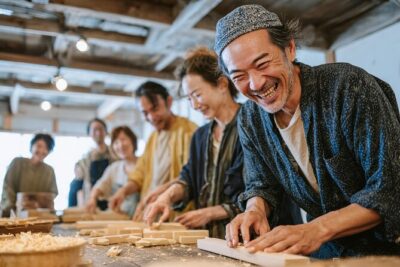
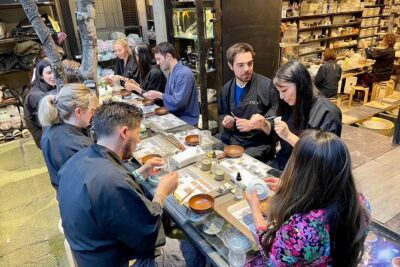
Kintsugi Experience: Art of Golden Joinery in Tokyo
Read our review →
Authentic Pure Gold Kintsugi Workshop with Master Taku in Tokyo
Read our review →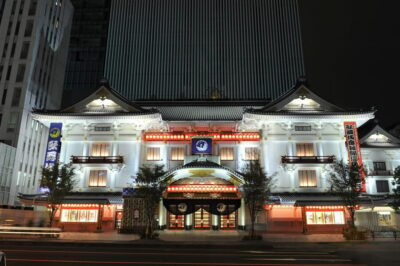
KABUKI Show at Kabukiza Theatre Admission Ticket
Read our review →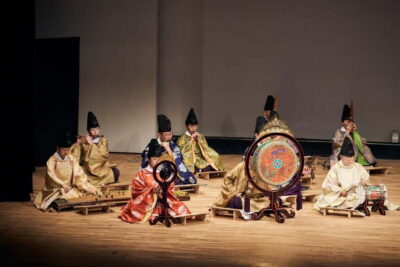
KABUKI, BUNRAKU, etc. presented by National Theatre
Read our review →
Kintsugi Workshop Class in Shibuya, Tokyo with mon cadeau
Read our review →
Browse the lists this tour appears in