
Reviewed · WALKING TOURS
Tokyo: Imperial Palace East Gardens Walking Tour
Tokyo’s Imperial Palace East Gardens give you two Tokyos in one walk: the polished capital of today and the formidable Edo Castle grounds of the shoguns. For $19, you get a 150-minute English tour through castle ruins, guard houses, ponds, bridges, and the carefully arranged Ninomaru Garden.
I especially like the way the tour joins military history with garden design, rather than treating the gardens as a pretty park with a few labels. I also like the practical touch of guides such as Mei using printed maps and old images to explain areas where only foundations remain. The main consideration is simple: you do not enter the Imperial Palace, and much of the original castle is gone, so the experience depends on your guide’s storytelling.
In This Review
- Key points to know before you go
- Why the East Gardens matter in modern Tokyo
- Starting near Wadakura Fountain Park
- Walking into the former Honmaru compound
- Ninomaru Garden and the art of controlled nature
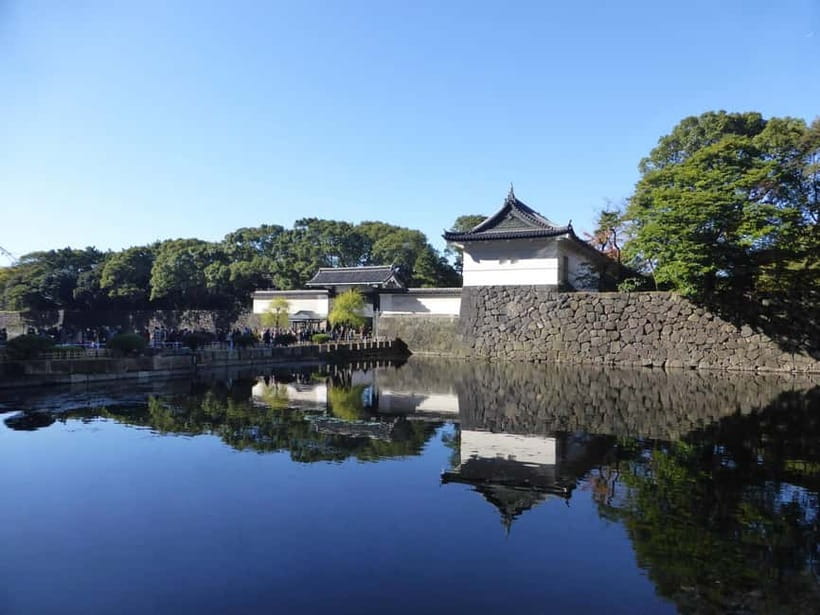
- Stone walls, guard houses, and castle defenses
- Seasonal beauty: spring blossoms and fall color
- How the guide shapes the experience
- What the $19 price gets you
- Who will enjoy this walk most
- Practical advice for a better visit
- Should you book the Imperial Palace East Gardens tour?
- FAQ
- How long is the Imperial Palace East Gardens walking tour?
- What language is the tour conducted in?
- Does the tour enter the Imperial Palace?
- Where does the tour begin and end?
- Is entry to the Imperial Palace included?
- Is the tour wheelchair accessible?
Key points to know before you go
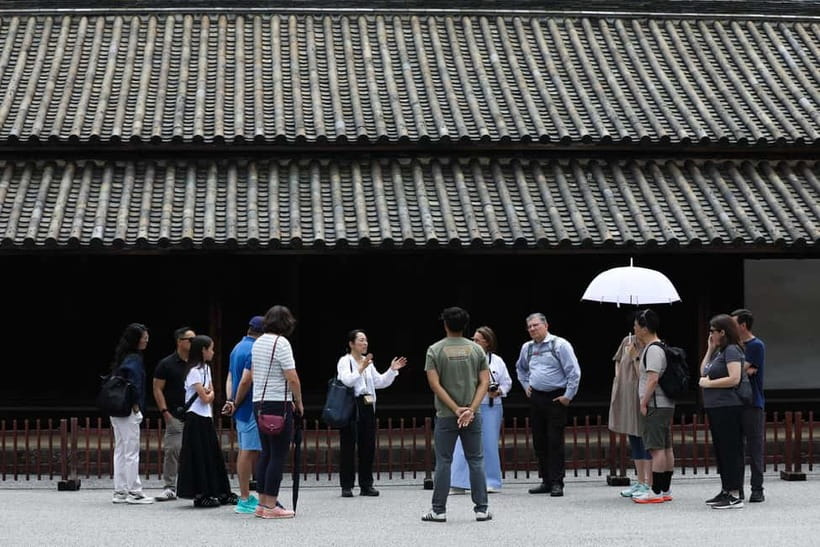
- Edo Castle ruins: See the Honmaru area, stone foundations, gates, defensive structures, and other remains from the castle compound.
- Ninomaru Garden: Enjoy a traditional Japanese garden with ponds, bridges, clipped trees, stone lanterns, and bonsai.
- A history-led walk: Guides explain the Tokugawa shoguns, emperors, samurai customs, and the changing role of the palace grounds.
- Seasonal scenery: Spring brings cherry blossoms, while fall brings colorful foliage.
- English guidance: Guides including Mei, Kei, Wakana, Tatsie, Loc, and Mieko have been praised for clear explanations and a friendly manner.
- Simple central meeting point: Meet near Starbucks Coffee at Kokyo Gaien Wadakura Fountain Park, then return there after the tour.
Why the East Gardens matter in modern Tokyo

The East Gardens are one of the best places in central Tokyo to understand how the city grew from Edo, the seat of the Tokugawa shoguns, into the modern capital. Tall office buildings and busy streets are close by, yet the garden paths lead you into a quieter world of clipped trees, open lawns, ponds, stonework, and old castle defenses.
This contrast is the heart of the experience. You are not simply walking through a royal garden. You are walking across former Edo Castle grounds, where power was organized, defended, and displayed. The gardens now feel calm, but the thick stone walls and raised foundations hint at a much more guarded past.
I find this setting especially useful early in a Tokyo visit. It gives you a basic framework for understanding shoguns, emperors, the Edo period, and the shift from feudal rule to the modern state. Without that context, the stones can look like attractive fragments. With a guide, they begin to explain the shape of old Tokyo.
More walking routes in Tokyo:
- Tokyo Tsukiji Fish Market Food and Culture Walking Tour
★ 5.0 · 3,184 reviews - Tokyo: Imperial Palace and Shogun Historical Walking Tour
★ 5.0 · 2,251 reviews - Tokyo: Shinjuku Local Bar and Izakaya Guided Walking Tour
★ 4.9 · 1,794 reviews
Starting near Wadakura Fountain Park
The walk begins near Starbucks Coffee at Kokyo Gaien Wadakura Fountain Park. The meeting point is listed at 35.68299330000001, 139.7611971, so check your map carefully before setting out and allow time to locate the guide nearby.
This is a sensible place to begin because it puts you beside the broad outer grounds of the palace area rather than dropping you straight into a confusing maze of city streets. Your guide will meet you nearby and lead the group toward the East Gardens.
The tour returns to the same Starbucks meeting area after about two and a half hours. That makes planning easier if you want to continue toward Tokyo Station or arrange another activity afterward. Still, I would avoid scheduling something tightly timed immediately after the walk. A garden tour moves at a human pace, and questions, photographs, or a short pause can affect the finish time.
Walking into the former Honmaru compound
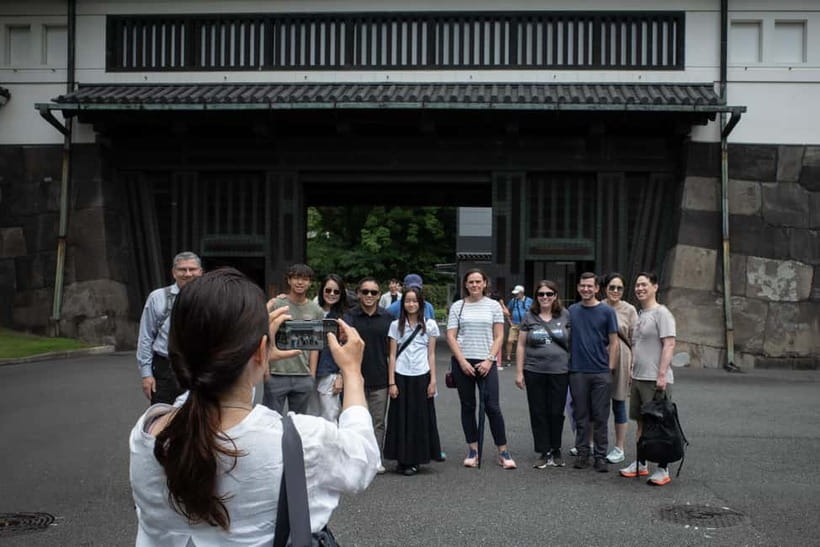
The Honmaru area was once the main compound of Edo Castle. Today, you see remnants rather than complete halls: castle foundations, gates, defensive features, and sections of stone construction.
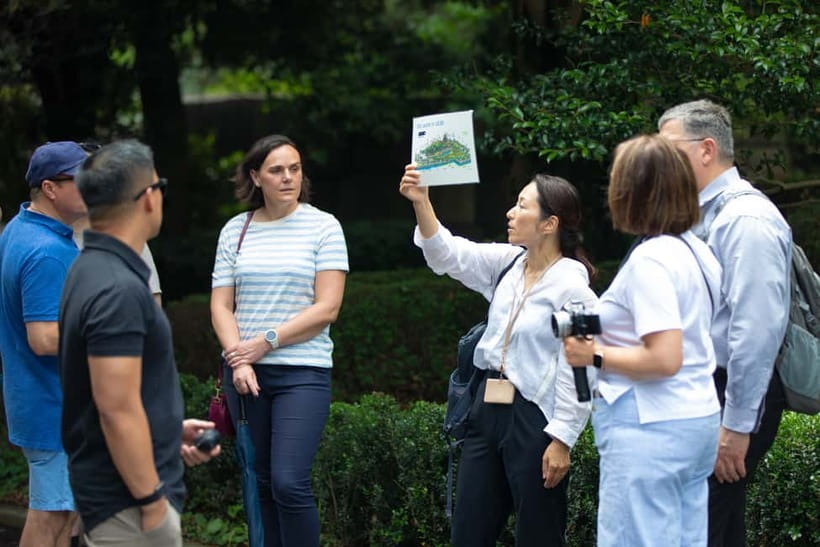
That absence is part of the lesson. You need to picture the buildings that no longer exist, and this is where a good guide makes a major difference. Guides such as Mei have used laminated maps and historical images to show the former layout, helping you understand how the castle was organized even when the ground itself offers only partial clues.
The walk also brings attention to military architecture. Stone walls were not placed only for beauty. Their height, angle, gateways, and placement helped control movement and protect the castle compound. A guide can connect these practical features to the social order of the shogunate, when access and rank mattered at every turn.
If you enjoy samurai history, this is likely the strongest part of the tour. You get more than a general story about old Japan. You can see the physical remains of the seat of Tokugawa power and consider how a castle functioned as both residence and fortress.
The drawback is that the Honmaru area does not survive as a complete castle. If you are expecting grand interiors, towers, or a restored palace complex, adjust your expectations. This is an outdoor history walk built around ruins, garden spaces, and explanation.
Ninomaru Garden and the art of controlled nature
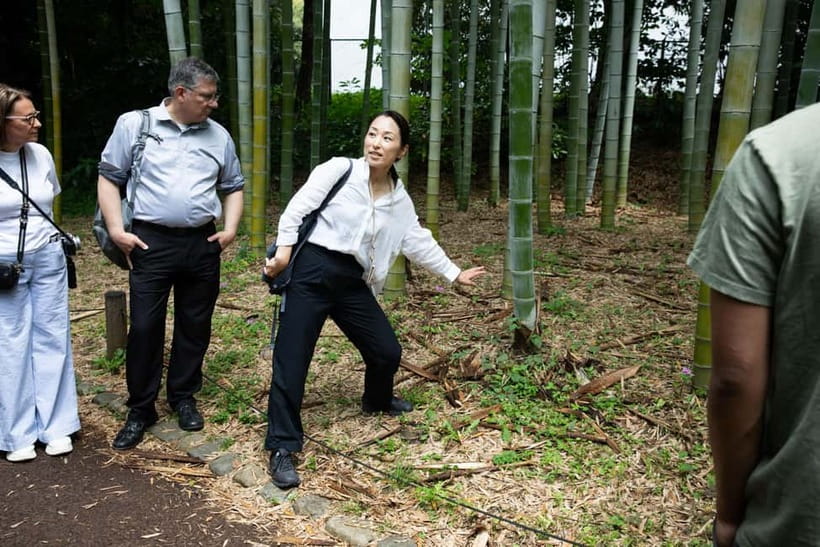
The Ninomaru Garden offers a different mood. Here, the focus shifts from defense and political power to traditional Japanese garden design.
Expect carefully arranged trees and shrubs, tranquil ponds, graceful bridges, stone lanterns, and neatly maintained paths. Bonsai trees and other pruned plants show how much care goes into shaping nature without making the garden feel artificial. The result is composed and quiet, with views designed to change as you walk.
I like this section because it gives the tour a useful rhythm. The castle remains make you think about force and hierarchy. The Ninomaru Garden asks you to slow down and notice proportion, empty space, water, stone, and the shape of a single tree.
Your guide can explain why these details matter instead of leaving you to admire them without context. Guides such as Wakana, Mieko, and Miyu have been praised for making the garden easy to understand while keeping the walk relaxed and personable.
Plan to take photographs here, but do not treat the garden as only a photo stop. Look at how the views are framed. Notice the contrast between the still ponds and the clipped greenery. The garden is most rewarding when you give yourself a moment to stop listening and simply look.
A few more Tokyo bookings worth comparing
- Mt Fuji and Hakone 1-Day Bus Tour Return by Bullet Train
★ 5.0 · 26,383 reviews - 1-Day Tokyo Bus Tour
★ 5.0 · 14,250 reviews - Tokyo: TOKYO SKYTREE® Admission ticket
★ 4.5 · 11,192 reviews - Tokyo: teamLab Planets TOKYO Digital Art Museum Entry Ticket
★ 4.6 · 9,779 reviews
Stone walls, guard houses, and castle defenses
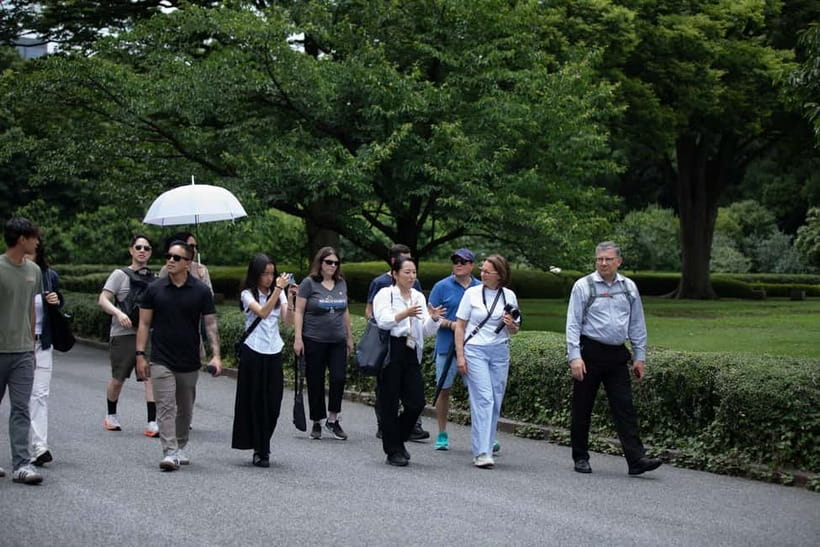
The East Gardens contain more than trees and flowers. Across the grounds, you can find historical features including stone walls, guard houses, watch towers, gates, and other defensive remnants.
These structures help make the old castle legible. A wall tells you where the compound was protected. A guard house suggests how movement was watched. A gate marks a controlled passage rather than a casual entrance.
The details may be easy to miss if you walk alone. Signs can identify a feature, but they cannot always explain how it fitted into the larger castle system. A live guide can point out the relationship between the remains and tell stories about the shoguns, samurai, emperors, and customs connected with the site.
The best guides keep this from becoming a dry military lecture. Kei has been praised for answering questions and making the history approachable. Tatsie has been noted for mixing information about shoguns, Japanese customs, and the gardens in a light, easy manner. Loc has been praised for his enthusiasm and for making the story feel connected to the country as a whole.
The tour can also include lighter observations about the Imperial family and modern Japan. That can help connect the historic grounds with the institution that occupies the wider palace site today. The emphasis remains on the gardens and former Edo Castle, not on celebrity gossip or palace access.
Seasonal beauty: spring blossoms and fall color
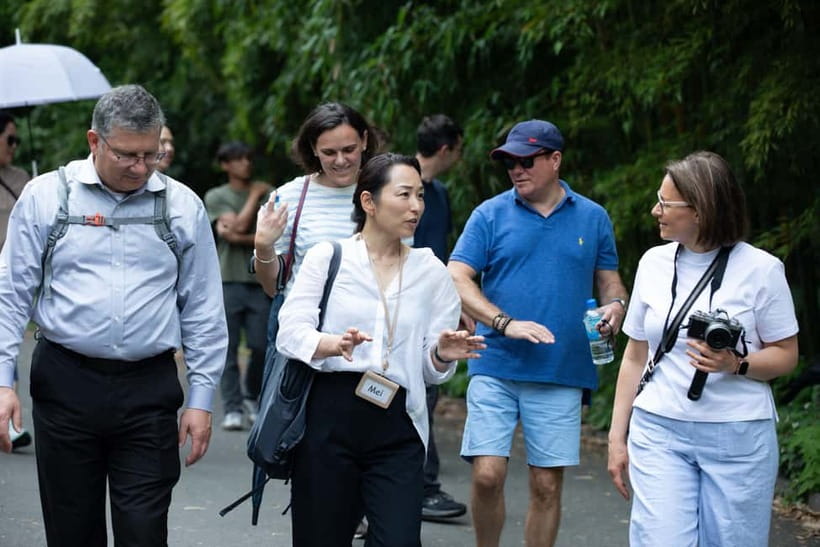
The East Gardens change with the calendar. In spring, cherry blossoms add a familiar Tokyo highlight. In fall, the foliage can turn the paths and garden views warm shades of red, gold, and orange.
Seasonal timing matters here. A garden can feel quite different depending on the month, and the tour’s appeal is not limited to peak blossom season. Autumn color has been especially praised, with late November and early December offering a particularly attractive setting in the right year.
I would not book this only for a guaranteed cherry blossom spectacle. Blooming and foliage conditions vary, and the tour’s real strength is the combination of scenery and history. If the flowers are early, late, or less dramatic than hoped, the stonework, ponds, garden design, and castle story still give you plenty to see.
Spring and fall also make comfortable walking conditions more likely than the hottest part of summer, though the activity description does not specify weather protection or indoor stops. Wear shoes you can walk in for 150 minutes and bring what you need for the day’s conditions.
How the guide shapes the experience
This is a guide-dependent tour. The site itself is worthwhile, but the surviving ruins need interpretation, and the East Gardens cover enough ground that a clear route matters.
The most praised guides include Mei, Kei, Wakana, Mieko, Miyu, Tatsie, Loc, Midori, Fuku, and Miracle. Their strengths are consistent: clear English, strong command of the subject, warmth, humor, patience with questions, and a good walking pace.
Mei receives particular praise for combining serious historical detail with fun conversation. She has also helped people with photographs and offered suggestions for other places to visit in Tokyo. That kind of extra help can be valuable on a first visit, though you should not assume a particular guide will lead your departure.
Miracle has used visual aids to explain the old Edo Castle, while Midori has been praised for personalizing the walk despite difficult weather. These details point to something important: the experience is not meant to be a memorized speech delivered while you hurry from one stop to the next.
A well-paced tour lets you listen, ask questions, take photographs, and look around. Several guides have been praised for allowing personal time in the Japanese garden, suggesting photo spots, and helping with pictures. That makes the tour feel less rigid than some large sightseeing walks.
The advertised rating is 4.8 from 353 reviews, which supports the view that guide quality is a major strength. Still, ratings cannot guarantee the same personality or pace for every departure. If you care strongly about a particular guide, check the booking details rather than assuming you can request one.
What the $19 price gets you
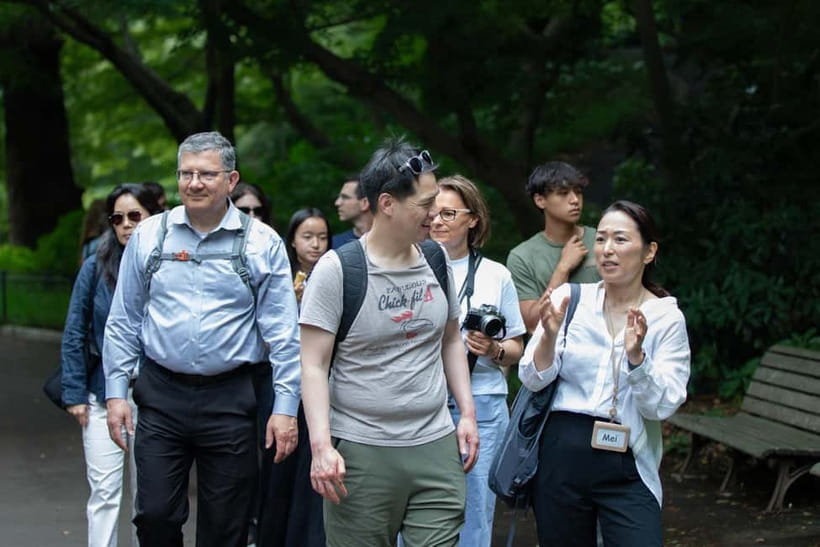
At $19 per person, this is an inexpensive way to add structure and context to a major Tokyo sight. You are paying for a walking tour and an English-speaking guide, not for a private palace visit or a complete museum experience.
The value is strongest if you want to understand what you are seeing. You could walk through the East Gardens independently, but the castle remains are easier to appreciate when someone explains the former layout, defensive purpose, and connection to the Tokugawa shoguns.
The price does not include entry to the Imperial Palace. The activity specifically does not go inside the palace, so budget and plan with the East Gardens as an outdoor visit. Do not book this expecting access to royal interiors, palace rooms, or a view into the private residence.
For the duration, the cost is reasonable. Two and a half hours is long enough to cover the major historical and garden areas without turning the outing into an exhausting full-day commitment. You also return to the original meeting area, which makes this easy to pair with other central Tokyo plans.
Free cancellation up to 24 hours before the start and the option to reserve now and pay later add flexibility. Those terms are useful if your Tokyo schedule is still shifting, but check the final booking conditions before payment.
Who will enjoy this walk most
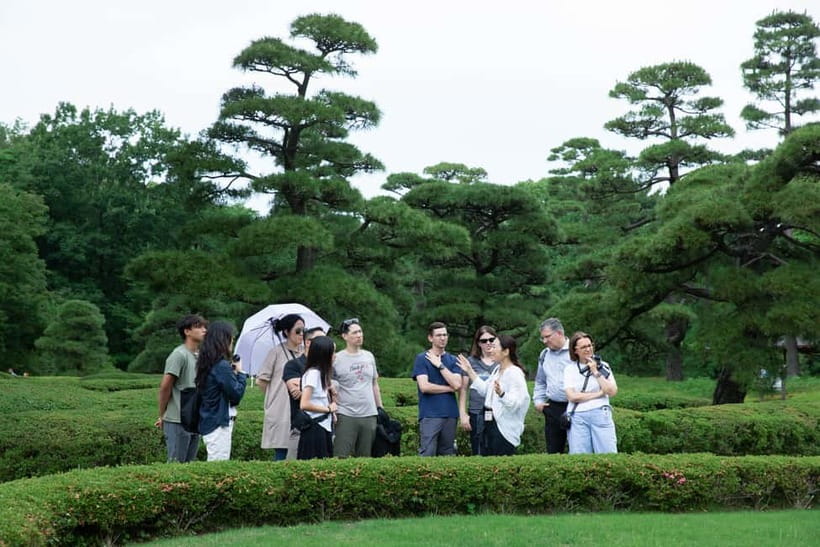
I would recommend this tour to first-time Tokyo visitors who want a clear introduction to the city’s political and historical past. It also suits anyone who likes gardens but wants more than a silent stroll through attractive scenery.
Families can benefit from the mix of castle defenses, stories, and open garden space. The guides are used to answering questions and keeping the pace approachable. History fans will appreciate the Honmaru foundations, gates, and military design, while photographers will find the Ninomaru Garden and seasonal plantings worth the time.
The walk is also suitable for people who want a central activity near Tokyo Station. Since it starts and ends near Wadakura Fountain Park, you do not need to commit to a distant day trip.
It may not suit you if you want a grand surviving castle building or an indoor palace tour. It is also not the right pick if you dislike walking or want a completely self-directed visit with no scheduled route. The experience is wheelchair accessible, but the supplied information does not describe the exact surface conditions or route details, so ask the operator if you need specific access information.
Practical advice for a better visit
Arrive early at the Starbucks near Wadakura Fountain Park. The meeting point is nearby rather than necessarily inside the cafe, so watch for the guide and confirm the exact spot in your booking instructions.
Wear comfortable shoes and bring water. The tour lasts 150 minutes and includes outdoor walking, with no indication of a long indoor break. You will want your hands free for photographs and your attention available for the guide’s explanations.
Bring a rain layer or sun protection according to the forecast. A previous departure continued successfully in rainy conditions, with the guide helping keep the group comfortable, but the weather will still affect how much you enjoy the gardens.
If you have already visited the Imperial Palace area, this tour can fill in the historical gaps you missed on a casual walk. If you have not visited, treat it as an introduction to the East Gardens rather than a palace-access experience.
Should you book the Imperial Palace East Gardens tour?
Book it if you want a reasonably priced, English-language walk that explains why the castle ruins and garden features matter. The strongest reasons are the guide-led interpretation, the contrast between Honmaru defenses and Ninomaru beauty, and the chance to see seasonal Tokyo scenery in a central location.
Skip it if your main goal is to enter the Imperial Palace or see a fully restored Edo castle. For everyone else, this is a practical way to spend two and a half hours learning how shogun-era Tokyo shaped the modern capital. The experience works best when you arrive ready to walk, look closely, and let the guide fill in the missing buildings.
FAQ
How long is the Imperial Palace East Gardens walking tour?
The tour lasts 150 minutes, or two and a half hours.
What language is the tour conducted in?
The live guide conducts the tour in English.
Does the tour enter the Imperial Palace?
No. The tour visits the Imperial Palace East Gardens and former Edo Castle grounds but does not go inside the Imperial Palace.
Where does the tour begin and end?
It begins near Starbucks Coffee at Kokyo Gaien Wadakura Fountain Park and returns to the same area.
Is entry to the Imperial Palace included?
No. Entry to the Imperial Palace is not included, and the tour does not go inside the palace.
Is the tour wheelchair accessible?
Yes, the activity is listed as wheelchair accessible. If you need details about specific surfaces or route conditions, confirm them with the provider before booking.
New on our Tokyo list
- From Tokyo: Mount Fuji & Hakone Full Day Private Tour★ 4.9 · 25 reviews
- Tokyo Spectacular View Day-Cruise in 90 Minutes★ 5.0 · 25 reviews
- Real Tokyo Runner Club : Daikoku Car Meet Night Tour with JDM Car★ 5.0 · 25 reviews
- 2.5 Hour-Guided Cycle Tour in the Central Tokyo★ 5.0 · 25 reviews
- Ramen Making from Scratch +Akihabara Tour –Cooking Class★ 5.0 · 25 reviews
- [Self-Drive] Tokyo & Daikoku Custom Car Driving Tour★ 4.9 · 25 reviews
- Tokyo: 2-Hour Night Bike Tour of the City’s Hidden Gems★ 4.9 · 25 reviews
- Samurai themed Entertainment show in Shinjuku★ 4.5 · 25 reviews
Walking Tours, compared.

Tokyo Tsukiji Fish Market Food and Culture Walking Tour
Read our review →
Imperial Palace and Shogun Historical Walking Tour
Read our review →
Shinjuku Local Bar and Izakaya Guided Walking Tour
Read our review →
Asakusa Walking Tour with Sensoji Temple Visit
Read our review →
Tokyo Castle & Imperial PalaceーShogun Walking Tour
Read our review →
Browse the lists this tour appears in