
Reviewed · JAPANESE CALLIGRAPHY CLASSES
Tokyo: Japanese Calligraphy Lesson with Skilled Instructor
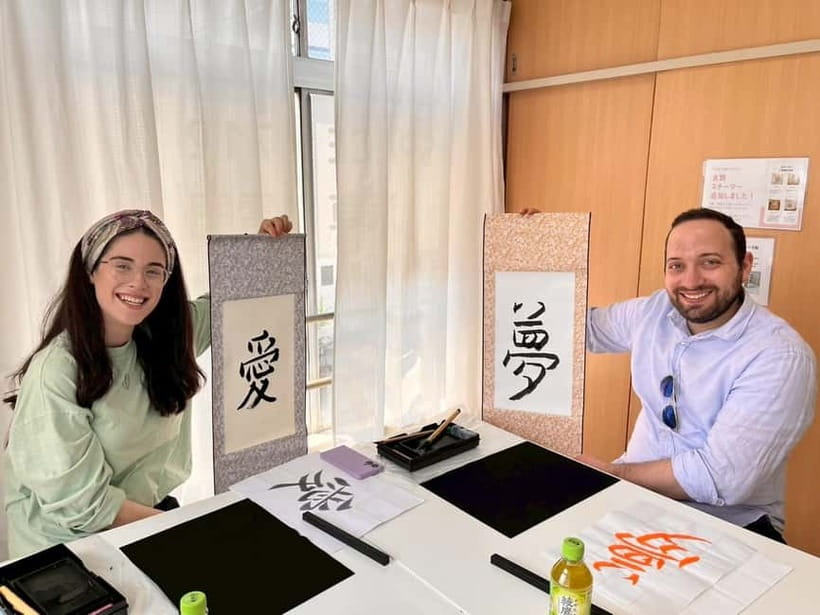
The best part of this one-hour Asakusa activity is that you do not simply watch a calligrapher work. You choose a Japanese word, practice it with help from Shusuke, then take home your own uchiwa fan, shikishi board, or kakemono scroll. The finished piece feels personal because you made the writing yourself.
I like the small group size, limited to four people, and the clear English explanations of each word’s meaning. I also like the generous practice time: 20 sheets of hanshi paper give you room to make mistakes, adjust your brush, and find a stroke you like. The main consideration is the meeting room. It is in Asakusa, but the exact address arrives after booking, and the room may be Japanese-style with tatami or Western-style with a table and chairs.
- Choose a word with meaning: Browse sample works and learn what the words mean in English before picking one.
- Practice on 20 sheets: Spend roughly 30 minutes working on brush control, shape, and balance.
- Learn from Shusuke: The instructor has more than 10 years of experience and holds a 3rd Dan certificate.
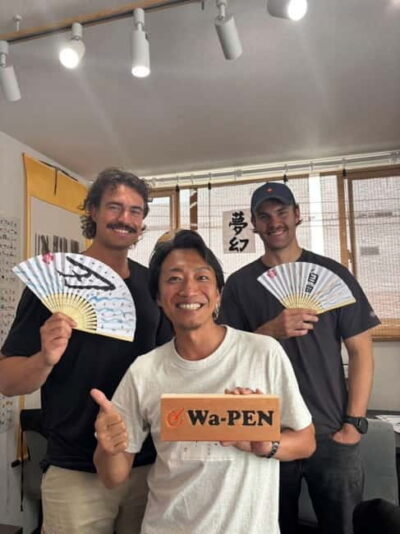
- Take home original art: Select an uchiwa, shikishi, or kakemono for your final piece.
- Keep the group intimate: The class accepts no more than four participants.
- Finish with a photo: A commemorative picture records your completed work.
In This Review
- Why this small Asakusa class feels personal
- Start with a Japanese word you actually understand
- Thirty minutes of brush practice on hanshi paper
- Pick the souvenir that fits your finished writing
- Meet Shusuke, a teacher with a traveler’s perspective
- A quiet counterpoint to Asakusa sightseeing
- Is $45 a fair price for one hour?
- Who will enjoy this activity most?
- Should you book the Asakusa calligraphy class?
- FAQ
- Where does the calligraphy class take place?
- Is the room Japanese-style?
- How long does the activity last?
- How many people can join?
- Which languages does the instructor speak?
- Who teaches the class?
- How much practice paper do I receive?
- What souvenir can I make?
- Are the meanings of the Japanese words explained?
- Can I cancel for a full refund?
Why this small Asakusa class feels personal
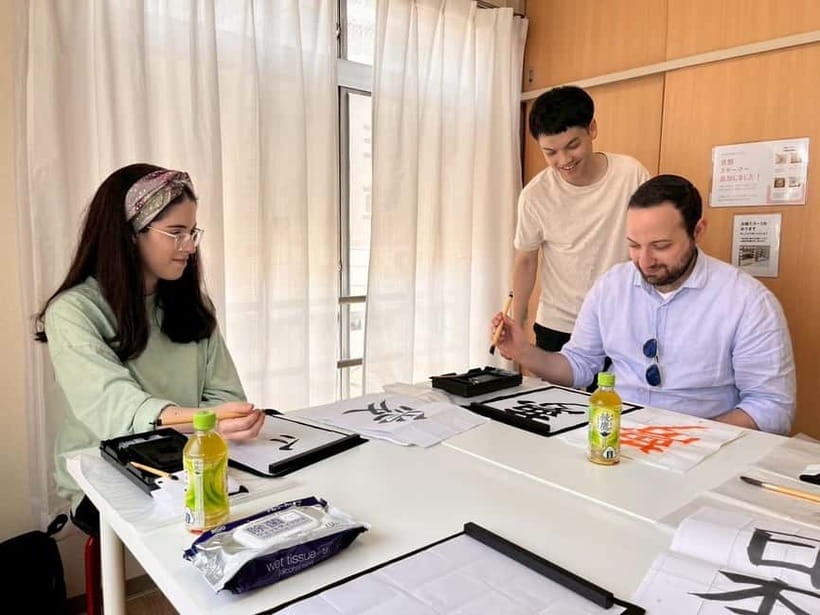
Japanese calligraphy is easy to admire and harder to produce. A character that looks simple on a finished scroll can require careful control of pressure, speed, and brush direction. This class gives you enough time to try, adjust, and try again rather than rushing straight to a souvenir.
The setting is deliberately small. With no more than four participants, Shusuke can watch your strokes and offer individual advice. That matters here. Calligraphy is not just about copying a printed outline. You need someone to point out when your brush is too heavy, when a line needs more space, or when the whole character feels unbalanced.
The class lasts one hour, so it fits neatly into an Asakusa sightseeing day. It is also calm by design. One participant described the private room and relaxed pace as major strengths, and that matches the shape of the activity: sit down, listen, practice, and focus on one piece of work.
Start with a Japanese word you actually understand
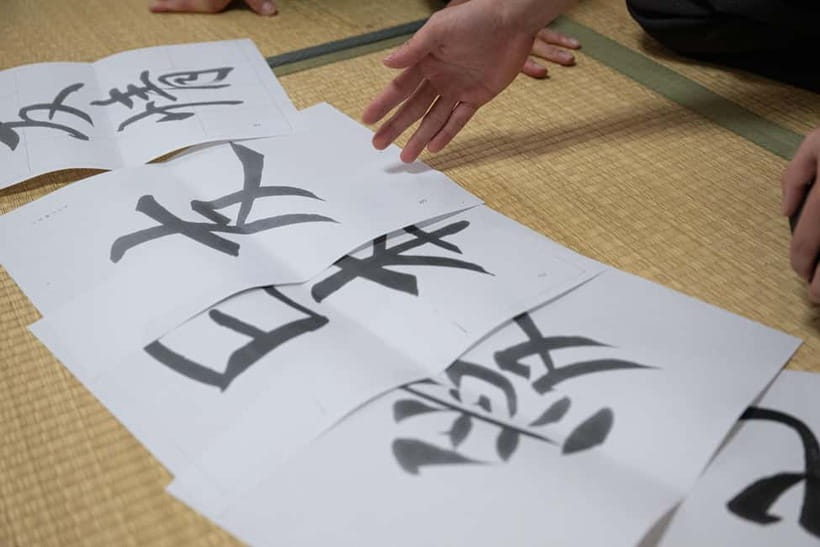
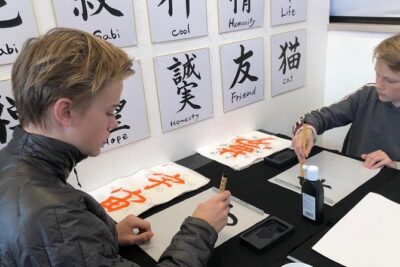
The first step is choosing a word or phrase. You can look through sample calligraphy pieces while Shusuke explains their meanings in English. This is more useful than selecting a character only because it looks attractive.
Japanese writing can carry several layers of meaning, and a short word may represent a feeling, hope, value, or idea. The supplied information does not list a fixed menu of words, so your choices depend on the samples available during your session. Ask about the meaning before you decide, especially if you plan to display the piece at home.
This opening also gives you a little cultural context without turning the class into a lecture. One participant from Mexico particularly valued the explanation of three Japanese calligraphy styles, along with practice in kanji. You can expect the lesson to connect the appearance of the writing with its meaning and form.
If you are buying this experience as a couple or family activity, choose words that relate to your trip or to something you share. If you are alone, a single character with a clear personal meaning may make the strongest souvenir. The important point is that you make an informed choice before reaching for the brush.
More calligraphy tables:
- Tokyo: Calligraphy on Kanji Fan & Scroll with Drink
★ 5.0 · 210 reviews - Let’s experience calligraphy in YANAKA, Taito-ku, TOKYO !!
★ 5.0 · 127 reviews - Experience all of Japanese culture and Japanese food experience classes “origami, udon, Japanese food, green tea, calligraphy” in 4 hours
★ 5.0 · 105 reviews
Thirty minutes of brush practice on hanshi paper
After choosing your word, you practice on hanshi, the thin paper used for calligraphy. Each person receives 20 sheets. That is a generous allowance for a one-hour class and one of the strongest practical features of the experience.
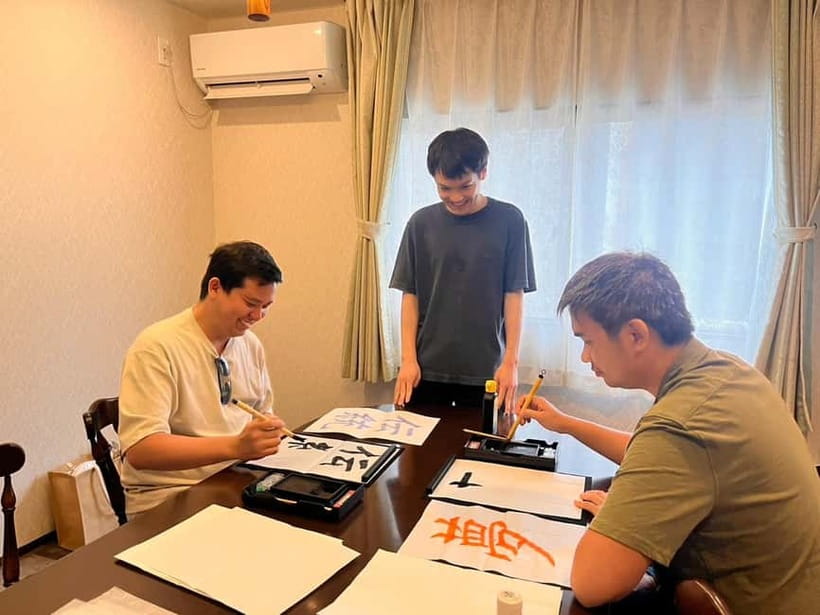
The practice period takes about 30 minutes. You will repeat the same word or phrase while Shusuke demonstrates techniques and gives corrections. This is where the class earns its value. A quick demonstration followed by one attempt would leave you with a lucky accident. Twenty sheets let you see your writing change from one attempt to the next.
Expect the guidance to focus on the basics of the brush. You will work on the shape of each character, the pressure of the bristles, and the relationship between thick and thin lines. The supplied details do not promise a formal lesson in every technical rule, so think of this as a guided introduction rather than professional training.
Still, the format gives you a real chance to improve. You can slow down, ask questions in English or Japanese, and receive advice at your own pace. Shusuke is a native Japanese speaker with advanced English and beginner Korean. His English ability should make the meaning and instruction accessible to most international participants, while Japanese speakers can take the lesson in Japanese.
Do not treat the practice sheets as wasted paper. They are the part of the class that lets you create a better final piece. If your first few attempts look uneven, that is normal. The point is to use the feedback and keep refining your strokes.
Pick the souvenir that fits your finished writing
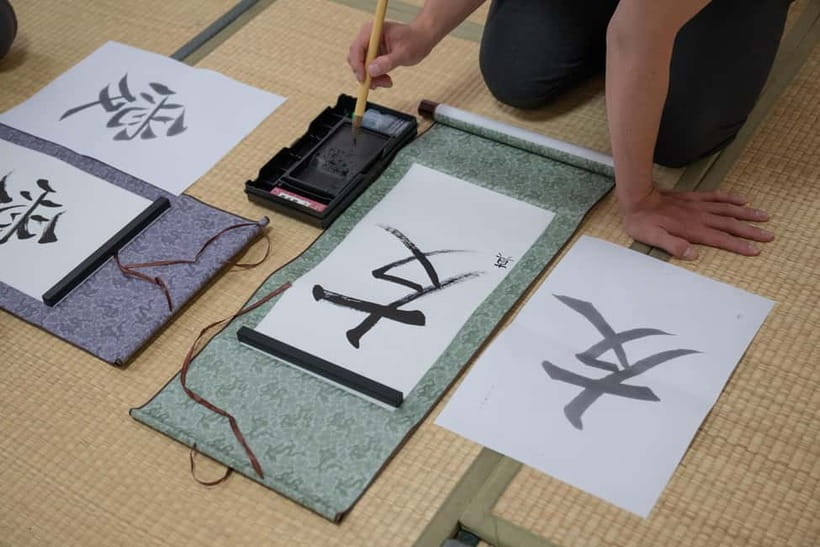
Once you have practiced enough, you transfer your chosen word to one of three items. Each option has a different feel and practical use.
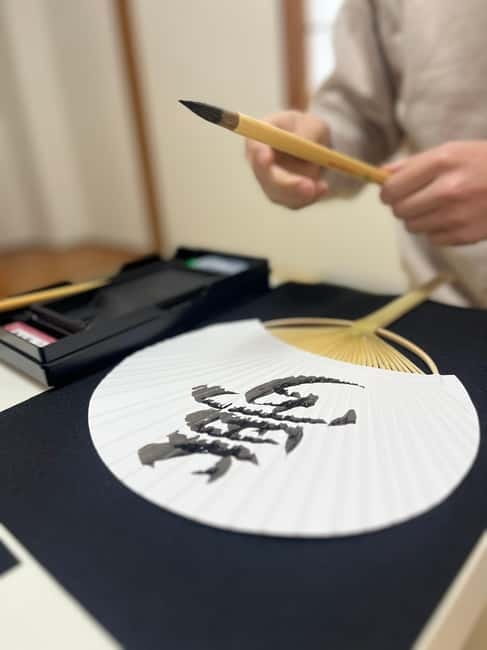
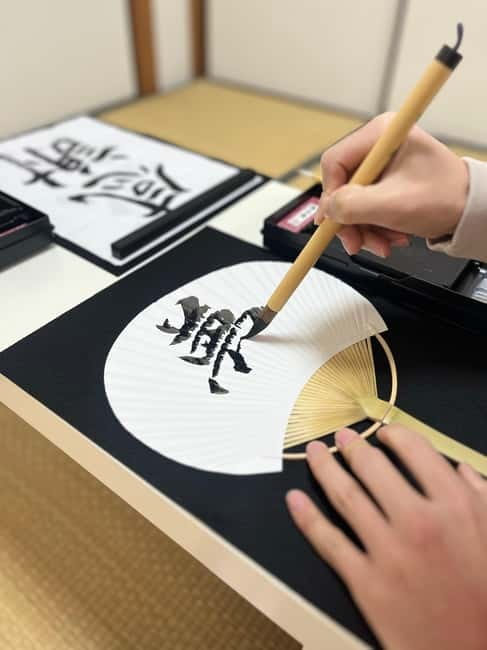
An uchiwa is a traditional Japanese fan. It gives your calligraphy a light, decorative format and may suit you if you want something connected to everyday Japanese design. A shikishi is a decorative board, a compact choice for framing or displaying on a shelf. A kakemono is a hanging scroll, the most traditional-looking option and the one that can make your writing feel like a formal piece of Japanese art.
The information provided does not specify the dimensions or materials of each item, so ask about the available choices when you arrive. The important difference is the format, not a promise of a particular size or finish.
This final stage also adds a little pressure, in a good way. You have practiced on ordinary paper, but now your strokes go on the object you will keep. Shusuke can help you decide when your writing is ready and guide you through the transfer. The end result is not factory-perfect, and that is part of its charm. Your hand made it.
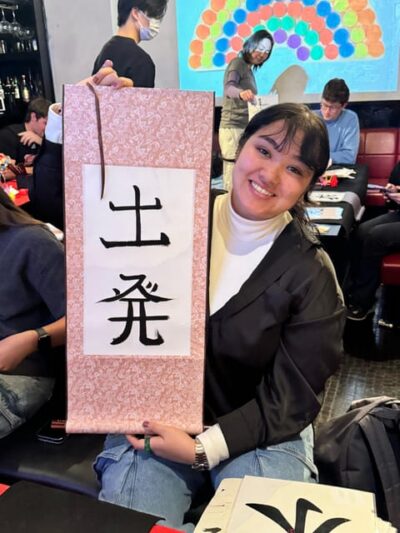
One participant received a scroll and was able to write a kanji character as a souvenir. That option may appeal to you if the hanging format feels more special than a flat board or fan. If you are traveling with limited luggage, consider the shape of the item before booking. The activity offers a choice, but it does not state how each souvenir is packed or carried.
Meet Shusuke, a teacher with a traveler’s perspective
Shusuke brings more than 10 years of calligraphy teaching experience to the class. He is certified in Japanese calligraphy at 3rd Dan through the Japan Educational Calligraphy Federation. That gives you a teacher with a serious background, but the session is still aimed at beginners who want a meaningful introduction.
His language skills are useful for international visitors. Instruction is available in English and Japanese, and his time studying abroad in the Philippines and Canada has given him experience outside Japan. He has also visited 20 countries and traveled widely within Japan.
That travel background may make conversation easier. The activity information says he is ready to share suggestions about places to visit in Japan. Keep your questions focused, since the class itself lasts only one hour, but this can be a pleasant extra for someone planning the rest of a Japan trip.
The strongest praise in the supplied feedback centers on his calm manner, clear teaching, communication, and willingness to help with questions. One participant also noted that Shusuke took many photographs. That is useful when your hands are busy with ink and brush, and the included commemorative photo gives you a record of the finished work.
Another participant booked Shusuke for a custom calligraphy project and praised the careful lettering, balanced design, and professional communication. That is separate from the one-hour lesson, but it suggests that his work extends beyond teaching a basic brush exercise.
A few more Tokyo bookings worth comparing
- Sushi Making Tokyo Roll and Authentic Japanese Sushi Class
★ 5.0 · 3,971 reviews - Tokyo: Roll and Authentic Sushi Making Class in Asakusa
★ 4.9 · 1,957 reviews - Tokyo Shinjuku Chopsticks Making Class
★ 5.0 · 1,763 reviews - Tokyo: Sushi Making Class in a Happi Coat near a Famous Spot
★ 4.9 · 1,377 reviews
A quiet counterpoint to Asakusa sightseeing
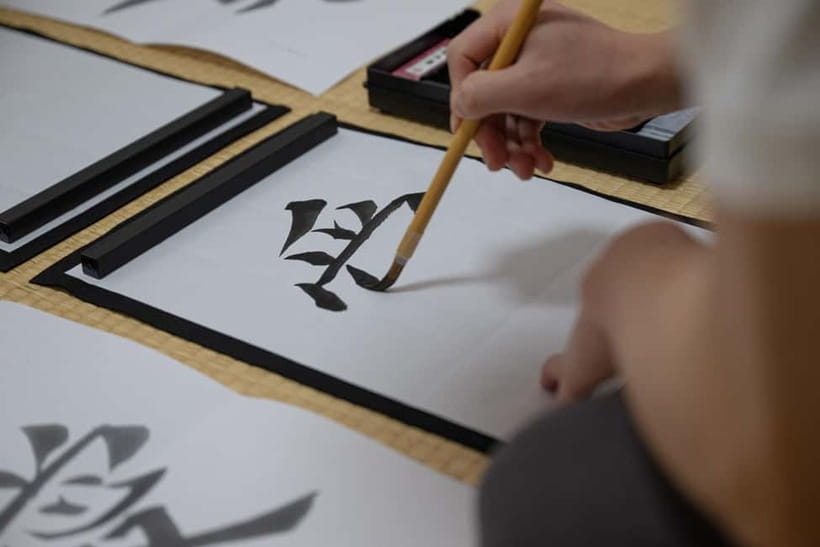
Asakusa is known for major sights and busy streets, but this class gives you a slower hour away from simply moving from one attraction to the next. You are not walking through a gallery or watching a staged performance. You are sitting with paper, ink, and a single word.
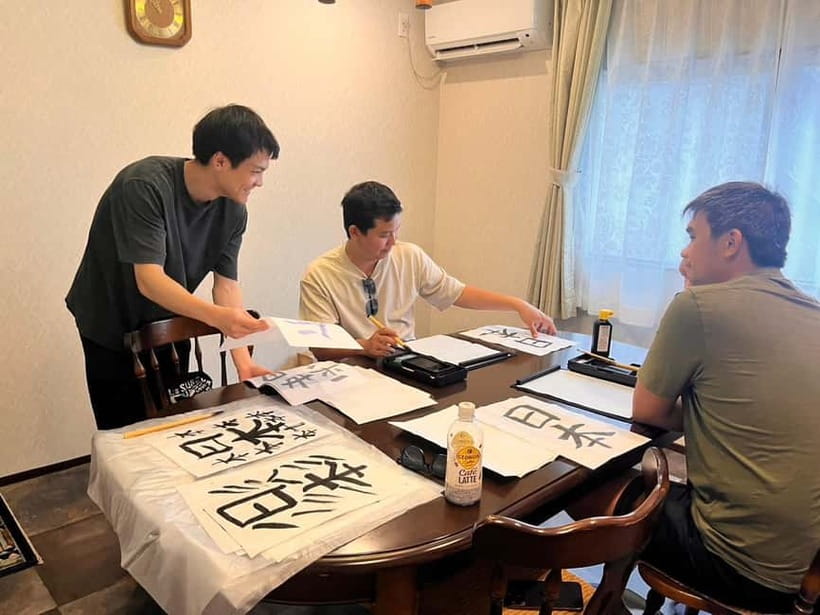
The exact rental room is confirmed by email after reservation. It may be a tatami room or a Western-style room with a table and chairs, depending on availability. This variation affects the feel of the session. Tatami offers a more traditional setting, while a table and chairs may be easier if you prefer a familiar working position.
Because the address is not supplied in advance, check your email before setting out and allow time to find the room. One participant found the meeting point easy to locate and praised the communication, but the actual location can vary. Do not assume every class meets in the same room.
The class is limited to four people, which helps keep the mood focused. It is a good match for couples, friends, families, or solo visitors who prefer personal attention. It may be less suitable if you want a large social activity or a long cultural workshop. The one-hour format is focused and compact.
Is $45 a fair price for one hour?
At $45 per person, this is not the cheapest souvenir activity in Tokyo. But the price includes instruction, 20 practice sheets, the final souvenir, access to word samples with English meanings, and a commemorative photo.
The practice paper matters. You are not paying only for the object you carry away. You are paying for the chance to learn how to make it, with an experienced teacher correcting your work. The souvenir becomes more meaningful because you selected the word and wrote it yourself.
The small group also improves the value. A class capped at four allows more direct help than a large workshop. If you are nervous about using a brush or cannot read Japanese, the English explanations and personal guidance reduce the guesswork.
I would compare this with the price of a standard souvenir plus a short craft lesson. The value is strongest if you care about the process and want a piece tied to your own effort. If you only want a decorative fan or scroll, you could likely find one elsewhere without paying for instruction.
You can reserve now and pay later, which helps if your Tokyo schedule is still changing. Cancellation is free up to 24 hours before the activity for a full refund. Starting times depend on availability, so check the schedule before building the class around another booking.
Who will enjoy this activity most?
I would recommend it to you if you want a hands-on cultural activity that fits into a busy Tokyo itinerary. The hour is short enough for a morning or afternoon plan, and the final piece is far more personal than a mass-produced keepsake.
It suits first-time calligraphy students because the instructor starts with sample words, explains their meanings, and allows repeated practice. You do not need to arrive with Japanese language skills. English instruction is available, and the key cultural information is explained clearly.
It is also a good choice for creative couples and small families. Each person can choose a different word and souvenir, then compare the results. The commemorative photograph adds a shared record without taking up much time.
I would hesitate only if you dislike seated, detail-focused activities or want a long workshop with advanced technique. One hour gives you an introduction and a finished item, not mastery. The exact room is also not guaranteed, so anyone seeking a specific tatami setting should treat that as a possibility rather than a promise.
Should you book the Asakusa calligraphy class?
Book it if you want to slow down for an hour, learn the meaning behind a Japanese word, and take home something you made with your own hands. The best reasons are the four-person limit, Shusuke’s long teaching experience, 20 practice sheets, and the choice of three souvenir formats.
The class is especially worthwhile for visitors who value personal instruction over a quick demonstration. It gives you enough repetition to improve, while the final fan, board, or scroll keeps the memory visible after you leave Japan.
Skip it if you want a large group atmosphere, a long lesson, or a guaranteed specific room. For everyone else, $45 is a reasonable price for a focused introduction, an original souvenir, and a calm break in Asakusa.
FAQ
Where does the calligraphy class take place?
The class uses a rental room in Asakusa. The exact address and meeting point are sent by email after you reserve.
Is the room Japanese-style?
The room may be Japanese-style with tatami or Western-style with a table and chairs, depending on availability.
How long does the activity last?
The activity lasts one hour.
How many people can join?
The class is limited to four participants.
Which languages does the instructor speak?
Instruction is available in English and Japanese. The instructor is a native Japanese speaker with advanced English and beginner Korean.
Who teaches the class?
The instructor is Shusuke. He has more than 10 years of calligraphy teaching experience and holds a 3rd Dan Japanese calligraphy certification from the Japan Educational Calligraphy Federation.
How much practice paper do I receive?
Each participant receives 20 sheets of hanshi calligraphy paper.
What souvenir can I make?
You can choose an uchiwa traditional fan, a shikishi decorative board, or a kakemono hanging scroll.
Are the meanings of the Japanese words explained?
Yes. You can look at sample calligraphy works and have their words and meanings explained in English before choosing one.
Can I cancel for a full refund?
Yes. You can cancel up to 24 hours in advance for a full refund. You can also reserve now and pay later.
New on our Tokyo list
- Sumi-e Experience in a relaxing green tea shop in Tokyo★ 5.0 · 3 reviews
- Tokyo : Kamikaze Street Drift Ride★ 5.0 · 3 reviews
- Private Zen Meditation in English in Shinjuku, Tokyo★ 5.0 · 3 reviews
- Onsen Spa in Tokyo and Asakusa Bar Hopping with Local Guide★ 5.0 · 3 reviews
- Easy for everyone! Now you can play handmade mini shamisen and show off to everyone! Musical instruments, sweets and live music★ 5.0 · 3 reviews
- Tokyo: Private Tsukiji Street Food & Sake with Local Guide★ 5.0 · 3 reviews
- Mt Fuji Exploration Tour with Free Japanese Kusa Mochi from Tokyo★ 4.5 · 3 reviews
- Tokyo Tsukiji Fish Market Walking and Exploring Hidden Gems Tour★ 5.0 · 3 reviews
Japanese Calligraphy Classes, compared.
Let’s experience calligraphy in YANAKA, Taito-ku, TOKYO !!
Read our review →
Calligraphy Workshop & Original T-Shirt Creation
Read our review →
Calligraphy Workshop & Original T-Shirt Creation
Read our review →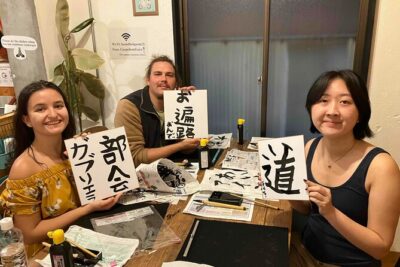
Calligraphy &Make your original folding fan in Asakusa
Read our review →
Tokyo Asakusa:Calligraphy & Make T-shirt Activity
Read our review →Browse the lists this tour appears in