
Reviewed · MARTIAL ARTS EXPERIENCES
Tokyo: Karate Experience with Former All-Japan Champion
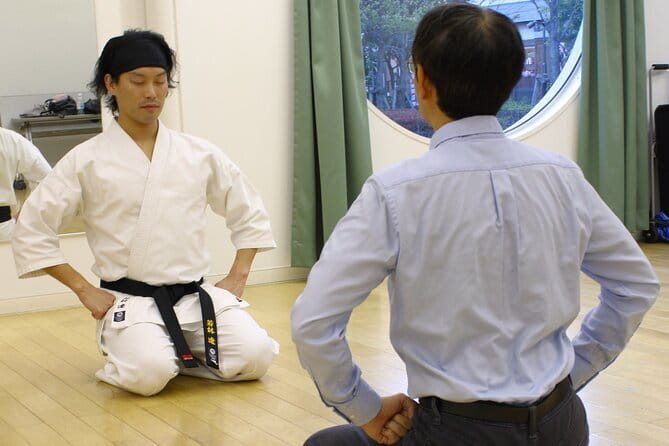
Karate training with Ryo, a former All-Japan champion, offers more than a quick tourist photo in a uniform. You learn how a lesson begins with a bow, how breathing shapes concentration, and how punches, blocks, kicks, and sparring are built one small movement at a time. The session is practical, active, and open to complete beginners.
I like the careful teaching and the chance to compare Kyokushin Karate with styles such as Shotokan, Goju Ryu, Taekwondo, or Muay Thai. I also like that children and adults can train together, with Ryo adjusting the pace and explaining techniques in clear English. The main consideration is to check your booking option carefully: the karate gi is included only with the private 90-minute option that specifically includes it.
In This Review
- Key points to know
- Meeting Ryo, a champion who teaches rather than performs
- Why the bow comes before the punches
- Stretching that prepares your body for karate
- Building punches, blocks, and kicks step by step
- Kata demonstration and the pattern behind the movement
- Safe sparring without contact
- Pad work gives the lesson some real energy
- Asakusa adds a useful Tokyo setting
- How long the 60 to 90 minutes feels
- Who gets the most from this experience
- What the 58 dollar price includes
- Practical preparation before you go
- Should you book Ryo’s Tokyo karate class?
- FAQ
- Is this karate experience suitable for complete beginners?
- Who teaches the karate lesson?
- Is the lesson taught in English?
- Does the experience include a karate uniform?
- Will I have to spar or fight another person?
- Where does the class meet?
Key points to know
- Train with a former All-Japan champion: Ryo has competed internationally and teaches Kyokushin Karate.
- Learn proper karate manners: The session begins and ends with a bow, along with breathing and focus work.
- Suitable for mixed abilities: Complete beginners, children, and experienced martial artists can all take part.
- Expect a real workout: Stretching, punches, kicks, blocks, pad work, and sparring drills keep you moving.
- Practice safely: The sparring section is non-contact, with attacks and defenses taught without unnecessary risk.
- Check the uniform option: A karate gi comes with the private 90-minute session option, not every booking.
Meeting Ryo, a champion who teaches rather than performs
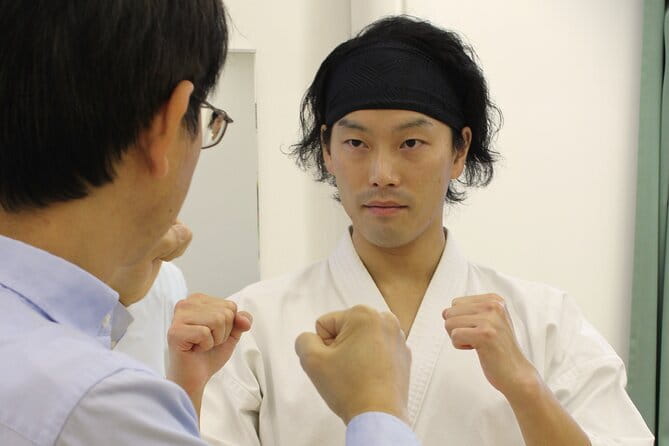
The heart of this experience is Ryo, who has trained in Kyokushin Karate for 20 years. Kyokushin is known for its full-contact approach, but this class does not throw beginners into a hard fight. Instead, Ryo explains the purpose behind each movement and builds the lesson in measured steps.
His background is serious. He placed third at the 2013 Kyokushin World Union championship in Bulgaria in the under 75-kilogram category, then became the All-Japan champion of Kyokushinkan International in the under 80-kilogram category. He has taught since 2010 and passed the examination for 2nd Dan black belt in 2020.
That experience matters most in the way he watches your movement. If your stance is too narrow, your shoulders too tense, or your kick lacks balance, he can correct the detail without making the session feel like an exam. You get instruction from someone who understands both performance and the first awkward steps of a beginner.
Ryo also teaches in English and Japanese. English-speaking participants have been able to follow the lesson, including children who arrived worried that language would be a problem. His friendly approach makes the class easier for a young student or a first-time martial arts participant who might feel nervous walking into a serious dojo.
More dojo sessions:
- Tokyo: Samurai Sword & Archery Class from Samurai Descendant
★ 5.0 · 603 reviews - Tokyo:Samurai sword and archery class from a samurai descendant
★ 5.0 · 121 reviews - Tokyo 2-Hour Genuine Samurai Experience: Kendo in Japan
★ 5.0 · 112 reviews
Why the bow comes before the punches
The first lesson is not a punch. It is the bow.
Karate follows the idea of starting with a bow and ending with a bow. Ryo shows you the proper manner and explains why respect is part of training. This gives the session a cultural side that a basic fitness class would miss. You are not only copying movements. You are learning how the class is framed.
You also practice breathing from the belly. This can sound like a small detail, but it changes the mood of the session. A calm breath helps you focus on posture and timing instead of rushing from one technique to the next.
I especially like this opening because it gives you a useful introduction to Japanese martial arts without turning the lesson into a lecture. The explanation is short, then you put it into practice. You learn the tradition through your body, not only through words.
The bow also helps set expectations. This is a respectful training session, not a chance to swing wildly at a target. You can work hard while still paying attention to control, form, and the person teaching you.
Stretching that prepares your body for karate
After the opening, you move through stretches for the major areas used in karate. The routine includes the leg muscles, hip joints, shoulder blades, and chest.
That preparation is important for anyone, but especially if you have spent the day walking around Tokyo or sitting on a long flight. Karate asks your body to turn, extend, balance, and return quickly to a stable stance. A few minutes of preparation makes the later kicks and blocks feel more manageable.
Do not mistake the warm-up for a long exercise class. It prepares you for the techniques that follow. You will work on flexibility and muscle strength, but the main goal is to move safely and smoothly during the lesson.
If your flexibility is limited, you do not need to arrive able to kick high. Ryo adjusts the class to your ability and can slow the pace when needed. Parents booking for children should find this reassuring. A 10-year-old with Tae Kwon Do experience and a complete beginner can both take part, with the instructor changing the level of challenge.
Building punches, blocks, and kicks step by step
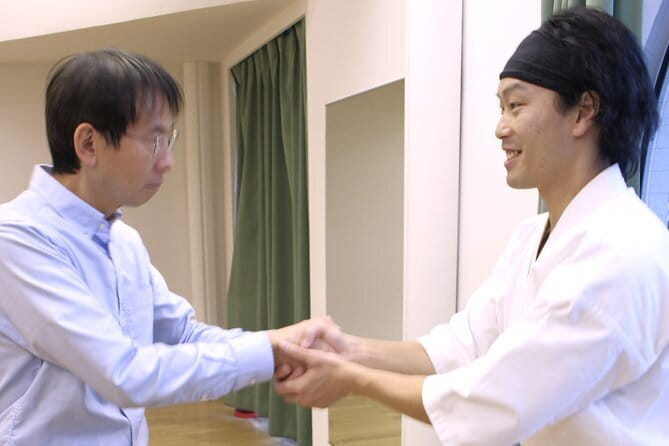
The technical section begins with a proper stance. From there, Ryo introduces basic punches, blocks, and kicks.
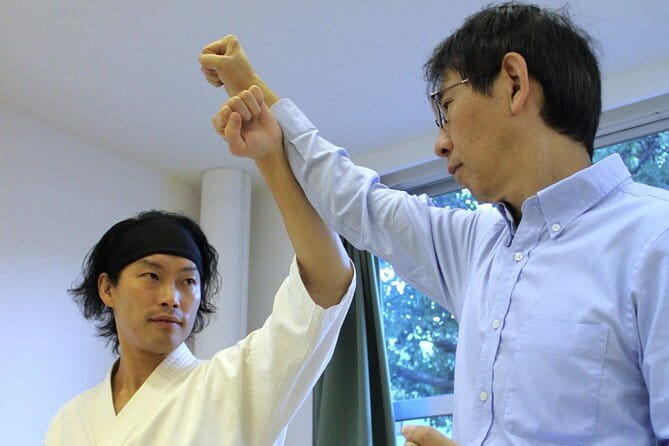
Each technique is broken into several movements. You might first learn the position of the hands, then the direction of the movement, then the return to your stance. This method gives you time to understand what each part does instead of trying to copy a fast combination all at once.
Ryo demonstrates the details and adds tips when needed. His focus is on precision and efficiency, which is useful for a complete beginner and still worthwhile if you already train in another style.
Experienced martial artists should not expect this to be a full advanced seminar. The lesson is designed for a broad range of abilities, so the basic material is central. Still, the differences between Kyokushin and other styles give returning martial artists something to think about.
Participants with Shotokan, Goju Ryu, Kenpo, Taekwondo, and Muay Thai backgrounds have found the comparison useful. You may notice changes in stance, kicking style, movement, or the way a technique is applied. Ryo can explain those differences while keeping the class moving.
For a first-timer, the benefit is simpler. You leave with a clear sense of how karate techniques are put together. You are not merely hitting a pad. You are learning where your feet go, how your body turns, and why a technique works better when the movement is controlled.
A few more Tokyo bookings worth comparing
- Mt Fuji and Hakone 1-Day Bus Tour Return by Bullet Train
★ 5.0 · 26,383 reviews - 1-Day Tokyo Bus Tour
★ 5.0 · 14,250 reviews - Tokyo: TOKYO SKYTREE® Admission ticket
★ 4.5 · 11,192 reviews - Tokyo: teamLab Planets TOKYO Digital Art Museum Entry Ticket
★ 4.6 · 9,779 reviews
Kata demonstration and the pattern behind the movement
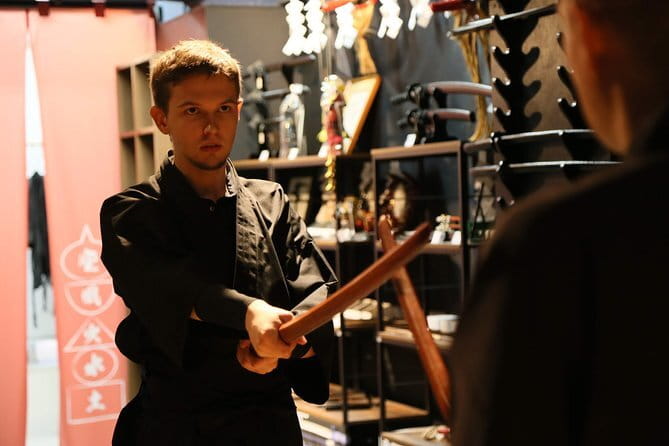
The experience includes a kata demonstration. Kata are patterns made from a sequence of karate techniques, performed with direction, rhythm, and purpose.
Watching Ryo demonstrate a kata gives you a glimpse of karate beyond individual punches and kicks. A single movement can look formal when practiced in a pattern, but it also shows how blocks, strikes, footwork, and changes of direction connect.
If you already practice karate, this is a useful chance to see Kyokushin movement from a skilled instructor. The style may differ from what you know, and that contrast can make familiar techniques look new.
If you are a beginner, you do not need prior knowledge of kata to enjoy the demonstration. Think of it as a short view of the structure behind the basic exercises. It shows how karate can be practiced as both a fighting system and a disciplined form.
Safe sparring without contact
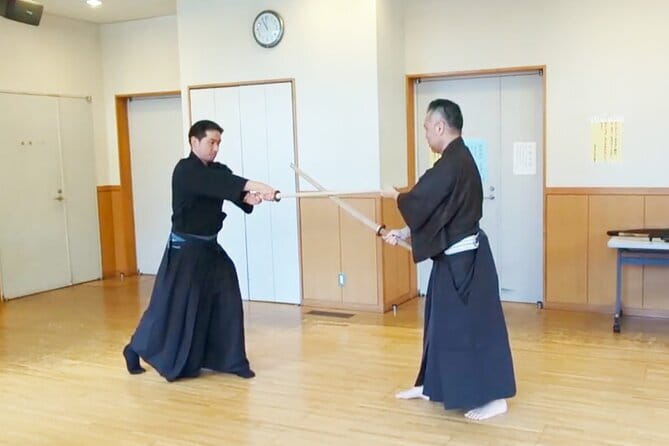
The final stage introduces the essence of kumite, or sparring. This is done without physical contact, so you can practice the timing and decision-making of an exchange without being hit.
Ryo teaches defenses against attacks such as punches, front kicks, and low kicks. He explains how to respond with precision and efficiency, then gives you the chance to practice the sequence.
This section is valuable because it connects the earlier drills. A punch is no longer just a punch. You begin to think about distance, reaction, guard position, and what happens after an attack. At the same time, the non-contact format keeps the exercise suitable for people who have never sparred.
You should still listen closely and move with control. Non-contact does not mean careless. The purpose is to learn the response, not to race through it or prove toughness.
For a parent, this is one of the strongest parts of the lesson. Children can experience the excitement of sparring while avoiding the pressure of a full-contact bout. For an experienced martial artist, the drill offers a chance to compare defensive ideas with your usual style.
Pad work gives the lesson some real energy
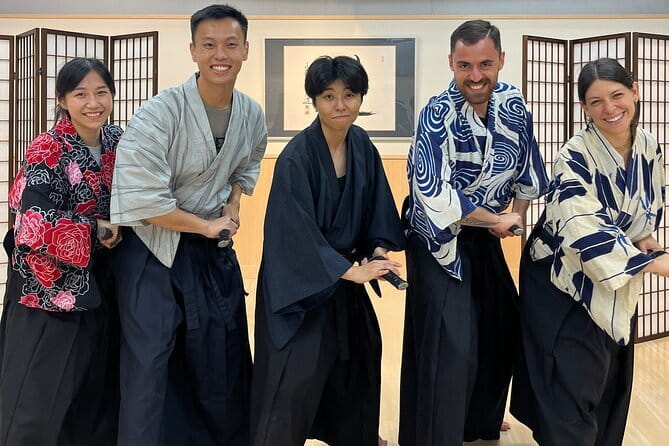
The class includes punching and kicking pads. This is where you can apply the technique with more force and feel the physical side of karate.
Pad work also makes the session fun for children and adults who want an active experience. You can hear and feel the impact, but the equipment gives you a controlled target. Ryo can watch your form while you work on accuracy and power.
The class is not gimmicky. It is a proper workout, especially when combined with the warm-up, repeated technique practice, and sparring drills. You should wear clothes that let you move freely unless your selected option includes the karate uniform.
Pay attention when booking. The supplied information lists a karate uniform with the private 90-minute session that specifically says it includes a karate gi. One participant expected a uniform with a 90-minute class and found that it was not included in that option. If wearing a gi matters to you, choose the correct package rather than assuming every session provides one.
Asakusa adds a useful Tokyo setting
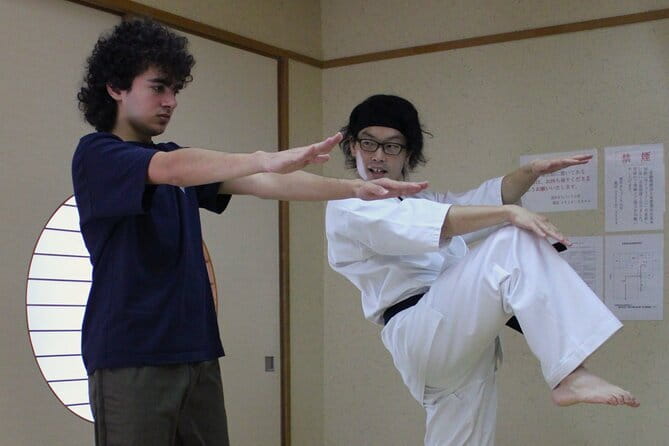
The class takes place in central Asakusa, according to the experience details provided by participants, though the exact meeting point can vary with the option you book.
Asakusa is a practical area for this activity. It is easy to combine a karate lesson with sightseeing, and the setting gives you a chance to step away from the usual temples, shopping streets, and food stops for a different view of Japanese culture.
One unusual detail is that a session may take place inside a martial arts store. That setting can add to the atmosphere, especially if you already enjoy combat sports. It also makes the experience feel connected to everyday martial arts culture rather than staged as a generic tourist show.
Because the meeting point changes by booking option, check the final location before setting out. Do not rely only on the general Tokyo or Asakusa label.
How long the 60 to 90 minutes feels
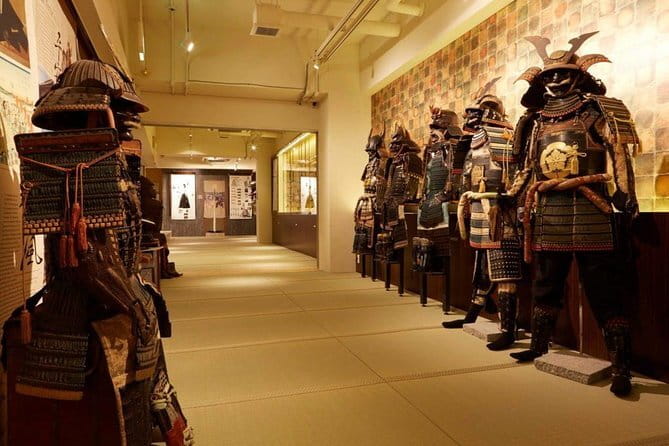
The experience lasts about one hour to 90 minutes, depending on the option and availability.
A one-hour class is enough for a clear introduction. You can learn the bow, breathing, stretching, basic techniques, and some sparring principles without giving up half a day of sightseeing.
The private 90-minute option gives you more room for correction, repetition, and individual attention. It also offers the karate gi according to the booking details. If you are booking for a family or for someone with previous training, the longer format may offer better value because Ryo has more time to adjust the exercises.
A short class also has a practical advantage in Tokyo. You can fit it between other plans without organizing a full martial arts course. Still, do not expect to master karate in one visit. The real value is a focused introduction, a strong workout, and a better understanding of how the art is practiced.
Who gets the most from this experience
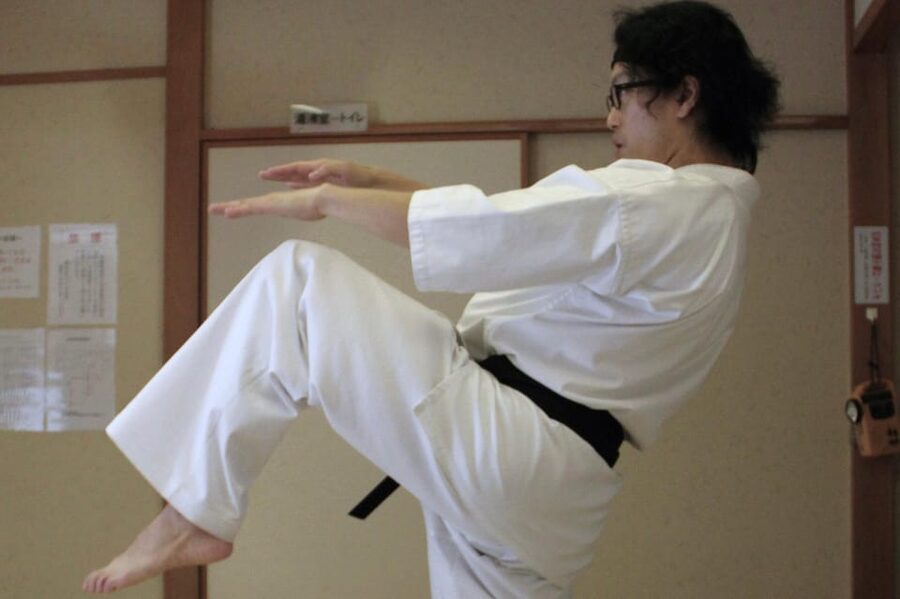
This class is a good match for you if you want an active cultural experience and have at least a little curiosity about martial arts.
Complete beginners can take part. Ryo breaks the techniques down and works at an appropriate pace, so you do not need to know karate terms before arriving.
Children can also enjoy it. Young participants aged 8, 10, 14, and 15 have taken part successfully, including children who were nervous about English or new to the instructor. Parents can join in rather than simply wait on the side.
Experienced martial artists get a different kind of value. You can study Kyokushin technique, compare styles, ask questions, and use the class to examine familiar movements from another angle. It is especially useful if you already practice Shotokan, Goju Ryu, Kenpo, Taekwondo, Muay Thai, or another karate style.
This may be less suitable if you want a hard full-contact fight or a long, advanced technical camp. The sparring is deliberately non-contact, and the class must serve beginners as well as experienced participants.
What the 58 dollar price includes
At about $58 per person, the experience costs more than a casual tourist activity, but you are paying for direct instruction from a qualified black belt and former All-Japan champion rather than simply watching a demonstration.
The package includes an interactive karate lesson, kata demonstration, punching and kicking pads, and a bottle of water. A uniform is included only in the specified private 90-minute option with a karate gi, so compare the choices before paying.
The value is strongest if you care about personal correction. Ryo pays attention to how you move and adapts the exercises to your ability. That makes the session more useful than a large class where everyone follows the same routine from a distance.
Private and small-group options are available. A private lesson can be worth the extra cost for a family with children, a mixed-ability pair, or an experienced martial artist who wants more detailed feedback.
Flexible booking also helps. You can reserve now and pay later, and cancellation is free up to 24 hours before the activity for a full refund. Starting times depend on availability, so check your chosen date and option carefully.
Practical preparation before you go
Wear comfortable workout clothes unless your selected booking includes a gi. You will stretch, punch, kick, and move through defensive drills, so restrictive clothing will make the session less enjoyable.
Bring an open mind about style. If you already practice martial arts, Kyokushin may use stances or movements that differ from your normal training. Treat those differences as the point of the visit, not as mistakes.
Tell Ryo about your level at the beginning. A complete beginner needs clear repetition, while a black belt may want more detail or a higher challenge. The lesson is designed to accommodate both, but the instructor can only tailor it if you explain what you already know.
You should also expect to bow, listen, and repeat movements carefully. The class has energy, but it is not simply a chance to hit pads as hard as possible.
Should you book Ryo’s Tokyo karate class?
I would book this if you want a hands-on introduction to Japanese martial arts led by someone with genuine competition and teaching experience. The strongest reasons are Ryo’s clear English instruction, his patient corrections, and the way the class connects manners, breathing, technique, kata, pad work, and non-contact sparring.
Families should consider the private option, especially if children have different abilities. Martial artists should book it for the Kyokushin perspective, not for a full advanced course. Beginners should choose it if they want a real workout without the intimidation of a contact fight.
Before confirming, check the meeting point, duration, and uniform details. If you want the gi, select the private 90-minute option that includes it. At $58, this is a good-value Tokyo activity for anyone who wants to do more than look at Japanese culture from the outside.
FAQ
Is this karate experience suitable for complete beginners?
Yes. The lesson is designed for both beginners and people with previous karate or martial arts experience. Basic techniques are divided into several steps so you can learn them gradually.
Who teaches the karate lesson?
Ryo teaches the class. He has practiced Kyokushin Karate for 20 years, has taught since 2010, holds a 2nd Dan black belt, and is a former All-Japan champion.
Is the lesson taught in English?
The instructor teaches in English and Japanese. English-speaking children and adults have been able to follow his explanations.
Does the experience include a karate uniform?
A karate uniform is included when you choose the private 90-minute session option with a karate gi. The uniform is not included with every 90-minute booking, so check the option details carefully.
Will I have to spar or fight another person?
You will learn the basics of kumite, or sparring, without physical contact. The lesson covers defenses against punches, front kicks, and low kicks without requiring a full-contact fight.
Where does the class meet?
The meeting point can vary depending on the option booked. The experience is in Tokyo, and the class has taken place in the central Asakusa area. Check the meeting details for your selected option before going.
New on our Tokyo list
- From Tokyo: Mount Fuji & Hakone Full Day Private Tour★ 4.9 · 25 reviews
- Tokyo Spectacular View Day-Cruise in 90 Minutes★ 5.0 · 25 reviews
- Real Tokyo Runner Club : Daikoku Car Meet Night Tour with JDM Car★ 5.0 · 25 reviews
- 2.5 Hour-Guided Cycle Tour in the Central Tokyo★ 5.0 · 25 reviews
- [Self-Drive] Tokyo & Daikoku Custom Car Driving Tour★ 4.9 · 25 reviews
- Tokyo: 2-Hour Night Bike Tour of the City’s Hidden Gems★ 4.9 · 25 reviews
- Ramen Making from Scratch +Akihabara Tour –Cooking Class★ 5.0 · 25 reviews
- Samurai themed Entertainment show in Shinjuku★ 4.5 · 25 reviews
Martial Arts Experiences, compared.

Samurai Sword & Archery Class from Samurai Descendant
Read our review →
Samurai sword and archery class from a samurai descendant
Read our review →
Tokyo 2-Hour Genuine Samurai Experience: Kendo in Japan
Read our review →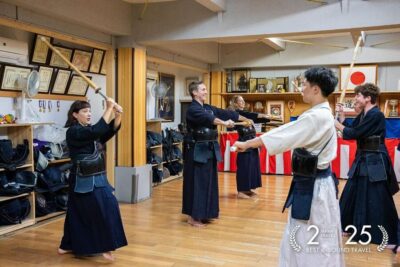
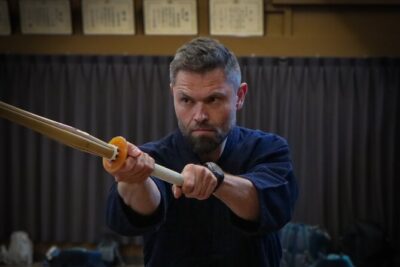
Samurai Experience – Learn Bushido through Kendo, in Tokyo
Read our review →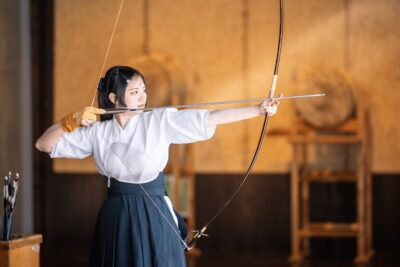
Samurai Experience – Learn Bushido through Kendo, in Tokyo
Read our review →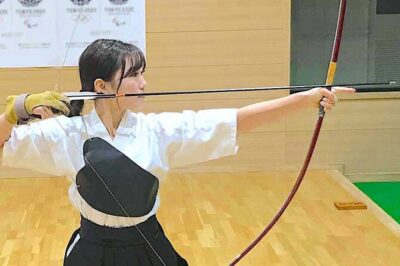
Authentic Kyudo Japanese Archery Experience in Tokyo
Read our review →Browse the lists this tour appears in