
Reviewed · SAMURAI & NINJA EXPERIENCES
Tokyo:Samurai sword and archery class from a samurai descendant
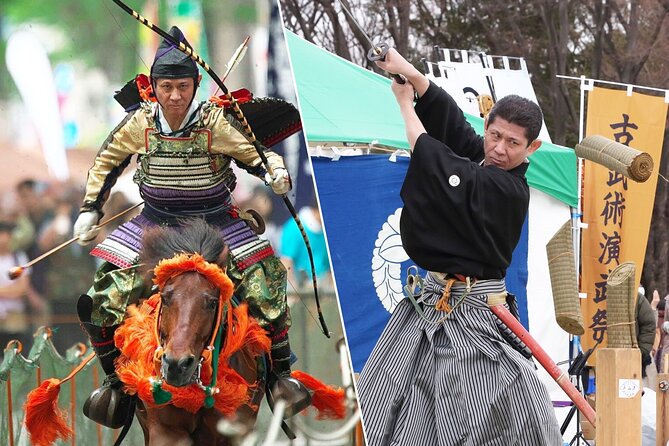
The most unusual part of this Tokyo-area experience is that you do not simply pose with a katana. At Yoshioki Sumida’s dojo in Machida, you learn sword handling, footwork, attack and defense, test cutting, and Japanese archery in a working martial-arts setting. Sumida is a samurai descendant and a master of swordsmanship and horseback archery.
I like the small-group format, which gives you more correction and attention than a quick photo stop. I also like the mix of classroom learning and physical work: you study the blade, practice forms, spar with mock swords, and try a real bow and arrow.
The main consideration is effort. This is not a polished stage show, and the training can be hard on your legs, shoulders, and back. The dojo is in Machida rather than central Tokyo, the studio can be tricky to locate, and one visitor needed about 1.5 hours from Tokyo Daiba.
In This Review
- Key points at a glance
- Why this feels different from a costume photo stop
- Arriving in Machida and getting ready
- The opening lecture: understanding the sword before using it
- Iai forms: learning to swing with control
- Gekken sparring: attack, defense, and timing
- Test cutting: the hard part is the blade line
- Archery with a traditional bow
- The Toyama-ryu demonstration
- The instructor and teaching style
- Is the $198.20 price good value?
- Who should book this class?
- Practical details before you book
- Should you book the Samurai Sword and Archery Class?
- FAQ
- Where does the samurai class take place?
- How long does the experience last?
- Who teaches the class?
- Is the class suitable for beginners?
- What equipment is included?
- Will I use a real sword?
- Is the class private?
- Can I cancel for a refund?
- What happens if bad weather cancels the class?
Key points at a glance
- Four-part training session: Expect a lecture, iai sword forms, gekken sparring, test cutting, and archery.
- A named master instructor: Yoshioki Sumida teaches the class, with staff support including Harry in some sessions.
- Real physical practice: You move while slashing targets, spar with foam or mock swords, and work on timing.
- Traditional equipment supplied: Training clothes, a practice sword, bokken, and bow and arrow are provided.
- A serious dojo setting: You watch a live Toyama-ryu demonstration rather than a choreographed tourist performance.
- Small-group attention: The maximum group size is 15, useful when you are learning movements that require close safety checks.
Why this feels different from a costume photo stop
Many samurai-themed activities in Japan are built around appearance. You put on robes, hold a sword, take pictures, and leave with a souvenir memory. This class takes a different route. You change into training wear, listen closely, repeat movements, and discover how hard it is to make a sword cut in the right line while your body is moving.
That difference matters. You are not being asked to act like a samurai for an hour. You are being introduced to the discipline behind swordsmanship. Sumida explains the parts and construction of a Japanese sword, its place in samurai culture, and the mechanics of handling it. The lesson gives you a small but useful look at how much control sits behind a movement that looks simple in films.
I especially like that the class does not treat the sword as a toy. A mock sword is used for much of the work, with safety explained throughout. You still get the satisfying challenge of cutting a target, but the emphasis stays on form, blade alignment, and control.
More dojo sessions:
- Tokyo: Samurai Sword & Archery Class from Samurai Descendant
★ 5.0 · 603 reviews - Tokyo 2-Hour Genuine Samurai Experience: Kendo in Japan
★ 5.0 · 112 reviews - Tokyo: Samurai Kendo Practice Experience
★ 4.7 · 102 reviews
Arriving in Machida and getting ready
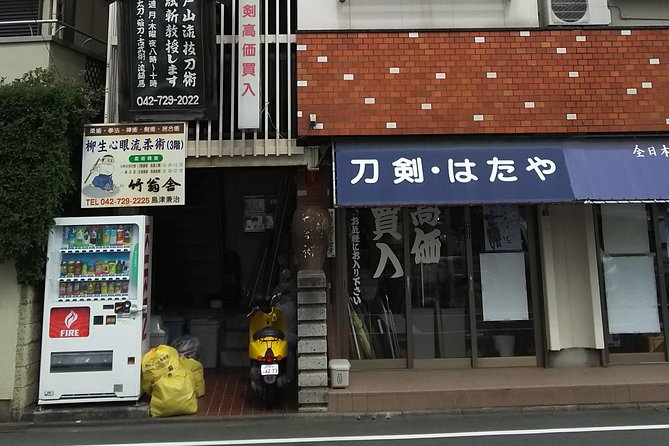
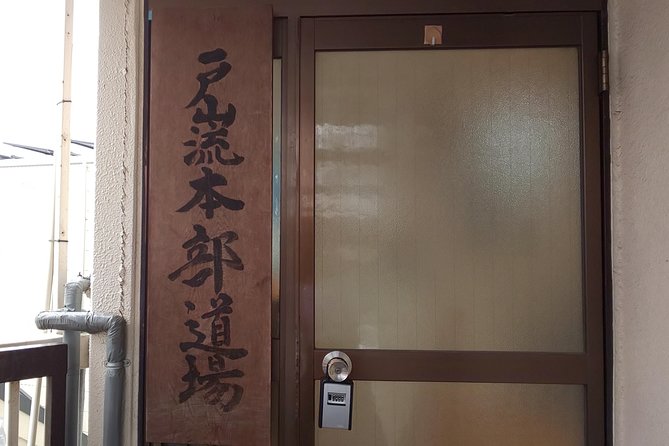
The meeting point is at 3-chome-14-14 Haramachida, Machida, Tokyo 194-0013. The area is near public transportation, but the dojo itself may take some effort to locate. I would not arrive at the last minute, especially if you are unfamiliar with Machida or coming from central Tokyo.
Machida gives you a change of pace from the dense center of Tokyo. One participant enjoyed walking around the city before heading to the dojo, while another reported a journey of about 1.5 hours from Tokyo Daiba. Travel time will depend on your starting point, so treat the two-and-a-half-hour class as only the activity portion of your outing.
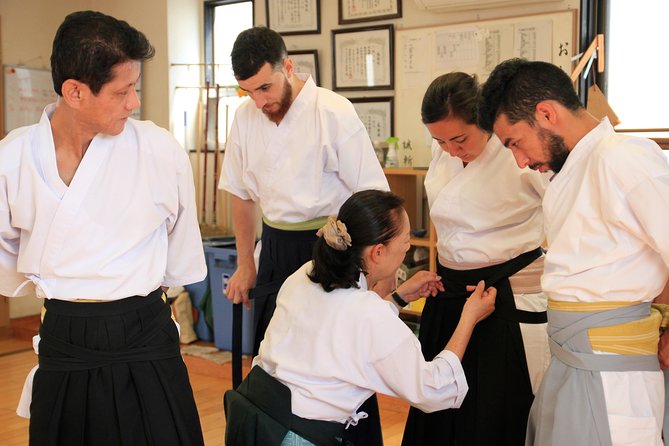
Once you arrive, you change into the supplied training clothes. The operator asks for your height and weight in advance so the lesson clothing can be prepared. You do not need to bring a practice sword or bow, since the equipment is provided.
The class can hold up to 15 people. That is still a manageable maximum for a hands-on session, though the amount of personal correction will depend on the group on your date. The experience is designed for most people to participate, but you should be ready to listen carefully and move for a sustained period.
The opening lecture: understanding the sword before using it
The lesson begins with a short lecture on Japanese swords. This is more than background filler. You learn about blade construction and the parts of a katana, along with the culture and traditions tied to its use.
That introduction gives the later exercises more meaning. When you grip the practice sword, you have some sense of why the instructor cares about the blade line, the angle of the cut, and the position of your hands. The class also includes instruction on assembling and disassembling a sword, according to the activity details and participant accounts.
Sumida’s teaching style is described as patient, encouraging, and serious about safety. He also has a playful side, which helps when beginners feel stiff or uncertain. You should still expect direct correction. The point is to improve your movement, not simply to get through a set of poses.
Iai forms: learning to swing with control
The iai section introduces you to handling and swinging a mock sword. You practice kata, or formal slashing patterns, with attention to stance, movement, and the path of the blade.
This is where the class begins to show its physical side. A sword swing uses more than your arms. You need balance, timing, posture, and a controlled finish. The action may look easy when performed by a master, but beginners quickly learn that speed without form does not help.
You will likely repeat the same movement several times. That repetition is useful because you can feel small mistakes in your grip or posture. Sumida checks that you understand the movement and that you are practicing safely before moving on.
The supplied mock sword keeps the focus on technique. You are not expected to handle a sharp blade as a first-time student. Later, you may have the chance to cut a target, but only after learning the mechanics that make the cut safe and effective.
More samurai and ninja sessions:
- Tokyo: Samurai Ninja Museum Guided tour and Experience
★ 4.6 · 1,010 reviews - Best Samurai Experience in Tokyo
★ 5.0 · 458 reviews - Ninja Experience (Family Friendly) at Samurai Ninja Museum TOKYO
★ 5.0 · 441 reviews - Tokyo: Samurai Entertainment Night Show in Kanda Shrine
★ 4.6 · 417 reviews
Gekken sparring: attack, defense, and timing
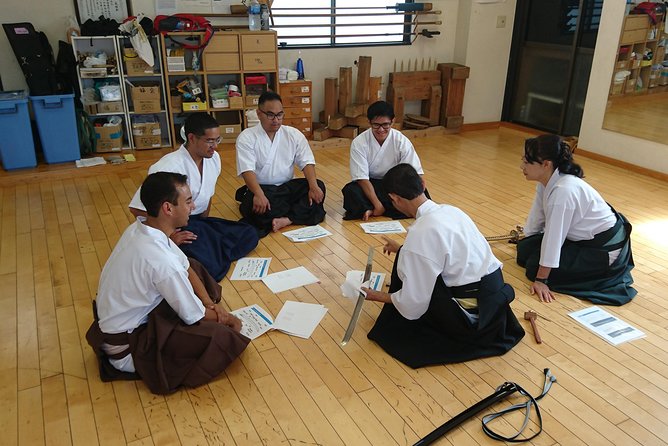
The gekken lesson adds a partner element. Using mock or foam swords, you practice the timing of attack and defense, then spar in a controlled way.
This is one of the most enjoyable sections for many people, but it is also where listening matters most. You are not taking part in an uncontrolled duel. The instructor teaches specific actions and responses, then helps you apply them with a partner. The goal is to understand distance, timing, and reaction.
Some participants have sparred with Sumida himself, which can be both fun and intimidating. You should expect him to show why experience matters. His movements are likely to be faster and more precise than yours, but the exercise is meant to teach rather than embarrass.
The sparring makes a useful contrast with the formal kata. Forms teach clean movement in a set pattern. Sparring asks you to respond to another person. Together, the two sections show why swordsmanship is not just a matter of swinging hard.
Test cutting: the hard part is the blade line
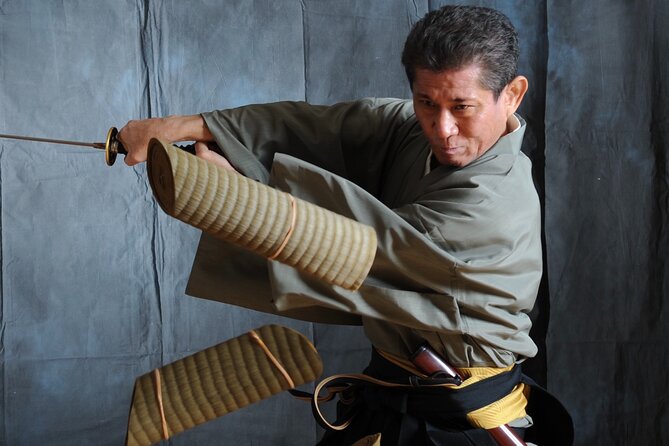
The cutting exercise is the moment many people picture when they book a samurai class. You use a mock sword to check the blade line and practice cutting through a target, including tatami-style mats or blocks as described in the experience details.
The important point is that the target does not simply fall because you hit it. You need the correct angle, movement, and follow-through. You also need to move while slashing, which makes the task much harder than a stationary strike.
This is a good place to set your expectations. You may not succeed immediately, and success is not the only measure of the exercise. The value is in feeling how technique controls the result. When a cut works, it feels earned because you have already practiced the position and motion.
The activity details describe this as a difficult challenge, and that is useful warning. You are likely to work harder than expected. Several people found the class physically demanding and reported soreness for a day or two afterward. I would avoid scheduling a strenuous hike or another demanding martial-arts session right afterward.
Archery with a traditional bow
The class also lets you try a bow and arrow, presented as the main weapon of the samurai 1,000 years ago. This widens the lesson beyond the katana and shows that samurai training was not limited to sword combat.
The supplied equipment includes a real bow and arrow. The class description does not promise a long archery course or a particular number of shots, so I would think of this as an introduction rather than a full archery certification session.
Still, the change in movement is valuable. Sword work is close-range and body-centered, while archery asks for steady handling and concentration at a distance. You get to compare two different forms of control within the same session.
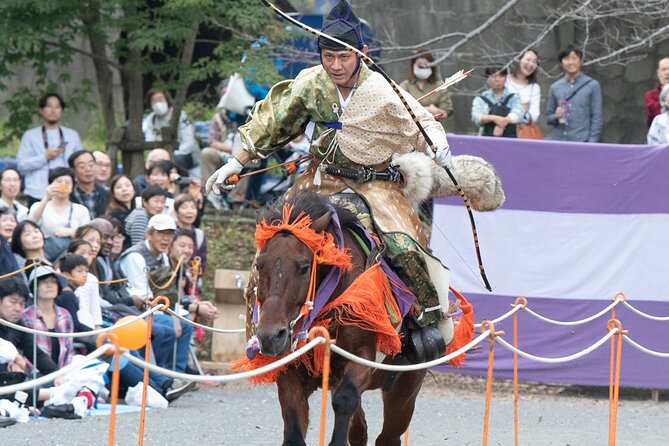
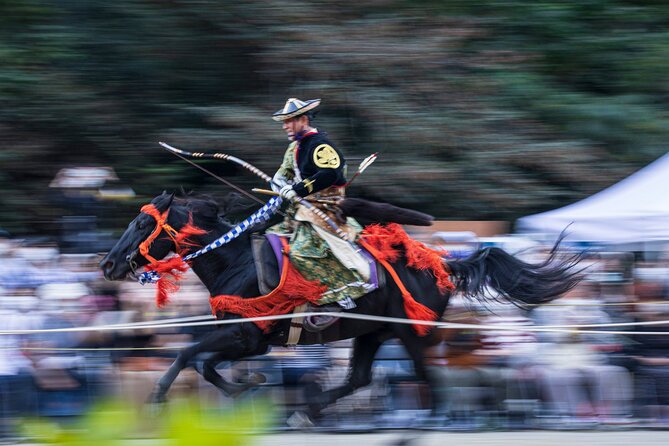
The experience provider identifies Sumida as a master of horseback archery as well as swordsmanship. That background gives the archery portion a clear connection to the instructor’s wider practice, even though the class itself is held at a dojo rather than on horseback.
The Toyama-ryu demonstration
You also have the chance to watch a live demonstration of Toyama-ryu technique. The demonstration is presented as serious instruction, not entertainment, and may include difficult movements from a seventh-grade practitioner.
That distinction is worth noting. If you want a flashy samurai show with dramatic music and staged jokes, this may feel restrained. If you want to see what trained sword technique looks like after years of practice, the demonstration adds useful context.
Watching the master perform after you have struggled with basic cuts changes how you see the art. A clean movement no longer looks effortless. You understand that the ease comes from discipline, timing, and repeated practice.
The instructor and teaching style
Yoshioki Sumida is the central figure in this experience. He teaches the sword history, demonstrates the movements, corrects technique, and keeps safety in view. His role as a samurai descendant adds a personal connection to the subject, but the class still depends on his ability as a teacher.
The strongest praise focuses on his patience, warmth, passion, and clear explanations. He is also described as someone who encourages students while maintaining high expectations. That balance is important for beginners. You want help without being treated as if the activity is a joke.
Some sessions include another instructor or staff member, such as Harry, who assists with teaching and interaction. The exact staffing may vary, but the class is designed to provide guidance rather than leave you to copy movements from a distance.
I would approach the lesson with respect. Listen when instructions are given, keep control of the equipment, and do not treat sparring or cutting as a competition. You will learn more and enjoy it more if you focus on doing the movement correctly.
Is the $198.20 price good value?
At $198.20 per person, this is not a cheap add-on. The price makes more sense if you want several connected activities in one serious session: sword history, sword handling, kata, sparring, cutting practice, archery, and a live demonstration.
You also receive training clothing and equipment, so you do not need to arrange those separately. The small-group limit matters here. Personal correction is a major part of learning sword technique safely, and a class of up to 15 offers more contact than a large stage-style activity.
I would not book this solely for a quick photo or a single katana swing. You may find better value elsewhere if your only goal is dressing up. I would consider the price fair for someone who wants hands-on martial-arts practice and a cultural lesson led by a specialist.
The experience has a 5-star rating from 121 reviews and a 99 percent recommendation rate. Those figures point to very strong satisfaction, but the physical demands remain important. A high rating does not make the class easy, and the operator is clear that you will be training rather than watching a show.
Who should book this class?
I would recommend it to adults, older children, families, couples, and friends who are curious about Japanese martial arts and willing to concentrate. It suits people who enjoy learning by doing, especially if you want something less predictable than another temple visit or city viewpoint.
It is also a good choice for martial-arts students who want a short introduction to Japanese sword and archery traditions. You should not expect professional-level instruction in one class, but you can gain a clear sense of the discipline and decide if you want to continue training later.
You do not need to be athletic to take part. The class is open to most people, and one person in their 50s appreciated the range of exercises. Still, you should be comfortable with physical activity and understand that your body may ache afterward.
I would think twice if you dislike close instruction, partner practice, or repeated drills. This is not a passive cultural talk. You need to watch, copy, adjust, and try again.
Practical details before you book
The experience lasts about 2 hours and 30 minutes and ends at the dojo. A mobile ticket is provided, and booking confirmation is received at the time of booking.
The class requires good weather. If poor weather causes cancellation, you are offered another date or a full refund. You can cancel for a full refund up to 24 hours before the start time, but cancellations or changes made inside that 24-hour window are not accepted and are not refunded.
The details also note a facility charter fee may occur. If you want to rent the facility exclusively, you need to contact the operator. I would clarify that fee before booking if you are considering a private group or exclusive use.
Bring enough time for the journey and finding the entrance. Since the class begins with changing clothes and an introduction, arriving rushed would work against the calm attention the lesson needs.
Should you book the Samurai Sword and Archery Class?
Book this if you want a serious, hands-on look at samurai training rather than a costume photo. The combination of sword history, kata, sparring, target cutting, archery, and a Toyama-ryu demonstration gives you a fuller session than a single sword lesson.
I particularly like the personal teaching from Yoshioki Sumida, the supplied equipment, and the fact that the class asks you to work for the result. The trade-offs are the price, the trip to Machida, the hard physical effort, and the need to find the dojo.
For a curious first-timer, a martial-arts enthusiast, or a family looking for a memorable activity beyond central Tokyo, I would book it. Just arrive early, wear a focused attitude, and save your heaviest sightseeing day for later.
FAQ
Where does the samurai class take place?
The class begins and ends at the dojo at 3-chome-14-14 Haramachida, Machida, Tokyo 194-0013, Japan.
How long does the experience last?
The experience lasts approximately 2 hours and 30 minutes.
Who teaches the class?
The instructor is Yoshioki Sumida, a master of swordsmanship and horseback archery and a descendant of samurai.
Is the class suitable for beginners?
Yes. Most people can participate, and the instructor teaches sword handling, forms, sparring, cutting, and archery step by step.
What equipment is included?
Training clothes, a practice sword, a bokken, and a real bow and arrow are included.
Will I use a real sword?
The class includes mock-sword practice and test cutting. The provided equipment specifically includes a practice sword and bokken.
Is the class private?
The class is held in a small-group setting with a maximum of 15 participants. Exclusive facility rental may be available for an additional fee.
Can I cancel for a refund?
You can cancel at least 24 hours before the start time for a full refund. Cancellations and changes made less than 24 hours before the start time are not accepted.
What happens if bad weather cancels the class?
If the experience is canceled because of poor weather, you are offered a different date or a full refund.
More Workshops in Tokyo
- Sushi Making Tokyo Roll and Authentic Japanese Sushi Class
★ 5.0 · 3,971 reviews - Tokyo: Roll and Authentic Sushi Making Class in Asakusa
★ 4.9 · 1,957 reviews - Tokyo Shinjuku Chopsticks Making Class
★ 5.0 · 1,763 reviews - Tokyo: Sushi Making Class in a Happi Coat near a Famous Spot
★ 4.9 · 1,377 reviews
New on our Tokyo list
- From Tokyo: Mount Fuji & Hakone Full Day Private Tour★ 4.9 · 25 reviews
- Tokyo Spectacular View Day-Cruise in 90 Minutes★ 5.0 · 25 reviews
- Real Tokyo Runner Club : Daikoku Car Meet Night Tour with JDM Car★ 5.0 · 25 reviews
- 2.5 Hour-Guided Cycle Tour in the Central Tokyo★ 5.0 · 25 reviews
- Tokyo: 2-Hour Night Bike Tour of the City’s Hidden Gems★ 4.9 · 25 reviews
- Ramen Making from Scratch +Akihabara Tour –Cooking Class★ 5.0 · 25 reviews
- [Self-Drive] Tokyo & Daikoku Custom Car Driving Tour★ 4.9 · 25 reviews
- Samurai themed Entertainment show in Shinjuku★ 4.5 · 25 reviews
Samurai & Ninja Experiences, compared.
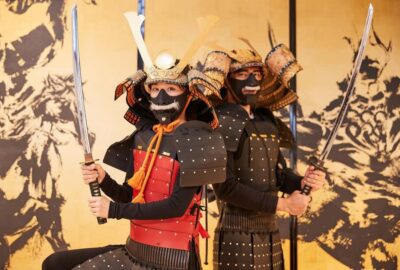
Samurai Ninja Museum Guided tour and Experience
Read our review →
Samurai Sword & Archery Class from Samurai Descendant
Read our review →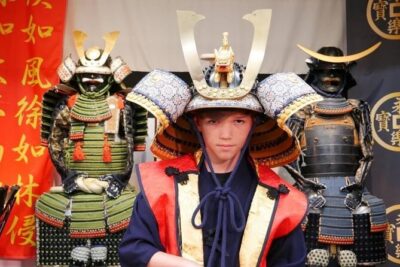
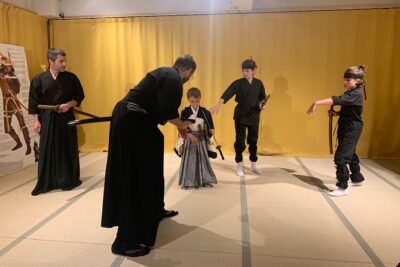
Ninja Experience (Family Friendly) at Samurai Ninja Museum TOKYO
Read our review →
Samurai Entertainment Night Show in Kanda Shrine
Read our review →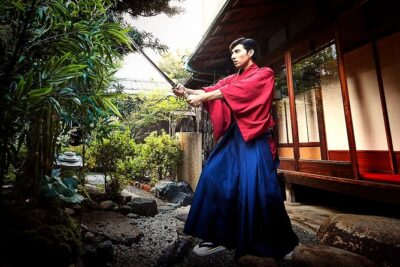
Tokyo Sword Experience – includes Museum Ticket/Ninja Experience
Read our review →
Samurai Ninja Museum Asakusa: Samurai Sword Lesson & Tour
Read our review →
Ninja Samurai 2-hour hands-on lesson by Japanese master in Tokyo
Read our review →Browse the lists this tour appears in